

ARM vs Classic Circuit Configurations: Future Viability
MAR 25, 20269 MIN READ
Generate Your Research Report Instantly with AI Agent
PatSnap Eureka helps you evaluate technical feasibility & market potential.
ARM vs Classic Circuit Architecture Background and Objectives
The evolution of circuit architectures has been fundamentally shaped by the ongoing tension between performance optimization and design complexity. ARM (Advanced RISC Machine) architecture emerged in the 1980s as a revolutionary approach to processor design, emphasizing reduced instruction set computing principles that prioritized energy efficiency and simplified instruction execution. This philosophy stood in stark contrast to traditional Complex Instruction Set Computing (CISC) architectures, which had dominated the computing landscape through designs like x86 processors.
Classic circuit configurations, rooted in CISC principles, were developed during an era when memory was expensive and programming efficiency was paramount. These architectures featured extensive instruction sets with complex, multi-cycle operations designed to minimize the number of instructions required for common tasks. The underlying philosophy centered on hardware complexity to achieve software simplicity, resulting in processors capable of executing sophisticated operations in single instructions.
ARM's emergence represented a paradigmatic shift toward streamlined instruction sets, where simple operations could be executed in single clock cycles. This approach traded instruction complexity for execution speed and power efficiency, fundamentally altering the relationship between hardware design and software optimization. The RISC philosophy underlying ARM architecture emphasized the principle that simpler, more frequent operations should be optimized at the hardware level.
The technological objectives driving this architectural evolution encompass multiple dimensions of performance optimization. Primary goals include maximizing computational throughput while minimizing power consumption, achieving optimal silicon area utilization, and maintaining scalability across diverse application domains. These objectives have become increasingly critical as computing applications have expanded from traditional desktop environments to mobile devices, embedded systems, and Internet of Things applications.
Contemporary circuit design faces unprecedented challenges in balancing performance, power efficiency, and manufacturing costs. The proliferation of mobile computing has elevated energy efficiency from a secondary consideration to a primary design constraint. Simultaneously, the demand for high-performance computing in artificial intelligence, machine learning, and data processing applications requires architectures capable of handling increasingly complex computational workloads.
The strategic importance of architectural choice extends beyond immediate performance metrics to encompass long-term technological viability, ecosystem compatibility, and market positioning. Understanding the fundamental trade-offs between ARM and classic circuit configurations becomes essential for predicting future technological trajectories and identifying sustainable competitive advantages in an rapidly evolving semiconductor landscape.
Classic circuit configurations, rooted in CISC principles, were developed during an era when memory was expensive and programming efficiency was paramount. These architectures featured extensive instruction sets with complex, multi-cycle operations designed to minimize the number of instructions required for common tasks. The underlying philosophy centered on hardware complexity to achieve software simplicity, resulting in processors capable of executing sophisticated operations in single instructions.
ARM's emergence represented a paradigmatic shift toward streamlined instruction sets, where simple operations could be executed in single clock cycles. This approach traded instruction complexity for execution speed and power efficiency, fundamentally altering the relationship between hardware design and software optimization. The RISC philosophy underlying ARM architecture emphasized the principle that simpler, more frequent operations should be optimized at the hardware level.
The technological objectives driving this architectural evolution encompass multiple dimensions of performance optimization. Primary goals include maximizing computational throughput while minimizing power consumption, achieving optimal silicon area utilization, and maintaining scalability across diverse application domains. These objectives have become increasingly critical as computing applications have expanded from traditional desktop environments to mobile devices, embedded systems, and Internet of Things applications.
Contemporary circuit design faces unprecedented challenges in balancing performance, power efficiency, and manufacturing costs. The proliferation of mobile computing has elevated energy efficiency from a secondary consideration to a primary design constraint. Simultaneously, the demand for high-performance computing in artificial intelligence, machine learning, and data processing applications requires architectures capable of handling increasingly complex computational workloads.
The strategic importance of architectural choice extends beyond immediate performance metrics to encompass long-term technological viability, ecosystem compatibility, and market positioning. Understanding the fundamental trade-offs between ARM and classic circuit configurations becomes essential for predicting future technological trajectories and identifying sustainable competitive advantages in an rapidly evolving semiconductor landscape.
Market Demand Analysis for ARM and Classic Circuit Solutions
The semiconductor industry is experiencing unprecedented demand driven by digital transformation across multiple sectors. ARM-based processors have captured significant market share in mobile computing, with smartphones and tablets representing the largest volume segment. The proliferation of Internet of Things devices, edge computing applications, and automotive electronics has created substantial opportunities for both ARM and classic circuit architectures.
Enterprise computing markets show divergent preferences based on specific requirements. Data centers increasingly adopt ARM processors for cloud workloads due to their energy efficiency advantages, particularly in hyperscale environments where power consumption directly impacts operational costs. Meanwhile, high-performance computing applications continue to rely heavily on classic x86 architectures for their superior single-threaded performance and extensive software ecosystem compatibility.
The automotive sector presents a rapidly expanding market for both architectures. Advanced driver assistance systems and autonomous vehicle technologies require diverse processing capabilities, creating demand for ARM processors in sensor fusion applications and classic circuits in real-time control systems. Electric vehicle adoption further amplifies this demand as battery management and powertrain control systems require reliable, proven circuit configurations.
Industrial automation and manufacturing represent another significant growth area. ARM-based solutions gain traction in smart factory applications where connectivity and power efficiency are paramount. However, classic circuit configurations maintain dominance in mission-critical control systems where deterministic behavior and long-term availability are essential requirements.
Consumer electronics markets continue evolving with smart home devices, wearables, and portable electronics driving ARM adoption. The emphasis on battery life and compact form factors favors ARM architectures, while classic circuits remain relevant in high-performance gaming systems and professional workstations.
Emerging applications in artificial intelligence and machine learning create new market dynamics. Edge AI implementations often favor ARM processors for their balance of performance and power consumption, while training workloads typically require the computational density provided by classic high-performance architectures.
Geographic market variations also influence demand patterns. Developing markets show strong preference for cost-effective ARM solutions in mobile and basic computing applications, while established markets maintain diverse requirements across both architectural approaches depending on specific use cases and performance requirements.
Enterprise computing markets show divergent preferences based on specific requirements. Data centers increasingly adopt ARM processors for cloud workloads due to their energy efficiency advantages, particularly in hyperscale environments where power consumption directly impacts operational costs. Meanwhile, high-performance computing applications continue to rely heavily on classic x86 architectures for their superior single-threaded performance and extensive software ecosystem compatibility.
The automotive sector presents a rapidly expanding market for both architectures. Advanced driver assistance systems and autonomous vehicle technologies require diverse processing capabilities, creating demand for ARM processors in sensor fusion applications and classic circuits in real-time control systems. Electric vehicle adoption further amplifies this demand as battery management and powertrain control systems require reliable, proven circuit configurations.
Industrial automation and manufacturing represent another significant growth area. ARM-based solutions gain traction in smart factory applications where connectivity and power efficiency are paramount. However, classic circuit configurations maintain dominance in mission-critical control systems where deterministic behavior and long-term availability are essential requirements.
Consumer electronics markets continue evolving with smart home devices, wearables, and portable electronics driving ARM adoption. The emphasis on battery life and compact form factors favors ARM architectures, while classic circuits remain relevant in high-performance gaming systems and professional workstations.
Emerging applications in artificial intelligence and machine learning create new market dynamics. Edge AI implementations often favor ARM processors for their balance of performance and power consumption, while training workloads typically require the computational density provided by classic high-performance architectures.
Geographic market variations also influence demand patterns. Developing markets show strong preference for cost-effective ARM solutions in mobile and basic computing applications, while established markets maintain diverse requirements across both architectural approaches depending on specific use cases and performance requirements.
Current Status and Challenges in Circuit Configuration Technologies
The current landscape of circuit configuration technologies presents a complex dichotomy between ARM-based architectures and traditional circuit designs, each facing distinct developmental trajectories and implementation challenges. ARM processors have achieved remarkable market penetration, particularly in mobile and embedded systems, where their RISC architecture delivers superior power efficiency compared to conventional CISC designs. However, this dominance is increasingly challenged by evolving computational demands and emerging application scenarios.
ARM's current technological status reflects significant maturity in low-power applications, with advanced process nodes enabling sophisticated system-on-chip implementations. The architecture's scalability from microcontrollers to high-performance computing platforms demonstrates its versatility, yet reveals inherent limitations in specialized computing tasks. Current ARM implementations struggle with intensive parallel processing workloads and high-frequency operations where classic circuit configurations maintain advantages.
Classic circuit configurations, encompassing both discrete component designs and traditional processor architectures, continue to dominate in high-performance computing, industrial automation, and specialized signal processing applications. These configurations offer superior customization capabilities and deterministic performance characteristics essential for real-time systems. However, they face mounting pressure from power consumption constraints and integration complexity as semiconductor scaling approaches physical limits.
The primary technical challenges confronting both paradigms include thermal management, electromagnetic interference, and manufacturing yield optimization. ARM architectures encounter specific difficulties in maintaining performance consistency across diverse operating conditions while preserving energy efficiency. Clock domain crossing, cache coherency in multi-core implementations, and dynamic voltage scaling present ongoing engineering challenges that impact system reliability and performance predictability.
Classic circuit configurations face different but equally significant obstacles, including component obsolescence, supply chain vulnerabilities, and increasing design complexity. The transition to advanced packaging technologies and heterogeneous integration creates new failure modes and testing challenges. Additionally, the growing demand for artificial intelligence acceleration and edge computing capabilities exposes limitations in traditional architectural approaches.
Geographically, ARM technology development concentrates in established semiconductor hubs including Silicon Valley, Cambridge, and key Asian manufacturing centers. Classic circuit innovation remains distributed across traditional electronics manufacturing regions, with significant research activities in Germany, Japan, and specialized facilities worldwide. This geographical distribution influences technology transfer rates and collaborative development opportunities.
Current market dynamics reveal ARM's continued expansion into server and automotive markets, while classic configurations maintain strongholds in aerospace, defense, and industrial sectors where reliability and long-term support outweigh power efficiency considerations. The convergence of these technologies through hybrid implementations represents an emerging trend that may reshape future circuit configuration strategies.
ARM's current technological status reflects significant maturity in low-power applications, with advanced process nodes enabling sophisticated system-on-chip implementations. The architecture's scalability from microcontrollers to high-performance computing platforms demonstrates its versatility, yet reveals inherent limitations in specialized computing tasks. Current ARM implementations struggle with intensive parallel processing workloads and high-frequency operations where classic circuit configurations maintain advantages.
Classic circuit configurations, encompassing both discrete component designs and traditional processor architectures, continue to dominate in high-performance computing, industrial automation, and specialized signal processing applications. These configurations offer superior customization capabilities and deterministic performance characteristics essential for real-time systems. However, they face mounting pressure from power consumption constraints and integration complexity as semiconductor scaling approaches physical limits.
The primary technical challenges confronting both paradigms include thermal management, electromagnetic interference, and manufacturing yield optimization. ARM architectures encounter specific difficulties in maintaining performance consistency across diverse operating conditions while preserving energy efficiency. Clock domain crossing, cache coherency in multi-core implementations, and dynamic voltage scaling present ongoing engineering challenges that impact system reliability and performance predictability.
Classic circuit configurations face different but equally significant obstacles, including component obsolescence, supply chain vulnerabilities, and increasing design complexity. The transition to advanced packaging technologies and heterogeneous integration creates new failure modes and testing challenges. Additionally, the growing demand for artificial intelligence acceleration and edge computing capabilities exposes limitations in traditional architectural approaches.
Geographically, ARM technology development concentrates in established semiconductor hubs including Silicon Valley, Cambridge, and key Asian manufacturing centers. Classic circuit innovation remains distributed across traditional electronics manufacturing regions, with significant research activities in Germany, Japan, and specialized facilities worldwide. This geographical distribution influences technology transfer rates and collaborative development opportunities.
Current market dynamics reveal ARM's continued expansion into server and automotive markets, while classic configurations maintain strongholds in aerospace, defense, and industrial sectors where reliability and long-term support outweigh power efficiency considerations. The convergence of these technologies through hybrid implementations represents an emerging trend that may reshape future circuit configuration strategies.
Current Technical Solutions for Circuit Configuration Optimization
01 ARM-based processor architecture implementations
ARM processor architectures provide advantages in circuit design through reduced instruction set computing (RISC) principles, enabling lower power consumption and simplified circuit configurations. These implementations focus on optimizing processing efficiency while maintaining compact circuit layouts suitable for embedded systems and mobile applications.- ARM-based processor architecture implementations: ARM processor architectures provide advantages in circuit design through reduced instruction set computing (RISC) principles, enabling lower power consumption and simplified circuit configurations. These implementations focus on optimizing performance while maintaining energy efficiency, making them suitable for mobile and embedded applications. The architecture allows for flexible integration with various peripheral components and memory systems.
- Classic circuit configuration optimization techniques: Traditional circuit configurations employ established design methodologies that prioritize stability and proven performance characteristics. These approaches utilize conventional logic design principles and standard cell libraries to achieve reliable operation. Classic configurations often incorporate redundancy and error correction mechanisms to ensure robust functionality across varying operating conditions.
- Hybrid architecture combining ARM and classic elements: Hybrid circuit designs integrate ARM processor cores with traditional circuit blocks to leverage benefits from both approaches. This combination allows for optimized power management while maintaining compatibility with legacy systems. The hybrid approach enables designers to selectively apply ARM-based solutions where efficiency gains are significant while retaining classic configurations for critical timing-sensitive operations.
- Power efficiency comparison and optimization: Power consumption analysis between different circuit architectures reveals distinct advantages depending on application requirements. Advanced power management techniques can be applied to both architecture types, including dynamic voltage scaling and clock gating. Optimization strategies focus on reducing static and dynamic power dissipation while maintaining required performance levels across different operational modes.
- Performance scalability and integration considerations: Scalability factors influence the viability of different circuit configurations for various application domains. Integration complexity varies between architectures based on system requirements, available silicon area, and thermal constraints. Design considerations include interconnect optimization, memory hierarchy design, and peripheral interface compatibility to ensure effective system-level performance.
02 Classic circuit configuration optimization techniques
Traditional circuit configurations utilize established design methodologies including analog and digital circuit arrangements that have proven reliability over decades. These approaches emphasize stability, predictable performance characteristics, and compatibility with legacy systems through conventional component arrangements and signal processing methods.Expand Specific Solutions03 Hybrid architecture combining ARM and classic elements
Integrated circuit designs that combine modern processor architectures with traditional circuit elements to leverage benefits of both approaches. These hybrid configurations enable backward compatibility while incorporating advanced processing capabilities, allowing for flexible system designs that can adapt to various application requirements.Expand Specific Solutions04 Power management and efficiency comparisons
Circuit configurations focusing on power consumption optimization and thermal management across different architectural approaches. These designs evaluate energy efficiency metrics, heat dissipation characteristics, and operational sustainability to determine viability for specific deployment scenarios including battery-powered and high-performance applications.Expand Specific Solutions05 Performance evaluation and testing methodologies
Systematic approaches for assessing and comparing circuit configuration performance across different architectural paradigms. These methodologies include benchmarking procedures, reliability testing protocols, and validation frameworks that enable objective assessment of processing speed, accuracy, and operational stability under various conditions.Expand Specific Solutions
Major Players in ARM and Classic Circuit Ecosystem
The ARM vs Classic Circuit Configurations competitive landscape reflects a mature industry undergoing significant architectural transition. The market demonstrates substantial scale with established players like Intel, NVIDIA, and Huawei driving innovation alongside emerging specialists such as Mythic and Arm Technology (China). Technology maturity varies significantly across segments, with companies like STMicroelectronics and Infineon representing mature classic circuit implementations, while NVIDIA and Google push ARM-based solutions for AI and mobile computing. The ecosystem spans from foundational IP providers like Arm Technology (China) to system integrators including Hon Hai Precision and Dell Products. Academic institutions such as Beihang University and National University of Singapore contribute research advancement. The competitive dynamics suggest ARM architectures are gaining momentum in specialized applications, particularly AI inference and mobile computing, while classic configurations maintain dominance in traditional computing and industrial applications, indicating a bifurcated market evolution.
Intel Corp.
Technical Solution: Intel maintains classic x86 CISC architecture while incorporating ARM-like efficiency improvements through hybrid core designs in their Alder Lake and newer processors. Their approach combines Performance-cores (P-cores) with Efficiency-cores (E-cores), mimicking ARM's big.LITTLE concept. Intel's advanced manufacturing processes, including Intel 4 and Intel 3 nodes, aim to compete with ARM's power efficiency while maintaining x86 compatibility. Their integrated graphics solutions and AI acceleration units provide comprehensive computing platforms for diverse workloads.
Strengths: Strong backward compatibility, superior single-thread performance, integrated solutions. Weaknesses: Higher power consumption, complex architecture increases manufacturing costs.
Huawei Technologies Co., Ltd.
Technical Solution: Huawei's Kirin processors historically utilized ARM Cortex designs with custom GPU solutions, focusing on mobile and edge computing applications. Their HiSilicon division developed ARM-based chips with integrated 5G modems and AI processing units, demonstrating ARM's viability in telecommunications infrastructure. Despite recent constraints, Huawei's approach emphasized ARM's advantages in power-constrained environments while developing proprietary architectures for specific applications. Their server processors like Kunpeng series showcase ARM's potential in data center environments traditionally dominated by x86 architectures.
Strengths: Integrated 5G and AI capabilities, strong mobile optimization, custom silicon expertise. Weaknesses: Supply chain constraints, limited ecosystem compared to established players.
Core Technology Analysis in ARM vs Classic Circuit Design
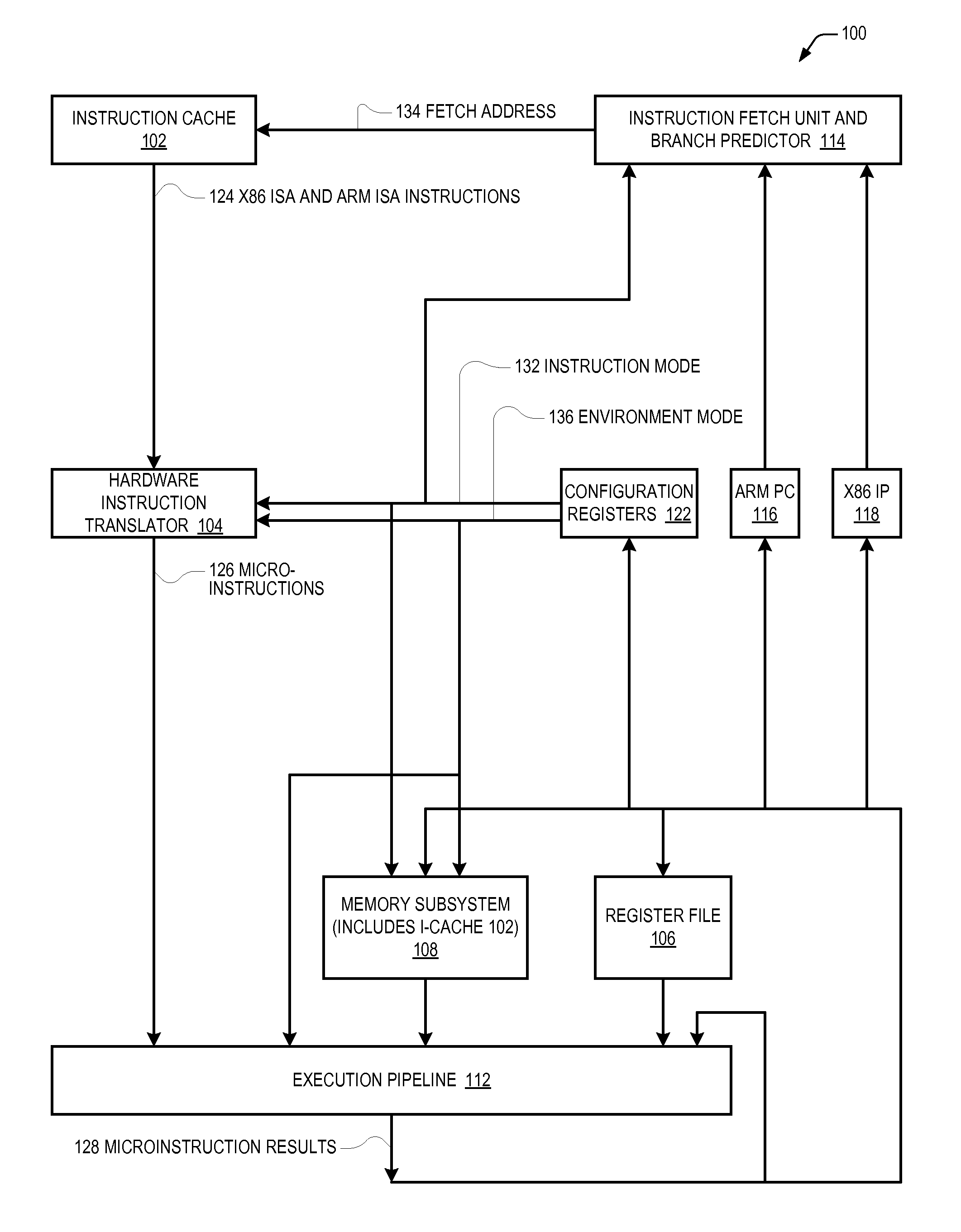
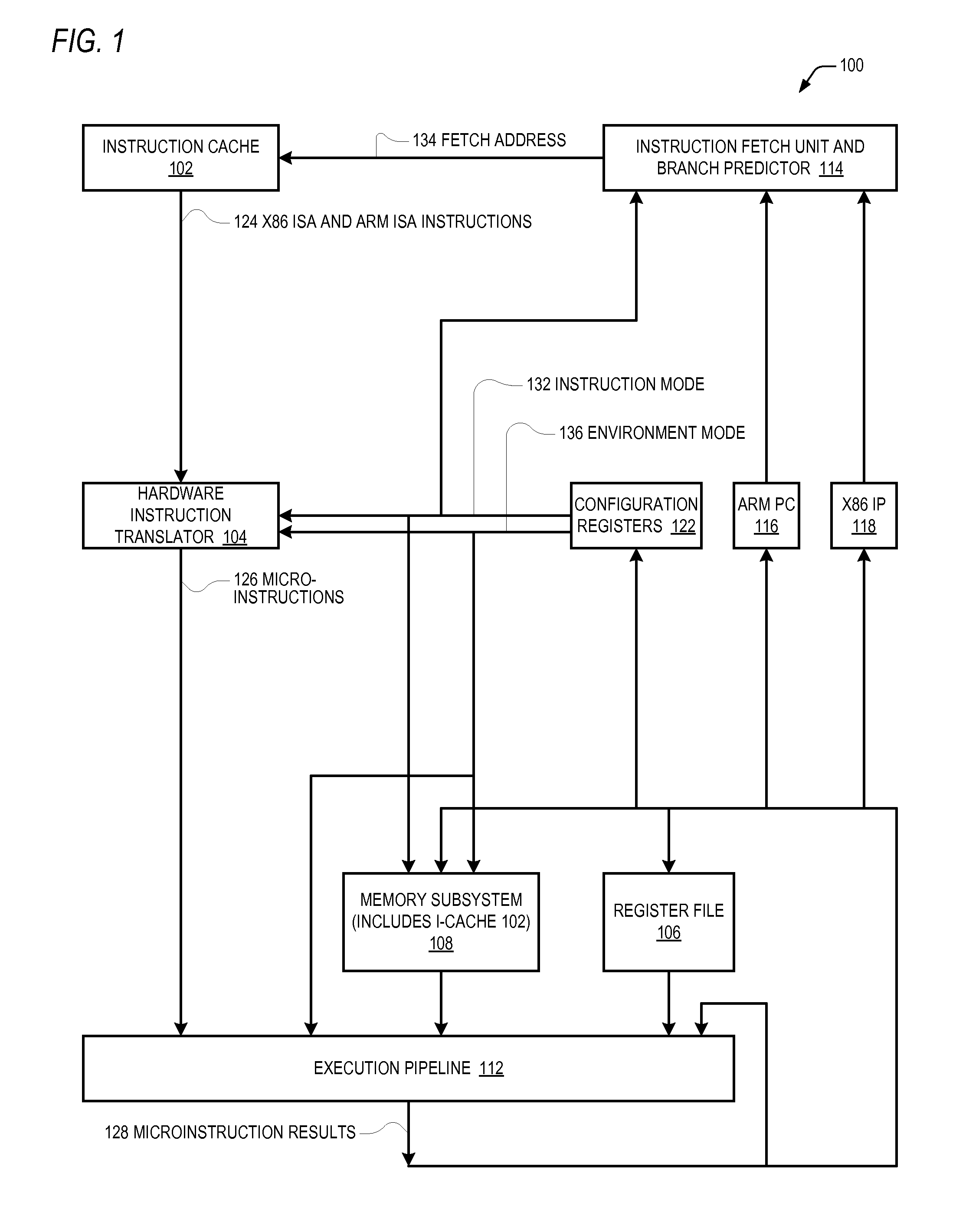
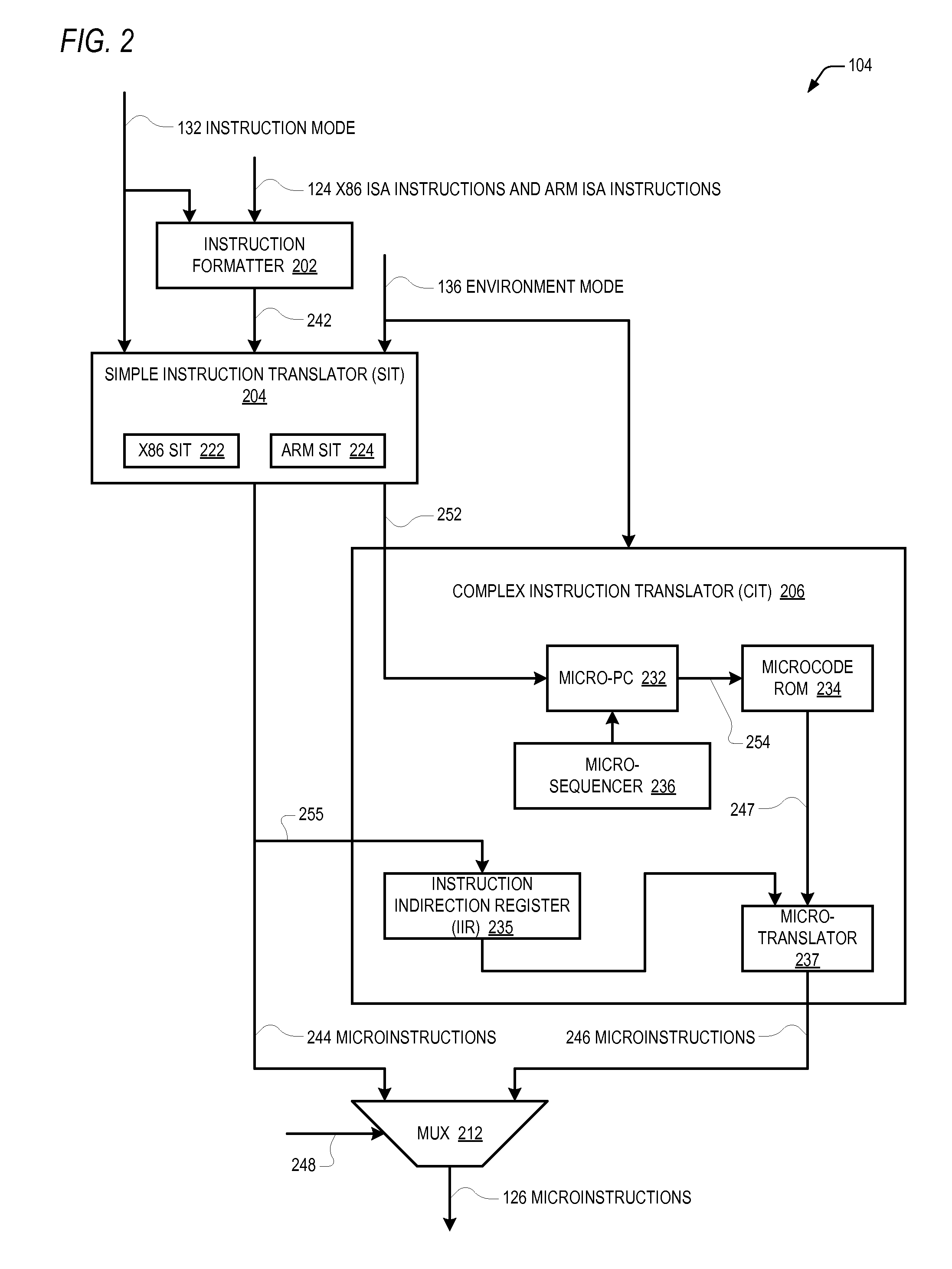
Microprocessor that performs x86 isa and arm isa machine language program instructions by hardware translation into microinstructions executed by common execution pipeline
PatentActiveUS20120260067A1
Innovation
- A microprocessor design that includes a hardware instruction translator capable of translating both x86 and ARM instruction set architecture (ISA) machine language programs into microinstructions, which are then executed by a common execution pipeline, allowing the microprocessor to run both x86 ISA and ARM ISA machine language programs.

Circuit for selecting interrupt requests in RISC microprocessors
PatentInactiveUS6694398B1
Innovation
- A hardware-based selector and control device with separate arbitrators for FIQ and IRQ requests, which selects the highest priority interrupt and generates an acknowledge vector to directly route the interrupt request to the appropriate service program, reducing the need for CPU polling.


Industry Standards and Compatibility Requirements
The semiconductor industry operates under a complex framework of standards that significantly influence the viability of ARM versus classic circuit configurations. IEEE standards, particularly IEEE 1149.1 for boundary scan testing and IEEE 1500 for embedded core testing, have evolved to accommodate both architectures, though ARM-based systems often require additional compliance layers due to their integrated nature. The International Electrotechnical Commission (IEC) standards for functional safety, including IEC 61508 and automotive-specific ISO 26262, present distinct challenges for each configuration type.
ARM architectures benefit from standardized interfaces such as AMBA (Advanced Microcontroller Bus Architecture) protocols, which facilitate system-on-chip integration and ensure compatibility across different IP blocks. These standards have become industry benchmarks, with AXI, AHB, and APB protocols widely adopted across the semiconductor ecosystem. Classic circuit configurations, conversely, rely on established standards like PCI Express, USB, and traditional memory interfaces, which offer proven interoperability but may lack the flexibility required for modern integrated solutions.
Compatibility requirements in automotive applications present particular challenges, where functional safety standards demand rigorous verification processes. ARM-based systems must demonstrate compliance with ASIL (Automotive Safety Integrity Level) requirements, often necessitating additional hardware safety mechanisms and redundancy features. Classic configurations may achieve compliance through well-established discrete component approaches, though this can result in increased system complexity and cost.
The emergence of edge computing and IoT applications has driven new standardization efforts, with organizations like the Industrial Internet Consortium and Edge Computing Consortium establishing frameworks that favor ARM's power efficiency and integration capabilities. However, legacy system compatibility remains a critical factor, particularly in industrial and aerospace applications where classic circuit configurations maintain advantages due to their proven track record and extensive certification history.
Regulatory compliance across different geographical markets adds another layer of complexity, with varying electromagnetic compatibility (EMC) requirements, export control regulations, and regional safety standards influencing architecture selection. ARM-based solutions often provide better compliance pathways for consumer and mobile applications, while classic configurations may offer clearer regulatory paths for critical infrastructure and defense applications.
ARM architectures benefit from standardized interfaces such as AMBA (Advanced Microcontroller Bus Architecture) protocols, which facilitate system-on-chip integration and ensure compatibility across different IP blocks. These standards have become industry benchmarks, with AXI, AHB, and APB protocols widely adopted across the semiconductor ecosystem. Classic circuit configurations, conversely, rely on established standards like PCI Express, USB, and traditional memory interfaces, which offer proven interoperability but may lack the flexibility required for modern integrated solutions.
Compatibility requirements in automotive applications present particular challenges, where functional safety standards demand rigorous verification processes. ARM-based systems must demonstrate compliance with ASIL (Automotive Safety Integrity Level) requirements, often necessitating additional hardware safety mechanisms and redundancy features. Classic configurations may achieve compliance through well-established discrete component approaches, though this can result in increased system complexity and cost.
The emergence of edge computing and IoT applications has driven new standardization efforts, with organizations like the Industrial Internet Consortium and Edge Computing Consortium establishing frameworks that favor ARM's power efficiency and integration capabilities. However, legacy system compatibility remains a critical factor, particularly in industrial and aerospace applications where classic circuit configurations maintain advantages due to their proven track record and extensive certification history.
Regulatory compliance across different geographical markets adds another layer of complexity, with varying electromagnetic compatibility (EMC) requirements, export control regulations, and regional safety standards influencing architecture selection. ARM-based solutions often provide better compliance pathways for consumer and mobile applications, while classic configurations may offer clearer regulatory paths for critical infrastructure and defense applications.
Performance Benchmarking and Viability Assessment
Performance benchmarking between ARM and classic circuit configurations reveals significant disparities across multiple evaluation metrics. ARM-based systems demonstrate superior power efficiency, typically consuming 30-50% less energy than traditional x86 architectures under comparable workloads. This advantage stems from ARM's RISC architecture design philosophy, which emphasizes simplified instruction sets and optimized power management capabilities.
Processing performance comparisons show nuanced results depending on application types. ARM processors excel in mobile computing, IoT applications, and battery-powered devices where thermal constraints are critical. However, classic x86 configurations maintain advantages in high-performance computing scenarios requiring complex instruction processing and legacy software compatibility. Single-threaded performance benchmarks often favor x86 architectures, while ARM demonstrates competitive multi-core efficiency.
Thermal management assessments indicate ARM's superior heat dissipation characteristics, enabling sustained performance without aggressive cooling solutions. This translates to reduced system complexity and lower operational costs in data center environments. Classic circuits require more sophisticated thermal management systems, increasing overall infrastructure investment and maintenance requirements.
Cost-effectiveness analysis reveals ARM's growing economic viability across diverse market segments. Manufacturing costs for ARM-based systems are typically 20-30% lower due to simplified die designs and reduced power delivery requirements. Total cost of ownership calculations favor ARM implementations in scenarios prioritizing energy efficiency and operational longevity.
Scalability assessments demonstrate ARM's architectural flexibility in supporting diverse performance requirements through modular core configurations. This adaptability enables manufacturers to optimize silicon area utilization and customize performance characteristics for specific applications. Classic architectures offer proven scalability in high-performance segments but face increasing challenges in power-constrained environments.
Future viability projections strongly favor ARM configurations in emerging technology domains including edge computing, autonomous systems, and sustainable computing initiatives. Market adoption trends indicate accelerating ARM penetration in traditionally x86-dominated sectors, supported by improving software ecosystem maturity and performance parity achievements in critical benchmarks.
Processing performance comparisons show nuanced results depending on application types. ARM processors excel in mobile computing, IoT applications, and battery-powered devices where thermal constraints are critical. However, classic x86 configurations maintain advantages in high-performance computing scenarios requiring complex instruction processing and legacy software compatibility. Single-threaded performance benchmarks often favor x86 architectures, while ARM demonstrates competitive multi-core efficiency.
Thermal management assessments indicate ARM's superior heat dissipation characteristics, enabling sustained performance without aggressive cooling solutions. This translates to reduced system complexity and lower operational costs in data center environments. Classic circuits require more sophisticated thermal management systems, increasing overall infrastructure investment and maintenance requirements.
Cost-effectiveness analysis reveals ARM's growing economic viability across diverse market segments. Manufacturing costs for ARM-based systems are typically 20-30% lower due to simplified die designs and reduced power delivery requirements. Total cost of ownership calculations favor ARM implementations in scenarios prioritizing energy efficiency and operational longevity.
Scalability assessments demonstrate ARM's architectural flexibility in supporting diverse performance requirements through modular core configurations. This adaptability enables manufacturers to optimize silicon area utilization and customize performance characteristics for specific applications. Classic architectures offer proven scalability in high-performance segments but face increasing challenges in power-constrained environments.
Future viability projections strongly favor ARM configurations in emerging technology domains including edge computing, autonomous systems, and sustainable computing initiatives. Market adoption trends indicate accelerating ARM penetration in traditionally x86-dominated sectors, supported by improving software ecosystem maturity and performance parity achievements in critical benchmarks.
Unlock deeper insights with PatSnap Eureka Quick Research — get a full tech report to explore trends and direct your research. Try now!
Generate Your Research Report Instantly with AI Agent
Supercharge your innovation with PatSnap Eureka AI Agent Platform!