

Comparative Studies on Conductive Polymer Composites for Different Industries
OCT 23, 20259 MIN READ
Generate Your Research Report Instantly with AI Agent
PatSnap Eureka helps you evaluate technical feasibility & market potential.
Conductive Polymer Evolution and Research Objectives
Conductive polymer composites (CPCs) have evolved significantly since their discovery in the late 1970s when Alan J. Heeger, Alan MacDiarmid, and Hideki Shirakawa demonstrated that polyacetylene could conduct electricity when doped with iodine. This groundbreaking work, which earned them the Nobel Prize in Chemistry in 2000, marked the beginning of a new era in polymer science and materials engineering.
The evolution of conductive polymers has progressed through several distinct phases. Initially, research focused primarily on understanding the fundamental mechanisms of conductivity in polymeric materials. During the 1980s and early 1990s, scientists concentrated on synthesizing new conductive polymers with improved stability and processability, including polypyrrole, polyaniline, and polythiophene derivatives.
By the late 1990s and early 2000s, the focus shifted toward creating composite materials that combined conductive polymers with traditional polymers, metals, or carbon-based materials to enhance their electrical, mechanical, and thermal properties. This period saw significant advancements in processing techniques, allowing for better control over the morphology and dispersion of conductive fillers within polymer matrices.
The past decade has witnessed remarkable progress in tailoring conductive polymer composites for specific industry applications. Researchers have developed sophisticated methods to control the interface between conductive fillers and polymer matrices, leading to composites with unprecedented combinations of electrical conductivity, mechanical strength, and environmental stability.
Current research trends indicate a growing interest in sustainable and bio-based conductive polymer composites, as well as materials that can respond to external stimuli such as temperature, pH, or mechanical stress. The integration of nanotechnology has further expanded the possibilities, with nanoscale fillers enabling conductivity at much lower loading levels while maintaining excellent mechanical properties.
The primary objectives of this technical research report are to comprehensively analyze the current state of conductive polymer composite technologies across different industrial sectors, identify industry-specific requirements and challenges, and evaluate how various formulations and processing methods address these needs. Additionally, this report aims to map the technological trajectory of conductive polymer composites, highlighting emerging trends and potential breakthrough areas that could reshape their application landscape.
Furthermore, this research seeks to establish a comparative framework for assessing the performance, cost-effectiveness, and sustainability of different conductive polymer composite solutions across industries including electronics, automotive, aerospace, healthcare, and energy. By identifying cross-industry synergies and application-specific optimizations, this report will provide valuable insights for strategic R&D planning and technology investment decisions.
The evolution of conductive polymers has progressed through several distinct phases. Initially, research focused primarily on understanding the fundamental mechanisms of conductivity in polymeric materials. During the 1980s and early 1990s, scientists concentrated on synthesizing new conductive polymers with improved stability and processability, including polypyrrole, polyaniline, and polythiophene derivatives.
By the late 1990s and early 2000s, the focus shifted toward creating composite materials that combined conductive polymers with traditional polymers, metals, or carbon-based materials to enhance their electrical, mechanical, and thermal properties. This period saw significant advancements in processing techniques, allowing for better control over the morphology and dispersion of conductive fillers within polymer matrices.
The past decade has witnessed remarkable progress in tailoring conductive polymer composites for specific industry applications. Researchers have developed sophisticated methods to control the interface between conductive fillers and polymer matrices, leading to composites with unprecedented combinations of electrical conductivity, mechanical strength, and environmental stability.
Current research trends indicate a growing interest in sustainable and bio-based conductive polymer composites, as well as materials that can respond to external stimuli such as temperature, pH, or mechanical stress. The integration of nanotechnology has further expanded the possibilities, with nanoscale fillers enabling conductivity at much lower loading levels while maintaining excellent mechanical properties.
The primary objectives of this technical research report are to comprehensively analyze the current state of conductive polymer composite technologies across different industrial sectors, identify industry-specific requirements and challenges, and evaluate how various formulations and processing methods address these needs. Additionally, this report aims to map the technological trajectory of conductive polymer composites, highlighting emerging trends and potential breakthrough areas that could reshape their application landscape.
Furthermore, this research seeks to establish a comparative framework for assessing the performance, cost-effectiveness, and sustainability of different conductive polymer composite solutions across industries including electronics, automotive, aerospace, healthcare, and energy. By identifying cross-industry synergies and application-specific optimizations, this report will provide valuable insights for strategic R&D planning and technology investment decisions.
Market Analysis of Conductive Polymer Composite Applications
The conductive polymer composites (CPCs) market has experienced significant growth over the past decade, with a global market value reaching $3.9 billion in 2022 and projected to exceed $7.5 billion by 2028, representing a compound annual growth rate of approximately 11.5%. This robust growth is primarily driven by increasing demand across multiple industries including electronics, automotive, aerospace, healthcare, and energy storage.
In the electronics sector, CPCs are witnessing substantial adoption in electromagnetic interference (EMI) shielding applications, particularly as electronic devices continue to miniaturize while operating at higher frequencies. The automotive industry represents another major market, with CPCs increasingly replacing traditional metal components to reduce vehicle weight and improve fuel efficiency, while simultaneously providing electromagnetic shielding and static discharge capabilities.
The aerospace industry demonstrates growing demand for lightweight, high-performance materials that can withstand extreme conditions while providing electrical conductivity. CPCs offer significant advantages in this sector, particularly in applications requiring protection against lightning strikes and electromagnetic interference in aircraft components.
Healthcare applications represent an emerging market segment with substantial growth potential. Conductive polymer composites are increasingly utilized in biosensors, drug delivery systems, and tissue engineering applications. The biocompatibility of certain polymer matrices combined with electrical conductivity creates unique opportunities for medical device innovation.
Regional analysis reveals that Asia-Pacific dominates the market, accounting for approximately 42% of global consumption, driven primarily by the robust electronics manufacturing sector in countries like China, Japan, South Korea, and Taiwan. North America and Europe follow with market shares of 28% and 23% respectively, with particular strength in automotive and aerospace applications.
Market segmentation by conductive filler type shows carbon-based fillers (carbon black, carbon nanotubes, graphene) leading with approximately 65% market share, followed by metallic fillers at 25% and intrinsically conductive polymers at 10%. The carbon nanotube segment specifically is experiencing the fastest growth due to superior conductivity properties at lower loading levels.
End-user analysis indicates that electronics manufacturers remain the largest consumers of CPCs, followed by automotive and aerospace industries. However, the highest growth rates are observed in emerging applications such as smart textiles, 3D printing of electronic components, and renewable energy systems, particularly in photovoltaic applications and energy storage devices.
In the electronics sector, CPCs are witnessing substantial adoption in electromagnetic interference (EMI) shielding applications, particularly as electronic devices continue to miniaturize while operating at higher frequencies. The automotive industry represents another major market, with CPCs increasingly replacing traditional metal components to reduce vehicle weight and improve fuel efficiency, while simultaneously providing electromagnetic shielding and static discharge capabilities.
The aerospace industry demonstrates growing demand for lightweight, high-performance materials that can withstand extreme conditions while providing electrical conductivity. CPCs offer significant advantages in this sector, particularly in applications requiring protection against lightning strikes and electromagnetic interference in aircraft components.
Healthcare applications represent an emerging market segment with substantial growth potential. Conductive polymer composites are increasingly utilized in biosensors, drug delivery systems, and tissue engineering applications. The biocompatibility of certain polymer matrices combined with electrical conductivity creates unique opportunities for medical device innovation.
Regional analysis reveals that Asia-Pacific dominates the market, accounting for approximately 42% of global consumption, driven primarily by the robust electronics manufacturing sector in countries like China, Japan, South Korea, and Taiwan. North America and Europe follow with market shares of 28% and 23% respectively, with particular strength in automotive and aerospace applications.
Market segmentation by conductive filler type shows carbon-based fillers (carbon black, carbon nanotubes, graphene) leading with approximately 65% market share, followed by metallic fillers at 25% and intrinsically conductive polymers at 10%. The carbon nanotube segment specifically is experiencing the fastest growth due to superior conductivity properties at lower loading levels.
End-user analysis indicates that electronics manufacturers remain the largest consumers of CPCs, followed by automotive and aerospace industries. However, the highest growth rates are observed in emerging applications such as smart textiles, 3D printing of electronic components, and renewable energy systems, particularly in photovoltaic applications and energy storage devices.
Technical Barriers and Global Development Status
Despite significant advancements in conductive polymer composite (CPC) technology, several technical barriers continue to impede widespread industrial adoption. The primary challenge remains achieving an optimal balance between electrical conductivity and mechanical properties. When conductive fillers are incorporated at concentrations sufficient for high conductivity, mechanical integrity often deteriorates, resulting in brittle materials unsuitable for many applications requiring flexibility or durability.
Processing difficulties present another significant obstacle. The high viscosity of polymer melts containing conductive fillers complicates manufacturing processes, particularly in injection molding and extrusion. This challenge becomes more pronounced when attempting to achieve uniform dispersion of nanoscale fillers such as carbon nanotubes or graphene, where agglomeration frequently occurs, creating inconsistent electrical properties throughout the material.
Long-term stability remains problematic across industries, with many CPCs exhibiting conductivity degradation over time due to environmental factors including temperature fluctuations, humidity, and UV exposure. This instability particularly affects automotive and aerospace applications where extreme operating conditions are common.
The global development landscape of conductive polymer composites shows distinct regional specialization patterns. North America leads in research and development of high-performance CPCs for aerospace and defense applications, with significant investment in carbon nanotube and graphene-based composites. The United States maintains technological leadership through strong university-industry collaboration networks and substantial government funding.
European development focuses on sustainable and environmentally friendly conductive composites, with particular emphasis on bio-based polymers and reduced environmental impact. Countries like Germany and Finland have established centers of excellence specifically targeting automotive and electronics applications with stringent environmental regulations.
The Asia-Pacific region, particularly China, South Korea, and Japan, dominates in manufacturing scale and cost-effective production methods. China has rapidly expanded its patent portfolio in this field, focusing on mass production techniques for consumer electronics applications. Japan maintains leadership in specialized high-performance composites for automotive and electronic applications, while South Korea excels in flexible electronics applications.
Emerging economies, including India and Brazil, are developing capabilities in specific application niches, with India focusing on low-cost solutions for electrical shielding and Brazil exploring natural fiber-reinforced conductive composites. These regional specializations create a complex global ecosystem where technology transfer and international collaboration are increasingly important for overcoming the persistent technical barriers in this field.
Processing difficulties present another significant obstacle. The high viscosity of polymer melts containing conductive fillers complicates manufacturing processes, particularly in injection molding and extrusion. This challenge becomes more pronounced when attempting to achieve uniform dispersion of nanoscale fillers such as carbon nanotubes or graphene, where agglomeration frequently occurs, creating inconsistent electrical properties throughout the material.
Long-term stability remains problematic across industries, with many CPCs exhibiting conductivity degradation over time due to environmental factors including temperature fluctuations, humidity, and UV exposure. This instability particularly affects automotive and aerospace applications where extreme operating conditions are common.
The global development landscape of conductive polymer composites shows distinct regional specialization patterns. North America leads in research and development of high-performance CPCs for aerospace and defense applications, with significant investment in carbon nanotube and graphene-based composites. The United States maintains technological leadership through strong university-industry collaboration networks and substantial government funding.
European development focuses on sustainable and environmentally friendly conductive composites, with particular emphasis on bio-based polymers and reduced environmental impact. Countries like Germany and Finland have established centers of excellence specifically targeting automotive and electronics applications with stringent environmental regulations.
The Asia-Pacific region, particularly China, South Korea, and Japan, dominates in manufacturing scale and cost-effective production methods. China has rapidly expanded its patent portfolio in this field, focusing on mass production techniques for consumer electronics applications. Japan maintains leadership in specialized high-performance composites for automotive and electronic applications, while South Korea excels in flexible electronics applications.
Emerging economies, including India and Brazil, are developing capabilities in specific application niches, with India focusing on low-cost solutions for electrical shielding and Brazil exploring natural fiber-reinforced conductive composites. These regional specializations create a complex global ecosystem where technology transfer and international collaboration are increasingly important for overcoming the persistent technical barriers in this field.
Current Formulation and Processing Methodologies
01 Carbon-based conductive polymer composites
Carbon-based materials such as carbon nanotubes, graphene, and carbon black are incorporated into polymer matrices to enhance electrical conductivity. These composites offer advantages including lightweight properties, flexibility, and tunable conductivity levels. The carbon fillers create conductive networks within the polymer matrix, allowing for electron transport while maintaining the mechanical properties of the base polymer.- Carbon-based conductive polymer composites: Carbon-based materials such as carbon nanotubes, graphene, and carbon black are incorporated into polymer matrices to create conductive composites. These fillers provide excellent electrical conductivity while maintaining the mechanical properties of the polymer. The resulting composites can be used in various applications including electromagnetic shielding, antistatic materials, and flexible electronics. The dispersion method and filler concentration significantly affect the final conductivity of the composite.
- Metal-polymer conductive composites: Metal particles or nanowires are incorporated into polymer matrices to create conductive composites with enhanced electrical properties. Common metals used include silver, copper, and nickel. These composites offer advantages such as high conductivity, flexibility, and processability. The metal-polymer interface plays a crucial role in determining the overall performance of the composite. Applications include printed electronics, sensors, and electromagnetic interference shielding materials.
- Intrinsically conductive polymers and their composites: Intrinsically conductive polymers such as polyaniline, polypyrrole, and PEDOT:PSS are used either alone or in combination with conventional polymers to create conductive composites. These materials conduct electricity through their conjugated backbone structure. The conductivity can be further enhanced by doping or by creating blends with other materials. These composites find applications in batteries, supercapacitors, organic electronics, and biomedical devices.
- Processing techniques for conductive polymer composites: Various processing techniques are employed to manufacture conductive polymer composites with optimized properties. These include solution blending, melt mixing, in-situ polymerization, and layer-by-layer assembly. The processing method significantly affects the dispersion of conductive fillers and the resulting electrical properties. Advanced techniques such as 3D printing and electrospinning are also used to create structured conductive composites with tailored properties for specific applications.
- Applications of conductive polymer composites: Conductive polymer composites find applications across various industries. They are used in energy storage devices such as batteries and supercapacitors, sensors and actuators, electromagnetic interference shielding, antistatic materials, and flexible electronics. Emerging applications include wearable electronics, smart textiles, and biomedical devices. The specific formulation of the composite can be tailored to meet the requirements of each application, balancing properties such as conductivity, flexibility, durability, and cost.
02 Metal-polymer conductive composites
Metal particles or nanowires are dispersed within polymer matrices to create conductive composites with enhanced electrical properties. These composites combine the processability of polymers with the high conductivity of metals. Various metals including silver, copper, and nickel are commonly used as conductive fillers. The metal content and distribution pattern significantly influence the overall conductivity and mechanical properties of the composite.Expand Specific Solutions03 Intrinsically conductive polymers in composites
Intrinsically conductive polymers such as polyaniline, polypyrrole, and PEDOT:PSS are used either as the matrix or as components in composite materials. These polymers contain conjugated double bonds that allow electron movement along the polymer backbone. When combined with other materials, they can create composites with unique electrical, optical, and mechanical properties suitable for various applications including sensors, actuators, and energy storage devices.Expand Specific Solutions04 Processing techniques for conductive polymer composites
Various processing techniques are employed to manufacture conductive polymer composites with optimized properties. These include solution blending, melt mixing, in-situ polymerization, and layer-by-layer assembly. The processing method significantly affects the dispersion of conductive fillers within the polymer matrix, which in turn determines the electrical conductivity, mechanical strength, and other properties of the final composite material.Expand Specific Solutions05 Applications of conductive polymer composites
Conductive polymer composites find applications across various industries including electronics, automotive, aerospace, and healthcare. They are used in electromagnetic interference shielding, antistatic coatings, flexible electronics, sensors, actuators, and energy storage devices. The versatility of these materials stems from their ability to combine electrical conductivity with other desirable properties such as flexibility, lightweight, corrosion resistance, and ease of processing.Expand Specific Solutions
Leading Companies and Competitive Landscape Analysis
The conductive polymer composites market is currently in a growth phase, with increasing applications across electronics, automotive, and energy sectors. The global market size is estimated to reach $10-12 billion by 2025, growing at a CAGR of 8-10%. Technologically, the field shows varying maturity levels across industries, with electronics applications being most advanced. Academic institutions like Sichuan University, Nanjing University, and Kyoto University are driving fundamental research, while companies including SABIC, DuPont, and Cabot Corporation lead commercial development. Xerox and Boeing represent end-users implementing these materials in practical applications. The competitive landscape features collaboration between academia and industry, with specialized materials companies developing proprietary formulations for specific industrial applications, creating a fragmented but innovation-rich environment.
Cabot Corp.
Technical Solution: Cabot Corporation has pioneered specialized conductive carbon black and graphene-enhanced polymer composites for multiple industries. Their technology centers on proprietary surface modification techniques that enable superior dispersion of conductive particles within polymer matrices, resulting in lower percolation thresholds (typically 2-5 wt% compared to industry standards of 8-15 wt%)[2]. Cabot's VULCAN® XC series specifically engineered for conductive applications achieves conductivity levels of 10^-3 to 10^1 S/cm while maintaining mechanical integrity. Their research has demonstrated that controlled aggregation of carbon structures creates effective conductive networks at lower loadings, preserving the host polymer's mechanical properties. For automotive applications, Cabot has developed composites with volume resistivity below 10^3 ohm-cm that maintain conductivity through multiple thermal cycles and mechanical stress[4]. Their recent innovations include hybrid filler systems combining carbon black with carbon nanotubes or graphene to achieve synergistic effects, reducing overall filler content while enhancing conductivity and mechanical performance.
Strengths: Industry-leading expertise in carbon materials; established global supply chain ensuring material availability; extensive application development support for customers. Weaknesses: Carbon black-based composites typically have limited transparency; potential for increased viscosity during processing at higher loadings; some formulations may have reduced UV stability requiring additional stabilizers.
Xerox Holdings Corp.
Technical Solution: Xerox has developed innovative conductive polymer composites specifically optimized for printing and electronic applications. Their technology platform centers on proprietary polymer blends incorporating polythiophene derivatives and silver nanostructures that can be precisely deposited using modified printing technologies. Xerox's research has yielded composites with sheet resistances as low as 10 ohms/square while maintaining flexibility and adhesion to various substrates[1]. Their patented process allows for controlled morphology of conductive networks within the polymer matrix, creating pathways for electrical conductivity while minimizing material usage. For their core printing business, Xerox has developed specialized CPCs that function as charge transport layers in imaging components, with carefully engineered work functions and carrier mobility. These materials demonstrate stable electrical properties over millions of printing cycles and resistance to ozone degradation[5]. Beyond printing, Xerox has expanded their CPC technology to flexible electronics applications, including sensors and RFID antennas, where their materials can withstand over 10,000 bending cycles while maintaining conductivity within 5% of original values.
Strengths: Exceptional expertise in formulating materials compatible with printing processes; advanced characterization capabilities for electronic materials; strong intellectual property portfolio in conductive composites. Weaknesses: Solutions primarily optimized for printing/electronics applications rather than structural uses; some formulations have limited temperature stability above 150°C; higher cost compared to conventional materials.
Key Patents and Scientific Breakthroughs
Polymer composites and methods for producing the same
PatentInactiveUS20100190924A1
Innovation
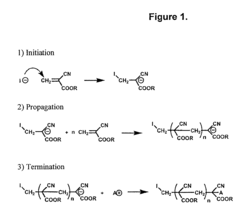
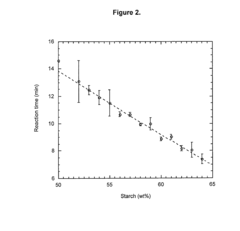
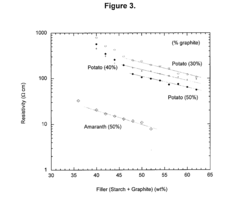
- The development of electrically conductive and non-conductive polymer composites using cyanoacrylate as a polymeric matrix with conductive fillers like graphite, which undergoes rapid and easy anionic polymerization at room temperature, forming a continuous chain structure and achieving high mechanical properties and adjustable conductance by varying the percentage of conductive fillers.
Conductive polymer composite
PatentActiveEP3172746A1
Innovation
- A conductive polymer composite comprising immiscible polymers with conductive particles predominantly dispersed in one polymer, achieving a reduced percolation threshold and eliminating the NTC effect, allowing for flexible and cost-effective heating elements with enhanced PTC performance.
Cross-Industry Performance Comparison Framework
To effectively evaluate conductive polymer composites (CPCs) across different industrial applications, a standardized cross-industry performance comparison framework is essential. This framework must account for the diverse requirements and operating conditions that CPCs encounter in various sectors, from electronics to automotive to healthcare.
The framework begins with the establishment of universal performance metrics that can be consistently applied across industries. These include electrical conductivity (measured in S/cm), mechanical strength (tensile strength, flexural modulus), thermal stability (glass transition temperature, thermal degradation onset), processing characteristics (viscosity, cure time), and long-term reliability factors (environmental resistance, aging characteristics). These core metrics provide a baseline for cross-industry evaluation.
Industry-specific weighting systems constitute the second layer of the framework. For electronics applications, electrical conductivity and EMI shielding effectiveness may carry greater importance, while automotive applications might prioritize mechanical durability and thermal stability under vibration conditions. Healthcare applications typically emphasize biocompatibility and sterilization resistance alongside electrical performance.
Testing protocols represent another critical component, with standardized methodologies adapted to simulate the specific stresses encountered in each industry. For instance, electronics-focused testing includes humidity-temperature cycling and current-carrying capacity, while automotive testing incorporates exposure to automotive fluids and temperature extremes from -40°C to 125°C.
Cost-performance ratio analysis forms an integral part of the framework, evaluating materials not merely on absolute performance but on value delivered relative to implementation costs. This includes raw material costs, processing requirements, and lifecycle considerations specific to each industry's economic models.
Application-specific benchmarking completes the framework, establishing industry-relevant reference points against which new CPC formulations can be measured. These benchmarks include both traditional materials being replaced (such as metals in EMI shielding) and competing composite solutions, providing context for performance evaluation.
The framework's implementation involves radar chart visualization techniques that enable quick multi-parameter comparison across industries, supported by numerical scoring systems that generate composite performance indices. This allows materials scientists and engineers to rapidly identify promising formulations for cross-industry applications or to optimize compositions for specific sector requirements.
The framework begins with the establishment of universal performance metrics that can be consistently applied across industries. These include electrical conductivity (measured in S/cm), mechanical strength (tensile strength, flexural modulus), thermal stability (glass transition temperature, thermal degradation onset), processing characteristics (viscosity, cure time), and long-term reliability factors (environmental resistance, aging characteristics). These core metrics provide a baseline for cross-industry evaluation.
Industry-specific weighting systems constitute the second layer of the framework. For electronics applications, electrical conductivity and EMI shielding effectiveness may carry greater importance, while automotive applications might prioritize mechanical durability and thermal stability under vibration conditions. Healthcare applications typically emphasize biocompatibility and sterilization resistance alongside electrical performance.
Testing protocols represent another critical component, with standardized methodologies adapted to simulate the specific stresses encountered in each industry. For instance, electronics-focused testing includes humidity-temperature cycling and current-carrying capacity, while automotive testing incorporates exposure to automotive fluids and temperature extremes from -40°C to 125°C.
Cost-performance ratio analysis forms an integral part of the framework, evaluating materials not merely on absolute performance but on value delivered relative to implementation costs. This includes raw material costs, processing requirements, and lifecycle considerations specific to each industry's economic models.
Application-specific benchmarking completes the framework, establishing industry-relevant reference points against which new CPC formulations can be measured. These benchmarks include both traditional materials being replaced (such as metals in EMI shielding) and competing composite solutions, providing context for performance evaluation.
The framework's implementation involves radar chart visualization techniques that enable quick multi-parameter comparison across industries, supported by numerical scoring systems that generate composite performance indices. This allows materials scientists and engineers to rapidly identify promising formulations for cross-industry applications or to optimize compositions for specific sector requirements.
Environmental and Sustainability Considerations
The environmental impact of conductive polymer composites (CPCs) has become increasingly significant as these materials gain wider industrial adoption. Life cycle assessment (LCA) studies reveal that the production of CPCs typically generates a smaller carbon footprint compared to traditional metal-based conductors, with potential reductions of 30-45% in greenhouse gas emissions. This advantage stems primarily from lower processing temperatures and reduced energy requirements during manufacturing. However, the environmental profile varies significantly depending on the specific polymer matrix and conductive fillers used, with carbon-based fillers generally offering better sustainability metrics than metal-based alternatives.
Waste management presents both challenges and opportunities for CPC technologies. The heterogeneous nature of these composites often complicates recycling processes, as separation of the conductive fillers from the polymer matrix requires specialized techniques. Recent innovations in solvent-based and mechanical recycling methods have shown promise, achieving recovery rates of up to 80% for certain CPC formulations. Additionally, biodegradable polymer matrices combined with sustainable conductive fillers represent an emerging frontier, with research demonstrating viable conductivity while reducing end-of-life environmental impact.
Regulatory frameworks worldwide are increasingly addressing the sustainability aspects of composite materials. The European Union's REACH regulations and RoHS directive have particular implications for CPCs, especially those containing heavy metals or halogenated flame retardants. Similarly, initiatives like the U.S. EPA's Sustainable Materials Management program are driving industries toward more environmentally responsible material selection. These regulatory pressures are accelerating the development of CPCs with reduced environmental hazards while maintaining performance requirements.
Energy efficiency during the operational phase represents another critical sustainability consideration. CPCs utilized in electromagnetic shielding applications can reduce electronic device energy consumption by 5-12% through improved thermal management. Similarly, in automotive applications, the lightweight nature of CPCs contributes to vehicle weight reduction, potentially improving fuel efficiency by 2-3% when replacing traditional metal components. These operational benefits must be factored into comprehensive sustainability assessments.
Water usage and pollution concerns also merit attention in CPC production. Conventional manufacturing processes may involve solvent-based systems that generate wastewater containing potentially harmful chemicals. Emerging green chemistry approaches are addressing this challenge through water-based processing methods and bio-derived solvents, reducing water pollution by up to 60% compared to traditional techniques. Additionally, the development of solvent-free processing methods, such as melt mixing and solid-state shear pulverization, offers promising pathways to minimize environmental impact while maintaining material performance.
Waste management presents both challenges and opportunities for CPC technologies. The heterogeneous nature of these composites often complicates recycling processes, as separation of the conductive fillers from the polymer matrix requires specialized techniques. Recent innovations in solvent-based and mechanical recycling methods have shown promise, achieving recovery rates of up to 80% for certain CPC formulations. Additionally, biodegradable polymer matrices combined with sustainable conductive fillers represent an emerging frontier, with research demonstrating viable conductivity while reducing end-of-life environmental impact.
Regulatory frameworks worldwide are increasingly addressing the sustainability aspects of composite materials. The European Union's REACH regulations and RoHS directive have particular implications for CPCs, especially those containing heavy metals or halogenated flame retardants. Similarly, initiatives like the U.S. EPA's Sustainable Materials Management program are driving industries toward more environmentally responsible material selection. These regulatory pressures are accelerating the development of CPCs with reduced environmental hazards while maintaining performance requirements.
Energy efficiency during the operational phase represents another critical sustainability consideration. CPCs utilized in electromagnetic shielding applications can reduce electronic device energy consumption by 5-12% through improved thermal management. Similarly, in automotive applications, the lightweight nature of CPCs contributes to vehicle weight reduction, potentially improving fuel efficiency by 2-3% when replacing traditional metal components. These operational benefits must be factored into comprehensive sustainability assessments.
Water usage and pollution concerns also merit attention in CPC production. Conventional manufacturing processes may involve solvent-based systems that generate wastewater containing potentially harmful chemicals. Emerging green chemistry approaches are addressing this challenge through water-based processing methods and bio-derived solvents, reducing water pollution by up to 60% compared to traditional techniques. Additionally, the development of solvent-free processing methods, such as melt mixing and solid-state shear pulverization, offers promising pathways to minimize environmental impact while maintaining material performance.
Unlock deeper insights with PatSnap Eureka Quick Research — get a full tech report to explore trends and direct your research. Try now!
Generate Your Research Report Instantly with AI Agent
Supercharge your innovation with PatSnap Eureka AI Agent Platform!