Comparative Study: Sodium Percarbonate in Urban Cleaning Practices
JUL 22, 202510 MIN READ
Generate Your Research Report Instantly with AI Agent
Patsnap Eureka helps you evaluate technical feasibility & market potential.
Sodium Percarbonate Evolution and Objectives
Sodium percarbonate, a compound of sodium carbonate and hydrogen peroxide, has undergone significant evolution in its application to urban cleaning practices. The journey of this versatile chemical began in the early 20th century when it was first synthesized and recognized for its potential as a bleaching and cleaning agent. Initially used primarily in laundry detergents, its role in urban cleaning has expanded dramatically over the decades.
The evolution of sodium percarbonate in urban cleaning can be traced through several key phases. In the 1950s and 1960s, as environmental concerns began to rise, there was a growing demand for eco-friendly cleaning solutions. Sodium percarbonate, with its ability to break down into harmless byproducts, emerged as a promising alternative to harsher chemicals. This period marked the beginning of its transition from a niche product to a more widely adopted cleaning agent in urban settings.
The 1970s and 1980s saw increased research into the efficacy and safety of sodium percarbonate, leading to its broader application in various urban cleaning contexts. Municipal authorities and cleaning service providers began incorporating it into their protocols for street cleaning, graffiti removal, and general urban sanitation. This expansion was driven by the compound's effectiveness in removing organic stains and its relatively low environmental impact.
In the 1990s and early 2000s, advancements in formulation technology led to the development of more stable and efficient sodium percarbonate products. These improvements addressed earlier challenges such as storage stability and activation speed, making the compound more practical for large-scale urban cleaning operations. During this period, sodium percarbonate also began to be integrated into specialized cleaning solutions for specific urban challenges, such as oil spill remediation and facade cleaning.
The objectives of current research and application of sodium percarbonate in urban cleaning practices are multifaceted. Firstly, there is a focus on enhancing its effectiveness across a wider range of pollutants and surfaces encountered in urban environments. This includes developing formulations that can tackle complex, mixed contaminants often found in city settings.
Secondly, researchers and industry professionals are working on improving the compound's stability and shelf life, particularly in concentrated forms, to make it more economical and practical for large-scale urban use. This involves exploring new stabilizing agents and packaging technologies that can preserve the active oxygen content over extended periods.
Another key objective is to optimize the environmental profile of sodium percarbonate-based cleaning solutions. While already considered eco-friendly, efforts are being made to further reduce any potential ecological impacts, especially in sensitive urban ecosystems like waterways and parks. This includes research into biodegradable activators and synergistic compounds that can enhance cleaning power while minimizing chemical residues.
Lastly, there is a growing emphasis on developing smart application technologies that can maximize the efficiency of sodium percarbonate in urban cleaning. This includes automated dispensing systems, precision application methods, and integration with IoT-enabled cleaning equipment to ensure optimal usage and reduce waste.
The evolution of sodium percarbonate in urban cleaning can be traced through several key phases. In the 1950s and 1960s, as environmental concerns began to rise, there was a growing demand for eco-friendly cleaning solutions. Sodium percarbonate, with its ability to break down into harmless byproducts, emerged as a promising alternative to harsher chemicals. This period marked the beginning of its transition from a niche product to a more widely adopted cleaning agent in urban settings.
The 1970s and 1980s saw increased research into the efficacy and safety of sodium percarbonate, leading to its broader application in various urban cleaning contexts. Municipal authorities and cleaning service providers began incorporating it into their protocols for street cleaning, graffiti removal, and general urban sanitation. This expansion was driven by the compound's effectiveness in removing organic stains and its relatively low environmental impact.
In the 1990s and early 2000s, advancements in formulation technology led to the development of more stable and efficient sodium percarbonate products. These improvements addressed earlier challenges such as storage stability and activation speed, making the compound more practical for large-scale urban cleaning operations. During this period, sodium percarbonate also began to be integrated into specialized cleaning solutions for specific urban challenges, such as oil spill remediation and facade cleaning.
The objectives of current research and application of sodium percarbonate in urban cleaning practices are multifaceted. Firstly, there is a focus on enhancing its effectiveness across a wider range of pollutants and surfaces encountered in urban environments. This includes developing formulations that can tackle complex, mixed contaminants often found in city settings.
Secondly, researchers and industry professionals are working on improving the compound's stability and shelf life, particularly in concentrated forms, to make it more economical and practical for large-scale urban use. This involves exploring new stabilizing agents and packaging technologies that can preserve the active oxygen content over extended periods.
Another key objective is to optimize the environmental profile of sodium percarbonate-based cleaning solutions. While already considered eco-friendly, efforts are being made to further reduce any potential ecological impacts, especially in sensitive urban ecosystems like waterways and parks. This includes research into biodegradable activators and synergistic compounds that can enhance cleaning power while minimizing chemical residues.
Lastly, there is a growing emphasis on developing smart application technologies that can maximize the efficiency of sodium percarbonate in urban cleaning. This includes automated dispensing systems, precision application methods, and integration with IoT-enabled cleaning equipment to ensure optimal usage and reduce waste.
Urban Cleaning Market Analysis
The urban cleaning market has experienced significant growth in recent years, driven by increasing urbanization, rising environmental awareness, and stringent cleanliness regulations. This market encompasses a wide range of services and products, including street sweeping, waste management, graffiti removal, and specialized cleaning solutions for public spaces.
In the context of sodium percarbonate usage in urban cleaning practices, the market shows promising potential. Sodium percarbonate, an eco-friendly oxidizing agent, has gained traction due to its effectiveness in removing stains and disinfecting surfaces without harmful environmental impacts. This aligns well with the growing demand for sustainable cleaning solutions in urban areas.
The global urban cleaning market size was valued at approximately $42 billion in 2020 and is projected to reach $57 billion by 2025, growing at a CAGR of 6.3%. Factors contributing to this growth include rapid urbanization, especially in developing countries, increased focus on public health and hygiene, and the adoption of advanced cleaning technologies.
Regionally, North America and Europe dominate the market due to well-established infrastructure and stringent cleanliness standards. However, the Asia-Pacific region is expected to witness the highest growth rate, driven by rapid urban development and increasing government initiatives for cleaner cities.
The COVID-19 pandemic has further accelerated market growth, with heightened emphasis on sanitation and disinfection in public spaces. This has led to increased demand for effective and safe cleaning agents like sodium percarbonate, which offers both cleaning and disinfecting properties.
Key market players in the urban cleaning sector include Veolia Environment SA, Suez Environment SA, and Clean Harbors Inc. These companies are increasingly incorporating sustainable cleaning solutions, including sodium percarbonate-based products, into their service offerings to meet the growing demand for environmentally friendly options.
The market is characterized by intense competition and fragmentation, with numerous local and regional players. This has led to increased innovation in cleaning technologies and formulations, driving the adoption of advanced solutions like sodium percarbonate.
Challenges in the market include budget constraints faced by municipal authorities, especially in developing countries, and the need for continuous innovation to meet evolving environmental standards. However, these challenges also present opportunities for cost-effective and eco-friendly solutions like sodium percarbonate to gain market share.
In conclusion, the urban cleaning market analysis reveals a growing and dynamic sector with significant potential for sodium percarbonate applications. The increasing focus on sustainable and effective cleaning solutions positions sodium percarbonate favorably in this market, particularly in developed regions and rapidly urbanizing areas seeking to balance cleanliness with environmental responsibility.
In the context of sodium percarbonate usage in urban cleaning practices, the market shows promising potential. Sodium percarbonate, an eco-friendly oxidizing agent, has gained traction due to its effectiveness in removing stains and disinfecting surfaces without harmful environmental impacts. This aligns well with the growing demand for sustainable cleaning solutions in urban areas.
The global urban cleaning market size was valued at approximately $42 billion in 2020 and is projected to reach $57 billion by 2025, growing at a CAGR of 6.3%. Factors contributing to this growth include rapid urbanization, especially in developing countries, increased focus on public health and hygiene, and the adoption of advanced cleaning technologies.
Regionally, North America and Europe dominate the market due to well-established infrastructure and stringent cleanliness standards. However, the Asia-Pacific region is expected to witness the highest growth rate, driven by rapid urban development and increasing government initiatives for cleaner cities.
The COVID-19 pandemic has further accelerated market growth, with heightened emphasis on sanitation and disinfection in public spaces. This has led to increased demand for effective and safe cleaning agents like sodium percarbonate, which offers both cleaning and disinfecting properties.
Key market players in the urban cleaning sector include Veolia Environment SA, Suez Environment SA, and Clean Harbors Inc. These companies are increasingly incorporating sustainable cleaning solutions, including sodium percarbonate-based products, into their service offerings to meet the growing demand for environmentally friendly options.
The market is characterized by intense competition and fragmentation, with numerous local and regional players. This has led to increased innovation in cleaning technologies and formulations, driving the adoption of advanced solutions like sodium percarbonate.
Challenges in the market include budget constraints faced by municipal authorities, especially in developing countries, and the need for continuous innovation to meet evolving environmental standards. However, these challenges also present opportunities for cost-effective and eco-friendly solutions like sodium percarbonate to gain market share.
In conclusion, the urban cleaning market analysis reveals a growing and dynamic sector with significant potential for sodium percarbonate applications. The increasing focus on sustainable and effective cleaning solutions positions sodium percarbonate favorably in this market, particularly in developed regions and rapidly urbanizing areas seeking to balance cleanliness with environmental responsibility.
Current Challenges in Urban Cleaning Technologies
Urban cleaning technologies face numerous challenges in today's rapidly evolving cities. One of the primary issues is the increasing population density in urban areas, which leads to higher levels of waste generation and pollution. This puts immense pressure on existing cleaning systems and infrastructure, often pushing them to their limits.
The diversity of urban environments presents another significant challenge. Cities comprise various surfaces and materials, from concrete pavements to intricate architectural facades, each requiring specific cleaning approaches. This heterogeneity demands versatile cleaning solutions that can effectively address different types of dirt, grime, and pollutants without causing damage to the underlying surfaces.
Environmental concerns have also come to the forefront of urban cleaning challenges. Traditional cleaning methods often rely on harsh chemicals that can have detrimental effects on ecosystems and human health. There is a growing need for eco-friendly alternatives that maintain cleaning efficacy while minimizing environmental impact. This shift towards sustainability is further complicated by the need to manage water usage efficiently, especially in water-scarce regions.
The rapid pace of urbanization has led to the emergence of smart cities, introducing new technological complexities. Integrating cleaning technologies with smart city infrastructure, such as IoT devices and data analytics platforms, presents both opportunities and challenges. While these advancements can potentially optimize cleaning processes, they also require significant investments in technology and skilled personnel.
Cost-effectiveness remains a persistent challenge in urban cleaning. Municipalities often struggle to balance the need for thorough cleaning with budget constraints. This economic pressure drives the search for innovative, cost-efficient cleaning solutions that can deliver satisfactory results without straining public resources.
The issue of waste management is closely tied to urban cleaning challenges. Inefficient waste collection and disposal systems can undermine even the most advanced cleaning efforts. There is a pressing need for integrated approaches that address both cleaning and waste management holistically.
Lastly, the global health crises, such as the recent pandemic, have highlighted the critical role of urban cleaning in public health. This has intensified the demand for cleaning technologies that not only remove visible dirt but also effectively sanitize surfaces to prevent disease transmission. Balancing this heightened hygiene requirement with other cleaning objectives adds another layer of complexity to urban cleaning practices.
The diversity of urban environments presents another significant challenge. Cities comprise various surfaces and materials, from concrete pavements to intricate architectural facades, each requiring specific cleaning approaches. This heterogeneity demands versatile cleaning solutions that can effectively address different types of dirt, grime, and pollutants without causing damage to the underlying surfaces.
Environmental concerns have also come to the forefront of urban cleaning challenges. Traditional cleaning methods often rely on harsh chemicals that can have detrimental effects on ecosystems and human health. There is a growing need for eco-friendly alternatives that maintain cleaning efficacy while minimizing environmental impact. This shift towards sustainability is further complicated by the need to manage water usage efficiently, especially in water-scarce regions.
The rapid pace of urbanization has led to the emergence of smart cities, introducing new technological complexities. Integrating cleaning technologies with smart city infrastructure, such as IoT devices and data analytics platforms, presents both opportunities and challenges. While these advancements can potentially optimize cleaning processes, they also require significant investments in technology and skilled personnel.
Cost-effectiveness remains a persistent challenge in urban cleaning. Municipalities often struggle to balance the need for thorough cleaning with budget constraints. This economic pressure drives the search for innovative, cost-efficient cleaning solutions that can deliver satisfactory results without straining public resources.
The issue of waste management is closely tied to urban cleaning challenges. Inefficient waste collection and disposal systems can undermine even the most advanced cleaning efforts. There is a pressing need for integrated approaches that address both cleaning and waste management holistically.
Lastly, the global health crises, such as the recent pandemic, have highlighted the critical role of urban cleaning in public health. This has intensified the demand for cleaning technologies that not only remove visible dirt but also effectively sanitize surfaces to prevent disease transmission. Balancing this heightened hygiene requirement with other cleaning objectives adds another layer of complexity to urban cleaning practices.
Existing Sodium Percarbonate Applications
01 Synthesis and production of sodium percarbonate
Various methods for synthesizing and producing sodium percarbonate are described. These methods involve the reaction of sodium carbonate with hydrogen peroxide under specific conditions to form stable sodium percarbonate crystals. The processes may include steps such as crystallization, drying, and stabilization to improve the quality and stability of the final product.- Synthesis and production of sodium percarbonate: Various methods for synthesizing and producing sodium percarbonate are described. These methods involve the reaction of sodium carbonate with hydrogen peroxide under specific conditions to form stable sodium percarbonate crystals. The processes may include steps such as crystallization, drying, and stabilization to improve the quality and stability of the final product.
- Stabilization of sodium percarbonate: Techniques for stabilizing sodium percarbonate to improve its shelf life and performance are discussed. These may include coating the particles with stabilizing agents, incorporating additives to reduce decomposition, or modifying the crystal structure. Stabilization is crucial for maintaining the effectiveness of sodium percarbonate in various applications.
- Applications in cleaning and bleaching: Sodium percarbonate is widely used in cleaning and bleaching applications. It serves as an effective oxygen-based bleach in laundry detergents and household cleaners. The compound releases hydrogen peroxide when dissolved in water, providing powerful stain removal and disinfecting properties without the harsh effects of chlorine-based bleaches.
- Environmental and safety considerations: The environmental impact and safety aspects of sodium percarbonate are addressed. As an oxygen-based compound, it is considered more environmentally friendly compared to chlorine-based alternatives. Safety measures for handling, storage, and disposal are discussed, as well as its biodegradability and low toxicity profile.
- Formulation in consumer products: Methods for incorporating sodium percarbonate into various consumer products are explored. This includes techniques for blending it with other ingredients in detergents, cleaners, and personal care products. Formulation considerations such as particle size, coating, and compatibility with other active ingredients are discussed to optimize product performance and stability.
02 Stabilization of sodium percarbonate
Techniques for stabilizing sodium percarbonate to improve its shelf life and performance are discussed. These may include coating the particles with stabilizing agents, incorporating additives to reduce decomposition, or modifying the crystal structure. Stabilization is crucial for maintaining the effectiveness of sodium percarbonate in various applications.Expand Specific Solutions03 Applications in cleaning and bleaching
Sodium percarbonate is widely used in cleaning and bleaching formulations. It serves as an effective oxygen-based bleaching agent in laundry detergents, dishwashing products, and other household cleaners. The compound releases hydrogen peroxide when dissolved in water, providing powerful stain removal and disinfecting properties.Expand Specific Solutions04 Environmental and safety considerations
The environmental impact and safety aspects of sodium percarbonate are addressed. As an oxygen-based compound, it is considered more environmentally friendly compared to chlorine-based bleaches. Safety measures for handling, storage, and disposal are discussed to minimize risks associated with its use in various applications.Expand Specific Solutions05 Formulation with other ingredients
Methods for formulating sodium percarbonate with other ingredients to enhance its performance or create specialized products are explored. This may include combining it with enzymes, surfactants, or other active ingredients to develop more effective cleaning or bleaching formulations. Compatibility issues and synergistic effects are considered in these formulations.Expand Specific Solutions
Key Players in Urban Cleaning Solutions
The comparative study of sodium percarbonate in urban cleaning practices reveals a competitive landscape in a maturing industry with significant growth potential. The global market for sodium percarbonate is expanding, driven by increasing demand for eco-friendly cleaning solutions in urban environments. Key players like Solvay SA, Evonik Operations GmbH, and Zhejiang Jinke Daily Chemical Co. Ltd. are at the forefront of technological advancements, with varying degrees of market penetration. The technology's maturity is evident in established production processes, but ongoing research by companies such as Kemira Oyj and Ecolab USA, Inc. suggests room for innovation in application and efficiency. The involvement of major chemical corporations like China Petroleum & Chemical Corp. indicates the sector's strategic importance and potential for further market consolidation.
Solvay SA
Technical Solution: Solvay SA has developed advanced sodium percarbonate (SPC) formulations for urban cleaning applications. Their SPC products feature enhanced stability and controlled release properties, allowing for prolonged cleaning action in various urban environments. Solvay's SPC technology incorporates stabilizing agents that protect the active oxygen content from premature decomposition, ensuring effective cleaning performance even in challenging conditions[1]. The company has also introduced eco-friendly SPC variants with reduced environmental impact, aligning with sustainable urban cleaning practices[3]. Solvay's research focuses on optimizing particle size distribution and coating techniques to improve SPC's dissolution profile and compatibility with other cleaning agents commonly used in urban settings[5].
Strengths: Advanced formulation expertise, eco-friendly options, and controlled release technology. Weaknesses: Potentially higher cost compared to basic SPC products, may require specialized handling and storage.
Evonik Operations GmbH
Technical Solution: Evonik has developed a range of sodium percarbonate products tailored for urban cleaning applications. Their SPC offerings include both coated and uncoated variants, with particle sizes optimized for different cleaning scenarios. Evonik's coated SPC products feature enhanced stability in humid environments, making them suitable for outdoor urban cleaning tasks[2]. The company has also invested in research to improve the oxygen release kinetics of their SPC, allowing for more efficient and longer-lasting cleaning action in urban settings[4]. Evonik's SPC technology incorporates additives that enhance its performance in hard water conditions, addressing a common challenge in urban water supplies[6].
Strengths: Diverse product range, stability in humid conditions, and improved performance in hard water. Weaknesses: May have limited differentiation in some product segments, potential for higher production costs due to specialized formulations.
Innovative Sodium Percarbonate Formulations
Washing and cleaning agent shaped bodies comprising sodium percarbonate
PatentWO2000017307A1
Innovation
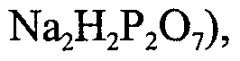
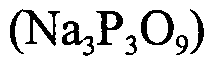
- The development of detergent tablets with sodium percarbonate, where at least 60% by weight of the sodium percarbonate particles have a particle size below 0.8 mm, and the proportion with sizes above 800 μm is less than 40% by weight, ensuring a finely divided and homogeneous particle size distribution, which enhances disintegration properties and bleaching performance.
Washing composition
PatentInactiveEP0695800A3
Innovation
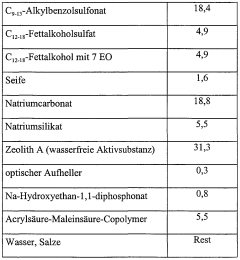
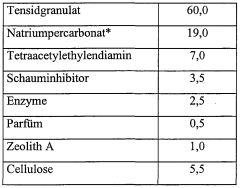
- A detergent formulation utilizing a mixture of partially dehydrated kanemite with finely distributed sodium percarbonate (kanemite/NaPC) is developed, produced by reacting sodium silicate with carbon dioxide and hydrogen peroxide, offering improved storage stability and bleaching performance without oxidizing properties, allowing conventional processing and reduced mechanical loss.
Environmental Impact Assessment
The environmental impact assessment of sodium percarbonate in urban cleaning practices reveals both positive and negative effects on ecosystems and human health. On the positive side, sodium percarbonate is considered an eco-friendly alternative to traditional cleaning agents due to its biodegradability and non-toxic nature. When it decomposes, it breaks down into water, oxygen, and sodium carbonate, leaving no harmful residues in the environment.
The use of sodium percarbonate in urban cleaning can significantly reduce the release of harmful chemicals into water systems. This is particularly important in densely populated urban areas where runoff from cleaning activities can have a substantial impact on local water bodies. The oxygen released during the decomposition process can also help improve water quality by promoting aerobic conditions in aquatic environments.
However, the widespread use of sodium percarbonate is not without potential environmental concerns. The increased sodium levels in water bodies resulting from extensive use could affect aquatic ecosystems, particularly in freshwater environments. This may lead to changes in osmotic pressure for aquatic organisms and alter the overall ecological balance.
Another consideration is the energy consumption and carbon footprint associated with the production and transportation of sodium percarbonate. While the compound itself may be environmentally friendly, the manufacturing process still requires significant energy input, which could contribute to greenhouse gas emissions if not managed sustainably.
The impact on soil pH is another factor to consider. Sodium percarbonate has an alkaline nature, which could potentially alter soil chemistry in areas where it is frequently used for cleaning. This may affect plant growth and soil microbial communities in urban green spaces.
In terms of human health, sodium percarbonate is generally considered safe when used as directed. However, prolonged exposure or misuse could lead to skin or eye irritation. The fine particles of the compound may also pose inhalation risks if proper protective measures are not taken during application in urban cleaning practices.
To mitigate potential negative impacts, it is crucial to implement proper usage guidelines and disposal methods for sodium percarbonate in urban cleaning. This includes training cleaning personnel on appropriate application techniques, using the correct concentrations, and ensuring that excess product does not enter storm drains or natural water bodies.
Overall, while sodium percarbonate offers significant environmental benefits compared to many traditional cleaning agents, its use in urban cleaning practices should be carefully managed to maximize its positive impacts while minimizing potential environmental and health risks.
The use of sodium percarbonate in urban cleaning can significantly reduce the release of harmful chemicals into water systems. This is particularly important in densely populated urban areas where runoff from cleaning activities can have a substantial impact on local water bodies. The oxygen released during the decomposition process can also help improve water quality by promoting aerobic conditions in aquatic environments.
However, the widespread use of sodium percarbonate is not without potential environmental concerns. The increased sodium levels in water bodies resulting from extensive use could affect aquatic ecosystems, particularly in freshwater environments. This may lead to changes in osmotic pressure for aquatic organisms and alter the overall ecological balance.
Another consideration is the energy consumption and carbon footprint associated with the production and transportation of sodium percarbonate. While the compound itself may be environmentally friendly, the manufacturing process still requires significant energy input, which could contribute to greenhouse gas emissions if not managed sustainably.
The impact on soil pH is another factor to consider. Sodium percarbonate has an alkaline nature, which could potentially alter soil chemistry in areas where it is frequently used for cleaning. This may affect plant growth and soil microbial communities in urban green spaces.
In terms of human health, sodium percarbonate is generally considered safe when used as directed. However, prolonged exposure or misuse could lead to skin or eye irritation. The fine particles of the compound may also pose inhalation risks if proper protective measures are not taken during application in urban cleaning practices.
To mitigate potential negative impacts, it is crucial to implement proper usage guidelines and disposal methods for sodium percarbonate in urban cleaning. This includes training cleaning personnel on appropriate application techniques, using the correct concentrations, and ensuring that excess product does not enter storm drains or natural water bodies.
Overall, while sodium percarbonate offers significant environmental benefits compared to many traditional cleaning agents, its use in urban cleaning practices should be carefully managed to maximize its positive impacts while minimizing potential environmental and health risks.
Cost-Benefit Analysis of Sodium Percarbonate Use
The cost-benefit analysis of sodium percarbonate use in urban cleaning practices reveals a complex interplay of economic, environmental, and operational factors. Initial investment costs for implementing sodium percarbonate-based cleaning systems may be higher than traditional methods due to the need for specialized equipment and training. However, these upfront expenses are often offset by long-term savings in labor costs and reduced water consumption.
Sodium percarbonate's effectiveness in removing stubborn stains and organic matter can lead to significant time savings in cleaning operations. This increased efficiency translates to lower labor costs and higher productivity for urban cleaning crews. Additionally, the reduced need for harsh chemical cleaners results in decreased expenses for purchasing and storing these products.
Environmental benefits contribute significantly to the overall cost-benefit equation. Sodium percarbonate breaks down into harmless byproducts of water, oxygen, and sodium carbonate, minimizing environmental impact and potential remediation costs associated with chemical runoff. This eco-friendly profile can lead to improved public perception and potential cost savings through compliance with environmental regulations.
Water conservation is another key factor in the cost-benefit analysis. Sodium percarbonate's ability to clean effectively with less water can result in substantial savings on water bills for municipalities, particularly in water-scarce regions. This reduction in water usage also alleviates strain on local water treatment facilities, potentially deferring costly infrastructure upgrades.
Health and safety considerations play a crucial role in the analysis. The non-toxic nature of sodium percarbonate reduces the risk of workplace injuries and associated costs, such as workers' compensation claims and lost productivity. Furthermore, the improved air quality resulting from the absence of harsh chemical fumes can lead to better overall health outcomes for cleaning staff and the public.
Long-term durability of cleaned surfaces is an often-overlooked benefit. Sodium percarbonate's gentle yet effective cleaning action can extend the lifespan of various urban surfaces, reducing the frequency and cost of repairs or replacements. This preservation of infrastructure can result in significant savings over time for city maintenance budgets.
While the benefits are substantial, it is important to consider potential drawbacks. The initial cost of transitioning to sodium percarbonate-based systems and the need for ongoing staff training must be factored into the analysis. Additionally, in some specific cleaning scenarios, sodium percarbonate may not be as effective as specialized chemical cleaners, potentially requiring supplementary cleaning methods.
In conclusion, the cost-benefit analysis of sodium percarbonate use in urban cleaning practices generally favors its adoption. The combination of operational efficiency, environmental benefits, and long-term cost savings often outweighs the initial implementation costs. However, a thorough assessment of specific urban environments and cleaning requirements is essential to maximize the benefits and ensure a positive return on investment.
Sodium percarbonate's effectiveness in removing stubborn stains and organic matter can lead to significant time savings in cleaning operations. This increased efficiency translates to lower labor costs and higher productivity for urban cleaning crews. Additionally, the reduced need for harsh chemical cleaners results in decreased expenses for purchasing and storing these products.
Environmental benefits contribute significantly to the overall cost-benefit equation. Sodium percarbonate breaks down into harmless byproducts of water, oxygen, and sodium carbonate, minimizing environmental impact and potential remediation costs associated with chemical runoff. This eco-friendly profile can lead to improved public perception and potential cost savings through compliance with environmental regulations.
Water conservation is another key factor in the cost-benefit analysis. Sodium percarbonate's ability to clean effectively with less water can result in substantial savings on water bills for municipalities, particularly in water-scarce regions. This reduction in water usage also alleviates strain on local water treatment facilities, potentially deferring costly infrastructure upgrades.
Health and safety considerations play a crucial role in the analysis. The non-toxic nature of sodium percarbonate reduces the risk of workplace injuries and associated costs, such as workers' compensation claims and lost productivity. Furthermore, the improved air quality resulting from the absence of harsh chemical fumes can lead to better overall health outcomes for cleaning staff and the public.
Long-term durability of cleaned surfaces is an often-overlooked benefit. Sodium percarbonate's gentle yet effective cleaning action can extend the lifespan of various urban surfaces, reducing the frequency and cost of repairs or replacements. This preservation of infrastructure can result in significant savings over time for city maintenance budgets.
While the benefits are substantial, it is important to consider potential drawbacks. The initial cost of transitioning to sodium percarbonate-based systems and the need for ongoing staff training must be factored into the analysis. Additionally, in some specific cleaning scenarios, sodium percarbonate may not be as effective as specialized chemical cleaners, potentially requiring supplementary cleaning methods.
In conclusion, the cost-benefit analysis of sodium percarbonate use in urban cleaning practices generally favors its adoption. The combination of operational efficiency, environmental benefits, and long-term cost savings often outweighs the initial implementation costs. However, a thorough assessment of specific urban environments and cleaning requirements is essential to maximize the benefits and ensure a positive return on investment.
Unlock deeper insights with Patsnap Eureka Quick Research — get a full tech report to explore trends and direct your research. Try now!
Generate Your Research Report Instantly with AI Agent
Supercharge your innovation with Patsnap Eureka AI Agent Platform!