Compare Economical PCM vs High-Performance Options
FEB 26, 20269 MIN READ
Generate Your Research Report Instantly with AI Agent
Patsnap Eureka helps you evaluate technical feasibility & market potential.
PCM Technology Background and Performance Goals
Phase Change Materials (PCM) represent a revolutionary thermal energy storage technology that leverages the latent heat absorption and release during phase transitions, primarily between solid and liquid states. This technology has evolved from basic paraffin-based applications in the 1940s to sophisticated engineered materials capable of precise thermal management across diverse temperature ranges. The fundamental principle relies on materials absorbing substantial amounts of thermal energy during melting and releasing equivalent energy during solidification, maintaining relatively constant temperatures throughout the phase transition process.
The historical development of PCM technology spans several decades, beginning with simple organic compounds and progressing to advanced inorganic salts, salt hydrates, and hybrid formulations. Early applications focused on passive solar heating systems and building thermal regulation. The technology gained significant momentum in the 1980s with NASA's space program requirements, driving innovations in encapsulation techniques and thermal cycling stability. Recent decades have witnessed exponential growth in PCM applications across electronics cooling, automotive thermal management, renewable energy storage, and smart building systems.
Contemporary PCM technology encompasses three primary categories: organic PCMs including paraffins and fatty acids, inorganic PCMs comprising salt hydrates and metallic alloys, and eutectic mixtures combining multiple compounds. Each category presents distinct advantages and limitations regarding thermal properties, cost-effectiveness, and application suitability. Organic PCMs typically offer excellent thermal cycling stability and chemical compatibility but exhibit lower thermal conductivity. Inorganic options provide higher energy density and thermal conductivity while presenting challenges in corrosion resistance and phase separation.
The performance objectives for modern PCM systems center on achieving optimal balance between thermal efficiency, economic viability, and operational reliability. Key performance metrics include latent heat capacity ranging from 100-300 kJ/kg, melting temperatures precisely matched to application requirements, thermal conductivity enhancement through additives or structural modifications, and cycling stability exceeding 10,000 charge-discharge cycles without significant property degradation.
Current technological goals emphasize developing cost-effective formulations that maintain high-performance characteristics while reducing material costs by 30-50% compared to premium options. This involves optimizing phase change temperatures, enhancing heat transfer rates through nano-additives, improving encapsulation durability, and establishing scalable manufacturing processes. The industry increasingly focuses on creating application-specific PCM solutions that deliver targeted performance metrics while maintaining economic competitiveness in mass-market applications.
The historical development of PCM technology spans several decades, beginning with simple organic compounds and progressing to advanced inorganic salts, salt hydrates, and hybrid formulations. Early applications focused on passive solar heating systems and building thermal regulation. The technology gained significant momentum in the 1980s with NASA's space program requirements, driving innovations in encapsulation techniques and thermal cycling stability. Recent decades have witnessed exponential growth in PCM applications across electronics cooling, automotive thermal management, renewable energy storage, and smart building systems.
Contemporary PCM technology encompasses three primary categories: organic PCMs including paraffins and fatty acids, inorganic PCMs comprising salt hydrates and metallic alloys, and eutectic mixtures combining multiple compounds. Each category presents distinct advantages and limitations regarding thermal properties, cost-effectiveness, and application suitability. Organic PCMs typically offer excellent thermal cycling stability and chemical compatibility but exhibit lower thermal conductivity. Inorganic options provide higher energy density and thermal conductivity while presenting challenges in corrosion resistance and phase separation.
The performance objectives for modern PCM systems center on achieving optimal balance between thermal efficiency, economic viability, and operational reliability. Key performance metrics include latent heat capacity ranging from 100-300 kJ/kg, melting temperatures precisely matched to application requirements, thermal conductivity enhancement through additives or structural modifications, and cycling stability exceeding 10,000 charge-discharge cycles without significant property degradation.
Current technological goals emphasize developing cost-effective formulations that maintain high-performance characteristics while reducing material costs by 30-50% compared to premium options. This involves optimizing phase change temperatures, enhancing heat transfer rates through nano-additives, improving encapsulation durability, and establishing scalable manufacturing processes. The industry increasingly focuses on creating application-specific PCM solutions that deliver targeted performance metrics while maintaining economic competitiveness in mass-market applications.
Market Demand Analysis for PCM Solutions
The global Phase Change Materials market demonstrates significant growth momentum driven by increasing energy efficiency requirements and thermal management challenges across multiple industries. Building and construction sectors represent the largest demand segment, where PCM solutions address growing needs for sustainable temperature regulation and reduced energy consumption in both residential and commercial applications.
Automotive industry demand continues expanding as electric vehicle manufacturers seek advanced thermal management solutions for battery systems. The critical need to maintain optimal operating temperatures for lithium-ion batteries creates substantial market opportunities for both economical and high-performance PCM variants. Traditional automotive applications also drive demand for cost-effective solutions in cabin comfort systems.
Electronics and telecommunications sectors exhibit strong preference for high-performance PCM options due to stringent thermal requirements in data centers, 5G infrastructure, and consumer electronics. These applications typically prioritize thermal conductivity and cycling stability over cost considerations, creating distinct market segments with different value propositions.
Industrial applications present diverse demand patterns, with process industries favoring economical solutions for waste heat recovery and energy storage, while aerospace and defense sectors require premium performance characteristics. Cold chain logistics and pharmaceutical storage applications represent emerging demand areas where reliability and performance specifications vary significantly based on specific use cases.
Regional demand patterns show developed markets emphasizing high-performance solutions driven by stringent energy efficiency regulations and advanced manufacturing requirements. Emerging economies demonstrate stronger preference for economical PCM options, focusing on basic thermal management needs in construction and industrial applications.
Market segmentation reveals distinct customer preferences based on application criticality, with mission-critical applications justifying premium pricing for enhanced performance characteristics. Cost-sensitive applications drive volume demand for economical alternatives, creating opportunities for manufacturers to develop differentiated product portfolios addressing diverse market needs.
The growing emphasis on sustainability and carbon footprint reduction across industries creates additional demand drivers, with customers increasingly evaluating PCM solutions based on lifecycle environmental impact alongside traditional performance and cost metrics.
Automotive industry demand continues expanding as electric vehicle manufacturers seek advanced thermal management solutions for battery systems. The critical need to maintain optimal operating temperatures for lithium-ion batteries creates substantial market opportunities for both economical and high-performance PCM variants. Traditional automotive applications also drive demand for cost-effective solutions in cabin comfort systems.
Electronics and telecommunications sectors exhibit strong preference for high-performance PCM options due to stringent thermal requirements in data centers, 5G infrastructure, and consumer electronics. These applications typically prioritize thermal conductivity and cycling stability over cost considerations, creating distinct market segments with different value propositions.
Industrial applications present diverse demand patterns, with process industries favoring economical solutions for waste heat recovery and energy storage, while aerospace and defense sectors require premium performance characteristics. Cold chain logistics and pharmaceutical storage applications represent emerging demand areas where reliability and performance specifications vary significantly based on specific use cases.
Regional demand patterns show developed markets emphasizing high-performance solutions driven by stringent energy efficiency regulations and advanced manufacturing requirements. Emerging economies demonstrate stronger preference for economical PCM options, focusing on basic thermal management needs in construction and industrial applications.
Market segmentation reveals distinct customer preferences based on application criticality, with mission-critical applications justifying premium pricing for enhanced performance characteristics. Cost-sensitive applications drive volume demand for economical alternatives, creating opportunities for manufacturers to develop differentiated product portfolios addressing diverse market needs.
The growing emphasis on sustainability and carbon footprint reduction across industries creates additional demand drivers, with customers increasingly evaluating PCM solutions based on lifecycle environmental impact alongside traditional performance and cost metrics.
Current PCM Technology Status and Challenges
Phase Change Materials (PCM) technology has reached a critical juncture where the market demands both cost-effective solutions and high-performance applications. Current PCM implementations span across various sectors including building energy management, electronics thermal regulation, and industrial process optimization. The technology landscape is characterized by a clear division between economical paraffin-based solutions and advanced engineered materials such as salt hydrates and metallic alloys.
Economical PCM options, primarily organic paraffins and fatty acids, dominate the lower-temperature applications market due to their relatively low cost and stable thermal cycling properties. These materials typically operate within the 20-60°C range and offer phase change enthalpies between 150-250 kJ/kg. However, their performance limitations include lower thermal conductivity (0.2-0.4 W/mK), potential leakage issues, and flammability concerns that restrict their application scope.
High-performance PCM alternatives, including salt hydrates, metallic alloys, and engineered composite materials, demonstrate superior thermal properties with conductivities reaching 20-40 W/mK and operating temperatures extending beyond 800°C. These materials enable rapid thermal response and precise temperature control but command significantly higher costs, often 5-10 times more expensive than conventional options.
The primary technical challenges facing current PCM technology include thermal conductivity enhancement, encapsulation reliability, and long-term stability. Supercooling phenomena in salt hydrates and phase separation issues continue to limit commercial viability. Additionally, the integration of PCM systems into existing infrastructure requires sophisticated heat exchanger designs and control mechanisms, adding complexity and cost.
Manufacturing scalability represents another significant challenge, particularly for high-performance variants. Current production methods struggle to maintain consistent quality while achieving cost-effective mass production. The lack of standardized testing protocols and performance metrics further complicates technology adoption and comparison between different PCM solutions.
Geographical distribution of PCM technology development shows concentration in North America, Europe, and Asia-Pacific regions, with varying focus areas. European initiatives emphasize building integration applications, while Asian markets drive electronics cooling solutions. This regional specialization creates technology gaps and limits cross-sector knowledge transfer, hindering overall industry advancement.
Economical PCM options, primarily organic paraffins and fatty acids, dominate the lower-temperature applications market due to their relatively low cost and stable thermal cycling properties. These materials typically operate within the 20-60°C range and offer phase change enthalpies between 150-250 kJ/kg. However, their performance limitations include lower thermal conductivity (0.2-0.4 W/mK), potential leakage issues, and flammability concerns that restrict their application scope.
High-performance PCM alternatives, including salt hydrates, metallic alloys, and engineered composite materials, demonstrate superior thermal properties with conductivities reaching 20-40 W/mK and operating temperatures extending beyond 800°C. These materials enable rapid thermal response and precise temperature control but command significantly higher costs, often 5-10 times more expensive than conventional options.
The primary technical challenges facing current PCM technology include thermal conductivity enhancement, encapsulation reliability, and long-term stability. Supercooling phenomena in salt hydrates and phase separation issues continue to limit commercial viability. Additionally, the integration of PCM systems into existing infrastructure requires sophisticated heat exchanger designs and control mechanisms, adding complexity and cost.
Manufacturing scalability represents another significant challenge, particularly for high-performance variants. Current production methods struggle to maintain consistent quality while achieving cost-effective mass production. The lack of standardized testing protocols and performance metrics further complicates technology adoption and comparison between different PCM solutions.
Geographical distribution of PCM technology development shows concentration in North America, Europe, and Asia-Pacific regions, with varying focus areas. European initiatives emphasize building integration applications, while Asian markets drive electronics cooling solutions. This regional specialization creates technology gaps and limits cross-sector knowledge transfer, hindering overall industry advancement.
Current PCM Solution Approaches
01 Phase change materials for thermal energy storage
Phase change materials (PCMs) are utilized for thermal energy storage applications by absorbing and releasing heat during phase transitions. These materials can store large amounts of thermal energy at relatively constant temperatures, making them suitable for temperature regulation and energy management systems. The PCMs can be incorporated into various structures and compositions to enhance thermal performance.- Phase change materials for thermal energy storage: Phase change materials (PCMs) are utilized for thermal energy storage applications by absorbing and releasing heat during phase transitions. These materials can store large amounts of thermal energy at relatively constant temperatures, making them suitable for temperature regulation and energy management systems. The PCMs can be incorporated into various structures and compositions to enhance thermal performance.
- Encapsulation and containment of PCM: Encapsulation techniques are employed to contain phase change materials and prevent leakage during phase transitions. Various encapsulation methods include microencapsulation, macroencapsulation, and incorporation into porous matrices or polymer structures. These containment strategies improve the stability, durability, and handling characteristics of PCMs while maintaining their thermal storage capabilities.
- PCM composites with enhanced thermal conductivity: Composite materials combining phase change materials with thermally conductive additives are developed to improve heat transfer rates. These composites may incorporate materials such as graphite, metal particles, carbon fibers, or other conductive fillers to enhance the thermal conductivity of the PCM system. The improved thermal performance enables faster charging and discharging cycles in thermal energy storage applications.
- PCM applications in building materials and construction: Phase change materials are integrated into building materials and construction elements for passive thermal regulation and energy efficiency. PCMs can be incorporated into wallboards, concrete, insulation materials, and other building components to reduce temperature fluctuations and decrease heating and cooling energy demands. These applications contribute to improved indoor comfort and reduced energy consumption in buildings.
- PCM formulations and compositions: Various formulations and compositions of phase change materials are developed to achieve specific melting points, thermal storage capacities, and performance characteristics. These formulations may include organic compounds, inorganic salts, eutectic mixtures, or hybrid combinations tailored for particular applications. The selection and optimization of PCM compositions enable customized thermal management solutions for diverse industrial and commercial uses.
02 Encapsulation and containment of PCM
Encapsulation techniques are employed to contain phase change materials and prevent leakage during phase transitions. Various encapsulation methods include microencapsulation, macroencapsulation, and incorporation into porous matrices or polymer structures. These containment strategies improve the stability, durability, and handling characteristics of PCMs while maintaining their thermal storage capabilities.Expand Specific Solutions03 PCM composites with enhanced thermal conductivity
Composite materials combining phase change materials with thermally conductive additives are developed to improve heat transfer rates. These composites incorporate materials such as metal particles, carbon-based materials, or thermally conductive polymers to enhance the overall thermal conductivity while maintaining the energy storage capacity of the PCM. The improved thermal performance enables faster charging and discharging cycles.Expand Specific Solutions04 PCM applications in building materials and construction
Phase change materials are integrated into building materials and construction elements for passive thermal regulation and energy efficiency. These applications include incorporation into wallboards, concrete, insulation materials, and roofing systems. The PCMs help maintain comfortable indoor temperatures by absorbing excess heat during warm periods and releasing it during cooler periods, reducing heating and cooling energy demands.Expand Specific Solutions05 PCM formulations with nucleating agents and stabilizers
Formulations of phase change materials incorporate nucleating agents and stabilizers to control crystallization behavior and prevent supercooling or phase separation. These additives ensure consistent and reliable phase transition temperatures while improving the long-term stability and cycling performance of the PCM. The formulations may also include thickening agents and surfactants to maintain homogeneity.Expand Specific Solutions
Major PCM Industry Players Analysis
The PCM (Phase Change Memory) technology landscape is currently in a transitional phase between early commercialization and broader market adoption, with the global market experiencing steady growth driven by demand for non-volatile memory solutions. The competitive environment features established semiconductor giants like Intel Corp., Sony Group Corp., and IBM leading high-performance PCM development, while companies such as Macronix International and Western Digital Technologies focus on economical implementations. Technology maturity varies significantly across players, with Intel and IBM demonstrating advanced 3D XPoint and storage-class memory solutions representing the high-performance tier, whereas traditional memory manufacturers like Infineon Technologies and Panasonic Holdings are developing cost-effective alternatives for consumer applications, creating a clear bifurcation between premium and budget market segments.
Intel Corp.
Technical Solution: Intel offers a comprehensive PCM portfolio ranging from economical Optane DC Persistent Memory modules to high-performance 3D XPoint technology solutions. Their economical options provide cost-effective storage-class memory with 128GB-512GB capacities at lower price points, while high-performance variants deliver ultra-low latency access times under 350 nanoseconds and endurance ratings exceeding 10^15 write cycles. Intel's PCM solutions bridge the gap between DRAM and NAND flash, offering byte-addressable non-volatile memory with significantly faster access than traditional storage while maintaining data persistence across power cycles.
Strengths: Market leadership in PCM technology, extensive product portfolio from budget to premium options, strong enterprise ecosystem integration. Weaknesses: Higher cost per bit compared to traditional NAND flash, limited capacity scaling compared to conventional memory solutions.
Western Digital Technologies, Inc.
Technical Solution: Western Digital provides tiered PCM solutions addressing both cost-conscious and performance-critical applications. Their economical PCM offerings focus on consumer and entry-level enterprise markets with optimized cost-per-gigabyte ratios, while high-performance options target data center and AI workloads requiring ultra-fast random access patterns. The company leverages advanced manufacturing processes to deliver PCM modules with varying endurance characteristics, from standard consumer-grade cycles to enterprise-level durability specifications exceeding millions of program-erase cycles for mission-critical applications.
Strengths: Strong manufacturing capabilities, diverse market positioning from consumer to enterprise, established storage industry expertise. Weaknesses: Later entry into PCM market compared to competitors, dependency on third-party PCM cell technology development.
Key PCM Innovation Technologies
Phase change material pack for cold thermal energy storage, having nucleating agent added thereto
PatentWO2016032024A1
Innovation
- Incorporating a nucleating agent such as n-1-tetradecanol, cetyl alcohol, or stearyl alcohol into n-tetradecane within a sealed phase change material pack, along with an absorber to maintain shape and prevent leakage, significantly shortens freezing time and improves temperature control.


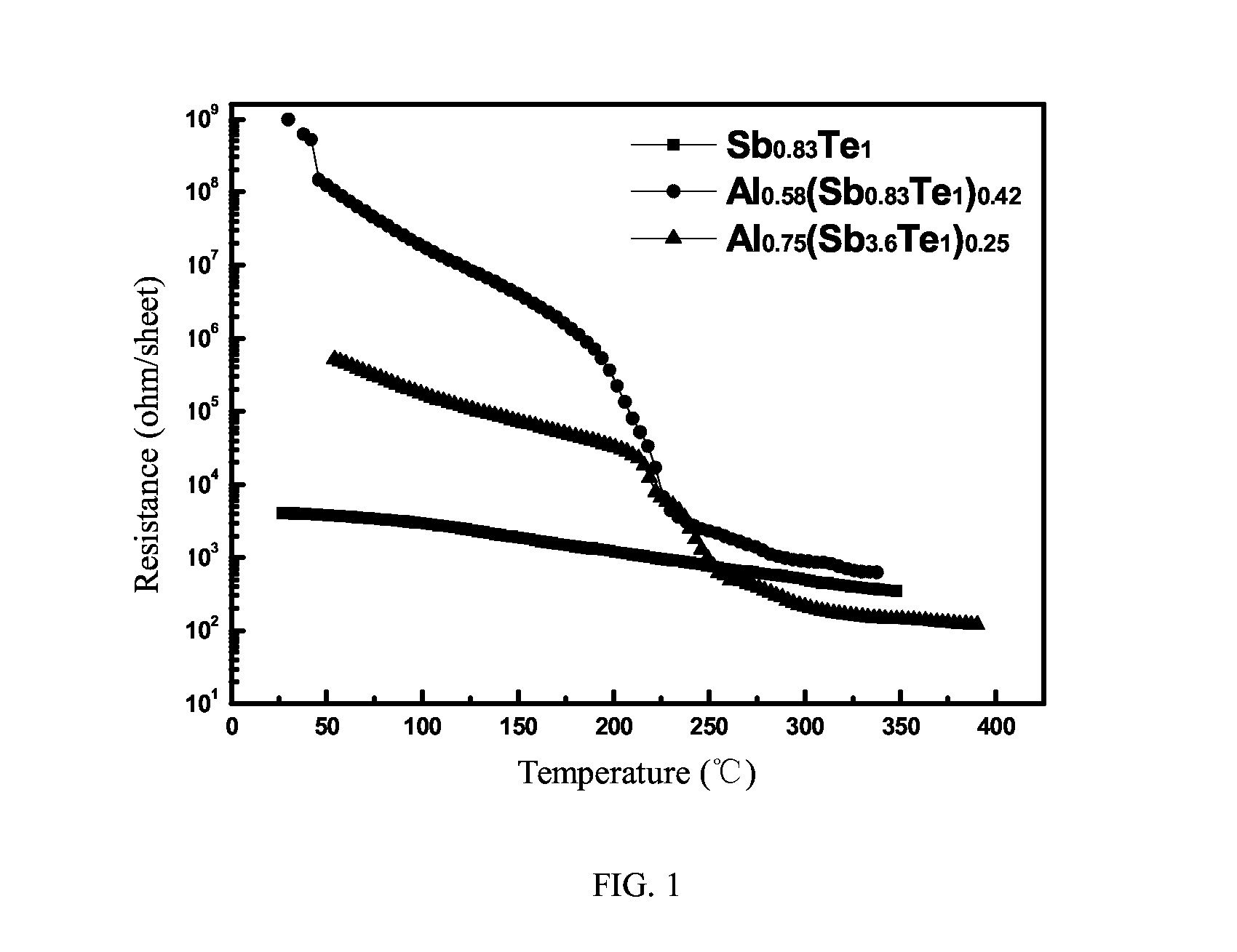
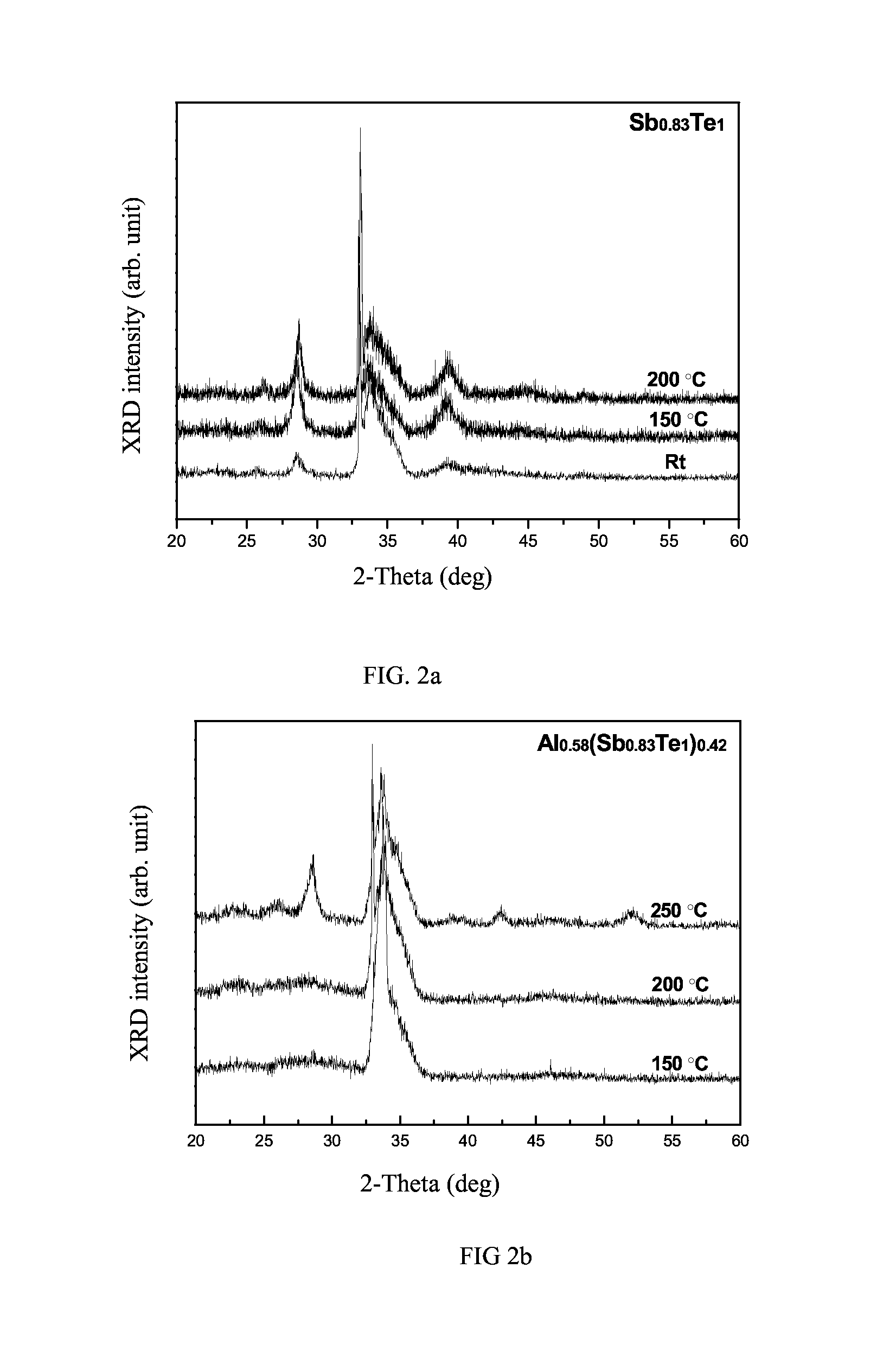
Al-Sb-Te phase change material used for phase change memory and fabrication method thereof
PatentActiveUS8920684B2
Innovation
- A phase change material composed of a mixture of aluminum (Al), antimony (Sb), and tellurium (Te) with a general formula Alx(SbyTe1-x), which exhibits high crystallization speed, thermal stability, and low power consumption, and is fabricated using methods like physical vapor deposition, enabling reversible resistivity changes for data storage.
PCM Cost-Performance Trade-off Analysis
The cost-performance trade-off in Phase Change Materials represents a fundamental decision framework that significantly impacts both initial investment and long-term operational efficiency. This analysis reveals distinct market segments where different PCM categories demonstrate optimal value propositions based on specific application requirements and performance expectations.
Economical PCM options, primarily consisting of paraffin-based materials and salt hydrates, typically offer cost advantages ranging from $2-8 per kilogram. These materials provide basic thermal storage capabilities with energy densities between 100-200 kJ/kg and operating temperature ranges suitable for building applications and low-grade industrial processes. While their thermal conductivity remains relatively low at 0.1-0.5 W/mK, the cost-effectiveness makes them attractive for large-scale deployment scenarios where moderate performance requirements can be satisfied.
High-performance PCM alternatives, including metallic alloys, advanced organic compounds, and engineered composite materials, command premium pricing from $15-50 per kilogram. These materials deliver superior thermal properties with energy densities exceeding 300 kJ/kg, enhanced thermal conductivity up to 10 W/mK, and extended operational lifespans surpassing 10,000 thermal cycles. The performance advantages become particularly valuable in aerospace, electronics cooling, and precision manufacturing applications where thermal management criticality justifies higher material costs.
The economic evaluation framework must incorporate total cost of ownership considerations beyond initial material procurement. High-performance PCMs often demonstrate superior lifecycle economics through reduced system complexity, minimized maintenance requirements, and enhanced operational reliability. Conversely, economical options may require additional heat transfer enhancement mechanisms or more frequent replacement cycles, potentially offsetting initial cost savings.
Application-specific optimization reveals that the cost-performance sweet spot varies significantly across different use cases. Building thermal management systems typically favor economical PCMs due to large volume requirements and moderate performance demands, while electronic thermal interface applications justify high-performance materials through improved device reliability and compact form factors. Industrial process heat recovery applications often require intermediate performance levels, creating opportunities for hybrid solutions that balance cost constraints with operational efficiency requirements.
Economical PCM options, primarily consisting of paraffin-based materials and salt hydrates, typically offer cost advantages ranging from $2-8 per kilogram. These materials provide basic thermal storage capabilities with energy densities between 100-200 kJ/kg and operating temperature ranges suitable for building applications and low-grade industrial processes. While their thermal conductivity remains relatively low at 0.1-0.5 W/mK, the cost-effectiveness makes them attractive for large-scale deployment scenarios where moderate performance requirements can be satisfied.
High-performance PCM alternatives, including metallic alloys, advanced organic compounds, and engineered composite materials, command premium pricing from $15-50 per kilogram. These materials deliver superior thermal properties with energy densities exceeding 300 kJ/kg, enhanced thermal conductivity up to 10 W/mK, and extended operational lifespans surpassing 10,000 thermal cycles. The performance advantages become particularly valuable in aerospace, electronics cooling, and precision manufacturing applications where thermal management criticality justifies higher material costs.
The economic evaluation framework must incorporate total cost of ownership considerations beyond initial material procurement. High-performance PCMs often demonstrate superior lifecycle economics through reduced system complexity, minimized maintenance requirements, and enhanced operational reliability. Conversely, economical options may require additional heat transfer enhancement mechanisms or more frequent replacement cycles, potentially offsetting initial cost savings.
Application-specific optimization reveals that the cost-performance sweet spot varies significantly across different use cases. Building thermal management systems typically favor economical PCMs due to large volume requirements and moderate performance demands, while electronic thermal interface applications justify high-performance materials through improved device reliability and compact form factors. Industrial process heat recovery applications often require intermediate performance levels, creating opportunities for hybrid solutions that balance cost constraints with operational efficiency requirements.
PCM Application Scenario Optimization
The optimization of PCM application scenarios requires a comprehensive evaluation framework that balances cost-effectiveness with performance requirements across diverse thermal management applications. Different scenarios demand varying levels of thermal performance, making the selection between economical and high-performance PCM options a critical decision factor that directly impacts system efficiency and project viability.
Industrial heating and cooling applications typically favor economical PCM solutions due to their large-scale deployment requirements and moderate temperature control precision needs. These scenarios often involve warehouse climate control, agricultural storage facilities, and basic HVAC systems where cost per unit volume becomes the primary selection criterion. The thermal cycling frequency in such applications is generally low to moderate, allowing economical PCMs to deliver adequate performance over extended operational periods.
High-performance PCM applications emerge in scenarios demanding precise temperature control, rapid thermal response, or extreme operating conditions. Electronic thermal management systems, aerospace applications, and medical device temperature regulation require PCMs with superior thermal conductivity, narrow melting point ranges, and enhanced cycling stability. These scenarios justify the premium cost through improved system reliability and performance optimization.
Building envelope applications present a mixed optimization landscape where the choice between economical and high-performance options depends on climate zones, building types, and energy efficiency targets. Residential applications often benefit from economical PCM integration in walls and roofing systems, while commercial buildings with stringent energy performance requirements may warrant high-performance solutions for peak load management and thermal comfort optimization.
Energy storage applications demonstrate clear performance-cost trade-offs based on storage duration and power density requirements. Short-term thermal storage systems for load shifting can effectively utilize economical PCMs, while applications requiring rapid charge-discharge cycles or high energy density storage necessitate high-performance formulations with enhanced thermal properties and cycling durability.
The optimization process must consider lifecycle costs, maintenance requirements, and performance degradation patterns to ensure appropriate PCM selection for each specific application scenario.
Industrial heating and cooling applications typically favor economical PCM solutions due to their large-scale deployment requirements and moderate temperature control precision needs. These scenarios often involve warehouse climate control, agricultural storage facilities, and basic HVAC systems where cost per unit volume becomes the primary selection criterion. The thermal cycling frequency in such applications is generally low to moderate, allowing economical PCMs to deliver adequate performance over extended operational periods.
High-performance PCM applications emerge in scenarios demanding precise temperature control, rapid thermal response, or extreme operating conditions. Electronic thermal management systems, aerospace applications, and medical device temperature regulation require PCMs with superior thermal conductivity, narrow melting point ranges, and enhanced cycling stability. These scenarios justify the premium cost through improved system reliability and performance optimization.
Building envelope applications present a mixed optimization landscape where the choice between economical and high-performance options depends on climate zones, building types, and energy efficiency targets. Residential applications often benefit from economical PCM integration in walls and roofing systems, while commercial buildings with stringent energy performance requirements may warrant high-performance solutions for peak load management and thermal comfort optimization.
Energy storage applications demonstrate clear performance-cost trade-offs based on storage duration and power density requirements. Short-term thermal storage systems for load shifting can effectively utilize economical PCMs, while applications requiring rapid charge-discharge cycles or high energy density storage necessitate high-performance formulations with enhanced thermal properties and cycling durability.
The optimization process must consider lifecycle costs, maintenance requirements, and performance degradation patterns to ensure appropriate PCM selection for each specific application scenario.
Unlock deeper insights with Patsnap Eureka Quick Research — get a full tech report to explore trends and direct your research. Try now!
Generate Your Research Report Instantly with AI Agent
Supercharge your innovation with Patsnap Eureka AI Agent Platform!