Comparison of Enovix Batteries with Emerging Battery Technologies
Enovix Battery Evolution
Enovix, a pioneering company in the battery technology sector, has made significant strides in the evolution of lithium-ion batteries. Their journey began with a focus on addressing the limitations of traditional battery designs, particularly in terms of energy density and safety. The company's innovative approach involves a unique 3D cell architecture that allows for more efficient use of space within the battery, resulting in higher energy density.
The evolution of Enovix batteries can be traced through several key stages. Initially, the company focused on developing its proprietary 3D silicon lithium-ion battery technology. This design incorporates silicon as the anode material, which offers significantly higher energy storage capacity compared to traditional graphite anodes. The use of silicon, however, presented challenges due to its tendency to expand during charging cycles.
To overcome this obstacle, Enovix developed a novel constraint system that allows for the expansion of silicon while maintaining the structural integrity of the battery. This breakthrough marked a crucial point in their evolutionary timeline, enabling the practical application of silicon anodes in commercial batteries.
As the technology matured, Enovix focused on scaling up production and improving manufacturing processes. They introduced advanced automation techniques and precision engineering to ensure consistent quality and performance across their battery production. This phase of evolution was critical in transitioning from a promising technology to a commercially viable product.
In recent years, Enovix has further refined its battery technology to address specific market needs. They have developed variants of their core technology tailored for different applications, ranging from consumer electronics to electric vehicles. This diversification represents an important evolutionary step, demonstrating the adaptability and versatility of their core technology.
The company has also made significant progress in enhancing the safety features of their batteries. By leveraging their unique 3D architecture, Enovix has implemented advanced thermal management systems and integrated safety mechanisms that reduce the risk of thermal runaway and other battery-related hazards.
Looking towards the future, Enovix continues to push the boundaries of battery technology. Their ongoing research and development efforts are focused on further increasing energy density, improving charging speeds, and extending battery lifespan. The company is also exploring the integration of advanced materials and nanotechnology to unlock new possibilities in battery performance.
The evolution of Enovix batteries represents a significant leap forward in energy storage technology. By addressing key limitations of traditional lithium-ion batteries, Enovix has positioned itself at the forefront of the next generation of battery solutions. Their journey from concept to commercialization serves as a testament to the potential of innovative approaches in transforming established technologies.
Market Demand Analysis
The market demand for advanced battery technologies, particularly those comparable to Enovix batteries, has been experiencing significant growth in recent years. This surge is primarily driven by the increasing adoption of electric vehicles, portable electronics, and renewable energy storage systems. The global lithium-ion battery market, which encompasses Enovix and other emerging battery technologies, is projected to reach substantial market value in the coming years.
In the electric vehicle sector, the demand for high-performance batteries with improved energy density, faster charging capabilities, and longer lifespans is particularly strong. Automakers are constantly seeking battery technologies that can provide extended driving ranges and reduce charging times, making Enovix and similar advanced battery solutions highly attractive. The consumer electronics market also presents a substantial opportunity for these batteries, as manufacturers strive to create devices with longer battery life and faster charging capabilities.
The renewable energy sector is another key driver of market demand for advanced battery technologies. As the world transitions towards cleaner energy sources, the need for efficient and reliable energy storage solutions continues to grow. Grid-scale energy storage systems require batteries with high energy density, long cycle life, and improved safety features, aligning well with the characteristics of Enovix and other emerging battery technologies.
Industrial applications, including robotics, aerospace, and medical devices, are also contributing to the increasing demand for advanced battery solutions. These sectors require batteries that can deliver high performance in challenging environments, making technologies like Enovix particularly appealing.
The market demand is further influenced by government regulations and initiatives promoting clean energy and electric mobility. Many countries have set ambitious targets for reducing carbon emissions and phasing out internal combustion engines, which is expected to accelerate the adoption of electric vehicles and, consequently, the demand for advanced battery technologies.
However, it's important to note that the market for emerging battery technologies is highly competitive. While Enovix offers promising advancements, it faces competition from other innovative battery technologies and established players in the industry. Factors such as production scalability, cost-effectiveness, and compatibility with existing manufacturing processes will play crucial roles in determining market penetration and adoption rates.
Overall, the market demand for advanced battery technologies like Enovix is robust and expected to continue growing. The key to success in this market will be the ability to deliver on the promised performance improvements while achieving cost-competitiveness and scalability to meet the increasing demand across various industries.
Current Battery Tech
The current landscape of battery technology is dominated by lithium-ion batteries, which have become the standard for portable electronics, electric vehicles, and energy storage systems. These batteries offer high energy density, long cycle life, and relatively low self-discharge rates. However, they also face limitations in terms of safety, charging speed, and environmental impact.
Lithium-ion batteries typically use a graphite anode and a cathode made of lithium cobalt oxide or other lithium-based compounds. The electrolyte is usually a lithium salt in an organic solvent. This configuration allows for the reversible movement of lithium ions between the electrodes during charge and discharge cycles.
Recent advancements in lithium-ion technology have focused on improving energy density, safety, and charging speeds. Silicon-based anodes have gained attention due to their potential to significantly increase energy density. However, challenges related to volume expansion during cycling have hindered widespread adoption.
Solid-state batteries represent another promising direction in current battery technology. These batteries replace the liquid electrolyte with a solid material, potentially offering improved safety, higher energy density, and faster charging capabilities. Several major automotive and technology companies are investing heavily in solid-state battery research and development.
Emerging technologies such as lithium-sulfur and lithium-air batteries are also being explored for their potential to dramatically increase energy density. However, these technologies are still in the early stages of development and face significant challenges in terms of cycle life and practical implementation.
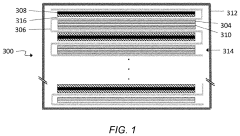
In the context of Enovix batteries, their unique 3D silicon lithium-ion architecture represents a significant departure from conventional lithium-ion designs. Enovix's approach aims to address the silicon expansion issue while maximizing energy density. This technology utilizes a silicon-dominant anode and a proprietary cell architecture that constrains the silicon, allowing for higher silicon content without compromising cycle life.
Compared to traditional lithium-ion batteries, Enovix claims to offer up to 100% higher energy density. This improvement is achieved through the combination of silicon anodes and their patented 3D cell structure. The technology also promises faster charging capabilities and enhanced safety features due to its unique design.
While Enovix batteries show promise, they are still in the early stages of commercialization. The company faces challenges in scaling up production and demonstrating long-term reliability in real-world applications. As with any emerging battery technology, extensive testing and validation will be crucial for widespread adoption.
Enovix Tech Solutions
01 Battery structure and design innovations
Enovix has developed innovative battery structures and designs, including 3D silicon lithium-ion batteries. These designs aim to improve energy density, performance, and safety of batteries. The structure may involve unique electrode arrangements, separator designs, or packaging methods to enhance overall battery efficiency.- Battery structure and design innovations: Enovix has developed innovative battery structures and designs, including unique electrode arrangements and cell architectures. These advancements aim to improve energy density, performance, and safety of lithium-ion batteries. The designs may incorporate novel materials and manufacturing techniques to enhance overall battery efficiency.
- Advanced electrode materials and compositions: Enovix batteries utilize advanced electrode materials and compositions to enhance battery performance. This may include novel cathode and anode materials, electrolyte formulations, and additives that improve capacity, cycling stability, and charge/discharge rates. The focus is on developing materials that can withstand high energy densities while maintaining safety and longevity.
- Manufacturing processes and techniques: Enovix has developed specialized manufacturing processes and techniques for producing their advanced batteries. These may include innovative assembly methods, precision fabrication techniques, and quality control measures. The manufacturing approach is designed to enable mass production of high-performance batteries while maintaining consistency and reliability.
- Battery management and control systems: Enovix batteries incorporate advanced management and control systems to optimize performance and safety. These systems may include sophisticated monitoring of cell parameters, thermal management, and charge/discharge control algorithms. The focus is on maximizing battery life, efficiency, and safety through intelligent management of battery operations.
- Integration and application-specific designs: Enovix develops battery solutions tailored for specific applications and integration requirements. This includes designing batteries for various form factors, power demands, and environmental conditions. The company focuses on creating battery systems that can be seamlessly integrated into diverse products and technologies, from consumer electronics to electric vehicles.
02 Silicon-based anode technology
Enovix batteries utilize silicon-based anode technology, which offers higher energy density compared to traditional graphite anodes. This technology allows for increased capacity and improved performance in lithium-ion batteries, potentially enabling longer-lasting and more powerful energy storage solutions.Expand Specific Solutions03 Manufacturing processes and equipment
The company has developed specialized manufacturing processes and equipment for producing their advanced batteries. This includes innovative assembly techniques, quality control methods, and automation systems designed to ensure consistent production of high-performance batteries at scale.Expand Specific Solutions04 Battery management and control systems
Enovix batteries incorporate advanced management and control systems to optimize performance, safety, and longevity. These systems may include sophisticated monitoring, balancing, and protection circuits to ensure efficient operation and prevent issues such as overcharging or thermal runaway.Expand Specific Solutions05 Application-specific battery designs
Enovix develops batteries tailored for specific applications, such as consumer electronics, electric vehicles, or renewable energy storage. These designs take into account the unique requirements of each application, optimizing factors like size, weight, power output, and cycle life to meet the needs of different industries and use cases.Expand Specific Solutions
Key Battery Players
The competition in Enovix Batteries and emerging battery technologies is intensifying as the industry enters a growth phase. The market size is expanding rapidly due to increasing demand for high-performance batteries in electric vehicles and energy storage systems. While the technology is maturing, there's still room for innovation. Key players like LG Energy Solution, Toyota, BYD, and Panasonic are investing heavily in R&D to improve battery performance and reduce costs. Emerging companies such as Enevate and Smartville are introducing novel technologies, challenging established players. The landscape is dynamic, with collaborations between automakers, battery manufacturers, and research institutions driving advancements in battery chemistry and manufacturing processes.
LG Energy Solution Ltd.
Panasonic Holdings Corp.
Core Enovix Innovations
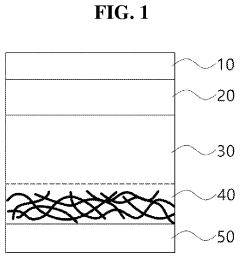
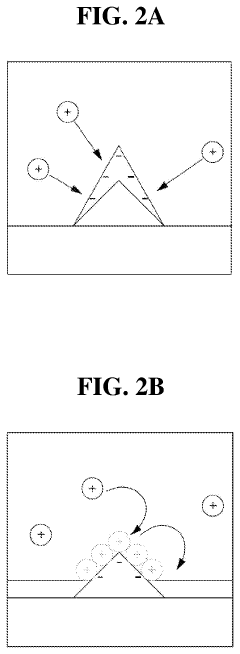
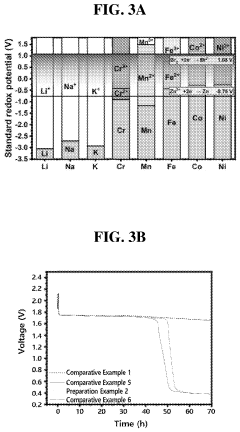
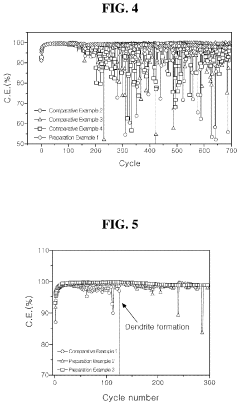
- An electrolyte for zinc-bromine batteries comprising zinc bromide (ZnBr2), a bromine complexing agent such as 1-ethylpyridinium bromide (1-EpBr), and a metal ion additive like manganese sulfate (MnSO4) is used, which inhibits the crossover phenomenon and promotes uniform zinc electrodeposition, preventing dendrite formation.
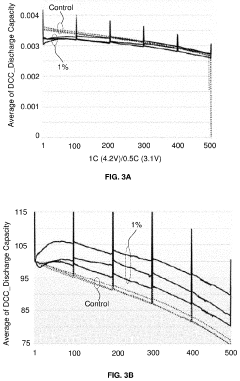
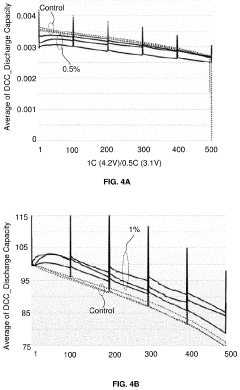
- An electrolyte system comprising a crown ether-based compound, a linear carbonate, and a Li-containing salt is used, which stabilizes the solid electrolyte interphase layer, reduces electrolyte reactions, and enhances thermal stability, thereby improving the electrochemical performance and safety of silicon-based anode batteries.
Environmental Impact
The environmental impact of battery technologies is a critical consideration in the development and adoption of emerging energy storage solutions. When comparing Enovix batteries with other emerging battery technologies, several key factors come into play.
Enovix batteries, with their silicon-anode technology, offer potential environmental benefits due to their higher energy density. This increased energy density allows for smaller and lighter batteries, potentially reducing the overall material usage and environmental footprint associated with battery production. Additionally, the longer lifespan of Enovix batteries may contribute to reduced waste generation over time.
However, the production of silicon anodes may have its own environmental implications, including energy-intensive manufacturing processes and potential resource extraction challenges. The environmental impact of sourcing and processing silicon for battery anodes needs to be carefully evaluated and compared to traditional graphite anodes used in conventional lithium-ion batteries.
In contrast, other emerging battery technologies present their own environmental considerations. Solid-state batteries, for instance, may offer improved safety and reduced risk of hazardous material leakage, potentially minimizing environmental contamination risks. However, the production of solid electrolytes may involve rare earth elements or other materials with complex supply chains and extraction processes.
Lithium-sulfur batteries show promise in terms of using more abundant and potentially less environmentally impactful materials. Sulfur is a byproduct of industrial processes, and its use in batteries could provide a valuable recycling opportunity. However, challenges related to the stability and lifespan of lithium-sulfur batteries may offset some of these benefits if frequent replacements are required.
Sodium-ion batteries present an alternative that reduces reliance on lithium, potentially alleviating some of the environmental and geopolitical concerns associated with lithium mining. However, the overall environmental impact of sodium extraction and processing must be carefully assessed.
The end-of-life management and recyclability of these various battery technologies are crucial factors in their overall environmental impact. Enovix batteries, like other lithium-ion technologies, face challenges in recycling due to the complexity of their components. Emerging technologies may offer opportunities for improved recyclability, but this aspect requires further research and development.
In conclusion, while Enovix batteries show promise in terms of energy density and potential material reduction, a comprehensive life cycle assessment is necessary to fully understand their environmental impact compared to other emerging battery technologies. Factors such as raw material sourcing, production processes, energy efficiency during use, lifespan, and end-of-life management all play crucial roles in determining the overall environmental footprint of these innovative energy storage solutions.
Safety Regulations
Safety regulations play a crucial role in the development and commercialization of battery technologies, including Enovix batteries and other emerging energy storage solutions. These regulations are designed to ensure the safe operation, transportation, and disposal of batteries, protecting both consumers and the environment.
For Enovix batteries and other advanced energy storage technologies, compliance with international safety standards is paramount. The most widely recognized standards include those set by the International Electrotechnical Commission (IEC) and Underwriters Laboratories (UL). These standards cover various aspects of battery safety, such as thermal runaway prevention, short circuit protection, and mechanical integrity.
One of the key safety concerns for lithium-ion batteries, including Enovix's silicon anode technology, is the risk of thermal runaway. Regulatory bodies require manufacturers to implement robust safety mechanisms to prevent and mitigate this risk. This includes the use of advanced battery management systems (BMS) that monitor temperature, voltage, and current to detect and prevent potential safety issues.
Transportation regulations for batteries have become increasingly stringent, particularly for air shipments. The International Air Transport Association (IATA) has established specific guidelines for the packaging and handling of lithium-ion batteries during air transport. Enovix and other battery manufacturers must adhere to these regulations to ensure safe transportation of their products.
Environmental regulations also play a significant role in the battery industry. The European Union's Battery Directive, for instance, sets requirements for battery collection, recycling, and disposal. As emerging battery technologies like Enovix's continue to evolve, manufacturers must consider end-of-life management and recyclability in their design processes to comply with these regulations.
Safety certification processes for new battery technologies can be complex and time-consuming. Regulatory bodies often require extensive testing and documentation to prove the safety and reliability of novel battery designs. This can impact the time-to-market for emerging technologies, including Enovix batteries, as they navigate the certification process.
As battery technologies advance, safety regulations are likely to evolve to address new challenges and risks. Manufacturers and researchers must stay abreast of these changes and adapt their designs and processes accordingly. This ongoing regulatory compliance is essential for maintaining consumer trust and ensuring the long-term viability of emerging battery technologies in the market.