

Conductive Polymer Composites in Electronics: Standards and Regulations
OCT 23, 202510 MIN READ
Generate Your Research Report Instantly with AI Agent
PatSnap Eureka helps you evaluate technical feasibility & market potential.
Conductive Polymer Evolution and Objectives
Conductive polymer composites (CPCs) have evolved significantly since their initial discovery in the 1970s when Alan J. Heeger, Alan MacDiarmid, and Hideki Shirakawa demonstrated that polyacetylene could conduct electricity when doped with iodine. This groundbreaking work, which earned them the Nobel Prize in Chemistry in 2000, marked the beginning of a new era in polymer science and electronics. The evolution of conductive polymers has been characterized by continuous improvements in conductivity, processability, and stability, transitioning from laboratory curiosities to commercially viable materials.
Throughout the 1980s and 1990s, research focused primarily on understanding the fundamental mechanisms of conductivity in polymers and developing new conductive polymer structures. Polymers such as polypyrrole, polyaniline, and polythiophene emerged as promising candidates due to their enhanced stability and processability compared to polyacetylene. The development of soluble derivatives, particularly poly(3,4-ethylenedioxythiophene) (PEDOT) complexed with poly(styrenesulfonate) (PSS) in the 1990s, represented a significant milestone that enabled practical applications.
The early 2000s witnessed a shift toward composite materials, combining conductive polymers with traditional polymers, carbon-based materials (carbon nanotubes, graphene), and metallic nanoparticles. These composites offered tunable electrical properties while maintaining the mechanical advantages of polymers. The evolution of processing techniques, including solution processing, electrospinning, and 3D printing, further expanded the application potential of conductive polymer composites in electronics.
Recent technological advancements have focused on enhancing the performance of CPCs under various environmental conditions, improving their long-term stability, and developing sustainable production methods. The integration of conductive polymers with flexible substrates has enabled the development of wearable electronics, while advances in biocompatibility have opened doors to biomedical applications. The emergence of self-healing conductive polymers represents the cutting edge of current research, addressing durability concerns in electronic devices.
The primary objectives in conductive polymer composite research today include achieving metal-like conductivity while maintaining polymer-like processability, developing environmentally sustainable production methods, and establishing comprehensive standards and regulations for their use in electronics. Specific technical goals include reducing contact resistance at interfaces, enhancing thermal stability above 200°C for industrial applications, improving mechanical flexibility without compromising electrical performance, and developing reliable testing protocols that accurately predict long-term performance under real-world conditions.
As electronics continue to evolve toward flexible, wearable, and sustainable platforms, conductive polymer composites are positioned to play a crucial role in next-generation devices. The establishment of clear standards and regulations will be essential for widespread industrial adoption, ensuring consistency, safety, and reliability across applications ranging from consumer electronics to healthcare devices and automotive systems.
Throughout the 1980s and 1990s, research focused primarily on understanding the fundamental mechanisms of conductivity in polymers and developing new conductive polymer structures. Polymers such as polypyrrole, polyaniline, and polythiophene emerged as promising candidates due to their enhanced stability and processability compared to polyacetylene. The development of soluble derivatives, particularly poly(3,4-ethylenedioxythiophene) (PEDOT) complexed with poly(styrenesulfonate) (PSS) in the 1990s, represented a significant milestone that enabled practical applications.
The early 2000s witnessed a shift toward composite materials, combining conductive polymers with traditional polymers, carbon-based materials (carbon nanotubes, graphene), and metallic nanoparticles. These composites offered tunable electrical properties while maintaining the mechanical advantages of polymers. The evolution of processing techniques, including solution processing, electrospinning, and 3D printing, further expanded the application potential of conductive polymer composites in electronics.
Recent technological advancements have focused on enhancing the performance of CPCs under various environmental conditions, improving their long-term stability, and developing sustainable production methods. The integration of conductive polymers with flexible substrates has enabled the development of wearable electronics, while advances in biocompatibility have opened doors to biomedical applications. The emergence of self-healing conductive polymers represents the cutting edge of current research, addressing durability concerns in electronic devices.
The primary objectives in conductive polymer composite research today include achieving metal-like conductivity while maintaining polymer-like processability, developing environmentally sustainable production methods, and establishing comprehensive standards and regulations for their use in electronics. Specific technical goals include reducing contact resistance at interfaces, enhancing thermal stability above 200°C for industrial applications, improving mechanical flexibility without compromising electrical performance, and developing reliable testing protocols that accurately predict long-term performance under real-world conditions.
As electronics continue to evolve toward flexible, wearable, and sustainable platforms, conductive polymer composites are positioned to play a crucial role in next-generation devices. The establishment of clear standards and regulations will be essential for widespread industrial adoption, ensuring consistency, safety, and reliability across applications ranging from consumer electronics to healthcare devices and automotive systems.
Market Analysis for Conductive Polymer Applications
The conductive polymer composites market has experienced significant growth in recent years, driven primarily by increasing demand in electronics manufacturing. The global market value reached approximately $3.9 billion in 2022 and is projected to grow at a compound annual growth rate (CAGR) of 8.7% through 2028, potentially reaching $6.4 billion by the end of the forecast period. This growth trajectory is supported by the expanding applications of conductive polymers in flexible electronics, wearable technology, and advanced semiconductor packaging.
The electronics sector represents the largest application segment, accounting for roughly 42% of the total conductive polymer composites market. Within this sector, consumer electronics dominates with a 35% share, followed by automotive electronics at 28%, and medical devices at 17%. The remaining 20% is distributed across various applications including aerospace, defense, and industrial electronics.
Regionally, Asia-Pacific leads the market with approximately 45% share, driven by the concentration of electronics manufacturing in countries like China, Japan, South Korea, and Taiwan. North America and Europe follow with 25% and 20% market shares respectively, with particular strength in high-performance applications and research advancements.
Key market drivers include the miniaturization trend in electronics, which necessitates materials with superior electrical properties in smaller form factors. The growing demand for lightweight and flexible electronic components has also accelerated adoption, particularly in portable devices and wearable technology. Additionally, the push for sustainable electronics has created opportunities for conductive polymers as alternatives to traditional metal-based conductors.
Market challenges include price volatility of raw materials, particularly for specialty polymers and conductive fillers. Regulatory compliance represents another significant challenge, with different regions implementing varying standards for electronic materials, especially concerning flame retardancy, toxicity, and environmental impact.
Emerging opportunities exist in next-generation applications such as printed electronics, where conductive polymer composites offer advantages in manufacturing flexibility and cost reduction. The electric vehicle market presents another growth avenue, with demand for lightweight components and battery technologies driving innovation in conductive polymer applications.
Customer preferences are increasingly favoring materials that offer multifunctional properties beyond conductivity, such as thermal management capabilities, electromagnetic interference (EMI) shielding, and mechanical durability. This trend is reshaping product development strategies among market participants, with greater emphasis on customized solutions for specific application requirements.
The electronics sector represents the largest application segment, accounting for roughly 42% of the total conductive polymer composites market. Within this sector, consumer electronics dominates with a 35% share, followed by automotive electronics at 28%, and medical devices at 17%. The remaining 20% is distributed across various applications including aerospace, defense, and industrial electronics.
Regionally, Asia-Pacific leads the market with approximately 45% share, driven by the concentration of electronics manufacturing in countries like China, Japan, South Korea, and Taiwan. North America and Europe follow with 25% and 20% market shares respectively, with particular strength in high-performance applications and research advancements.
Key market drivers include the miniaturization trend in electronics, which necessitates materials with superior electrical properties in smaller form factors. The growing demand for lightweight and flexible electronic components has also accelerated adoption, particularly in portable devices and wearable technology. Additionally, the push for sustainable electronics has created opportunities for conductive polymers as alternatives to traditional metal-based conductors.
Market challenges include price volatility of raw materials, particularly for specialty polymers and conductive fillers. Regulatory compliance represents another significant challenge, with different regions implementing varying standards for electronic materials, especially concerning flame retardancy, toxicity, and environmental impact.
Emerging opportunities exist in next-generation applications such as printed electronics, where conductive polymer composites offer advantages in manufacturing flexibility and cost reduction. The electric vehicle market presents another growth avenue, with demand for lightweight components and battery technologies driving innovation in conductive polymer applications.
Customer preferences are increasingly favoring materials that offer multifunctional properties beyond conductivity, such as thermal management capabilities, electromagnetic interference (EMI) shielding, and mechanical durability. This trend is reshaping product development strategies among market participants, with greater emphasis on customized solutions for specific application requirements.
Technical Barriers and Global Development Status
Despite significant advancements in conductive polymer composite (CPC) technology, several technical barriers continue to impede widespread adoption in electronics applications. A primary challenge remains achieving consistent electrical conductivity while maintaining mechanical properties. The percolation threshold—the minimum filler content required for conductivity—often necessitates high loading levels that compromise flexibility and processability. This fundamental trade-off between conductivity and mechanical performance represents a significant hurdle for manufacturers seeking to develop reliable electronic components.
Thermal stability presents another critical barrier, as many CPCs exhibit conductivity degradation at elevated temperatures common in electronic operations. This instability manifests through polymer matrix expansion, disrupting conductive networks and causing performance fluctuations that compromise long-term reliability. Additionally, environmental factors such as humidity and oxidation can significantly alter electrical properties over time, creating challenges for applications requiring consistent performance in variable conditions.
From a global development perspective, CPC technology exhibits notable regional variations. North America leads in research output and patent filings, with particular strength in advanced applications like electromagnetic interference (EMI) shielding and flexible electronics. The United States maintains a dominant position through substantial investment in university-industry partnerships and national laboratory initiatives focused on next-generation electronic materials.
Europe has established itself as a leader in standardization efforts, with the European Committee for Electrotechnical Standardization (CENELEC) developing comprehensive frameworks for CPC testing and certification. Countries like Germany and Finland have pioneered environmentally sustainable CPC formulations that align with the EU's stringent REACH and RoHS regulations, creating a distinct competitive advantage in eco-friendly electronic components.
The Asia-Pacific region, particularly China, South Korea, and Japan, has emerged as the manufacturing powerhouse for CPC-based electronics. China's rapid advancement stems from massive infrastructure investments and government initiatives like "Made in China 2025," which specifically targets new electronic materials. Japanese firms maintain leadership in high-precision applications through superior quality control methodologies, while South Korean companies excel in integrating CPCs into consumer electronics.
Globally, standardization remains fragmented, with ISO, IEC, ASTM, and regional bodies each developing partially overlapping guidelines. This regulatory inconsistency creates compliance challenges for manufacturers operating across multiple markets and impedes technology transfer between regions. Recent international efforts through organizations like the International Electrotechnical Commission (IEC) aim to harmonize testing protocols and performance metrics, potentially accelerating global adoption of CPC technology in next-generation electronic applications.
Thermal stability presents another critical barrier, as many CPCs exhibit conductivity degradation at elevated temperatures common in electronic operations. This instability manifests through polymer matrix expansion, disrupting conductive networks and causing performance fluctuations that compromise long-term reliability. Additionally, environmental factors such as humidity and oxidation can significantly alter electrical properties over time, creating challenges for applications requiring consistent performance in variable conditions.
From a global development perspective, CPC technology exhibits notable regional variations. North America leads in research output and patent filings, with particular strength in advanced applications like electromagnetic interference (EMI) shielding and flexible electronics. The United States maintains a dominant position through substantial investment in university-industry partnerships and national laboratory initiatives focused on next-generation electronic materials.
Europe has established itself as a leader in standardization efforts, with the European Committee for Electrotechnical Standardization (CENELEC) developing comprehensive frameworks for CPC testing and certification. Countries like Germany and Finland have pioneered environmentally sustainable CPC formulations that align with the EU's stringent REACH and RoHS regulations, creating a distinct competitive advantage in eco-friendly electronic components.
The Asia-Pacific region, particularly China, South Korea, and Japan, has emerged as the manufacturing powerhouse for CPC-based electronics. China's rapid advancement stems from massive infrastructure investments and government initiatives like "Made in China 2025," which specifically targets new electronic materials. Japanese firms maintain leadership in high-precision applications through superior quality control methodologies, while South Korean companies excel in integrating CPCs into consumer electronics.
Globally, standardization remains fragmented, with ISO, IEC, ASTM, and regional bodies each developing partially overlapping guidelines. This regulatory inconsistency creates compliance challenges for manufacturers operating across multiple markets and impedes technology transfer between regions. Recent international efforts through organizations like the International Electrotechnical Commission (IEC) aim to harmonize testing protocols and performance metrics, potentially accelerating global adoption of CPC technology in next-generation electronic applications.
Current Conductive Polymer Composite Solutions
01 Carbon-based conductive polymer composites
Carbon-based materials such as carbon nanotubes, graphene, and carbon black are incorporated into polymer matrices to enhance electrical conductivity. These composites offer advantages including lightweight properties, flexibility, and tunable conductivity levels. The carbon fillers create conductive networks within the polymer matrix, allowing for electron transport while maintaining the mechanical properties of the base polymer.- Conductive polymer composites with carbon-based fillers: Carbon-based materials such as carbon nanotubes, graphene, and carbon black are commonly used as conductive fillers in polymer composites. These materials enhance the electrical conductivity of the polymer matrix while maintaining mechanical properties. The dispersion of these carbon-based fillers within the polymer matrix is crucial for achieving optimal conductivity. These composites find applications in electromagnetic shielding, antistatic materials, and flexible electronics.
- Conductive polymer composites for energy storage applications: Conductive polymer composites are increasingly being used in energy storage devices such as batteries and supercapacitors. These composites combine the flexibility and processability of polymers with the electrical conductivity needed for efficient energy storage. By incorporating conductive fillers or using intrinsically conductive polymers, these materials can achieve high energy density, improved cycle life, and enhanced charge-discharge rates compared to conventional materials.
- Thermally conductive polymer composites: Polymer composites can be engineered to exhibit high thermal conductivity while maintaining electrical insulation properties. These materials typically incorporate fillers such as boron nitride, aluminum oxide, or metal particles that enhance heat dissipation. Thermally conductive polymer composites are valuable in electronic packaging, heat sinks, and thermal management systems where efficient heat transfer is required without electrical conductivity.
- Self-healing conductive polymer composites: Self-healing conductive polymer composites represent an advanced class of materials that can restore their electrical conductivity after mechanical damage. These materials incorporate microcapsules containing conductive materials or utilize reversible chemical bonds that can reform after being broken. Self-healing capabilities extend the lifespan of electronic devices and reduce maintenance costs in applications such as wearable electronics, sensors, and flexible displays.
- Processing techniques for conductive polymer composites: Various processing techniques are employed to manufacture conductive polymer composites with optimized properties. These include melt blending, solution mixing, in-situ polymerization, and additive manufacturing. The choice of processing method significantly affects the dispersion of conductive fillers, interfacial adhesion, and ultimately the electrical, thermal, and mechanical properties of the composite. Advanced processing techniques can achieve higher conductivity at lower filler loadings, maintaining the desirable mechanical properties of the polymer matrix.
02 Metal-polymer conductive composites
Metal particles or nanowires are dispersed within polymer matrices to create conductive composites with enhanced electrical properties. These composites combine the processability of polymers with the high conductivity of metals. Various metals including silver, copper, and aluminum are used to achieve different conductivity levels and cost points. These materials find applications in electromagnetic shielding, flexible electronics, and sensors.Expand Specific Solutions03 Intrinsically conductive polymer composites
Intrinsically conductive polymers such as polyaniline, polypyrrole, and PEDOT:PSS are blended with conventional polymers to create composites with electrical conductivity. These materials offer advantages including solution processability, tunable conductivity through doping, and unique optoelectronic properties. The composites maintain flexibility while providing electrical functionality for applications in sensors, actuators, and energy storage devices.Expand Specific Solutions04 Thermal and electrical management composites
Specialized polymer composites designed for both thermal and electrical conductivity management. These materials incorporate fillers that enhance heat dissipation while maintaining electrical properties. The composites are engineered for applications requiring temperature control alongside electrical functionality, such as battery components, electronic packaging, and thermal interface materials. Various filler combinations are used to optimize the balance between thermal and electrical performance.Expand Specific Solutions05 Processing techniques for conductive polymer composites
Advanced manufacturing and processing methods for creating conductive polymer composites with enhanced properties and performance. These techniques include solution blending, melt processing, in-situ polymerization, and surface modification of fillers. The processing methods significantly impact the dispersion of conductive fillers, interfacial adhesion, and ultimately the electrical properties of the final composite. Specialized techniques enable the creation of composites with uniform conductivity and improved mechanical characteristics.Expand Specific Solutions
Industry Leaders and Competitive Landscape
The conductive polymer composites market in electronics is currently in a growth phase, with increasing adoption across various electronic applications. The market size is expanding rapidly, driven by demand for lightweight, flexible, and cost-effective alternatives to traditional conductive materials. Technologically, the field is advancing from early commercial applications toward broader implementation, with companies like DuPont, BASF, and LG Chem leading innovation in material development. Littelfuse and Laird Technologies are focusing on specialized applications in circuit protection and EMI shielding respectively. Academic institutions including Sichuan University, Tokyo Institute of Technology, and The Ohio State University are contributing fundamental research to improve performance characteristics and environmental sustainability, while regulatory frameworks continue to evolve to address safety and environmental concerns.
DuPont de Nemours, Inc.
Technical Solution: DuPont has developed advanced conductive polymer composites (CPCs) that integrate their proprietary Kapton® polyimide films with various conductive fillers including carbon nanotubes, graphene, and metallic particles. Their technology focuses on creating flexible electronic substrates with tailored conductivity profiles that maintain performance under extreme conditions. DuPont's approach includes specialized surface treatment processes that enhance the interface between polymer matrices and conductive fillers, resulting in more stable electrical properties across temperature fluctuations. Their materials comply with UL 94 V-0 flammability standards and meet RoHS and REACH regulations for environmental safety. DuPont has also pioneered manufacturing techniques that allow for precise control of filler dispersion, critical for maintaining consistent electrical properties across production batches. Their CPCs are engineered to meet IPC-4101 specifications for printed circuit board materials while offering enhanced thermal management capabilities.
Strengths: Superior thermal stability (up to 400°C) and chemical resistance; established global compliance infrastructure; extensive materials science expertise allowing customized solutions. Weaknesses: Higher cost compared to conventional alternatives; some formulations require specialized processing equipment; longer lead times for custom formulations.
Laird Technologies, Inc.
Technical Solution: Laird Technologies has developed a comprehensive suite of conductive polymer composite solutions specifically designed for electromagnetic interference (EMI) shielding and thermal management applications. Their proprietary ECCOSORB® and T-FLEX® product lines incorporate specialized conductive fillers within thermoplastic and elastomeric matrices to create materials with precisely controlled electrical conductivity. Laird's technology emphasizes the development of form-in-place gaskets and gap fillers that conform to irregular surfaces while maintaining consistent electrical properties. Their manufacturing process includes precision dispensing systems that allow for automated application in high-volume production environments. Laird's materials are engineered to meet MIL-DTL-83528 military specifications for EMI shielding effectiveness and comply with IEC 61000-4-3 standards for electromagnetic compatibility. Their conductive polymer composites are formulated to maintain performance across wide temperature ranges (-40°C to +150°C) and have been tested for long-term reliability under environmental stress according to ASTM D4169 protocols.
Strengths: Industry-leading EMI shielding effectiveness (up to 100 dB); excellent conformability to complex geometries; proven reliability in harsh environments; comprehensive technical support infrastructure. Weaknesses: Higher initial cost compared to traditional metal shielding; some formulations have limited high-temperature performance; potential for galvanic corrosion when in contact with certain metal substrates.
Key Patents and Technical Innovations
Highly conductive carbon/inherently conductive polymer composites
PatentInactiveUS20040232390A1
Innovation
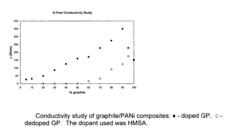
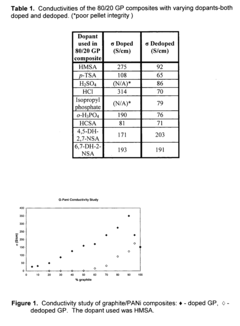
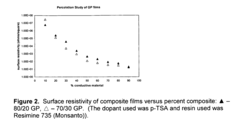
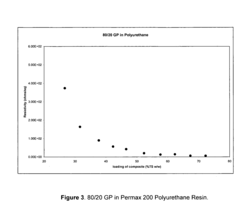
- The development of composites comprising graphite and doped polyaniline, polypyrrole, polythiophene, or polyethylenedioxythiophene with graphite, synthesized by oxidative polymerization in the presence of an acid dopant, resulting in higher conductivity and improved dispersibility in various solvents and resins.
Conductive polymer composites
PatentInactiveUS20080272344A1
Innovation
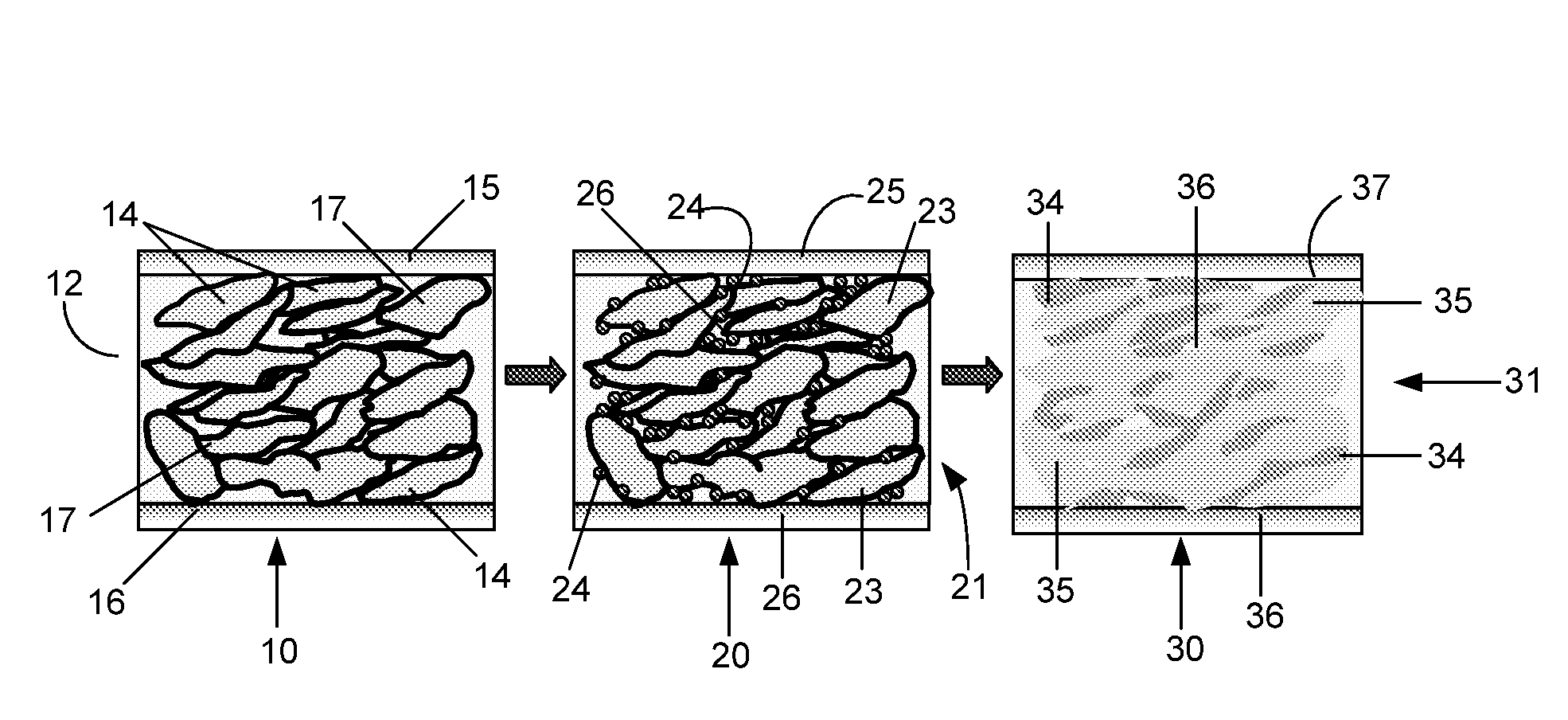
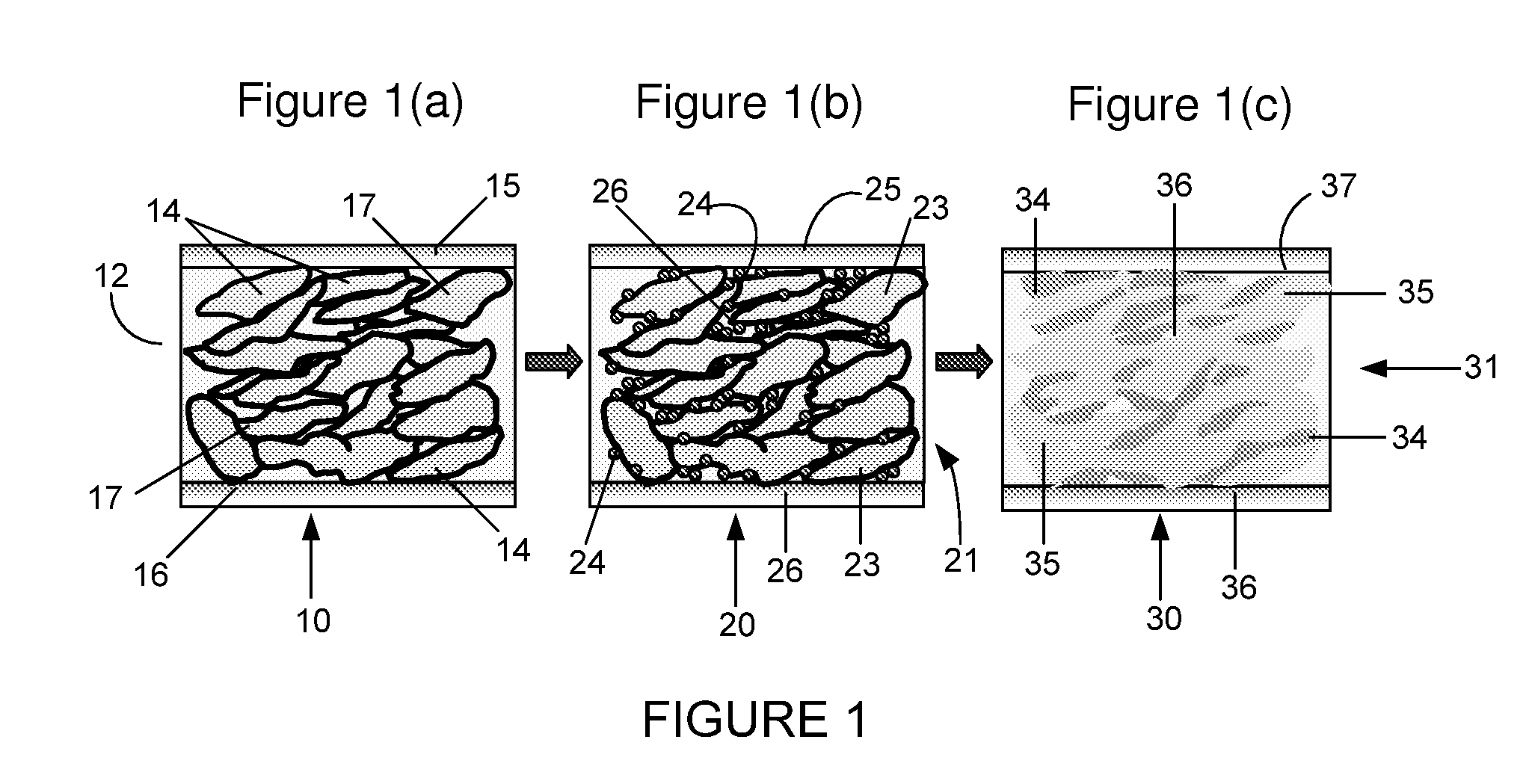
- A polymer composite is formed by mixing conductive metal flakes and surface-functionalized silver nanoparticles with a polymer precursor, where the nanoparticles are sintered to create a network with reduced contact points, enhancing electrical conductivity without using lead.
Regulatory Framework and Compliance Requirements
The regulatory landscape for conductive polymer composites (CPCs) in electronics is complex and multifaceted, encompassing international, regional, and national standards that manufacturers must navigate. At the international level, the International Electrotechnical Commission (IEC) has established several standards relevant to CPCs, including IEC 60093 for volume and surface resistivity measurements and IEC 61340 for electrostatic discharge protection. These standards provide essential guidelines for ensuring the reliability and safety of CPC-based electronic components.
In the United States, the Underwriters Laboratories (UL) certification is crucial for market access, with UL 94 specifically addressing the flammability of plastic materials used in devices and appliances. The Federal Communications Commission (FCC) regulations on electromagnetic interference (EMI) are particularly relevant for CPCs, as these materials are often utilized for EMI shielding applications. Additionally, the Environmental Protection Agency (EPA) enforces the Toxic Substances Control Act (TSCA), which regulates the introduction of new chemical substances, including novel conductive polymers.
The European Union's regulatory framework presents significant compliance challenges through the Restriction of Hazardous Substances (RoHS) Directive, which limits the use of specific hazardous materials in electrical and electronic equipment. The Registration, Evaluation, Authorization, and Restriction of Chemicals (REACH) regulation further requires manufacturers to register chemical substances and demonstrate their safe use. For medical applications of CPCs, the Medical Device Regulation (MDR) imposes stringent requirements for materials used in medical electronics.
In Asia, Japan's Ministry of Economy, Trade and Industry (METI) has established the J-Moss regulation for hazardous substances, while China's Restriction of Hazardous Substances (China RoHS) and Measures for the Administration of the Pollution Control of Electronic Information Products impose similar restrictions. South Korea's Act for Resource Recycling of Electrical and Electronic Equipment and Vehicles parallels these regulatory approaches.
Emerging regulations are increasingly focusing on sustainability aspects of CPCs, with the EU's Circular Economy Action Plan and various Extended Producer Responsibility (EPR) schemes requiring manufacturers to consider the entire lifecycle of their products. This includes considerations for recyclability, repairability, and end-of-life management of CPC-containing electronics.
Compliance with these diverse regulatory frameworks necessitates comprehensive testing protocols and documentation systems. Manufacturers must implement robust quality management systems that can adapt to evolving regulatory requirements across different markets, making regulatory intelligence a critical component of product development strategies for CPC-based electronics.
In the United States, the Underwriters Laboratories (UL) certification is crucial for market access, with UL 94 specifically addressing the flammability of plastic materials used in devices and appliances. The Federal Communications Commission (FCC) regulations on electromagnetic interference (EMI) are particularly relevant for CPCs, as these materials are often utilized for EMI shielding applications. Additionally, the Environmental Protection Agency (EPA) enforces the Toxic Substances Control Act (TSCA), which regulates the introduction of new chemical substances, including novel conductive polymers.
The European Union's regulatory framework presents significant compliance challenges through the Restriction of Hazardous Substances (RoHS) Directive, which limits the use of specific hazardous materials in electrical and electronic equipment. The Registration, Evaluation, Authorization, and Restriction of Chemicals (REACH) regulation further requires manufacturers to register chemical substances and demonstrate their safe use. For medical applications of CPCs, the Medical Device Regulation (MDR) imposes stringent requirements for materials used in medical electronics.
In Asia, Japan's Ministry of Economy, Trade and Industry (METI) has established the J-Moss regulation for hazardous substances, while China's Restriction of Hazardous Substances (China RoHS) and Measures for the Administration of the Pollution Control of Electronic Information Products impose similar restrictions. South Korea's Act for Resource Recycling of Electrical and Electronic Equipment and Vehicles parallels these regulatory approaches.
Emerging regulations are increasingly focusing on sustainability aspects of CPCs, with the EU's Circular Economy Action Plan and various Extended Producer Responsibility (EPR) schemes requiring manufacturers to consider the entire lifecycle of their products. This includes considerations for recyclability, repairability, and end-of-life management of CPC-containing electronics.
Compliance with these diverse regulatory frameworks necessitates comprehensive testing protocols and documentation systems. Manufacturers must implement robust quality management systems that can adapt to evolving regulatory requirements across different markets, making regulatory intelligence a critical component of product development strategies for CPC-based electronics.
Environmental Impact and Sustainability Considerations
The environmental impact of conductive polymer composites (CPCs) in electronics represents a critical consideration as these materials gain wider adoption. Traditional electronic components often contain hazardous substances like lead, mercury, and brominated flame retardants that pose significant environmental and health risks. CPCs offer promising alternatives with potentially reduced toxicity profiles, particularly when designed with environmentally benign polymers and conductive fillers.
Life cycle assessment (LCA) studies indicate that CPCs may provide environmental advantages through reduced energy consumption during manufacturing compared to conventional metal-based conductors. The lower processing temperatures required for polymer composites translate to decreased carbon footprints across production phases. However, comprehensive cradle-to-grave analyses remain limited, highlighting a research gap that standards bodies must address to fully quantify environmental benefits.
Waste management presents both challenges and opportunities for CPC technologies. The European Union's Waste Electrical and Electronic Equipment (WEEE) Directive and Restriction of Hazardous Substances (RoHS) regulations increasingly influence CPC formulation strategies. Manufacturers must design CPCs with end-of-life considerations, including recyclability and biodegradability where feasible, to comply with evolving circular economy principles.
Biodegradable conductive polymers represent an emerging frontier, with research focusing on naturally derived polymers combined with sustainable conductive fillers. These materials could potentially decompose under controlled conditions while maintaining necessary electrical performance during product lifespans. Standards development organizations are beginning to establish protocols for verifying biodegradation claims and preventing greenwashing in this sector.
Resource efficiency considerations are driving innovation in CPC manufacturing. The utilization of renewable feedstocks, bio-based polymers, and recovered carbon materials (from waste streams) as conductive fillers demonstrates promising sustainability pathways. Industry standards increasingly incorporate metrics for renewable content and resource efficiency, though harmonization of these standards remains incomplete across global markets.
Carbon footprint reduction strategies for CPCs include optimization of synthesis methods, solvent reduction or elimination, and energy-efficient processing techniques. The International Electrotechnical Commission (IEC) and other standards bodies are developing specific environmental performance criteria for electronic materials, including CPCs, to enable meaningful comparisons between competing technologies and drive continuous improvement in environmental performance.
Life cycle assessment (LCA) studies indicate that CPCs may provide environmental advantages through reduced energy consumption during manufacturing compared to conventional metal-based conductors. The lower processing temperatures required for polymer composites translate to decreased carbon footprints across production phases. However, comprehensive cradle-to-grave analyses remain limited, highlighting a research gap that standards bodies must address to fully quantify environmental benefits.
Waste management presents both challenges and opportunities for CPC technologies. The European Union's Waste Electrical and Electronic Equipment (WEEE) Directive and Restriction of Hazardous Substances (RoHS) regulations increasingly influence CPC formulation strategies. Manufacturers must design CPCs with end-of-life considerations, including recyclability and biodegradability where feasible, to comply with evolving circular economy principles.
Biodegradable conductive polymers represent an emerging frontier, with research focusing on naturally derived polymers combined with sustainable conductive fillers. These materials could potentially decompose under controlled conditions while maintaining necessary electrical performance during product lifespans. Standards development organizations are beginning to establish protocols for verifying biodegradation claims and preventing greenwashing in this sector.
Resource efficiency considerations are driving innovation in CPC manufacturing. The utilization of renewable feedstocks, bio-based polymers, and recovered carbon materials (from waste streams) as conductive fillers demonstrates promising sustainability pathways. Industry standards increasingly incorporate metrics for renewable content and resource efficiency, though harmonization of these standards remains incomplete across global markets.
Carbon footprint reduction strategies for CPCs include optimization of synthesis methods, solvent reduction or elimination, and energy-efficient processing techniques. The International Electrotechnical Commission (IEC) and other standards bodies are developing specific environmental performance criteria for electronic materials, including CPCs, to enable meaningful comparisons between competing technologies and drive continuous improvement in environmental performance.
Unlock deeper insights with PatSnap Eureka Quick Research — get a full tech report to explore trends and direct your research. Try now!
Generate Your Research Report Instantly with AI Agent
Supercharge your innovation with PatSnap Eureka AI Agent Platform!