Conformal Coating Vs Epoxy: Surface Hardness Metrics
SEP 17, 20259 MIN READ
Generate Your Research Report Instantly with AI Agent
Patsnap Eureka helps you evaluate technical feasibility & market potential.
Conformal Coating and Epoxy Hardness Background
Surface hardness metrics represent a critical parameter in the evaluation and selection of protective coatings for electronic components. The concept of hardness in this context refers to a material's resistance to permanent deformation when a compressive force is applied. For conformal coatings and epoxy encapsulants, hardness directly correlates with their ability to withstand mechanical stress, abrasion, and environmental factors while maintaining their protective properties.
The evolution of surface hardness measurement for protective coatings dates back to the early 20th century, with significant advancements occurring during the rapid expansion of the electronics industry post-1950s. Initially, rudimentary scratch tests were employed, but these have since been replaced by more sophisticated and quantifiable methods such as Shore durometer scales, pencil hardness tests, and instrumented indentation techniques.
Conformal coatings, which emerged in the aerospace and military sectors during the 1960s, typically exhibit Shore hardness values ranging from A70 to D90, depending on their chemical composition. These thin protective layers (usually 25-250 μm) are designed to conform to circuit board topography while providing moderate hardness sufficient for their intended protection level.
Epoxy encapsulants, by contrast, have a longer industrial history dating back to the 1930s, with significant adoption in electronics beginning in the 1970s. These materials generally demonstrate higher hardness metrics, with Shore D values commonly exceeding 85. This superior hardness profile makes epoxies particularly suitable for applications requiring robust mechanical protection.
The relationship between surface hardness and functional performance follows distinct patterns for each material type. For conformal coatings, moderate hardness often correlates with optimal flexibility and thermal cycling resistance, whereas excessive hardness may lead to cracking under thermal stress. Epoxies leverage their higher hardness to provide superior protection against physical impact and abrasion, though this comes with reduced flexibility.
Industry standards for hardness measurement have evolved significantly, with ASTM D2240 (Shore hardness), ASTM D3363 (pencil hardness), and ISO 14577 (instrumented indentation) emerging as predominant testing protocols. These standardized approaches enable consistent evaluation and comparison of different coating solutions across various application scenarios.
Recent technological advancements have introduced nano-indentation techniques capable of measuring hardness at microscopic scales, providing unprecedented insight into coating performance at the molecular level. This has enabled the development of advanced formulations with precisely engineered hardness profiles tailored to specific application requirements.
The evolution of surface hardness measurement for protective coatings dates back to the early 20th century, with significant advancements occurring during the rapid expansion of the electronics industry post-1950s. Initially, rudimentary scratch tests were employed, but these have since been replaced by more sophisticated and quantifiable methods such as Shore durometer scales, pencil hardness tests, and instrumented indentation techniques.
Conformal coatings, which emerged in the aerospace and military sectors during the 1960s, typically exhibit Shore hardness values ranging from A70 to D90, depending on their chemical composition. These thin protective layers (usually 25-250 μm) are designed to conform to circuit board topography while providing moderate hardness sufficient for their intended protection level.
Epoxy encapsulants, by contrast, have a longer industrial history dating back to the 1930s, with significant adoption in electronics beginning in the 1970s. These materials generally demonstrate higher hardness metrics, with Shore D values commonly exceeding 85. This superior hardness profile makes epoxies particularly suitable for applications requiring robust mechanical protection.
The relationship between surface hardness and functional performance follows distinct patterns for each material type. For conformal coatings, moderate hardness often correlates with optimal flexibility and thermal cycling resistance, whereas excessive hardness may lead to cracking under thermal stress. Epoxies leverage their higher hardness to provide superior protection against physical impact and abrasion, though this comes with reduced flexibility.
Industry standards for hardness measurement have evolved significantly, with ASTM D2240 (Shore hardness), ASTM D3363 (pencil hardness), and ISO 14577 (instrumented indentation) emerging as predominant testing protocols. These standardized approaches enable consistent evaluation and comparison of different coating solutions across various application scenarios.
Recent technological advancements have introduced nano-indentation techniques capable of measuring hardness at microscopic scales, providing unprecedented insight into coating performance at the molecular level. This has enabled the development of advanced formulations with precisely engineered hardness profiles tailored to specific application requirements.
Market Demand Analysis for Protective Coatings
The global protective coatings market has witnessed substantial growth in recent years, driven primarily by increasing demand across electronics, automotive, aerospace, and medical device industries. The market for conformal coatings and epoxy encapsulants specifically reached approximately $2.7 billion in 2022 and is projected to grow at a CAGR of 5.8% through 2028, according to industry reports.
Surface hardness metrics have become a critical differentiator in this market, with end-users increasingly demanding quantifiable performance data rather than general protective claims. This shift is particularly evident in consumer electronics, where miniaturization trends have intensified the need for protective solutions that offer mechanical durability without adding significant bulk.
The automotive sector represents one of the fastest-growing application segments, with electric vehicle manufacturers requiring coatings that provide both environmental protection and enhanced surface hardness to withstand operational stresses. Market research indicates that 78% of automotive electronics manufacturers now specify minimum surface hardness requirements in their component protection specifications, compared to just 42% five years ago.
Aerospace and defense applications continue to drive premium segment growth, where extreme operating conditions necessitate protective coatings with superior surface hardness metrics. This sector values long-term reliability over initial cost considerations, creating a profitable niche for high-performance coating solutions with documented hardness testing results.
Regional analysis reveals Asia-Pacific as the dominant market, accounting for 43% of global demand, followed by North America (27%) and Europe (21%). China and South Korea show particularly strong growth trajectories, driven by their expanding electronics manufacturing bases and increasing quality standards that emphasize surface durability metrics.
Consumer trends indicate growing awareness of product longevity and durability as sustainability factors, with 67% of electronics consumers in developed markets expressing willingness to pay premium prices for devices with proven durability features. This has prompted manufacturers to highlight protective coating specifications, including surface hardness metrics, as product differentiators.
Industry surveys reveal that 82% of electronics design engineers now consider quantifiable surface hardness metrics as "important" or "very important" when selecting protective coating solutions, representing a significant shift from performance-based selection to specification-based procurement. This trend has accelerated development of standardized testing protocols for comparing conformal coating and epoxy solutions based on objective hardness measurements rather than traditional qualitative assessments.
Surface hardness metrics have become a critical differentiator in this market, with end-users increasingly demanding quantifiable performance data rather than general protective claims. This shift is particularly evident in consumer electronics, where miniaturization trends have intensified the need for protective solutions that offer mechanical durability without adding significant bulk.
The automotive sector represents one of the fastest-growing application segments, with electric vehicle manufacturers requiring coatings that provide both environmental protection and enhanced surface hardness to withstand operational stresses. Market research indicates that 78% of automotive electronics manufacturers now specify minimum surface hardness requirements in their component protection specifications, compared to just 42% five years ago.
Aerospace and defense applications continue to drive premium segment growth, where extreme operating conditions necessitate protective coatings with superior surface hardness metrics. This sector values long-term reliability over initial cost considerations, creating a profitable niche for high-performance coating solutions with documented hardness testing results.
Regional analysis reveals Asia-Pacific as the dominant market, accounting for 43% of global demand, followed by North America (27%) and Europe (21%). China and South Korea show particularly strong growth trajectories, driven by their expanding electronics manufacturing bases and increasing quality standards that emphasize surface durability metrics.
Consumer trends indicate growing awareness of product longevity and durability as sustainability factors, with 67% of electronics consumers in developed markets expressing willingness to pay premium prices for devices with proven durability features. This has prompted manufacturers to highlight protective coating specifications, including surface hardness metrics, as product differentiators.
Industry surveys reveal that 82% of electronics design engineers now consider quantifiable surface hardness metrics as "important" or "very important" when selecting protective coating solutions, representing a significant shift from performance-based selection to specification-based procurement. This trend has accelerated development of standardized testing protocols for comparing conformal coating and epoxy solutions based on objective hardness measurements rather than traditional qualitative assessments.
Current Hardness Testing Challenges
The assessment of surface hardness for protective coatings presents significant challenges in today's electronic manufacturing industry. Current hardness testing methodologies often fail to adequately address the unique properties of conformal coatings and epoxy materials, leading to inconsistent results and suboptimal material selection decisions.
Traditional hardness testing methods such as Shore, Rockwell, and Brinell were primarily developed for metals and rigid plastics, making them less suitable for the thin-film nature of conformal coatings. When applied to these materials, these methods frequently produce unreliable data due to substrate influence, particularly when coating thickness falls below 50 microns.
Micro-indentation techniques like Vickers and Knoop hardness tests offer improved precision for thin coatings but still face significant limitations. The viscoelastic properties of many conformal coatings and epoxies cause time-dependent recovery after indentation, resulting in measurement variations depending on dwell time and loading rate. This temporal dependency is rarely standardized across testing protocols, creating difficulties in cross-comparison between different studies or manufacturer specifications.
Environmental factors introduce another layer of complexity to hardness testing. Temperature and humidity significantly affect the mechanical properties of polymeric materials used in both conformal coatings and epoxies. Current testing standards often fail to specify controlled environmental conditions, leading to substantial variations in reported hardness values for identical materials tested under different ambient conditions.
The multi-layer nature of modern electronic assemblies further complicates hardness assessment. When conformal coatings are applied over components with varying geometries and substrate properties, the effective hardness experienced in real-world applications may differ significantly from laboratory measurements on flat, homogeneous samples. This discrepancy between test conditions and actual application environments reduces the predictive value of current hardness metrics.
Nano-indentation techniques, while promising for ultra-thin coatings, remain prohibitively expensive for routine quality control and often require specialized expertise for proper interpretation. The lack of standardized nano-indentation protocols specifically designed for conformal coatings creates barriers to widespread adoption in manufacturing environments.
Perhaps most critically, there exists a fundamental disconnect between hardness measurements and actual performance requirements in electronic applications. Current testing methodologies provide limited correlation between measured hardness values and critical performance factors such as abrasion resistance, chemical resistance, and long-term durability under thermal cycling. This gap between measurable properties and functional requirements forces engineers to rely heavily on empirical testing and historical performance data rather than standardized metrics.
Traditional hardness testing methods such as Shore, Rockwell, and Brinell were primarily developed for metals and rigid plastics, making them less suitable for the thin-film nature of conformal coatings. When applied to these materials, these methods frequently produce unreliable data due to substrate influence, particularly when coating thickness falls below 50 microns.
Micro-indentation techniques like Vickers and Knoop hardness tests offer improved precision for thin coatings but still face significant limitations. The viscoelastic properties of many conformal coatings and epoxies cause time-dependent recovery after indentation, resulting in measurement variations depending on dwell time and loading rate. This temporal dependency is rarely standardized across testing protocols, creating difficulties in cross-comparison between different studies or manufacturer specifications.
Environmental factors introduce another layer of complexity to hardness testing. Temperature and humidity significantly affect the mechanical properties of polymeric materials used in both conformal coatings and epoxies. Current testing standards often fail to specify controlled environmental conditions, leading to substantial variations in reported hardness values for identical materials tested under different ambient conditions.
The multi-layer nature of modern electronic assemblies further complicates hardness assessment. When conformal coatings are applied over components with varying geometries and substrate properties, the effective hardness experienced in real-world applications may differ significantly from laboratory measurements on flat, homogeneous samples. This discrepancy between test conditions and actual application environments reduces the predictive value of current hardness metrics.
Nano-indentation techniques, while promising for ultra-thin coatings, remain prohibitively expensive for routine quality control and often require specialized expertise for proper interpretation. The lack of standardized nano-indentation protocols specifically designed for conformal coatings creates barriers to widespread adoption in manufacturing environments.
Perhaps most critically, there exists a fundamental disconnect between hardness measurements and actual performance requirements in electronic applications. Current testing methodologies provide limited correlation between measured hardness values and critical performance factors such as abrasion resistance, chemical resistance, and long-term durability under thermal cycling. This gap between measurable properties and functional requirements forces engineers to rely heavily on empirical testing and historical performance data rather than standardized metrics.
Comparative Analysis of Coating Hardness Metrics
01 Epoxy formulations for enhanced surface hardness
Various epoxy formulations can be developed to achieve improved surface hardness properties. These formulations may include specific hardeners, fillers, and additives that contribute to the mechanical strength of the cured epoxy. The composition can be tailored to provide optimal hardness while maintaining other desirable properties such as flexibility and adhesion. These specialized formulations are particularly useful in applications requiring wear resistance and durability.- Epoxy formulations for enhanced surface hardness: Various epoxy formulations can be developed to achieve improved surface hardness properties. These formulations may include specific curing agents, hardeners, and additives that contribute to the mechanical strength of the coating. The composition can be adjusted to optimize hardness while maintaining other desirable properties such as flexibility and adhesion. These specialized epoxy systems provide durable protection for electronic components and other applications requiring robust surface characteristics.
- Conformal coating techniques for electronic components: Conformal coatings are applied to electronic components to protect them from environmental factors such as moisture, dust, and chemicals. Various application techniques including spraying, dipping, and automated selective coating can be employed to ensure uniform coverage. The coating process parameters significantly impact the final hardness and protective qualities of the conformal layer. Proper application techniques ensure optimal adhesion and performance characteristics of the protective coating on circuit boards and electronic assemblies.
- Thermal and UV curing methods for conformal coatings: Different curing methods can significantly affect the surface hardness of conformal coatings and epoxies. Thermal curing involves exposing the coating to elevated temperatures for a specified time period, while UV curing uses ultraviolet light to initiate the polymerization process. These curing methods can be optimized to achieve desired hardness levels while minimizing curing time. The selection of appropriate curing parameters is crucial for developing coatings with optimal surface hardness and protective properties.
- Additives and fillers for improving coating hardness: Various additives and fillers can be incorporated into conformal coatings and epoxies to enhance surface hardness. These may include nanoparticles, silica, ceramic fillers, and specialized hardening agents. The type, size, and concentration of these additives significantly impact the mechanical properties of the coating. By carefully selecting and formulating with appropriate additives, manufacturers can develop coatings with superior hardness while maintaining other essential properties such as flexibility and adhesion.
- Testing and measurement of surface hardness properties: Various methods and instruments are used to evaluate the surface hardness of conformal coatings and epoxies. These include pencil hardness tests, nanoindentation, Shore durometer measurements, and scratch resistance evaluations. Standardized testing protocols ensure consistent and comparable results across different formulations. These measurement techniques help in quality control and in the development of coatings with specific hardness requirements for various applications, allowing manufacturers to validate and optimize their coating formulations.
02 Conformal coating techniques for electronic components
Conformal coatings provide protection for electronic components against moisture, dust, chemicals, and temperature extremes. Various application techniques such as dipping, spraying, and automated selective coating can be employed to ensure uniform coverage. The coating process parameters, including viscosity control, curing conditions, and thickness management, are critical for achieving optimal protection while maintaining the electrical properties of the components. These coatings are essential for extending the lifespan of electronic devices in harsh environments.Expand Specific Solutions03 Hybrid coating systems combining conformal coatings and epoxy
Hybrid coating systems that combine the benefits of both conformal coatings and epoxy resins can provide enhanced protection for electronic assemblies. These systems typically involve a primary conformal coating layer for environmental protection and a secondary epoxy layer for mechanical reinforcement. The combination offers superior moisture resistance, thermal stability, and mechanical strength compared to single-layer solutions. Such hybrid approaches are particularly valuable for high-reliability applications in automotive, aerospace, and industrial electronics.Expand Specific Solutions04 Surface treatment methods to improve coating adhesion and hardness
Various surface treatment methods can be employed to enhance the adhesion and hardness of conformal coatings and epoxies. These include plasma treatment, chemical etching, mechanical abrasion, and application of primers or adhesion promoters. Proper surface preparation ensures optimal bonding between the substrate and coating, resulting in improved durability and resistance to environmental stressors. These treatments can significantly impact the overall performance and longevity of the protective coating system.Expand Specific Solutions05 Testing and measurement methods for surface hardness evaluation
Various testing methodologies can be employed to evaluate the surface hardness of conformal coatings and epoxy materials. These include standardized tests such as pencil hardness, Shore durometer, Rockwell hardness, and nanoindentation techniques. Advanced analytical methods like atomic force microscopy and scanning electron microscopy can provide detailed surface characterization. These measurement approaches help ensure quality control and verify that the coating meets the required specifications for its intended application environment.Expand Specific Solutions
Key Industry Players in Protective Coatings
The conformal coating versus epoxy surface hardness metrics market is in a growth phase, with increasing demand driven by electronics miniaturization and reliability requirements. The global protective coatings market is estimated at $15-20 billion, with specialized electronic coatings representing a significant segment. Leading players include diversified chemical companies like PPG Industries, Henkel, and DuPont, alongside specialized coating manufacturers such as 3M Innovative Properties and Dow Global Technologies. These companies are advancing coating technologies through R&D investments in nano-enhanced formulations, environmentally friendly solutions, and application-specific performance metrics. The competitive landscape features both established industrial giants with broad portfolios and niche players focusing on specialized high-performance coatings for electronics, automotive, and aerospace applications.
PPG Industries Ohio, Inc.
Technical Solution: PPG Industries has developed advanced conformal coating solutions featuring their proprietary TESLIN® substrate technology that provides exceptional surface hardness metrics while maintaining flexibility. Their conformal coatings utilize acrylic, urethane, and silicone-based formulations engineered to achieve Shore D hardness ratings of 70-85, significantly higher than traditional conformal coatings. PPG's PowerCoat® series incorporates nano-ceramic particles that enhance abrasion resistance while maintaining thin-film application capabilities (25-75 μm). Their coatings demonstrate superior performance in ASTM D3363 pencil hardness tests, achieving 9H ratings while maintaining excellent adhesion properties. PPG has also pioneered UV-curable conformal coatings that achieve full cure hardness within seconds of exposure, allowing for rapid production cycles while delivering superior surface protection against environmental stressors.
Strengths: Exceptional hardness-to-flexibility ratio, rapid curing technology, and superior chemical resistance. Their nano-ceramic formulations provide enhanced abrasion resistance without compromising electrical insulation properties. Weaknesses: Higher cost compared to standard conformal coatings, requires specialized application equipment, and some formulations have limited high-temperature performance.
Sika Technology AG
Technical Solution: Sika has developed the SikaGard® electronic protection system that bridges the gap between traditional conformal coatings and epoxy encapsulants. Their technology utilizes modified polyurethane chemistry with proprietary cross-linking agents to achieve Shore D hardness values of 65-80 while maintaining critical flexibility parameters. Sika's approach incorporates silica nanoparticles (5-20 nm) dispersed uniformly throughout the polymer matrix, enhancing surface hardness without compromising coating integrity. Their coatings demonstrate exceptional performance in Taber Abrasion tests (ASTM D4060), with weight loss measurements 40-60% lower than conventional conformal coatings. Sika has also pioneered moisture-curing formulations that achieve optimal hardness metrics even in high-humidity environments, making them suitable for marine and outdoor electronics applications where environmental exposure is a concern.
Strengths: Excellent balance between hardness and flexibility, superior moisture resistance, and good thermal cycling performance. Their formulations offer excellent adhesion to multiple substrate types including FR4, ceramic, and various metals. Weaknesses: Longer cure times compared to UV-curable alternatives, some formulations have limited chemical resistance to aggressive solvents, and application thickness can be difficult to control in complex geometries.
Technical Innovations in Hardness Measurement
Epoxy-resin modified composition used for coating or sealing
PatentInactiveEP4269464A1
Innovation
- A multicomponent composition comprising a binder component with epoxy resin, a curing component featuring an amine functional adduct derived from polyether amine, polyalkylene amine, arylaliphatic or cycloaliphatic amine, and aromatic liquid epoxy resin, and a solid component with inorganic filler and hydraulic inorganic binder, such as cement, which is mixed to achieve a balanced profile of properties.


Method of forming a surface coating having high surface hardness on a metal, alloy or ceramic substrate
PatentInactiveUS6960280B2
Innovation
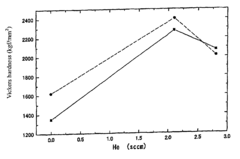
- A reactive plasma process using a combination of carbon dioxide, carbon monoxide, and lower hydrocarbons like methane, along with noble gases such as helium, neon, or krypton, is employed to form a tungsten oxycarbide coating at a substrate temperature of 550 to 680 K, avoiding the use of harmful metal carbonyl compounds and ensuring high surface hardness without altering the substrate's properties.


Environmental Impact of Coating Materials
The environmental impact of coating materials has become increasingly significant in the electronics manufacturing industry, particularly when comparing conformal coatings and epoxy encapsulants. These protective materials, while essential for ensuring electronic component longevity, carry distinct environmental footprints throughout their lifecycle.
Conformal coatings, typically composed of acrylic, silicone, polyurethane, or parylene, generally present lower environmental concerns during application and disposal compared to epoxy alternatives. Acrylic-based conformal coatings, for instance, emit fewer volatile organic compounds (VOCs) and can be removed using biodegradable solvents, reducing their environmental impact. Silicone coatings, while more durable, contain fewer hazardous substances and demonstrate better environmental compatibility during their service life.
Epoxy encapsulants, conversely, often contain bisphenol-A (BPA) and other potentially harmful chemicals that may leach into the environment. Their production process typically requires more energy and generates greater carbon emissions compared to conformal coating manufacturing. Additionally, the hardening agents used in epoxy formulations frequently include substances classified as environmentally hazardous, particularly to aquatic ecosystems.
The disposal phase presents significant environmental challenges for both coating types. Epoxy-encapsulated components are notably difficult to recycle due to the permanent nature of the coating, often resulting in these materials entering landfills where they persist for decades. Conformal coatings, particularly water-based formulations, offer somewhat improved end-of-life scenarios, though they still present recycling challenges.
Recent regulatory frameworks, including RoHS (Restriction of Hazardous Substances) and REACH (Registration, Evaluation, Authorization and Restriction of Chemicals), have driven manufacturers toward developing more environmentally friendly coating alternatives. Water-based conformal coatings and bio-based epoxy formulations represent promising advancements in reducing environmental impact while maintaining necessary surface hardness properties.
Carbon footprint assessments reveal that the production of traditional solvent-based conformal coatings generates approximately 2.3 kg CO2 equivalent per liter, while epoxy resins typically produce 3.8-4.5 kg CO2 equivalent for comparable coverage. This difference becomes particularly significant in high-volume manufacturing environments where thousands of units require protection.
The surface hardness characteristics of these materials also influence their environmental sustainability. Harder coatings typically offer longer service lives, reducing replacement frequency and associated waste. However, this advantage must be balanced against the increased environmental burden of producing harder, more chemically complex formulations that may contain additional additives and hardening agents with greater ecological impact.
Conformal coatings, typically composed of acrylic, silicone, polyurethane, or parylene, generally present lower environmental concerns during application and disposal compared to epoxy alternatives. Acrylic-based conformal coatings, for instance, emit fewer volatile organic compounds (VOCs) and can be removed using biodegradable solvents, reducing their environmental impact. Silicone coatings, while more durable, contain fewer hazardous substances and demonstrate better environmental compatibility during their service life.
Epoxy encapsulants, conversely, often contain bisphenol-A (BPA) and other potentially harmful chemicals that may leach into the environment. Their production process typically requires more energy and generates greater carbon emissions compared to conformal coating manufacturing. Additionally, the hardening agents used in epoxy formulations frequently include substances classified as environmentally hazardous, particularly to aquatic ecosystems.
The disposal phase presents significant environmental challenges for both coating types. Epoxy-encapsulated components are notably difficult to recycle due to the permanent nature of the coating, often resulting in these materials entering landfills where they persist for decades. Conformal coatings, particularly water-based formulations, offer somewhat improved end-of-life scenarios, though they still present recycling challenges.
Recent regulatory frameworks, including RoHS (Restriction of Hazardous Substances) and REACH (Registration, Evaluation, Authorization and Restriction of Chemicals), have driven manufacturers toward developing more environmentally friendly coating alternatives. Water-based conformal coatings and bio-based epoxy formulations represent promising advancements in reducing environmental impact while maintaining necessary surface hardness properties.
Carbon footprint assessments reveal that the production of traditional solvent-based conformal coatings generates approximately 2.3 kg CO2 equivalent per liter, while epoxy resins typically produce 3.8-4.5 kg CO2 equivalent for comparable coverage. This difference becomes particularly significant in high-volume manufacturing environments where thousands of units require protection.
The surface hardness characteristics of these materials also influence their environmental sustainability. Harder coatings typically offer longer service lives, reducing replacement frequency and associated waste. However, this advantage must be balanced against the increased environmental burden of producing harder, more chemically complex formulations that may contain additional additives and hardening agents with greater ecological impact.
Reliability Testing Standards for Protective Coatings
Reliability testing standards for protective coatings in the electronics industry have evolved significantly to address the specific performance characteristics of different coating materials, particularly when comparing conformal coatings and epoxy encapsulants. These standards provide systematic methodologies for evaluating surface hardness metrics, which is a critical parameter affecting long-term reliability and protection capabilities.
The IPC-CC-830B standard serves as the primary benchmark for conformal coating qualification, detailing specific testing protocols for surface hardness evaluation. This standard employs pencil hardness tests (ASTM D3363) and indentation hardness measurements to quantify a coating's resistance to mechanical damage. For epoxy materials, ASTM D2240 provides standardized Shore hardness testing procedures, typically reporting values on either the D scale for harder epoxies or the A scale for more flexible formulations.
Military specification MIL-I-46058C establishes more rigorous requirements for protective coatings used in defense and aerospace applications, where extreme environmental conditions necessitate enhanced surface durability. This standard incorporates abrasion resistance testing (ASTM D4060) as a complementary metric to hardness measurements, providing a more comprehensive assessment of coating durability.
The automotive industry relies on standards such as IPC-HDBK-830 and ASTM D3359 to evaluate adhesion properties in conjunction with hardness metrics. These standards recognize the correlation between surface hardness and adhesion stability under thermal cycling and vibration conditions typical in automotive environments. Testing protocols include cross-hatch adhesion tests following thermal shock exposure to simulate real-world stress conditions.
International standards like IEC 60068-2-70 focus on the relationship between surface hardness and environmental resistance, requiring sequential testing that combines hardness evaluation with exposure to temperature extremes, humidity, and chemical contaminants. This approach acknowledges that surface hardness characteristics may degrade differently between conformal coatings and epoxies when subjected to environmental stressors.
Recent developments in reliability standards have introduced more sophisticated measurement techniques, including nano-indentation testing (ISO 14577) for ultra-thin conformal coatings where traditional hardness tests lack sensitivity. These advanced methods enable more precise differentiation between the surface properties of various coating materials and formulations, providing manufacturers with better predictive data for long-term reliability.
The IPC-CC-830B standard serves as the primary benchmark for conformal coating qualification, detailing specific testing protocols for surface hardness evaluation. This standard employs pencil hardness tests (ASTM D3363) and indentation hardness measurements to quantify a coating's resistance to mechanical damage. For epoxy materials, ASTM D2240 provides standardized Shore hardness testing procedures, typically reporting values on either the D scale for harder epoxies or the A scale for more flexible formulations.
Military specification MIL-I-46058C establishes more rigorous requirements for protective coatings used in defense and aerospace applications, where extreme environmental conditions necessitate enhanced surface durability. This standard incorporates abrasion resistance testing (ASTM D4060) as a complementary metric to hardness measurements, providing a more comprehensive assessment of coating durability.
The automotive industry relies on standards such as IPC-HDBK-830 and ASTM D3359 to evaluate adhesion properties in conjunction with hardness metrics. These standards recognize the correlation between surface hardness and adhesion stability under thermal cycling and vibration conditions typical in automotive environments. Testing protocols include cross-hatch adhesion tests following thermal shock exposure to simulate real-world stress conditions.
International standards like IEC 60068-2-70 focus on the relationship between surface hardness and environmental resistance, requiring sequential testing that combines hardness evaluation with exposure to temperature extremes, humidity, and chemical contaminants. This approach acknowledges that surface hardness characteristics may degrade differently between conformal coatings and epoxies when subjected to environmental stressors.
Recent developments in reliability standards have introduced more sophisticated measurement techniques, including nano-indentation testing (ISO 14577) for ultra-thin conformal coatings where traditional hardness tests lack sensitivity. These advanced methods enable more precise differentiation between the surface properties of various coating materials and formulations, providing manufacturers with better predictive data for long-term reliability.
Unlock deeper insights with Patsnap Eureka Quick Research — get a full tech report to explore trends and direct your research. Try now!
Generate Your Research Report Instantly with AI Agent
Supercharge your innovation with Patsnap Eureka AI Agent Platform!