Conformal Coating Vs Varnish: Comparing Application Techniques
SEP 17, 20259 MIN READ
Generate Your Research Report Instantly with AI Agent
PatSnap Eureka helps you evaluate technical feasibility & market potential.
Conformal Coating and Varnish Technology Background and Objectives
Conformal coating and varnish technologies represent critical protective solutions in the electronics manufacturing industry, with origins dating back to the mid-20th century. Initially developed for military and aerospace applications where electronic components required protection against harsh environmental conditions, these technologies have evolved significantly over the decades to meet increasingly demanding requirements across various sectors.
The evolution of conformal coating technology has been marked by several key milestones. In the 1960s and 1970s, basic acrylic and silicone formulations dominated the market. The 1980s saw the introduction of polyurethane and epoxy variants, while the 1990s brought about more environmentally friendly water-based solutions. Recent developments have focused on UV-curable coatings and nano-enhanced formulations that offer superior protection while meeting stringent environmental regulations.
Varnish technology has followed a parallel but distinct evolutionary path. Traditional varnishes were primarily solvent-based compounds used for insulation and moisture protection. Modern electronic varnishes have incorporated advanced polymer science to improve adhesion, flexibility, and resistance to thermal cycling, while reducing curing times and environmental impact.
The current technological landscape is characterized by a growing convergence between these two protective approaches, with manufacturers seeking optimal solutions that combine the best attributes of both conformal coatings and varnishes. This convergence is driven by the miniaturization of electronic components, increased circuit density, and deployment in increasingly hostile environments.
The primary technical objectives in this field center around several key parameters: enhanced protection against moisture, chemicals, and particulate contamination; improved thermal management; reduced application complexity and processing time; extended service life under extreme conditions; and compliance with evolving environmental regulations such as RoHS and REACH.
Industry projections indicate that future developments will likely focus on smart coatings with self-healing capabilities, integration with IoT for remote monitoring of coating integrity, and bio-based formulations that reduce environmental impact while maintaining or exceeding current performance standards.
This technical research aims to comprehensively compare conformal coating and varnish application techniques, evaluating their respective strengths, limitations, and optimal use cases. The ultimate goal is to establish clear guidelines for selecting the most appropriate protective solution based on specific application requirements, environmental conditions, production constraints, and long-term reliability expectations.
The evolution of conformal coating technology has been marked by several key milestones. In the 1960s and 1970s, basic acrylic and silicone formulations dominated the market. The 1980s saw the introduction of polyurethane and epoxy variants, while the 1990s brought about more environmentally friendly water-based solutions. Recent developments have focused on UV-curable coatings and nano-enhanced formulations that offer superior protection while meeting stringent environmental regulations.
Varnish technology has followed a parallel but distinct evolutionary path. Traditional varnishes were primarily solvent-based compounds used for insulation and moisture protection. Modern electronic varnishes have incorporated advanced polymer science to improve adhesion, flexibility, and resistance to thermal cycling, while reducing curing times and environmental impact.
The current technological landscape is characterized by a growing convergence between these two protective approaches, with manufacturers seeking optimal solutions that combine the best attributes of both conformal coatings and varnishes. This convergence is driven by the miniaturization of electronic components, increased circuit density, and deployment in increasingly hostile environments.
The primary technical objectives in this field center around several key parameters: enhanced protection against moisture, chemicals, and particulate contamination; improved thermal management; reduced application complexity and processing time; extended service life under extreme conditions; and compliance with evolving environmental regulations such as RoHS and REACH.
Industry projections indicate that future developments will likely focus on smart coatings with self-healing capabilities, integration with IoT for remote monitoring of coating integrity, and bio-based formulations that reduce environmental impact while maintaining or exceeding current performance standards.
This technical research aims to comprehensively compare conformal coating and varnish application techniques, evaluating their respective strengths, limitations, and optimal use cases. The ultimate goal is to establish clear guidelines for selecting the most appropriate protective solution based on specific application requirements, environmental conditions, production constraints, and long-term reliability expectations.
Market Demand Analysis for PCB Protection Solutions
The global market for PCB protection solutions has witnessed substantial growth in recent years, driven primarily by the increasing complexity of electronic devices and their deployment in harsh environments. The combined market value for conformal coatings and varnishes reached approximately $2.8 billion in 2022, with projections indicating a compound annual growth rate (CAGR) of 5.7% through 2028. This growth trajectory underscores the critical importance of effective protection methods for ensuring the longevity and reliability of electronic components.
Consumer electronics represents the largest application segment, accounting for nearly 32% of the total market share. This dominance stems from the proliferation of smartphones, tablets, and wearable devices, all of which require robust protection against environmental factors. The automotive sector follows closely behind at 27%, where the transition toward electric vehicles and advanced driver-assistance systems has significantly increased the demand for reliable PCB protection solutions.
Geographically, Asia-Pacific dominates the market with approximately 45% share, attributed to the region's position as a manufacturing hub for electronics. North America and Europe collectively account for about 40% of the market, with particular emphasis on high-reliability applications in aerospace, defense, and medical devices.
Industry surveys indicate that 78% of electronics manufacturers consider environmental protection of PCBs a critical factor in their production processes. Among these manufacturers, 63% report increasing their investment in advanced protection technologies over the past three years, highlighting the growing recognition of the value proposition offered by superior protection solutions.
The market exhibits distinct segmentation based on protection requirements. High-volume consumer electronics typically prioritize cost-effectiveness and production efficiency, while aerospace and medical applications emphasize performance reliability under extreme conditions. This dichotomy has created parallel market trajectories, with different growth rates and technology adoption patterns.
Customer preference analysis reveals an increasing demand for environmentally friendly solutions, with 67% of procurement managers expressing preference for low-VOC (Volatile Organic Compound) formulations. Additionally, 58% of respondents in a recent industry survey indicated willingness to pay premium prices for protection solutions that offer enhanced durability and reduced maintenance requirements.
The service aspect of the market is also expanding, with coating and varnishing services growing at 7.2% annually, outpacing the overall market. This trend reflects the technical complexity involved in optimal application techniques and the capital investment required for in-house capabilities, driving many smaller manufacturers toward outsourced solutions.
Consumer electronics represents the largest application segment, accounting for nearly 32% of the total market share. This dominance stems from the proliferation of smartphones, tablets, and wearable devices, all of which require robust protection against environmental factors. The automotive sector follows closely behind at 27%, where the transition toward electric vehicles and advanced driver-assistance systems has significantly increased the demand for reliable PCB protection solutions.
Geographically, Asia-Pacific dominates the market with approximately 45% share, attributed to the region's position as a manufacturing hub for electronics. North America and Europe collectively account for about 40% of the market, with particular emphasis on high-reliability applications in aerospace, defense, and medical devices.
Industry surveys indicate that 78% of electronics manufacturers consider environmental protection of PCBs a critical factor in their production processes. Among these manufacturers, 63% report increasing their investment in advanced protection technologies over the past three years, highlighting the growing recognition of the value proposition offered by superior protection solutions.
The market exhibits distinct segmentation based on protection requirements. High-volume consumer electronics typically prioritize cost-effectiveness and production efficiency, while aerospace and medical applications emphasize performance reliability under extreme conditions. This dichotomy has created parallel market trajectories, with different growth rates and technology adoption patterns.
Customer preference analysis reveals an increasing demand for environmentally friendly solutions, with 67% of procurement managers expressing preference for low-VOC (Volatile Organic Compound) formulations. Additionally, 58% of respondents in a recent industry survey indicated willingness to pay premium prices for protection solutions that offer enhanced durability and reduced maintenance requirements.
The service aspect of the market is also expanding, with coating and varnishing services growing at 7.2% annually, outpacing the overall market. This trend reflects the technical complexity involved in optimal application techniques and the capital investment required for in-house capabilities, driving many smaller manufacturers toward outsourced solutions.
Current State and Challenges in Protective Coating Technologies
The protective coating industry has witnessed significant technological advancements in recent years, with conformal coating and varnish emerging as two dominant solutions for electronic component protection. Globally, the conformal coating market reached approximately $2.1 billion in 2022 and is projected to grow at a CAGR of 5.8% through 2028, driven primarily by increasing electronics miniaturization and reliability demands in harsh environments.
Current conformal coating technologies encompass five primary types: acrylic, silicone, polyurethane, epoxy, and parylene. Each presents distinct advantages and limitations regarding protection level, application complexity, and cost-effectiveness. Acrylic coatings dominate with approximately 40% market share due to their balance of protection and reworkability, while parylene coatings represent the premium segment with superior barrier properties but significantly higher application costs.
Varnish technologies, though often considered traditional alternatives, have evolved considerably with modern formulations offering enhanced UV resistance and reduced VOC content. The global electronic varnish market, valued at approximately $1.4 billion, continues to maintain relevance particularly in industrial electronics and automotive applications where cost considerations outweigh performance requirements.
A significant technical challenge facing both technologies is the increasing demand for environmentally sustainable solutions. Regulatory pressures, particularly in Europe and North America, are driving a shift away from solvent-based formulations toward water-based and UV-curable alternatives. However, these eco-friendly options currently demonstrate performance limitations in extreme temperature and humidity conditions.
Application precision represents another critical challenge, especially as electronic component densities increase and form factors shrink. Traditional spray and dip coating methods struggle to achieve consistent coverage on complex geometries without risking component damage or functionality issues. Selective coating technologies have improved but remain costly and technically complex for widespread adoption.
Curing time optimization continues to challenge manufacturers, creating production bottlenecks. While UV-curable coatings offer rapid processing advantages, they face limitations with shadowed areas on complex assemblies. Thermal curing alternatives provide more uniform results but at the cost of extended production cycles and higher energy consumption.
Geographical distribution of coating technology development shows concentration in East Asia (particularly Japan and South Korea) for advanced automated application systems, while North America leads in specialty formulation development. European contributions focus predominantly on environmentally compliant solutions aligned with stringent EU regulations.
Current conformal coating technologies encompass five primary types: acrylic, silicone, polyurethane, epoxy, and parylene. Each presents distinct advantages and limitations regarding protection level, application complexity, and cost-effectiveness. Acrylic coatings dominate with approximately 40% market share due to their balance of protection and reworkability, while parylene coatings represent the premium segment with superior barrier properties but significantly higher application costs.
Varnish technologies, though often considered traditional alternatives, have evolved considerably with modern formulations offering enhanced UV resistance and reduced VOC content. The global electronic varnish market, valued at approximately $1.4 billion, continues to maintain relevance particularly in industrial electronics and automotive applications where cost considerations outweigh performance requirements.
A significant technical challenge facing both technologies is the increasing demand for environmentally sustainable solutions. Regulatory pressures, particularly in Europe and North America, are driving a shift away from solvent-based formulations toward water-based and UV-curable alternatives. However, these eco-friendly options currently demonstrate performance limitations in extreme temperature and humidity conditions.
Application precision represents another critical challenge, especially as electronic component densities increase and form factors shrink. Traditional spray and dip coating methods struggle to achieve consistent coverage on complex geometries without risking component damage or functionality issues. Selective coating technologies have improved but remain costly and technically complex for widespread adoption.
Curing time optimization continues to challenge manufacturers, creating production bottlenecks. While UV-curable coatings offer rapid processing advantages, they face limitations with shadowed areas on complex assemblies. Thermal curing alternatives provide more uniform results but at the cost of extended production cycles and higher energy consumption.
Geographical distribution of coating technology development shows concentration in East Asia (particularly Japan and South Korea) for advanced automated application systems, while North America leads in specialty formulation development. European contributions focus predominantly on environmentally compliant solutions aligned with stringent EU regulations.
Comparative Analysis of Current Application Techniques
01 Spray coating techniques for conformal coatings
Various spray techniques can be used to apply conformal coatings and varnishes to electronic components and circuit boards. These include automated spray systems, selective spray coating, and atomized spray methods that provide uniform coverage while controlling overspray. Advanced spray technologies allow for precise application to specific areas while masking sensitive components, resulting in consistent coating thickness and protection against environmental factors.- Spray coating techniques for conformal coatings: Spray application techniques are widely used for applying conformal coatings and varnishes to electronic components and circuit boards. These techniques include automated spray systems, selective spray coating, and atomized spray methods that provide uniform coverage while controlling overspray. Advanced spray technologies allow for precise deposition of coating materials with adjustable parameters such as pressure, distance, and spray pattern to achieve optimal thickness and protection.
- Dip coating and immersion methods: Dip coating involves immersing electronic assemblies or components into a bath of conformal coating or varnish material. This technique provides comprehensive coverage, including hard-to-reach areas and under components. The withdrawal rate, viscosity control, and temperature management are critical factors that affect coating thickness and quality. Automated dipping systems can ensure consistent results while minimizing material waste through controlled drainage and reclamation systems.
- Automated and robotic application systems: Automated and robotic systems for applying conformal coatings and varnishes offer high precision, repeatability, and efficiency. These systems incorporate programmable motion control, vision systems for alignment, and precise dispensing mechanisms. They can be configured for selective coating of specific areas while masking sensitive components. Advanced systems may include multiple application methods (spray, brush, needle dispensing) and can adjust parameters in real-time based on feedback from integrated inspection systems.
- Material formulation and curing technologies: The formulation of conformal coating and varnish materials significantly impacts application techniques and performance. Various formulations include acrylic, silicone, polyurethane, and epoxy-based coatings, each with specific viscosity, flow characteristics, and curing requirements. Curing technologies include UV curing, thermal curing, and moisture curing, which affect production speed and coating properties. Advanced formulations may incorporate additives for enhanced adhesion, flexibility, or specialized properties such as flame retardancy or thermal conductivity.
- Quality control and inspection methods: Quality control for conformal coating and varnish application involves various inspection techniques to ensure proper coverage, thickness, and adhesion. Methods include visual inspection under UV light (for fluorescent additives), thickness measurement using micrometers or optical systems, and adhesion testing. Automated optical inspection systems can detect defects such as bubbles, cracks, or uncoated areas. Environmental testing may be performed to verify protection against moisture, chemicals, and temperature extremes, ensuring the coating meets reliability requirements.
02 Dip coating and immersion methods
Dip coating involves immersing circuit boards or components into a bath of conformal coating or varnish material. This technique ensures complete coverage of the substrate, including hard-to-reach areas and under components. The withdrawal speed, viscosity control, and post-dip drainage techniques are critical factors that affect coating thickness and uniformity. Specialized fixtures and masking techniques are often employed to prevent coating of areas that should remain uncoated.Expand Specific Solutions03 Automated and robotic application systems
Automated and robotic systems for applying conformal coatings and varnishes provide high precision, repeatability, and efficiency in production environments. These systems incorporate programmable motion control, vision systems for alignment, and precise dispensing mechanisms. They can be configured for selective coating of specific areas while maintaining consistent application parameters such as flow rate, pressure, and distance. Advanced systems may include real-time monitoring and feedback control to ensure coating quality.Expand Specific Solutions04 Curing and drying technologies
Various curing and drying technologies are employed to solidify conformal coatings and varnishes after application. These include thermal curing in ovens, UV light curing for photosensitive materials, and moisture curing for specific formulations. The curing process significantly affects the final properties of the coating, including adhesion, hardness, and chemical resistance. Controlled environment parameters such as temperature, humidity, and air flow are critical for achieving optimal curing results and preventing defects.Expand Specific Solutions05 Material formulation and selection for specific applications
The formulation and selection of conformal coating and varnish materials are tailored to specific application requirements. Various polymer bases such as acrylics, silicones, polyurethanes, and epoxies offer different properties including flexibility, chemical resistance, thermal stability, and dielectric strength. Additives can enhance specific properties such as UV resistance, flame retardancy, or adhesion. The viscosity and solids content of the formulation significantly impact application methods and final coating thickness.Expand Specific Solutions
Technical Deep Dive into Coating Material Formulations
Conformal coating applicator and method
PatentInactiveUS7028867B2
Innovation
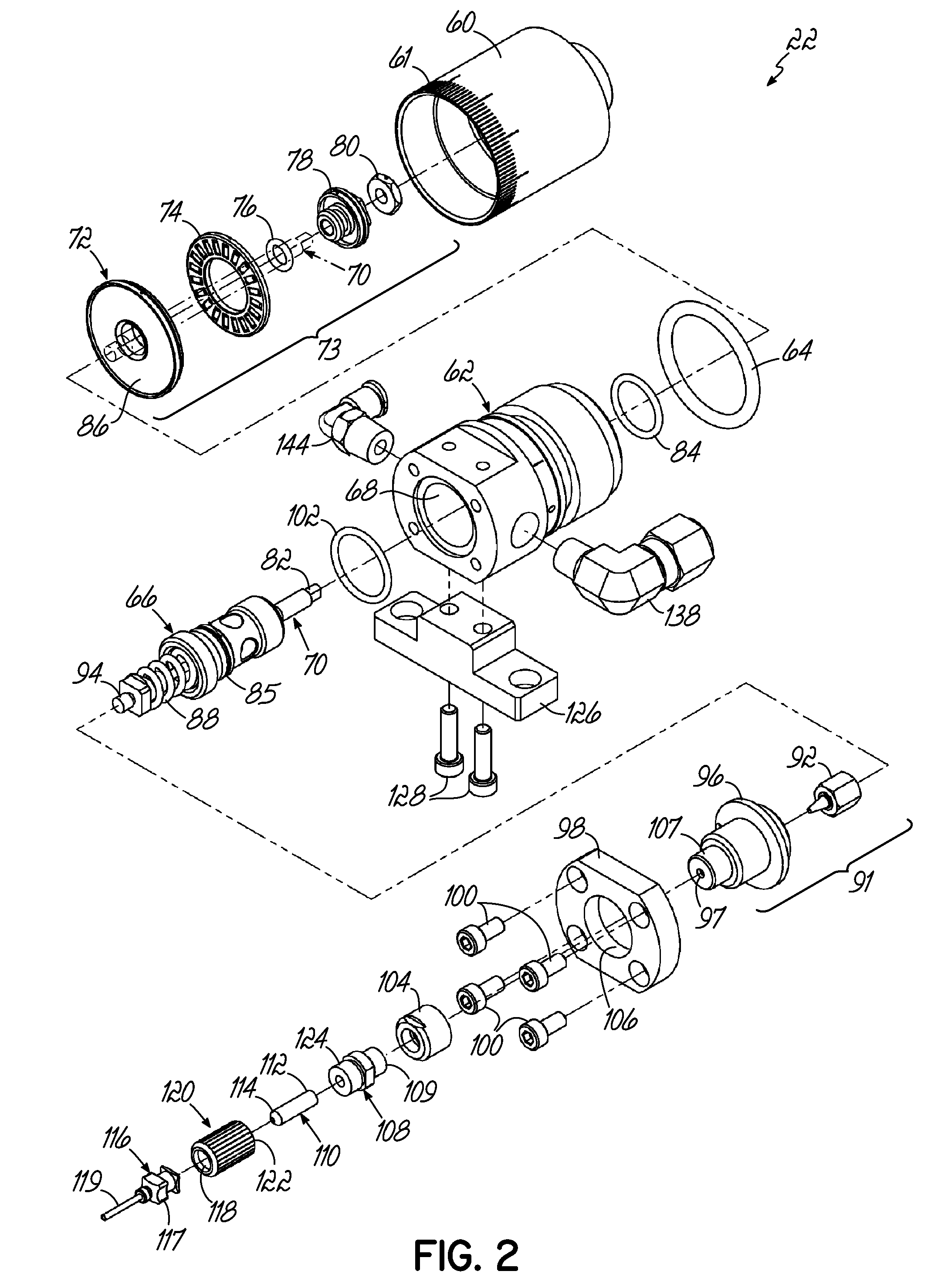
- A conformal coating applicator with a nozzle design that minimizes downstream material accumulation, allows for automated cleaning, and uses programmable controls to select various liquid and air pressures for different dispensing patterns, featuring a zero-cavity design and exposed nozzle for easy cleaning, and a fluid extension with adjustable splines for consistent airflow.
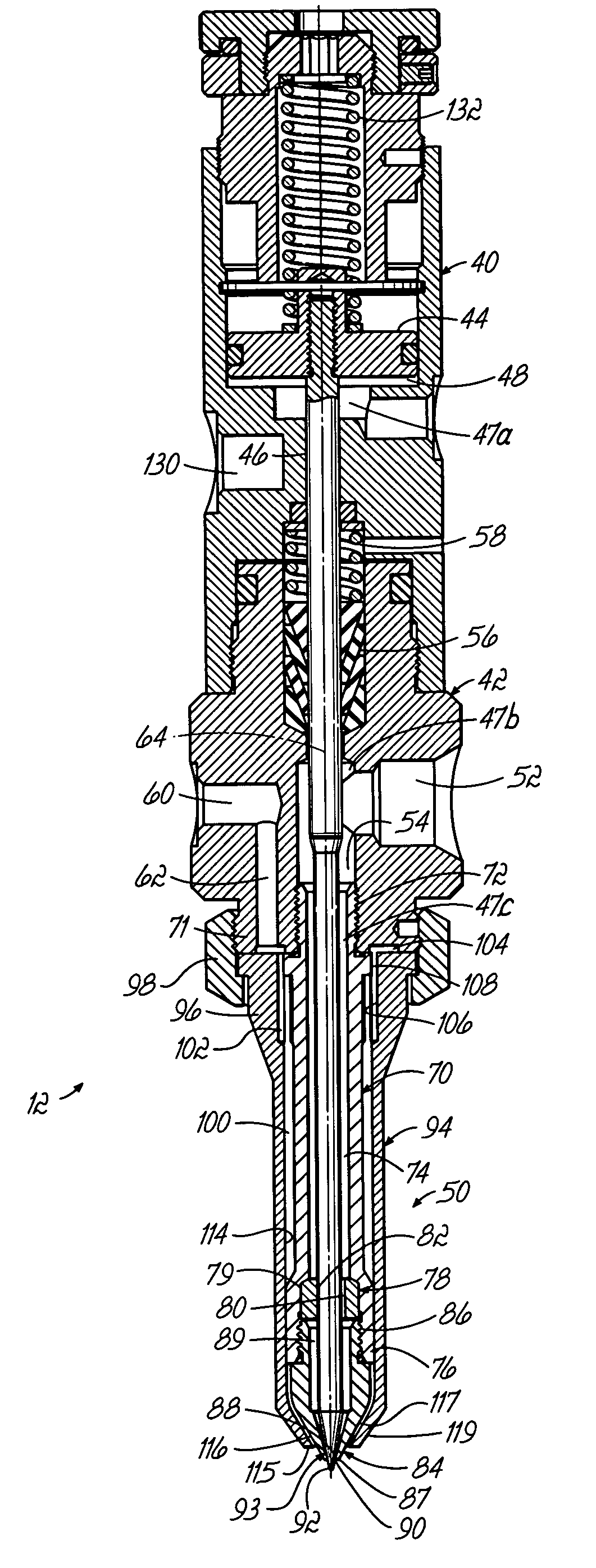
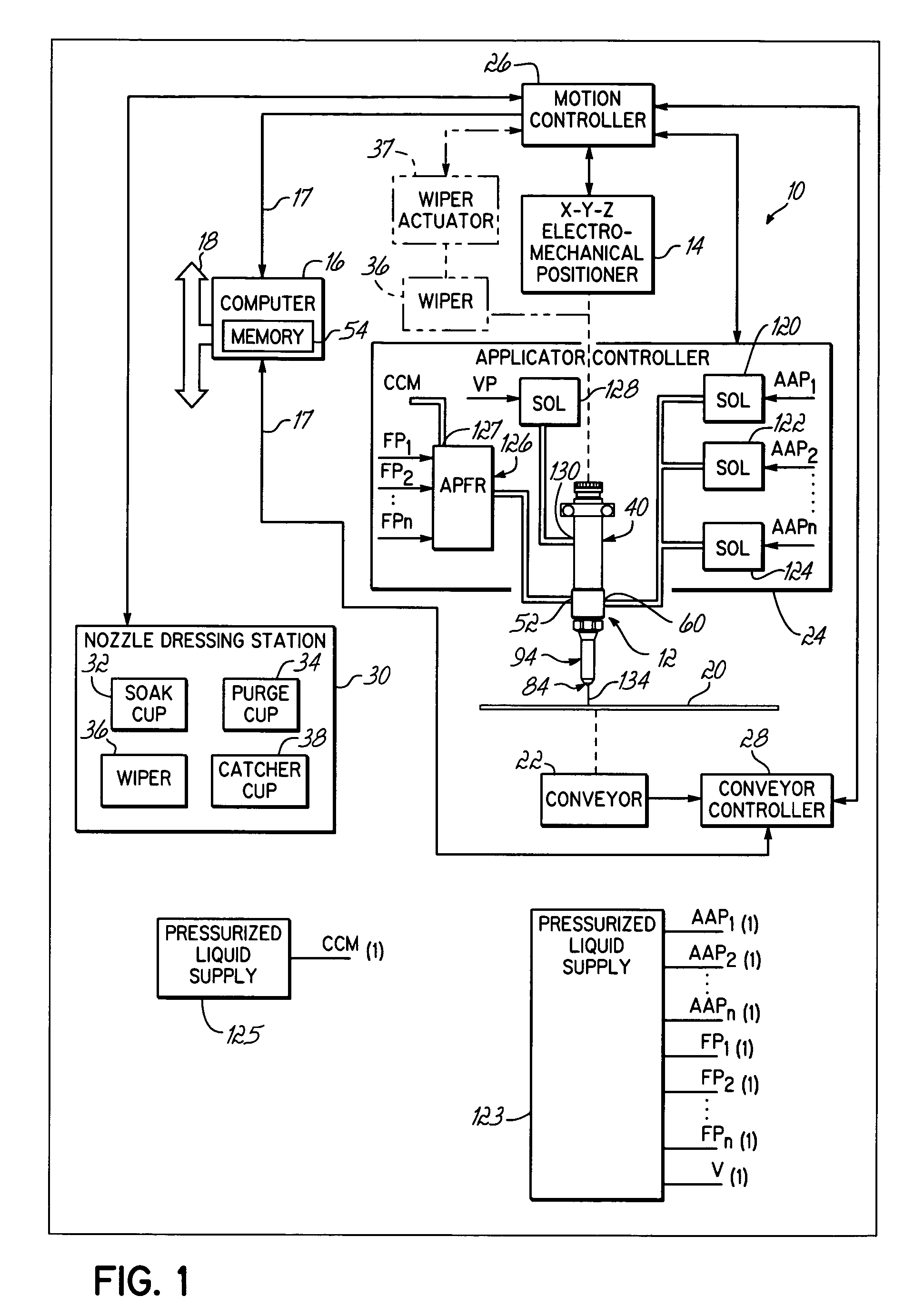
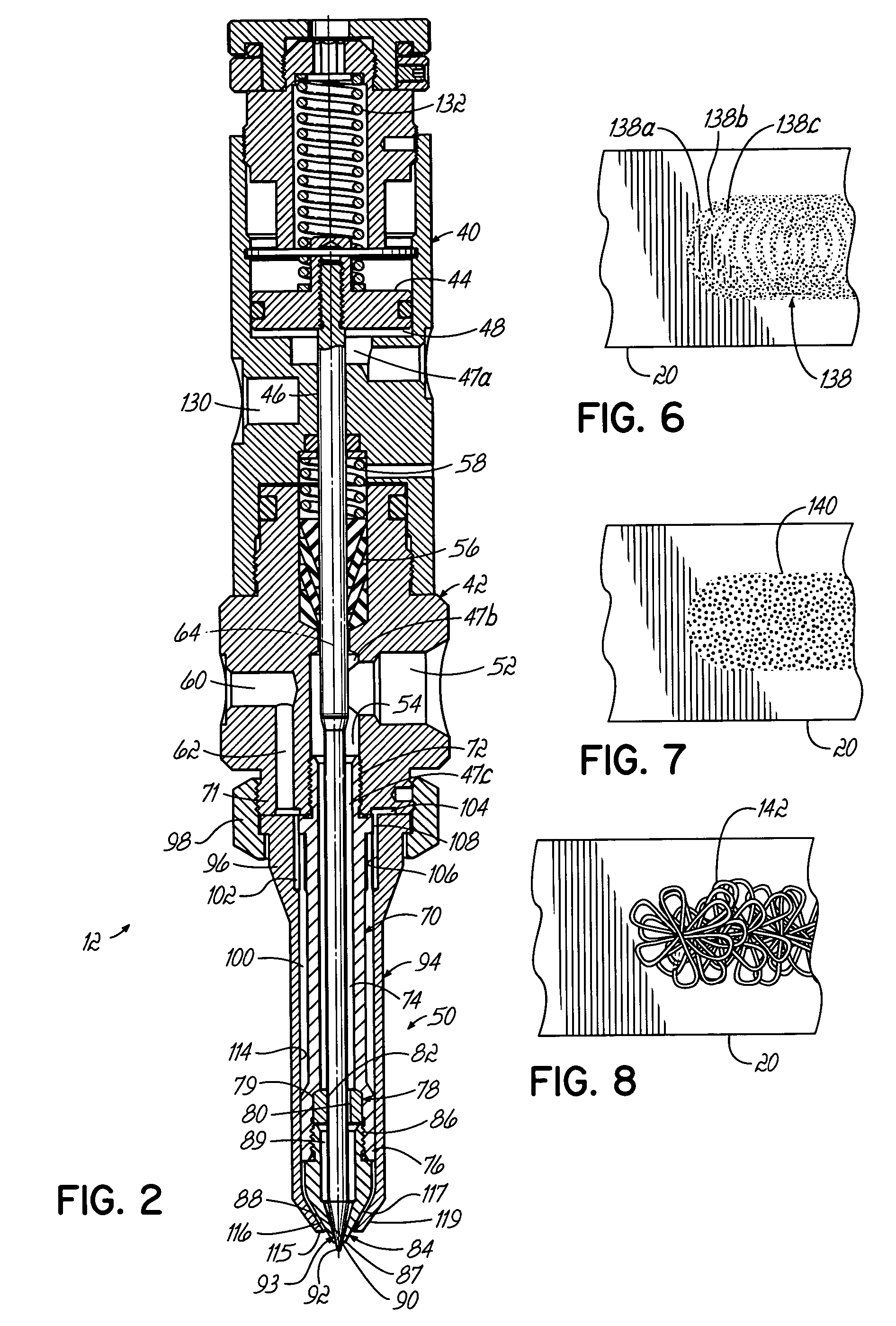
Thin line conformal coating method
PatentActiveUS20090202709A1
Innovation
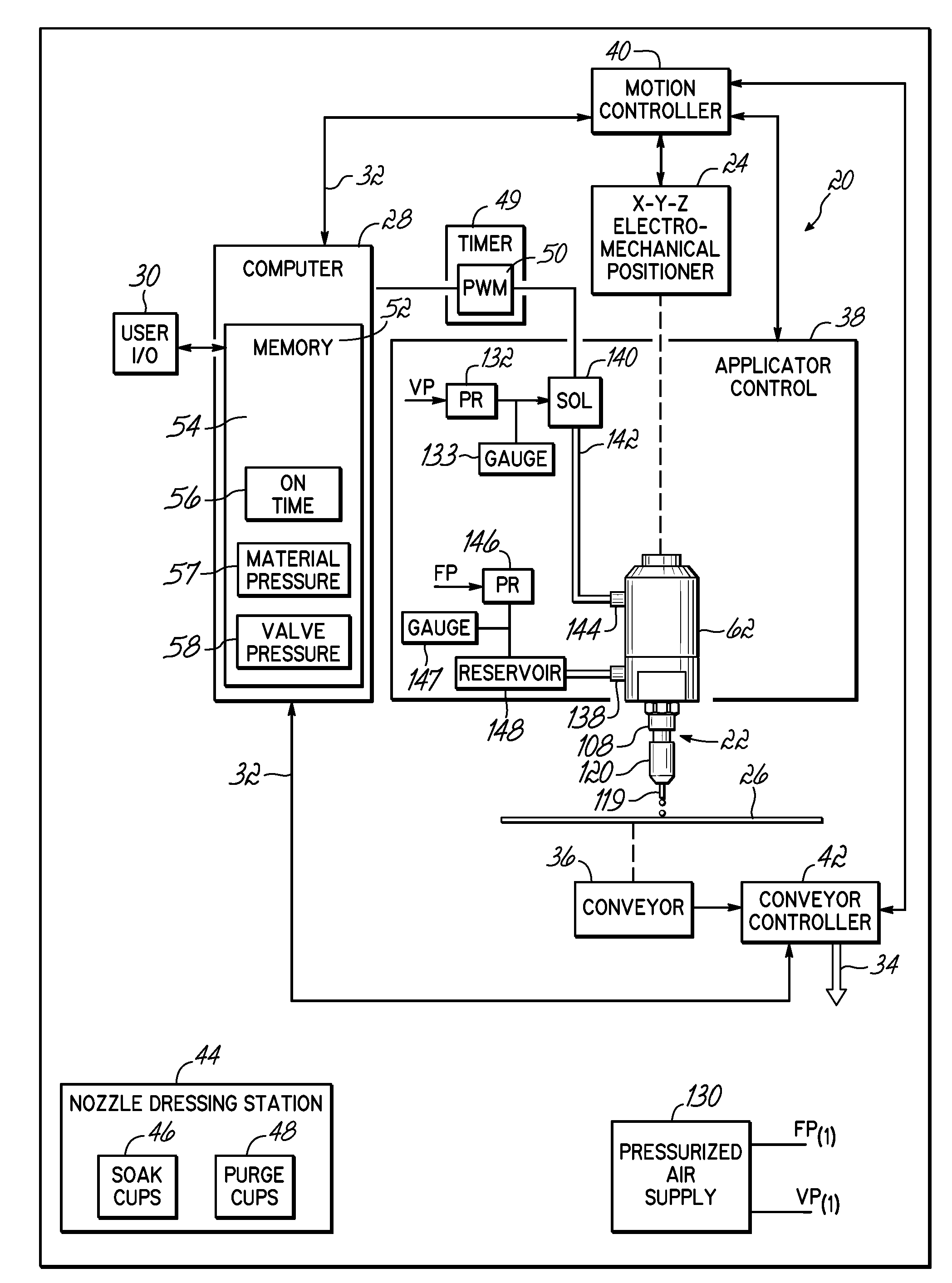
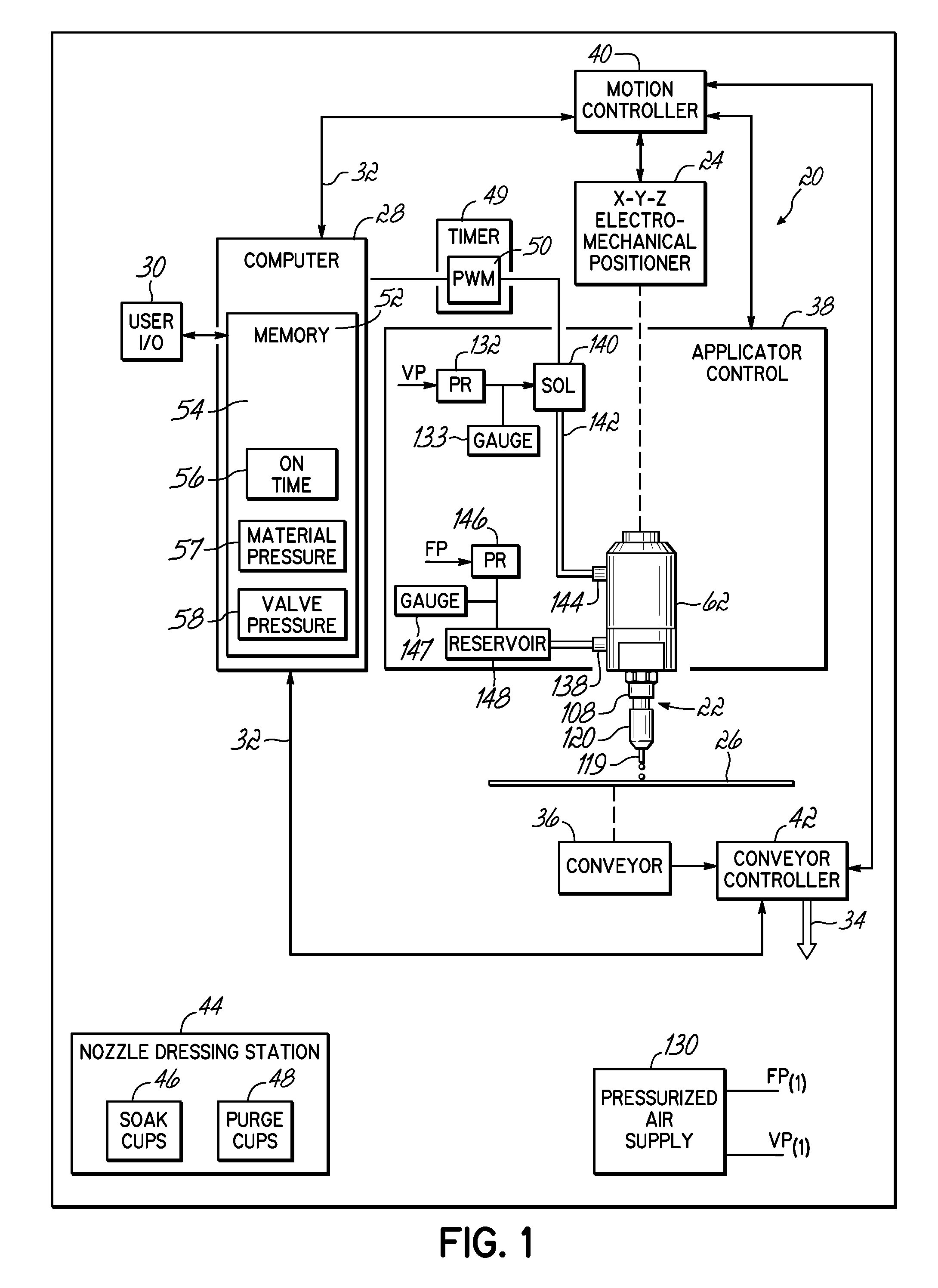
- A needle valve coating system with a solenoid-operated air cylinder and pulse width modulator control, allowing precise timing and pressure control of the needle valve to eject conformal coating material in a controlled and repeatable manner, preventing material from clinging to the dispensing tip and enabling thinner lines and closer proximity to keep-out areas.
Environmental Impact and Sustainability Considerations
The environmental impact of conformal coating and varnish application processes has become increasingly significant as electronics manufacturers face stricter regulations and growing consumer demand for sustainable practices. Traditional conformal coating methods often utilize volatile organic compounds (VOCs) that contribute to air pollution and pose health risks to workers. Solvent-based coatings, while effective for protection, release harmful emissions during application and curing processes, contributing to greenhouse gas accumulation and ozone depletion.
Recent advancements have led to the development of water-based and UV-curable conformal coatings that significantly reduce VOC emissions. These environmentally friendly alternatives can decrease harmful emissions by up to 80% compared to conventional solvent-based systems. Similarly, modern varnish formulations have evolved to include bio-based components derived from renewable resources, reducing dependency on petroleum-based raw materials.
Energy consumption represents another critical environmental consideration. Thermal curing processes for traditional coatings require substantial energy inputs, with some systems operating at temperatures exceeding 150°C for extended periods. UV-curing technologies offer a more energy-efficient alternative, reducing energy consumption by approximately 60-70% while simultaneously accelerating production cycles.
Waste management challenges differ significantly between application techniques. Spray application methods typically result in 30-40% material wastage due to overspray, while dipping techniques generate liquid waste requiring specialized disposal. Selective coating technologies have emerged as more efficient alternatives, reducing material waste by up to 90% through precise application only where protection is needed.
End-of-life considerations also differentiate these protection methods. Many conventional coatings create challenges for electronic component recycling, as they must be removed using chemical strippers that generate additional hazardous waste. Some newer formulations incorporate biodegradable elements or design features that facilitate easier separation during recycling processes.
Regulatory compliance continues to drive innovation in this sector. The European Union's Restriction of Hazardous Substances (RoHS) and Registration, Evaluation, Authorization and Restriction of Chemicals (REACH) regulations have accelerated the transition toward more environmentally responsible coating solutions. Manufacturers in North America and Asia are similarly adapting to meet increasingly stringent environmental standards, creating a global shift toward greener protection technologies for electronic assemblies.
Recent advancements have led to the development of water-based and UV-curable conformal coatings that significantly reduce VOC emissions. These environmentally friendly alternatives can decrease harmful emissions by up to 80% compared to conventional solvent-based systems. Similarly, modern varnish formulations have evolved to include bio-based components derived from renewable resources, reducing dependency on petroleum-based raw materials.
Energy consumption represents another critical environmental consideration. Thermal curing processes for traditional coatings require substantial energy inputs, with some systems operating at temperatures exceeding 150°C for extended periods. UV-curing technologies offer a more energy-efficient alternative, reducing energy consumption by approximately 60-70% while simultaneously accelerating production cycles.
Waste management challenges differ significantly between application techniques. Spray application methods typically result in 30-40% material wastage due to overspray, while dipping techniques generate liquid waste requiring specialized disposal. Selective coating technologies have emerged as more efficient alternatives, reducing material waste by up to 90% through precise application only where protection is needed.
End-of-life considerations also differentiate these protection methods. Many conventional coatings create challenges for electronic component recycling, as they must be removed using chemical strippers that generate additional hazardous waste. Some newer formulations incorporate biodegradable elements or design features that facilitate easier separation during recycling processes.
Regulatory compliance continues to drive innovation in this sector. The European Union's Restriction of Hazardous Substances (RoHS) and Registration, Evaluation, Authorization and Restriction of Chemicals (REACH) regulations have accelerated the transition toward more environmentally responsible coating solutions. Manufacturers in North America and Asia are similarly adapting to meet increasingly stringent environmental standards, creating a global shift toward greener protection technologies for electronic assemblies.
Cost-Benefit Analysis of Different Protection Solutions
When evaluating protection solutions for electronic assemblies, cost-benefit analysis provides critical insights for decision-making. Conformal coating typically ranges from $0.03 to $0.10 per square inch, while varnish applications generally cost $0.02 to $0.07 per square inch. However, initial material costs represent only one dimension of the total economic picture.
Equipment investment varies significantly between these solutions. Automated conformal coating systems require capital expenditures of $50,000 to $200,000, whereas varnish application equipment typically demands $15,000 to $75,000. This substantial difference in initial investment must be amortized across production volumes to determine per-unit cost impact.
Labor considerations further differentiate these solutions. Conformal coating processes, particularly with automated systems, reduce labor costs by approximately 30-40% compared to manual varnish application. Training requirements for conformal coating operators are generally more extensive, adding approximately 15-20% to initial workforce preparation costs.
Maintenance economics reveal that conformal coatings typically require less frequent reapplication, with service intervals of 5-7 years versus 2-4 years for varnish in comparable environments. This translates to lifecycle maintenance savings of approximately 40% for conformal coating solutions despite their higher initial application costs.
Failure rate analysis demonstrates that properly applied conformal coatings reduce electronic failure rates by 65-85% in harsh environments, while varnish applications achieve 40-60% reduction. When calculating the cost of field failures, warranty claims, and reputation damage, this performance differential often justifies the premium cost of conformal coating for critical applications.
Production efficiency metrics indicate that modern conformal coating processes achieve 30-50% faster cycle times than traditional varnish applications. This throughput advantage becomes particularly significant in high-volume manufacturing scenarios, effectively offsetting higher material costs through improved production economics.
Environmental compliance costs increasingly favor water-based and UV-curable conformal coatings, which typically incur 25-35% lower regulatory compliance costs compared to solvent-heavy varnish formulations. As environmental regulations tighten globally, this cost differential is projected to increase by an additional 10-15% over the next five years.
The optimal protection solution ultimately depends on specific application requirements, production volumes, and environmental conditions. For high-reliability applications in harsh environments, conformal coating's superior protection justifies its premium cost, while varnish remains economically advantageous for less demanding applications with tight budget constraints.
Equipment investment varies significantly between these solutions. Automated conformal coating systems require capital expenditures of $50,000 to $200,000, whereas varnish application equipment typically demands $15,000 to $75,000. This substantial difference in initial investment must be amortized across production volumes to determine per-unit cost impact.
Labor considerations further differentiate these solutions. Conformal coating processes, particularly with automated systems, reduce labor costs by approximately 30-40% compared to manual varnish application. Training requirements for conformal coating operators are generally more extensive, adding approximately 15-20% to initial workforce preparation costs.
Maintenance economics reveal that conformal coatings typically require less frequent reapplication, with service intervals of 5-7 years versus 2-4 years for varnish in comparable environments. This translates to lifecycle maintenance savings of approximately 40% for conformal coating solutions despite their higher initial application costs.
Failure rate analysis demonstrates that properly applied conformal coatings reduce electronic failure rates by 65-85% in harsh environments, while varnish applications achieve 40-60% reduction. When calculating the cost of field failures, warranty claims, and reputation damage, this performance differential often justifies the premium cost of conformal coating for critical applications.
Production efficiency metrics indicate that modern conformal coating processes achieve 30-50% faster cycle times than traditional varnish applications. This throughput advantage becomes particularly significant in high-volume manufacturing scenarios, effectively offsetting higher material costs through improved production economics.
Environmental compliance costs increasingly favor water-based and UV-curable conformal coatings, which typically incur 25-35% lower regulatory compliance costs compared to solvent-heavy varnish formulations. As environmental regulations tighten globally, this cost differential is projected to increase by an additional 10-15% over the next five years.
The optimal protection solution ultimately depends on specific application requirements, production volumes, and environmental conditions. For high-reliability applications in harsh environments, conformal coating's superior protection justifies its premium cost, while varnish remains economically advantageous for less demanding applications with tight budget constraints.
Unlock deeper insights with PatSnap Eureka Quick Research — get a full tech report to explore trends and direct your research. Try now!
Generate Your Research Report Instantly with AI Agent
Supercharge your innovation with PatSnap Eureka AI Agent Platform!