Dodecane in Focus: Innovations and Future Potential
JUL 29, 20259 MIN READ
Generate Your Research Report Instantly with AI Agent
PatSnap Eureka helps you evaluate technical feasibility & market potential.
Dodecane Background and Objectives
Dodecane, a straight-chain alkane with the molecular formula C12H26, has been a subject of increasing interest in various industrial and research applications. This hydrocarbon, belonging to the family of paraffins, has a rich history dating back to its discovery in the early 20th century. Initially identified as a component of petroleum, dodecane's unique properties have led to its widespread use in diverse fields, from fuel additives to cosmetics.
The evolution of dodecane research has been closely tied to advancements in organic chemistry and petrochemical engineering. Early studies focused primarily on its physical and chemical properties, laying the groundwork for its industrial applications. As analytical techniques improved, researchers gained deeper insights into dodecane's molecular structure and behavior, opening new avenues for its utilization.
In recent years, the focus on dodecane has shifted towards more innovative applications, driven by the need for sustainable and efficient energy solutions. Its potential as a hydrogen carrier for fuel cells and its role in developing advanced lubricants have garnered significant attention. Additionally, dodecane's use in nanotechnology and materials science has emerged as a promising area of research, with applications in self-healing materials and smart coatings.
The objectives of current dodecane research are multifaceted. Primarily, there is a strong emphasis on exploring its potential in renewable energy systems, particularly in the context of hydrogen storage and transportation. Researchers aim to optimize dodecane-based systems for enhanced energy density and safety in fuel applications. Another key objective is to investigate dodecane's role in developing high-performance, environmentally friendly lubricants and coolants for next-generation machinery and electronics.
Furthermore, the pharmaceutical and cosmetic industries are exploring dodecane's potential as a delivery vehicle for active ingredients, leveraging its unique properties to enhance product efficacy and stability. In the field of materials science, objectives include developing novel composites and smart materials incorporating dodecane, with applications ranging from self-cleaning surfaces to adaptive structures.
As environmental concerns gain prominence, a significant research goal is to develop greener production methods for dodecane and to explore bio-based alternatives. This aligns with the broader trend towards sustainability in chemical engineering and industrial processes. The ultimate aim is to position dodecane as a versatile, sustainable compound that can meet the evolving needs of various industries while minimizing environmental impact.
The evolution of dodecane research has been closely tied to advancements in organic chemistry and petrochemical engineering. Early studies focused primarily on its physical and chemical properties, laying the groundwork for its industrial applications. As analytical techniques improved, researchers gained deeper insights into dodecane's molecular structure and behavior, opening new avenues for its utilization.
In recent years, the focus on dodecane has shifted towards more innovative applications, driven by the need for sustainable and efficient energy solutions. Its potential as a hydrogen carrier for fuel cells and its role in developing advanced lubricants have garnered significant attention. Additionally, dodecane's use in nanotechnology and materials science has emerged as a promising area of research, with applications in self-healing materials and smart coatings.
The objectives of current dodecane research are multifaceted. Primarily, there is a strong emphasis on exploring its potential in renewable energy systems, particularly in the context of hydrogen storage and transportation. Researchers aim to optimize dodecane-based systems for enhanced energy density and safety in fuel applications. Another key objective is to investigate dodecane's role in developing high-performance, environmentally friendly lubricants and coolants for next-generation machinery and electronics.
Furthermore, the pharmaceutical and cosmetic industries are exploring dodecane's potential as a delivery vehicle for active ingredients, leveraging its unique properties to enhance product efficacy and stability. In the field of materials science, objectives include developing novel composites and smart materials incorporating dodecane, with applications ranging from self-cleaning surfaces to adaptive structures.
As environmental concerns gain prominence, a significant research goal is to develop greener production methods for dodecane and to explore bio-based alternatives. This aligns with the broader trend towards sustainability in chemical engineering and industrial processes. The ultimate aim is to position dodecane as a versatile, sustainable compound that can meet the evolving needs of various industries while minimizing environmental impact.
Market Analysis for Dodecane Applications
The global market for dodecane applications has shown significant growth in recent years, driven by increasing demand across various industries. Dodecane, a versatile hydrocarbon compound, finds extensive use in sectors such as cosmetics, pharmaceuticals, and industrial solvents. The cosmetics industry, in particular, has emerged as a major consumer of dodecane, utilizing it as a key ingredient in personal care products, fragrances, and hair care formulations.
In the pharmaceutical sector, dodecane serves as an important solvent and excipient in drug formulations, contributing to the steady market growth. The industrial solvent segment also presents a substantial market opportunity, with dodecane being employed in various manufacturing processes and as a cleaning agent. Additionally, the automotive and aerospace industries have shown increasing interest in dodecane as a potential fuel additive, further expanding its market potential.
Market analysis indicates that the Asia-Pacific region is experiencing the fastest growth in dodecane consumption, primarily due to rapid industrialization and increasing disposable income in countries like China and India. North America and Europe continue to be significant markets, driven by established cosmetics and pharmaceutical industries. The Middle East and Africa region is also showing promising growth, particularly in the industrial solvent segment.
The global dodecane market is characterized by a fragmented competitive landscape, with several key players vying for market share. Major companies are focusing on product innovation and expanding their production capacities to meet the growing demand. Sustainability concerns are also shaping the market, with increasing emphasis on bio-based alternatives and environmentally friendly production processes.
Looking ahead, the dodecane market is projected to maintain steady growth over the next five years. Factors such as urbanization, rising consumer awareness about personal care products, and technological advancements in industrial applications are expected to drive market expansion. However, potential challenges include volatile raw material prices and stringent environmental regulations, which may impact market dynamics.
In conclusion, the market analysis for dodecane applications reveals a positive outlook with diverse growth opportunities across multiple industries. As innovation continues and new applications emerge, the dodecane market is poised for further development and diversification in the coming years.
In the pharmaceutical sector, dodecane serves as an important solvent and excipient in drug formulations, contributing to the steady market growth. The industrial solvent segment also presents a substantial market opportunity, with dodecane being employed in various manufacturing processes and as a cleaning agent. Additionally, the automotive and aerospace industries have shown increasing interest in dodecane as a potential fuel additive, further expanding its market potential.
Market analysis indicates that the Asia-Pacific region is experiencing the fastest growth in dodecane consumption, primarily due to rapid industrialization and increasing disposable income in countries like China and India. North America and Europe continue to be significant markets, driven by established cosmetics and pharmaceutical industries. The Middle East and Africa region is also showing promising growth, particularly in the industrial solvent segment.
The global dodecane market is characterized by a fragmented competitive landscape, with several key players vying for market share. Major companies are focusing on product innovation and expanding their production capacities to meet the growing demand. Sustainability concerns are also shaping the market, with increasing emphasis on bio-based alternatives and environmentally friendly production processes.
Looking ahead, the dodecane market is projected to maintain steady growth over the next five years. Factors such as urbanization, rising consumer awareness about personal care products, and technological advancements in industrial applications are expected to drive market expansion. However, potential challenges include volatile raw material prices and stringent environmental regulations, which may impact market dynamics.
In conclusion, the market analysis for dodecane applications reveals a positive outlook with diverse growth opportunities across multiple industries. As innovation continues and new applications emerge, the dodecane market is poised for further development and diversification in the coming years.
Current Challenges in Dodecane Production
The production of dodecane faces several significant challenges that hinder its widespread adoption and efficient utilization. One of the primary obstacles is the high energy consumption associated with its synthesis. Traditional methods of dodecane production, such as the Fischer-Tropsch process or the oligomerization of ethylene, require substantial energy inputs, leading to increased production costs and environmental concerns.
Another major challenge lies in the feedstock availability and sustainability. Dodecane is typically derived from fossil fuel sources, which are finite and contribute to carbon emissions. The reliance on non-renewable resources poses long-term supply risks and conflicts with global efforts to transition towards more sustainable energy solutions.
Process efficiency and selectivity present additional hurdles in dodecane production. Current manufacturing techniques often result in a mixture of hydrocarbons with varying chain lengths, necessitating complex separation processes to isolate pure dodecane. This not only increases production costs but also reduces overall yield, making large-scale production less economically viable.
The environmental impact of dodecane production is a growing concern. The release of greenhouse gases and other pollutants during the manufacturing process contributes to climate change and air quality issues. Addressing these environmental challenges while maintaining production efficiency remains a significant obstacle for the industry.
Quality control and product consistency pose challenges in dodecane production. Variations in feedstock composition and process conditions can lead to inconsistencies in the final product, affecting its performance in various applications. Maintaining strict quality standards across different production batches is crucial for meeting industry specifications and customer requirements.
Regulatory compliance adds another layer of complexity to dodecane production. Stringent environmental regulations and safety standards require manufacturers to invest in advanced emission control technologies and implement rigorous safety protocols. Navigating the evolving regulatory landscape while maintaining operational efficiency presents ongoing challenges for producers.
Lastly, the development of cost-effective and scalable production technologies remains a significant challenge. While research into alternative production methods, such as bio-based routes or advanced catalytic processes, shows promise, scaling these technologies to commercial levels without compromising efficiency or economic viability is a complex undertaking. Overcoming these technological barriers is essential for advancing dodecane production and expanding its potential applications in various industries.
Another major challenge lies in the feedstock availability and sustainability. Dodecane is typically derived from fossil fuel sources, which are finite and contribute to carbon emissions. The reliance on non-renewable resources poses long-term supply risks and conflicts with global efforts to transition towards more sustainable energy solutions.
Process efficiency and selectivity present additional hurdles in dodecane production. Current manufacturing techniques often result in a mixture of hydrocarbons with varying chain lengths, necessitating complex separation processes to isolate pure dodecane. This not only increases production costs but also reduces overall yield, making large-scale production less economically viable.
The environmental impact of dodecane production is a growing concern. The release of greenhouse gases and other pollutants during the manufacturing process contributes to climate change and air quality issues. Addressing these environmental challenges while maintaining production efficiency remains a significant obstacle for the industry.
Quality control and product consistency pose challenges in dodecane production. Variations in feedstock composition and process conditions can lead to inconsistencies in the final product, affecting its performance in various applications. Maintaining strict quality standards across different production batches is crucial for meeting industry specifications and customer requirements.
Regulatory compliance adds another layer of complexity to dodecane production. Stringent environmental regulations and safety standards require manufacturers to invest in advanced emission control technologies and implement rigorous safety protocols. Navigating the evolving regulatory landscape while maintaining operational efficiency presents ongoing challenges for producers.
Lastly, the development of cost-effective and scalable production technologies remains a significant challenge. While research into alternative production methods, such as bio-based routes or advanced catalytic processes, shows promise, scaling these technologies to commercial levels without compromising efficiency or economic viability is a complex undertaking. Overcoming these technological barriers is essential for advancing dodecane production and expanding its potential applications in various industries.
Current Dodecane Production Methods
01 Synthesis and purification of dodecane
Various methods for synthesizing and purifying dodecane are described. These include catalytic processes, distillation techniques, and chemical reactions to produce high-purity dodecane for industrial applications.- Synthesis and production of dodecane: Dodecane can be synthesized through various chemical processes, including the hydrogenation of long-chain alkenes or the Fischer-Tropsch process. It is also produced as a byproduct in petroleum refining. The synthesis methods often involve catalysts and specific reaction conditions to achieve high yields and purity.
- Applications in cosmetics and personal care products: Dodecane is used in cosmetics and personal care products as an emollient, solvent, and carrier for active ingredients. It provides a smooth, non-greasy feel to formulations and helps improve the spreadability of products. Dodecane is particularly useful in hair care products, skin moisturizers, and makeup removers.
- Use in industrial lubricants and solvents: Dodecane serves as a component in industrial lubricants and solvents due to its low viscosity and good solvency properties. It is used in metalworking fluids, cutting oils, and as a solvent for various industrial processes. Dodecane's low volatility makes it suitable for applications requiring extended exposure times.
- Role in fuel and energy applications: Dodecane is a significant component in jet fuels and diesel fuels, contributing to their combustion properties and energy content. It is also used as a reference compound in fuel research and development. In some cases, dodecane is employed in thermal energy storage systems due to its favorable thermophysical properties.
- Environmental and safety considerations: The use and handling of dodecane require consideration of its environmental impact and safety aspects. Research focuses on biodegradation pathways, ecotoxicological effects, and potential alternatives. Safety measures for storage, transportation, and disposal are essential due to its flammability and potential for environmental contamination.
02 Use of dodecane in cosmetic and personal care products
Dodecane is utilized as an ingredient in cosmetic and personal care formulations. It serves as an emollient, solvent, or carrier in products such as moisturizers, sunscreens, and hair care items, contributing to improved texture and performance.Expand Specific Solutions03 Dodecane in fuel and lubricant applications
Dodecane is employed in fuel and lubricant formulations. It is used as a component in diesel fuel, jet fuel, and various lubricating oils, enhancing performance characteristics such as viscosity and combustion properties.Expand Specific Solutions04 Dodecane as a solvent and extraction medium
The use of dodecane as a solvent and extraction medium in various industrial processes is described. It is employed in chemical separations, extractions of natural products, and as a reaction medium in organic synthesis.Expand Specific Solutions05 Dodecane in polymer and material science applications
Dodecane finds applications in polymer and material science. It is used as a plasticizer, a component in polymer formulations, and in the production of specialty materials such as nanocomposites and advanced coatings.Expand Specific Solutions
Key Players in Dodecane Industry
The dodecane market is in a growth phase, driven by increasing demand in various industries. The global market size is expanding, with projections indicating significant growth in the coming years. Technologically, dodecane innovations are advancing, with major players like China Petroleum & Chemical Corp., Wanhua Chemical Group, and BASF Corp. leading research and development efforts. These companies are focusing on improving production processes, enhancing product quality, and exploring new applications. The technology is relatively mature, but ongoing research by institutions like Zhejiang University and Rice University is pushing boundaries in areas such as catalysis and sustainable production methods. As the industry evolves, collaborations between academic institutions and corporations are likely to accelerate innovations in dodecane technology.
China Petroleum & Chemical Corp.
Technical Solution: China Petroleum & Chemical Corp. (Sinopec) has been at the forefront of dodecane research and innovation. Their approach focuses on enhancing the production and application of dodecane in various industries. Sinopec has developed advanced catalytic cracking processes that significantly improve dodecane yield from petroleum feedstocks[1]. They have also implemented novel separation techniques using molecular sieves to achieve higher purity dodecane[2]. Furthermore, Sinopec has explored the potential of dodecane as a hydrogen carrier for fuel cell applications, conducting extensive research on dehydrogenation-hydrogenation cycles[3]. Their efforts extend to the development of dodecane-based phase change materials for thermal energy storage, which shows promise in renewable energy systems[4].
Strengths: Vast resources for large-scale production, extensive R&D capabilities, and integrated supply chain. Weaknesses: Heavy reliance on fossil fuel feedstocks, potential environmental concerns associated with petroleum-based processes.
Wanhua Chemical Group Co., Ltd.
Technical Solution: Wanhua Chemical Group has emerged as a significant player in dodecane research and innovation. Their approach focuses on developing novel applications for dodecane in polymer and materials science. Wanhua has explored the use of dodecane as a key component in the synthesis of high-performance polyurethanes, particularly for applications requiring excellent hydrophobicity and chemical resistance[17]. They have also investigated dodecane's potential as a blowing agent in the production of advanced foam materials with improved insulation properties[18]. Furthermore, Wanhua has developed dodecane-based microencapsulation techniques for controlled release applications in agriculture and pharmaceuticals[19]. Their research extends to the use of dodecane in the formulation of low-VOC coatings and adhesives, addressing growing environmental concerns in various industries[20].
Strengths: Strong expertise in materials science and polymer chemistry, diverse application portfolio, growing global presence. Weaknesses: Relatively new entrant in dodecane research compared to established petrochemical companies, potential challenges in scaling up novel applications.
Innovative Dodecane Research
Carbon nanotube structures in sensor apparatuses for analyzing biomarkers in breath samples
PatentActiveUS20110098591A1
Innovation
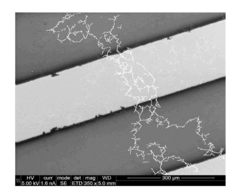
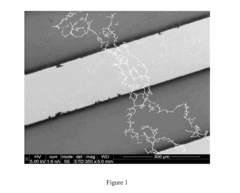
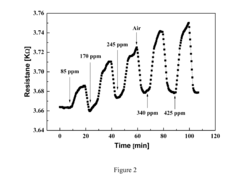
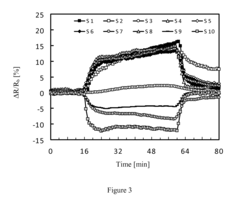
- A system comprising an array of chemically sensitive sensors made from single-walled carbon nanotubes (SWCNTs) coated with non-polar small organic molecules, in conjunction with learning and pattern recognition algorithms, is used to measure breath analytes. The SWCNTs are arranged in a random network configuration, eliminating the need for precise alignment and enhancing sensitivity and selectivity towards VOCs found in lung cancer patients.
Environmental Impact of Dodecane
The environmental impact of dodecane, a hydrocarbon compound with twelve carbon atoms, is a critical consideration in its industrial applications and potential future uses. As a component of diesel fuel and jet fuel, dodecane contributes to air pollution and greenhouse gas emissions when combusted. The release of carbon dioxide and other pollutants from dodecane-containing fuels has significant implications for climate change and air quality in urban areas.
In aquatic environments, dodecane poses risks due to its low water solubility and tendency to form a film on water surfaces. This can impede oxygen transfer and harm aquatic organisms. Spills or leaks of dodecane-containing products in marine ecosystems can have long-lasting effects on wildlife and coastal habitats. The compound's persistence in the environment raises concerns about its potential for bioaccumulation in food chains.
Soil contamination is another environmental issue associated with dodecane. When released into soil, it can adsorb to organic matter and potentially leach into groundwater. This contamination can affect soil microorganisms and plant growth, disrupting local ecosystems. The remediation of dodecane-contaminated sites often requires extensive and costly clean-up efforts.
Recent innovations in dodecane production and use have focused on mitigating its environmental impact. Researchers are exploring bio-based alternatives to petroleum-derived dodecane, aiming to reduce the carbon footprint of its production. These bio-derived versions may offer improved biodegradability and lower toxicity compared to their fossil fuel counterparts.
Advancements in fuel efficiency and emission control technologies are also helping to reduce the environmental impact of dodecane when used in transportation fuels. Improved engine designs and exhaust treatment systems are minimizing the release of harmful pollutants associated with dodecane combustion.
In the realm of industrial applications, efforts are underway to develop closed-loop systems that minimize dodecane release into the environment. These systems aim to capture and recycle the compound, reducing waste and potential environmental contamination. Additionally, research into green chemistry principles is leading to the development of safer solvents and reaction media that could potentially replace dodecane in certain applications.
The future potential of dodecane lies in balancing its useful properties with environmental sustainability. As global environmental regulations become more stringent, industries utilizing dodecane will need to adapt and innovate. This may involve developing more environmentally friendly production methods, improving containment and handling practices, and investing in technologies that enable more efficient use and recovery of the compound.
In aquatic environments, dodecane poses risks due to its low water solubility and tendency to form a film on water surfaces. This can impede oxygen transfer and harm aquatic organisms. Spills or leaks of dodecane-containing products in marine ecosystems can have long-lasting effects on wildlife and coastal habitats. The compound's persistence in the environment raises concerns about its potential for bioaccumulation in food chains.
Soil contamination is another environmental issue associated with dodecane. When released into soil, it can adsorb to organic matter and potentially leach into groundwater. This contamination can affect soil microorganisms and plant growth, disrupting local ecosystems. The remediation of dodecane-contaminated sites often requires extensive and costly clean-up efforts.
Recent innovations in dodecane production and use have focused on mitigating its environmental impact. Researchers are exploring bio-based alternatives to petroleum-derived dodecane, aiming to reduce the carbon footprint of its production. These bio-derived versions may offer improved biodegradability and lower toxicity compared to their fossil fuel counterparts.
Advancements in fuel efficiency and emission control technologies are also helping to reduce the environmental impact of dodecane when used in transportation fuels. Improved engine designs and exhaust treatment systems are minimizing the release of harmful pollutants associated with dodecane combustion.
In the realm of industrial applications, efforts are underway to develop closed-loop systems that minimize dodecane release into the environment. These systems aim to capture and recycle the compound, reducing waste and potential environmental contamination. Additionally, research into green chemistry principles is leading to the development of safer solvents and reaction media that could potentially replace dodecane in certain applications.
The future potential of dodecane lies in balancing its useful properties with environmental sustainability. As global environmental regulations become more stringent, industries utilizing dodecane will need to adapt and innovate. This may involve developing more environmentally friendly production methods, improving containment and handling practices, and investing in technologies that enable more efficient use and recovery of the compound.
Regulatory Framework for Dodecane Use
The regulatory framework for dodecane use is a complex and evolving landscape that reflects the growing importance of this hydrocarbon in various industries. As a key component in many products and processes, dodecane is subject to a range of regulations aimed at ensuring safety, environmental protection, and quality control.
In the United States, the Environmental Protection Agency (EPA) plays a crucial role in regulating dodecane under the Toxic Substances Control Act (TSCA). The EPA maintains a comprehensive inventory of chemical substances, including dodecane, and requires manufacturers and importers to comply with reporting, record-keeping, and testing requirements. Additionally, the Occupational Safety and Health Administration (OSHA) sets standards for workplace exposure limits and safety protocols for handling dodecane.
The European Union's regulatory approach is governed by the Registration, Evaluation, Authorization and Restriction of Chemicals (REACH) regulation. Under REACH, companies must register dodecane with the European Chemicals Agency (ECHA) and provide detailed information on its properties, uses, and potential risks. This information is then used to assess the need for further regulatory actions to protect human health and the environment.
In Asia, countries like China and Japan have their own regulatory frameworks. China's Measures for Environmental Management of New Chemical Substances require registration and risk assessment for dodecane use. Japan's Chemical Substances Control Law (CSCL) similarly mandates the evaluation and management of chemical substances, including dodecane.
Globally, the transportation of dodecane is regulated by international agreements such as the International Maritime Dangerous Goods (IMDG) Code and the International Air Transport Association (IATA) Dangerous Goods Regulations. These regulations ensure the safe handling and transport of dodecane across borders and different modes of transportation.
As the applications of dodecane continue to expand, particularly in emerging technologies and sustainable alternatives, regulatory bodies are adapting their frameworks to address new challenges. This includes the development of specific guidelines for biodegradable and bio-based dodecane derivatives, as well as regulations addressing the use of dodecane in novel applications such as advanced materials and energy storage solutions.
The future of dodecane regulation is likely to see increased focus on lifecycle assessment and circular economy principles. Regulators are expected to place greater emphasis on the environmental impact of dodecane production, use, and disposal, potentially leading to more stringent requirements for recycling and waste management. Additionally, as global efforts to reduce carbon emissions intensify, regulations may evolve to incentivize the development and use of more sustainable dodecane alternatives.
In the United States, the Environmental Protection Agency (EPA) plays a crucial role in regulating dodecane under the Toxic Substances Control Act (TSCA). The EPA maintains a comprehensive inventory of chemical substances, including dodecane, and requires manufacturers and importers to comply with reporting, record-keeping, and testing requirements. Additionally, the Occupational Safety and Health Administration (OSHA) sets standards for workplace exposure limits and safety protocols for handling dodecane.
The European Union's regulatory approach is governed by the Registration, Evaluation, Authorization and Restriction of Chemicals (REACH) regulation. Under REACH, companies must register dodecane with the European Chemicals Agency (ECHA) and provide detailed information on its properties, uses, and potential risks. This information is then used to assess the need for further regulatory actions to protect human health and the environment.
In Asia, countries like China and Japan have their own regulatory frameworks. China's Measures for Environmental Management of New Chemical Substances require registration and risk assessment for dodecane use. Japan's Chemical Substances Control Law (CSCL) similarly mandates the evaluation and management of chemical substances, including dodecane.
Globally, the transportation of dodecane is regulated by international agreements such as the International Maritime Dangerous Goods (IMDG) Code and the International Air Transport Association (IATA) Dangerous Goods Regulations. These regulations ensure the safe handling and transport of dodecane across borders and different modes of transportation.
As the applications of dodecane continue to expand, particularly in emerging technologies and sustainable alternatives, regulatory bodies are adapting their frameworks to address new challenges. This includes the development of specific guidelines for biodegradable and bio-based dodecane derivatives, as well as regulations addressing the use of dodecane in novel applications such as advanced materials and energy storage solutions.
The future of dodecane regulation is likely to see increased focus on lifecycle assessment and circular economy principles. Regulators are expected to place greater emphasis on the environmental impact of dodecane production, use, and disposal, potentially leading to more stringent requirements for recycling and waste management. Additionally, as global efforts to reduce carbon emissions intensify, regulations may evolve to incentivize the development and use of more sustainable dodecane alternatives.
Unlock deeper insights with PatSnap Eureka Quick Research — get a full tech report to explore trends and direct your research. Try now!
Generate Your Research Report Instantly with AI Agent
Supercharge your innovation with PatSnap Eureka AI Agent Platform!