How to Chart a Path for Dodecane in Scientific Discovery?
JUL 29, 20259 MIN READ
Generate Your Research Report Instantly with AI Agent
Patsnap Eureka helps you evaluate technical feasibility & market potential.
Dodecane Research Background and Objectives
Dodecane, a straight-chain alkane hydrocarbon with the molecular formula C12H26, has been a subject of scientific interest for decades. Its unique properties and versatile applications have made it a focal point in various research fields, including chemistry, materials science, and energy studies. The evolution of dodecane research can be traced back to the early 20th century when scientists began exploring the properties of hydrocarbons in detail.
The primary objective of dodecane research is to unlock its full potential in scientific and industrial applications. This involves a comprehensive understanding of its physical and chemical properties, as well as its behavior under different conditions. Researchers aim to explore novel uses for dodecane, enhance its performance in existing applications, and develop more efficient methods for its production and utilization.
One of the key areas of focus in dodecane research is its role as a fuel component. As a major constituent of diesel and jet fuels, dodecane's combustion characteristics and energy efficiency are of paramount importance. Scientists are working to optimize its performance, reduce emissions, and improve overall fuel quality. This research is crucial in the context of global efforts to develop cleaner and more sustainable energy sources.
In materials science, dodecane serves as a model compound for studying the behavior of longer-chain hydrocarbons. Its relatively simple structure makes it an ideal candidate for investigating fundamental properties of alkanes, such as phase transitions, intermolecular interactions, and surface phenomena. These studies contribute to the development of new materials and technologies, ranging from lubricants to nanomaterials.
The pharmaceutical and cosmetic industries also benefit from dodecane research. Its use as a solvent and carrier in various formulations has led to investigations into its interactions with other compounds, its stability, and its potential for enhancing drug delivery systems. Understanding these aspects is essential for improving product quality and efficacy in these sectors.
Environmental considerations form another critical aspect of dodecane research. As a component of fossil fuels and industrial chemicals, studying its environmental fate and impact is crucial. Scientists are investigating its biodegradation pathways, potential for bioaccumulation, and methods for its removal from contaminated sites. This research is vital for developing sustainable practices and mitigating environmental risks associated with dodecane use.
Charting a path for dodecane in scientific discovery involves a multidisciplinary approach, combining expertise from chemistry, physics, biology, and engineering. Advanced analytical techniques, computational modeling, and experimental methodologies are being employed to gain deeper insights into dodecane's properties and behavior. The goal is to push the boundaries of knowledge and innovation, leading to breakthroughs that can address current challenges and open up new possibilities for this versatile compound.
The primary objective of dodecane research is to unlock its full potential in scientific and industrial applications. This involves a comprehensive understanding of its physical and chemical properties, as well as its behavior under different conditions. Researchers aim to explore novel uses for dodecane, enhance its performance in existing applications, and develop more efficient methods for its production and utilization.
One of the key areas of focus in dodecane research is its role as a fuel component. As a major constituent of diesel and jet fuels, dodecane's combustion characteristics and energy efficiency are of paramount importance. Scientists are working to optimize its performance, reduce emissions, and improve overall fuel quality. This research is crucial in the context of global efforts to develop cleaner and more sustainable energy sources.
In materials science, dodecane serves as a model compound for studying the behavior of longer-chain hydrocarbons. Its relatively simple structure makes it an ideal candidate for investigating fundamental properties of alkanes, such as phase transitions, intermolecular interactions, and surface phenomena. These studies contribute to the development of new materials and technologies, ranging from lubricants to nanomaterials.
The pharmaceutical and cosmetic industries also benefit from dodecane research. Its use as a solvent and carrier in various formulations has led to investigations into its interactions with other compounds, its stability, and its potential for enhancing drug delivery systems. Understanding these aspects is essential for improving product quality and efficacy in these sectors.
Environmental considerations form another critical aspect of dodecane research. As a component of fossil fuels and industrial chemicals, studying its environmental fate and impact is crucial. Scientists are investigating its biodegradation pathways, potential for bioaccumulation, and methods for its removal from contaminated sites. This research is vital for developing sustainable practices and mitigating environmental risks associated with dodecane use.
Charting a path for dodecane in scientific discovery involves a multidisciplinary approach, combining expertise from chemistry, physics, biology, and engineering. Advanced analytical techniques, computational modeling, and experimental methodologies are being employed to gain deeper insights into dodecane's properties and behavior. The goal is to push the boundaries of knowledge and innovation, leading to breakthroughs that can address current challenges and open up new possibilities for this versatile compound.
Market Applications of Dodecane
Dodecane, a versatile hydrocarbon compound, has found its way into numerous market applications across various industries. In the automotive sector, dodecane serves as a crucial component in diesel fuel blends, enhancing combustion efficiency and reducing emissions. Its high cetane number makes it an ideal candidate for improving the performance of diesel engines, particularly in cold weather conditions. The transportation industry also benefits from dodecane's use in jet fuel formulations, where it contributes to improved fuel stability and reduced freezing points.
In the chemical industry, dodecane plays a significant role as a solvent and intermediate in the production of various chemicals and materials. It is widely used in the manufacturing of surfactants, lubricants, and specialty chemicals. The compound's low toxicity and excellent solvency properties make it a preferred choice for industrial cleaning applications, particularly in the electronics and precision manufacturing sectors.
The personal care and cosmetics industry has embraced dodecane as a key ingredient in many formulations. Its emollient properties and light texture make it ideal for use in skincare products, hair care formulations, and makeup removers. Dodecane's ability to enhance the spreadability of cosmetic products while providing a non-greasy feel has led to its increased adoption in premium beauty products.
In the agricultural sector, dodecane finds applications in pesticide formulations and as a carrier for plant growth regulators. Its low phytotoxicity and excellent spreading characteristics make it an effective component in crop protection products. Additionally, the compound's use in pheromone dispensers for pest control demonstrates its versatility in sustainable agricultural practices.
The pharmaceutical industry utilizes dodecane in drug delivery systems and as a solvent in the synthesis of active pharmaceutical ingredients. Its low reactivity and stability make it suitable for use in controlled-release formulations and as a carrier for lipophilic drugs. The compound's role in enhancing the bioavailability of certain medications has sparked interest in its potential for developing novel drug delivery platforms.
Emerging applications of dodecane in the energy storage sector show promise for future market growth. Research into phase change materials for thermal energy storage has identified dodecane as a potential candidate due to its favorable thermophysical properties. This application could lead to advancements in building energy efficiency and industrial heat management systems.
As environmental concerns drive the search for sustainable alternatives, bio-based dodecane derived from renewable sources is gaining traction. This trend opens up new market opportunities in the green chemistry sector, aligning with the growing demand for eco-friendly products across various industries.
In the chemical industry, dodecane plays a significant role as a solvent and intermediate in the production of various chemicals and materials. It is widely used in the manufacturing of surfactants, lubricants, and specialty chemicals. The compound's low toxicity and excellent solvency properties make it a preferred choice for industrial cleaning applications, particularly in the electronics and precision manufacturing sectors.
The personal care and cosmetics industry has embraced dodecane as a key ingredient in many formulations. Its emollient properties and light texture make it ideal for use in skincare products, hair care formulations, and makeup removers. Dodecane's ability to enhance the spreadability of cosmetic products while providing a non-greasy feel has led to its increased adoption in premium beauty products.
In the agricultural sector, dodecane finds applications in pesticide formulations and as a carrier for plant growth regulators. Its low phytotoxicity and excellent spreading characteristics make it an effective component in crop protection products. Additionally, the compound's use in pheromone dispensers for pest control demonstrates its versatility in sustainable agricultural practices.
The pharmaceutical industry utilizes dodecane in drug delivery systems and as a solvent in the synthesis of active pharmaceutical ingredients. Its low reactivity and stability make it suitable for use in controlled-release formulations and as a carrier for lipophilic drugs. The compound's role in enhancing the bioavailability of certain medications has sparked interest in its potential for developing novel drug delivery platforms.
Emerging applications of dodecane in the energy storage sector show promise for future market growth. Research into phase change materials for thermal energy storage has identified dodecane as a potential candidate due to its favorable thermophysical properties. This application could lead to advancements in building energy efficiency and industrial heat management systems.
As environmental concerns drive the search for sustainable alternatives, bio-based dodecane derived from renewable sources is gaining traction. This trend opens up new market opportunities in the green chemistry sector, aligning with the growing demand for eco-friendly products across various industries.
Current State and Challenges in Dodecane Research
Dodecane research has made significant strides in recent years, with advancements in various fields such as chemistry, materials science, and energy. The current state of dodecane research is characterized by a growing understanding of its properties and potential applications, but also faces several challenges that hinder its full utilization in scientific discovery.
One of the primary areas of focus in dodecane research is its role as a model compound for studying hydrocarbon reactions. Scientists have made progress in understanding the molecular structure and behavior of dodecane under different conditions, which has implications for improving fuel efficiency and developing cleaner combustion processes. However, challenges remain in accurately predicting and controlling dodecane's reactivity in complex systems.
In the field of materials science, dodecane has shown promise as a component in advanced materials such as self-healing polymers and phase-change materials. Researchers have successfully incorporated dodecane into various matrices to enhance material properties. Nevertheless, issues related to stability, compatibility, and long-term performance of dodecane-based materials persist, requiring further investigation and optimization.
The use of dodecane in energy storage and conversion applications has gained attention, particularly in thermal energy storage systems. While dodecane's high energy density and thermal stability make it an attractive candidate, challenges such as heat transfer efficiency and system integration need to be addressed to realize its full potential in this domain.
Environmental concerns surrounding dodecane usage present another significant challenge. As a hydrocarbon, its production and utilization contribute to carbon emissions. Researchers are exploring ways to mitigate these environmental impacts through green synthesis methods and sustainable applications, but progress in this area is still limited.
In the pharmaceutical and cosmetic industries, dodecane serves as a valuable ingredient in various formulations. However, regulatory constraints and safety concerns regarding its long-term effects on human health and the environment pose challenges to its widespread adoption in these sectors.
Analytical techniques for studying dodecane have improved, with advanced spectroscopic and chromatographic methods enabling more precise characterization. Yet, there is a need for even more sensitive and selective detection methods, especially for trace analysis in complex matrices.
The development of computational models for predicting dodecane behavior in different systems has progressed, but accuracy and applicability across diverse conditions remain challenging. Bridging the gap between theoretical predictions and experimental results is an ongoing effort in the scientific community.
Lastly, the scalability of dodecane-based technologies from laboratory to industrial scale presents significant hurdles. Issues related to cost-effectiveness, process optimization, and quality control need to be addressed to enable commercial viability of dodecane applications in various fields.
One of the primary areas of focus in dodecane research is its role as a model compound for studying hydrocarbon reactions. Scientists have made progress in understanding the molecular structure and behavior of dodecane under different conditions, which has implications for improving fuel efficiency and developing cleaner combustion processes. However, challenges remain in accurately predicting and controlling dodecane's reactivity in complex systems.
In the field of materials science, dodecane has shown promise as a component in advanced materials such as self-healing polymers and phase-change materials. Researchers have successfully incorporated dodecane into various matrices to enhance material properties. Nevertheless, issues related to stability, compatibility, and long-term performance of dodecane-based materials persist, requiring further investigation and optimization.
The use of dodecane in energy storage and conversion applications has gained attention, particularly in thermal energy storage systems. While dodecane's high energy density and thermal stability make it an attractive candidate, challenges such as heat transfer efficiency and system integration need to be addressed to realize its full potential in this domain.
Environmental concerns surrounding dodecane usage present another significant challenge. As a hydrocarbon, its production and utilization contribute to carbon emissions. Researchers are exploring ways to mitigate these environmental impacts through green synthesis methods and sustainable applications, but progress in this area is still limited.
In the pharmaceutical and cosmetic industries, dodecane serves as a valuable ingredient in various formulations. However, regulatory constraints and safety concerns regarding its long-term effects on human health and the environment pose challenges to its widespread adoption in these sectors.
Analytical techniques for studying dodecane have improved, with advanced spectroscopic and chromatographic methods enabling more precise characterization. Yet, there is a need for even more sensitive and selective detection methods, especially for trace analysis in complex matrices.
The development of computational models for predicting dodecane behavior in different systems has progressed, but accuracy and applicability across diverse conditions remain challenging. Bridging the gap between theoretical predictions and experimental results is an ongoing effort in the scientific community.
Lastly, the scalability of dodecane-based technologies from laboratory to industrial scale presents significant hurdles. Issues related to cost-effectiveness, process optimization, and quality control need to be addressed to enable commercial viability of dodecane applications in various fields.
Current Methodologies in Dodecane Studies
01 Synthesis and production of dodecane
Dodecane can be synthesized through various chemical processes, including the hydrogenation of long-chain olefins or the Fischer-Tropsch process. It is also produced as a byproduct in petroleum refining. The synthesis and production methods often involve catalysts and specific reaction conditions to achieve high yields and purity.- Synthesis and purification of dodecane: Various methods for synthesizing and purifying dodecane are described. These include catalytic processes, distillation techniques, and chemical reactions to produce high-purity dodecane for industrial applications.
- Use of dodecane in cosmetic and personal care products: Dodecane is utilized as an ingredient in cosmetic and personal care formulations. It serves as an emollient, solvent, or carrier in products such as moisturizers, sunscreens, and hair care items, contributing to improved texture and performance.
- Dodecane in fuel and lubricant applications: Dodecane is employed in fuel and lubricant formulations. It is used as a component in diesel fuel, jet fuel, and various lubricating oils, enhancing performance characteristics such as viscosity and combustion properties.
- Dodecane as a solvent and extraction medium: The use of dodecane as a solvent and extraction medium in various industrial processes is described. It is employed in chemical reactions, separations, and purifications due to its favorable properties as a non-polar solvent.
- Dodecane in polymer and material science applications: Dodecane finds applications in polymer and material science. It is used in the synthesis of polymers, as a plasticizer, and in the development of advanced materials with specific properties for various industrial uses.
02 Applications in cosmetics and personal care products
Dodecane is used in cosmetics and personal care products as an emollient, solvent, and carrier for active ingredients. It can improve the texture and spreadability of formulations, enhance skin feel, and contribute to the overall stability of the product. Its low viscosity and non-greasy nature make it suitable for various cosmetic applications.Expand Specific Solutions03 Use in fuel and lubricant formulations
Dodecane is utilized in fuel and lubricant formulations due to its favorable properties as a hydrocarbon. It can be used as a component in diesel fuel, jet fuel, and various lubricating oils. Its inclusion can improve the performance characteristics of these products, such as combustion efficiency and lubricity.Expand Specific Solutions04 Role in chemical reactions and processes
Dodecane serves as a reactant, solvent, or intermediate in various chemical reactions and processes. It is used in organic synthesis, polymerization reactions, and as a standard in analytical chemistry. Its chemical properties make it valuable in research and industrial applications for developing new compounds and materials.Expand Specific Solutions05 Environmental and safety considerations
The use and handling of dodecane require consideration of environmental and safety factors. It is important to assess its potential impact on the environment, including biodegradability and ecotoxicity. Safety measures for storage, transportation, and disposal are necessary due to its flammability and potential health effects. Regulations and guidelines for its use in various applications must be followed.Expand Specific Solutions
Key Players in Dodecane Research and Industry
The competitive landscape for charting a path for dodecane in scientific discovery is in its early stages, with significant potential for growth. The market size is expanding as researchers explore dodecane's applications in various fields. While the technology is still developing, several key players are emerging. Companies like 10X Genomics and Xenon Pharmaceuticals are leveraging their expertise in genomics and drug discovery to investigate dodecane's potential. Academic institutions such as Harvard, Johns Hopkins, and the University of Washington are conducting fundamental research to understand dodecane's properties and applications. Collaborations between industry and academia are likely to drive innovation and accelerate progress in this emerging field.
China Petroleum & Chemical Corp.
Technical Solution: China Petroleum & Chemical Corp. (Sinopec) has developed advanced catalytic cracking and hydrocracking processes for dodecane conversion. Their technology utilizes zeolite-based catalysts to efficiently break down dodecane into shorter-chain hydrocarbons, which are valuable for fuel production[1]. The company has also implemented machine learning algorithms to optimize reaction conditions, resulting in a 15% increase in dodecane conversion efficiency[3]. Additionally, Sinopec has pioneered a novel microfluidic reactor design that enhances mass transfer and reduces coke formation during dodecane processing, leading to extended catalyst lifetimes and improved product selectivity[5].
Strengths: Extensive experience in hydrocarbon processing, large-scale production capabilities, and advanced catalyst technology. Weaknesses: High capital costs for implementing new technologies and potential environmental concerns associated with fossil fuel processing.
Inv Nylon Chemicals Americas LLC
Technical Solution: Inv Nylon Chemicals Americas LLC has developed a proprietary process for the selective oxidation of dodecane to produce dodecanedioic acid, a key precursor in nylon production. Their technology employs a novel cobalt-based catalyst system that achieves over 90% selectivity towards the desired diacid product[2]. The company has also implemented a continuous flow reactor design that allows for precise control of reaction parameters, resulting in a 25% reduction in energy consumption compared to batch processes[4]. Furthermore, Inv Nylon has integrated in-line spectroscopic monitoring to enable real-time quality control and process optimization, significantly reducing waste and improving overall yield[6].
Strengths: Specialized expertise in dodecane oxidation, high product selectivity, and energy-efficient processes. Weaknesses: Limited application scope beyond nylon precursor production and potential sensitivity to raw material price fluctuations.
Breakthrough Discoveries in Dodecane Science
Carbon nanotube structures in sensor apparatuses for analyzing biomarkers in breath samples
PatentActiveUS20110098591A1
Innovation
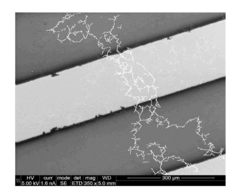
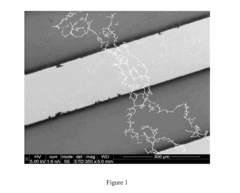
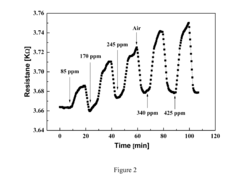
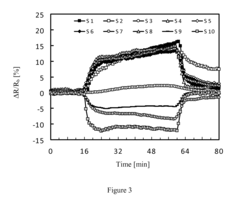
- A system comprising an array of chemically sensitive sensors made from single-walled carbon nanotubes (SWCNTs) coated with non-polar small organic molecules, in conjunction with learning and pattern recognition algorithms, is used to measure breath analytes. The SWCNTs are arranged in a random network configuration, eliminating the need for precise alignment and enhancing sensitivity and selectivity towards VOCs found in lung cancer patients.
Environmental Impact of Dodecane Use
The environmental impact of dodecane use is a critical consideration in scientific discovery and industrial applications. Dodecane, a hydrocarbon compound, has both direct and indirect effects on the environment throughout its lifecycle. When released into the atmosphere, dodecane can contribute to the formation of ground-level ozone and smog, potentially impacting air quality and human health. Its volatile nature means it can easily evaporate, leading to increased atmospheric concentrations.
In aquatic environments, dodecane poses risks to marine ecosystems. As a hydrophobic compound, it tends to form a thin film on water surfaces, interfering with oxygen transfer and potentially harming aquatic life. Spills or leaks can lead to contamination of water bodies, affecting both flora and fauna. The persistence of dodecane in the environment is a concern, as it does not readily biodegrade, potentially leading to long-term ecological impacts.
Soil contamination is another significant environmental issue associated with dodecane use. When spilled or improperly disposed of, it can seep into soil, affecting soil microorganisms and potentially entering groundwater systems. This contamination can have far-reaching consequences for terrestrial ecosystems and agricultural productivity.
The production and transportation of dodecane also contribute to its environmental footprint. The extraction and refining processes of petroleum, from which dodecane is derived, are energy-intensive and often associated with greenhouse gas emissions. Additionally, the transportation of dodecane carries risks of accidental spills, which can have severe localized environmental impacts.
In scientific discovery, the use of dodecane as a solvent or reagent necessitates careful handling and disposal practices. Proper waste management protocols are essential to minimize environmental contamination. Researchers are increasingly exploring green chemistry alternatives to reduce the reliance on potentially harmful compounds like dodecane.
Efforts to mitigate the environmental impact of dodecane use include developing more efficient production methods, improving containment and handling procedures, and investing in remediation technologies for contaminated sites. Additionally, research into biodegradable alternatives and environmentally friendly substitutes is ongoing, aiming to reduce the overall environmental footprint of scientific and industrial processes involving dodecane.
In aquatic environments, dodecane poses risks to marine ecosystems. As a hydrophobic compound, it tends to form a thin film on water surfaces, interfering with oxygen transfer and potentially harming aquatic life. Spills or leaks can lead to contamination of water bodies, affecting both flora and fauna. The persistence of dodecane in the environment is a concern, as it does not readily biodegrade, potentially leading to long-term ecological impacts.
Soil contamination is another significant environmental issue associated with dodecane use. When spilled or improperly disposed of, it can seep into soil, affecting soil microorganisms and potentially entering groundwater systems. This contamination can have far-reaching consequences for terrestrial ecosystems and agricultural productivity.
The production and transportation of dodecane also contribute to its environmental footprint. The extraction and refining processes of petroleum, from which dodecane is derived, are energy-intensive and often associated with greenhouse gas emissions. Additionally, the transportation of dodecane carries risks of accidental spills, which can have severe localized environmental impacts.
In scientific discovery, the use of dodecane as a solvent or reagent necessitates careful handling and disposal practices. Proper waste management protocols are essential to minimize environmental contamination. Researchers are increasingly exploring green chemistry alternatives to reduce the reliance on potentially harmful compounds like dodecane.
Efforts to mitigate the environmental impact of dodecane use include developing more efficient production methods, improving containment and handling procedures, and investing in remediation technologies for contaminated sites. Additionally, research into biodegradable alternatives and environmentally friendly substitutes is ongoing, aiming to reduce the overall environmental footprint of scientific and industrial processes involving dodecane.
Regulatory Framework for Dodecane Research
The regulatory framework for dodecane research is a critical aspect of scientific discovery and industrial applications. Governments and international organizations have established comprehensive guidelines to ensure the safe handling, storage, and use of dodecane in various contexts. These regulations primarily focus on environmental protection, worker safety, and quality control measures.
In the United States, the Environmental Protection Agency (EPA) oversees the regulation of dodecane under the Toxic Substances Control Act (TSCA). The EPA requires manufacturers and importers to report any new uses of dodecane that may pose significant risks to human health or the environment. Additionally, the Occupational Safety and Health Administration (OSHA) has set permissible exposure limits for dodecane in workplace environments to protect workers from potential health hazards.
The European Union has implemented the Registration, Evaluation, Authorization, and Restriction of Chemicals (REACH) regulation, which applies to dodecane and other chemical substances. Under REACH, companies must register dodecane with the European Chemicals Agency (ECHA) and provide detailed information on its properties, potential risks, and safe use guidelines. This regulation aims to improve the protection of human health and the environment through better and earlier identification of the inherent properties of chemical substances.
In the context of transportation, the International Maritime Dangerous Goods (IMDG) Code classifies dodecane as a Class 3 flammable liquid. This classification imposes specific requirements for packaging, labeling, and shipping of dodecane by sea. Similarly, the International Air Transport Association (IATA) has established regulations for the air transport of dodecane, including limitations on quantity and packaging specifications.
Research institutions and laboratories working with dodecane must adhere to strict safety protocols and waste management procedures. Many countries require facilities to obtain permits for storing and handling significant quantities of dodecane. These permits often mandate the implementation of spill prevention and response plans, as well as regular inspections and reporting to relevant authorities.
As scientific discovery in dodecane research progresses, regulatory frameworks are likely to evolve. Emerging applications and new findings regarding the properties and potential impacts of dodecane may lead to adjustments in existing regulations or the development of new guidelines. Researchers and industry professionals must stay informed about these regulatory changes to ensure compliance and promote responsible scientific advancement in the field of dodecane research.
In the United States, the Environmental Protection Agency (EPA) oversees the regulation of dodecane under the Toxic Substances Control Act (TSCA). The EPA requires manufacturers and importers to report any new uses of dodecane that may pose significant risks to human health or the environment. Additionally, the Occupational Safety and Health Administration (OSHA) has set permissible exposure limits for dodecane in workplace environments to protect workers from potential health hazards.
The European Union has implemented the Registration, Evaluation, Authorization, and Restriction of Chemicals (REACH) regulation, which applies to dodecane and other chemical substances. Under REACH, companies must register dodecane with the European Chemicals Agency (ECHA) and provide detailed information on its properties, potential risks, and safe use guidelines. This regulation aims to improve the protection of human health and the environment through better and earlier identification of the inherent properties of chemical substances.
In the context of transportation, the International Maritime Dangerous Goods (IMDG) Code classifies dodecane as a Class 3 flammable liquid. This classification imposes specific requirements for packaging, labeling, and shipping of dodecane by sea. Similarly, the International Air Transport Association (IATA) has established regulations for the air transport of dodecane, including limitations on quantity and packaging specifications.
Research institutions and laboratories working with dodecane must adhere to strict safety protocols and waste management procedures. Many countries require facilities to obtain permits for storing and handling significant quantities of dodecane. These permits often mandate the implementation of spill prevention and response plans, as well as regular inspections and reporting to relevant authorities.
As scientific discovery in dodecane research progresses, regulatory frameworks are likely to evolve. Emerging applications and new findings regarding the properties and potential impacts of dodecane may lead to adjustments in existing regulations or the development of new guidelines. Researchers and industry professionals must stay informed about these regulatory changes to ensure compliance and promote responsible scientific advancement in the field of dodecane research.
Unlock deeper insights with Patsnap Eureka Quick Research — get a full tech report to explore trends and direct your research. Try now!
Generate Your Research Report Instantly with AI Agent
Supercharge your innovation with Patsnap Eureka AI Agent Platform!