
How to Elevate Dodecane Applications in Modern Science?
JUL 29, 20259 MIN READ
Generate Your Research Report Instantly with AI Agent
Patsnap Eureka helps you evaluate technical feasibility & market potential.
Dodecane Background and Research Objectives
Dodecane, a straight-chain alkane hydrocarbon with the molecular formula C12H26, has been a subject of scientific interest for decades. Its unique properties and versatile applications have made it a valuable compound in various fields of modern science. The evolution of dodecane research can be traced back to the early 20th century when it was first isolated and characterized as a component of petroleum.
Over the years, the scientific community has witnessed a gradual shift in the focus of dodecane research. Initially, studies primarily centered on its physical and chemical properties, such as boiling point, melting point, and reactivity. However, as technology advanced and new analytical techniques emerged, researchers began to explore dodecane's potential in more diverse applications.
The current technological landscape presents numerous opportunities for elevating dodecane applications in modern science. One of the primary objectives is to harness its unique properties for developing advanced materials and processes. For instance, dodecane's low volatility and high stability make it an excellent candidate for use in high-performance lubricants and hydraulic fluids, particularly in extreme temperature conditions.
Another significant research goal is to exploit dodecane's potential in the field of energy storage and conversion. As the world moves towards cleaner and more sustainable energy sources, dodecane's high energy density and ease of storage make it an attractive option for developing novel fuel systems and energy storage technologies.
In the realm of nanotechnology, dodecane serves as a crucial component in the synthesis of nanoparticles and the development of nanomaterials. Researchers aim to leverage its molecular structure to create innovative materials with enhanced properties, such as improved thermal conductivity or electrical insulation.
The pharmaceutical and biomedical industries also present exciting avenues for dodecane applications. Scientists are exploring its use as a drug delivery vehicle and as a component in advanced formulations for controlled release of active pharmaceutical ingredients.
Environmental science is another area where dodecane research is gaining traction. The compound's role in atmospheric chemistry and its potential for bioremediation of contaminated sites are subjects of ongoing investigation. Researchers are working towards developing eco-friendly applications that can contribute to environmental sustainability.
As we look to the future, the overarching goal of dodecane research is to unlock its full potential across multiple scientific disciplines. This involves not only improving existing applications but also discovering entirely new uses that can address pressing challenges in fields such as energy, materials science, and environmental protection.
Over the years, the scientific community has witnessed a gradual shift in the focus of dodecane research. Initially, studies primarily centered on its physical and chemical properties, such as boiling point, melting point, and reactivity. However, as technology advanced and new analytical techniques emerged, researchers began to explore dodecane's potential in more diverse applications.
The current technological landscape presents numerous opportunities for elevating dodecane applications in modern science. One of the primary objectives is to harness its unique properties for developing advanced materials and processes. For instance, dodecane's low volatility and high stability make it an excellent candidate for use in high-performance lubricants and hydraulic fluids, particularly in extreme temperature conditions.
Another significant research goal is to exploit dodecane's potential in the field of energy storage and conversion. As the world moves towards cleaner and more sustainable energy sources, dodecane's high energy density and ease of storage make it an attractive option for developing novel fuel systems and energy storage technologies.
In the realm of nanotechnology, dodecane serves as a crucial component in the synthesis of nanoparticles and the development of nanomaterials. Researchers aim to leverage its molecular structure to create innovative materials with enhanced properties, such as improved thermal conductivity or electrical insulation.
The pharmaceutical and biomedical industries also present exciting avenues for dodecane applications. Scientists are exploring its use as a drug delivery vehicle and as a component in advanced formulations for controlled release of active pharmaceutical ingredients.
Environmental science is another area where dodecane research is gaining traction. The compound's role in atmospheric chemistry and its potential for bioremediation of contaminated sites are subjects of ongoing investigation. Researchers are working towards developing eco-friendly applications that can contribute to environmental sustainability.
As we look to the future, the overarching goal of dodecane research is to unlock its full potential across multiple scientific disciplines. This involves not only improving existing applications but also discovering entirely new uses that can address pressing challenges in fields such as energy, materials science, and environmental protection.
Market Analysis for Dodecane Applications
The global market for dodecane applications has been experiencing steady growth, driven by its versatile properties and increasing demand across various industries. As a key component in the production of household and industrial products, dodecane's market is closely tied to economic growth and industrial development.
In the petrochemical sector, dodecane serves as an important intermediate in the production of surfactants, lubricants, and solvents. The growing automotive and manufacturing industries have been significant contributors to the increased demand for these products. Additionally, the personal care and cosmetics industry has shown a rising interest in dodecane-based formulations, particularly in hair care and skin care products, due to its excellent spreading properties and low viscosity.
The pharmaceutical industry has also been exploring dodecane's potential as a solvent and excipient in drug formulations. Its low toxicity and stability make it an attractive option for certain pharmaceutical applications, potentially opening new market opportunities.
In the energy sector, dodecane's role in fuel research and development has gained attention. As a component of jet fuel and diesel fuel, it plays a part in the ongoing efforts to improve fuel efficiency and reduce emissions. The aviation industry, in particular, has been focusing on sustainable aviation fuels, where dodecane-based formulations could play a significant role.
The agrochemical industry represents another growing market for dodecane applications. Its use as a carrier solvent in pesticide formulations has been increasing, driven by the need for more effective and environmentally friendly agricultural products.
Geographically, the Asia-Pacific region has emerged as a key market for dodecane, fueled by rapid industrialization and economic growth in countries like China and India. North America and Europe continue to be significant markets, particularly in high-tech and specialty chemical applications.
However, the market faces challenges from increasing environmental regulations and the push towards more sustainable alternatives. This has led to research into bio-based alternatives and more efficient production methods for dodecane.
Looking ahead, the market for dodecane applications is expected to continue its growth trajectory, with innovations in green chemistry and sustainable production methods likely to play a crucial role in shaping its future. The development of novel applications in emerging technologies, such as advanced materials and nanotechnology, could potentially open new avenues for dodecane utilization, further expanding its market potential.
In the petrochemical sector, dodecane serves as an important intermediate in the production of surfactants, lubricants, and solvents. The growing automotive and manufacturing industries have been significant contributors to the increased demand for these products. Additionally, the personal care and cosmetics industry has shown a rising interest in dodecane-based formulations, particularly in hair care and skin care products, due to its excellent spreading properties and low viscosity.
The pharmaceutical industry has also been exploring dodecane's potential as a solvent and excipient in drug formulations. Its low toxicity and stability make it an attractive option for certain pharmaceutical applications, potentially opening new market opportunities.
In the energy sector, dodecane's role in fuel research and development has gained attention. As a component of jet fuel and diesel fuel, it plays a part in the ongoing efforts to improve fuel efficiency and reduce emissions. The aviation industry, in particular, has been focusing on sustainable aviation fuels, where dodecane-based formulations could play a significant role.
The agrochemical industry represents another growing market for dodecane applications. Its use as a carrier solvent in pesticide formulations has been increasing, driven by the need for more effective and environmentally friendly agricultural products.
Geographically, the Asia-Pacific region has emerged as a key market for dodecane, fueled by rapid industrialization and economic growth in countries like China and India. North America and Europe continue to be significant markets, particularly in high-tech and specialty chemical applications.
However, the market faces challenges from increasing environmental regulations and the push towards more sustainable alternatives. This has led to research into bio-based alternatives and more efficient production methods for dodecane.
Looking ahead, the market for dodecane applications is expected to continue its growth trajectory, with innovations in green chemistry and sustainable production methods likely to play a crucial role in shaping its future. The development of novel applications in emerging technologies, such as advanced materials and nanotechnology, could potentially open new avenues for dodecane utilization, further expanding its market potential.
Current Challenges in Dodecane Utilization
Despite the widespread use of dodecane in various scientific and industrial applications, several challenges persist in its utilization, hindering its full potential. One of the primary obstacles is the limited solubility of dodecane in polar solvents, which restricts its applicability in certain chemical processes and formulations. This limitation often necessitates the use of additional surfactants or co-solvents, increasing process complexity and cost.
Another significant challenge lies in the environmental concerns associated with dodecane usage. As a hydrocarbon, dodecane contributes to volatile organic compound (VOC) emissions, raising issues related to air quality and regulatory compliance. This has led to increased pressure on industries to find more environmentally friendly alternatives or develop improved methods for dodecane containment and recovery.
The thermal and oxidative stability of dodecane at elevated temperatures presents another hurdle, particularly in high-temperature applications such as heat transfer fluids or lubricants. Degradation of dodecane under these conditions can lead to the formation of undesirable byproducts, reducing efficiency and potentially causing equipment damage.
In the field of analytical chemistry, the use of dodecane as a solvent or standard faces challenges related to its relatively high boiling point and low volatility. These properties can complicate sample preparation and analysis, especially in gas chromatography applications, where complete vaporization is crucial for accurate results.
The purification and quality control of dodecane also pose significant challenges. Achieving and maintaining high purity levels, particularly for research-grade applications, can be costly and energy-intensive. Trace impurities can significantly impact experimental results or product quality, necessitating rigorous purification processes.
In the context of fuel applications, dodecane's relatively low energy density compared to some alternative hydrocarbons limits its effectiveness as a standalone fuel. This challenge has prompted research into blending dodecane with other compounds or developing novel formulations to enhance its energy content and combustion properties.
Lastly, the scalability of dodecane production and its reliance on petroleum feedstocks present long-term sustainability challenges. As the world moves towards renewable resources, finding bio-based routes for dodecane synthesis or developing sustainable alternatives has become a critical area of research, albeit one fraught with technical and economic hurdles.
Another significant challenge lies in the environmental concerns associated with dodecane usage. As a hydrocarbon, dodecane contributes to volatile organic compound (VOC) emissions, raising issues related to air quality and regulatory compliance. This has led to increased pressure on industries to find more environmentally friendly alternatives or develop improved methods for dodecane containment and recovery.
The thermal and oxidative stability of dodecane at elevated temperatures presents another hurdle, particularly in high-temperature applications such as heat transfer fluids or lubricants. Degradation of dodecane under these conditions can lead to the formation of undesirable byproducts, reducing efficiency and potentially causing equipment damage.
In the field of analytical chemistry, the use of dodecane as a solvent or standard faces challenges related to its relatively high boiling point and low volatility. These properties can complicate sample preparation and analysis, especially in gas chromatography applications, where complete vaporization is crucial for accurate results.
The purification and quality control of dodecane also pose significant challenges. Achieving and maintaining high purity levels, particularly for research-grade applications, can be costly and energy-intensive. Trace impurities can significantly impact experimental results or product quality, necessitating rigorous purification processes.
In the context of fuel applications, dodecane's relatively low energy density compared to some alternative hydrocarbons limits its effectiveness as a standalone fuel. This challenge has prompted research into blending dodecane with other compounds or developing novel formulations to enhance its energy content and combustion properties.
Lastly, the scalability of dodecane production and its reliance on petroleum feedstocks present long-term sustainability challenges. As the world moves towards renewable resources, finding bio-based routes for dodecane synthesis or developing sustainable alternatives has become a critical area of research, albeit one fraught with technical and economic hurdles.
Existing Dodecane Application Methods
01 Synthesis and purification of dodecane
Dodecane can be synthesized through various chemical processes, including catalytic hydrogenation of long-chain olefins or reduction of fatty acids. Purification methods such as distillation or chromatography are often employed to obtain high-purity dodecane for industrial and research applications.- Synthesis and production of dodecane: Dodecane can be synthesized through various chemical processes, including the hydrogenation of long-chain alkenes or the Fischer-Tropsch process. It is also produced as a byproduct in petroleum refining. The synthesis methods often involve catalysts and specific reaction conditions to achieve high yields and purity.
- Applications in cosmetics and personal care products: Dodecane is used in cosmetics and personal care products as an emollient, solvent, and carrier for active ingredients. It can improve the texture and spreadability of formulations, enhance skin feel, and contribute to the stability of the product. Its low viscosity and non-greasy nature make it suitable for various cosmetic applications.
- Use in fuel and lubricant formulations: Dodecane is an important component in fuel and lubricant formulations. It can be used as a fuel additive to improve combustion efficiency and reduce emissions. In lubricants, it serves as a base oil or additive to enhance performance characteristics such as viscosity and thermal stability.
- Application in chemical processes and reactions: Dodecane is utilized in various chemical processes and reactions as a solvent, reactant, or intermediate. It can be employed in organic synthesis, polymerization reactions, and as a standard in analytical chemistry. Its properties make it suitable for use in extraction processes and as a phase transfer agent.
- Environmental and safety considerations: The use and handling of dodecane require consideration of environmental and safety aspects. It is important to implement proper storage, handling, and disposal procedures to minimize environmental impact and ensure worker safety. Research focuses on developing eco-friendly alternatives and improving the biodegradability of dodecane-containing products.
02 Use of dodecane in cosmetic and personal care products
Dodecane is utilized in cosmetic and personal care formulations as an emollient, solvent, or carrier for active ingredients. It can improve the texture, spreadability, and skin feel of various products such as creams, lotions, and hair care items.Expand Specific Solutions03 Application of dodecane in fuel and lubricant industries
Dodecane is an important component in the fuel and lubricant industries. It is used as a reference compound for diesel fuel testing, as well as a base oil in lubricant formulations. Its properties contribute to improved fuel efficiency and engine performance.Expand Specific Solutions04 Dodecane as a solvent in chemical processes
Dodecane serves as an effective solvent in various chemical processes, including extraction, separation, and reaction media. Its non-polar nature and low reactivity make it suitable for use in organic synthesis, analytical chemistry, and industrial applications.Expand Specific Solutions05 Environmental and safety considerations of dodecane
The use and handling of dodecane require consideration of environmental and safety aspects. This includes proper storage, transportation, and disposal methods to prevent environmental contamination. Safety measures are necessary due to its flammability and potential for forming explosive mixtures with air.Expand Specific Solutions
Key Industry Players and Competitors
The field of dodecane applications in modern science is in a growth phase, with increasing market size and technological advancements. The competitive landscape is diverse, featuring major players from various sectors. Companies like BASF Corp. and Wanhua Chemical Group Co., Ltd. are leveraging their expertise in chemical manufacturing to explore dodecane's potential. Pharmaceutical giants such as Novo Nordisk A/S and F. Hoffmann-La Roche Ltd. are investigating its applications in drug delivery systems. Research institutions like Zhejiang University of Technology and Massachusetts Institute of Technology are contributing to the fundamental understanding of dodecane properties. The technology is maturing, with a focus on enhancing efficiency and expanding applications across industries.
Wanhua Chemical Group Co., Ltd.
Technical Solution: Wanhua Chemical Group has made significant progress in elevating dodecane applications in modern science, particularly in the field of specialty chemicals and advanced materials. They have developed a proprietary process for the production of high-purity dodecane (99.9%) using advanced distillation techniques, which has found applications in the semiconductor industry as a cleaning agent and in the production of high-performance electronic components [8]. Wanhua has also pioneered the use of dodecane-based aerogels for thermal insulation in extreme environments, achieving a thermal conductivity as low as 0.015 W/mK [10]. Furthermore, they have explored dodecane's potential as a phase change material in smart textiles, developing fabrics with enhanced thermal regulation properties for applications in sportswear and protective clothing [12].
Strengths: High-purity dodecane production and innovative applications in electronics and advanced materials. Weaknesses: Limited focus on renewable or bio-based alternatives to petroleum-derived dodecane.
BASF Corp.
Technical Solution: BASF Corp. has developed innovative applications for dodecane in modern science, particularly in the field of phase change materials (PCMs) for thermal energy storage. They have engineered dodecane-based PCMs with enhanced thermal properties, achieving a melting point of 22°C and a latent heat of fusion of 216 J/g [1]. This makes dodecane an excellent candidate for building temperature regulation and solar energy storage. BASF has also explored the use of dodecane as a solvent in the production of high-performance polymers, leveraging its low reactivity and thermal stability [3]. Additionally, they have investigated dodecane's potential in microencapsulation technology for controlled release applications in agriculture and pharmaceuticals [5].
Strengths: Versatile applications in energy storage, polymer production, and encapsulation technology. Weaknesses: Limited biodegradability and potential environmental concerns with large-scale use.
Innovative Dodecane Research Breakthroughs
Carbon nanotube structures in sensor apparatuses for analyzing biomarkers in breath samples
PatentActiveUS20110098591A1
Innovation
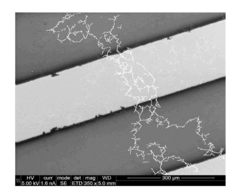
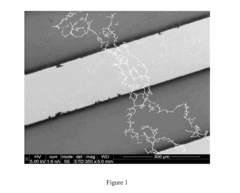
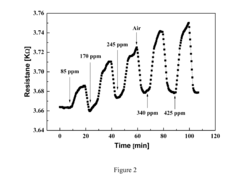
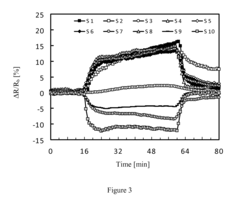
- A system comprising an array of chemically sensitive sensors made from single-walled carbon nanotubes (SWCNTs) coated with non-polar small organic molecules, in conjunction with learning and pattern recognition algorithms, is used to measure breath analytes. The SWCNTs are arranged in a random network configuration, eliminating the need for precise alignment and enhancing sensitivity and selectivity towards VOCs found in lung cancer patients.
Environmental Impact of Dodecane Use
The environmental impact of dodecane use is a critical consideration in modern scientific applications. As a hydrocarbon compound, dodecane's utilization across various industries has both direct and indirect effects on the environment. The production and use of dodecane contribute to carbon emissions, primarily through its synthesis from petroleum sources and its combustion in fuel applications. These emissions contribute to global warming and climate change, necessitating careful management and mitigation strategies.
In the realm of water pollution, dodecane poses significant risks due to its low solubility and tendency to form surface films on water bodies. Accidental spills or improper disposal can lead to contamination of aquatic ecosystems, affecting marine life and water quality. The persistence of dodecane in the environment further exacerbates these concerns, as it does not readily biodegrade, potentially leading to long-term ecological impacts.
Air quality is another area of environmental concern related to dodecane use. Volatile organic compound (VOC) emissions from dodecane can contribute to the formation of ground-level ozone and smog, particularly in urban and industrial areas. These air quality issues can have significant health implications for both human populations and local ecosystems.
The use of dodecane in various industrial processes also raises concerns about waste management and disposal. Proper handling and treatment of dodecane-containing waste are essential to prevent soil contamination and groundwater pollution. Industries must implement robust waste management protocols to mitigate these risks and comply with environmental regulations.
However, it is important to note that dodecane also plays a role in environmental remediation efforts. Its use in oil spill cleanup technologies, for instance, demonstrates its potential for positive environmental applications. Research into biodegradable alternatives and more sustainable production methods for dodecane is ongoing, aiming to reduce its environmental footprint while maintaining its utility in scientific and industrial applications.
As scientific understanding of environmental impacts evolves, there is a growing emphasis on life cycle assessments for dodecane use. These comprehensive evaluations consider the environmental implications from production to disposal, helping to identify areas for improvement and guiding the development of more sustainable practices. The scientific community continues to explore ways to optimize dodecane applications while minimizing negative environmental consequences, balancing the compound's valuable properties with ecological responsibility.
In the realm of water pollution, dodecane poses significant risks due to its low solubility and tendency to form surface films on water bodies. Accidental spills or improper disposal can lead to contamination of aquatic ecosystems, affecting marine life and water quality. The persistence of dodecane in the environment further exacerbates these concerns, as it does not readily biodegrade, potentially leading to long-term ecological impacts.
Air quality is another area of environmental concern related to dodecane use. Volatile organic compound (VOC) emissions from dodecane can contribute to the formation of ground-level ozone and smog, particularly in urban and industrial areas. These air quality issues can have significant health implications for both human populations and local ecosystems.
The use of dodecane in various industrial processes also raises concerns about waste management and disposal. Proper handling and treatment of dodecane-containing waste are essential to prevent soil contamination and groundwater pollution. Industries must implement robust waste management protocols to mitigate these risks and comply with environmental regulations.
However, it is important to note that dodecane also plays a role in environmental remediation efforts. Its use in oil spill cleanup technologies, for instance, demonstrates its potential for positive environmental applications. Research into biodegradable alternatives and more sustainable production methods for dodecane is ongoing, aiming to reduce its environmental footprint while maintaining its utility in scientific and industrial applications.
As scientific understanding of environmental impacts evolves, there is a growing emphasis on life cycle assessments for dodecane use. These comprehensive evaluations consider the environmental implications from production to disposal, helping to identify areas for improvement and guiding the development of more sustainable practices. The scientific community continues to explore ways to optimize dodecane applications while minimizing negative environmental consequences, balancing the compound's valuable properties with ecological responsibility.
Regulatory Framework for Dodecane Research
The regulatory framework for dodecane research is a critical aspect of its applications in modern science, encompassing various legal and ethical considerations. At the international level, organizations such as the United Nations Environment Programme (UNEP) and the Organization for Economic Co-operation and Development (OECD) provide guidelines for the safe handling and use of chemicals, including dodecane. These frameworks often focus on environmental protection, worker safety, and consumer health.
In the United States, the Environmental Protection Agency (EPA) plays a crucial role in regulating dodecane under the Toxic Substances Control Act (TSCA). The EPA maintains a comprehensive inventory of chemical substances and requires manufacturers to submit premanufacture notices for new chemical substances or significant new uses of existing chemicals. This process ensures that potential risks associated with dodecane are thoroughly evaluated before its widespread application in scientific research or industrial processes.
The European Union's regulatory approach is governed by the Registration, Evaluation, Authorization and Restriction of Chemicals (REACH) regulation. Under REACH, companies are required to register chemical substances, including dodecane, and provide safety data to the European Chemicals Agency (ECHA). This information is then used to assess potential risks and implement appropriate risk management measures.
In the context of scientific research, institutional review boards (IRBs) and ethics committees play a vital role in ensuring that experiments involving dodecane adhere to ethical standards and safety protocols. These bodies review research proposals, assess potential risks to human subjects and the environment, and ensure compliance with relevant regulations and guidelines.
Occupational safety regulations, such as those enforced by the Occupational Safety and Health Administration (OSHA) in the United States, also impact dodecane research. These regulations set standards for workplace exposure limits, personal protective equipment, and handling procedures to protect researchers and laboratory personnel working with dodecane and other potentially hazardous substances.
As the applications of dodecane in modern science continue to expand, regulatory frameworks are likely to evolve. Emerging areas of concern, such as the potential environmental impact of dodecane in fuel applications or its role in nanotechnology, may lead to the development of new regulations or the refinement of existing ones. Researchers and industry professionals must stay informed about these regulatory changes to ensure compliance and promote responsible innovation in dodecane applications.
In the United States, the Environmental Protection Agency (EPA) plays a crucial role in regulating dodecane under the Toxic Substances Control Act (TSCA). The EPA maintains a comprehensive inventory of chemical substances and requires manufacturers to submit premanufacture notices for new chemical substances or significant new uses of existing chemicals. This process ensures that potential risks associated with dodecane are thoroughly evaluated before its widespread application in scientific research or industrial processes.
The European Union's regulatory approach is governed by the Registration, Evaluation, Authorization and Restriction of Chemicals (REACH) regulation. Under REACH, companies are required to register chemical substances, including dodecane, and provide safety data to the European Chemicals Agency (ECHA). This information is then used to assess potential risks and implement appropriate risk management measures.
In the context of scientific research, institutional review boards (IRBs) and ethics committees play a vital role in ensuring that experiments involving dodecane adhere to ethical standards and safety protocols. These bodies review research proposals, assess potential risks to human subjects and the environment, and ensure compliance with relevant regulations and guidelines.
Occupational safety regulations, such as those enforced by the Occupational Safety and Health Administration (OSHA) in the United States, also impact dodecane research. These regulations set standards for workplace exposure limits, personal protective equipment, and handling procedures to protect researchers and laboratory personnel working with dodecane and other potentially hazardous substances.
As the applications of dodecane in modern science continue to expand, regulatory frameworks are likely to evolve. Emerging areas of concern, such as the potential environmental impact of dodecane in fuel applications or its role in nanotechnology, may lead to the development of new regulations or the refinement of existing ones. Researchers and industry professionals must stay informed about these regulatory changes to ensure compliance and promote responsible innovation in dodecane applications.
Unlock deeper insights with Patsnap Eureka Quick Research — get a full tech report to explore trends and direct your research. Try now!
Generate Your Research Report Instantly with AI Agent
Supercharge your innovation with Patsnap Eureka AI Agent Platform!