How to Capture Dodecane's Transformational Potential?
JUL 29, 20259 MIN READ
Generate Your Research Report Instantly with AI Agent
PatSnap Eureka helps you evaluate technical feasibility & market potential.
Dodecane Overview and Research Objectives
Dodecane, a straight-chain alkane hydrocarbon with the molecular formula C12H26, has emerged as a compound of significant interest in various industrial and research applications. This versatile substance, found naturally in petroleum and produced synthetically, possesses unique properties that make it valuable across multiple sectors, including energy, materials science, and chemical engineering.
The primary objective of this research is to explore and evaluate the transformational potential of dodecane, focusing on its capacity to drive innovation and create new opportunities in diverse fields. By examining its physical and chemical characteristics, we aim to identify novel applications and optimize existing uses, ultimately unlocking its full potential as a versatile resource.
Dodecane's properties, such as its low volatility, high energy density, and thermal stability, make it an attractive candidate for various applications. In the energy sector, it serves as a crucial component in jet fuels and diesel blends, contributing to improved engine performance and fuel efficiency. The material science industry leverages dodecane's properties in the development of advanced coatings, lubricants, and polymers, enhancing the durability and functionality of numerous products.
Furthermore, dodecane plays a vital role in chemical synthesis, serving as a precursor for the production of various organic compounds and specialty chemicals. Its potential in green chemistry applications, particularly as a renewable feedstock for sustainable chemical processes, presents an exciting avenue for research and development.
This research aims to address several key questions surrounding dodecane's transformational potential. We will investigate how its unique molecular structure can be exploited to create novel materials with enhanced properties. Additionally, we will explore the possibility of developing more efficient and environmentally friendly production methods for dodecane and its derivatives.
Another crucial aspect of our research objectives is to evaluate dodecane's potential in emerging technologies, such as energy storage systems, advanced catalysis, and nanomaterials. By identifying synergies between dodecane's properties and cutting-edge scientific advancements, we aim to uncover groundbreaking applications that could revolutionize various industries.
To capture dodecane's transformational potential fully, this research will adopt a multidisciplinary approach, combining insights from chemistry, materials science, engineering, and environmental studies. We will conduct comprehensive literature reviews, experimental studies, and collaborative research with industry partners to gain a holistic understanding of dodecane's capabilities and limitations.
The primary objective of this research is to explore and evaluate the transformational potential of dodecane, focusing on its capacity to drive innovation and create new opportunities in diverse fields. By examining its physical and chemical characteristics, we aim to identify novel applications and optimize existing uses, ultimately unlocking its full potential as a versatile resource.
Dodecane's properties, such as its low volatility, high energy density, and thermal stability, make it an attractive candidate for various applications. In the energy sector, it serves as a crucial component in jet fuels and diesel blends, contributing to improved engine performance and fuel efficiency. The material science industry leverages dodecane's properties in the development of advanced coatings, lubricants, and polymers, enhancing the durability and functionality of numerous products.
Furthermore, dodecane plays a vital role in chemical synthesis, serving as a precursor for the production of various organic compounds and specialty chemicals. Its potential in green chemistry applications, particularly as a renewable feedstock for sustainable chemical processes, presents an exciting avenue for research and development.
This research aims to address several key questions surrounding dodecane's transformational potential. We will investigate how its unique molecular structure can be exploited to create novel materials with enhanced properties. Additionally, we will explore the possibility of developing more efficient and environmentally friendly production methods for dodecane and its derivatives.
Another crucial aspect of our research objectives is to evaluate dodecane's potential in emerging technologies, such as energy storage systems, advanced catalysis, and nanomaterials. By identifying synergies between dodecane's properties and cutting-edge scientific advancements, we aim to uncover groundbreaking applications that could revolutionize various industries.
To capture dodecane's transformational potential fully, this research will adopt a multidisciplinary approach, combining insights from chemistry, materials science, engineering, and environmental studies. We will conduct comprehensive literature reviews, experimental studies, and collaborative research with industry partners to gain a holistic understanding of dodecane's capabilities and limitations.
Market Analysis for Dodecane Applications
The global market for dodecane applications is experiencing significant growth, driven by its versatile properties and increasing demand across various industries. Dodecane, a straight-chain alkane hydrocarbon, finds extensive use in sectors such as cosmetics, pharmaceuticals, lubricants, and fuel additives. The market is characterized by a steady increase in demand, particularly in emerging economies where industrialization and urbanization are rapidly advancing.
In the cosmetics and personal care industry, dodecane serves as a key ingredient in numerous products, including hair care formulations, skin moisturizers, and makeup removers. Its excellent spreading properties and low viscosity make it an ideal carrier for active ingredients. The growing consumer focus on natural and sustainable beauty products has further boosted the demand for dodecane-based formulations, as it can be derived from renewable sources.
The pharmaceutical sector represents another significant market for dodecane applications. Its use as a solvent in drug delivery systems and as an excipient in various pharmaceutical formulations has been steadily increasing. The rise in chronic diseases and the aging population in many countries are driving factors for the pharmaceutical industry's growth, consequently impacting the demand for dodecane.
In the lubricants industry, dodecane is utilized as a base oil component, offering excellent thermal stability and low-temperature performance. The automotive and industrial machinery sectors are major consumers of dodecane-based lubricants, with the market expected to expand further as these industries continue to grow globally.
The fuel additives market is another area where dodecane shows promising potential. As regulations on fuel efficiency and emissions become more stringent worldwide, the demand for high-performance fuel additives is rising. Dodecane's properties make it an excellent candidate for improving fuel combustion and reducing emissions, aligning with the global push towards cleaner energy solutions.
Geographically, North America and Europe currently dominate the dodecane market, owing to their well-established cosmetics, pharmaceutical, and automotive industries. However, the Asia-Pacific region is emerging as a rapidly growing market, driven by increasing industrialization, rising disposable incomes, and growing awareness of personal care products.
The market analysis indicates that the dodecane industry is poised for substantial growth in the coming years. Factors such as technological advancements in production processes, increasing research and development activities, and the exploration of new application areas are expected to further propel market expansion. As industries continue to seek sustainable and efficient solutions, dodecane's transformational potential is likely to be increasingly realized across various sectors.
In the cosmetics and personal care industry, dodecane serves as a key ingredient in numerous products, including hair care formulations, skin moisturizers, and makeup removers. Its excellent spreading properties and low viscosity make it an ideal carrier for active ingredients. The growing consumer focus on natural and sustainable beauty products has further boosted the demand for dodecane-based formulations, as it can be derived from renewable sources.
The pharmaceutical sector represents another significant market for dodecane applications. Its use as a solvent in drug delivery systems and as an excipient in various pharmaceutical formulations has been steadily increasing. The rise in chronic diseases and the aging population in many countries are driving factors for the pharmaceutical industry's growth, consequently impacting the demand for dodecane.
In the lubricants industry, dodecane is utilized as a base oil component, offering excellent thermal stability and low-temperature performance. The automotive and industrial machinery sectors are major consumers of dodecane-based lubricants, with the market expected to expand further as these industries continue to grow globally.
The fuel additives market is another area where dodecane shows promising potential. As regulations on fuel efficiency and emissions become more stringent worldwide, the demand for high-performance fuel additives is rising. Dodecane's properties make it an excellent candidate for improving fuel combustion and reducing emissions, aligning with the global push towards cleaner energy solutions.
Geographically, North America and Europe currently dominate the dodecane market, owing to their well-established cosmetics, pharmaceutical, and automotive industries. However, the Asia-Pacific region is emerging as a rapidly growing market, driven by increasing industrialization, rising disposable incomes, and growing awareness of personal care products.
The market analysis indicates that the dodecane industry is poised for substantial growth in the coming years. Factors such as technological advancements in production processes, increasing research and development activities, and the exploration of new application areas are expected to further propel market expansion. As industries continue to seek sustainable and efficient solutions, dodecane's transformational potential is likely to be increasingly realized across various sectors.
Current Challenges in Dodecane Utilization
Despite the promising potential of dodecane, several significant challenges currently hinder its widespread utilization and full exploitation. One of the primary obstacles is the limited availability and high cost of production. Dodecane, being a long-chain hydrocarbon, requires complex extraction and refining processes, which contribute to its relatively high market price. This economic barrier restricts its application in various industries where cost-effectiveness is a crucial factor.
Another challenge lies in the environmental concerns associated with dodecane production and use. As a petroleum-derived compound, its extraction and processing contribute to carbon emissions and environmental degradation. The increasing global focus on sustainability and reducing carbon footprints poses a significant challenge to the expansion of dodecane utilization in many sectors.
The chemical stability of dodecane, while beneficial in some applications, presents challenges in others. Its resistance to chemical reactions makes it difficult to modify or functionalize for specific uses. This limitation restricts its potential in certain advanced applications where tailored chemical properties are required.
Storage and transportation of dodecane also present logistical challenges. Its low flash point and flammability necessitate special handling and storage conditions, increasing operational costs and safety concerns. This aspect particularly affects its use in consumer products and large-scale industrial applications.
The lack of comprehensive research on dodecane's long-term effects on human health and the environment is another significant challenge. While generally considered safe, there is a need for more extensive toxicological studies to fully understand its impact, especially in new application areas.
In the realm of energy applications, dodecane faces competition from emerging alternative fuels and energy storage technologies. Its potential as a hydrogen carrier or in thermal energy storage systems is promising, but requires further technological advancements to become commercially viable and competitive.
Regulatory hurdles also pose challenges to dodecane's expanded use. Varying regulations across different countries regarding the use of petroleum-derived products in certain applications can limit its global market potential. Compliance with these diverse regulatory frameworks adds complexity to product development and marketing strategies.
Lastly, the limited awareness of dodecane's potential applications among industries and researchers hinders innovation and investment in this field. Overcoming this knowledge gap and promoting interdisciplinary research is crucial for unlocking dodecane's full transformational potential across various sectors.
Another challenge lies in the environmental concerns associated with dodecane production and use. As a petroleum-derived compound, its extraction and processing contribute to carbon emissions and environmental degradation. The increasing global focus on sustainability and reducing carbon footprints poses a significant challenge to the expansion of dodecane utilization in many sectors.
The chemical stability of dodecane, while beneficial in some applications, presents challenges in others. Its resistance to chemical reactions makes it difficult to modify or functionalize for specific uses. This limitation restricts its potential in certain advanced applications where tailored chemical properties are required.
Storage and transportation of dodecane also present logistical challenges. Its low flash point and flammability necessitate special handling and storage conditions, increasing operational costs and safety concerns. This aspect particularly affects its use in consumer products and large-scale industrial applications.
The lack of comprehensive research on dodecane's long-term effects on human health and the environment is another significant challenge. While generally considered safe, there is a need for more extensive toxicological studies to fully understand its impact, especially in new application areas.
In the realm of energy applications, dodecane faces competition from emerging alternative fuels and energy storage technologies. Its potential as a hydrogen carrier or in thermal energy storage systems is promising, but requires further technological advancements to become commercially viable and competitive.
Regulatory hurdles also pose challenges to dodecane's expanded use. Varying regulations across different countries regarding the use of petroleum-derived products in certain applications can limit its global market potential. Compliance with these diverse regulatory frameworks adds complexity to product development and marketing strategies.
Lastly, the limited awareness of dodecane's potential applications among industries and researchers hinders innovation and investment in this field. Overcoming this knowledge gap and promoting interdisciplinary research is crucial for unlocking dodecane's full transformational potential across various sectors.
Existing Dodecane Processing Methods
01 Synthesis and production of dodecane
Dodecane can be synthesized through various chemical processes, including the hydrogenation of long-chain alkenes or the Fischer-Tropsch process. It is also produced as a byproduct in petroleum refining. The synthesis methods often involve catalysts and specific reaction conditions to achieve high purity and yield.- Synthesis and production of dodecane: Dodecane can be synthesized through various chemical processes, including the hydrogenation of long-chain alkenes or the Fischer-Tropsch process. It can also be produced from renewable resources such as plant oils or biomass. The production methods often involve catalytic reactions and may require specific reaction conditions to optimize yield and purity.
- Applications in fuel and energy: Dodecane is widely used in the fuel and energy sector due to its high energy density and combustion properties. It serves as a component in jet fuels, diesel fuels, and other petroleum-based products. Research is ongoing to develop more efficient and environmentally friendly fuel formulations incorporating dodecane.
- Use in cosmetics and personal care products: Dodecane finds applications in cosmetics and personal care products as an emollient, solvent, or carrier oil. It is used in formulations for skin care, hair care, and fragrance products. Its properties make it suitable for creating lightweight, non-greasy textures in various cosmetic preparations.
- Industrial and chemical applications: Dodecane has various industrial and chemical applications, including its use as a solvent, lubricant, or intermediate in chemical synthesis. It is employed in the production of surfactants, plasticizers, and other specialty chemicals. Its properties make it valuable in diverse industrial processes and formulations.
- Environmental and safety considerations: Research and development efforts focus on addressing environmental and safety concerns related to dodecane use. This includes studying its biodegradability, potential environmental impacts, and developing safer handling and storage methods. Efforts are also made to improve its performance while minimizing any adverse effects on human health and the environment.
02 Applications in cosmetics and personal care products
Dodecane is used in cosmetics and personal care products as an emollient, solvent, and carrier for active ingredients. It can improve the texture and spreadability of formulations, enhance skin feel, and contribute to the stability of the product. Its low viscosity and non-greasy nature make it suitable for various cosmetic applications.Expand Specific Solutions03 Use in industrial processes and materials
Dodecane finds applications in various industrial processes and materials. It is used as a solvent in chemical reactions, as a component in lubricants and hydraulic fluids, and as a raw material for the production of surfactants and other chemicals. Its properties make it suitable for heat transfer applications and as a phase change material.Expand Specific Solutions04 Environmental and fuel applications
Dodecane is studied for its potential in environmental and fuel applications. It is investigated as a component in biofuels and alternative energy sources. Its properties are also relevant in the development of pollution control technologies and environmental remediation processes. Research focuses on its biodegradability and environmental impact.Expand Specific Solutions05 Analytical and research applications
Dodecane is used in various analytical and research applications. It serves as a standard or reference compound in chromatography and other analytical techniques. In research, it is used to study molecular interactions, surface phenomena, and as a model compound for understanding the behavior of hydrocarbons in different systems.Expand Specific Solutions
Key Industry Players and Competitors
The market for dodecane's transformational potential is in its early growth stage, with increasing interest from major chemical companies and research institutions. The global market size is expanding, driven by applications in various industries such as petrochemicals, polymers, and renewable energy. Technologically, the field is rapidly evolving, with companies like BASF Corp., Wanhua Chemical Group, and China Petroleum & Chemical Corp. leading research and development efforts. These industry giants are investing in advanced processes to harness dodecane's properties, while academic institutions like ETH Zurich and KAIST are contributing fundamental research. The involvement of diverse players indicates a competitive landscape with significant potential for innovation and market growth.
BASF Corp.
Technical Solution: BASF has developed innovative processes to capture dodecane's potential in various applications. They utilize advanced catalytic systems for the selective hydrogenation of dodecane to produce high-quality lubricants and specialty chemicals[1]. Their proprietary technology enables the conversion of dodecane into valuable intermediates for the production of surfactants, plasticizers, and other performance materials[2]. BASF has also implemented a closed-loop recycling system for dodecane, enhancing sustainability and reducing waste in the production process[3].
Strengths: Extensive R&D capabilities, global market presence, and integrated value chain. Weaknesses: High capital investment required for process implementation and potential regulatory challenges in some regions.
Wanhua Chemical Group Co., Ltd.
Technical Solution: Wanhua Chemical has developed a novel approach to harness dodecane's potential through their advanced isomerization technology. They have successfully implemented a catalytic process that converts linear dodecane into branched isomers, significantly improving the cold flow properties and oxidation stability of the resulting products[4]. This technology has found applications in high-performance lubricants and specialty solvents. Additionally, Wanhua has integrated dodecane-based intermediates into their polyurethane production, enhancing the performance characteristics of their final products[5].
Strengths: Strong position in the Asian market, vertically integrated production capabilities. Weaknesses: Limited global presence compared to some competitors, potential intellectual property challenges.
Innovative Dodecane Transformation Techniques
Carbon nanotube structures in sensor apparatuses for analyzing biomarkers in breath samples
PatentActiveUS20110098591A1
Innovation
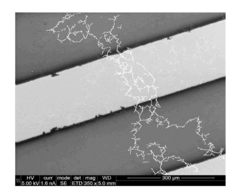
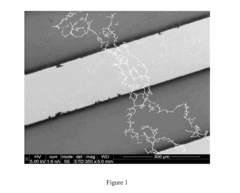
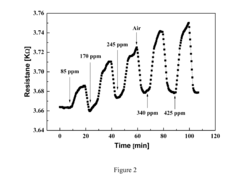
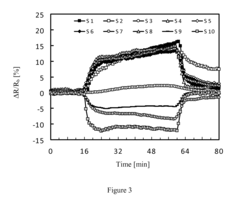
- A system comprising an array of chemically sensitive sensors made from single-walled carbon nanotubes (SWCNTs) coated with non-polar small organic molecules, in conjunction with learning and pattern recognition algorithms, is used to measure breath analytes. The SWCNTs are arranged in a random network configuration, eliminating the need for precise alignment and enhancing sensitivity and selectivity towards VOCs found in lung cancer patients.
Process for colouring hair keratin fibers, comprising the application of a composition comprising at least one (POLY)carbodiimide compound and a composition comprising at least one associative polymer and a particular compound
PatentPendingUS20240197614A1
Innovation
- A process involving the application of composition A, containing (poly)carbodiimide compounds, and composition B, comprising associative polymers and compounds with carboxylic acid groups, to hair keratin fibers, either simultaneously or sequentially, to achieve a stable and uniform color coating that persists through shampoo washing and external attacks.


Environmental Impact Assessment
The environmental impact assessment of dodecane's transformational potential is a critical aspect that requires thorough examination. Dodecane, a hydrocarbon compound with various industrial applications, presents both opportunities and challenges in terms of its environmental footprint.
One of the primary environmental concerns associated with dodecane is its potential for air pollution. As a volatile organic compound (VOC), dodecane can contribute to the formation of ground-level ozone and smog when released into the atmosphere. This can have detrimental effects on air quality, particularly in urban and industrial areas where its use may be more prevalent. Consequently, stringent emission control measures and proper handling protocols are essential to mitigate these risks.
Water contamination is another significant environmental consideration. Dodecane's low solubility in water means that spills or improper disposal can lead to the formation of surface films on water bodies. This can disrupt aquatic ecosystems by interfering with oxygen transfer and potentially harming marine life. Furthermore, its persistence in the environment raises concerns about long-term accumulation in sediments and potential bioaccumulation in aquatic organisms.
Soil contamination is also a potential risk associated with dodecane use. Accidental spills or leaks can result in soil pollution, affecting soil quality and potentially impacting vegetation growth. The compound's mobility in soil can lead to groundwater contamination, further exacerbating environmental risks and potentially affecting drinking water sources.
On the positive side, dodecane's potential as a renewable fuel source could contribute to reducing greenhouse gas emissions when compared to traditional fossil fuels. If produced from sustainable biomass sources, it could offer a more environmentally friendly alternative to conventional petroleum-based fuels. However, the full life cycle assessment of dodecane production, including land use changes and energy inputs, must be carefully evaluated to ensure a net positive environmental impact.
The environmental impact of dodecane also extends to its production processes. Traditional methods of dodecane synthesis often involve energy-intensive processes and the use of petrochemical feedstocks. Developing more sustainable production methods, such as bio-based processes or utilizing waste streams, could significantly reduce the overall environmental footprint of dodecane production.
In conclusion, capturing dodecane's transformational potential requires a comprehensive approach to environmental stewardship. This includes implementing robust emission control technologies, developing spill prevention and response strategies, and investing in research for more sustainable production methods. By addressing these environmental challenges proactively, the industry can harness dodecane's potential while minimizing its ecological impact.
One of the primary environmental concerns associated with dodecane is its potential for air pollution. As a volatile organic compound (VOC), dodecane can contribute to the formation of ground-level ozone and smog when released into the atmosphere. This can have detrimental effects on air quality, particularly in urban and industrial areas where its use may be more prevalent. Consequently, stringent emission control measures and proper handling protocols are essential to mitigate these risks.
Water contamination is another significant environmental consideration. Dodecane's low solubility in water means that spills or improper disposal can lead to the formation of surface films on water bodies. This can disrupt aquatic ecosystems by interfering with oxygen transfer and potentially harming marine life. Furthermore, its persistence in the environment raises concerns about long-term accumulation in sediments and potential bioaccumulation in aquatic organisms.
Soil contamination is also a potential risk associated with dodecane use. Accidental spills or leaks can result in soil pollution, affecting soil quality and potentially impacting vegetation growth. The compound's mobility in soil can lead to groundwater contamination, further exacerbating environmental risks and potentially affecting drinking water sources.
On the positive side, dodecane's potential as a renewable fuel source could contribute to reducing greenhouse gas emissions when compared to traditional fossil fuels. If produced from sustainable biomass sources, it could offer a more environmentally friendly alternative to conventional petroleum-based fuels. However, the full life cycle assessment of dodecane production, including land use changes and energy inputs, must be carefully evaluated to ensure a net positive environmental impact.
The environmental impact of dodecane also extends to its production processes. Traditional methods of dodecane synthesis often involve energy-intensive processes and the use of petrochemical feedstocks. Developing more sustainable production methods, such as bio-based processes or utilizing waste streams, could significantly reduce the overall environmental footprint of dodecane production.
In conclusion, capturing dodecane's transformational potential requires a comprehensive approach to environmental stewardship. This includes implementing robust emission control technologies, developing spill prevention and response strategies, and investing in research for more sustainable production methods. By addressing these environmental challenges proactively, the industry can harness dodecane's potential while minimizing its ecological impact.
Regulatory Framework for Dodecane Usage
The regulatory framework for dodecane usage is a critical aspect of harnessing its transformational potential across various industries. As a versatile hydrocarbon, dodecane's applications span from fuel additives to cosmetics, necessitating a comprehensive regulatory approach to ensure safety, environmental protection, and optimal utilization.
At the international level, organizations such as the United Nations Environment Programme (UNEP) and the World Health Organization (WHO) provide overarching guidelines for the handling and use of hydrocarbons like dodecane. These guidelines often form the basis for national and regional regulations, emphasizing the importance of harmonized global standards to facilitate international trade and ensure consistent safety measures.
In the United States, the Environmental Protection Agency (EPA) plays a pivotal role in regulating dodecane usage. Under the Toxic Substances Control Act (TSCA), dodecane is subject to reporting, record-keeping, and testing requirements. The Occupational Safety and Health Administration (OSHA) sets workplace exposure limits and safety protocols for handling dodecane in industrial settings.
The European Union's regulatory framework for dodecane falls under the Registration, Evaluation, Authorization, and Restriction of Chemicals (REACH) regulation. This comprehensive legislation requires manufacturers and importers to register substances like dodecane and provide detailed safety information. The European Chemicals Agency (ECHA) oversees the implementation of REACH, ensuring that dodecane's use aligns with human health and environmental protection standards.
In the context of fuel applications, regulatory bodies such as the International Civil Aviation Organization (ICAO) and the International Maritime Organization (IMO) have established specific guidelines for the use of dodecane-based fuels in aviation and maritime transport. These regulations focus on performance standards, emissions control, and safety measures.
As dodecane finds increasing applications in consumer products, regulatory frameworks in cosmetics and personal care industries become relevant. In the EU, the Cosmetic Products Regulation (EC) No 1223/2009 governs the use of ingredients like dodecane in cosmetic formulations. Similarly, the U.S. Food and Drug Administration (FDA) regulates dodecane's use in cosmetics and personal care products under the Federal Food, Drug, and Cosmetic Act.
To capture dodecane's transformational potential fully, it is crucial for stakeholders to navigate this complex regulatory landscape effectively. This involves staying abreast of evolving regulations, participating in industry consultations, and proactively addressing safety and environmental concerns. As new applications for dodecane emerge, regulatory frameworks will likely adapt, necessitating ongoing engagement between industry, regulators, and research institutions to ensure that regulations support innovation while maintaining stringent safety and environmental standards.
At the international level, organizations such as the United Nations Environment Programme (UNEP) and the World Health Organization (WHO) provide overarching guidelines for the handling and use of hydrocarbons like dodecane. These guidelines often form the basis for national and regional regulations, emphasizing the importance of harmonized global standards to facilitate international trade and ensure consistent safety measures.
In the United States, the Environmental Protection Agency (EPA) plays a pivotal role in regulating dodecane usage. Under the Toxic Substances Control Act (TSCA), dodecane is subject to reporting, record-keeping, and testing requirements. The Occupational Safety and Health Administration (OSHA) sets workplace exposure limits and safety protocols for handling dodecane in industrial settings.
The European Union's regulatory framework for dodecane falls under the Registration, Evaluation, Authorization, and Restriction of Chemicals (REACH) regulation. This comprehensive legislation requires manufacturers and importers to register substances like dodecane and provide detailed safety information. The European Chemicals Agency (ECHA) oversees the implementation of REACH, ensuring that dodecane's use aligns with human health and environmental protection standards.
In the context of fuel applications, regulatory bodies such as the International Civil Aviation Organization (ICAO) and the International Maritime Organization (IMO) have established specific guidelines for the use of dodecane-based fuels in aviation and maritime transport. These regulations focus on performance standards, emissions control, and safety measures.
As dodecane finds increasing applications in consumer products, regulatory frameworks in cosmetics and personal care industries become relevant. In the EU, the Cosmetic Products Regulation (EC) No 1223/2009 governs the use of ingredients like dodecane in cosmetic formulations. Similarly, the U.S. Food and Drug Administration (FDA) regulates dodecane's use in cosmetics and personal care products under the Federal Food, Drug, and Cosmetic Act.
To capture dodecane's transformational potential fully, it is crucial for stakeholders to navigate this complex regulatory landscape effectively. This involves staying abreast of evolving regulations, participating in industry consultations, and proactively addressing safety and environmental concerns. As new applications for dodecane emerge, regulatory frameworks will likely adapt, necessitating ongoing engagement between industry, regulators, and research institutions to ensure that regulations support innovation while maintaining stringent safety and environmental standards.
Unlock deeper insights with PatSnap Eureka Quick Research — get a full tech report to explore trends and direct your research. Try now!
Generate Your Research Report Instantly with AI Agent
Supercharge your innovation with PatSnap Eureka AI Agent Platform!