

Enhancing Brain-Computer Interface Design with User-Centric Feedback
MAR 5, 20269 MIN READ
Generate Your Research Report Instantly with AI Agent
PatSnap Eureka helps you evaluate technical feasibility & market potential.
BCI Technology Background and User-Centric Goals
Brain-Computer Interface technology represents a revolutionary paradigm in human-machine interaction, enabling direct communication pathways between the brain and external devices. The field has evolved from early experimental concepts in the 1970s to sophisticated systems capable of translating neural signals into actionable commands for prosthetic devices, computer interfaces, and therapeutic applications.
The foundational principles of BCI technology rest on the ability to capture, decode, and interpret neural activity through various signal acquisition methods. These include invasive techniques such as microelectrode arrays that record from individual neurons, semi-invasive approaches like electrocorticography (ECoG), and non-invasive methods including electroencephalography (EEG) and functional magnetic resonance imaging (fMRI). Each approach offers distinct advantages in terms of signal quality, spatial resolution, and user safety considerations.
Traditional BCI development has primarily focused on technical performance metrics such as signal-to-noise ratio, decoding accuracy, and system latency. However, this technology-centric approach has often overlooked the critical importance of user experience and individual variability in neural patterns. The recognition of these limitations has catalyzed a paradigm shift toward user-centric design methodologies that prioritize human factors alongside technical specifications.
The integration of user-centric feedback mechanisms represents a fundamental evolution in BCI design philosophy. This approach acknowledges that successful BCI systems must adapt to individual users rather than requiring users to conform to rigid system parameters. User-centric goals encompass multiple dimensions including intuitive control interfaces, personalized calibration protocols, and adaptive learning algorithms that evolve with user proficiency.
Contemporary research emphasizes the importance of closed-loop feedback systems that provide real-time information to users about their neural control performance. These systems enable users to develop more effective mental strategies and improve their ability to generate consistent, decodable neural signals. The feedback modalities range from visual displays and auditory cues to haptic sensations that create immersive training environments.
The ultimate objective of user-centric BCI design extends beyond mere functional restoration to encompass quality of life improvements and seamless integration into daily activities. This holistic approach considers factors such as cognitive load, user fatigue, social acceptance, and long-term usability. Success metrics have expanded to include user satisfaction, learning curve optimization, and the ability to perform complex, real-world tasks with minimal conscious effort.
The foundational principles of BCI technology rest on the ability to capture, decode, and interpret neural activity through various signal acquisition methods. These include invasive techniques such as microelectrode arrays that record from individual neurons, semi-invasive approaches like electrocorticography (ECoG), and non-invasive methods including electroencephalography (EEG) and functional magnetic resonance imaging (fMRI). Each approach offers distinct advantages in terms of signal quality, spatial resolution, and user safety considerations.
Traditional BCI development has primarily focused on technical performance metrics such as signal-to-noise ratio, decoding accuracy, and system latency. However, this technology-centric approach has often overlooked the critical importance of user experience and individual variability in neural patterns. The recognition of these limitations has catalyzed a paradigm shift toward user-centric design methodologies that prioritize human factors alongside technical specifications.
The integration of user-centric feedback mechanisms represents a fundamental evolution in BCI design philosophy. This approach acknowledges that successful BCI systems must adapt to individual users rather than requiring users to conform to rigid system parameters. User-centric goals encompass multiple dimensions including intuitive control interfaces, personalized calibration protocols, and adaptive learning algorithms that evolve with user proficiency.
Contemporary research emphasizes the importance of closed-loop feedback systems that provide real-time information to users about their neural control performance. These systems enable users to develop more effective mental strategies and improve their ability to generate consistent, decodable neural signals. The feedback modalities range from visual displays and auditory cues to haptic sensations that create immersive training environments.
The ultimate objective of user-centric BCI design extends beyond mere functional restoration to encompass quality of life improvements and seamless integration into daily activities. This holistic approach considers factors such as cognitive load, user fatigue, social acceptance, and long-term usability. Success metrics have expanded to include user satisfaction, learning curve optimization, and the ability to perform complex, real-world tasks with minimal conscious effort.
Market Demand for User-Friendly BCI Systems
The global brain-computer interface market is experiencing unprecedented growth driven by increasing demand for intuitive, accessible systems that prioritize user experience. Healthcare applications represent the largest segment, where patients with neurological conditions, spinal cord injuries, and neurodegenerative diseases require BCI systems that minimize cognitive burden while maximizing functional outcomes. The aging population worldwide intensifies this demand, as traditional assistive technologies often prove inadequate for users with complex neurological profiles.
Consumer electronics markets are emerging as significant drivers of user-friendly BCI adoption. Gaming and entertainment sectors actively seek non-invasive, plug-and-play BCI solutions that deliver seamless integration without extensive training periods. Virtual and augmented reality applications demand BCIs with minimal latency and high user comfort, pushing manufacturers toward more ergonomic designs with simplified calibration processes.
Industrial and professional applications create substantial market opportunities for user-centric BCI systems. Manufacturing environments require hands-free control interfaces that workers can operate safely without extensive technical expertise. Military and aerospace sectors demand robust, intuitive BCI systems for mission-critical operations where user error must be minimized through superior interface design.
The prosthetics market represents a particularly compelling segment where user-friendly design directly impacts quality of life. Amputees require BCI-controlled prosthetics that feel natural and respond predictably to neural signals. Market research indicates strong preference for systems offering immediate usability over those requiring lengthy adaptation periods, regardless of advanced functionality.
Educational and research institutions drive demand for accessible BCI platforms that enable broader participation in neurotechnology research. Universities seek cost-effective, user-friendly systems that students and researchers can operate without specialized technical training, expanding the potential user base significantly.
Regulatory environments increasingly emphasize user safety and accessibility standards, creating market pressure for BCI manufacturers to prioritize user-centric design principles. Medical device regulations now explicitly consider user interface quality as a safety factor, making intuitive design a competitive necessity rather than optional enhancement.
Market barriers include cost sensitivity across all segments, where user-friendly features must justify premium pricing through demonstrated value. Integration complexity with existing systems remains a significant concern, particularly in healthcare settings where interoperability with electronic health records and medical devices is essential for widespread adoption.
Consumer electronics markets are emerging as significant drivers of user-friendly BCI adoption. Gaming and entertainment sectors actively seek non-invasive, plug-and-play BCI solutions that deliver seamless integration without extensive training periods. Virtual and augmented reality applications demand BCIs with minimal latency and high user comfort, pushing manufacturers toward more ergonomic designs with simplified calibration processes.
Industrial and professional applications create substantial market opportunities for user-centric BCI systems. Manufacturing environments require hands-free control interfaces that workers can operate safely without extensive technical expertise. Military and aerospace sectors demand robust, intuitive BCI systems for mission-critical operations where user error must be minimized through superior interface design.
The prosthetics market represents a particularly compelling segment where user-friendly design directly impacts quality of life. Amputees require BCI-controlled prosthetics that feel natural and respond predictably to neural signals. Market research indicates strong preference for systems offering immediate usability over those requiring lengthy adaptation periods, regardless of advanced functionality.
Educational and research institutions drive demand for accessible BCI platforms that enable broader participation in neurotechnology research. Universities seek cost-effective, user-friendly systems that students and researchers can operate without specialized technical training, expanding the potential user base significantly.
Regulatory environments increasingly emphasize user safety and accessibility standards, creating market pressure for BCI manufacturers to prioritize user-centric design principles. Medical device regulations now explicitly consider user interface quality as a safety factor, making intuitive design a competitive necessity rather than optional enhancement.
Market barriers include cost sensitivity across all segments, where user-friendly features must justify premium pricing through demonstrated value. Integration complexity with existing systems remains a significant concern, particularly in healthcare settings where interoperability with electronic health records and medical devices is essential for widespread adoption.
Current BCI State and User Experience Challenges
Brain-Computer Interface technology has reached a critical juncture where technical capabilities increasingly diverge from user experience requirements. Current BCI systems demonstrate remarkable achievements in signal acquisition and processing, with invasive systems achieving bandwidths exceeding 200 Hz and non-invasive EEG-based systems supporting real-time control applications. However, these technical milestones mask significant usability challenges that impede widespread adoption and practical implementation.
The predominant challenge lies in the substantial gap between laboratory performance and real-world usability. Most contemporary BCI systems require extensive calibration periods, often spanning multiple sessions, before achieving acceptable performance levels. Users frequently report frustration with inconsistent system responses, particularly during initial training phases where success rates may fall below 70%. This calibration burden creates a barrier to entry that limits BCI accessibility to specialized research environments rather than practical consumer applications.
Signal quality degradation represents another persistent challenge affecting user experience. Non-invasive systems suffer from signal artifacts caused by muscle movements, eye blinks, and environmental electromagnetic interference. These artifacts necessitate frequent recalibration and can cause unexpected system behaviors that undermine user confidence. Invasive systems, while offering superior signal quality, introduce surgical risks and long-term biocompatibility concerns that significantly impact user acceptance.
Current BCI architectures predominantly employ one-way communication paradigms, where neural signals are decoded into commands without providing meaningful feedback to users about system interpretation accuracy. This absence of transparent feedback mechanisms leaves users unable to understand why certain mental commands succeed while others fail, creating a frustrating trial-and-error learning experience that can extend training periods indefinitely.
The user interface design in existing BCI systems often reflects engineering priorities rather than human-centered design principles. Many systems present complex parameter adjustment interfaces that require technical expertise to operate effectively. Users frequently encounter steep learning curves when attempting to optimize system performance, with limited guidance on how mental strategies correlate with system outputs.
Fatigue management emerges as a critical yet underaddressed challenge in current BCI implementations. Sustained mental effort required for BCI control can lead to cognitive exhaustion within 30-60 minutes of continuous use. Existing systems provide minimal support for fatigue detection or adaptive performance adjustment, resulting in degraded user experience during extended interaction sessions.
The lack of standardized user experience metrics across BCI platforms further complicates the assessment of system usability. While technical performance metrics such as classification accuracy and information transfer rates are well-established, comprehensive frameworks for evaluating user satisfaction, learning progression, and long-term engagement remain underdeveloped, hindering systematic improvements in user-centric design approaches.
The predominant challenge lies in the substantial gap between laboratory performance and real-world usability. Most contemporary BCI systems require extensive calibration periods, often spanning multiple sessions, before achieving acceptable performance levels. Users frequently report frustration with inconsistent system responses, particularly during initial training phases where success rates may fall below 70%. This calibration burden creates a barrier to entry that limits BCI accessibility to specialized research environments rather than practical consumer applications.
Signal quality degradation represents another persistent challenge affecting user experience. Non-invasive systems suffer from signal artifacts caused by muscle movements, eye blinks, and environmental electromagnetic interference. These artifacts necessitate frequent recalibration and can cause unexpected system behaviors that undermine user confidence. Invasive systems, while offering superior signal quality, introduce surgical risks and long-term biocompatibility concerns that significantly impact user acceptance.
Current BCI architectures predominantly employ one-way communication paradigms, where neural signals are decoded into commands without providing meaningful feedback to users about system interpretation accuracy. This absence of transparent feedback mechanisms leaves users unable to understand why certain mental commands succeed while others fail, creating a frustrating trial-and-error learning experience that can extend training periods indefinitely.
The user interface design in existing BCI systems often reflects engineering priorities rather than human-centered design principles. Many systems present complex parameter adjustment interfaces that require technical expertise to operate effectively. Users frequently encounter steep learning curves when attempting to optimize system performance, with limited guidance on how mental strategies correlate with system outputs.
Fatigue management emerges as a critical yet underaddressed challenge in current BCI implementations. Sustained mental effort required for BCI control can lead to cognitive exhaustion within 30-60 minutes of continuous use. Existing systems provide minimal support for fatigue detection or adaptive performance adjustment, resulting in degraded user experience during extended interaction sessions.
The lack of standardized user experience metrics across BCI platforms further complicates the assessment of system usability. While technical performance metrics such as classification accuracy and information transfer rates are well-established, comprehensive frameworks for evaluating user satisfaction, learning progression, and long-term engagement remain underdeveloped, hindering systematic improvements in user-centric design approaches.
Existing User-Centric BCI Design Solutions
01 Signal processing and feature extraction methods
Advanced signal processing techniques are employed to enhance brain-computer interface performance by extracting meaningful features from neural signals. These methods include filtering algorithms, time-frequency analysis, and pattern recognition approaches that improve the accuracy of brain signal interpretation. Machine learning algorithms are integrated to identify and classify neural patterns more effectively, enabling better translation of brain activity into control commands.- Signal processing and feature extraction methods: Advanced signal processing techniques are employed to enhance brain-computer interface performance by extracting meaningful features from neural signals. These methods include filtering algorithms, wavelet transforms, and time-frequency analysis to improve signal quality and reduce noise interference. Machine learning algorithms are applied to identify patterns and classify brain states more accurately, enabling better interpretation of user intentions.
- Neural signal acquisition and electrode optimization: Improvements in electrode design and placement strategies enhance the quality of neural signal acquisition in brain-computer interfaces. This includes the development of high-density electrode arrays, flexible electrode materials, and optimized spatial configurations to capture brain activity with greater precision. Advanced amplification and analog-to-digital conversion techniques are implemented to maintain signal integrity during the acquisition process.
- Adaptive learning and calibration systems: Adaptive algorithms enable brain-computer interfaces to continuously learn and adjust to individual user characteristics and changing neural patterns over time. These systems employ online calibration methods that reduce setup time and improve long-term usability. Self-adjusting parameters and personalized models enhance the accuracy and responsiveness of the interface by accounting for inter-subject variability and temporal changes in brain signals.
- Multimodal integration and hybrid interface approaches: Combining multiple input modalities and sensing technologies creates more robust and versatile brain-computer interface systems. Hybrid approaches integrate electroencephalography with other biosignals or external control methods to expand functionality and improve reliability. Multimodal fusion techniques leverage complementary information sources to enhance classification accuracy and provide users with more intuitive control options.
- Real-time feedback and user training protocols: Enhanced feedback mechanisms and structured training protocols improve user proficiency and interface performance in brain-computer systems. Real-time visualization of brain activity helps users develop better control strategies through neurofeedback training. Gamification elements and progressive difficulty adjustments maintain user engagement while facilitating skill acquisition, leading to faster learning curves and more effective brain-computer communication.
02 Electrode design and signal acquisition optimization
Improvements in electrode configuration and placement strategies enhance the quality of neural signal acquisition. This includes the development of novel electrode materials, array designs, and positioning methods that maximize signal-to-noise ratio. Advanced sensor technologies and multi-channel recording systems are utilized to capture brain activity with higher spatial and temporal resolution, reducing interference and improving overall system performance.Expand Specific Solutions03 Adaptive learning and calibration systems
Adaptive algorithms and calibration mechanisms are implemented to personalize brain-computer interfaces for individual users. These systems continuously learn from user interactions and adjust parameters to optimize performance over time. Self-calibrating methods reduce setup time and improve usability by automatically adapting to variations in brain signals across different sessions and users, enhancing the overall user experience and control accuracy.Expand Specific Solutions04 Hybrid interface architectures and multi-modal integration
Hybrid brain-computer interface designs combine multiple input modalities and signal types to enhance system robustness and functionality. These architectures integrate various brain signal acquisition methods with complementary technologies to provide more reliable and versatile control options. Multi-modal approaches leverage the strengths of different signal sources, improving system performance in diverse application scenarios and expanding the range of possible user interactions.Expand Specific Solutions05 Real-time processing and feedback mechanisms
Real-time signal processing capabilities and immediate feedback systems are crucial for enhancing brain-computer interface responsiveness and user engagement. These mechanisms enable instantaneous translation of neural signals into actions with minimal latency, providing users with timely feedback about their control performance. Advanced computational architectures and optimized algorithms ensure efficient processing of brain signals, supporting applications that require rapid response times and continuous interaction.Expand Specific Solutions
Key Players in BCI and Neurotechnology Industry
The brain-computer interface (BCI) field for user-centric feedback enhancement is experiencing rapid evolution across multiple development stages. The industry demonstrates substantial market potential, evidenced by diverse participation from established technology giants like Neuralink Corp. and Snap Inc., specialized BCI companies including Neurable Inc., MindPortal Inc., and Cognixion Corp., alongside major healthcare corporations such as Koninklijke Philips NV. Technology maturity varies significantly across applications, with companies like SmartStent Pty Ltd. advancing minimally invasive neural interfaces, while research institutions including Tsinghua University, University of Washington, and California Institute of Technology drive fundamental innovation. The competitive landscape spans from early-stage startups developing non-invasive solutions to established players integrating BCI capabilities into consumer products, indicating a maturing ecosystem with accelerating commercial viability and expanding therapeutic applications.
Koninklijke Philips NV
Technical Solution: Philips has developed non-invasive brain-computer interface solutions focusing on healthcare applications, particularly for patient monitoring and rehabilitation. Their technology integrates EEG-based signal acquisition with advanced signal processing algorithms and user-friendly feedback systems. The company emphasizes clinical-grade reliability and regulatory compliance, incorporating real-time biofeedback mechanisms that help users understand and control their neural activity. Their user-centric approach includes intuitive visual and auditory feedback interfaces designed for patients with varying levels of technical expertise, making BCI technology accessible in clinical environments.
Strengths: Strong healthcare market presence, regulatory expertise, clinical validation experience. Weaknesses: Limited to non-invasive approaches, slower signal acquisition compared to invasive methods.
Neurable, Inc.
Technical Solution: Neurable specializes in non-invasive brain-computer interfaces using dry EEG electrodes integrated into everyday devices like headphones and VR headsets. Their technology focuses on user experience optimization through machine learning algorithms that adapt to individual brain patterns and provide real-time feedback for cognitive state monitoring. The company has developed proprietary signal processing techniques that filter noise and enhance signal quality without requiring conductive gels. Their user-centric design emphasizes seamless integration into consumer electronics, making BCI technology accessible for everyday applications including focus training and mental state awareness.
Strengths: Consumer-friendly design, integration with existing devices, non-invasive approach. Weaknesses: Lower signal resolution than invasive methods, limited to surface-level brain activity monitoring.
Core Innovations in BCI User Feedback Systems
Brain-computer interface
PatentActiveUS12093456B2
Innovation
- A method that adaptively calibrates BCI systems by updating model weightings and sensory stimulus modulations in real-time using neural-signal filtering and neurofeedback, allowing for ongoing calibration during user interactions, thereby maintaining accurate associations between neural signals and system controls.


Brain-computer interface with adaptations for high-speed, accurate, and intuitive user interactions
PatentPendingJP2024075573A
Innovation
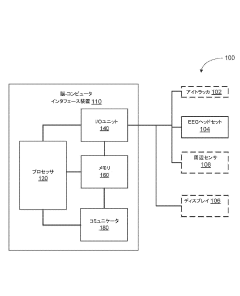
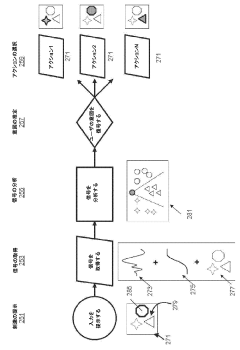
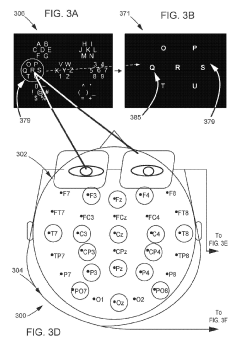
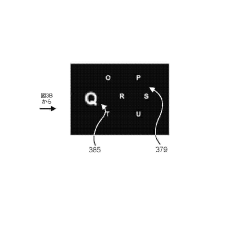
- A hybrid BCI system that integrates eye movement and brain activity tracking to enable real-time positioning of user gaze and action selection, using a combination of eye trackers and neural recording headsets to process signals for intuitive and accurate human-machine interaction, allowing for hardware-independent operation across various platforms.
Regulatory Framework for BCI Medical Devices
The regulatory landscape for brain-computer interface medical devices represents a complex and evolving framework that directly impacts the development and deployment of user-centric BCI systems. Current regulatory approaches primarily fall under existing medical device classifications, with the FDA treating BCIs as Class II or Class III devices depending on their invasiveness and intended use. The European Union's Medical Device Regulation (MDR) similarly categorizes BCIs based on risk assessment, requiring comprehensive clinical evidence for market approval.
Regulatory bodies face unique challenges when evaluating user-centric BCI designs, as traditional clinical trial methodologies may not adequately capture the nuanced feedback mechanisms and adaptive learning capabilities inherent in these systems. The FDA's breakthrough device designation program has accelerated approval pathways for innovative BCIs, recognizing their potential to address unmet medical needs while acknowledging the need for specialized evaluation criteria.
International harmonization efforts are emerging through organizations like the International Organization for Standardization (ISO), which is developing specific standards for BCI safety and performance evaluation. These standards increasingly emphasize the importance of user experience metrics and long-term usability studies, reflecting the shift toward user-centric design principles in regulatory assessment.
Privacy and data protection regulations add another layer of complexity, as BCIs generate highly sensitive neural data requiring specialized handling protocols. The General Data Protection Regulation (GDPR) in Europe and similar frameworks globally mandate explicit consent mechanisms and data minimization principles that must be integrated into BCI system architecture from the design phase.
Emerging regulatory trends indicate a move toward adaptive regulatory frameworks that can accommodate the iterative nature of user-centric BCI development. Regulatory sandboxes and pilot programs are being established to allow controlled testing of innovative BCI technologies while maintaining patient safety standards. These initiatives recognize that traditional linear approval processes may not suit the dynamic, feedback-driven development cycles characteristic of user-centric BCI systems.
The regulatory framework continues to evolve as stakeholders work to balance innovation acceleration with patient protection, establishing precedents that will shape future BCI development and deployment strategies.
Regulatory bodies face unique challenges when evaluating user-centric BCI designs, as traditional clinical trial methodologies may not adequately capture the nuanced feedback mechanisms and adaptive learning capabilities inherent in these systems. The FDA's breakthrough device designation program has accelerated approval pathways for innovative BCIs, recognizing their potential to address unmet medical needs while acknowledging the need for specialized evaluation criteria.
International harmonization efforts are emerging through organizations like the International Organization for Standardization (ISO), which is developing specific standards for BCI safety and performance evaluation. These standards increasingly emphasize the importance of user experience metrics and long-term usability studies, reflecting the shift toward user-centric design principles in regulatory assessment.
Privacy and data protection regulations add another layer of complexity, as BCIs generate highly sensitive neural data requiring specialized handling protocols. The General Data Protection Regulation (GDPR) in Europe and similar frameworks globally mandate explicit consent mechanisms and data minimization principles that must be integrated into BCI system architecture from the design phase.
Emerging regulatory trends indicate a move toward adaptive regulatory frameworks that can accommodate the iterative nature of user-centric BCI development. Regulatory sandboxes and pilot programs are being established to allow controlled testing of innovative BCI technologies while maintaining patient safety standards. These initiatives recognize that traditional linear approval processes may not suit the dynamic, feedback-driven development cycles characteristic of user-centric BCI systems.
The regulatory framework continues to evolve as stakeholders work to balance innovation acceleration with patient protection, establishing precedents that will shape future BCI development and deployment strategies.
Ethical Considerations in Neural Data Privacy
Neural data privacy represents one of the most critical ethical challenges in brain-computer interface development, particularly as user-centric feedback mechanisms become more sophisticated. The intimate nature of neural signals raises unprecedented concerns about mental privacy, cognitive liberty, and the potential for unauthorized access to thoughts, emotions, and intentions. Unlike traditional biometric data, neural information provides direct access to brain states and mental processes, creating unique vulnerabilities that existing privacy frameworks struggle to address.
The collection and processing of neural data for user feedback optimization introduces complex consent challenges. Traditional informed consent models prove inadequate when dealing with data that users themselves may not fully understand or control. Neural signals can reveal information beyond the intended BCI application, potentially exposing subconscious thoughts, emotional states, or cognitive patterns that users never intended to share. This creates an ethical imperative for developing granular consent mechanisms that allow users to specify exactly what types of neural information can be collected, processed, and stored.
Data ownership and control present another significant ethical dimension. Current legal frameworks provide limited guidance on who owns neural data and how individuals can exercise control over their brain-derived information. The question becomes particularly complex when considering whether users retain ownership of processed neural patterns, machine learning models trained on their data, or derivative insights generated through algorithmic analysis. Establishing clear data ownership rights is essential for maintaining user autonomy and preventing exploitation.
The potential for neural data misuse extends beyond privacy violations to include discrimination, manipulation, and coercion. Employers, insurers, or governments could potentially use neural information to make decisions about employment, coverage, or civil liberties based on cognitive patterns or mental states. This risk necessitates robust regulatory frameworks that explicitly prohibit discriminatory uses of neural data while ensuring that legitimate research and therapeutic applications can continue.
Anonymization and de-identification of neural data present unique technical and ethical challenges. Traditional anonymization techniques may prove insufficient for neural signals, which contain highly individual patterns that could serve as biological fingerprints. The development of privacy-preserving technologies, such as differential privacy, federated learning, and homomorphic encryption, becomes crucial for enabling beneficial BCI applications while protecting user privacy.
Cross-border data transfer and international regulatory harmonization add additional complexity to neural data privacy considerations. Different jurisdictions may have varying standards for neural data protection, creating challenges for global BCI development and deployment while potentially creating privacy havens or regulatory arbitrage opportunities that could undermine user protections.
The collection and processing of neural data for user feedback optimization introduces complex consent challenges. Traditional informed consent models prove inadequate when dealing with data that users themselves may not fully understand or control. Neural signals can reveal information beyond the intended BCI application, potentially exposing subconscious thoughts, emotional states, or cognitive patterns that users never intended to share. This creates an ethical imperative for developing granular consent mechanisms that allow users to specify exactly what types of neural information can be collected, processed, and stored.
Data ownership and control present another significant ethical dimension. Current legal frameworks provide limited guidance on who owns neural data and how individuals can exercise control over their brain-derived information. The question becomes particularly complex when considering whether users retain ownership of processed neural patterns, machine learning models trained on their data, or derivative insights generated through algorithmic analysis. Establishing clear data ownership rights is essential for maintaining user autonomy and preventing exploitation.
The potential for neural data misuse extends beyond privacy violations to include discrimination, manipulation, and coercion. Employers, insurers, or governments could potentially use neural information to make decisions about employment, coverage, or civil liberties based on cognitive patterns or mental states. This risk necessitates robust regulatory frameworks that explicitly prohibit discriminatory uses of neural data while ensuring that legitimate research and therapeutic applications can continue.
Anonymization and de-identification of neural data present unique technical and ethical challenges. Traditional anonymization techniques may prove insufficient for neural signals, which contain highly individual patterns that could serve as biological fingerprints. The development of privacy-preserving technologies, such as differential privacy, federated learning, and homomorphic encryption, becomes crucial for enabling beneficial BCI applications while protecting user privacy.
Cross-border data transfer and international regulatory harmonization add additional complexity to neural data privacy considerations. Different jurisdictions may have varying standards for neural data protection, creating challenges for global BCI development and deployment while potentially creating privacy havens or regulatory arbitrage opportunities that could undermine user protections.
Unlock deeper insights with PatSnap Eureka Quick Research — get a full tech report to explore trends and direct your research. Try now!
Generate Your Research Report Instantly with AI Agent
Supercharge your innovation with PatSnap Eureka AI Agent Platform!