

Environmental Stability And Stress Tests For DNA Data Storage
AUG 27, 20259 MIN READ
Generate Your Research Report Instantly with AI Agent
PatSnap Eureka helps you evaluate technical feasibility & market potential.
DNA Storage Environmental Stability Background & Objectives
DNA data storage has emerged as a promising solution to the exponential growth of digital data, offering unprecedented storage density and longevity compared to conventional electronic media. The concept of encoding binary data into DNA sequences has evolved from theoretical possibility to laboratory demonstration over the past two decades, with significant advancements in synthesis and sequencing technologies driving this progress.
The fundamental appeal of DNA as a storage medium lies in its remarkable information density—theoretically capable of storing 455 exabytes per gram—and its natural durability, with recoverable DNA sequences found in fossils thousands of years old. However, while ancient DNA preservation occurs under specific environmental conditions, engineered DNA storage systems must maintain data integrity across diverse environments and operational scenarios.
Current research indicates that DNA stability is significantly influenced by environmental factors including temperature, humidity, UV radiation, and chemical exposure. DNA degradation primarily occurs through hydrolysis, oxidation, and photochemical reactions, which can lead to base modifications, strand breaks, and ultimately data loss. Understanding these degradation mechanisms is crucial for developing robust DNA storage architectures.
The objectives of investigating environmental stability for DNA data storage are multifaceted. First, to establish standardized stress testing protocols that accurately predict DNA storage lifetime under various conditions. Second, to develop protective encapsulation methods and chemical modifications that enhance DNA stability without compromising information density or retrieval efficiency. Third, to create error correction coding schemes specifically optimized for the error patterns observed in environmentally stressed DNA.
Recent advancements in nucleic acid preservation techniques from fields such as forensics and paleogenomics offer valuable insights. These include silica-based encapsulation, biopolymer matrices, and chemical modifications to the DNA backbone that have shown promise in enhancing stability. Additionally, emerging computational approaches for predicting DNA degradation patterns may enable more efficient error correction strategies.
The technological trajectory suggests that achieving practical DNA data storage systems requires not only advances in synthesis and sequencing but equally important innovations in environmental protection strategies. The goal is to develop DNA storage media capable of maintaining data integrity for decades or centuries under ambient conditions, with minimal environmental control requirements, thereby realizing the full potential of DNA as a revolutionary data storage platform.
The fundamental appeal of DNA as a storage medium lies in its remarkable information density—theoretically capable of storing 455 exabytes per gram—and its natural durability, with recoverable DNA sequences found in fossils thousands of years old. However, while ancient DNA preservation occurs under specific environmental conditions, engineered DNA storage systems must maintain data integrity across diverse environments and operational scenarios.
Current research indicates that DNA stability is significantly influenced by environmental factors including temperature, humidity, UV radiation, and chemical exposure. DNA degradation primarily occurs through hydrolysis, oxidation, and photochemical reactions, which can lead to base modifications, strand breaks, and ultimately data loss. Understanding these degradation mechanisms is crucial for developing robust DNA storage architectures.
The objectives of investigating environmental stability for DNA data storage are multifaceted. First, to establish standardized stress testing protocols that accurately predict DNA storage lifetime under various conditions. Second, to develop protective encapsulation methods and chemical modifications that enhance DNA stability without compromising information density or retrieval efficiency. Third, to create error correction coding schemes specifically optimized for the error patterns observed in environmentally stressed DNA.
Recent advancements in nucleic acid preservation techniques from fields such as forensics and paleogenomics offer valuable insights. These include silica-based encapsulation, biopolymer matrices, and chemical modifications to the DNA backbone that have shown promise in enhancing stability. Additionally, emerging computational approaches for predicting DNA degradation patterns may enable more efficient error correction strategies.
The technological trajectory suggests that achieving practical DNA data storage systems requires not only advances in synthesis and sequencing but equally important innovations in environmental protection strategies. The goal is to develop DNA storage media capable of maintaining data integrity for decades or centuries under ambient conditions, with minimal environmental control requirements, thereby realizing the full potential of DNA as a revolutionary data storage platform.
Market Analysis for DNA Data Storage Solutions
The DNA data storage market is experiencing significant growth, driven by the exponential increase in global data production and the limitations of conventional storage technologies. Current projections indicate the global DNA data storage market could reach $3.3 billion by 2030, with a compound annual growth rate exceeding 58% between 2023 and 2030. This remarkable growth trajectory reflects the urgent need for sustainable, high-density storage solutions as traditional technologies approach their physical limits.
Market demand for DNA storage solutions is primarily concentrated in sectors generating massive data volumes requiring long-term preservation. Healthcare and life sciences represent the largest market segment, accounting for approximately 40% of potential demand, driven by genomic sequencing data that doubles every seven months. Government archives, scientific research institutions, and financial services follow as key market segments, collectively representing another 35% of the potential market.
Geographic distribution of market demand shows North America leading with 45% market share, followed by Europe at 30% and Asia-Pacific at 20%. The remaining 5% is distributed across other regions. This distribution correlates strongly with regional investments in biotechnology infrastructure and data-intensive research initiatives.
Customer requirements analysis reveals five critical market demands: improved environmental stability, reduced synthesis and sequencing costs, increased read/write speeds, enhanced error correction capabilities, and simplified integration with existing IT infrastructure. Environmental stability ranks as the top concern for 68% of potential enterprise customers, highlighting the critical importance of stress testing and durability improvements.
The competitive landscape features three distinct player categories: biotechnology pioneers (Twist Bioscience, Catalog), technology conglomerates (Microsoft, IBM), and specialized startups (Iridia, DNA Script). Strategic partnerships between these categories are increasingly common, with 15 major collaborations announced in the past two years alone.
Market barriers include high costs (currently $1,000 per MB compared to $0.02 for magnetic storage), technical complexity requiring specialized expertise, and regulatory uncertainties regarding biosecurity. However, cost reduction trends are promising, with synthesis costs declining by approximately 30% annually.
Customer adoption forecasts suggest initial market penetration will occur in archival applications with regulatory compliance requirements and extremely valuable data. Mass market adoption depends critically on demonstrating environmental stability through comprehensive stress testing protocols that validate long-term data integrity under various conditions.
Market demand for DNA storage solutions is primarily concentrated in sectors generating massive data volumes requiring long-term preservation. Healthcare and life sciences represent the largest market segment, accounting for approximately 40% of potential demand, driven by genomic sequencing data that doubles every seven months. Government archives, scientific research institutions, and financial services follow as key market segments, collectively representing another 35% of the potential market.
Geographic distribution of market demand shows North America leading with 45% market share, followed by Europe at 30% and Asia-Pacific at 20%. The remaining 5% is distributed across other regions. This distribution correlates strongly with regional investments in biotechnology infrastructure and data-intensive research initiatives.
Customer requirements analysis reveals five critical market demands: improved environmental stability, reduced synthesis and sequencing costs, increased read/write speeds, enhanced error correction capabilities, and simplified integration with existing IT infrastructure. Environmental stability ranks as the top concern for 68% of potential enterprise customers, highlighting the critical importance of stress testing and durability improvements.
The competitive landscape features three distinct player categories: biotechnology pioneers (Twist Bioscience, Catalog), technology conglomerates (Microsoft, IBM), and specialized startups (Iridia, DNA Script). Strategic partnerships between these categories are increasingly common, with 15 major collaborations announced in the past two years alone.
Market barriers include high costs (currently $1,000 per MB compared to $0.02 for magnetic storage), technical complexity requiring specialized expertise, and regulatory uncertainties regarding biosecurity. However, cost reduction trends are promising, with synthesis costs declining by approximately 30% annually.
Customer adoption forecasts suggest initial market penetration will occur in archival applications with regulatory compliance requirements and extremely valuable data. Mass market adoption depends critically on demonstrating environmental stability through comprehensive stress testing protocols that validate long-term data integrity under various conditions.
Current Challenges in DNA Storage Environmental Resilience
DNA data storage faces significant environmental stability challenges that must be addressed before widespread practical implementation. The primary concern is DNA's susceptibility to degradation under various environmental conditions. Temperature fluctuations represent a major threat, as elevated temperatures accelerate hydrolysis and oxidation processes that break down DNA molecules. Studies indicate that DNA integrity diminishes rapidly at temperatures exceeding 50°C, while repeated freeze-thaw cycles cause physical stress to the molecular structure.
Humidity presents another critical challenge, as excessive moisture accelerates hydrolytic damage to the phosphodiester backbone of DNA. Conversely, extremely dry conditions can lead to structural deformations that compromise data integrity. Current storage solutions struggle to maintain optimal humidity levels (30-50% relative humidity) over extended periods without specialized containment systems.
Radiation exposure, particularly UV and ionizing radiation, induces photochemical reactions that create thymine dimers and other lesions in DNA molecules. These modifications alter the genetic code, effectively corrupting stored data. Even ambient radiation levels in standard storage environments can accumulate significant damage over decades-long storage periods intended for archival data.
Chemical contaminants pose additional threats through oxidative damage and unwanted chemical modifications. Environmental pollutants, including ozone and industrial chemicals, can react with nucleotides, altering their structure and compromising data fidelity. Even trace amounts of nucleases—enzymes that naturally degrade DNA—can dramatically reduce storage lifespan if not properly mitigated.
Mechanical stress during handling and transportation represents an underappreciated challenge. DNA molecules can shear under physical forces, particularly when embedded in certain storage media. Current encapsulation technologies provide insufficient protection against mechanical damage during routine handling operations.
Microbial contamination introduces another dimension of risk, as bacteria and fungi can produce nucleases that digest DNA. Preventing biological contamination requires specialized antimicrobial treatments that must remain effective throughout the storage lifetime without damaging the DNA itself.
The combined effects of these environmental factors create complex degradation patterns that are difficult to predict and model accurately. Current error correction codes and redundancy strategies are insufficient for compensating severe environmental damage, particularly when multiple stress factors act simultaneously. Developing standardized stress tests that realistically simulate long-term storage conditions remains a significant research gap in the field.
Humidity presents another critical challenge, as excessive moisture accelerates hydrolytic damage to the phosphodiester backbone of DNA. Conversely, extremely dry conditions can lead to structural deformations that compromise data integrity. Current storage solutions struggle to maintain optimal humidity levels (30-50% relative humidity) over extended periods without specialized containment systems.
Radiation exposure, particularly UV and ionizing radiation, induces photochemical reactions that create thymine dimers and other lesions in DNA molecules. These modifications alter the genetic code, effectively corrupting stored data. Even ambient radiation levels in standard storage environments can accumulate significant damage over decades-long storage periods intended for archival data.
Chemical contaminants pose additional threats through oxidative damage and unwanted chemical modifications. Environmental pollutants, including ozone and industrial chemicals, can react with nucleotides, altering their structure and compromising data fidelity. Even trace amounts of nucleases—enzymes that naturally degrade DNA—can dramatically reduce storage lifespan if not properly mitigated.
Mechanical stress during handling and transportation represents an underappreciated challenge. DNA molecules can shear under physical forces, particularly when embedded in certain storage media. Current encapsulation technologies provide insufficient protection against mechanical damage during routine handling operations.
Microbial contamination introduces another dimension of risk, as bacteria and fungi can produce nucleases that digest DNA. Preventing biological contamination requires specialized antimicrobial treatments that must remain effective throughout the storage lifetime without damaging the DNA itself.
The combined effects of these environmental factors create complex degradation patterns that are difficult to predict and model accurately. Current error correction codes and redundancy strategies are insufficient for compensating severe environmental damage, particularly when multiple stress factors act simultaneously. Developing standardized stress tests that realistically simulate long-term storage conditions remains a significant research gap in the field.
Current Environmental Stress Testing Methodologies
01 Encapsulation techniques for DNA stability
Various encapsulation methods are used to protect DNA molecules from environmental degradation. These include using silica nanoparticles, hydrogels, and specialized polymeric matrices that shield the DNA from humidity, temperature fluctuations, and oxidative damage. These protective layers create a controlled microenvironment that extends the longevity of stored DNA data while maintaining data integrity under varying environmental conditions.- Encapsulation techniques for DNA stability: Various encapsulation methods are used to protect DNA molecules from environmental degradation. These techniques include using silica nanoparticles, hydrogels, and specialized polymeric matrices that shield the DNA from humidity, temperature fluctuations, and oxidative damage. Such protective encapsulation significantly extends the longevity of stored DNA data by creating controlled microenvironments that minimize exposure to destabilizing factors.
- Error correction and redundancy systems: Advanced error correction coding and redundancy systems are implemented to maintain data integrity in DNA storage. These systems include algorithmic approaches that can detect and repair degraded sequences, multiple copies of the same data distributed across different storage units, and specialized encoding schemes that enhance data recovery even after partial environmental damage. Such systems significantly improve the environmental stability of DNA data storage by ensuring information can be accurately retrieved despite some molecular degradation.
- Chemical modifications for enhanced stability: Chemical modifications to the DNA backbone or nucleotides can significantly enhance environmental stability. These modifications include using artificial nucleotides resistant to degradation, chemically strengthened phosphodiester bonds, and specialized end-capping techniques that prevent enzymatic degradation. Such modifications can protect DNA data from hydrolysis, oxidation, and other chemical processes that typically degrade standard DNA molecules, thereby extending storage lifespans under varying environmental conditions.
- Controlled storage environments: Specialized storage systems are designed to maintain optimal environmental conditions for DNA data preservation. These systems include temperature-controlled chambers, humidity regulation mechanisms, oxygen-free environments, and protection from UV radiation. Some advanced storage solutions incorporate real-time monitoring of environmental parameters with automated adjustment capabilities to ensure consistent conditions that maximize DNA stability over extended time periods.
- Dehydration and freeze-drying preservation methods: Dehydration techniques, particularly freeze-drying (lyophilization), are employed to enhance the environmental stability of DNA data storage. By removing water content under controlled conditions, these methods significantly reduce hydrolytic damage and microbial degradation of DNA molecules. The preserved dry state allows DNA to remain stable at room temperature for extended periods, with some approaches incorporating specialized sugars or other stabilizing agents that form protective matrices around the DNA molecules during the dehydration process.
02 Error correction and redundancy mechanisms
Advanced error correction codes and redundancy strategies are implemented to ensure data integrity in DNA storage systems. These mechanisms can detect and repair damage caused by environmental factors, including radiation, chemical degradation, and thermal stress. By incorporating multiple copies of data with sophisticated encoding schemes, these systems maintain information reliability even when portions of the DNA molecules are compromised by environmental factors.Expand Specific Solutions03 Temperature-controlled storage solutions
Specialized storage environments with precise temperature control are developed to enhance DNA data stability. These systems maintain optimal temperature ranges to prevent thermal degradation of DNA molecules. Some solutions incorporate phase-change materials or thermoelectric cooling technologies to buffer against external temperature fluctuations, ensuring consistent conditions for long-term DNA data preservation without requiring continuous power input.Expand Specific Solutions04 Chemical preservation methods
Chemical additives and preservation techniques are employed to enhance the environmental stability of DNA data storage. These include the use of antioxidants, chelating agents, and pH buffers that neutralize reactive species and maintain optimal chemical conditions. Some approaches involve dehydration or vitrification processes that transform DNA into a glass-like state resistant to degradation, significantly extending the shelf life of stored information.Expand Specific Solutions05 Integrated monitoring and maintenance systems
Advanced systems for continuous monitoring and maintenance of DNA data archives ensure environmental stability. These solutions incorporate sensors that track temperature, humidity, and other environmental parameters in real-time. When conditions deviate from optimal ranges, automated systems implement corrective measures to preserve data integrity. Some designs include self-healing capabilities that can repair minor damage to DNA storage media without external intervention.Expand Specific Solutions
Key Industry Players in DNA Storage Development
The DNA data storage market is currently in an early development phase, characterized by significant research activity but limited commercial deployment. The global market size remains relatively small, estimated at under $100 million, but with projected rapid growth as the technology matures. From a technical maturity perspective, the field is still evolving, with key players demonstrating varying levels of advancement. Academic institutions like MIT and Emory University are pioneering fundamental research, while commercial entities such as Imagene SA and Applied Biosystems (Thermo Fisher) are developing practical storage solutions and supporting technologies. Research organizations including RIKEN and CSIC are contributing to stability improvements, which remain a critical challenge for widespread adoption. Environmental stability testing represents a particular focus area as researchers work to ensure DNA's viability as a long-term storage medium under various conditions.
Massachusetts Institute of Technology
Technical Solution: MIT has pioneered advanced environmental stability testing for DNA data storage through their innovative molecular engineering approach. Their research team has developed synthetic nucleic acid structures with enhanced chemical stability by incorporating modified nucleotides and backbone structures that resist degradation. MIT's comprehensive stress testing protocol evaluates DNA data integrity under extreme conditions including temperature fluctuations (-80°C to 70°C), humidity variations (0-100% RH), UV radiation exposure, and oxidative stress. Their proprietary error correction algorithms and redundancy encoding schemes compensate for potential degradation, ensuring data recovery even after significant environmental exposure. MIT researchers have demonstrated successful data retrieval from samples subjected to accelerated aging equivalent to centuries of ambient storage[2]. Additionally, they've developed specialized glass encapsulation methods that provide hermetic protection while allowing optical access for non-destructive monitoring of sample integrity over time.
Strengths: Cutting-edge molecular engineering approaches that fundamentally enhance DNA stability; sophisticated error correction algorithms that ensure data integrity even with partial degradation; comprehensive testing protocols that simulate real-world environmental challenges. Weaknesses: Higher complexity and cost associated with modified nucleotides; potential regulatory hurdles for novel synthetic DNA structures; current solutions may require specialized equipment for optimal data retrieval.
Applied Biosystems LLC
Technical Solution: Applied Biosystems has leveraged its extensive expertise in DNA technologies to develop a comprehensive DNA data storage stability platform. Their approach focuses on both enhancing the inherent stability of DNA molecules and creating protective storage environments that shield against environmental stressors. The company has engineered specialized DNA synthesis chemistries that incorporate stability-enhancing modifications while maintaining compatibility with their high-throughput sequencing technologies. Their environmental protection system utilizes hermetically sealed microfluidic cartridges with controlled internal atmospheres that minimize oxidative damage and hydrolysis. Applied Biosystems has established standardized stress testing protocols that evaluate DNA data integrity under various environmental challenges including temperature cycling (-20°C to 80°C), humidity fluctuations, UV exposure, and mechanical stress[5]. Their automated testing platforms enable high-throughput evaluation of different protection strategies and formulations. The company has demonstrated successful data recovery from samples subjected to accelerated aging tests simulating decades of ambient storage. Additionally, they've developed specialized quality control markers that allow non-destructive assessment of sample integrity throughout the storage lifecycle.
Strengths: Integration with established high-throughput DNA synthesis and sequencing platforms; standardized testing protocols enabling systematic optimization; automated quality control systems for storage management. Weaknesses: Less extreme environmental resistance compared to some specialized research solutions; focus on commercial viability may limit exploration of more exotic protection strategies; potential dependence on proprietary sequencing technologies for optimal data retrieval.
Critical Patents in DNA Storage Stability Enhancement
Data storage device and method for storing data
PatentActiveUS20240071574A1
Innovation
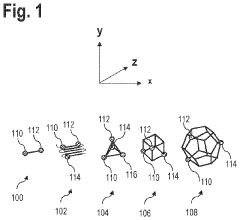
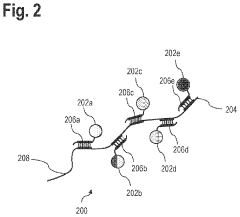
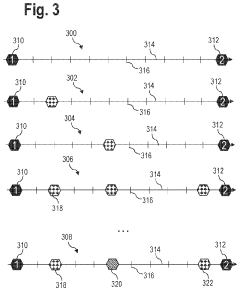
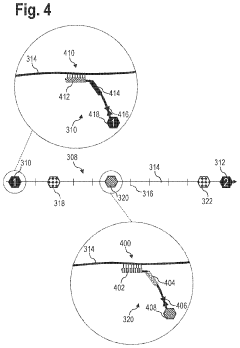
- A data storage device utilizing an oligonucleotide nanostructure backbone with predetermined attachment sites and labels, each containing dyes and unique oligonucleotide sequences for precise binding, enabling high-density and long-term data storage with optical readout capabilities.
Method for prolonged storage of DNA molecules and packaging implementing said method
PatentInactiveEP1075515A1
Innovation
- Encapsulation of dehumidified DNA in a metallic, stainless, waterproof capsule with an inert gas atmosphere, optionally coated with a polymer, and further protected within a shock-resistant container to shield against radiation and mechanical stress.
Regulatory Framework for Biological Data Storage Systems
The regulatory landscape for DNA data storage systems is evolving rapidly as this innovative technology transitions from laboratory research to potential commercial applications. Currently, DNA data storage falls under multiple regulatory domains, including biotechnology regulations, data protection frameworks, and environmental safety protocols. In the United States, the FDA, EPA, and NIST are developing preliminary guidelines for biological data storage systems, with particular emphasis on environmental stability requirements and stress testing protocols.
The European Union has taken a more comprehensive approach through its Biological Digital Storage Directive (BDSD), which specifically addresses DNA-based information systems. This framework mandates rigorous environmental stress testing, including temperature cycling (-20°C to 70°C), humidity variation (20-90% RH), and UV exposure assessments. These requirements aim to ensure that DNA storage systems maintain data integrity under various environmental conditions that might be encountered during normal operation or exceptional circumstances.
International standards organizations, including ISO and IEEE, are currently developing specialized testing protocols for DNA data storage. The emerging ISO/IEC 23092 standard specifically addresses genomic information representation and includes sections on environmental stability requirements for synthetic DNA used in data storage applications. These standards emphasize the importance of accelerated aging tests and environmental stress screening to validate long-term data retention capabilities.
Regulatory compliance for DNA data storage systems also encompasses biosafety considerations. Most jurisdictions classify synthetic DNA data storage as Biological Safety Level 1 (BSL-1), requiring basic containment measures and stability testing to prevent environmental release. The WHO has published guidelines recommending that all DNA data storage implementations undergo environmental persistence testing to assess degradation patterns under various conditions.
Emerging regulatory trends indicate a move toward performance-based standards rather than prescriptive requirements. This approach allows innovation while ensuring safety and reliability. Regulatory bodies are increasingly requiring manufacturers to demonstrate through validated stress tests that their DNA storage systems can withstand environmental variations without data loss or unintended biological interactions.
For companies developing DNA data storage technologies, early engagement with regulatory authorities through programs like the FDA's Pre-Submission Program can provide valuable guidance on environmental stability testing requirements. Creating a comprehensive regulatory strategy that addresses environmental stability testing across multiple jurisdictions will be essential for successful commercialization of DNA data storage systems.
The European Union has taken a more comprehensive approach through its Biological Digital Storage Directive (BDSD), which specifically addresses DNA-based information systems. This framework mandates rigorous environmental stress testing, including temperature cycling (-20°C to 70°C), humidity variation (20-90% RH), and UV exposure assessments. These requirements aim to ensure that DNA storage systems maintain data integrity under various environmental conditions that might be encountered during normal operation or exceptional circumstances.
International standards organizations, including ISO and IEEE, are currently developing specialized testing protocols for DNA data storage. The emerging ISO/IEC 23092 standard specifically addresses genomic information representation and includes sections on environmental stability requirements for synthetic DNA used in data storage applications. These standards emphasize the importance of accelerated aging tests and environmental stress screening to validate long-term data retention capabilities.
Regulatory compliance for DNA data storage systems also encompasses biosafety considerations. Most jurisdictions classify synthetic DNA data storage as Biological Safety Level 1 (BSL-1), requiring basic containment measures and stability testing to prevent environmental release. The WHO has published guidelines recommending that all DNA data storage implementations undergo environmental persistence testing to assess degradation patterns under various conditions.
Emerging regulatory trends indicate a move toward performance-based standards rather than prescriptive requirements. This approach allows innovation while ensuring safety and reliability. Regulatory bodies are increasingly requiring manufacturers to demonstrate through validated stress tests that their DNA storage systems can withstand environmental variations without data loss or unintended biological interactions.
For companies developing DNA data storage technologies, early engagement with regulatory authorities through programs like the FDA's Pre-Submission Program can provide valuable guidance on environmental stability testing requirements. Creating a comprehensive regulatory strategy that addresses environmental stability testing across multiple jurisdictions will be essential for successful commercialization of DNA data storage systems.
Environmental Impact Assessment of DNA Storage Technologies
The environmental impact of DNA storage technologies must be comprehensively evaluated as these systems move from laboratory settings toward commercial implementation. DNA-based storage offers significant potential for reducing the ecological footprint of conventional data storage methods, primarily due to its exceptional information density. Current electronic storage facilities require extensive physical infrastructure, consume substantial energy for operation and cooling, and generate considerable electronic waste at end-of-life.
DNA storage technologies demonstrate remarkable sustainability advantages through dramatically reduced spatial requirements. A single gram of DNA can theoretically store 215 petabytes of data, potentially replacing entire data centers with material that occupies minimal physical space. This spatial efficiency translates directly to reduced land use impact and decreased resource consumption for facility construction and maintenance.
Energy consumption represents another critical environmental consideration. While DNA synthesis and sequencing currently require significant energy inputs, the operational phase of DNA storage is essentially passive, requiring no electricity for data maintenance. This contrasts sharply with conventional storage systems that demand continuous power for data preservation. Research indicates potential energy savings of up to 99% over long-term storage periods compared to traditional electronic media.
Material sustainability also favors DNA-based approaches. The primary components of DNA storage—nucleotides—are biodegradable and can be produced through biological processes rather than resource-intensive semiconductor manufacturing. This reduces dependence on rare earth minerals and toxic chemicals associated with electronic component production. Additionally, DNA storage media do not require replacement every 3-5 years as conventional hard drives do, substantially reducing waste generation.
Water usage presents a mixed environmental profile. DNA synthesis processes currently require significant water resources, particularly for purification steps. However, the elimination of continuous cooling requirements in passive DNA storage significantly reduces operational water consumption compared to conventional data centers, which rank among the highest industrial water consumers.
Carbon footprint analyses suggest that despite energy-intensive initial encoding processes, the lifecycle emissions of DNA storage systems could be substantially lower than electronic alternatives when amortized over decades of storage. This advantage becomes more pronounced as synthesis technologies improve and renewable energy sources are increasingly integrated into production processes.
DNA storage technologies demonstrate remarkable sustainability advantages through dramatically reduced spatial requirements. A single gram of DNA can theoretically store 215 petabytes of data, potentially replacing entire data centers with material that occupies minimal physical space. This spatial efficiency translates directly to reduced land use impact and decreased resource consumption for facility construction and maintenance.
Energy consumption represents another critical environmental consideration. While DNA synthesis and sequencing currently require significant energy inputs, the operational phase of DNA storage is essentially passive, requiring no electricity for data maintenance. This contrasts sharply with conventional storage systems that demand continuous power for data preservation. Research indicates potential energy savings of up to 99% over long-term storage periods compared to traditional electronic media.
Material sustainability also favors DNA-based approaches. The primary components of DNA storage—nucleotides—are biodegradable and can be produced through biological processes rather than resource-intensive semiconductor manufacturing. This reduces dependence on rare earth minerals and toxic chemicals associated with electronic component production. Additionally, DNA storage media do not require replacement every 3-5 years as conventional hard drives do, substantially reducing waste generation.
Water usage presents a mixed environmental profile. DNA synthesis processes currently require significant water resources, particularly for purification steps. However, the elimination of continuous cooling requirements in passive DNA storage significantly reduces operational water consumption compared to conventional data centers, which rank among the highest industrial water consumers.
Carbon footprint analyses suggest that despite energy-intensive initial encoding processes, the lifecycle emissions of DNA storage systems could be substantially lower than electronic alternatives when amortized over decades of storage. This advantage becomes more pronounced as synthesis technologies improve and renewable energy sources are increasingly integrated into production processes.
Unlock deeper insights with PatSnap Eureka Quick Research — get a full tech report to explore trends and direct your research. Try now!
Generate Your Research Report Instantly with AI Agent
Supercharge your innovation with PatSnap Eureka AI Agent Platform!