

Future Challenges and Opportunities for PTFE
JUN 27, 20259 MIN READ
Generate Your Research Report Instantly with AI Agent
PatSnap Eureka helps you evaluate technical feasibility & market potential.
PTFE Evolution and Objectives
Polytetrafluoroethylene (PTFE), commonly known as Teflon, has been a revolutionary material since its accidental discovery in 1938. Its unique properties, including exceptional chemical resistance, low friction coefficient, and high thermal stability, have made it indispensable in various industries. The evolution of PTFE technology has been marked by continuous improvements in synthesis methods, processing techniques, and application diversification.
The primary objective in PTFE development has been to enhance its performance characteristics while addressing environmental concerns. Early research focused on optimizing the polymerization process to achieve higher molecular weights and improved mechanical properties. Subsequent efforts aimed at developing modified PTFE grades with enhanced wear resistance, reduced creep, and better processability.
In recent years, the PTFE industry has faced increasing pressure to adopt more sustainable practices. This has led to the exploration of eco-friendly production methods, such as water-based emulsion polymerization and the development of PTFE recycling technologies. The goal is to reduce the environmental impact of PTFE manufacturing and end-of-life disposal while maintaining its superior performance.
Another significant trend in PTFE evolution has been the development of nanocomposites. By incorporating nanoparticles into the PTFE matrix, researchers have created materials with enhanced mechanical strength, thermal conductivity, and wear resistance. This has opened up new applications in aerospace, automotive, and electronics industries.
The miniaturization trend in electronics has also driven PTFE innovation. The development of ultra-thin PTFE films and coatings has become crucial for high-frequency circuit boards and flexible electronics. Researchers are working on improving the adhesion of PTFE to various substrates, a historically challenging aspect due to its non-stick nature.
Looking ahead, the objectives for PTFE technology include developing bio-based alternatives, improving recycling efficiency, and expanding its application in emerging fields such as 3D printing and smart materials. There is also a growing interest in exploring the potential of PTFE in medical applications, particularly in implantable devices and drug delivery systems.
The future of PTFE technology will likely focus on addressing its current limitations while leveraging its unique properties for novel applications. This includes improving its resistance to high-energy radiation, enhancing its electrical properties for advanced electronics, and developing PTFE-based composites with self-healing capabilities. As environmental regulations become stricter, the industry will need to innovate in production methods and end-of-life solutions to ensure PTFE's continued relevance in a sustainable future.
The primary objective in PTFE development has been to enhance its performance characteristics while addressing environmental concerns. Early research focused on optimizing the polymerization process to achieve higher molecular weights and improved mechanical properties. Subsequent efforts aimed at developing modified PTFE grades with enhanced wear resistance, reduced creep, and better processability.
In recent years, the PTFE industry has faced increasing pressure to adopt more sustainable practices. This has led to the exploration of eco-friendly production methods, such as water-based emulsion polymerization and the development of PTFE recycling technologies. The goal is to reduce the environmental impact of PTFE manufacturing and end-of-life disposal while maintaining its superior performance.
Another significant trend in PTFE evolution has been the development of nanocomposites. By incorporating nanoparticles into the PTFE matrix, researchers have created materials with enhanced mechanical strength, thermal conductivity, and wear resistance. This has opened up new applications in aerospace, automotive, and electronics industries.
The miniaturization trend in electronics has also driven PTFE innovation. The development of ultra-thin PTFE films and coatings has become crucial for high-frequency circuit boards and flexible electronics. Researchers are working on improving the adhesion of PTFE to various substrates, a historically challenging aspect due to its non-stick nature.
Looking ahead, the objectives for PTFE technology include developing bio-based alternatives, improving recycling efficiency, and expanding its application in emerging fields such as 3D printing and smart materials. There is also a growing interest in exploring the potential of PTFE in medical applications, particularly in implantable devices and drug delivery systems.
The future of PTFE technology will likely focus on addressing its current limitations while leveraging its unique properties for novel applications. This includes improving its resistance to high-energy radiation, enhancing its electrical properties for advanced electronics, and developing PTFE-based composites with self-healing capabilities. As environmental regulations become stricter, the industry will need to innovate in production methods and end-of-life solutions to ensure PTFE's continued relevance in a sustainable future.
PTFE Market Demand Analysis
The global PTFE market has been experiencing steady growth, driven by increasing demand across various industries. The unique properties of PTFE, including its exceptional chemical resistance, low friction coefficient, and high-temperature stability, make it a sought-after material in numerous applications. The automotive sector represents a significant portion of PTFE demand, particularly in gaskets, seals, and fuel system components. As the automotive industry continues to evolve towards electric and hybrid vehicles, the demand for PTFE in this sector is expected to shift but remain strong due to its excellent electrical insulation properties.
The aerospace industry is another major consumer of PTFE, utilizing the material in aircraft components, wiring, and hydraulic systems. With the projected growth in air travel and the expansion of space exploration initiatives, the demand for PTFE in aerospace applications is anticipated to increase. In the electronics industry, PTFE's dielectric properties make it invaluable for high-frequency circuit boards and cable insulation, a market segment that is expanding rapidly with the rollout of 5G networks and the growing Internet of Things (IoT) ecosystem.
The medical sector presents a promising growth area for PTFE, particularly in implantable devices and surgical equipment. The material's biocompatibility and non-stick properties make it ideal for these applications. As healthcare technologies advance and the global population ages, the demand for PTFE in medical applications is expected to rise significantly.
In the industrial sector, PTFE continues to be in high demand for chemical processing equipment, where its corrosion resistance is crucial. The growth of the chemical industry, especially in emerging economies, is likely to drive further demand for PTFE in this sector. Additionally, the increasing focus on energy efficiency has led to growing interest in PTFE-based products for heat exchangers and other energy-related applications.
The construction industry is also contributing to PTFE market growth, with the material being used in architectural membranes, coatings, and sealants. As urbanization continues and sustainable building practices gain prominence, the demand for PTFE in construction is expected to increase. The material's durability and weather resistance make it particularly attractive for long-lasting architectural applications.
However, the PTFE market faces challenges, including environmental concerns related to the production and disposal of fluoropolymers. This has led to increased research into more sustainable production methods and recycling technologies for PTFE. The development of eco-friendly alternatives and the implementation of stricter regulations may impact future market dynamics, potentially creating both challenges and opportunities for innovation in the PTFE industry.
The aerospace industry is another major consumer of PTFE, utilizing the material in aircraft components, wiring, and hydraulic systems. With the projected growth in air travel and the expansion of space exploration initiatives, the demand for PTFE in aerospace applications is anticipated to increase. In the electronics industry, PTFE's dielectric properties make it invaluable for high-frequency circuit boards and cable insulation, a market segment that is expanding rapidly with the rollout of 5G networks and the growing Internet of Things (IoT) ecosystem.
The medical sector presents a promising growth area for PTFE, particularly in implantable devices and surgical equipment. The material's biocompatibility and non-stick properties make it ideal for these applications. As healthcare technologies advance and the global population ages, the demand for PTFE in medical applications is expected to rise significantly.
In the industrial sector, PTFE continues to be in high demand for chemical processing equipment, where its corrosion resistance is crucial. The growth of the chemical industry, especially in emerging economies, is likely to drive further demand for PTFE in this sector. Additionally, the increasing focus on energy efficiency has led to growing interest in PTFE-based products for heat exchangers and other energy-related applications.
The construction industry is also contributing to PTFE market growth, with the material being used in architectural membranes, coatings, and sealants. As urbanization continues and sustainable building practices gain prominence, the demand for PTFE in construction is expected to increase. The material's durability and weather resistance make it particularly attractive for long-lasting architectural applications.
However, the PTFE market faces challenges, including environmental concerns related to the production and disposal of fluoropolymers. This has led to increased research into more sustainable production methods and recycling technologies for PTFE. The development of eco-friendly alternatives and the implementation of stricter regulations may impact future market dynamics, potentially creating both challenges and opportunities for innovation in the PTFE industry.
PTFE Technical Hurdles
Despite its remarkable properties, PTFE faces several technical hurdles that challenge its widespread application and future development. One of the primary challenges is the material's inherent non-stick nature, which, while beneficial in many applications, poses difficulties in bonding and adhesion. This limitation restricts PTFE's use in composite materials and multi-layer structures, where strong interfacial bonding is crucial for performance.
Another significant hurdle is PTFE's poor wear resistance and low load-bearing capacity. While the material exhibits excellent chemical resistance and low friction, its soft nature leads to rapid wear under high-stress conditions. This characteristic limits PTFE's use in high-load bearing applications and necessitates frequent replacements in certain industrial settings.
The processing of PTFE presents its own set of challenges. The material's high melting point and high melt viscosity make conventional thermoplastic processing techniques ineffective. This limitation results in increased production costs and restricts the complexity of shapes that can be manufactured using PTFE.
Environmental concerns also pose a significant challenge for PTFE. The material's production process traditionally involves the use of perfluorooctanoic acid (PFOA), a persistent organic pollutant. While efforts have been made to phase out PFOA, finding equally effective and environmentally friendly alternatives remains an ongoing challenge for the industry.
PTFE's thermal stability, while generally an advantage, becomes a limitation at extremely high temperatures. The material begins to degrade at temperatures above 260°C, releasing toxic fumes. This thermal limitation restricts PTFE's use in certain high-temperature applications and poses safety concerns in extreme conditions.
The recyclability of PTFE is another technical hurdle. Unlike many other plastics, PTFE cannot be easily melted and reformed, making traditional recycling methods ineffective. This characteristic contributes to environmental concerns and challenges the material's sustainability in a circular economy.
Lastly, the cost of PTFE production remains a significant barrier to its wider adoption. The complex manufacturing process and the high-purity raw materials required result in a relatively expensive end product. This cost factor limits PTFE's use in price-sensitive applications and markets.
Addressing these technical hurdles is crucial for expanding PTFE's applications and ensuring its continued relevance in future technologies. Overcoming these challenges will require innovative approaches in material science, processing technologies, and environmental management.
Another significant hurdle is PTFE's poor wear resistance and low load-bearing capacity. While the material exhibits excellent chemical resistance and low friction, its soft nature leads to rapid wear under high-stress conditions. This characteristic limits PTFE's use in high-load bearing applications and necessitates frequent replacements in certain industrial settings.
The processing of PTFE presents its own set of challenges. The material's high melting point and high melt viscosity make conventional thermoplastic processing techniques ineffective. This limitation results in increased production costs and restricts the complexity of shapes that can be manufactured using PTFE.
Environmental concerns also pose a significant challenge for PTFE. The material's production process traditionally involves the use of perfluorooctanoic acid (PFOA), a persistent organic pollutant. While efforts have been made to phase out PFOA, finding equally effective and environmentally friendly alternatives remains an ongoing challenge for the industry.
PTFE's thermal stability, while generally an advantage, becomes a limitation at extremely high temperatures. The material begins to degrade at temperatures above 260°C, releasing toxic fumes. This thermal limitation restricts PTFE's use in certain high-temperature applications and poses safety concerns in extreme conditions.
The recyclability of PTFE is another technical hurdle. Unlike many other plastics, PTFE cannot be easily melted and reformed, making traditional recycling methods ineffective. This characteristic contributes to environmental concerns and challenges the material's sustainability in a circular economy.
Lastly, the cost of PTFE production remains a significant barrier to its wider adoption. The complex manufacturing process and the high-purity raw materials required result in a relatively expensive end product. This cost factor limits PTFE's use in price-sensitive applications and markets.
Addressing these technical hurdles is crucial for expanding PTFE's applications and ensuring its continued relevance in future technologies. Overcoming these challenges will require innovative approaches in material science, processing technologies, and environmental management.
Current PTFE Solutions
01 PTFE manufacturing processes
Various methods for producing PTFE are described, including polymerization techniques, extrusion processes, and molding methods. These processes aim to improve the quality, efficiency, and properties of the resulting PTFE materials.- PTFE manufacturing processes: Various methods for producing PTFE are described, including polymerization techniques, extrusion processes, and molding procedures. These processes aim to improve the quality, consistency, and properties of the final PTFE product, such as tensile strength, elongation, and thermal stability.
- PTFE composites and blends: PTFE is often combined with other materials to create composites or blends with enhanced properties. These combinations can improve characteristics such as wear resistance, chemical resistance, and mechanical strength. Fillers, reinforcing agents, and other polymers are commonly used in these formulations.
- Surface modification of PTFE: Techniques for modifying the surface of PTFE materials are explored to enhance properties such as adhesion, wettability, and biocompatibility. These modifications can involve chemical treatments, plasma processing, or the application of coatings to alter the surface characteristics of PTFE products.
- PTFE in membrane and filtration applications: PTFE is widely used in membrane and filtration technologies due to its chemical inertness and non-stick properties. Innovations in this area focus on improving membrane porosity, selectivity, and durability for applications in water treatment, gas separation, and industrial filtration processes.
- PTFE in electronic and electrical applications: The use of PTFE in electronic and electrical components is explored, leveraging its excellent dielectric properties and thermal stability. Applications include insulation for wires and cables, printed circuit boards, and high-frequency components. Research focuses on enhancing the material's performance in these specialized applications.
02 PTFE composite materials
The development of PTFE-based composite materials involves combining PTFE with other substances to enhance its properties or create new functionalities. These composites can include fillers, reinforcing agents, or other polymers to improve mechanical strength, thermal conductivity, or other specific characteristics.Expand Specific Solutions03 Surface modification of PTFE
Techniques for modifying the surface of PTFE materials are explored to improve their adhesion, wettability, or compatibility with other materials. These modifications can involve chemical treatments, plasma processing, or the application of coatings to alter the surface properties of PTFE.Expand Specific Solutions04 PTFE in specialized applications
The use of PTFE in various specialized applications is discussed, including its incorporation into medical devices, aerospace components, and industrial equipment. These applications leverage PTFE's unique properties such as chemical resistance, low friction, and high temperature stability.Expand Specific Solutions05 Recycling and environmental considerations of PTFE
Methods for recycling PTFE and addressing environmental concerns related to its production and disposal are explored. This includes techniques for reprocessing PTFE waste, developing more sustainable manufacturing processes, and creating environmentally friendly alternatives.Expand Specific Solutions
PTFE Industry Leaders
The PTFE market is in a mature stage but continues to evolve with new applications and technological advancements. The global market size is substantial, driven by growing demand in various industries. Technologically, PTFE is well-established, but innovation continues, particularly in areas like nanocomposites and surface modifications. Key players like DAIKIN INDUSTRIES, W. L. Gore & Associates, and AGC, Inc. are at the forefront of PTFE research and development, focusing on enhancing properties and exploring novel applications. Academic institutions such as Zhejiang University and Swiss Federal Institute of Technology are contributing to fundamental research, potentially leading to breakthroughs in PTFE technology and applications.
DAIKIN INDUSTRIES Ltd.
Technical Solution: DAIKIN INDUSTRIES Ltd. is at the forefront of PTFE research, focusing on developing next-generation fluoropolymers with enhanced properties. They are working on PTFE grades with improved processability and thermal stability for high-temperature applications[4]. Daikin is also exploring the development of PTFE-based nanocomposites to enhance mechanical properties and wear resistance[5]. Their research extends to the creation of water-based PTFE dispersions for environmentally friendly coatings and the development of PTFE materials with reduced environmental impact during production and use[6].
Strengths: Strong market presence in fluoropolymers, extensive R&D facilities, and a focus on eco-friendly solutions. Weaknesses: Potential regulatory challenges related to fluoropolymer production and the need for significant investment in new technologies.
AGC, Inc. (Japan)
Technical Solution: AGC, Inc. is tackling future PTFE challenges through advanced materials research. They are developing high-purity PTFE grades for semiconductor and electronics applications, focusing on reducing impurities and enhancing dielectric properties[10]. AGC is also exploring the creation of PTFE-based membranes with controlled porosity for filtration and separation technologies[11]. Their research extends to the development of PTFE composites with improved flame retardancy and chemical resistance for demanding industrial applications. Additionally, AGC is investigating eco-friendly processing methods for PTFE to reduce environmental impact and improve sustainability[12].
Strengths: Strong presence in the Asian market, expertise in high-performance materials, and a focus on sustainability. Weaknesses: Potential limitations in global market reach compared to some competitors, and challenges in adapting to rapidly changing regulatory environments.
PTFE Innovation Breakthroughs
Preparation process of PTFE resin with high compression ratio
PatentActiveCN112062891A
Innovation
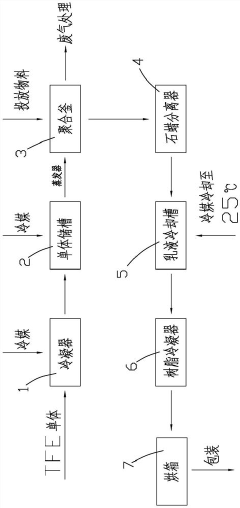
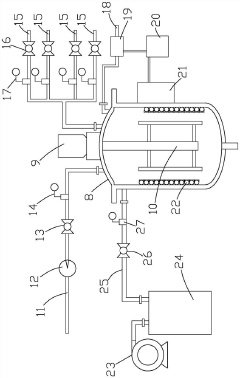
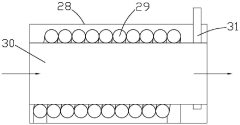
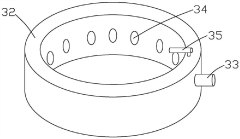
- The preparation process of high compression ratio PTFE resin includes condensing tetrafluoroethylene monomer, adding stabilizer and modified monomer, forming a vortex through stirring and heating in the polymerization tank to accelerate the reaction, and using a paraffin separator to improve the purity. High quality agglomerates are formed by emulsion cooling and drying.
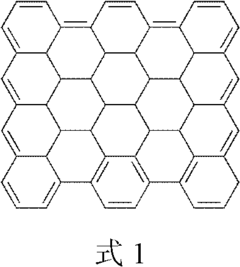
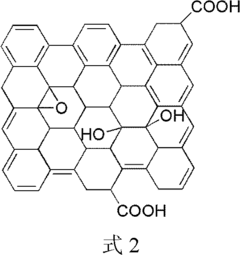
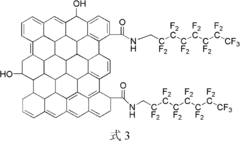
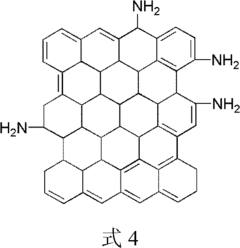
Graphene/PTFE (Polytetrafluoroethylene) nanometer compound material and preparation method thereof
PatentInactiveCN102649860A
Innovation
- Graphene or its derivatives are mixed with polytetrafluoroethylene (PTFE) and glass fiber in a specific ratio, and the graphene/PTFE nanocomposite is prepared through high-speed stirring, molding and sintering processes to improve its wear resistance.
Environmental Impact of PTFE
The environmental impact of PTFE (Polytetrafluoroethylene) is a critical consideration as the material continues to find widespread use across various industries. While PTFE offers numerous benefits, its production, use, and disposal present significant environmental challenges that must be addressed.
PTFE production involves the use of perfluorooctanoic acid (PFOA), a persistent organic pollutant that has been linked to various health and environmental issues. Although many manufacturers have phased out PFOA, alternative production methods may still have environmental implications that require further study and mitigation efforts.
The durability and chemical resistance of PTFE, while advantageous in many applications, contribute to its persistence in the environment. PTFE products do not readily biodegrade, potentially leading to long-term accumulation in landfills and ecosystems. This persistence raises concerns about the material's impact on wildlife and potential contamination of food chains.
Incineration of PTFE waste can release harmful substances, including hydrogen fluoride and other toxic compounds. Proper disposal and recycling methods are crucial to minimize these emissions and reduce the overall environmental footprint of PTFE products.
Microplastic pollution is another emerging concern related to PTFE. As PTFE products wear down, they may release microscopic particles into the environment, contributing to the growing problem of microplastic contamination in water bodies and soil.
Despite these challenges, opportunities exist to improve the environmental profile of PTFE. Research into more sustainable production methods, such as water-based emulsion polymerization, shows promise in reducing the use of harmful chemicals. Additionally, advancements in recycling technologies offer potential solutions for managing PTFE waste more effectively.
The development of bio-based alternatives to PTFE is an area of active research that could lead to more environmentally friendly options in the future. These alternatives aim to maintain the desirable properties of PTFE while reducing its environmental impact throughout the product lifecycle.
As regulations around persistent organic pollutants and microplastics continue to evolve, the PTFE industry faces pressure to innovate and adapt. This regulatory landscape presents both challenges and opportunities for manufacturers to develop more sustainable practices and products.
PTFE production involves the use of perfluorooctanoic acid (PFOA), a persistent organic pollutant that has been linked to various health and environmental issues. Although many manufacturers have phased out PFOA, alternative production methods may still have environmental implications that require further study and mitigation efforts.
The durability and chemical resistance of PTFE, while advantageous in many applications, contribute to its persistence in the environment. PTFE products do not readily biodegrade, potentially leading to long-term accumulation in landfills and ecosystems. This persistence raises concerns about the material's impact on wildlife and potential contamination of food chains.
Incineration of PTFE waste can release harmful substances, including hydrogen fluoride and other toxic compounds. Proper disposal and recycling methods are crucial to minimize these emissions and reduce the overall environmental footprint of PTFE products.
Microplastic pollution is another emerging concern related to PTFE. As PTFE products wear down, they may release microscopic particles into the environment, contributing to the growing problem of microplastic contamination in water bodies and soil.
Despite these challenges, opportunities exist to improve the environmental profile of PTFE. Research into more sustainable production methods, such as water-based emulsion polymerization, shows promise in reducing the use of harmful chemicals. Additionally, advancements in recycling technologies offer potential solutions for managing PTFE waste more effectively.
The development of bio-based alternatives to PTFE is an area of active research that could lead to more environmentally friendly options in the future. These alternatives aim to maintain the desirable properties of PTFE while reducing its environmental impact throughout the product lifecycle.
As regulations around persistent organic pollutants and microplastics continue to evolve, the PTFE industry faces pressure to innovate and adapt. This regulatory landscape presents both challenges and opportunities for manufacturers to develop more sustainable practices and products.
PTFE Recycling Technologies
PTFE recycling technologies have become increasingly important as environmental concerns and resource scarcity drive the need for sustainable practices in the fluoropolymer industry. Current recycling methods for PTFE can be broadly categorized into mechanical, chemical, and thermal processes. Mechanical recycling involves grinding and shredding PTFE waste into fine particles, which can then be reprocessed into new products. This method is relatively simple and cost-effective but may result in lower-quality recycled material.
Chemical recycling techniques aim to break down PTFE into its constituent monomers or other valuable chemical compounds. One promising approach is the use of supercritical water to depolymerize PTFE, yielding tetrafluoroethylene (TFE) and other fluorinated compounds. This method offers the potential for high-quality recycled material but requires significant energy input and specialized equipment.
Thermal recycling processes, such as pyrolysis, involve heating PTFE waste to high temperatures in the absence of oxygen. This results in the decomposition of the polymer into various fluorinated gases and solid residues. These gases can be captured and purified for use in the production of new PTFE or other fluoropolymers. While thermal recycling can handle a wide range of PTFE waste, it also requires substantial energy input and careful control of process conditions.
Emerging technologies in PTFE recycling include plasma-assisted decomposition and catalytic depolymerization. Plasma-assisted methods use high-energy plasma to break down PTFE molecules, potentially offering more efficient and controlled recycling processes. Catalytic depolymerization employs specific catalysts to facilitate the breakdown of PTFE under milder conditions, potentially reducing energy requirements and improving selectivity.
As research in PTFE recycling progresses, there is a growing focus on developing closed-loop systems that can efficiently recover and reuse fluorine-containing compounds. This approach aims to minimize waste and reduce the environmental impact of PTFE production and disposal. Additionally, efforts are being made to improve the quality of recycled PTFE, enabling its use in high-performance applications and expanding the market for recycled materials.
The future of PTFE recycling technologies lies in optimizing existing methods and developing novel approaches that are more energy-efficient, cost-effective, and environmentally friendly. Advancements in process automation, real-time monitoring, and artificial intelligence may play a crucial role in enhancing the efficiency and effectiveness of PTFE recycling operations. Furthermore, the integration of recycling technologies with broader waste management and circular economy initiatives will be essential for creating sustainable solutions for PTFE and other fluoropolymers.
Chemical recycling techniques aim to break down PTFE into its constituent monomers or other valuable chemical compounds. One promising approach is the use of supercritical water to depolymerize PTFE, yielding tetrafluoroethylene (TFE) and other fluorinated compounds. This method offers the potential for high-quality recycled material but requires significant energy input and specialized equipment.
Thermal recycling processes, such as pyrolysis, involve heating PTFE waste to high temperatures in the absence of oxygen. This results in the decomposition of the polymer into various fluorinated gases and solid residues. These gases can be captured and purified for use in the production of new PTFE or other fluoropolymers. While thermal recycling can handle a wide range of PTFE waste, it also requires substantial energy input and careful control of process conditions.
Emerging technologies in PTFE recycling include plasma-assisted decomposition and catalytic depolymerization. Plasma-assisted methods use high-energy plasma to break down PTFE molecules, potentially offering more efficient and controlled recycling processes. Catalytic depolymerization employs specific catalysts to facilitate the breakdown of PTFE under milder conditions, potentially reducing energy requirements and improving selectivity.
As research in PTFE recycling progresses, there is a growing focus on developing closed-loop systems that can efficiently recover and reuse fluorine-containing compounds. This approach aims to minimize waste and reduce the environmental impact of PTFE production and disposal. Additionally, efforts are being made to improve the quality of recycled PTFE, enabling its use in high-performance applications and expanding the market for recycled materials.
The future of PTFE recycling technologies lies in optimizing existing methods and developing novel approaches that are more energy-efficient, cost-effective, and environmentally friendly. Advancements in process automation, real-time monitoring, and artificial intelligence may play a crucial role in enhancing the efficiency and effectiveness of PTFE recycling operations. Furthermore, the integration of recycling technologies with broader waste management and circular economy initiatives will be essential for creating sustainable solutions for PTFE and other fluoropolymers.
Unlock deeper insights with PatSnap Eureka Quick Research — get a full tech report to explore trends and direct your research. Try now!
Generate Your Research Report Instantly with AI Agent
Supercharge your innovation with PatSnap Eureka AI Agent Platform!