How to Utilize PTFE for Long‑Term ROI?
JUN 27, 20259 MIN READ
Generate Your Research Report Instantly with AI Agent
PatSnap Eureka helps you evaluate technical feasibility & market potential.
PTFE Technology Evolution and Objectives
Polytetrafluoroethylene (PTFE), commonly known as Teflon, has undergone significant technological evolution since its accidental discovery by Roy Plunkett in 1938. Initially developed as a refrigerant, PTFE's unique properties quickly led to its application in various industries. The technology's evolution has been driven by the continuous pursuit of enhancing its performance characteristics and expanding its utility across diverse sectors.
The primary objective in PTFE technology development has been to maximize its inherent properties while overcoming limitations. These properties include exceptional chemical resistance, low friction coefficient, high temperature resistance, and excellent electrical insulation. Researchers and engineers have focused on improving PTFE's wear resistance, thermal stability, and processability to broaden its application scope and increase its long-term return on investment (ROI).
One significant milestone in PTFE technology was the development of modified PTFE in the 1970s. This innovation addressed the material's poor wear resistance and deformation under load, opening up new possibilities for its use in demanding mechanical applications. Subsequently, the introduction of PTFE micropowders and dispersions in the 1980s and 1990s further expanded its utility in coatings, lubricants, and composite materials.
Recent technological advancements have centered on enhancing PTFE's sustainability and cost-effectiveness. This includes the development of eco-friendly production methods, recycling techniques, and the creation of PTFE nanocomposites. These innovations aim to reduce environmental impact while improving the material's performance and longevity, directly contributing to increased long-term ROI.
The current objectives in PTFE technology evolution are multifaceted. Researchers are exploring ways to further improve PTFE's mechanical properties, particularly its creep resistance and load-bearing capacity. There is also a focus on developing PTFE grades with enhanced thermal conductivity for applications in heat management systems. Additionally, efforts are being made to create PTFE formulations with improved adhesion properties, addressing one of the material's traditional limitations.
Another key objective is the integration of PTFE with emerging technologies such as 3D printing and smart materials. This convergence aims to create novel applications and manufacturing processes that can significantly boost the material's value proposition and ROI potential. Furthermore, there is ongoing research into PTFE's potential in cutting-edge fields like biomedical engineering and nanotechnology, which could open up entirely new markets and revenue streams.
In conclusion, the evolution of PTFE technology has been marked by continuous innovation aimed at expanding its capabilities and applications. The current objectives focus on enhancing its performance, sustainability, and versatility, with the ultimate goal of maximizing long-term ROI across various industries. As research progresses, PTFE is poised to remain a critical material in numerous high-value applications, driving technological advancements and economic growth.
The primary objective in PTFE technology development has been to maximize its inherent properties while overcoming limitations. These properties include exceptional chemical resistance, low friction coefficient, high temperature resistance, and excellent electrical insulation. Researchers and engineers have focused on improving PTFE's wear resistance, thermal stability, and processability to broaden its application scope and increase its long-term return on investment (ROI).
One significant milestone in PTFE technology was the development of modified PTFE in the 1970s. This innovation addressed the material's poor wear resistance and deformation under load, opening up new possibilities for its use in demanding mechanical applications. Subsequently, the introduction of PTFE micropowders and dispersions in the 1980s and 1990s further expanded its utility in coatings, lubricants, and composite materials.
Recent technological advancements have centered on enhancing PTFE's sustainability and cost-effectiveness. This includes the development of eco-friendly production methods, recycling techniques, and the creation of PTFE nanocomposites. These innovations aim to reduce environmental impact while improving the material's performance and longevity, directly contributing to increased long-term ROI.
The current objectives in PTFE technology evolution are multifaceted. Researchers are exploring ways to further improve PTFE's mechanical properties, particularly its creep resistance and load-bearing capacity. There is also a focus on developing PTFE grades with enhanced thermal conductivity for applications in heat management systems. Additionally, efforts are being made to create PTFE formulations with improved adhesion properties, addressing one of the material's traditional limitations.
Another key objective is the integration of PTFE with emerging technologies such as 3D printing and smart materials. This convergence aims to create novel applications and manufacturing processes that can significantly boost the material's value proposition and ROI potential. Furthermore, there is ongoing research into PTFE's potential in cutting-edge fields like biomedical engineering and nanotechnology, which could open up entirely new markets and revenue streams.
In conclusion, the evolution of PTFE technology has been marked by continuous innovation aimed at expanding its capabilities and applications. The current objectives focus on enhancing its performance, sustainability, and versatility, with the ultimate goal of maximizing long-term ROI across various industries. As research progresses, PTFE is poised to remain a critical material in numerous high-value applications, driving technological advancements and economic growth.
Market Analysis for PTFE Applications
The global market for Polytetrafluoroethylene (PTFE) applications has shown robust growth in recent years, driven by its unique properties and versatile uses across various industries. PTFE's exceptional chemical resistance, low friction coefficient, and high-temperature stability make it a valuable material in numerous sectors, contributing to its increasing demand and market expansion.
In the automotive industry, PTFE finds extensive applications in seals, gaskets, and bearings, enhancing vehicle performance and durability. The growing automotive sector, particularly in emerging economies, is expected to fuel the demand for PTFE in the coming years. Similarly, the aerospace industry relies heavily on PTFE for its lightweight and heat-resistant properties, used in aircraft components and insulation materials.
The electronics and electrical sector represents another significant market for PTFE applications. With the rapid advancement of technology and the increasing demand for high-performance electronic devices, PTFE is utilized in cable insulation, printed circuit boards, and semiconductor manufacturing. The material's excellent dielectric properties and thermal stability make it indispensable in this fast-growing industry.
In the chemical processing industry, PTFE's exceptional chemical resistance makes it ideal for lining pipes, valves, and tanks, protecting equipment from corrosive substances. As industrial processes become more complex and demanding, the need for PTFE in this sector is projected to rise steadily.
The healthcare and pharmaceutical industries also contribute significantly to the PTFE market. The material's biocompatibility and non-stick properties make it suitable for medical implants, drug delivery systems, and laboratory equipment. With the aging global population and increasing healthcare expenditure, this sector is expected to drive substantial growth in PTFE applications.
Geographically, North America and Europe currently dominate the PTFE market, owing to their well-established industrial bases and technological advancements. However, the Asia-Pacific region is emerging as a key growth driver, fueled by rapid industrialization, increasing manufacturing activities, and rising disposable incomes in countries like China and India.
Despite its numerous advantages, the PTFE market faces challenges related to environmental concerns and regulatory pressures. The production process of PTFE involves the use of fluoropolymers, which have raised environmental issues. This has led to increased research and development efforts to find more sustainable production methods and eco-friendly alternatives, potentially reshaping the market landscape in the long term.
In the automotive industry, PTFE finds extensive applications in seals, gaskets, and bearings, enhancing vehicle performance and durability. The growing automotive sector, particularly in emerging economies, is expected to fuel the demand for PTFE in the coming years. Similarly, the aerospace industry relies heavily on PTFE for its lightweight and heat-resistant properties, used in aircraft components and insulation materials.
The electronics and electrical sector represents another significant market for PTFE applications. With the rapid advancement of technology and the increasing demand for high-performance electronic devices, PTFE is utilized in cable insulation, printed circuit boards, and semiconductor manufacturing. The material's excellent dielectric properties and thermal stability make it indispensable in this fast-growing industry.
In the chemical processing industry, PTFE's exceptional chemical resistance makes it ideal for lining pipes, valves, and tanks, protecting equipment from corrosive substances. As industrial processes become more complex and demanding, the need for PTFE in this sector is projected to rise steadily.
The healthcare and pharmaceutical industries also contribute significantly to the PTFE market. The material's biocompatibility and non-stick properties make it suitable for medical implants, drug delivery systems, and laboratory equipment. With the aging global population and increasing healthcare expenditure, this sector is expected to drive substantial growth in PTFE applications.
Geographically, North America and Europe currently dominate the PTFE market, owing to their well-established industrial bases and technological advancements. However, the Asia-Pacific region is emerging as a key growth driver, fueled by rapid industrialization, increasing manufacturing activities, and rising disposable incomes in countries like China and India.
Despite its numerous advantages, the PTFE market faces challenges related to environmental concerns and regulatory pressures. The production process of PTFE involves the use of fluoropolymers, which have raised environmental issues. This has led to increased research and development efforts to find more sustainable production methods and eco-friendly alternatives, potentially reshaping the market landscape in the long term.
PTFE Properties and Current Limitations
Polytetrafluoroethylene (PTFE), commonly known as Teflon, is a synthetic fluoropolymer of tetrafluoroethylene. It possesses a unique combination of properties that make it highly valuable in various industrial applications. PTFE exhibits exceptional chemical resistance, withstanding attack from almost all chemicals except for certain alkali metals in their molten state and a few fluorinating agents at elevated temperatures.
One of PTFE's most notable characteristics is its extremely low coefficient of friction, which is among the lowest of any solid material. This property makes it ideal for applications requiring minimal friction, such as in bearings, seals, and non-stick coatings. Additionally, PTFE boasts excellent thermal stability, maintaining its properties over a wide temperature range from -200°C to +260°C.
PTFE's hydrophobic nature contributes to its non-stick properties and makes it an excellent choice for water-repellent applications. It also demonstrates remarkable electrical insulation properties, with a high dielectric strength and low dielectric constant, making it suitable for use in high-frequency electrical applications.
Despite its numerous advantages, PTFE does have some limitations that can affect its long-term return on investment (ROI). One significant drawback is its poor wear resistance compared to other engineering plastics. In applications involving frequent mechanical contact or abrasion, PTFE may wear more quickly, potentially leading to increased maintenance costs and shorter component lifespans.
Another limitation is PTFE's relatively high cost compared to other polymers, which can impact initial investment decisions. While its unique properties often justify the expense, the higher upfront cost must be carefully weighed against long-term benefits in specific applications.
PTFE's low thermal conductivity, while beneficial in some scenarios, can be a limitation in applications requiring heat dissipation. This property may necessitate additional design considerations or the use of composite materials to enhance thermal management in certain use cases.
The material's creep behavior under load, especially at elevated temperatures, is another factor that can limit its application in structural components subjected to continuous stress. This characteristic requires careful engineering and may restrict PTFE's use in certain load-bearing applications.
Lastly, while PTFE's chemical inertness is generally an advantage, it also presents challenges in bonding and adhesion. Special surface treatments or adhesives are often required to effectively bond PTFE to other materials, potentially increasing manufacturing complexity and costs.
One of PTFE's most notable characteristics is its extremely low coefficient of friction, which is among the lowest of any solid material. This property makes it ideal for applications requiring minimal friction, such as in bearings, seals, and non-stick coatings. Additionally, PTFE boasts excellent thermal stability, maintaining its properties over a wide temperature range from -200°C to +260°C.
PTFE's hydrophobic nature contributes to its non-stick properties and makes it an excellent choice for water-repellent applications. It also demonstrates remarkable electrical insulation properties, with a high dielectric strength and low dielectric constant, making it suitable for use in high-frequency electrical applications.
Despite its numerous advantages, PTFE does have some limitations that can affect its long-term return on investment (ROI). One significant drawback is its poor wear resistance compared to other engineering plastics. In applications involving frequent mechanical contact or abrasion, PTFE may wear more quickly, potentially leading to increased maintenance costs and shorter component lifespans.
Another limitation is PTFE's relatively high cost compared to other polymers, which can impact initial investment decisions. While its unique properties often justify the expense, the higher upfront cost must be carefully weighed against long-term benefits in specific applications.
PTFE's low thermal conductivity, while beneficial in some scenarios, can be a limitation in applications requiring heat dissipation. This property may necessitate additional design considerations or the use of composite materials to enhance thermal management in certain use cases.
The material's creep behavior under load, especially at elevated temperatures, is another factor that can limit its application in structural components subjected to continuous stress. This characteristic requires careful engineering and may restrict PTFE's use in certain load-bearing applications.
Lastly, while PTFE's chemical inertness is generally an advantage, it also presents challenges in bonding and adhesion. Special surface treatments or adhesives are often required to effectively bond PTFE to other materials, potentially increasing manufacturing complexity and costs.
Current PTFE Utilization Strategies
01 Financial analysis of PTFE investments
This point focuses on methods and systems for analyzing the financial aspects of PTFE investments. It includes tools for calculating return on investment, assessing risk factors, and evaluating the long-term economic benefits of using PTFE in various applications. These analyses help businesses make informed decisions about investing in PTFE technology or products.- Financial analysis of PTFE investments: This point focuses on methods and systems for analyzing the financial aspects of PTFE investments. It includes tools for calculating return on investment, assessing risk factors, and evaluating the long-term economic benefits of using PTFE in various applications. These analyses help businesses make informed decisions about investing in PTFE technology or products.
- PTFE manufacturing process optimization: This category covers innovations in PTFE manufacturing processes aimed at improving efficiency and reducing costs. It includes methods for optimizing production parameters, reducing waste, and enhancing product quality. These improvements contribute to a better return on investment by lowering production costs and increasing the value of the final product.
- PTFE applications in energy efficiency: This point explores the use of PTFE in energy-efficient applications, such as insulation, heat exchangers, and low-friction surfaces. It highlights how PTFE's unique properties can lead to significant energy savings in various industries, thereby improving the overall return on investment for businesses adopting PTFE-based solutions.
- Market analysis and forecasting for PTFE products: This category focuses on methods and systems for analyzing market trends and forecasting demand for PTFE products. It includes tools for assessing market potential, identifying growth opportunities, and predicting future sales. These insights help businesses make strategic decisions about PTFE investments and maximize their return on investment.
- PTFE recycling and sustainability: This point addresses the recycling and sustainable use of PTFE materials. It covers methods for reclaiming and reprocessing PTFE waste, as well as developing more environmentally friendly PTFE products. These innovations contribute to improved return on investment by reducing material costs and aligning with growing demand for sustainable solutions.
02 PTFE manufacturing process optimization
This category covers innovations in PTFE production processes aimed at improving efficiency and reducing costs. It includes methods for optimizing raw material usage, enhancing production yields, and implementing advanced manufacturing techniques. These improvements contribute to a better return on investment by lowering production costs and increasing output quality.Expand Specific Solutions03 PTFE applications in energy efficiency
This point explores the use of PTFE in energy-efficient applications, such as in building materials, industrial equipment, and renewable energy technologies. The focus is on how PTFE's unique properties can lead to energy savings and improved performance, thereby increasing the return on investment for businesses and consumers adopting these technologies.Expand Specific Solutions04 Market analysis and forecasting for PTFE products
This category involves systems and methods for analyzing market trends, forecasting demand, and assessing competitive landscapes for PTFE products. It includes tools for predicting future market values, identifying growth opportunities, and optimizing pricing strategies, all of which contribute to maximizing the return on investment in PTFE-related ventures.Expand Specific Solutions05 PTFE recycling and sustainability
This point addresses methods and systems for recycling PTFE materials and improving the sustainability of PTFE production and use. It includes innovative recycling techniques, life cycle assessments, and strategies for reducing environmental impact. These approaches can enhance the long-term return on investment by improving resource efficiency and meeting growing demands for sustainable materials.Expand Specific Solutions
Key PTFE Manufacturers and Suppliers
The market for PTFE (Polytetrafluoroethylene) utilization is in a mature growth stage, with a global market size estimated to reach $2.5 billion by 2025. The technology's maturity is evident from its widespread adoption across industries, including automotive, electronics, and chemical processing. Key players like AGC, Inc., DAIKIN INDUSTRIES Ltd., and DuPont Safety & Construction, Inc. have established strong footholds in the market, leveraging their extensive R&D capabilities and global presence. Emerging companies such as Shengyi Technology Co., Ltd. and Zhejiang Juhua New Materials Research Institute Co. Ltd. are also making significant strides in PTFE innovation, particularly in specialized applications. The competitive landscape is characterized by a focus on developing high-performance PTFE variants and exploring new application areas to drive long-term ROI.
AGC, Inc. (Japan)
Technical Solution: AGC has developed innovative PTFE solutions for long-term ROI across multiple industries. Their Fluon® PTFE products offer exceptional chemical resistance and low friction properties for demanding applications[16]. AGC has introduced a modified PTFE grade with improved wear resistance and lower creep, extending the lifespan of components in high-stress environments[17]. They have also developed a unique PTFE film technology that enhances the performance of solar panels, improving long-term energy efficiency[18]. AGC's focus on sustainable PTFE production includes the development of PFOA-free manufacturing processes and the use of recycled materials in certain PTFE products[19].
Strengths: Strong presence in Asian markets, diverse PTFE product portfolio, focus on sustainability. Weaknesses: Relatively smaller global market share compared to some competitors, potential challenges in expanding to new geographic markets.
DAIKIN INDUSTRIES Ltd.
Technical Solution: Daikin has pioneered innovative PTFE technologies for long-term ROI across multiple sectors. Their NEOFLON™ PTFE series offers superior chemical resistance and thermal stability[4]. Daikin has developed a unique granular PTFE that allows for easier processing and improved mechanical properties, reducing manufacturing costs and extending product life[5]. They have also introduced a low-friction PTFE coating technology that significantly reduces wear in industrial machinery, leading to longer maintenance intervals and reduced downtime[6]. Daikin's focus on environmentally friendly PTFE production methods, including the use of non-PFOA emulsifiers, addresses long-term sustainability concerns[7].
Strengths: Strong focus on eco-friendly PTFE solutions, diverse product portfolio, global market presence. Weaknesses: Relatively high product costs, potential regulatory challenges in some markets due to fluoropolymer concerns.
Innovative PTFE Formulations and Processes
A method for producing tetrafluoromethane by cracking waste polytetrafluoroethylene with thermal plasma
PatentActiveCN117024245B
Innovation
- The thermal plasma cracking method is used to conduct a plasma cracking reaction of 1800-5000K on waste polytetrafluoroethylene, combined with quenching and gas-solid separation, to obtain cracked gas mainly composed of tetrafluoromethane, and improve the concentration of tetrafluoromethane through adsorption and distillation. The yield is high, the formation of by-products is avoided, and it is suitable for industrial application.


PTFE composite powder, preparation method thereof, and composite material containing the same
PatentInactiveUS20240174820A1
Innovation
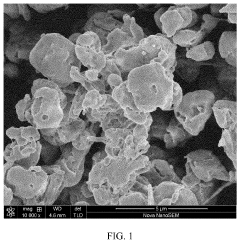
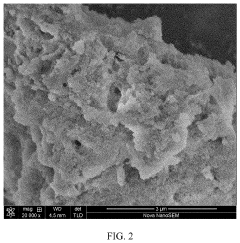
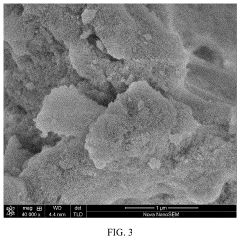
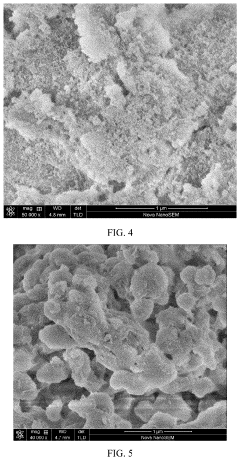
- A PTFE composite powder is developed by coating an inorganic powder layer on the PTFE powder, followed by a surface treatment agent, which improves compatibility with various polymers and enhances interface bonding, using a method that avoids sodium-naphthalene treatment and requires simpler, more environmentally friendly processes.
Life Cycle Cost Analysis of PTFE Products
Life cycle cost analysis (LCCA) of PTFE products is a crucial aspect of evaluating the long-term return on investment (ROI) for businesses considering the use of this versatile material. PTFE, known for its exceptional chemical resistance and low friction properties, offers significant advantages in various industrial applications. However, to fully understand its economic impact, it is essential to consider all costs associated with PTFE products throughout their entire lifecycle.
The initial acquisition cost of PTFE products is often higher compared to alternative materials. This upfront investment can be a deterrent for some businesses. However, a comprehensive LCCA reveals that the total cost of ownership over time may be significantly lower due to PTFE's durability and performance characteristics.
Maintenance costs for PTFE products are typically lower than those for conventional materials. The material's non-stick properties and resistance to chemical degradation reduce the need for frequent cleaning and maintenance interventions. This translates to reduced downtime and labor costs associated with maintenance activities, contributing positively to the overall ROI.
Operational costs are another critical factor in LCCA for PTFE products. The material's low coefficient of friction can lead to energy savings in applications involving moving parts or fluid flow. Additionally, PTFE's thermal stability allows for consistent performance across a wide temperature range, potentially reducing energy consumption in temperature-controlled processes.
Replacement frequency is a key consideration in LCCA. PTFE's exceptional durability and resistance to wear mean that components made from this material often have a longer service life compared to alternatives. This extended lifespan reduces the frequency of replacements, leading to cost savings in terms of both material and labor over time.
Environmental impact and disposal costs should also be factored into the LCCA. While PTFE is not biodegradable, it is recyclable, and many manufacturers offer recycling programs for end-of-life PTFE products. The ability to recycle can offset disposal costs and contribute to a company's sustainability goals, potentially providing additional value beyond direct cost savings.
When conducting an LCCA for PTFE products, it is crucial to consider industry-specific factors that may influence costs. For example, in the chemical processing industry, PTFE's resistance to corrosive substances can significantly extend equipment life and reduce the risk of costly failures. In the food and beverage sector, PTFE's FDA compliance and ease of cleaning can lead to savings in regulatory compliance and sanitation processes.
The initial acquisition cost of PTFE products is often higher compared to alternative materials. This upfront investment can be a deterrent for some businesses. However, a comprehensive LCCA reveals that the total cost of ownership over time may be significantly lower due to PTFE's durability and performance characteristics.
Maintenance costs for PTFE products are typically lower than those for conventional materials. The material's non-stick properties and resistance to chemical degradation reduce the need for frequent cleaning and maintenance interventions. This translates to reduced downtime and labor costs associated with maintenance activities, contributing positively to the overall ROI.
Operational costs are another critical factor in LCCA for PTFE products. The material's low coefficient of friction can lead to energy savings in applications involving moving parts or fluid flow. Additionally, PTFE's thermal stability allows for consistent performance across a wide temperature range, potentially reducing energy consumption in temperature-controlled processes.
Replacement frequency is a key consideration in LCCA. PTFE's exceptional durability and resistance to wear mean that components made from this material often have a longer service life compared to alternatives. This extended lifespan reduces the frequency of replacements, leading to cost savings in terms of both material and labor over time.
Environmental impact and disposal costs should also be factored into the LCCA. While PTFE is not biodegradable, it is recyclable, and many manufacturers offer recycling programs for end-of-life PTFE products. The ability to recycle can offset disposal costs and contribute to a company's sustainability goals, potentially providing additional value beyond direct cost savings.
When conducting an LCCA for PTFE products, it is crucial to consider industry-specific factors that may influence costs. For example, in the chemical processing industry, PTFE's resistance to corrosive substances can significantly extend equipment life and reduce the risk of costly failures. In the food and beverage sector, PTFE's FDA compliance and ease of cleaning can lead to savings in regulatory compliance and sanitation processes.
Environmental Impact and Sustainability of PTFE
Polytetrafluoroethylene (PTFE), commonly known as Teflon, has been widely used in various industries due to its unique properties. However, its environmental impact and sustainability have become increasingly important considerations in recent years. The production and disposal of PTFE raise significant environmental concerns, primarily due to the use of perfluorooctanoic acid (PFOA) in its manufacturing process.
PFOA, a persistent organic pollutant, has been linked to various health and environmental issues. It can accumulate in the environment and living organisms, potentially causing long-term ecological damage. Recognizing these risks, many manufacturers have phased out PFOA use in PTFE production, adopting alternative processes that reduce environmental impact.
The durability and longevity of PTFE products contribute to their sustainability profile. PTFE's resistance to wear, chemicals, and extreme temperatures means that products made with this material often have extended lifespans, reducing the need for frequent replacements. This longevity can lead to decreased waste generation and resource consumption over time, aligning with principles of sustainable product design.
Recycling PTFE presents both challenges and opportunities. While the material itself is not biodegradable, advancements in recycling technologies have made it possible to reclaim and reprocess PTFE waste. Mechanical recycling methods can grind and repurpose PTFE scrap, while more advanced chemical processes can break down the material for use in new products. These recycling efforts contribute to a more circular economy approach for PTFE utilization.
The energy-intensive nature of PTFE production remains a sustainability concern. However, ongoing research and development efforts focus on improving energy efficiency in manufacturing processes. Additionally, the application of PTFE in renewable energy technologies, such as solar panels and fuel cells, demonstrates its potential to contribute to broader sustainability goals.
As industries strive for more sustainable practices, the use of PTFE is being reevaluated and optimized. Manufacturers are exploring bio-based alternatives and developing PTFE formulations with reduced environmental footprints. These innovations aim to maintain the beneficial properties of PTFE while addressing sustainability challenges.
In conclusion, while PTFE poses certain environmental challenges, its long-term sustainability profile is complex. The material's durability, potential for recycling, and ongoing innovations in production and application suggest that PTFE can play a role in sustainable industrial practices when managed responsibly. Balancing the material's unique properties with environmental considerations will be crucial for its continued use and development in various sectors.
PFOA, a persistent organic pollutant, has been linked to various health and environmental issues. It can accumulate in the environment and living organisms, potentially causing long-term ecological damage. Recognizing these risks, many manufacturers have phased out PFOA use in PTFE production, adopting alternative processes that reduce environmental impact.
The durability and longevity of PTFE products contribute to their sustainability profile. PTFE's resistance to wear, chemicals, and extreme temperatures means that products made with this material often have extended lifespans, reducing the need for frequent replacements. This longevity can lead to decreased waste generation and resource consumption over time, aligning with principles of sustainable product design.
Recycling PTFE presents both challenges and opportunities. While the material itself is not biodegradable, advancements in recycling technologies have made it possible to reclaim and reprocess PTFE waste. Mechanical recycling methods can grind and repurpose PTFE scrap, while more advanced chemical processes can break down the material for use in new products. These recycling efforts contribute to a more circular economy approach for PTFE utilization.
The energy-intensive nature of PTFE production remains a sustainability concern. However, ongoing research and development efforts focus on improving energy efficiency in manufacturing processes. Additionally, the application of PTFE in renewable energy technologies, such as solar panels and fuel cells, demonstrates its potential to contribute to broader sustainability goals.
As industries strive for more sustainable practices, the use of PTFE is being reevaluated and optimized. Manufacturers are exploring bio-based alternatives and developing PTFE formulations with reduced environmental footprints. These innovations aim to maintain the beneficial properties of PTFE while addressing sustainability challenges.
In conclusion, while PTFE poses certain environmental challenges, its long-term sustainability profile is complex. The material's durability, potential for recycling, and ongoing innovations in production and application suggest that PTFE can play a role in sustainable industrial practices when managed responsibly. Balancing the material's unique properties with environmental considerations will be crucial for its continued use and development in various sectors.
Unlock deeper insights with PatSnap Eureka Quick Research — get a full tech report to explore trends and direct your research. Try now!
Generate Your Research Report Instantly with AI Agent
Supercharge your innovation with PatSnap Eureka AI Agent Platform!