How Advanced Simulation Accelerates Membrane Material Discovery
SEP 3, 20259 MIN READ
Generate Your Research Report Instantly with AI Agent
Patsnap Eureka helps you evaluate technical feasibility & market potential.
Membrane Simulation Background and Objectives
Membrane technology has evolved significantly over the past several decades, transforming from simple filtration methods to sophisticated separation systems with applications spanning water purification, gas separation, energy production, and pharmaceutical processing. The development trajectory of membrane materials has been characterized by incremental improvements in selectivity, permeability, and durability, with recent breakthroughs in nanomaterials and composite structures pushing performance boundaries further.
Traditional membrane development relied heavily on empirical approaches, involving extensive laboratory testing through trial-and-error methodologies. This process typically required years of experimental work before viable materials could be identified, characterized, and scaled for commercial applications. The inherent inefficiency of this approach has created significant bottlenecks in addressing urgent global challenges such as water scarcity, carbon capture, and sustainable energy production.
Advanced simulation technologies represent a paradigm shift in membrane material discovery. Computational methods including molecular dynamics (MD), density functional theory (DFT), Monte Carlo simulations, and machine learning algorithms now enable researchers to model membrane behavior at atomic and molecular scales. These techniques allow for the prediction of critical performance parameters without the need for physical prototyping at early development stages.
The integration of high-performance computing with these simulation methodologies has dramatically accelerated the screening process for potential membrane materials. Researchers can now evaluate thousands of theoretical structures and compositions in silico, identifying promising candidates for experimental validation with unprecedented efficiency. This computational-first approach has reduced development timelines from decades to years, and in some cases, to mere months.
The primary objective of advanced membrane simulation is to establish predictive frameworks that accurately model the relationship between material structure and functional properties. By understanding these structure-property relationships, researchers aim to design materials with precisely tailored characteristics for specific separation challenges. This includes optimizing pore size distribution, surface chemistry, mechanical stability, and resistance to fouling or degradation under operational conditions.
Current technological trends point toward multi-scale modeling approaches that bridge quantum mechanical calculations with mesoscale and macroscale simulations. This holistic methodology enables researchers to predict not only fundamental material properties but also practical performance metrics in real-world applications and at industrial scales.
The ultimate goal of membrane simulation research is to enable inverse design – starting with desired performance specifications and working backward to identify material compositions and structures that meet these requirements. This approach promises to revolutionize membrane technology development, potentially addressing critical global challenges in water security, energy efficiency, and environmental sustainability through accelerated materials innovation.
Traditional membrane development relied heavily on empirical approaches, involving extensive laboratory testing through trial-and-error methodologies. This process typically required years of experimental work before viable materials could be identified, characterized, and scaled for commercial applications. The inherent inefficiency of this approach has created significant bottlenecks in addressing urgent global challenges such as water scarcity, carbon capture, and sustainable energy production.
Advanced simulation technologies represent a paradigm shift in membrane material discovery. Computational methods including molecular dynamics (MD), density functional theory (DFT), Monte Carlo simulations, and machine learning algorithms now enable researchers to model membrane behavior at atomic and molecular scales. These techniques allow for the prediction of critical performance parameters without the need for physical prototyping at early development stages.
The integration of high-performance computing with these simulation methodologies has dramatically accelerated the screening process for potential membrane materials. Researchers can now evaluate thousands of theoretical structures and compositions in silico, identifying promising candidates for experimental validation with unprecedented efficiency. This computational-first approach has reduced development timelines from decades to years, and in some cases, to mere months.
The primary objective of advanced membrane simulation is to establish predictive frameworks that accurately model the relationship between material structure and functional properties. By understanding these structure-property relationships, researchers aim to design materials with precisely tailored characteristics for specific separation challenges. This includes optimizing pore size distribution, surface chemistry, mechanical stability, and resistance to fouling or degradation under operational conditions.
Current technological trends point toward multi-scale modeling approaches that bridge quantum mechanical calculations with mesoscale and macroscale simulations. This holistic methodology enables researchers to predict not only fundamental material properties but also practical performance metrics in real-world applications and at industrial scales.
The ultimate goal of membrane simulation research is to enable inverse design – starting with desired performance specifications and working backward to identify material compositions and structures that meet these requirements. This approach promises to revolutionize membrane technology development, potentially addressing critical global challenges in water security, energy efficiency, and environmental sustainability through accelerated materials innovation.
Market Analysis for Advanced Membrane Materials
The advanced membrane materials market is experiencing robust growth, driven by increasing demand across multiple industries including water treatment, gas separation, energy storage, and healthcare. The global membrane market was valued at approximately 5.4 billion USD in 2021 and is projected to reach 10.2 billion USD by 2028, growing at a CAGR of 9.5% during the forecast period. This growth trajectory is particularly pronounced in regions facing water scarcity challenges, with Asia-Pacific emerging as the fastest-growing regional market.
Water treatment applications currently dominate the membrane materials market, accounting for over 40% of total demand. This is primarily due to increasing water quality regulations and growing water scarcity concerns globally. The gas separation segment is witnessing the highest growth rate, fueled by industrial decarbonization initiatives and the expanding hydrogen economy, where selective membranes play a crucial role.
Healthcare applications represent another significant growth segment, with membrane technologies being increasingly utilized in drug delivery systems, hemodialysis, and tissue engineering. The pharmaceutical industry's demand for precise filtration and separation processes has created a premium market for specialized membrane materials with enhanced biocompatibility and selectivity properties.
From a materials perspective, polymeric membranes currently dominate with approximately 70% market share, primarily due to their cost-effectiveness and processing versatility. However, ceramic and composite membranes are gaining traction in high-performance applications where thermal stability and chemical resistance are paramount. The emerging market for mixed matrix membranes, combining polymers with inorganic fillers, is growing at 12% annually as these materials offer enhanced permeability-selectivity combinations.
Market analysis reveals that end-users are increasingly prioritizing membrane materials with extended operational lifetimes, reduced fouling tendencies, and lower energy consumption profiles. This shift is creating premium pricing opportunities for advanced materials that can demonstrate superior performance metrics through simulation-validated design approaches.
The competitive landscape features established players like DuPont, 3M, and Toray Industries controlling significant market share, while specialized startups focusing on novel membrane architectures are attracting substantial venture capital investment. Recent market consolidation through mergers and acquisitions indicates the strategic importance of membrane technology portfolios for major chemical and materials companies.
Regionally, North America and Europe lead in high-performance membrane development and adoption, while manufacturing capacity is increasingly concentrated in Asia. This geographic distribution creates opportunities for technology transfer partnerships and regional market specialization strategies.
Water treatment applications currently dominate the membrane materials market, accounting for over 40% of total demand. This is primarily due to increasing water quality regulations and growing water scarcity concerns globally. The gas separation segment is witnessing the highest growth rate, fueled by industrial decarbonization initiatives and the expanding hydrogen economy, where selective membranes play a crucial role.
Healthcare applications represent another significant growth segment, with membrane technologies being increasingly utilized in drug delivery systems, hemodialysis, and tissue engineering. The pharmaceutical industry's demand for precise filtration and separation processes has created a premium market for specialized membrane materials with enhanced biocompatibility and selectivity properties.
From a materials perspective, polymeric membranes currently dominate with approximately 70% market share, primarily due to their cost-effectiveness and processing versatility. However, ceramic and composite membranes are gaining traction in high-performance applications where thermal stability and chemical resistance are paramount. The emerging market for mixed matrix membranes, combining polymers with inorganic fillers, is growing at 12% annually as these materials offer enhanced permeability-selectivity combinations.
Market analysis reveals that end-users are increasingly prioritizing membrane materials with extended operational lifetimes, reduced fouling tendencies, and lower energy consumption profiles. This shift is creating premium pricing opportunities for advanced materials that can demonstrate superior performance metrics through simulation-validated design approaches.
The competitive landscape features established players like DuPont, 3M, and Toray Industries controlling significant market share, while specialized startups focusing on novel membrane architectures are attracting substantial venture capital investment. Recent market consolidation through mergers and acquisitions indicates the strategic importance of membrane technology portfolios for major chemical and materials companies.
Regionally, North America and Europe lead in high-performance membrane development and adoption, while manufacturing capacity is increasingly concentrated in Asia. This geographic distribution creates opportunities for technology transfer partnerships and regional market specialization strategies.
Current Simulation Challenges in Membrane Research
Despite significant advancements in computational methods, membrane material discovery faces several critical simulation challenges that limit research progress. Current molecular dynamics (MD) simulations struggle with accurately representing the complex interactions between membrane materials and various solutes, particularly for novel separation applications. The computational cost remains prohibitively high for screening large material libraries, with detailed simulations of membrane transport phenomena often requiring weeks of supercomputer time even for relatively simple systems.
Scale bridging presents another formidable challenge, as researchers must connect molecular-level phenomena to macroscopic performance metrics. Most current models fail to effectively bridge these scales, creating a disconnect between atomic-level simulations and practical membrane performance predictions. This gap significantly hinders the translation of computational insights into experimental validation and commercial development.
Force field accuracy remains problematic for emerging membrane materials, especially for novel polymers, mixed matrix membranes, and two-dimensional materials. Existing force fields were largely developed for conventional materials and often fail to capture the unique physicochemical properties of innovative membrane structures. This limitation introduces substantial uncertainty in simulation results, particularly when predicting separation performance for complex mixtures or under non-standard operating conditions.
Modeling interfacial phenomena presents exceptional difficulties, as membrane separation processes are fundamentally governed by interface interactions. Current simulation approaches struggle to accurately represent the dynamic behavior at solid-liquid interfaces, polymer-filler interfaces in mixed matrix membranes, and the complex surface chemistry that determines selectivity and permeability. These interfacial regions often exhibit properties distinct from bulk materials, yet are poorly represented in standard simulation frameworks.
Time-scale limitations further constrain simulation capabilities, as many critical membrane processes occur over seconds to hours, while MD simulations typically cover nanoseconds to microseconds. This mismatch forces researchers to rely on questionable extrapolations or simplified models that may not capture the true dynamics of membrane transport and fouling processes.
Data integration challenges compound these issues, with researchers struggling to effectively combine computational predictions with experimental characterization data. The lack of standardized frameworks for integrating multi-scale, multi-physics simulation results with experimental validation creates significant barriers to establishing reliable computational screening protocols for membrane materials discovery.
Scale bridging presents another formidable challenge, as researchers must connect molecular-level phenomena to macroscopic performance metrics. Most current models fail to effectively bridge these scales, creating a disconnect between atomic-level simulations and practical membrane performance predictions. This gap significantly hinders the translation of computational insights into experimental validation and commercial development.
Force field accuracy remains problematic for emerging membrane materials, especially for novel polymers, mixed matrix membranes, and two-dimensional materials. Existing force fields were largely developed for conventional materials and often fail to capture the unique physicochemical properties of innovative membrane structures. This limitation introduces substantial uncertainty in simulation results, particularly when predicting separation performance for complex mixtures or under non-standard operating conditions.
Modeling interfacial phenomena presents exceptional difficulties, as membrane separation processes are fundamentally governed by interface interactions. Current simulation approaches struggle to accurately represent the dynamic behavior at solid-liquid interfaces, polymer-filler interfaces in mixed matrix membranes, and the complex surface chemistry that determines selectivity and permeability. These interfacial regions often exhibit properties distinct from bulk materials, yet are poorly represented in standard simulation frameworks.
Time-scale limitations further constrain simulation capabilities, as many critical membrane processes occur over seconds to hours, while MD simulations typically cover nanoseconds to microseconds. This mismatch forces researchers to rely on questionable extrapolations or simplified models that may not capture the true dynamics of membrane transport and fouling processes.
Data integration challenges compound these issues, with researchers struggling to effectively combine computational predictions with experimental characterization data. The lack of standardized frameworks for integrating multi-scale, multi-physics simulation results with experimental validation creates significant barriers to establishing reliable computational screening protocols for membrane materials discovery.
State-of-the-Art Simulation Approaches for Membranes
01 Hardware-based simulation acceleration techniques
Hardware-based approaches to accelerate simulation processes involve specialized processors, FPGA implementations, and dedicated acceleration cards. These hardware solutions can significantly reduce computation time by parallelizing operations and optimizing data flow. The techniques include custom circuit designs for specific simulation tasks, hardware-software co-design methodologies, and specialized architectures that can handle complex simulation models more efficiently than general-purpose computing systems.- Hardware-based simulation acceleration techniques: Hardware-based approaches to accelerate simulations involve specialized processors, FPGA implementations, and dedicated circuits designed specifically for simulation workloads. These hardware solutions can significantly reduce computation time by parallelizing operations and optimizing data flow. The techniques include custom silicon designs for physics simulations, hardware-accelerated rendering engines, and specialized co-processors that work alongside traditional CPUs to handle simulation-specific calculations.
- Parallel computing and distributed simulation frameworks: Distributed computing architectures enable simulations to be split across multiple processing nodes, allowing for significant acceleration of complex models. These frameworks implement load balancing algorithms, efficient communication protocols between nodes, and synchronization mechanisms to maintain simulation coherence. By dividing computational tasks across networked systems, these approaches can scale to handle extremely large simulation spaces while reducing overall execution time.
- AI and machine learning for simulation optimization: Artificial intelligence and machine learning techniques are being applied to accelerate simulations by creating surrogate models, predicting simulation outcomes without running full calculations, and optimizing simulation parameters automatically. These approaches can identify patterns in simulation data to reduce redundant calculations, intelligently sample the solution space, and adaptively refine models based on previous results, leading to significant performance improvements.
- Real-time simulation acceleration algorithms: Specialized algorithms designed for real-time simulation performance employ techniques such as adaptive time-stepping, multi-resolution modeling, and approximation methods that maintain accuracy while reducing computational complexity. These approaches dynamically adjust simulation fidelity based on importance, observer perspective, or system state, ensuring critical aspects receive full computational resources while less important elements are simplified.
- GPU-accelerated simulation techniques: Graphics Processing Units (GPUs) are increasingly used to accelerate simulations by leveraging their massive parallel processing capabilities. These techniques involve reformulating simulation algorithms to exploit GPU architecture, implementing efficient memory management strategies, and developing specialized kernels for simulation-specific operations. GPU acceleration is particularly effective for physics-based simulations, fluid dynamics, molecular modeling, and other highly parallelizable computational problems.
02 Machine learning approaches for simulation acceleration
Machine learning algorithms are increasingly being applied to accelerate simulation processes by creating surrogate models that can approximate complex physical systems. These approaches use neural networks, deep learning, and other AI techniques to learn from simulation data and predict outcomes without running full simulations. This significantly reduces computational requirements while maintaining acceptable accuracy levels for many applications, enabling faster design iterations and real-time simulation capabilities.Expand Specific Solutions03 Parallel computing and distributed simulation frameworks
Advanced simulation acceleration can be achieved through parallel computing architectures and distributed simulation frameworks. These approaches divide complex simulation tasks across multiple computing nodes, enabling simultaneous processing of different simulation components. The techniques include domain decomposition, load balancing algorithms, and synchronization protocols that maintain consistency across distributed simulation environments while maximizing computational efficiency.Expand Specific Solutions04 Algorithm optimization for simulation efficiency
Algorithmic improvements represent a fundamental approach to simulation acceleration, focusing on mathematical and computational optimizations that reduce complexity and processing requirements. These techniques include adaptive time-stepping, model order reduction, multi-scale modeling approaches, and specialized numerical methods that can solve simulation equations more efficiently. By reformulating simulation problems and implementing smarter algorithms, significant performance gains can be achieved without requiring additional hardware resources.Expand Specific Solutions05 Real-time simulation and interactive visualization techniques
Real-time simulation acceleration focuses on techniques that enable interactive visualization and analysis of simulation results as they are being generated. These approaches include progressive rendering methods, adaptive resolution techniques, and predictive computing that prioritizes visually important simulation aspects. By optimizing the simulation pipeline for human interaction and visual feedback, these methods allow for faster decision-making and more intuitive understanding of complex simulation behaviors.Expand Specific Solutions
Leading Organizations in Membrane Simulation Technology
Advanced membrane material discovery is currently in a growth phase, with the market expected to reach significant scale due to increasing applications in energy, water purification, and healthcare sectors. The technology maturity varies across players, with academic institutions like Harbin Institute of Technology, Tsinghua University, and California Institute of Technology leading fundamental research, while companies such as Toyota Research Institute, Robert Bosch GmbH, and Google are advancing computational simulation approaches. Industry leaders including Toyota Motor Corp., Mercedes-Benz, and TSMC are applying these technologies to develop commercial applications. The integration of AI and machine learning by companies like Iambic Therapeutics and Microsoft is accelerating the discovery process, reducing the traditional timeline from years to months through advanced simulation techniques.
Toyota Research Institute, Inc.
Technical Solution: Toyota Research Institute has pioneered an advanced simulation platform called Accelerated Materials Design and Discovery (AMDD) specifically targeting membrane materials for energy applications. Their approach combines high-throughput quantum mechanical simulations with machine learning models to predict membrane properties and performance. TRI's simulation framework incorporates molecular dynamics to model ion transport through membranes, critical for fuel cell and battery applications. They've developed specialized force fields that accurately capture interactions between polymers, ions, and solvents in membrane environments. The platform utilizes cloud computing infrastructure to run thousands of parallel simulations, generating comprehensive property databases that feed into their machine learning algorithms for rapid material screening and optimization.
Strengths: Specialized focus on energy-related membrane applications; robust integration of quantum and classical simulation methods; extensive computational resources enabling high-throughput screening. Weaknesses: Primarily focused on energy storage applications rather than broader membrane uses; proprietary nature limits academic collaboration; validation primarily within automotive-relevant conditions.
The Georgia Tech Research Corp.
Technical Solution: Georgia Tech has developed a multi-scale simulation framework that combines molecular dynamics (MD), dissipative particle dynamics (DPD), and finite element analysis to accelerate membrane material discovery. Their approach integrates quantum mechanical calculations at the atomic level with mesoscale simulations to predict membrane performance characteristics such as selectivity, permeability, and mechanical stability. The framework employs machine learning algorithms to establish structure-property relationships from simulation data, enabling rapid screening of thousands of potential membrane materials without extensive laboratory testing. Georgia Tech researchers have successfully applied this methodology to design novel polymer membranes for water purification, gas separation, and energy storage applications, reducing development time from years to months.
Strengths: Comprehensive multi-scale modeling approach that bridges atomic to macroscopic scales; integration with machine learning for accelerated screening; strong validation against experimental data. Weaknesses: Computationally intensive simulations require significant computing resources; accuracy depends on force field parameterization; some membrane properties still require experimental verification.
Key Algorithms and Models for Membrane Property Prediction
Methods and systems for machine-learning based molecule generation and scoring
PatentPendingUS20250140356A1
Innovation
- The method combines generative modeling, such as diffusion models, with multi-objective optimization to guide the generation of ligands that optimize for multiple target properties like affinity and synthetic accessibility, while using machine learning approaches to manage computational costs and expand the search chemical space.


Prediction of molecular polar surface area and bioabsorption
PatentInactiveUS7113870B2
Innovation
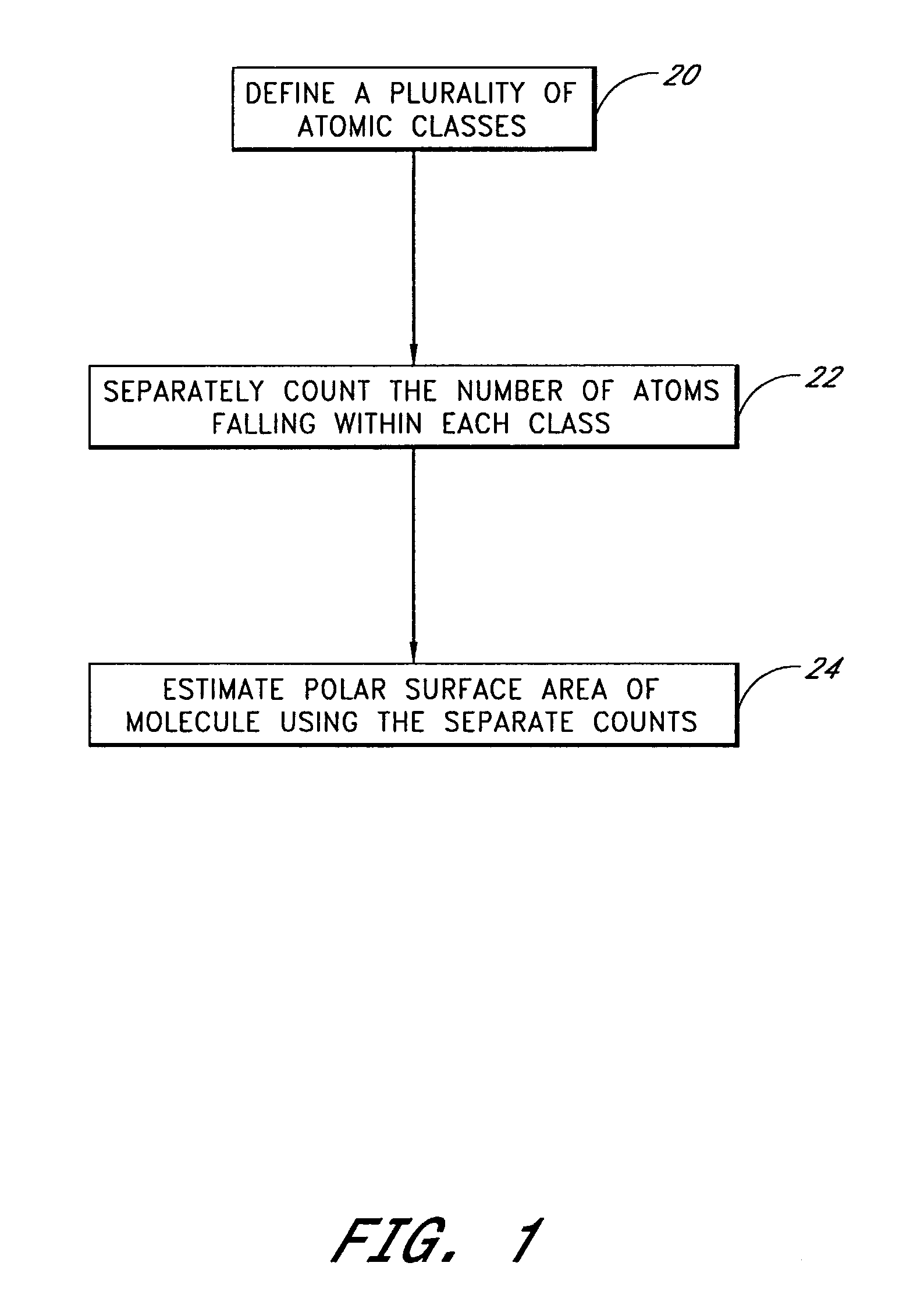
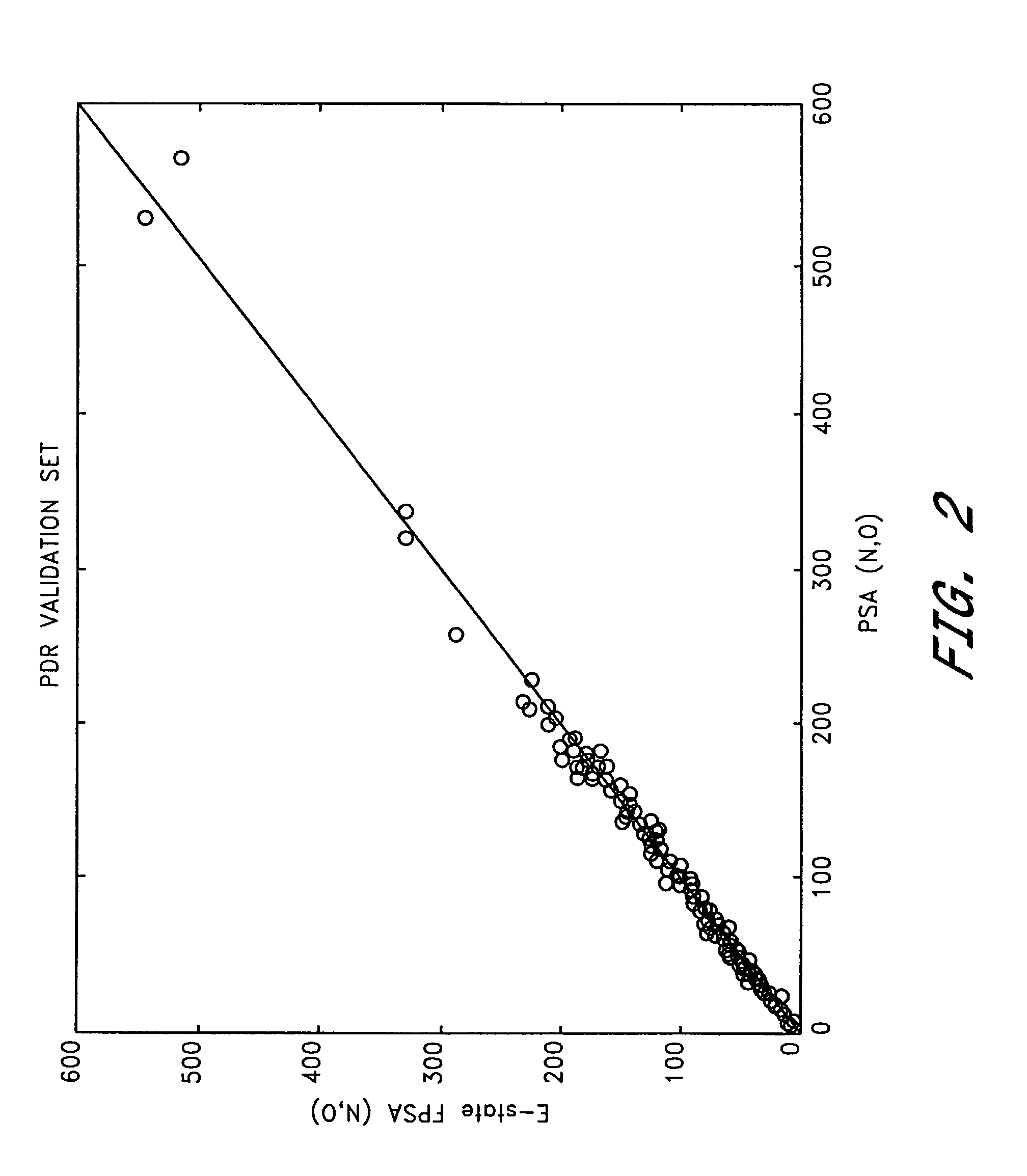
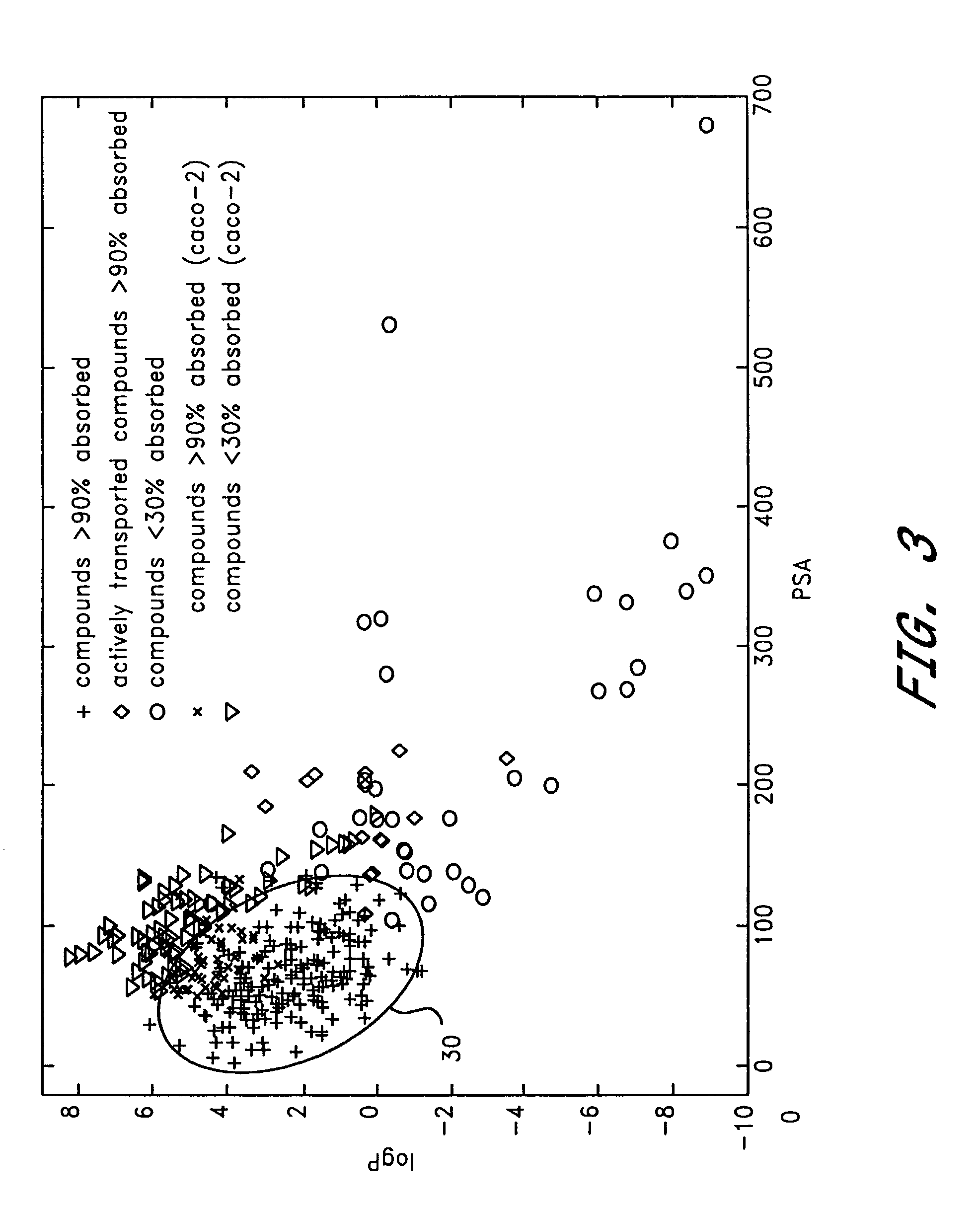
- A method that estimates polar surface area by counting atoms or atom clusters in specific atomic classes and using coefficients to calculate the polar surface area without requiring energy-minimized three-dimensional structures, significantly reducing computation time and enabling rapid evaluation of large compound databases.

Computational Infrastructure Requirements
The computational infrastructure required for advanced membrane material simulations represents a critical foundation for accelerating discovery processes. High-performance computing (HPC) clusters with significant parallel processing capabilities are essential, as molecular dynamics simulations and quantum mechanical calculations demand substantial computational resources. Current state-of-the-art facilities typically employ systems with thousands of CPU cores or specialized GPU arrays optimized for scientific computing workloads.
Storage infrastructure presents another crucial requirement, with membrane simulation datasets often reaching petabyte scale. This necessitates high-speed, distributed storage systems with robust data management protocols to ensure efficient access and long-term preservation of simulation results and intermediate calculations.
Network architecture must support high-bandwidth, low-latency connections between computing nodes, particularly for distributed simulations that require frequent communication between processes. InfiniBand or similar high-performance networking technologies have become standard in facilities dedicated to materials simulation.
Specialized software environments constitute another vital component, requiring optimized simulation packages such as GROMACS, LAMMPS, and Quantum ESPRESSO. These must be supported by scientific libraries, visualization tools, and workflow management systems that can orchestrate complex simulation pipelines while ensuring reproducibility.
Cloud computing resources have emerged as complementary infrastructure, offering scalability for peak workloads. Hybrid approaches combining on-premises HPC with cloud bursting capabilities provide cost-effective solutions for membrane material research organizations with variable computational demands.
Energy efficiency considerations have gained prominence, with advanced cooling systems and power management technologies becoming essential for sustainable operation of simulation infrastructure. Many leading research facilities now implement liquid cooling and dynamic power scaling to reduce environmental impact while maintaining performance.
Data security and access control systems represent the final critical infrastructure component, particularly for collaborative research involving proprietary membrane technologies. Comprehensive authentication mechanisms, encryption protocols, and secure data transfer methods must be implemented to protect intellectual property while enabling productive scientific collaboration across institutional boundaries.
Storage infrastructure presents another crucial requirement, with membrane simulation datasets often reaching petabyte scale. This necessitates high-speed, distributed storage systems with robust data management protocols to ensure efficient access and long-term preservation of simulation results and intermediate calculations.
Network architecture must support high-bandwidth, low-latency connections between computing nodes, particularly for distributed simulations that require frequent communication between processes. InfiniBand or similar high-performance networking technologies have become standard in facilities dedicated to materials simulation.
Specialized software environments constitute another vital component, requiring optimized simulation packages such as GROMACS, LAMMPS, and Quantum ESPRESSO. These must be supported by scientific libraries, visualization tools, and workflow management systems that can orchestrate complex simulation pipelines while ensuring reproducibility.
Cloud computing resources have emerged as complementary infrastructure, offering scalability for peak workloads. Hybrid approaches combining on-premises HPC with cloud bursting capabilities provide cost-effective solutions for membrane material research organizations with variable computational demands.
Energy efficiency considerations have gained prominence, with advanced cooling systems and power management technologies becoming essential for sustainable operation of simulation infrastructure. Many leading research facilities now implement liquid cooling and dynamic power scaling to reduce environmental impact while maintaining performance.
Data security and access control systems represent the final critical infrastructure component, particularly for collaborative research involving proprietary membrane technologies. Comprehensive authentication mechanisms, encryption protocols, and secure data transfer methods must be implemented to protect intellectual property while enabling productive scientific collaboration across institutional boundaries.
Sustainability Impact of Accelerated Membrane Development
The accelerated development of advanced membrane materials through simulation technologies represents a significant opportunity for addressing critical sustainability challenges facing our planet. By expediting the discovery and optimization of novel membrane materials, we can dramatically reduce the environmental footprint across multiple industrial sectors while simultaneously addressing resource scarcity issues.
Water purification applications stand as perhaps the most immediate sustainability impact area. Advanced membranes developed through computational methods can significantly improve desalination efficiency, reducing energy consumption by up to 30% compared to conventional technologies. This translates directly to lower carbon emissions while increasing global access to clean water - a critical resource for approximately 2.2 billion people currently lacking safe drinking water.
In the energy sector, accelerated membrane development enables more efficient carbon capture systems, potentially reducing implementation costs by 25-40%. These membranes can be optimized for specific industrial applications, maximizing CO2 separation efficiency while minimizing energy penalties. The environmental impact extends beyond emissions reduction to include decreased land use requirements for equivalent capture capacity.
The circular economy benefits substantially from advanced membrane technologies. By enabling more precise molecular separation processes, these materials facilitate resource recovery from waste streams that were previously economically unfeasible to process. This includes critical minerals, rare earth elements, and valuable organic compounds that can be reintroduced into production cycles.
Agricultural sustainability sees significant gains through specialized membranes for controlled nutrient delivery and water conservation. Simulation-accelerated development has produced membranes capable of reducing fertilizer requirements by up to 35% while maintaining or improving crop yields, directly addressing both water pollution and resource efficiency challenges.
From a lifecycle perspective, computationally-designed membranes often exhibit extended operational lifespans, reducing replacement frequency and associated material consumption. Many advanced designs incorporate biodegradable or recyclable components, further enhancing their sustainability profile compared to conventional alternatives.
The economic dimension of sustainability is equally compelling. By reducing the time-to-market for innovative membrane solutions from decades to years, simulation technologies enable faster deployment of sustainability-enhancing technologies across global markets, creating positive environmental impacts at scale while simultaneously generating economic opportunities in green technology sectors.
Water purification applications stand as perhaps the most immediate sustainability impact area. Advanced membranes developed through computational methods can significantly improve desalination efficiency, reducing energy consumption by up to 30% compared to conventional technologies. This translates directly to lower carbon emissions while increasing global access to clean water - a critical resource for approximately 2.2 billion people currently lacking safe drinking water.
In the energy sector, accelerated membrane development enables more efficient carbon capture systems, potentially reducing implementation costs by 25-40%. These membranes can be optimized for specific industrial applications, maximizing CO2 separation efficiency while minimizing energy penalties. The environmental impact extends beyond emissions reduction to include decreased land use requirements for equivalent capture capacity.
The circular economy benefits substantially from advanced membrane technologies. By enabling more precise molecular separation processes, these materials facilitate resource recovery from waste streams that were previously economically unfeasible to process. This includes critical minerals, rare earth elements, and valuable organic compounds that can be reintroduced into production cycles.
Agricultural sustainability sees significant gains through specialized membranes for controlled nutrient delivery and water conservation. Simulation-accelerated development has produced membranes capable of reducing fertilizer requirements by up to 35% while maintaining or improving crop yields, directly addressing both water pollution and resource efficiency challenges.
From a lifecycle perspective, computationally-designed membranes often exhibit extended operational lifespans, reducing replacement frequency and associated material consumption. Many advanced designs incorporate biodegradable or recyclable components, further enhancing their sustainability profile compared to conventional alternatives.
The economic dimension of sustainability is equally compelling. By reducing the time-to-market for innovative membrane solutions from decades to years, simulation technologies enable faster deployment of sustainability-enhancing technologies across global markets, creating positive environmental impacts at scale while simultaneously generating economic opportunities in green technology sectors.
Unlock deeper insights with Patsnap Eureka Quick Research — get a full tech report to explore trends and direct your research. Try now!
Generate Your Research Report Instantly with AI Agent
Supercharge your innovation with Patsnap Eureka AI Agent Platform!