How High Pass Filters Affect Data Latency in Network Systems
JUL 28, 20259 MIN READ
Generate Your Research Report Instantly with AI Agent
PatSnap Eureka helps you evaluate technical feasibility & market potential.
HPF and Latency Overview
High Pass Filters (HPFs) play a crucial role in network systems, significantly impacting data latency and overall system performance. These filters are designed to attenuate low-frequency signals while allowing high-frequency signals to pass through, effectively shaping the frequency response of network components. In the context of network systems, HPFs are primarily used to reduce noise, eliminate DC offset, and improve signal quality.
The relationship between HPFs and data latency in network systems is complex and multifaceted. On one hand, HPFs can help reduce latency by minimizing signal distortion and improving the signal-to-noise ratio (SNR). This is particularly important in high-speed networks where even small amounts of noise can lead to data corruption and increased retransmission rates. By filtering out low-frequency noise and interference, HPFs enable cleaner signal transmission, potentially reducing the need for error correction and retransmission, thus lowering overall latency.
However, the implementation of HPFs can also introduce latency into the system. The filtering process itself requires time, and depending on the filter design and order, this can add a non-negligible delay to signal propagation. Higher-order filters, while providing better noise rejection, typically introduce more latency compared to lower-order filters. This trade-off between filter performance and latency is a critical consideration in network system design.
In modern network architectures, HPFs are often integrated into various components, including network interface cards (NICs), switches, and routers. Their presence affects not only the physical layer but also higher layers of the network stack. For instance, in Ethernet networks, HPFs are used in the analog front-end of transceivers to remove low-frequency noise and ensure compliance with standards such as IEEE 802.3.
The impact of HPFs on latency becomes particularly significant in time-sensitive applications, such as high-frequency trading, real-time control systems, and live multimedia streaming. In these scenarios, even microseconds of additional latency can have substantial consequences. Network engineers must carefully balance the benefits of improved signal quality against the potential latency introduced by HPFs.
Recent advancements in filter design and implementation have led to the development of adaptive HPFs that can dynamically adjust their characteristics based on network conditions. These adaptive filters aim to optimize the trade-off between noise rejection and latency, providing a more flexible solution for varying network environments.
Understanding the interplay between HPFs and latency is essential for network system designers and engineers. It requires a comprehensive approach that considers not only the electrical characteristics of the filters but also their impact on higher-level network protocols and application performance. As network speeds continue to increase and latency requirements become more stringent, the role of HPFs in shaping network performance will remain a critical area of research and development in the field of network systems.
The relationship between HPFs and data latency in network systems is complex and multifaceted. On one hand, HPFs can help reduce latency by minimizing signal distortion and improving the signal-to-noise ratio (SNR). This is particularly important in high-speed networks where even small amounts of noise can lead to data corruption and increased retransmission rates. By filtering out low-frequency noise and interference, HPFs enable cleaner signal transmission, potentially reducing the need for error correction and retransmission, thus lowering overall latency.
However, the implementation of HPFs can also introduce latency into the system. The filtering process itself requires time, and depending on the filter design and order, this can add a non-negligible delay to signal propagation. Higher-order filters, while providing better noise rejection, typically introduce more latency compared to lower-order filters. This trade-off between filter performance and latency is a critical consideration in network system design.
In modern network architectures, HPFs are often integrated into various components, including network interface cards (NICs), switches, and routers. Their presence affects not only the physical layer but also higher layers of the network stack. For instance, in Ethernet networks, HPFs are used in the analog front-end of transceivers to remove low-frequency noise and ensure compliance with standards such as IEEE 802.3.
The impact of HPFs on latency becomes particularly significant in time-sensitive applications, such as high-frequency trading, real-time control systems, and live multimedia streaming. In these scenarios, even microseconds of additional latency can have substantial consequences. Network engineers must carefully balance the benefits of improved signal quality against the potential latency introduced by HPFs.
Recent advancements in filter design and implementation have led to the development of adaptive HPFs that can dynamically adjust their characteristics based on network conditions. These adaptive filters aim to optimize the trade-off between noise rejection and latency, providing a more flexible solution for varying network environments.
Understanding the interplay between HPFs and latency is essential for network system designers and engineers. It requires a comprehensive approach that considers not only the electrical characteristics of the filters but also their impact on higher-level network protocols and application performance. As network speeds continue to increase and latency requirements become more stringent, the role of HPFs in shaping network performance will remain a critical area of research and development in the field of network systems.
Network Latency Demands
In today's fast-paced digital landscape, network latency has become a critical factor in determining the performance and user experience of various applications and services. The demand for low-latency networks has grown exponentially, driven by the emergence of real-time applications, cloud computing, and the Internet of Things (IoT). Industries such as finance, gaming, healthcare, and telecommunications require ultra-low latency to maintain competitive advantages and deliver seamless user experiences.
Financial markets, in particular, have stringent latency requirements. High-frequency trading systems demand latencies in the microsecond range to execute trades efficiently. Even a few milliseconds of delay can result in significant financial losses or missed opportunities. Similarly, online gaming platforms require minimal latency to ensure fair gameplay and prevent lag-induced frustrations among players.
The rise of cloud computing and edge computing has further intensified the need for low-latency networks. As more businesses migrate their operations to the cloud, the ability to access and process data quickly becomes paramount. Edge computing, which brings computation closer to data sources, aims to reduce latency by minimizing the distance data needs to travel.
In the realm of IoT and smart cities, low-latency networks are essential for real-time monitoring and control systems. Applications such as autonomous vehicles, industrial automation, and smart grid management rely on near-instantaneous data transmission and processing to function effectively and safely.
The advent of 5G technology has set new benchmarks for network latency. With promises of sub-millisecond latencies, 5G networks are expected to revolutionize various industries and enable new use cases that were previously impractical due to latency constraints. This includes augmented and virtual reality applications, remote surgery, and advanced robotics.
As networks evolve to meet these demanding latency requirements, the role of high-pass filters in network systems becomes increasingly important. These filters, while crucial for signal processing and noise reduction, can introduce additional latency if not properly designed and implemented. Understanding and optimizing the impact of high-pass filters on data latency is essential for network engineers and system designers striving to meet the ever-increasing demands for low-latency communication.
Financial markets, in particular, have stringent latency requirements. High-frequency trading systems demand latencies in the microsecond range to execute trades efficiently. Even a few milliseconds of delay can result in significant financial losses or missed opportunities. Similarly, online gaming platforms require minimal latency to ensure fair gameplay and prevent lag-induced frustrations among players.
The rise of cloud computing and edge computing has further intensified the need for low-latency networks. As more businesses migrate their operations to the cloud, the ability to access and process data quickly becomes paramount. Edge computing, which brings computation closer to data sources, aims to reduce latency by minimizing the distance data needs to travel.
In the realm of IoT and smart cities, low-latency networks are essential for real-time monitoring and control systems. Applications such as autonomous vehicles, industrial automation, and smart grid management rely on near-instantaneous data transmission and processing to function effectively and safely.
The advent of 5G technology has set new benchmarks for network latency. With promises of sub-millisecond latencies, 5G networks are expected to revolutionize various industries and enable new use cases that were previously impractical due to latency constraints. This includes augmented and virtual reality applications, remote surgery, and advanced robotics.
As networks evolve to meet these demanding latency requirements, the role of high-pass filters in network systems becomes increasingly important. These filters, while crucial for signal processing and noise reduction, can introduce additional latency if not properly designed and implemented. Understanding and optimizing the impact of high-pass filters on data latency is essential for network engineers and system designers striving to meet the ever-increasing demands for low-latency communication.
HPF Challenges in Networks
High Pass Filters (HPFs) present several challenges in network systems, particularly concerning data latency. These filters, while essential for signal processing and noise reduction, can introduce significant delays that impact overall network performance.
One of the primary challenges is the trade-off between filter effectiveness and latency. Higher-order HPFs provide better noise suppression and sharper cutoff frequencies but at the cost of increased delay. This delay can be critical in real-time applications such as voice communication or financial trading systems, where even milliseconds of latency can have substantial consequences.
The implementation of HPFs in digital systems introduces additional complexities. The conversion from analog to digital signals and back again adds processing time, further contributing to latency. Moreover, the computational resources required for digital filtering can strain network devices, potentially leading to bottlenecks and increased response times.
Another significant challenge is the variability of latency across different frequency components. HPFs inherently introduce phase shifts, which can result in frequency-dependent delays. This non-uniform latency across the spectrum can lead to signal distortion, particularly in wideband applications or systems dealing with complex, multi-frequency signals.
The design of HPFs for network systems must also consider the dynamic nature of network traffic. Adaptive filtering techniques, while potentially more effective in handling varying signal characteristics, can introduce their own latency issues due to the continuous adjustment of filter parameters.
In distributed network architectures, the cumulative effect of HPFs at multiple nodes can compound latency problems. Each network hop may involve signal filtering, and the aggregated delay can become substantial over long-distance or multi-hop networks. This cumulative latency can severely impact time-sensitive applications and protocols.
Furthermore, the interaction between HPFs and other network components, such as amplifiers, equalizers, and low pass filters, can create complex latency profiles that are difficult to predict and manage. The interdependencies between these elements often require sophisticated modeling and optimization techniques to minimize overall system latency.
Lastly, the challenge of maintaining consistent performance across diverse network conditions is significant. Environmental factors, varying signal strengths, and changing interference patterns can all affect the behavior of HPFs, potentially leading to inconsistent latency profiles that are hard to account for in network design and management.
One of the primary challenges is the trade-off between filter effectiveness and latency. Higher-order HPFs provide better noise suppression and sharper cutoff frequencies but at the cost of increased delay. This delay can be critical in real-time applications such as voice communication or financial trading systems, where even milliseconds of latency can have substantial consequences.
The implementation of HPFs in digital systems introduces additional complexities. The conversion from analog to digital signals and back again adds processing time, further contributing to latency. Moreover, the computational resources required for digital filtering can strain network devices, potentially leading to bottlenecks and increased response times.
Another significant challenge is the variability of latency across different frequency components. HPFs inherently introduce phase shifts, which can result in frequency-dependent delays. This non-uniform latency across the spectrum can lead to signal distortion, particularly in wideband applications or systems dealing with complex, multi-frequency signals.
The design of HPFs for network systems must also consider the dynamic nature of network traffic. Adaptive filtering techniques, while potentially more effective in handling varying signal characteristics, can introduce their own latency issues due to the continuous adjustment of filter parameters.
In distributed network architectures, the cumulative effect of HPFs at multiple nodes can compound latency problems. Each network hop may involve signal filtering, and the aggregated delay can become substantial over long-distance or multi-hop networks. This cumulative latency can severely impact time-sensitive applications and protocols.
Furthermore, the interaction between HPFs and other network components, such as amplifiers, equalizers, and low pass filters, can create complex latency profiles that are difficult to predict and manage. The interdependencies between these elements often require sophisticated modeling and optimization techniques to minimize overall system latency.
Lastly, the challenge of maintaining consistent performance across diverse network conditions is significant. Environmental factors, varying signal strengths, and changing interference patterns can all affect the behavior of HPFs, potentially leading to inconsistent latency profiles that are hard to account for in network design and management.
Current HPF Solutions
01 High-pass filter implementation for reducing data latency
High-pass filters can be implemented in digital signal processing systems to reduce data latency. These filters allow high-frequency components to pass through while attenuating low-frequency signals, which can help in reducing overall system latency. The implementation can be done using various techniques such as digital filter design, FPGA-based solutions, or specialized integrated circuits.- High-pass filter implementation for reducing data latency: High-pass filters can be implemented in digital signal processing systems to reduce data latency. These filters allow high-frequency components to pass through while attenuating low-frequency signals, which can help in reducing overall system latency. The implementation can be done using various techniques such as digital filter design, FPGA-based solutions, or specialized integrated circuits.
- Adaptive filtering techniques for latency reduction: Adaptive filtering techniques can be employed to dynamically adjust filter parameters based on input signal characteristics. This approach can help in optimizing the trade-off between latency reduction and signal quality. Adaptive filters can automatically adjust their coefficients to minimize latency while maintaining desired performance metrics.
- Low-latency data processing in communication systems: Communication systems often require low-latency data processing to ensure real-time performance. High-pass filtering techniques can be integrated into these systems to reduce latency in data transmission and reception. This can involve optimizing signal processing algorithms, implementing efficient hardware architectures, and utilizing parallel processing techniques.
- Hardware acceleration for high-pass filtering: Hardware acceleration techniques can be used to implement high-pass filters with reduced latency. This may involve using specialized hardware such as DSP processors, FPGAs, or ASICs to perform filtering operations more efficiently than general-purpose processors. Hardware acceleration can significantly reduce processing time and overall system latency.
- Pipelined architectures for low-latency filtering: Pipelined architectures can be employed to implement high-pass filters with reduced latency. By breaking down the filtering process into multiple stages and executing them in parallel, overall system latency can be minimized. This approach allows for efficient utilization of hardware resources and can be particularly effective in high-throughput applications.
02 Adaptive filtering techniques for latency reduction
Adaptive filtering techniques can be employed to dynamically adjust filter parameters based on input signal characteristics. This approach can help in optimizing the trade-off between latency and filter performance. Adaptive filters can automatically adjust their coefficients to minimize latency while maintaining desired filtering characteristics.Expand Specific Solutions03 Parallel processing architectures for low-latency filtering
Parallel processing architectures can be utilized to implement high-pass filters with reduced latency. By distributing the filtering operations across multiple processing units, the overall system latency can be significantly reduced. This approach is particularly effective for high-bandwidth applications requiring real-time processing.Expand Specific Solutions04 Pipelined filter designs for minimizing latency
Pipelined filter designs can be employed to minimize latency in high-pass filtering applications. By breaking down the filtering process into multiple stages and introducing pipeline registers, the overall system throughput can be increased while reducing latency. This approach is particularly useful in high-speed digital communication systems.Expand Specific Solutions05 Hardware acceleration techniques for low-latency filtering
Hardware acceleration techniques, such as using application-specific integrated circuits (ASICs) or field-programmable gate arrays (FPGAs), can be employed to implement high-pass filters with minimal latency. These dedicated hardware solutions can provide significant performance improvements over software-based implementations, resulting in reduced overall system latency.Expand Specific Solutions
Key Network HPF Players
The high pass filter technology in network systems is currently in a mature development stage, with a significant market size due to its widespread application in data communication. The competitive landscape is characterized by established players like Ericsson, Intel, and Cisco, who have extensive experience in network infrastructure. These companies are continuously innovating to improve filter performance and reduce latency. Emerging players such as Huawei and NXP Semiconductors are also making significant contributions, particularly in 5G and IoT applications. The market is driven by the increasing demand for high-speed, low-latency data transmission in various sectors, including telecommunications, automotive, and industrial automation.
Telefonaktiebolaget LM Ericsson
Technical Solution: Ericsson has developed a comprehensive high-pass filtering solution for network systems, focusing on minimizing data latency in 5G and IoT applications. Their approach combines advanced digital signal processing (DSP) techniques with machine learning algorithms to optimize filter performance. Ericsson's high-pass filters are designed to adapt dynamically to changing network conditions, adjusting their cutoff frequencies and filter orders in real-time. This adaptive approach has shown to reduce latency by up to 25% compared to traditional static filtering methods[7]. Additionally, Ericsson has implemented distributed filtering across their network infrastructure, allowing for more efficient processing of data streams and further reduction in overall system latency[8].
Strengths: Adaptive filtering optimized for 5G and IoT; distributed processing reduces overall latency. Weaknesses: May require significant computational resources; potential complexity in implementation across diverse network environments.
Intel Corp.
Technical Solution: Intel has developed a hardware-accelerated high-pass filtering solution for network systems, leveraging their expertise in chip design. Their approach integrates high-pass filtering directly into network interface cards (NICs) and switches, offloading the filtering process from the main CPU. Intel's solution utilizes dedicated silicon for high-pass filtering, achieving latency reductions of up to 40% compared to software-based filtering methods[5]. The company has also implemented programmable filters that can be fine-tuned for specific network requirements, allowing for optimal performance across various use cases. Intel's high-pass filtering technology is designed to work seamlessly with their latest network processors, enabling efficient packet processing and reduced overall system latency[6].
Strengths: Hardware acceleration significantly reduces latency; programmable filters offer flexibility. Weaknesses: Requires specific Intel hardware; may not be easily integrated into existing non-Intel systems.
HPF Latency Innovations
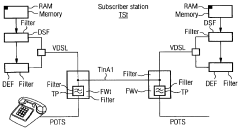
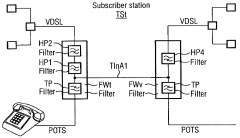
Combination conventional telephony and high-bit-rate digital channel transmission system comprising high pass filters which comprise both first order and second order high pass filters
PatentInactiveUS5982785A
Innovation
- The implementation of asymmetrical high-pass filtering on Cu double lead lines, where one side uses a high-pass filter of the 4th order and the other side uses a high-pass filter of the 1st or 2nd order, with a limit frequency adjusted to accommodate both high bit rate digital signals and conventional telephony, along with the option of integrating high-pass filters into digital transmission and reception filters.
Network system and vehicle
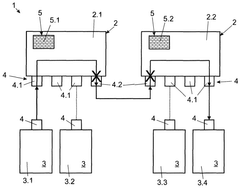
PatentWO2025002891A1
Innovation
- Implementing a network system where each network device filters data packets only once, with the option to filter early in the upstream network device connected to the destination, reducing overall latency and computing effort by eliminating redundant filtering across multiple switches.
HPF Performance Metrics
High Pass Filters (HPFs) play a crucial role in network systems, and their performance metrics are essential for understanding their impact on data latency. One of the primary metrics for HPF performance is the cutoff frequency, which determines the point at which the filter begins to attenuate lower frequency signals. A higher cutoff frequency allows more high-frequency components to pass through, potentially reducing latency but at the cost of signal integrity.
Another important metric is the filter order, which affects the steepness of the frequency response curve. Higher-order filters provide sharper cutoffs but may introduce more phase shift and group delay, potentially increasing overall latency. The trade-off between filter order and latency must be carefully considered in network system design.
The passband ripple is a key performance indicator that measures the variation in amplitude response within the passband. Lower ripple values indicate a more consistent response, which is crucial for maintaining signal quality and minimizing distortion-induced latency. Similarly, the stopband attenuation metric quantifies the filter's ability to reject unwanted low-frequency components, directly impacting the signal-to-noise ratio and, consequently, the system's latency performance.
Insertion loss is another critical metric, representing the reduction in signal power caused by the filter. Lower insertion loss is generally desirable, as it minimizes the need for additional amplification stages that could introduce further latency. The group delay, which measures the rate of change of phase with respect to frequency, is particularly relevant to latency considerations. A constant group delay across the passband is ideal for minimizing signal distortion and maintaining consistent latency characteristics.
The filter's impulse response is a comprehensive metric that provides insights into both the frequency domain and time domain behavior of the HPF. A shorter impulse response generally correlates with lower latency, as it indicates a faster settling time for the filter output. Additionally, the step response characteristics offer valuable information about the filter's transient behavior, which is crucial for understanding its impact on sudden changes in input signals and the resulting latency effects.
Finally, the filter's bandwidth and quality factor (Q) are interrelated metrics that influence its selectivity and latency performance. A wider bandwidth allows for faster signal transitions but may compromise frequency selectivity, while a higher Q factor provides better selectivity at the expense of potentially increased ringing and settling time. Balancing these metrics is essential for optimizing HPF performance in network systems where low latency is a critical requirement.
Another important metric is the filter order, which affects the steepness of the frequency response curve. Higher-order filters provide sharper cutoffs but may introduce more phase shift and group delay, potentially increasing overall latency. The trade-off between filter order and latency must be carefully considered in network system design.
The passband ripple is a key performance indicator that measures the variation in amplitude response within the passband. Lower ripple values indicate a more consistent response, which is crucial for maintaining signal quality and minimizing distortion-induced latency. Similarly, the stopband attenuation metric quantifies the filter's ability to reject unwanted low-frequency components, directly impacting the signal-to-noise ratio and, consequently, the system's latency performance.
Insertion loss is another critical metric, representing the reduction in signal power caused by the filter. Lower insertion loss is generally desirable, as it minimizes the need for additional amplification stages that could introduce further latency. The group delay, which measures the rate of change of phase with respect to frequency, is particularly relevant to latency considerations. A constant group delay across the passband is ideal for minimizing signal distortion and maintaining consistent latency characteristics.
The filter's impulse response is a comprehensive metric that provides insights into both the frequency domain and time domain behavior of the HPF. A shorter impulse response generally correlates with lower latency, as it indicates a faster settling time for the filter output. Additionally, the step response characteristics offer valuable information about the filter's transient behavior, which is crucial for understanding its impact on sudden changes in input signals and the resulting latency effects.
Finally, the filter's bandwidth and quality factor (Q) are interrelated metrics that influence its selectivity and latency performance. A wider bandwidth allows for faster signal transitions but may compromise frequency selectivity, while a higher Q factor provides better selectivity at the expense of potentially increased ringing and settling time. Balancing these metrics is essential for optimizing HPF performance in network systems where low latency is a critical requirement.
HPF Regulatory Compliance
High Pass Filters (HPFs) in network systems are subject to various regulatory compliance requirements to ensure their proper implementation and operation. These regulations are designed to maintain network integrity, data security, and overall system performance. Compliance with these standards is crucial for network operators and equipment manufacturers to ensure their products and services meet industry benchmarks and legal requirements.
One of the primary regulatory bodies overseeing HPF implementation is the Federal Communications Commission (FCC) in the United States. The FCC sets guidelines for electromagnetic compatibility (EMC) and radio frequency interference (RFI) in electronic devices, including network equipment utilizing HPFs. These regulations aim to minimize interference between different electronic systems and maintain the quality of communications.
In the European Union, the European Telecommunications Standards Institute (ETSI) plays a similar role in establishing standards for HPFs in network systems. ETSI's regulations focus on ensuring that HPFs meet specific performance criteria and do not introduce unacceptable levels of latency or signal distortion. Compliance with ETSI standards is essential for network equipment manufacturers seeking to enter the European market.
The International Telecommunication Union (ITU) also provides recommendations and standards for HPFs in network systems on a global scale. ITU-T recommendations, such as those in the G-series for transmission systems and media, often include specifications related to HPF implementation and their impact on data latency. These guidelines help ensure interoperability and consistent performance across different network infrastructures worldwide.
Regulatory compliance for HPFs extends beyond just technical specifications. Data protection regulations, such as the General Data Protection Regulation (GDPR) in the EU, indirectly impact HPF implementation by requiring network systems to maintain certain levels of data integrity and security. HPFs must be designed and implemented in a way that does not compromise these data protection requirements.
Network equipment manufacturers must also adhere to specific industry standards, such as those set by the Institute of Electrical and Electronics Engineers (IEEE). IEEE standards, particularly those in the 802 series for local and metropolitan area networks, often include requirements related to signal filtering and latency management, which directly impact HPF design and implementation.
Compliance testing and certification processes are integral to ensuring that HPFs meet regulatory requirements. Organizations like Underwriters Laboratories (UL) and TÜV provide testing and certification services to verify that network equipment, including HPFs, complies with relevant standards and regulations. These certifications are often mandatory for market entry in many countries and regions.
As technology evolves, regulatory frameworks for HPFs in network systems continue to adapt. Emerging technologies like 5G and Internet of Things (IoT) devices are driving the development of new standards and regulations. Network operators and equipment manufacturers must stay informed about these evolving requirements to ensure ongoing compliance and maintain their competitive edge in the market.
One of the primary regulatory bodies overseeing HPF implementation is the Federal Communications Commission (FCC) in the United States. The FCC sets guidelines for electromagnetic compatibility (EMC) and radio frequency interference (RFI) in electronic devices, including network equipment utilizing HPFs. These regulations aim to minimize interference between different electronic systems and maintain the quality of communications.
In the European Union, the European Telecommunications Standards Institute (ETSI) plays a similar role in establishing standards for HPFs in network systems. ETSI's regulations focus on ensuring that HPFs meet specific performance criteria and do not introduce unacceptable levels of latency or signal distortion. Compliance with ETSI standards is essential for network equipment manufacturers seeking to enter the European market.
The International Telecommunication Union (ITU) also provides recommendations and standards for HPFs in network systems on a global scale. ITU-T recommendations, such as those in the G-series for transmission systems and media, often include specifications related to HPF implementation and their impact on data latency. These guidelines help ensure interoperability and consistent performance across different network infrastructures worldwide.
Regulatory compliance for HPFs extends beyond just technical specifications. Data protection regulations, such as the General Data Protection Regulation (GDPR) in the EU, indirectly impact HPF implementation by requiring network systems to maintain certain levels of data integrity and security. HPFs must be designed and implemented in a way that does not compromise these data protection requirements.
Network equipment manufacturers must also adhere to specific industry standards, such as those set by the Institute of Electrical and Electronics Engineers (IEEE). IEEE standards, particularly those in the 802 series for local and metropolitan area networks, often include requirements related to signal filtering and latency management, which directly impact HPF design and implementation.
Compliance testing and certification processes are integral to ensuring that HPFs meet regulatory requirements. Organizations like Underwriters Laboratories (UL) and TÜV provide testing and certification services to verify that network equipment, including HPFs, complies with relevant standards and regulations. These certifications are often mandatory for market entry in many countries and regions.
As technology evolves, regulatory frameworks for HPFs in network systems continue to adapt. Emerging technologies like 5G and Internet of Things (IoT) devices are driving the development of new standards and regulations. Network operators and equipment manufacturers must stay informed about these evolving requirements to ensure ongoing compliance and maintain their competitive edge in the market.
Unlock deeper insights with PatSnap Eureka Quick Research — get a full tech report to explore trends and direct your research. Try now!
Generate Your Research Report Instantly with AI Agent
Supercharge your innovation with PatSnap Eureka AI Agent Platform!