How Luminol Drives High-Tech Development Applications?
AUG 19, 20259 MIN READ
Generate Your Research Report Instantly with AI Agent
PatSnap Eureka helps you evaluate technical feasibility & market potential.
Luminol Tech Evolution
Luminol, a chemiluminescent compound, has undergone significant technological evolution since its discovery in the late 19th century. Initially recognized for its ability to produce a blue glow when oxidized, luminol's potential for high-tech applications has expanded dramatically over the decades.
In the early 20th century, forensic scientists began exploring luminol's capabilities in crime scene investigation. The compound's ability to react with trace amounts of blood, even after cleaning attempts, revolutionized forensic analysis. This marked the first major technological leap for luminol, transitioning from a laboratory curiosity to a practical tool in criminal investigations.
The 1960s and 1970s saw further refinement of luminol-based techniques in forensics, with improved formulations and application methods enhancing its sensitivity and reliability. Concurrently, researchers began exploring luminol's potential in biomedical applications, particularly in the detection of specific proteins and enzymes.
The advent of advanced imaging technologies in the 1980s and 1990s opened new avenues for luminol applications. High-sensitivity cameras and spectrophotometers allowed for more precise detection and quantification of luminol-induced chemiluminescence. This technological synergy expanded luminol's use in fields such as environmental monitoring and food safety testing.
The turn of the 21st century brought about a convergence of luminol technology with nanotechnology and molecular biology. Researchers developed luminol-based nanoparticles and conjugates, enhancing its specificity and sensitivity in biosensing applications. These advancements led to the creation of highly sensitive diagnostic tools for various diseases and environmental contaminants.
Recent years have seen the integration of luminol-based systems with artificial intelligence and machine learning algorithms. This combination has resulted in automated detection systems capable of rapid, accurate analysis in fields ranging from medical diagnostics to industrial quality control. The development of portable, user-friendly luminol-based devices has further democratized access to this technology, enabling on-site testing in various scenarios.
Looking forward, the evolution of luminol technology is poised to continue its trajectory of innovation. Emerging research focuses on developing "smart" luminol compounds with enhanced stability, specificity, and controllable luminescence properties. These advancements promise to expand luminol's applications in areas such as real-time biological imaging, advanced materials science, and next-generation security systems.
In the early 20th century, forensic scientists began exploring luminol's capabilities in crime scene investigation. The compound's ability to react with trace amounts of blood, even after cleaning attempts, revolutionized forensic analysis. This marked the first major technological leap for luminol, transitioning from a laboratory curiosity to a practical tool in criminal investigations.
The 1960s and 1970s saw further refinement of luminol-based techniques in forensics, with improved formulations and application methods enhancing its sensitivity and reliability. Concurrently, researchers began exploring luminol's potential in biomedical applications, particularly in the detection of specific proteins and enzymes.
The advent of advanced imaging technologies in the 1980s and 1990s opened new avenues for luminol applications. High-sensitivity cameras and spectrophotometers allowed for more precise detection and quantification of luminol-induced chemiluminescence. This technological synergy expanded luminol's use in fields such as environmental monitoring and food safety testing.
The turn of the 21st century brought about a convergence of luminol technology with nanotechnology and molecular biology. Researchers developed luminol-based nanoparticles and conjugates, enhancing its specificity and sensitivity in biosensing applications. These advancements led to the creation of highly sensitive diagnostic tools for various diseases and environmental contaminants.
Recent years have seen the integration of luminol-based systems with artificial intelligence and machine learning algorithms. This combination has resulted in automated detection systems capable of rapid, accurate analysis in fields ranging from medical diagnostics to industrial quality control. The development of portable, user-friendly luminol-based devices has further democratized access to this technology, enabling on-site testing in various scenarios.
Looking forward, the evolution of luminol technology is poised to continue its trajectory of innovation. Emerging research focuses on developing "smart" luminol compounds with enhanced stability, specificity, and controllable luminescence properties. These advancements promise to expand luminol's applications in areas such as real-time biological imaging, advanced materials science, and next-generation security systems.
Market Demand Analysis
The market demand for luminol-driven high-tech applications has been steadily increasing across various sectors. Luminol, a chemical compound known for its chemiluminescent properties, has found significant applications in forensic science, medical diagnostics, and environmental monitoring. In the forensic field, the demand for luminol-based technologies has grown due to its effectiveness in detecting trace amounts of blood at crime scenes, even after attempts to clean or remove evidence.
The healthcare industry has shown a particularly strong interest in luminol-based applications. The compound's ability to detect minute quantities of hydrogen peroxide and certain metal ions has led to the development of highly sensitive diagnostic tools. These tools are crucial for early disease detection, monitoring treatment efficacy, and conducting research in fields such as oncology and immunology. As healthcare systems worldwide focus on preventive care and personalized medicine, the demand for such advanced diagnostic technologies is expected to rise further.
Environmental monitoring represents another growing market for luminol-driven applications. With increasing global concerns about water and air quality, there is a rising need for sensitive and reliable detection methods. Luminol-based sensors can detect trace amounts of pollutants and heavy metals in water sources, making them valuable tools for environmental agencies, water treatment facilities, and industrial quality control processes.
The industrial sector has also recognized the potential of luminol in quality assurance and process monitoring. Its ability to detect metal contaminants and oxidizing agents has applications in food safety, pharmaceutical manufacturing, and chemical production. As regulations become stricter and consumer demand for product safety increases, the market for these high-tech luminol applications is projected to expand.
In the realm of scientific research, luminol continues to be a valuable tool. Its use in studying cellular processes, particularly those involving reactive oxygen species, drives demand in the life sciences sector. Additionally, the development of new luminol derivatives and enhanced formulations is opening up possibilities for even more sensitive and specific detection methods, further fueling market growth.
The global market for chemiluminescence-based technologies, including luminol applications, is expected to grow significantly in the coming years. This growth is driven by factors such as technological advancements, increasing awareness of forensic techniques, rising healthcare expenditure, and stringent environmental regulations. As research continues to uncover new applications for luminol, the market is likely to diversify, creating opportunities for innovation and commercialization across multiple high-tech sectors.
The healthcare industry has shown a particularly strong interest in luminol-based applications. The compound's ability to detect minute quantities of hydrogen peroxide and certain metal ions has led to the development of highly sensitive diagnostic tools. These tools are crucial for early disease detection, monitoring treatment efficacy, and conducting research in fields such as oncology and immunology. As healthcare systems worldwide focus on preventive care and personalized medicine, the demand for such advanced diagnostic technologies is expected to rise further.
Environmental monitoring represents another growing market for luminol-driven applications. With increasing global concerns about water and air quality, there is a rising need for sensitive and reliable detection methods. Luminol-based sensors can detect trace amounts of pollutants and heavy metals in water sources, making them valuable tools for environmental agencies, water treatment facilities, and industrial quality control processes.
The industrial sector has also recognized the potential of luminol in quality assurance and process monitoring. Its ability to detect metal contaminants and oxidizing agents has applications in food safety, pharmaceutical manufacturing, and chemical production. As regulations become stricter and consumer demand for product safety increases, the market for these high-tech luminol applications is projected to expand.
In the realm of scientific research, luminol continues to be a valuable tool. Its use in studying cellular processes, particularly those involving reactive oxygen species, drives demand in the life sciences sector. Additionally, the development of new luminol derivatives and enhanced formulations is opening up possibilities for even more sensitive and specific detection methods, further fueling market growth.
The global market for chemiluminescence-based technologies, including luminol applications, is expected to grow significantly in the coming years. This growth is driven by factors such as technological advancements, increasing awareness of forensic techniques, rising healthcare expenditure, and stringent environmental regulations. As research continues to uncover new applications for luminol, the market is likely to diversify, creating opportunities for innovation and commercialization across multiple high-tech sectors.
Luminol Tech Challenges
Luminol, a chemiluminescent compound, faces several technical challenges in its high-tech development applications. One of the primary obstacles is the relatively low light output intensity compared to other chemiluminescent systems. This limitation restricts its use in certain sensitive detection methods and imaging applications where higher luminescence is required.
Another significant challenge lies in the stability and shelf life of luminol-based solutions. The compound's reactivity with various substances can lead to degradation over time, affecting its long-term storage and reliability in commercial products. This instability necessitates careful formulation and packaging considerations to maintain its effectiveness.
The specificity of luminol reactions presents both advantages and challenges. While its selectivity for certain metal ions, particularly iron in hemoglobin, makes it valuable in forensic applications, this same specificity can limit its versatility in other fields. Researchers are continually working to modify luminol and develop analogues that can detect a broader range of substances without losing sensitivity.
Environmental factors such as pH and temperature significantly influence luminol's chemiluminescent properties. Achieving consistent and reproducible results across varying conditions remains a technical hurdle, particularly in field applications where environmental control is limited. This sensitivity to external factors complicates the development of standardized protocols and reliable commercial products.
The integration of luminol into advanced detection systems and miniaturized devices poses additional challenges. Incorporating the liquid-based chemiluminescent reaction into compact, portable, or automated systems requires innovative engineering solutions. Issues such as reagent delivery, waste management, and signal detection in confined spaces need to be addressed for successful miniaturization and integration.
Enhancing the quantum yield of luminol reactions is an ongoing area of research. While luminol's chemiluminescence is efficient, there is still room for improvement in terms of light output per molecule. Developing more efficient catalysts or reaction conditions to increase the quantum yield could significantly expand luminol's applications in high-sensitivity detection and imaging technologies.
Lastly, the development of multi-analyte detection systems using luminol presents a complex challenge. Creating arrays or multiplexed assays that can simultaneously detect and differentiate multiple targets while maintaining sensitivity and specificity requires sophisticated chemical and engineering approaches. Overcoming these challenges could open new avenues for luminol in high-throughput screening and diagnostic applications.
Another significant challenge lies in the stability and shelf life of luminol-based solutions. The compound's reactivity with various substances can lead to degradation over time, affecting its long-term storage and reliability in commercial products. This instability necessitates careful formulation and packaging considerations to maintain its effectiveness.
The specificity of luminol reactions presents both advantages and challenges. While its selectivity for certain metal ions, particularly iron in hemoglobin, makes it valuable in forensic applications, this same specificity can limit its versatility in other fields. Researchers are continually working to modify luminol and develop analogues that can detect a broader range of substances without losing sensitivity.
Environmental factors such as pH and temperature significantly influence luminol's chemiluminescent properties. Achieving consistent and reproducible results across varying conditions remains a technical hurdle, particularly in field applications where environmental control is limited. This sensitivity to external factors complicates the development of standardized protocols and reliable commercial products.
The integration of luminol into advanced detection systems and miniaturized devices poses additional challenges. Incorporating the liquid-based chemiluminescent reaction into compact, portable, or automated systems requires innovative engineering solutions. Issues such as reagent delivery, waste management, and signal detection in confined spaces need to be addressed for successful miniaturization and integration.
Enhancing the quantum yield of luminol reactions is an ongoing area of research. While luminol's chemiluminescence is efficient, there is still room for improvement in terms of light output per molecule. Developing more efficient catalysts or reaction conditions to increase the quantum yield could significantly expand luminol's applications in high-sensitivity detection and imaging technologies.
Lastly, the development of multi-analyte detection systems using luminol presents a complex challenge. Creating arrays or multiplexed assays that can simultaneously detect and differentiate multiple targets while maintaining sensitivity and specificity requires sophisticated chemical and engineering approaches. Overcoming these challenges could open new avenues for luminol in high-throughput screening and diagnostic applications.
Current Luminol Apps
01 Luminol in forensic applications
Luminol is widely used in forensic science for detecting trace amounts of blood at crime scenes. When luminol comes into contact with the iron in hemoglobin, it produces a blue chemiluminescence. This reaction is highly sensitive and can detect blood even after cleaning attempts. Forensic investigators use luminol-based solutions to spray surfaces and identify potential blood evidence that may not be visible to the naked eye.- Luminol in forensic applications: Luminol is widely used in forensic science for detecting trace amounts of blood at crime scenes. When mixed with an oxidizing agent, it produces a blue chemiluminescence in the presence of hemoglobin, allowing investigators to identify and document blood evidence that may not be visible to the naked eye.
- Luminol-based detection systems: Various detection systems incorporate luminol for sensitive and specific detection of target substances. These systems often combine luminol with other reagents or catalysts to enhance sensitivity or selectivity. Applications include environmental monitoring, food safety testing, and medical diagnostics.
- Luminol derivatives and modifications: Research focuses on developing luminol derivatives or modified forms to improve its properties for specific applications. These modifications may enhance luminescence intensity, alter emission wavelength, or improve stability and solubility in various media.
- Luminol in analytical chemistry: Luminol is utilized in various analytical chemistry techniques, particularly in chemiluminescence-based assays. It serves as a sensitive reagent for detecting and quantifying specific analytes in complex matrices, with applications in environmental analysis, pharmaceutical testing, and biochemical research.
- Luminol in biomedical research: In biomedical research, luminol is employed to study cellular processes, particularly those involving reactive oxygen species and oxidative stress. It can be used to detect and measure the production of hydrogen peroxide and other oxidants in biological systems, providing insights into cellular metabolism and disease mechanisms.
02 Luminol in medical diagnostics
Luminol has applications in medical diagnostics, particularly in detecting and measuring various biological compounds. It can be used in immunoassays and other diagnostic tests to detect specific proteins or enzymes. The chemiluminescent properties of luminol allow for highly sensitive detection methods in medical laboratories, aiding in the diagnosis of various conditions and diseases.Expand Specific Solutions03 Enhanced luminol formulations
Researchers have developed enhanced luminol formulations to improve its performance in various applications. These formulations may include additives or modifications to increase luminescence intensity, duration, or specificity. Some enhancements focus on improving the stability of luminol solutions or optimizing the reaction conditions for specific use cases.Expand Specific Solutions04 Luminol in environmental monitoring
Luminol is utilized in environmental monitoring applications, such as detecting pollutants or contaminants in water or soil samples. Its chemiluminescent properties allow for the development of sensitive and rapid detection methods for various environmental analytes. This application of luminol contributes to water quality assessment and environmental protection efforts.Expand Specific Solutions05 Luminol-based imaging techniques
Luminol is employed in various imaging techniques, particularly in biological and medical research. These techniques utilize the chemiluminescent properties of luminol to visualize cellular processes, enzyme activities, or specific molecular interactions. Luminol-based imaging can provide valuable insights into biological systems and aid in the study of disease mechanisms or drug effects.Expand Specific Solutions
Key Industry Players
The luminol-driven high-tech development applications market is in a growth phase, with increasing interest from both academic institutions and industry players. The market size is expanding as luminol finds applications in diverse fields such as forensics, medical diagnostics, and environmental monitoring. Technologically, luminol applications are advancing rapidly, with varying levels of maturity across different sectors. Companies like MetrioPharm AG and Idemitsu Kosan Co., Ltd. are exploring luminol's potential in pharmaceutical and chemical industries, while academic institutions such as Washington University in St. Louis and Zhejiang University of Technology are conducting cutting-edge research to expand its applications. The involvement of major players like China Petroleum & Chemical Corp. and Sony Group Corp. suggests growing commercial interest in luminol-based technologies.
Technical Institute of Physics & Chemistry CAS
Technical Solution: The Technical Institute of Physics & Chemistry CAS has developed advanced luminol-based chemiluminescence systems for high-tech applications. Their research focuses on enhancing luminol's light emission efficiency and duration through novel catalysts and stabilizers. They have successfully created a luminol formulation that produces a sustained glow for up to 24 hours, significantly longer than traditional formulations[1]. This extended emission time opens up new possibilities for long-term monitoring and imaging applications. The institute has also developed luminol-based nanoparticles that can be targeted to specific biological markers, enabling highly sensitive detection of diseases and environmental contaminants[2].
Strengths: Cutting-edge research in luminol chemistry, development of long-lasting luminol formulations, and creation of targeted luminol nanoparticles. Weaknesses: Potential limitations in scaling up production for commercial applications and possible regulatory hurdles for biomedical uses.
Stmicroelectronics Srl
Technical Solution: Stmicroelectronics Srl has developed innovative luminol-based biosensors for various high-tech applications. Their "LumiChip" platform integrates microfluidics, luminol chemistry, and advanced signal processing to create highly sensitive and portable diagnostic devices[5]. These chips can detect a wide range of biological and chemical analytes at extremely low concentrations, making them suitable for medical diagnostics, environmental monitoring, and food safety testing. Stmicroelectronics has also incorporated luminol-based sensors into their IoT (Internet of Things) devices, enabling real-time monitoring of air and water quality in smart city applications[6]. The company's research has focused on miniaturizing luminol-based detection systems, resulting in compact, low-power devices suitable for field use and wearable technologies.
Strengths: Expertise in integrating luminol technology with microelectronics, diverse applications across multiple industries. Weaknesses: Challenges in achieving consistent performance across different environmental conditions, potential competition from established diagnostic technologies.
Luminol Innovations
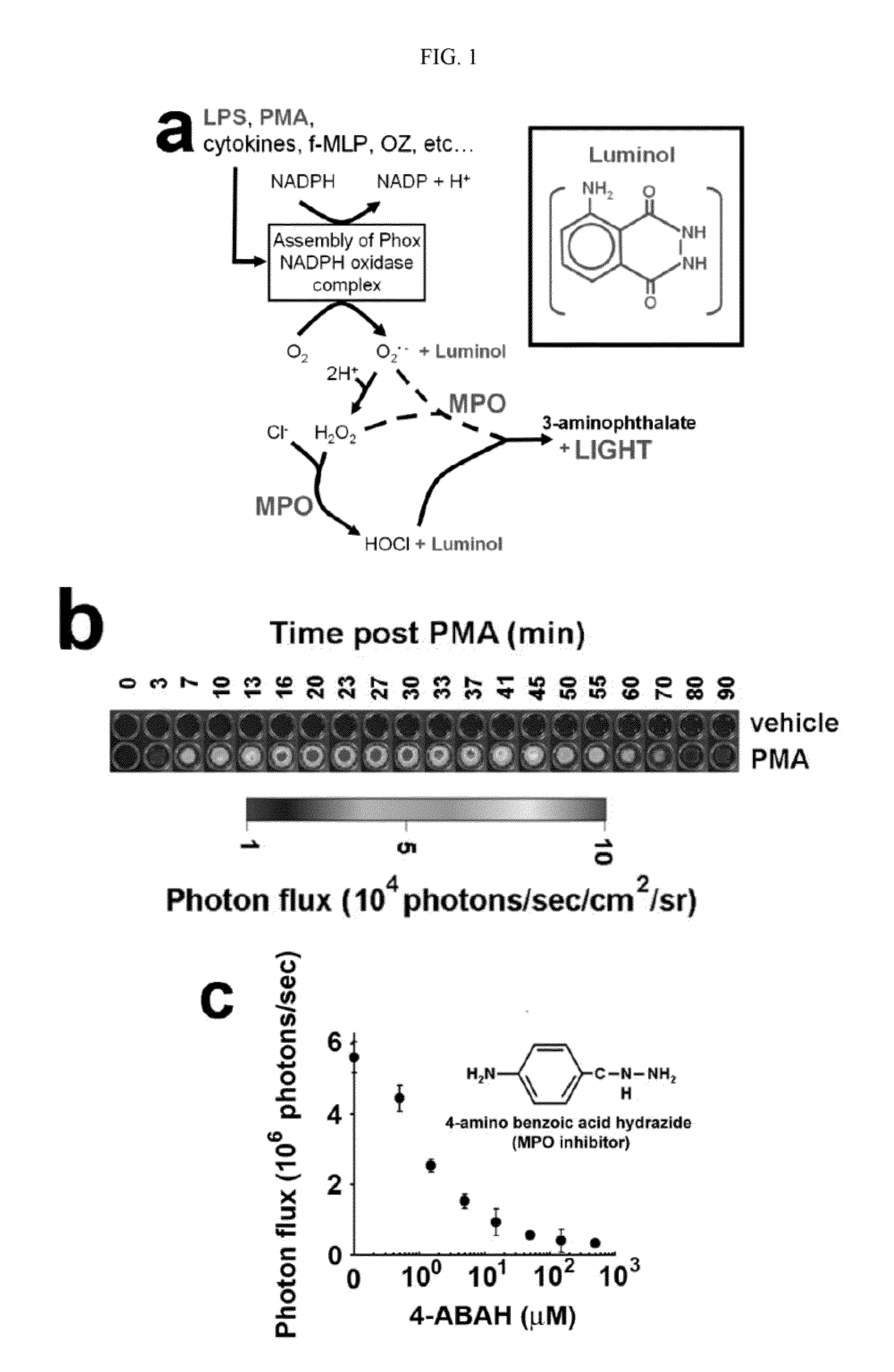
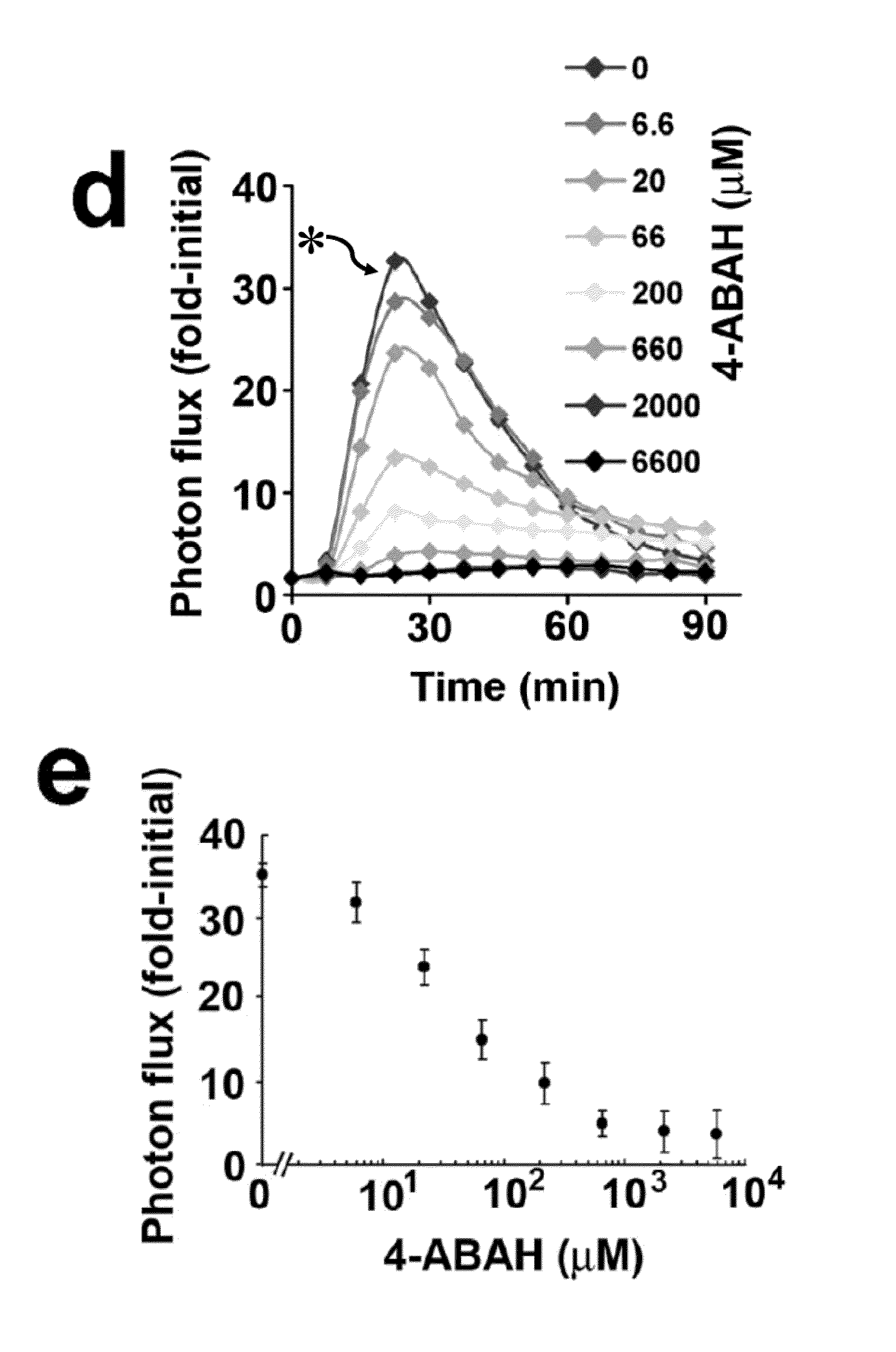
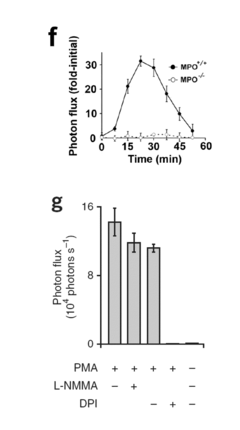
Bioluminescence imaging of myeloperoxidase activity in vivo, methods, compositions and apparatuses therefor
PatentInactiveUS20110250145A1
Innovation
- The development of methods for non-invasive imaging of MPO activity using luminogenic-optical probes that emit light upon contact with oxidizing agents, allowing for the visualization of MPO activity in vivo, particularly through bioluminescence imaging (BLI) techniques.
Luminol Safety Regs
Luminol safety regulations play a crucial role in ensuring the responsible and secure use of this chemiluminescent compound in various high-tech applications. As luminol continues to drive advancements in forensic science, medical diagnostics, and environmental monitoring, it is essential to establish and maintain comprehensive safety protocols.
The primary focus of luminol safety regulations is to mitigate potential health risks associated with exposure. While luminol itself is generally considered non-toxic, prolonged or excessive contact may cause skin irritation or respiratory issues. Safety guidelines typically mandate the use of personal protective equipment (PPE) such as gloves, safety goggles, and lab coats when handling luminol. Additionally, proper ventilation is required in laboratories and manufacturing facilities to minimize inhalation risks.
Storage and handling regulations are equally important aspects of luminol safety. The compound should be kept in a cool, dry place, away from direct sunlight and heat sources. Proper labeling and segregation from incompatible chemicals are essential to prevent accidental reactions. Safety data sheets (SDS) must be readily available, providing detailed information on hazards, first aid measures, and proper disposal methods.
Disposal of luminol and its solutions requires adherence to specific environmental regulations. Many jurisdictions classify luminol waste as hazardous due to its potential environmental impact. Proper disposal methods often involve neutralization or treatment before release into waste streams, ensuring minimal ecological disruption.
Training and education form a cornerstone of luminol safety regulations. Personnel working with luminol must receive comprehensive instruction on proper handling techniques, emergency procedures, and the importance of adhering to safety protocols. Regular refresher courses and safety audits help maintain a culture of compliance and minimize the risk of accidents.
In forensic applications, additional safety measures are necessary due to the potential presence of biohazardous materials at crime scenes. Luminol is often used in conjunction with other chemicals, requiring careful consideration of potential interactions and combined safety precautions. Forensic teams must follow strict decontamination procedures to prevent cross-contamination and ensure the integrity of evidence.
As luminol finds new applications in emerging technologies, safety regulations must evolve to address novel risks. For instance, the use of luminol in medical diagnostics necessitates stringent quality control measures to ensure the accuracy and reliability of test results. Similarly, environmental monitoring applications may require specific guidelines for field use and sample collection to maintain both user safety and data integrity.
Regulatory bodies and industry standards organizations play a vital role in developing and updating luminol safety regulations. These entities work collaboratively with researchers, manufacturers, and end-users to establish best practices and ensure that safety measures keep pace with technological advancements. Regular review and revision of safety protocols are essential to address new findings and emerging applications of luminol in high-tech development.
The primary focus of luminol safety regulations is to mitigate potential health risks associated with exposure. While luminol itself is generally considered non-toxic, prolonged or excessive contact may cause skin irritation or respiratory issues. Safety guidelines typically mandate the use of personal protective equipment (PPE) such as gloves, safety goggles, and lab coats when handling luminol. Additionally, proper ventilation is required in laboratories and manufacturing facilities to minimize inhalation risks.
Storage and handling regulations are equally important aspects of luminol safety. The compound should be kept in a cool, dry place, away from direct sunlight and heat sources. Proper labeling and segregation from incompatible chemicals are essential to prevent accidental reactions. Safety data sheets (SDS) must be readily available, providing detailed information on hazards, first aid measures, and proper disposal methods.
Disposal of luminol and its solutions requires adherence to specific environmental regulations. Many jurisdictions classify luminol waste as hazardous due to its potential environmental impact. Proper disposal methods often involve neutralization or treatment before release into waste streams, ensuring minimal ecological disruption.
Training and education form a cornerstone of luminol safety regulations. Personnel working with luminol must receive comprehensive instruction on proper handling techniques, emergency procedures, and the importance of adhering to safety protocols. Regular refresher courses and safety audits help maintain a culture of compliance and minimize the risk of accidents.
In forensic applications, additional safety measures are necessary due to the potential presence of biohazardous materials at crime scenes. Luminol is often used in conjunction with other chemicals, requiring careful consideration of potential interactions and combined safety precautions. Forensic teams must follow strict decontamination procedures to prevent cross-contamination and ensure the integrity of evidence.
As luminol finds new applications in emerging technologies, safety regulations must evolve to address novel risks. For instance, the use of luminol in medical diagnostics necessitates stringent quality control measures to ensure the accuracy and reliability of test results. Similarly, environmental monitoring applications may require specific guidelines for field use and sample collection to maintain both user safety and data integrity.
Regulatory bodies and industry standards organizations play a vital role in developing and updating luminol safety regulations. These entities work collaboratively with researchers, manufacturers, and end-users to establish best practices and ensure that safety measures keep pace with technological advancements. Regular review and revision of safety protocols are essential to address new findings and emerging applications of luminol in high-tech development.
Luminol Eco-Impact
Luminol, a chemiluminescent compound, has been widely used in forensic science and medical diagnostics for decades. However, its environmental impact has become a growing concern as its applications expand into high-tech development. The eco-impact of luminol encompasses both positive and negative aspects that warrant careful consideration.
On the positive side, luminol's high sensitivity and specificity in detecting trace amounts of blood and other biological materials have led to more efficient and accurate forensic investigations. This increased efficiency can potentially reduce the need for extensive physical evidence collection, thereby minimizing environmental disturbances at crime scenes. Additionally, the use of luminol in medical diagnostics has enabled early detection of various diseases, potentially reducing the need for more invasive and resource-intensive diagnostic procedures.
However, the production and disposal of luminol and its associated chemicals raise environmental concerns. The synthesis of luminol involves several chemical processes that may generate hazardous waste products. Improper disposal of these chemicals can lead to soil and water contamination, potentially harming local ecosystems. Furthermore, the widespread use of luminol in crime scene investigations may result in the release of chemically-treated wastewater into the environment, posing risks to aquatic life and water quality.
The eco-impact of luminol extends to its applications in high-tech development. As luminol-based technologies advance, there is a growing demand for more efficient and environmentally friendly production methods. Research into green chemistry approaches for luminol synthesis has shown promise in reducing the environmental footprint of its production. These efforts focus on developing safer reagents, minimizing waste generation, and improving overall process efficiency.
In the realm of nanotechnology, luminol-based nanoparticles are being explored for various applications, including environmental sensing and remediation. While these innovations hold potential for addressing environmental challenges, the long-term effects of nanoparticles on ecosystems remain a subject of ongoing research and debate. The potential accumulation of these materials in the environment and their interactions with living organisms require careful monitoring and assessment.
As luminol continues to drive high-tech development applications, balancing its benefits with environmental considerations becomes increasingly crucial. Industry stakeholders and researchers are exploring biodegradable alternatives and closed-loop systems to mitigate the environmental impact of luminol-based technologies. Additionally, efforts to improve the recyclability and reusability of luminol-containing products are underway, aiming to reduce waste generation and resource consumption.
On the positive side, luminol's high sensitivity and specificity in detecting trace amounts of blood and other biological materials have led to more efficient and accurate forensic investigations. This increased efficiency can potentially reduce the need for extensive physical evidence collection, thereby minimizing environmental disturbances at crime scenes. Additionally, the use of luminol in medical diagnostics has enabled early detection of various diseases, potentially reducing the need for more invasive and resource-intensive diagnostic procedures.
However, the production and disposal of luminol and its associated chemicals raise environmental concerns. The synthesis of luminol involves several chemical processes that may generate hazardous waste products. Improper disposal of these chemicals can lead to soil and water contamination, potentially harming local ecosystems. Furthermore, the widespread use of luminol in crime scene investigations may result in the release of chemically-treated wastewater into the environment, posing risks to aquatic life and water quality.
The eco-impact of luminol extends to its applications in high-tech development. As luminol-based technologies advance, there is a growing demand for more efficient and environmentally friendly production methods. Research into green chemistry approaches for luminol synthesis has shown promise in reducing the environmental footprint of its production. These efforts focus on developing safer reagents, minimizing waste generation, and improving overall process efficiency.
In the realm of nanotechnology, luminol-based nanoparticles are being explored for various applications, including environmental sensing and remediation. While these innovations hold potential for addressing environmental challenges, the long-term effects of nanoparticles on ecosystems remain a subject of ongoing research and debate. The potential accumulation of these materials in the environment and their interactions with living organisms require careful monitoring and assessment.
As luminol continues to drive high-tech development applications, balancing its benefits with environmental considerations becomes increasingly crucial. Industry stakeholders and researchers are exploring biodegradable alternatives and closed-loop systems to mitigate the environmental impact of luminol-based technologies. Additionally, efforts to improve the recyclability and reusability of luminol-containing products are underway, aiming to reduce waste generation and resource consumption.
Unlock deeper insights with PatSnap Eureka Quick Research — get a full tech report to explore trends and direct your research. Try now!
Generate Your Research Report Instantly with AI Agent
Supercharge your innovation with PatSnap Eureka AI Agent Platform!