

How Model Predictive Control Improves District Heating Networks
SEP 5, 20259 MIN READ
Generate Your Research Report Instantly with AI Agent
PatSnap Eureka helps you evaluate technical feasibility & market potential.
MPC in District Heating: Background and Objectives
District heating networks (DHNs) have evolved significantly since their inception in the late 19th century. Initially designed as simple systems to distribute heat from a central source to nearby buildings, modern DHNs have transformed into complex, interconnected infrastructures serving entire urban areas. The technological evolution of these systems has been driven by increasing demands for energy efficiency, environmental sustainability, and operational cost reduction.
Model Predictive Control (MPC) represents a pivotal advancement in the control strategies for DHNs. Unlike traditional control methods that react to immediate conditions, MPC employs mathematical models to predict system behavior over a finite time horizon, optimizing control decisions based on these predictions. This approach emerged in the 1970s in process industries but has only recently been applied to district heating systems due to increasing computational capabilities and the growing complexity of energy networks.
The primary objective of implementing MPC in district heating networks is to achieve optimal balance between energy efficiency, operational costs, and user comfort. By anticipating future demand patterns, weather conditions, and system dynamics, MPC can proactively adjust heat production and distribution parameters, resulting in significant improvements in overall system performance.
Current technological trends in this field include the integration of renewable energy sources into DHNs, the development of low-temperature networks, and the implementation of smart grid concepts. These trends necessitate more sophisticated control strategies capable of handling variable energy inputs, diverse consumer demands, and complex operational constraints – challenges that MPC is uniquely positioned to address.
The evolution of MPC in district heating is closely tied to advancements in computational methods, sensor technologies, and data analytics. Early implementations were limited by computational constraints and model inaccuracies, but recent developments in machine learning and big data analytics have enhanced the predictive capabilities of these systems, enabling more accurate forecasting of heat demand and network behavior.
Looking forward, the technical goals for MPC in district heating include reducing primary energy consumption by 15-30%, decreasing carbon emissions by up to 25%, and improving overall system resilience against supply disruptions and extreme weather events. Additionally, there is a growing focus on developing more adaptive MPC algorithms capable of self-learning and continuous optimization in response to changing network conditions and operational requirements.
Model Predictive Control (MPC) represents a pivotal advancement in the control strategies for DHNs. Unlike traditional control methods that react to immediate conditions, MPC employs mathematical models to predict system behavior over a finite time horizon, optimizing control decisions based on these predictions. This approach emerged in the 1970s in process industries but has only recently been applied to district heating systems due to increasing computational capabilities and the growing complexity of energy networks.
The primary objective of implementing MPC in district heating networks is to achieve optimal balance between energy efficiency, operational costs, and user comfort. By anticipating future demand patterns, weather conditions, and system dynamics, MPC can proactively adjust heat production and distribution parameters, resulting in significant improvements in overall system performance.
Current technological trends in this field include the integration of renewable energy sources into DHNs, the development of low-temperature networks, and the implementation of smart grid concepts. These trends necessitate more sophisticated control strategies capable of handling variable energy inputs, diverse consumer demands, and complex operational constraints – challenges that MPC is uniquely positioned to address.
The evolution of MPC in district heating is closely tied to advancements in computational methods, sensor technologies, and data analytics. Early implementations were limited by computational constraints and model inaccuracies, but recent developments in machine learning and big data analytics have enhanced the predictive capabilities of these systems, enabling more accurate forecasting of heat demand and network behavior.
Looking forward, the technical goals for MPC in district heating include reducing primary energy consumption by 15-30%, decreasing carbon emissions by up to 25%, and improving overall system resilience against supply disruptions and extreme weather events. Additionally, there is a growing focus on developing more adaptive MPC algorithms capable of self-learning and continuous optimization in response to changing network conditions and operational requirements.
Market Analysis of Smart District Heating Solutions
The global smart district heating market is experiencing significant growth, driven by increasing energy efficiency demands and sustainability goals. Currently valued at approximately $7.5 billion, this market is projected to reach $12.3 billion by 2027, representing a compound annual growth rate of 10.4%. This growth is particularly pronounced in regions with established district heating infrastructure, such as Northern Europe, where countries like Denmark, Finland, and Sweden lead adoption rates with market penetration exceeding 60% in urban areas.
The demand for Model Predictive Control (MPC) solutions in district heating networks is primarily driven by three key factors. First, regulatory pressures and carbon reduction targets are compelling energy providers to optimize their heating systems. The European Union's Energy Efficiency Directive and various national climate policies have established concrete targets for reducing emissions from heating systems, creating a regulatory environment favorable to advanced control solutions.
Second, economic considerations are becoming increasingly important as energy prices continue to rise. District heating operators are seeking solutions that can reduce operational costs while maintaining or improving service quality. MPC systems have demonstrated potential for 15-25% energy savings compared to conventional control methods, representing significant operational cost reductions for large-scale networks.
Third, technological advancements in IoT, big data analytics, and cloud computing have created an ecosystem where MPC solutions can be effectively implemented and scaled. The decreasing cost of sensors, improved communication protocols, and greater computational capabilities have removed many of the historical barriers to adoption.
Market segmentation reveals distinct customer groups with varying needs. Large municipal utilities and energy companies represent the primary market segment, accounting for approximately 65% of current demand. These organizations typically operate extensive networks serving tens of thousands of buildings and possess the technical capabilities to implement complex control systems. Medium-sized district heating operators constitute about 25% of the market, while smaller community-based systems and new developments make up the remaining 10%.
Customer pain points primarily revolve around implementation complexity, integration with legacy systems, and initial investment costs. Despite proven long-term benefits, the upfront costs of MPC implementation—including hardware upgrades, software licensing, and system integration—can range from $100,000 for small networks to several million dollars for large metropolitan systems. This represents a significant barrier, particularly for smaller operators with limited capital expenditure budgets.
The demand for Model Predictive Control (MPC) solutions in district heating networks is primarily driven by three key factors. First, regulatory pressures and carbon reduction targets are compelling energy providers to optimize their heating systems. The European Union's Energy Efficiency Directive and various national climate policies have established concrete targets for reducing emissions from heating systems, creating a regulatory environment favorable to advanced control solutions.
Second, economic considerations are becoming increasingly important as energy prices continue to rise. District heating operators are seeking solutions that can reduce operational costs while maintaining or improving service quality. MPC systems have demonstrated potential for 15-25% energy savings compared to conventional control methods, representing significant operational cost reductions for large-scale networks.
Third, technological advancements in IoT, big data analytics, and cloud computing have created an ecosystem where MPC solutions can be effectively implemented and scaled. The decreasing cost of sensors, improved communication protocols, and greater computational capabilities have removed many of the historical barriers to adoption.
Market segmentation reveals distinct customer groups with varying needs. Large municipal utilities and energy companies represent the primary market segment, accounting for approximately 65% of current demand. These organizations typically operate extensive networks serving tens of thousands of buildings and possess the technical capabilities to implement complex control systems. Medium-sized district heating operators constitute about 25% of the market, while smaller community-based systems and new developments make up the remaining 10%.
Customer pain points primarily revolve around implementation complexity, integration with legacy systems, and initial investment costs. Despite proven long-term benefits, the upfront costs of MPC implementation—including hardware upgrades, software licensing, and system integration—can range from $100,000 for small networks to several million dollars for large metropolitan systems. This represents a significant barrier, particularly for smaller operators with limited capital expenditure budgets.
Technical Challenges in District Heating Control Systems
District heating control systems face numerous technical challenges that impede optimal performance and efficiency. Traditional control methods rely on fixed temperature setpoints and simple feedback loops, which cannot effectively handle the complex dynamics of large-scale heating networks. These conventional approaches fail to account for thermal inertia, resulting in significant time delays between control actions and system responses, often leading to oscillations and instability in temperature regulation.
The variable heat demand patterns across different buildings and zones present another major challenge. Consumer behavior is inherently unpredictable, with demand fluctuations occurring throughout the day and across seasons. Current systems struggle to anticipate these changes, resulting in either overheating or insufficient heating during transition periods, particularly in morning ramp-up or evening setback scenarios.
Network complexity compounds these difficulties, as district heating systems typically consist of interconnected pipes spanning several kilometers with multiple supply and return branches. This physical layout creates hydraulic imbalances and uneven heat distribution, with distant consumers often experiencing inadequate service quality compared to those closer to heat generation plants. The complexity makes it extremely difficult to maintain consistent pressure and temperature throughout the entire network.
Weather dependency introduces additional variability that conventional control systems cannot adequately address. Outdoor temperature fluctuations, solar gains, and wind conditions significantly impact heating requirements, yet traditional reactive control approaches cannot incorporate weather forecasts into their operational strategies, resulting in delayed responses to changing environmental conditions.
Energy efficiency remains a persistent challenge, with substantial heat losses occurring throughout distribution networks. Current control systems rarely optimize for minimal pumping energy or heat loss reduction, instead focusing primarily on meeting minimum temperature requirements regardless of efficiency implications. This approach leads to unnecessary energy consumption and increased operational costs.
Integration with renewable energy sources presents emerging technical hurdles. The intermittent nature of renewable generation creates supply-side variability that traditional control systems are not designed to accommodate. Without sophisticated prediction and optimization capabilities, systems cannot effectively utilize renewable heat sources or coordinate with electricity markets for combined heat and power operations.
Legacy infrastructure compatibility further complicates control system improvements. Many district heating networks operate with aging equipment that lacks modern sensors, actuators, or communication capabilities. Retrofitting these systems with advanced controls requires significant investment and careful integration strategies to avoid disrupting essential heating services.
The variable heat demand patterns across different buildings and zones present another major challenge. Consumer behavior is inherently unpredictable, with demand fluctuations occurring throughout the day and across seasons. Current systems struggle to anticipate these changes, resulting in either overheating or insufficient heating during transition periods, particularly in morning ramp-up or evening setback scenarios.
Network complexity compounds these difficulties, as district heating systems typically consist of interconnected pipes spanning several kilometers with multiple supply and return branches. This physical layout creates hydraulic imbalances and uneven heat distribution, with distant consumers often experiencing inadequate service quality compared to those closer to heat generation plants. The complexity makes it extremely difficult to maintain consistent pressure and temperature throughout the entire network.
Weather dependency introduces additional variability that conventional control systems cannot adequately address. Outdoor temperature fluctuations, solar gains, and wind conditions significantly impact heating requirements, yet traditional reactive control approaches cannot incorporate weather forecasts into their operational strategies, resulting in delayed responses to changing environmental conditions.
Energy efficiency remains a persistent challenge, with substantial heat losses occurring throughout distribution networks. Current control systems rarely optimize for minimal pumping energy or heat loss reduction, instead focusing primarily on meeting minimum temperature requirements regardless of efficiency implications. This approach leads to unnecessary energy consumption and increased operational costs.
Integration with renewable energy sources presents emerging technical hurdles. The intermittent nature of renewable generation creates supply-side variability that traditional control systems are not designed to accommodate. Without sophisticated prediction and optimization capabilities, systems cannot effectively utilize renewable heat sources or coordinate with electricity markets for combined heat and power operations.
Legacy infrastructure compatibility further complicates control system improvements. Many district heating networks operate with aging equipment that lacks modern sensors, actuators, or communication capabilities. Retrofitting these systems with advanced controls requires significant investment and careful integration strategies to avoid disrupting essential heating services.
Current MPC Implementation Approaches for DHN
01 Advanced optimization algorithms for MPC
Model Predictive Control (MPC) performance can be significantly enhanced through advanced optimization algorithms that improve computational efficiency and solution quality. These algorithms enable faster processing of complex control problems, allowing for real-time implementation in demanding applications. Techniques include improved mathematical solvers, parallel computing approaches, and specialized algorithms designed to handle constraints more effectively while maintaining control stability.- Advanced optimization algorithms for MPC: Model Predictive Control can be improved through advanced optimization algorithms that enhance computational efficiency and solution quality. These algorithms include novel mathematical approaches for solving complex control problems, reducing computational load, and improving convergence speed. By implementing these advanced optimization techniques, MPC systems can handle more complex models and constraints while maintaining real-time performance requirements.
- Integration of machine learning with MPC: Combining machine learning techniques with Model Predictive Control creates hybrid systems that can adapt to changing conditions and improve over time. These systems use data-driven approaches to refine predictive models, identify patterns, and optimize control parameters automatically. Machine learning integration enables MPC to handle non-linear systems more effectively and adapt to process variations without extensive manual retuning.
- Robust MPC for handling uncertainties: Robust Model Predictive Control frameworks address system uncertainties and disturbances by incorporating explicit uncertainty models into the control design. These approaches ensure stable operation despite model inaccuracies, external disturbances, or parameter variations. Robust MPC techniques include bounded uncertainty models, min-max formulations, and tube-based approaches that maintain control performance while guaranteeing constraint satisfaction under uncertain conditions.
- Distributed and hierarchical MPC architectures: Distributed and hierarchical Model Predictive Control architectures improve scalability and performance for large-scale systems. These approaches decompose complex control problems into smaller, more manageable subproblems that can be solved in parallel or at different time scales. By implementing coordinated control across multiple controllers, these architectures reduce computational complexity while maintaining overall system performance and constraint satisfaction.
- Real-time implementation techniques for MPC: Real-time implementation techniques for Model Predictive Control focus on reducing computational delays and ensuring timely control actions. These techniques include code optimization, hardware acceleration, efficient numerical methods, and approximation strategies that maintain control performance while meeting strict timing requirements. Advanced implementation approaches enable MPC to be applied to fast-dynamic systems where traditional implementations would be too slow.
02 Integration of machine learning with MPC
Combining machine learning techniques with Model Predictive Control creates adaptive systems that can improve performance over time. These hybrid approaches allow the control system to learn from operational data, adjust model parameters automatically, and better handle uncertainties or disturbances. Machine learning algorithms help identify patterns in system behavior that traditional modeling might miss, resulting in more robust control strategies and improved prediction accuracy.Expand Specific Solutions03 Robust MPC for handling uncertainties
Robust Model Predictive Control frameworks address system uncertainties and disturbances by incorporating explicit uncertainty models into the control formulation. These approaches ensure stability and performance even when the actual system behavior deviates from the nominal model. Methods include min-max optimization, tube-based MPC, and scenario-based approaches that consider multiple possible future trajectories, providing guaranteed performance bounds under specified uncertainty conditions.Expand Specific Solutions04 Distributed and hierarchical MPC architectures
Distributed and hierarchical Model Predictive Control architectures improve scalability and performance for large-scale systems by decomposing the control problem into smaller, more manageable sub-problems. These approaches enable coordination between multiple controllers while reducing computational complexity. Hierarchical structures organize controllers at different levels with varying time scales and objectives, while distributed architectures allow parallel computation with communication between local controllers to achieve global optimization goals.Expand Specific Solutions05 Economic and multi-objective MPC formulations
Economic and multi-objective Model Predictive Control formulations directly incorporate operational costs and multiple competing objectives into the control problem. Unlike traditional tracking MPC, these approaches optimize economic performance metrics such as energy consumption, production efficiency, or resource utilization while maintaining process constraints. This results in improved overall system efficiency by balancing control performance with operational economics in real-time decision making.Expand Specific Solutions
Leading Companies and Research Institutions in MPC
Model Predictive Control (MPC) in district heating networks is evolving rapidly, currently transitioning from early adoption to growth phase. The market is expanding significantly, projected to reach substantial value as energy efficiency demands increase globally. Technologically, MPC solutions show varying maturity levels across key players. Siemens AG and Johnson Controls lead with comprehensive commercial implementations, while academic institutions like Zhejiang University and North China Electric Power University drive fundamental research innovations. Companies such as Grundfos and State Grid Corp. of China are developing specialized applications for network optimization. Huaneng Clean Energy Research Institute and Brain4energy are advancing AI integration with MPC systems. The competitive landscape features both established industrial automation giants and emerging specialized technology providers, with collaboration between research institutions and industry partners accelerating practical implementations.
Zhejiang University
Technical Solution: Zhejiang University has developed a sophisticated MPC framework specifically designed for district heating networks in dense urban environments. Their approach combines thermal-hydraulic modeling with multi-objective optimization algorithms to balance energy efficiency, thermal comfort, and operational costs. The university's research team has created a novel distributed MPC architecture that divides large heating networks into manageable zones while maintaining global optimization through coordination algorithms. Their solution incorporates uncertainty quantification methods to handle the stochastic nature of weather conditions and user behavior, resulting in more robust control strategies. The system employs machine learning techniques to continuously refine thermal models of buildings and network components, improving prediction accuracy over time[5]. Field tests conducted in collaboration with municipal heating providers have demonstrated peak load reductions of 18% and overall energy savings of 12-15% compared to conventional control strategies, while maintaining or improving user comfort levels[6].
Strengths: Cutting-edge research incorporating the latest advances in distributed optimization and machine learning, strong focus on practical implementation challenges in existing networks, and comprehensive modeling of both hydraulic and thermal dynamics. Weaknesses: Less commercial deployment experience compared to industrial players, higher computational requirements for real-time implementation, and potential challenges in scaling to very large networks with thousands of substations.
Siemens AG
Technical Solution: Siemens AG has developed advanced Model Predictive Control (MPC) solutions for district heating networks that integrate multiple energy sources and optimize distribution efficiency. Their technology utilizes dynamic mathematical models to predict future system behavior across complex heating networks, allowing for proactive adjustments rather than reactive responses. Siemens' MPC implementation incorporates weather forecasting data, building thermal characteristics, and real-time energy pricing to optimize heat production and distribution schedules. The system employs a hierarchical control architecture with centralized optimization at the production level and distributed control at the substation level, enabling coordinated operation while maintaining local responsiveness[1]. Their solution has demonstrated energy savings of 15-25% in large-scale district heating implementations while reducing peak load requirements by intelligent load shifting and thermal storage utilization[3].
Strengths: Comprehensive integration with existing SCADA systems, proven scalability for large urban networks, and sophisticated multi-variable optimization algorithms that balance comfort, cost, and emissions. Weaknesses: Higher initial implementation costs compared to conventional control systems, requires significant system modeling effort, and depends on accurate forecasting data which may not always be available in all markets.
Key Algorithms and Mathematical Models for DHN Control
Urban heating system heating network regulating method and system based on mechanism model prediction control
PatentActiveCN105910169A
Innovation
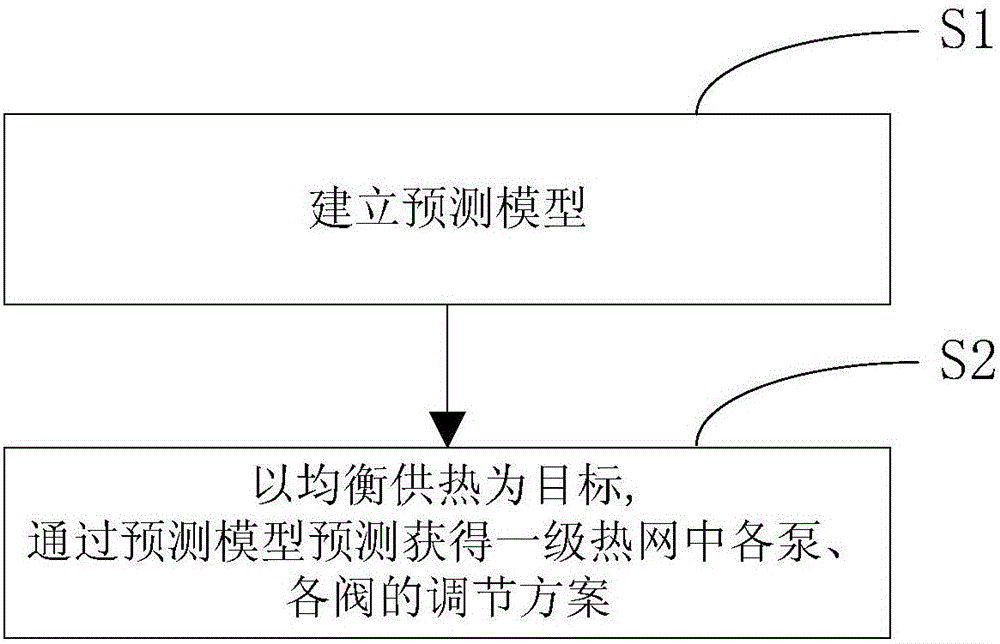
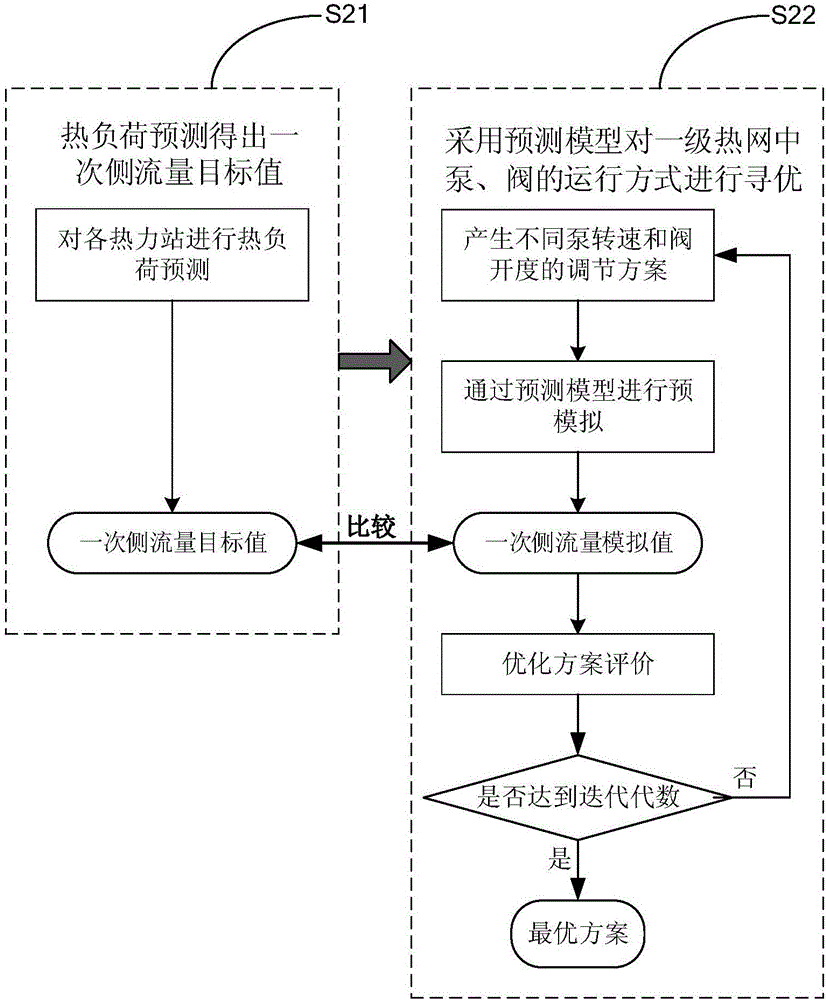
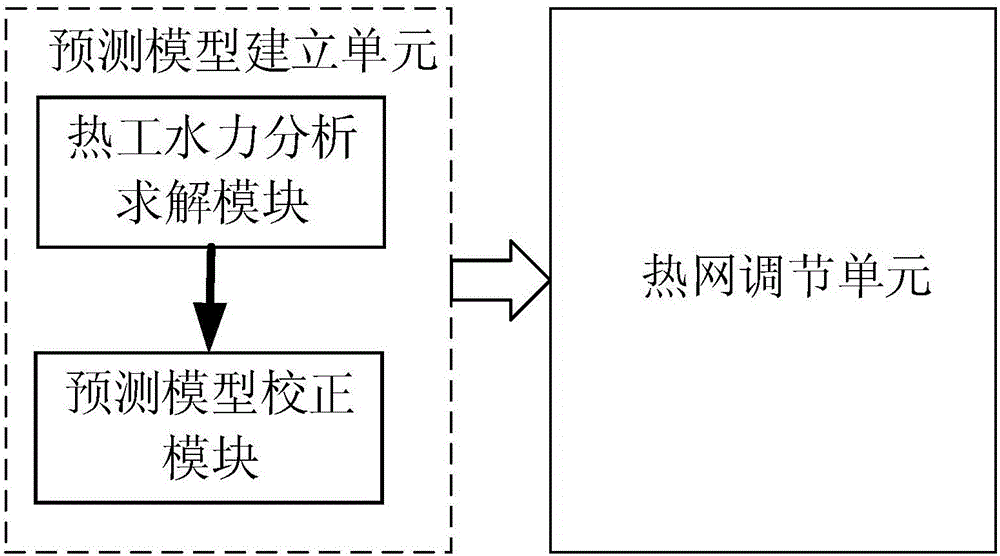
- Using the model predictive control method, a predictive model is established with the goal of balanced heating. Through thermal hydraulic analysis and predictive model correction, the resistance characteristic coefficient and hot water volume flow rate of the pipe network are calculated. Combined with the loop adjustment flow adjustment algorithm, the pump is optimized. and valve operation to achieve a balanced heat supply.

Bayesian network-based regional heat supply model predictive control system and method
PatentActiveCN109270842A
Innovation
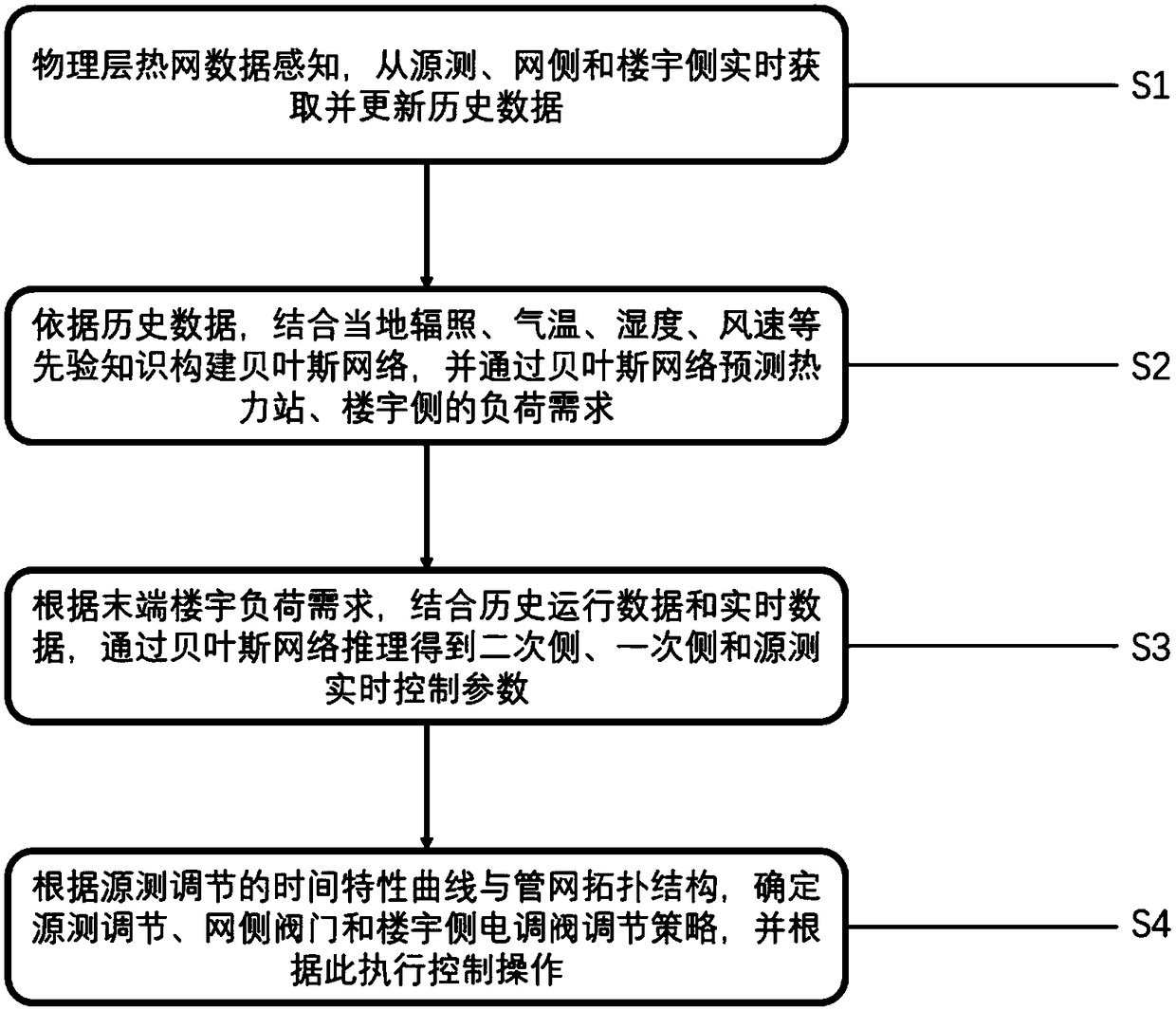
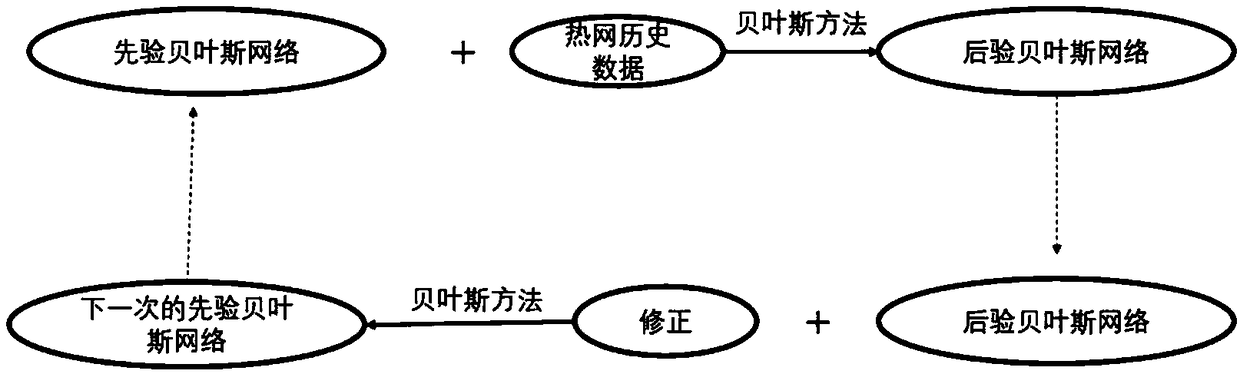
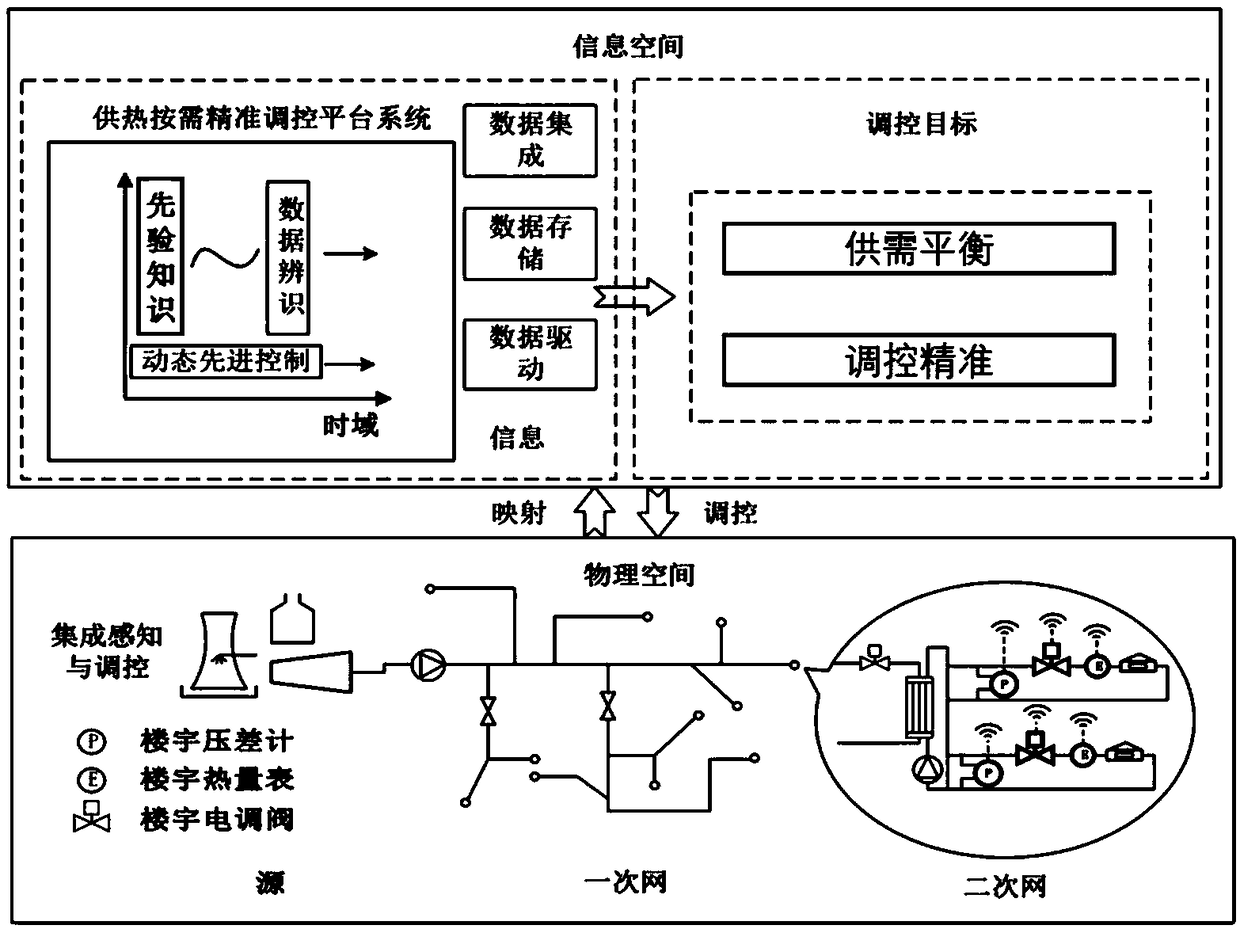
- The district heating model predictive control method based on Bayesian network is used to obtain and update historical data in real time through physical layer data perception, Bayesian network load prediction and neural network time response model, build a Bayesian network model, and derive The control parameters on the source side, heating station and building side eliminate the hysteresis of heating network adjustment and achieve precise heating on demand.

Energy Efficiency and Carbon Reduction Potential
The implementation of Model Predictive Control (MPC) in district heating networks presents significant potential for energy efficiency improvements and carbon emissions reduction. Studies indicate that MPC can reduce primary energy consumption by 15-25% compared to conventional control methods, directly translating to proportional decreases in carbon emissions from heating operations.
This efficiency gain stems from MPC's ability to optimize the operation of heat production units based on dynamic factors including weather forecasts, building thermal characteristics, and energy price fluctuations. By anticipating future conditions rather than merely reacting to current ones, MPC enables proactive management of thermal energy production and distribution, minimizing waste and unnecessary peak production.
In large-scale district heating networks serving urban areas, the carbon reduction impact becomes particularly significant. For instance, a medium-sized district heating network serving 50,000 households could potentially reduce CO2 emissions by 5,000-10,000 tons annually through MPC implementation. This reduction becomes even more pronounced when the heating system incorporates renewable energy sources, as MPC can optimize their integration and utilization.
The carbon reduction benefits extend beyond direct operational improvements. MPC enables better load balancing and peak shaving, reducing the need for carbon-intensive peak load boilers that typically rely on fossil fuels. By flattening demand curves and optimizing supply temperatures, MPC allows for lower overall system temperatures, which improves the efficiency of heat pumps and other low-carbon technologies.
Economic analyses demonstrate that the energy efficiency improvements from MPC implementation typically result in a return on investment period of 1-3 years, depending on the size and complexity of the district heating network. This favorable economic profile makes MPC an attractive option for both public and private district heating operators seeking cost-effective carbon reduction strategies.
Furthermore, MPC facilitates the integration of waste heat recovery systems and thermal storage solutions, which can further enhance the overall system efficiency. By predicting optimal charging and discharging cycles for thermal storage, MPC maximizes the utilization of low-carbon heat sources and minimizes reliance on fossil fuel backup systems during peak demand periods.
As regulatory frameworks increasingly emphasize carbon reduction targets, MPC represents a technologically mature and economically viable pathway for district heating operators to achieve substantial emissions reductions while maintaining or improving service quality and reliability.
This efficiency gain stems from MPC's ability to optimize the operation of heat production units based on dynamic factors including weather forecasts, building thermal characteristics, and energy price fluctuations. By anticipating future conditions rather than merely reacting to current ones, MPC enables proactive management of thermal energy production and distribution, minimizing waste and unnecessary peak production.
In large-scale district heating networks serving urban areas, the carbon reduction impact becomes particularly significant. For instance, a medium-sized district heating network serving 50,000 households could potentially reduce CO2 emissions by 5,000-10,000 tons annually through MPC implementation. This reduction becomes even more pronounced when the heating system incorporates renewable energy sources, as MPC can optimize their integration and utilization.
The carbon reduction benefits extend beyond direct operational improvements. MPC enables better load balancing and peak shaving, reducing the need for carbon-intensive peak load boilers that typically rely on fossil fuels. By flattening demand curves and optimizing supply temperatures, MPC allows for lower overall system temperatures, which improves the efficiency of heat pumps and other low-carbon technologies.
Economic analyses demonstrate that the energy efficiency improvements from MPC implementation typically result in a return on investment period of 1-3 years, depending on the size and complexity of the district heating network. This favorable economic profile makes MPC an attractive option for both public and private district heating operators seeking cost-effective carbon reduction strategies.
Furthermore, MPC facilitates the integration of waste heat recovery systems and thermal storage solutions, which can further enhance the overall system efficiency. By predicting optimal charging and discharging cycles for thermal storage, MPC maximizes the utilization of low-carbon heat sources and minimizes reliance on fossil fuel backup systems during peak demand periods.
As regulatory frameworks increasingly emphasize carbon reduction targets, MPC represents a technologically mature and economically viable pathway for district heating operators to achieve substantial emissions reductions while maintaining or improving service quality and reliability.
Integration with Renewable Energy Sources
The integration of renewable energy sources with Model Predictive Control (MPC) in district heating networks represents a significant advancement in sustainable energy management. As renewable energy adoption accelerates globally, district heating systems must evolve to accommodate intermittent sources like solar thermal, geothermal, wind, and biomass. MPC provides the sophisticated control framework necessary to optimize these complex integrations.
MPC algorithms excel at forecasting renewable energy availability and adjusting heating network operations accordingly. For instance, when solar thermal production peaks during midday, MPC can preemptively reduce conventional heating plant output while maintaining optimal temperature distribution throughout the network. This predictive capability enables the system to maximize renewable utilization while minimizing fossil fuel consumption.
The stochastic nature of renewable sources presents unique challenges that MPC is particularly well-equipped to address. By incorporating weather forecasts and historical production patterns, MPC can develop probabilistic models of renewable energy availability. These models enable the controller to prepare contingency operations that maintain system stability despite fluctuations in renewable input, ensuring consistent heat delivery to consumers.
Energy storage technologies become significantly more effective when managed through MPC frameworks. Thermal storage systems, including water tanks and phase-change materials, can be charged during renewable energy surplus periods and discharged during shortfalls. MPC optimizes this charge-discharge cycle by considering future energy availability, demand patterns, and price signals, creating a virtual power plant effect that smooths the integration of renewables.
Recent implementations demonstrate MPC's effectiveness in renewable integration. In Scandinavian district heating networks, MPC systems have achieved up to 30% reduction in carbon emissions by optimizing the interplay between biomass boilers, solar thermal collectors, and conventional heating plants. The controller's ability to balance multiple objectives—emissions reduction, cost minimization, and service quality—makes it invaluable for modern district heating operations.
The economic case for MPC-managed renewable integration is compelling. While initial implementation costs are significant, operational savings typically deliver return on investment within 2-4 years. These savings derive from reduced fuel consumption, lower maintenance requirements, and the ability to participate in demand response programs that generate additional revenue streams.
Looking forward, MPC systems will increasingly incorporate machine learning techniques to improve renewable energy forecasting accuracy. This evolution will further enhance the controller's ability to maximize renewable utilization while maintaining the reliability and efficiency that district heating customers expect.
MPC algorithms excel at forecasting renewable energy availability and adjusting heating network operations accordingly. For instance, when solar thermal production peaks during midday, MPC can preemptively reduce conventional heating plant output while maintaining optimal temperature distribution throughout the network. This predictive capability enables the system to maximize renewable utilization while minimizing fossil fuel consumption.
The stochastic nature of renewable sources presents unique challenges that MPC is particularly well-equipped to address. By incorporating weather forecasts and historical production patterns, MPC can develop probabilistic models of renewable energy availability. These models enable the controller to prepare contingency operations that maintain system stability despite fluctuations in renewable input, ensuring consistent heat delivery to consumers.
Energy storage technologies become significantly more effective when managed through MPC frameworks. Thermal storage systems, including water tanks and phase-change materials, can be charged during renewable energy surplus periods and discharged during shortfalls. MPC optimizes this charge-discharge cycle by considering future energy availability, demand patterns, and price signals, creating a virtual power plant effect that smooths the integration of renewables.
Recent implementations demonstrate MPC's effectiveness in renewable integration. In Scandinavian district heating networks, MPC systems have achieved up to 30% reduction in carbon emissions by optimizing the interplay between biomass boilers, solar thermal collectors, and conventional heating plants. The controller's ability to balance multiple objectives—emissions reduction, cost minimization, and service quality—makes it invaluable for modern district heating operations.
The economic case for MPC-managed renewable integration is compelling. While initial implementation costs are significant, operational savings typically deliver return on investment within 2-4 years. These savings derive from reduced fuel consumption, lower maintenance requirements, and the ability to participate in demand response programs that generate additional revenue streams.
Looking forward, MPC systems will increasingly incorporate machine learning techniques to improve renewable energy forecasting accuracy. This evolution will further enhance the controller's ability to maximize renewable utilization while maintaining the reliability and efficiency that district heating customers expect.
Unlock deeper insights with PatSnap Eureka Quick Research — get a full tech report to explore trends and direct your research. Try now!
Generate Your Research Report Instantly with AI Agent
Supercharge your innovation with PatSnap Eureka AI Agent Platform!