How Nitinol Facilitates Improved Implant Longevity
AUG 6, 20259 MIN READ
Generate Your Research Report Instantly with AI Agent
PatSnap Eureka helps you evaluate technical feasibility & market potential.
Nitinol Implant Evolution
The evolution of Nitinol implants represents a significant advancement in medical technology, particularly in the realm of long-term implantable devices. Nitinol, an alloy of nickel and titanium, has revolutionized the field of implantology due to its unique properties of shape memory and superelasticity.
In the early stages of implant development, traditional materials such as stainless steel and titanium were predominantly used. However, these materials often fell short in terms of biocompatibility and mechanical performance over extended periods. The introduction of Nitinol in the 1960s marked a turning point, offering a material that could adapt to the body's natural movements and withstand repeated stress without fatigue.
The first generation of Nitinol implants primarily focused on exploiting the material's shape memory properties. These early devices were designed to change shape at body temperature, allowing for minimally invasive insertion and subsequent expansion to their functional form. This capability was particularly beneficial in cardiovascular applications, such as stents, which could be compressed for insertion and then expand to support blood vessel walls.
As research progressed, the superelastic properties of Nitinol became increasingly important in implant design. This characteristic allowed implants to undergo significant deformation without permanent damage, closely mimicking the behavior of natural tissues. Orthopedic implants, in particular, benefited from this property, as it enabled the development of devices that could flex and bend with the patient's movements, reducing stress on surrounding tissues and improving overall comfort.
The late 1990s and early 2000s saw a surge in Nitinol implant innovations, with a focus on surface treatments and coatings to enhance biocompatibility and reduce the risk of nickel leaching. These advancements addressed concerns about potential allergic reactions and improved the long-term safety profile of Nitinol implants.
Recent developments in Nitinol implant technology have centered on customization and precision manufacturing. Advanced 3D printing techniques now allow for the creation of patient-specific implants with complex geometries, optimizing fit and function. Additionally, researchers are exploring ways to fine-tune the transformation temperatures of Nitinol, enabling more precise control over shape changes in response to body temperature variations.
The latest frontier in Nitinol implant evolution involves the integration of smart technologies. Researchers are developing implants with embedded sensors that can monitor various physiological parameters and provide real-time feedback. This convergence of material science and digital technology promises to create a new generation of adaptive implants capable of responding dynamically to the body's changing needs.
In the early stages of implant development, traditional materials such as stainless steel and titanium were predominantly used. However, these materials often fell short in terms of biocompatibility and mechanical performance over extended periods. The introduction of Nitinol in the 1960s marked a turning point, offering a material that could adapt to the body's natural movements and withstand repeated stress without fatigue.
The first generation of Nitinol implants primarily focused on exploiting the material's shape memory properties. These early devices were designed to change shape at body temperature, allowing for minimally invasive insertion and subsequent expansion to their functional form. This capability was particularly beneficial in cardiovascular applications, such as stents, which could be compressed for insertion and then expand to support blood vessel walls.
As research progressed, the superelastic properties of Nitinol became increasingly important in implant design. This characteristic allowed implants to undergo significant deformation without permanent damage, closely mimicking the behavior of natural tissues. Orthopedic implants, in particular, benefited from this property, as it enabled the development of devices that could flex and bend with the patient's movements, reducing stress on surrounding tissues and improving overall comfort.
The late 1990s and early 2000s saw a surge in Nitinol implant innovations, with a focus on surface treatments and coatings to enhance biocompatibility and reduce the risk of nickel leaching. These advancements addressed concerns about potential allergic reactions and improved the long-term safety profile of Nitinol implants.
Recent developments in Nitinol implant technology have centered on customization and precision manufacturing. Advanced 3D printing techniques now allow for the creation of patient-specific implants with complex geometries, optimizing fit and function. Additionally, researchers are exploring ways to fine-tune the transformation temperatures of Nitinol, enabling more precise control over shape changes in response to body temperature variations.
The latest frontier in Nitinol implant evolution involves the integration of smart technologies. Researchers are developing implants with embedded sensors that can monitor various physiological parameters and provide real-time feedback. This convergence of material science and digital technology promises to create a new generation of adaptive implants capable of responding dynamically to the body's changing needs.
Market Demand Analysis
The market demand for Nitinol-based implants has been steadily increasing due to the material's unique properties that contribute to improved implant longevity. Nitinol, a nickel-titanium alloy, exhibits superelasticity and shape memory characteristics, making it highly suitable for various medical applications, particularly in the field of implantable devices.
The global market for Nitinol-based medical devices is experiencing significant growth, driven by the rising prevalence of chronic diseases, an aging population, and the increasing adoption of minimally invasive surgical procedures. Cardiovascular applications, including stents and heart valve frames, represent a substantial portion of the market demand for Nitinol implants. The material's ability to withstand repeated stress and maintain its shape makes it ideal for these applications, where long-term durability is crucial.
Orthopedic implants constitute another major segment of the Nitinol market. The material's superelastic properties allow for the development of devices that can adapt to the natural movement of bones and joints, reducing wear and tear and potentially extending the lifespan of the implant. This is particularly beneficial in applications such as spinal implants, where the ability to withstand repetitive stress is essential.
The dental implant sector is also showing increased interest in Nitinol-based solutions. The material's biocompatibility and ability to osseointegrate with surrounding bone tissue make it an attractive option for long-lasting dental implants. Additionally, the shape memory properties of Nitinol allow for the creation of self-expanding implants that can adapt to the patient's anatomy, potentially improving fit and reducing the risk of implant failure.
Market analysts project continued growth in the demand for Nitinol implants across various medical specialties. The material's ability to enhance implant longevity addresses a critical need in the healthcare industry, as longer-lasting implants can reduce the need for revision surgeries, improve patient outcomes, and potentially lower overall healthcare costs.
However, the market for Nitinol implants also faces challenges. The high cost of raw materials and complex manufacturing processes can impact the overall cost of Nitinol-based devices. Additionally, stringent regulatory requirements for medical implants can slow down the introduction of new Nitinol-based products to the market. Despite these challenges, ongoing research and development efforts are focused on optimizing Nitinol properties and manufacturing techniques to further improve implant performance and reduce costs.
As healthcare systems worldwide continue to emphasize value-based care and long-term patient outcomes, the demand for implants with improved longevity is expected to grow. Nitinol's unique properties position it as a key material in addressing this market need, driving innovation in implant design and manufacturing across multiple medical specialties.
The global market for Nitinol-based medical devices is experiencing significant growth, driven by the rising prevalence of chronic diseases, an aging population, and the increasing adoption of minimally invasive surgical procedures. Cardiovascular applications, including stents and heart valve frames, represent a substantial portion of the market demand for Nitinol implants. The material's ability to withstand repeated stress and maintain its shape makes it ideal for these applications, where long-term durability is crucial.
Orthopedic implants constitute another major segment of the Nitinol market. The material's superelastic properties allow for the development of devices that can adapt to the natural movement of bones and joints, reducing wear and tear and potentially extending the lifespan of the implant. This is particularly beneficial in applications such as spinal implants, where the ability to withstand repetitive stress is essential.
The dental implant sector is also showing increased interest in Nitinol-based solutions. The material's biocompatibility and ability to osseointegrate with surrounding bone tissue make it an attractive option for long-lasting dental implants. Additionally, the shape memory properties of Nitinol allow for the creation of self-expanding implants that can adapt to the patient's anatomy, potentially improving fit and reducing the risk of implant failure.
Market analysts project continued growth in the demand for Nitinol implants across various medical specialties. The material's ability to enhance implant longevity addresses a critical need in the healthcare industry, as longer-lasting implants can reduce the need for revision surgeries, improve patient outcomes, and potentially lower overall healthcare costs.
However, the market for Nitinol implants also faces challenges. The high cost of raw materials and complex manufacturing processes can impact the overall cost of Nitinol-based devices. Additionally, stringent regulatory requirements for medical implants can slow down the introduction of new Nitinol-based products to the market. Despite these challenges, ongoing research and development efforts are focused on optimizing Nitinol properties and manufacturing techniques to further improve implant performance and reduce costs.
As healthcare systems worldwide continue to emphasize value-based care and long-term patient outcomes, the demand for implants with improved longevity is expected to grow. Nitinol's unique properties position it as a key material in addressing this market need, driving innovation in implant design and manufacturing across multiple medical specialties.
Technical Challenges
Despite the promising potential of Nitinol in improving implant longevity, several technical challenges persist in its widespread adoption and optimal utilization. One of the primary hurdles is the complex manufacturing process required to produce Nitinol implants with consistent and reliable properties. The material's unique shape memory and superelastic characteristics are highly sensitive to composition and processing parameters, making it difficult to achieve uniform performance across different batches.
Another significant challenge lies in the long-term biocompatibility of Nitinol implants. While the material generally exhibits good biocompatibility, concerns remain about the potential release of nickel ions over time, which could lead to adverse reactions in some patients. Researchers are still working to fully understand and mitigate the long-term effects of Nitinol implants on surrounding tissues and the body's immune response.
The fatigue behavior of Nitinol under cyclic loading conditions presents another technical hurdle. Although Nitinol demonstrates excellent fatigue resistance compared to many conventional implant materials, predicting and ensuring its long-term performance under the complex and varied stress conditions encountered in the human body remains challenging. This is particularly critical for implants subjected to repeated deformation cycles, such as those used in cardiovascular applications.
Surface engineering of Nitinol implants poses additional challenges. While various surface treatments have been developed to enhance biocompatibility and reduce nickel ion release, achieving a perfect balance between surface properties, corrosion resistance, and the preservation of the material's unique mechanical characteristics is an ongoing area of research and development.
The non-linear behavior of Nitinol complicates the design and analysis of implants. Traditional engineering principles and modeling techniques often fall short in accurately predicting the material's response under complex loading conditions. This necessitates the development of advanced computational models and simulation tools specifically tailored to Nitinol's unique properties.
Lastly, the integration of Nitinol with other materials in composite implants presents challenges in terms of interface stability and long-term performance. Ensuring strong, durable bonds between Nitinol and other implant components, while maintaining the desired overall implant characteristics, requires innovative joining techniques and careful material selection.
Addressing these technical challenges is crucial for fully leveraging Nitinol's potential in enhancing implant longevity. Ongoing research efforts focus on refining manufacturing processes, developing advanced surface treatments, improving computational modeling capabilities, and exploring novel composite designs to overcome these hurdles and expand the application of Nitinol in long-lasting, high-performance medical implants.
Another significant challenge lies in the long-term biocompatibility of Nitinol implants. While the material generally exhibits good biocompatibility, concerns remain about the potential release of nickel ions over time, which could lead to adverse reactions in some patients. Researchers are still working to fully understand and mitigate the long-term effects of Nitinol implants on surrounding tissues and the body's immune response.
The fatigue behavior of Nitinol under cyclic loading conditions presents another technical hurdle. Although Nitinol demonstrates excellent fatigue resistance compared to many conventional implant materials, predicting and ensuring its long-term performance under the complex and varied stress conditions encountered in the human body remains challenging. This is particularly critical for implants subjected to repeated deformation cycles, such as those used in cardiovascular applications.
Surface engineering of Nitinol implants poses additional challenges. While various surface treatments have been developed to enhance biocompatibility and reduce nickel ion release, achieving a perfect balance between surface properties, corrosion resistance, and the preservation of the material's unique mechanical characteristics is an ongoing area of research and development.
The non-linear behavior of Nitinol complicates the design and analysis of implants. Traditional engineering principles and modeling techniques often fall short in accurately predicting the material's response under complex loading conditions. This necessitates the development of advanced computational models and simulation tools specifically tailored to Nitinol's unique properties.
Lastly, the integration of Nitinol with other materials in composite implants presents challenges in terms of interface stability and long-term performance. Ensuring strong, durable bonds between Nitinol and other implant components, while maintaining the desired overall implant characteristics, requires innovative joining techniques and careful material selection.
Addressing these technical challenges is crucial for fully leveraging Nitinol's potential in enhancing implant longevity. Ongoing research efforts focus on refining manufacturing processes, developing advanced surface treatments, improving computational modeling capabilities, and exploring novel composite designs to overcome these hurdles and expand the application of Nitinol in long-lasting, high-performance medical implants.
Current Nitinol Solutions
01 Fatigue resistance and durability of Nitinol
Nitinol's unique properties, including superelasticity and shape memory, contribute to its longevity in various applications. The material's ability to withstand repeated stress cycles without significant degradation makes it ideal for long-lasting components in medical devices, aerospace, and automotive industries. Proper heat treatment and surface finishing techniques can further enhance Nitinol's fatigue resistance and overall lifespan.- Fatigue resistance and durability of Nitinol: Nitinol's unique properties, including superelasticity and shape memory, contribute to its longevity in various applications. The material's ability to withstand repeated stress cycles without significant degradation makes it ideal for long-lasting components in medical devices, aerospace, and automotive industries. Proper heat treatment and surface finishing techniques can further enhance Nitinol's fatigue resistance and overall lifespan.
- Corrosion resistance of Nitinol: Nitinol exhibits excellent corrosion resistance, particularly in harsh environments such as the human body or marine applications. This property contributes significantly to its longevity in various applications. The formation of a stable titanium oxide layer on the surface provides protection against corrosion, ensuring the material maintains its structural integrity and functional properties over extended periods.
- Biocompatibility and long-term implant performance: Nitinol's biocompatibility makes it an excellent choice for long-term medical implants. Its ability to integrate with biological tissues without causing adverse reactions contributes to the longevity of medical devices. The material's superelastic properties allow for minimally invasive procedures and reduce the risk of implant failure over time, leading to improved patient outcomes and reduced need for replacement surgeries.
- Temperature-induced shape memory effects on longevity: Nitinol's shape memory properties, activated by temperature changes, contribute to its longevity in various applications. This characteristic allows for self-expanding or self-contracting components that can maintain their functionality over extended periods. The material's ability to return to its pre-programmed shape after deformation reduces wear and tear, extending the lifespan of devices incorporating Nitinol elements.
- Surface treatments and coatings for enhanced longevity: Various surface treatments and coatings can be applied to Nitinol to enhance its longevity. These treatments can improve wear resistance, reduce friction, and provide additional protection against corrosion. Techniques such as electropolishing, plasma-assisted coatings, or the application of biocompatible polymers can significantly extend the lifespan of Nitinol components in demanding applications, particularly in medical and industrial settings.
02 Corrosion resistance and biocompatibility
Nitinol's excellent corrosion resistance, particularly in biological environments, contributes to its longevity in medical implants and devices. The formation of a stable titanium oxide layer on its surface enhances biocompatibility and protects against degradation. This characteristic allows Nitinol-based medical devices to maintain their functionality and structural integrity over extended periods in the human body.Expand Specific Solutions03 Environmental adaptability and thermal stability
Nitinol's ability to maintain its properties across a wide range of temperatures contributes to its longevity in diverse applications. The material's thermal stability and resistance to extreme environmental conditions make it suitable for use in aerospace, oil and gas, and other demanding industries where long-term reliability is crucial.Expand Specific Solutions04 Surface treatments and coatings for enhanced longevity
Various surface treatments and coatings can be applied to Nitinol to improve its longevity. These treatments may include electropolishing, passivation, or the application of protective coatings to enhance wear resistance, reduce friction, and prevent corrosion. Such modifications can significantly extend the lifespan of Nitinol components in applications where they are subjected to harsh environments or frequent use.Expand Specific Solutions05 Monitoring and predictive maintenance of Nitinol components
Advanced monitoring techniques and predictive maintenance strategies can be employed to assess the condition of Nitinol components and predict their remaining lifespan. This may involve the use of sensors, data analytics, and machine learning algorithms to detect early signs of fatigue or degradation, allowing for timely interventions to extend the longevity of Nitinol-based systems and devices.Expand Specific Solutions
Key Industry Players
The competitive landscape for Nitinol-facilitated implant longevity is characterized by a mature market with significant growth potential. The global Nitinol medical devices market is expected to reach $26.5 billion by 2025, driven by increasing demand for minimally invasive procedures and advanced implants. Key players like Boston Scientific, Medtronic, and W. L. Gore & Associates are investing heavily in R&D to develop innovative Nitinol-based implants. The technology's maturity is evident in its widespread adoption across various medical applications, with companies like ADMEDES GmbH and Cordis Corp. specializing in Nitinol component manufacturing. However, emerging players and research institutions continue to explore new applications, indicating ongoing opportunities for technological advancements in this field.
W. L. Gore & Associates, Inc.
Technical Solution: W. L. Gore & Associates has developed advanced Nitinol-based implants that significantly improve longevity. Their proprietary surface modification techniques enhance the biocompatibility of Nitinol, reducing the risk of inflammatory responses and improving osseointegration[1]. The company's Nitinol-based stent grafts utilize a unique radial force distribution system, allowing for better conformability to vessel anatomy while maintaining long-term patency[2]. Gore's implants also incorporate a specialized heat treatment process that optimizes the superelastic properties of Nitinol, resulting in improved fatigue resistance and reduced risk of fracture over extended periods[3].
Strengths: Superior biocompatibility, enhanced conformability to anatomy, and improved fatigue resistance. Weaknesses: Potentially higher production costs due to specialized processing techniques.
ADMEDES GmbH
Technical Solution: ADMEDES GmbH specializes in Nitinol-based medical devices with a focus on improving implant longevity. Their proprietary Nitinol processing techniques result in ultra-fine grain structures, enhancing both the strength and fatigue resistance of implants[10]. ADMEDES has developed a unique electropolishing method that creates an exceptionally smooth surface on Nitinol devices, reducing the risk of thrombus formation and improving long-term patency in vascular applications[11]. The company's advanced shape-setting techniques allow for complex geometries in Nitinol implants, enabling designs that better mimic natural anatomical structures and reduce mechanical stress over time[12].
Strengths: Ultra-fine grain structure for improved mechanical properties, superior surface finish, and ability to create complex implant geometries. Weaknesses: Specialized processing may limit production volume and increase costs.
Innovative Nitinol Research
Method for producing a low nickel content surface on nitinol
PatentWO2004108983A2
Innovation
- Nitrogen ion implantation reduces nickel concentration in the surface layer, converting it into a mechanically stable and corrosion-resistant titanium nitride layer, eliminating nickel exposure without altering the material's mechanical properties.
Intravascular Functional Element and Method of Manufacture and Use of a Salt Bath for Warming Treatment
PatentInactiveUS20140228934A1
Innovation
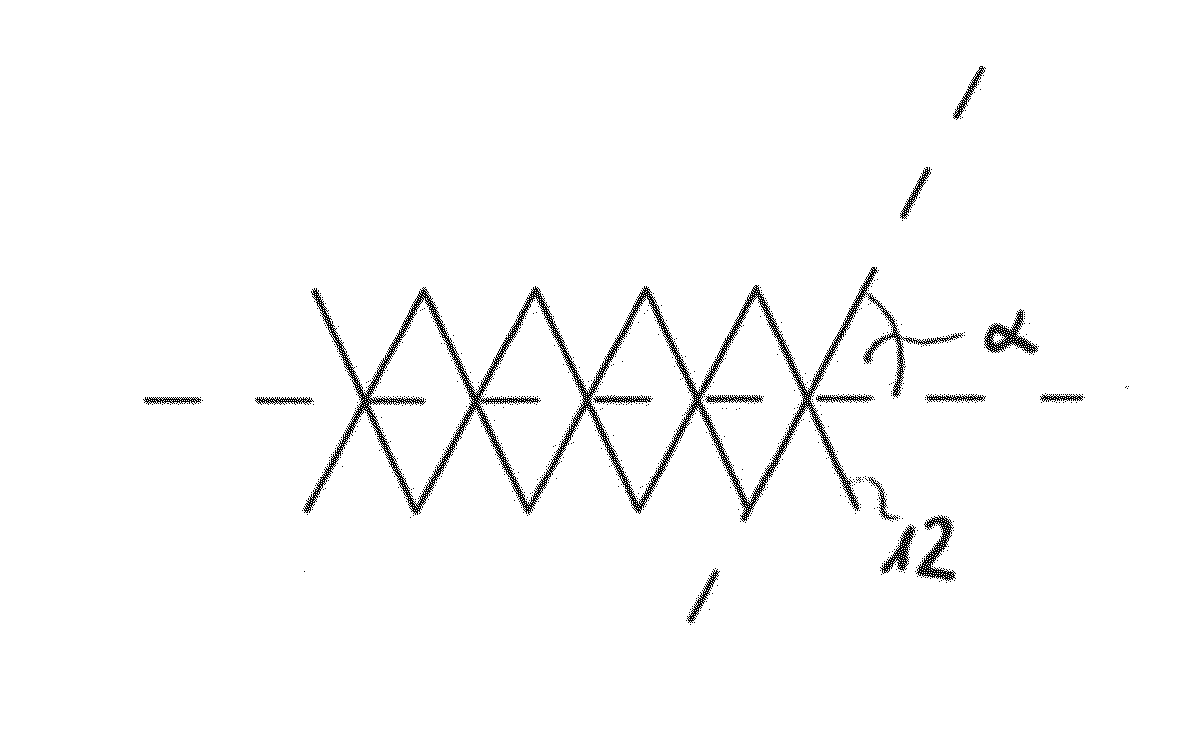
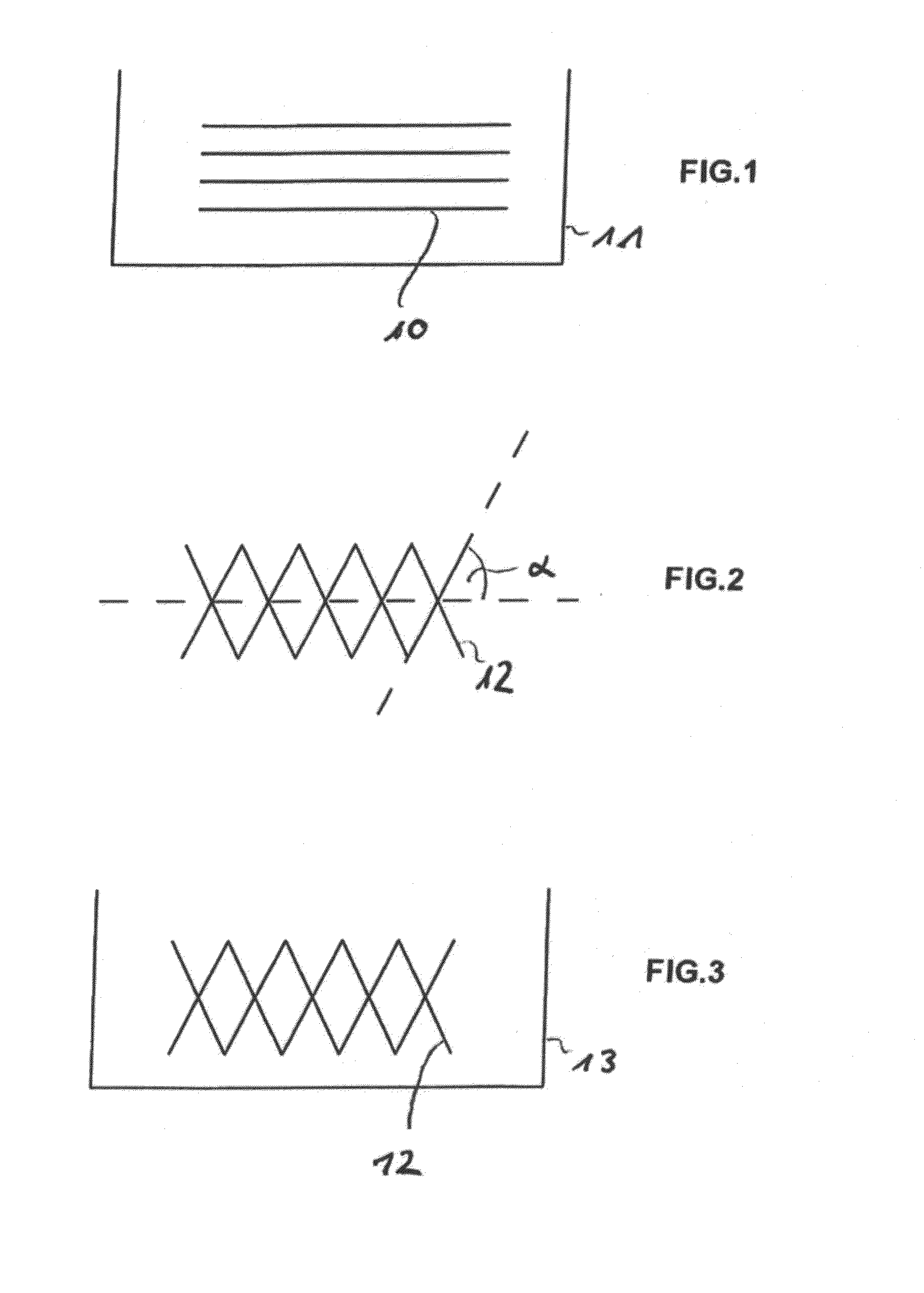
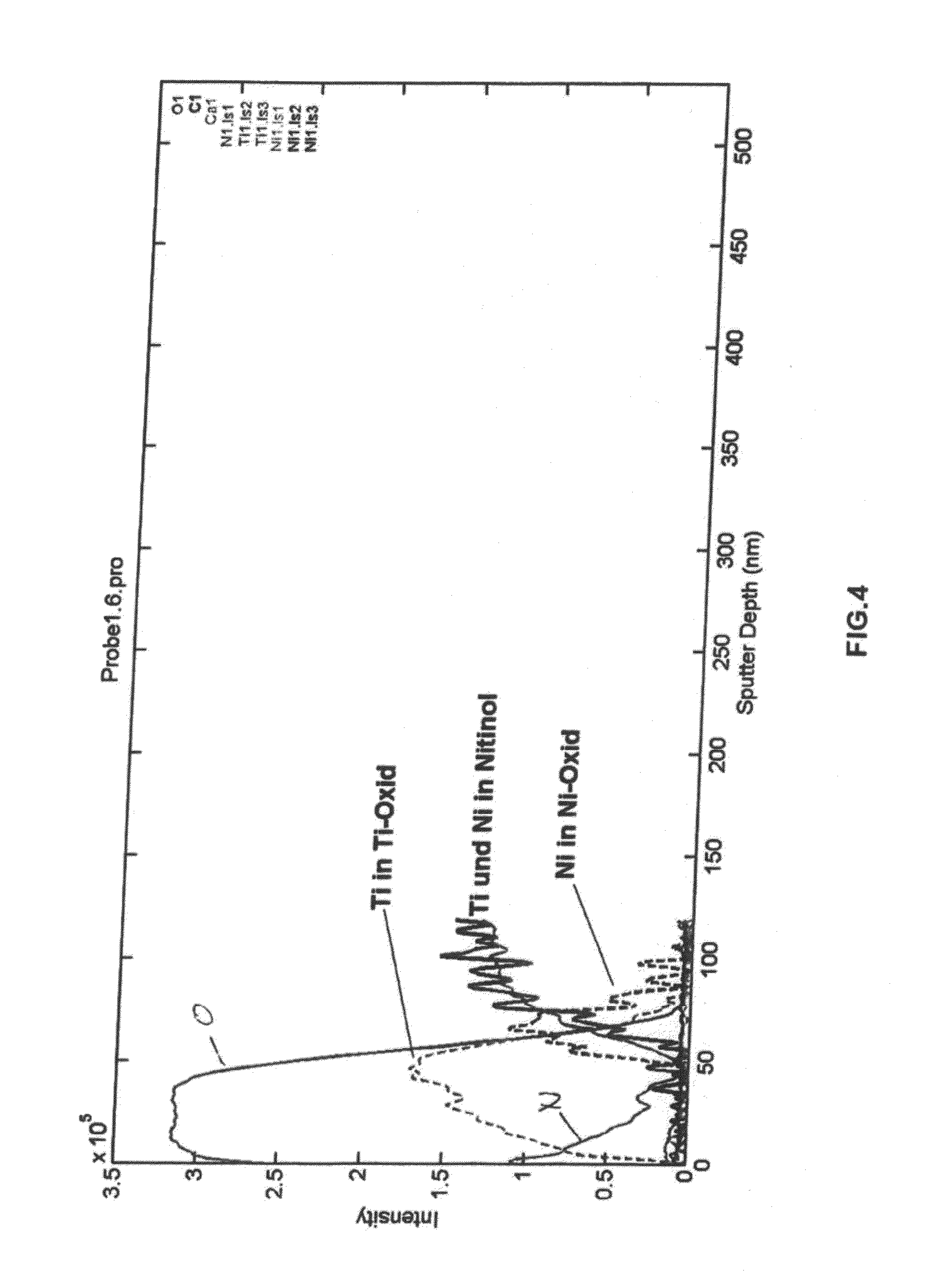
- A method involving electropolishing to remove the natural oxide layer, followed by heat treatment in a nitrogen-containing salt bath to form a mixed oxide layer with TiO2 and nitrides, enhancing wear resistance and biocompatibility while reducing nickel release.

Biocompatibility Assessment
Biocompatibility assessment is a critical aspect of evaluating Nitinol's suitability for long-term implantation. Nitinol, an alloy of nickel and titanium, has gained significant attention in the medical device industry due to its unique properties, including shape memory and superelasticity. However, its biocompatibility must be thoroughly examined to ensure the safety and longevity of implants.
The primary concern in Nitinol biocompatibility is the potential release of nickel ions, which can cause adverse reactions in some patients. To address this, researchers have developed various surface treatments and coatings to minimize nickel leaching. These include thermal oxidation, plasma immersion ion implantation, and the application of titanium nitride or diamond-like carbon coatings. These treatments create a protective layer that significantly reduces nickel release while maintaining Nitinol's desirable mechanical properties.
In vitro studies have shown that properly treated Nitinol exhibits excellent biocompatibility, with minimal cytotoxicity and inflammatory responses. Cell culture experiments demonstrate that Nitinol surfaces support cell adhesion, proliferation, and differentiation comparable to or better than other commonly used implant materials such as stainless steel or titanium alloys. Additionally, protein adsorption studies indicate that Nitinol's surface properties promote the formation of a favorable protein layer, which can enhance tissue integration.
In vivo studies have further confirmed Nitinol's biocompatibility in various applications. Long-term implantation studies in animal models have shown minimal foreign body reactions and good tissue integration. Histological analyses reveal the formation of a stable fibrous capsule around Nitinol implants, indicating a favorable host response. Moreover, studies on Nitinol stents and other cardiovascular devices have demonstrated excellent hemocompatibility, with reduced platelet adhesion and thrombus formation compared to traditional materials.
The biocompatibility of Nitinol is also influenced by its unique mechanical properties. The superelastic behavior of Nitinol allows for better stress distribution and reduced mechanical irritation at the implant-tissue interface. This property contributes to improved tissue healing and reduced risk of implant loosening or migration, further enhancing long-term biocompatibility.
Standardized testing protocols, such as those outlined in ISO 10993, are routinely employed to assess Nitinol's biocompatibility. These tests evaluate various aspects, including cytotoxicity, sensitization, irritation, systemic toxicity, and genotoxicity. The results consistently demonstrate that properly manufactured and treated Nitinol meets or exceeds the biocompatibility requirements for long-term implantation.
The primary concern in Nitinol biocompatibility is the potential release of nickel ions, which can cause adverse reactions in some patients. To address this, researchers have developed various surface treatments and coatings to minimize nickel leaching. These include thermal oxidation, plasma immersion ion implantation, and the application of titanium nitride or diamond-like carbon coatings. These treatments create a protective layer that significantly reduces nickel release while maintaining Nitinol's desirable mechanical properties.
In vitro studies have shown that properly treated Nitinol exhibits excellent biocompatibility, with minimal cytotoxicity and inflammatory responses. Cell culture experiments demonstrate that Nitinol surfaces support cell adhesion, proliferation, and differentiation comparable to or better than other commonly used implant materials such as stainless steel or titanium alloys. Additionally, protein adsorption studies indicate that Nitinol's surface properties promote the formation of a favorable protein layer, which can enhance tissue integration.
In vivo studies have further confirmed Nitinol's biocompatibility in various applications. Long-term implantation studies in animal models have shown minimal foreign body reactions and good tissue integration. Histological analyses reveal the formation of a stable fibrous capsule around Nitinol implants, indicating a favorable host response. Moreover, studies on Nitinol stents and other cardiovascular devices have demonstrated excellent hemocompatibility, with reduced platelet adhesion and thrombus formation compared to traditional materials.
The biocompatibility of Nitinol is also influenced by its unique mechanical properties. The superelastic behavior of Nitinol allows for better stress distribution and reduced mechanical irritation at the implant-tissue interface. This property contributes to improved tissue healing and reduced risk of implant loosening or migration, further enhancing long-term biocompatibility.
Standardized testing protocols, such as those outlined in ISO 10993, are routinely employed to assess Nitinol's biocompatibility. These tests evaluate various aspects, including cytotoxicity, sensitization, irritation, systemic toxicity, and genotoxicity. The results consistently demonstrate that properly manufactured and treated Nitinol meets or exceeds the biocompatibility requirements for long-term implantation.
Regulatory Considerations
The regulatory landscape surrounding Nitinol implants is complex and multifaceted, requiring careful consideration by manufacturers and healthcare providers. In the United States, the Food and Drug Administration (FDA) plays a pivotal role in overseeing the approval and regulation of Nitinol-based medical devices. These implants typically fall under Class II or Class III medical devices, depending on their intended use and associated risks.
For Class II devices, manufacturers often pursue the 510(k) clearance pathway, demonstrating substantial equivalence to a predicate device already on the market. However, novel Nitinol implants with unique properties or applications may require the more rigorous Premarket Approval (PMA) process, which demands extensive clinical data to prove safety and efficacy.
The FDA's guidance on Nitinol devices emphasizes the importance of thorough material characterization, including assessment of nickel release rates and potential allergenic responses. Manufacturers must provide comprehensive data on the implant's mechanical properties, fatigue resistance, and corrosion behavior under physiological conditions. Additionally, biocompatibility testing in accordance with ISO 10993 standards is crucial to evaluate the long-term safety of Nitinol implants.
In the European Union, Nitinol implants must comply with the Medical Device Regulation (MDR), which came into full effect in May 2021. The MDR imposes stricter requirements on clinical evidence, post-market surveillance, and traceability compared to its predecessor, the Medical Device Directive (MDD). Manufacturers seeking CE marking for Nitinol implants must demonstrate compliance with Essential Requirements, including risk management and quality assurance systems.
Regulatory bodies worldwide are increasingly focusing on the long-term performance of implantable devices. For Nitinol implants, this translates to heightened scrutiny of fatigue resistance, corrosion behavior, and potential for nickel leaching over extended periods. Manufacturers are expected to provide robust clinical data and post-market surveillance plans to monitor the long-term safety and efficacy of these devices.
As the field of Nitinol implants continues to evolve, regulatory frameworks are adapting to address emerging concerns and technological advancements. This includes considerations for 3D-printed Nitinol implants, which introduce new manufacturing variables and quality control challenges. Regulatory bodies are also paying closer attention to the potential interactions between Nitinol implants and medical imaging technologies, such as MRI compatibility and artifact reduction.
For Class II devices, manufacturers often pursue the 510(k) clearance pathway, demonstrating substantial equivalence to a predicate device already on the market. However, novel Nitinol implants with unique properties or applications may require the more rigorous Premarket Approval (PMA) process, which demands extensive clinical data to prove safety and efficacy.
The FDA's guidance on Nitinol devices emphasizes the importance of thorough material characterization, including assessment of nickel release rates and potential allergenic responses. Manufacturers must provide comprehensive data on the implant's mechanical properties, fatigue resistance, and corrosion behavior under physiological conditions. Additionally, biocompatibility testing in accordance with ISO 10993 standards is crucial to evaluate the long-term safety of Nitinol implants.
In the European Union, Nitinol implants must comply with the Medical Device Regulation (MDR), which came into full effect in May 2021. The MDR imposes stricter requirements on clinical evidence, post-market surveillance, and traceability compared to its predecessor, the Medical Device Directive (MDD). Manufacturers seeking CE marking for Nitinol implants must demonstrate compliance with Essential Requirements, including risk management and quality assurance systems.
Regulatory bodies worldwide are increasingly focusing on the long-term performance of implantable devices. For Nitinol implants, this translates to heightened scrutiny of fatigue resistance, corrosion behavior, and potential for nickel leaching over extended periods. Manufacturers are expected to provide robust clinical data and post-market surveillance plans to monitor the long-term safety and efficacy of these devices.
As the field of Nitinol implants continues to evolve, regulatory frameworks are adapting to address emerging concerns and technological advancements. This includes considerations for 3D-printed Nitinol implants, which introduce new manufacturing variables and quality control challenges. Regulatory bodies are also paying closer attention to the potential interactions between Nitinol implants and medical imaging technologies, such as MRI compatibility and artifact reduction.
Unlock deeper insights with PatSnap Eureka Quick Research — get a full tech report to explore trends and direct your research. Try now!
Generate Your Research Report Instantly with AI Agent
Supercharge your innovation with PatSnap Eureka AI Agent Platform!