How PHEVs can support off-grid energy solutions
AUG 14, 20259 MIN READ
Generate Your Research Report Instantly with AI Agent
Patsnap Eureka helps you evaluate technical feasibility & market potential.
PHEV Off-Grid Support: Background and Objectives
Plug-in Hybrid Electric Vehicles (PHEVs) have emerged as a promising technology in the automotive industry, bridging the gap between conventional internal combustion engine vehicles and fully electric vehicles. As the world grapples with the challenges of climate change and energy security, PHEVs have gained significant attention for their potential to support off-grid energy solutions. This technological advancement aligns with the global push towards sustainable energy practices and the need for resilient power systems in remote or disaster-prone areas.
The evolution of PHEV technology can be traced back to the early 2000s, with significant improvements in battery capacity, charging infrastructure, and overall efficiency over the past two decades. The primary objective of integrating PHEVs into off-grid energy solutions is to harness their substantial battery capacity and bidirectional charging capabilities to provide temporary or supplementary power in areas with limited or no access to the traditional electrical grid.
This integration aims to address several key challenges in the energy sector. Firstly, it seeks to enhance energy resilience in remote communities, disaster-stricken areas, or regions with unreliable grid infrastructure. Secondly, it aims to optimize the utilization of renewable energy sources by using PHEVs as mobile energy storage units. Lastly, it strives to create a more flexible and decentralized energy distribution system that can adapt to varying demand patterns and unforeseen circumstances.
The technological trajectory of PHEVs supporting off-grid solutions is closely linked to advancements in vehicle-to-grid (V2G) and vehicle-to-home (V2H) technologies. These innovations enable PHEVs to not only draw power from the grid but also feed electricity back into homes, buildings, or even local microgrids. This bidirectional flow of energy opens up new possibilities for energy management and distribution, particularly in off-grid scenarios.
As we explore the potential of PHEVs in off-grid energy solutions, it is crucial to consider the broader context of the global energy transition. The push towards decarbonization, coupled with the increasing frequency of extreme weather events and natural disasters, underscores the importance of developing robust and flexible energy systems. PHEVs, with their mobility and energy storage capabilities, are well-positioned to play a pivotal role in this evolving energy landscape.
The objectives of this technical research report are multifaceted. We aim to provide a comprehensive analysis of the current state of PHEV technology as it relates to off-grid energy support, identify key technical challenges and opportunities, and explore potential future developments in this field. By examining case studies, technical specifications, and emerging trends, we seek to offer valuable insights into how PHEVs can be effectively integrated into off-grid energy solutions, ultimately contributing to more resilient and sustainable energy systems worldwide.
The evolution of PHEV technology can be traced back to the early 2000s, with significant improvements in battery capacity, charging infrastructure, and overall efficiency over the past two decades. The primary objective of integrating PHEVs into off-grid energy solutions is to harness their substantial battery capacity and bidirectional charging capabilities to provide temporary or supplementary power in areas with limited or no access to the traditional electrical grid.
This integration aims to address several key challenges in the energy sector. Firstly, it seeks to enhance energy resilience in remote communities, disaster-stricken areas, or regions with unreliable grid infrastructure. Secondly, it aims to optimize the utilization of renewable energy sources by using PHEVs as mobile energy storage units. Lastly, it strives to create a more flexible and decentralized energy distribution system that can adapt to varying demand patterns and unforeseen circumstances.
The technological trajectory of PHEVs supporting off-grid solutions is closely linked to advancements in vehicle-to-grid (V2G) and vehicle-to-home (V2H) technologies. These innovations enable PHEVs to not only draw power from the grid but also feed electricity back into homes, buildings, or even local microgrids. This bidirectional flow of energy opens up new possibilities for energy management and distribution, particularly in off-grid scenarios.
As we explore the potential of PHEVs in off-grid energy solutions, it is crucial to consider the broader context of the global energy transition. The push towards decarbonization, coupled with the increasing frequency of extreme weather events and natural disasters, underscores the importance of developing robust and flexible energy systems. PHEVs, with their mobility and energy storage capabilities, are well-positioned to play a pivotal role in this evolving energy landscape.
The objectives of this technical research report are multifaceted. We aim to provide a comprehensive analysis of the current state of PHEV technology as it relates to off-grid energy support, identify key technical challenges and opportunities, and explore potential future developments in this field. By examining case studies, technical specifications, and emerging trends, we seek to offer valuable insights into how PHEVs can be effectively integrated into off-grid energy solutions, ultimately contributing to more resilient and sustainable energy systems worldwide.
Market Analysis for PHEV Off-Grid Solutions
The market for PHEV off-grid energy solutions is experiencing significant growth, driven by increasing demand for sustainable and resilient power systems in remote areas, disaster-prone regions, and developing countries. This market segment combines the advantages of plug-in hybrid electric vehicles (PHEVs) with the need for reliable off-grid power sources, creating a unique value proposition for consumers and businesses alike.
The global off-grid power market is projected to expand rapidly in the coming years, with a particular focus on renewable energy solutions. PHEVs, with their ability to store and deliver electricity, are well-positioned to capitalize on this growth. The market potential for PHEV off-grid solutions spans various sectors, including residential, commercial, and industrial applications.
In the residential sector, there is a growing interest in using PHEVs as backup power sources for homes, especially in areas prone to power outages or with unreliable grid connections. This market segment is particularly strong in developed countries where PHEV adoption is higher and homeowners are increasingly seeking energy independence.
The commercial sector presents significant opportunities for PHEV off-grid solutions, particularly in remote work sites, temporary facilities, and mobile businesses. Construction companies, event organizers, and mobile healthcare providers are among the potential customers who could benefit from the portable power capabilities of PHEVs.
In the industrial sector, PHEVs can provide valuable off-grid power solutions for mining operations, oil and gas exploration, and agricultural activities in remote locations. These industries often require reliable power sources in areas where grid connectivity is limited or non-existent.
The market for PHEV off-grid solutions is also closely tied to the broader electric vehicle (EV) market. As PHEV adoption increases and battery technology improves, the potential for these vehicles to serve as mobile power sources grows. This trend is further supported by the development of vehicle-to-grid (V2G) and vehicle-to-home (V2H) technologies, which enable bidirectional power flow between PHEVs and local energy systems.
Geographically, North America and Europe are expected to lead the market for PHEV off-grid solutions, given their higher PHEV adoption rates and more developed infrastructure. However, emerging markets in Asia-Pacific and Africa present significant growth potential, particularly in regions with limited grid access and a strong need for distributed energy resources.
The market analysis reveals several key drivers for PHEV off-grid solutions, including increasing environmental awareness, rising energy costs, and the need for resilient power systems in the face of climate change and natural disasters. Additionally, government incentives and regulations promoting clean energy and electric vehicle adoption are likely to further stimulate market growth.
The global off-grid power market is projected to expand rapidly in the coming years, with a particular focus on renewable energy solutions. PHEVs, with their ability to store and deliver electricity, are well-positioned to capitalize on this growth. The market potential for PHEV off-grid solutions spans various sectors, including residential, commercial, and industrial applications.
In the residential sector, there is a growing interest in using PHEVs as backup power sources for homes, especially in areas prone to power outages or with unreliable grid connections. This market segment is particularly strong in developed countries where PHEV adoption is higher and homeowners are increasingly seeking energy independence.
The commercial sector presents significant opportunities for PHEV off-grid solutions, particularly in remote work sites, temporary facilities, and mobile businesses. Construction companies, event organizers, and mobile healthcare providers are among the potential customers who could benefit from the portable power capabilities of PHEVs.
In the industrial sector, PHEVs can provide valuable off-grid power solutions for mining operations, oil and gas exploration, and agricultural activities in remote locations. These industries often require reliable power sources in areas where grid connectivity is limited or non-existent.
The market for PHEV off-grid solutions is also closely tied to the broader electric vehicle (EV) market. As PHEV adoption increases and battery technology improves, the potential for these vehicles to serve as mobile power sources grows. This trend is further supported by the development of vehicle-to-grid (V2G) and vehicle-to-home (V2H) technologies, which enable bidirectional power flow between PHEVs and local energy systems.
Geographically, North America and Europe are expected to lead the market for PHEV off-grid solutions, given their higher PHEV adoption rates and more developed infrastructure. However, emerging markets in Asia-Pacific and Africa present significant growth potential, particularly in regions with limited grid access and a strong need for distributed energy resources.
The market analysis reveals several key drivers for PHEV off-grid solutions, including increasing environmental awareness, rising energy costs, and the need for resilient power systems in the face of climate change and natural disasters. Additionally, government incentives and regulations promoting clean energy and electric vehicle adoption are likely to further stimulate market growth.
Technical Challenges in PHEV Off-Grid Integration
The integration of Plug-in Hybrid Electric Vehicles (PHEVs) into off-grid energy solutions presents several significant technical challenges. One of the primary obstacles is the development of efficient bidirectional charging systems. These systems must be capable of not only charging the PHEV's battery from the grid but also allowing the vehicle to feed power back into an off-grid system. This requires sophisticated power electronics and control algorithms to manage the flow of electricity in both directions while maintaining system stability.
Another major challenge lies in the battery management systems of PHEVs. When used as off-grid power sources, these vehicles may be subjected to more frequent and deeper discharge cycles than in normal driving conditions. This can accelerate battery degradation and reduce the overall lifespan of the vehicle's power storage system. Engineers must develop advanced battery management algorithms that can optimize the charge and discharge cycles to minimize wear while maximizing available energy.
The integration of PHEVs with existing off-grid infrastructure poses additional technical hurdles. Many off-grid systems rely on renewable energy sources such as solar or wind power, which are inherently intermittent. Synchronizing the PHEV's power output with these variable sources requires complex energy management systems capable of real-time load balancing and forecasting. This necessitates the development of smart grid technologies specifically tailored for off-grid applications.
Thermal management is another critical challenge in PHEV off-grid integration. When used as stationary power sources, PHEVs may generate significant heat during extended periods of high-power output. Efficient cooling systems must be designed to prevent overheating and ensure optimal performance, particularly in harsh environmental conditions often associated with off-grid locations.
The standardization of interfaces and protocols for PHEV off-grid integration is a substantial technical challenge. Currently, there is a lack of universal standards for connecting PHEVs to off-grid systems, which hampers widespread adoption and interoperability. Developing and implementing these standards requires collaboration across the automotive and energy sectors, as well as regulatory bodies.
Lastly, ensuring the reliability and durability of PHEVs in off-grid applications presents unique engineering challenges. These vehicles must be designed to withstand prolonged periods of stationary operation and potentially harsh environmental conditions. This may require the development of specialized components and materials that can maintain performance and longevity under these demanding circumstances.
Another major challenge lies in the battery management systems of PHEVs. When used as off-grid power sources, these vehicles may be subjected to more frequent and deeper discharge cycles than in normal driving conditions. This can accelerate battery degradation and reduce the overall lifespan of the vehicle's power storage system. Engineers must develop advanced battery management algorithms that can optimize the charge and discharge cycles to minimize wear while maximizing available energy.
The integration of PHEVs with existing off-grid infrastructure poses additional technical hurdles. Many off-grid systems rely on renewable energy sources such as solar or wind power, which are inherently intermittent. Synchronizing the PHEV's power output with these variable sources requires complex energy management systems capable of real-time load balancing and forecasting. This necessitates the development of smart grid technologies specifically tailored for off-grid applications.
Thermal management is another critical challenge in PHEV off-grid integration. When used as stationary power sources, PHEVs may generate significant heat during extended periods of high-power output. Efficient cooling systems must be designed to prevent overheating and ensure optimal performance, particularly in harsh environmental conditions often associated with off-grid locations.
The standardization of interfaces and protocols for PHEV off-grid integration is a substantial technical challenge. Currently, there is a lack of universal standards for connecting PHEVs to off-grid systems, which hampers widespread adoption and interoperability. Developing and implementing these standards requires collaboration across the automotive and energy sectors, as well as regulatory bodies.
Lastly, ensuring the reliability and durability of PHEVs in off-grid applications presents unique engineering challenges. These vehicles must be designed to withstand prolonged periods of stationary operation and potentially harsh environmental conditions. This may require the development of specialized components and materials that can maintain performance and longevity under these demanding circumstances.
Current PHEV Off-Grid Support Strategies
01 Charging systems for PHEVs
Advanced charging systems are crucial for PHEVs, including fast-charging technologies, wireless charging solutions, and smart grid integration. These systems aim to improve charging efficiency, reduce charging times, and enhance the overall user experience for PHEV owners.- Charging systems for PHEVs: Advanced charging systems are developed for PHEVs to improve efficiency and convenience. These systems include smart charging algorithms, wireless charging technologies, and fast-charging solutions. They aim to optimize battery life, reduce charging time, and enhance the overall user experience of plug-in hybrid vehicles.
- Energy management in PHEVs: Sophisticated energy management systems are designed for PHEVs to optimize the use of electric and combustion power sources. These systems utilize intelligent algorithms to balance power distribution, maximize fuel efficiency, and reduce emissions. They also incorporate regenerative braking and predictive energy management based on route information and driving patterns.
- Hybrid powertrain configurations: Various hybrid powertrain configurations are developed for PHEVs to improve performance and efficiency. These include series, parallel, and power-split architectures, each offering unique advantages in terms of power delivery, fuel economy, and electric range. Advanced transmission systems and clutch mechanisms are also integrated to optimize power flow between electric and combustion components.
- Battery technology for PHEVs: Advancements in battery technology focus on improving energy density, charging speed, and longevity for PHEV applications. This includes the development of new battery chemistries, thermal management systems, and battery management systems. Efforts are also made to reduce battery costs and improve safety features to enhance the overall viability of plug-in hybrid vehicles.
- Control systems and user interfaces: Innovative control systems and user interfaces are designed for PHEVs to enhance driver interaction and vehicle performance. These include advanced driver assistance systems, adaptive cruise control, and intelligent energy management interfaces. User-friendly displays and mobile applications are developed to provide real-time information on battery status, charging options, and vehicle efficiency.
02 Powertrain optimization in PHEVs
Optimizing the powertrain of PHEVs involves improving the integration of electric motors and internal combustion engines, enhancing energy management systems, and developing more efficient power distribution strategies. These advancements aim to maximize fuel efficiency and reduce emissions while maintaining performance.Expand Specific Solutions03 Battery management and range extension
Innovations in battery management systems and range extension technologies for PHEVs focus on improving battery life, increasing energy density, and implementing intelligent energy distribution algorithms. These developments aim to extend the electric-only driving range and overall efficiency of PHEVs.Expand Specific Solutions04 Vehicle-to-grid (V2G) integration for PHEVs
V2G technology enables PHEVs to interact with the power grid, allowing bidirectional energy flow. This integration can help stabilize the grid, provide emergency power during outages, and potentially generate revenue for PHEV owners through energy trading schemes.Expand Specific Solutions05 Lightweight materials and aerodynamic design for PHEVs
The use of lightweight materials and aerodynamic design principles in PHEV construction aims to reduce overall vehicle weight and improve energy efficiency. These advancements contribute to increased electric-only range and improved fuel economy in hybrid mode.Expand Specific Solutions
Key Players in PHEV Off-Grid Energy Sector
The market for PHEVs supporting off-grid energy solutions is in an early growth stage, with increasing interest driven by sustainability goals and energy resilience needs. The global market size for this technology is expanding, though still relatively small compared to traditional automotive sectors. Technical maturity varies among key players, with established automakers like Ford, Toyota, and BMW leading in PHEV development. Emerging companies such as Geely and Chery are rapidly advancing their capabilities. Energy management specialists like Johnson Controls and Clarios are contributing crucial battery and power system innovations. Universities and research institutions, including the University of California and Tongji University, are playing vital roles in advancing the underlying technologies for off-grid applications.
Ford Global Technologies LLC
Technical Solution: Ford has developed an innovative PHEV system capable of supporting off-grid energy solutions, primarily through their F-150 PowerBoost hybrid and upcoming all-electric F-150 Lightning. Their Pro Power Onboard technology transforms the vehicle into a mobile generator, providing up to 7.2 kW of power in the hybrid model and up to 9.6 kW in the electric version[9]. This system can power tools, appliances, and even homes during outages. Ford's Intelligent Backup Power system, designed for the F-150 Lightning, allows the vehicle to provide up to three days of full home power during outages, or up to 10 days if power is rationed[10]. The system includes bidirectional charging capability and integrates with home energy management systems to optimize power distribution. Ford is also exploring Vehicle-to-Grid (V2G) technology, which could allow their PHEVs to support grid stability and participate in energy markets[11].
Strengths: High power output capacity, integrated onboard generator system, and home backup power capability. Weaknesses: Currently limited to specific vehicle models, potential impact on vehicle range when used extensively for off-grid power.
Toyota Motor Corp.
Technical Solution: Toyota has developed an advanced PHEV system that can support off-grid energy solutions. Their technology utilizes a high-capacity battery pack and bidirectional charging capability, allowing the vehicle to act as a mobile power station. The system can provide up to 1500W of AC power output[1], sufficient to power essential household appliances during emergencies or in remote locations. Toyota's PHEVs are equipped with an intelligent power management system that optimizes energy distribution between vehicle propulsion and external power supply, ensuring efficient use of stored energy[2]. Additionally, Toyota has implemented Vehicle-to-Grid (V2G) technology in their PHEVs, enabling them to integrate with smart grids and contribute to grid stability during peak demand periods[3].
Strengths: High power output capacity, intelligent energy management, and V2G capability. Weaknesses: Limited battery capacity compared to dedicated power storage systems, potential impact on vehicle range when used for extended off-grid power supply.
Innovative PHEV-Grid Integration Technologies
Method and Apparatus for Planning an Electric Car Trip
PatentPendingUS20240361137A1
Innovation
- A system that integrates environmental, car, and driver factors into navigation route planning using a computer system connected to the internet, utilizing sensors and data analytics to optimize routes based on real-time data.
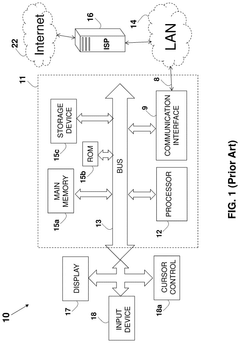
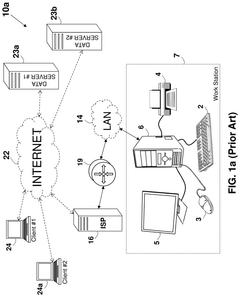
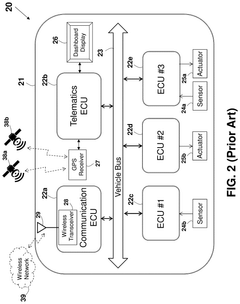
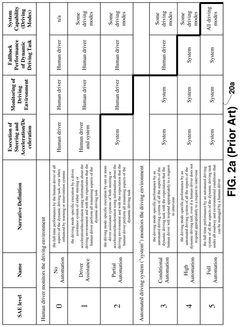
Plugin hybrid electric vehicle with v2g optimization system
PatentActiveUS20090229900A1
Innovation
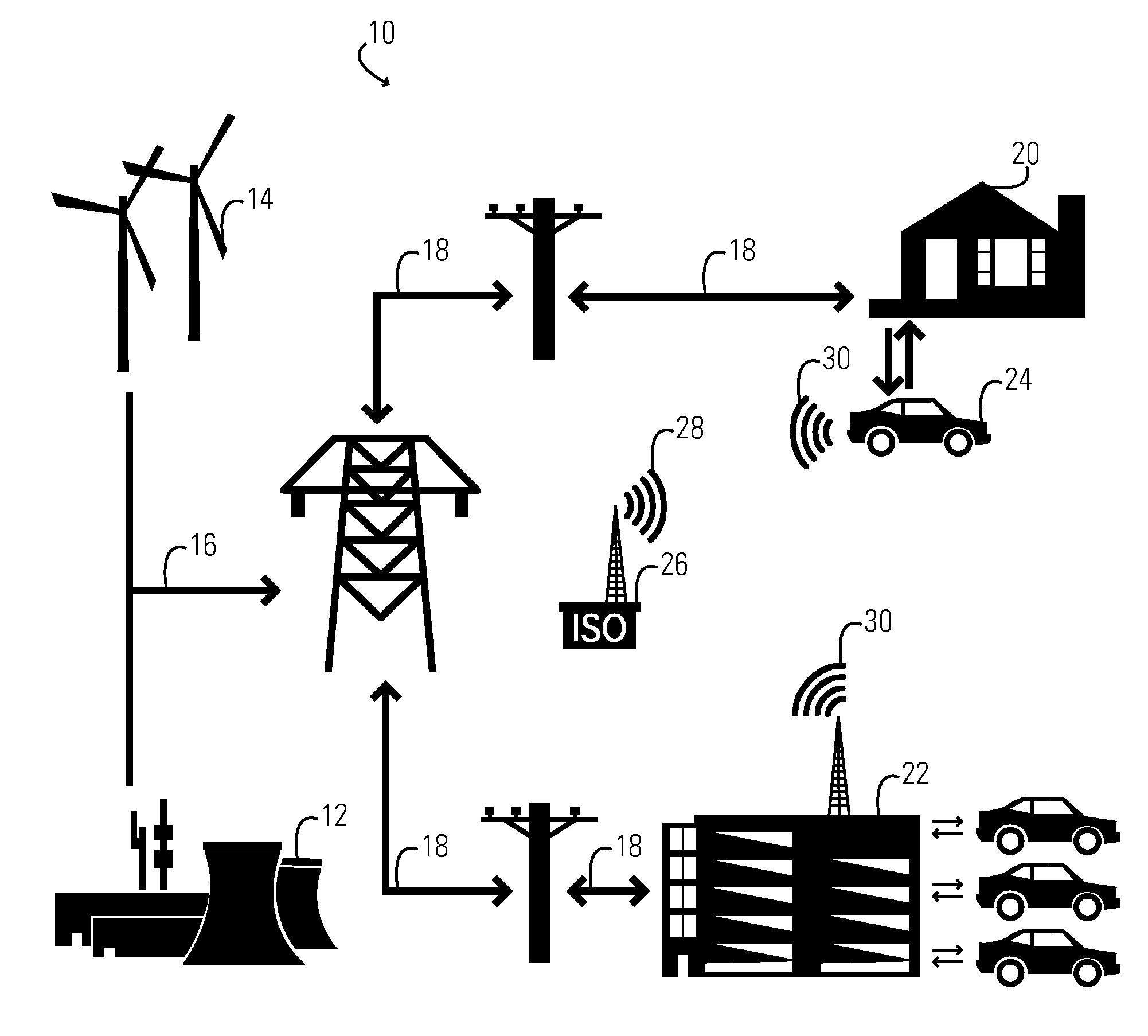
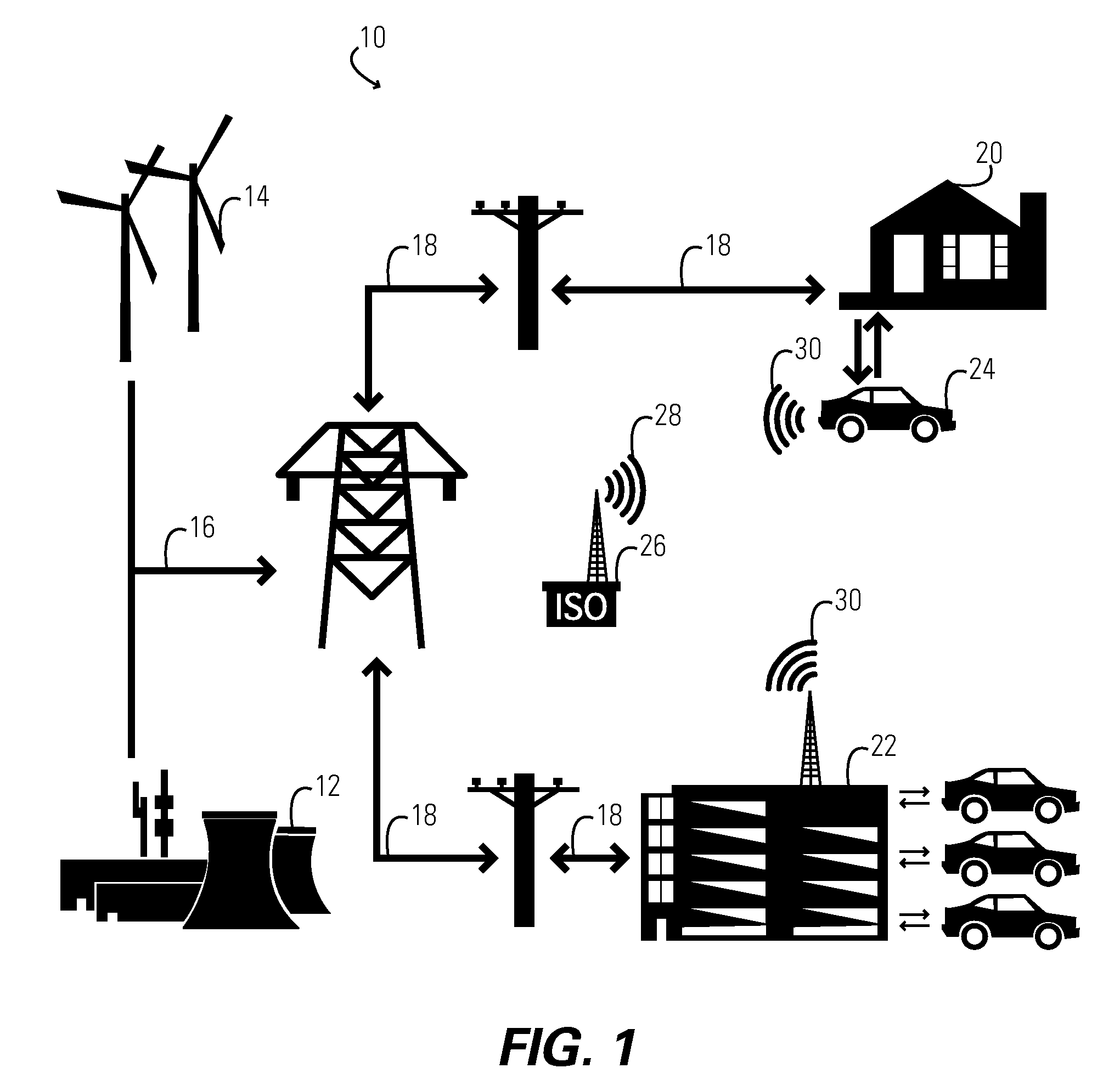
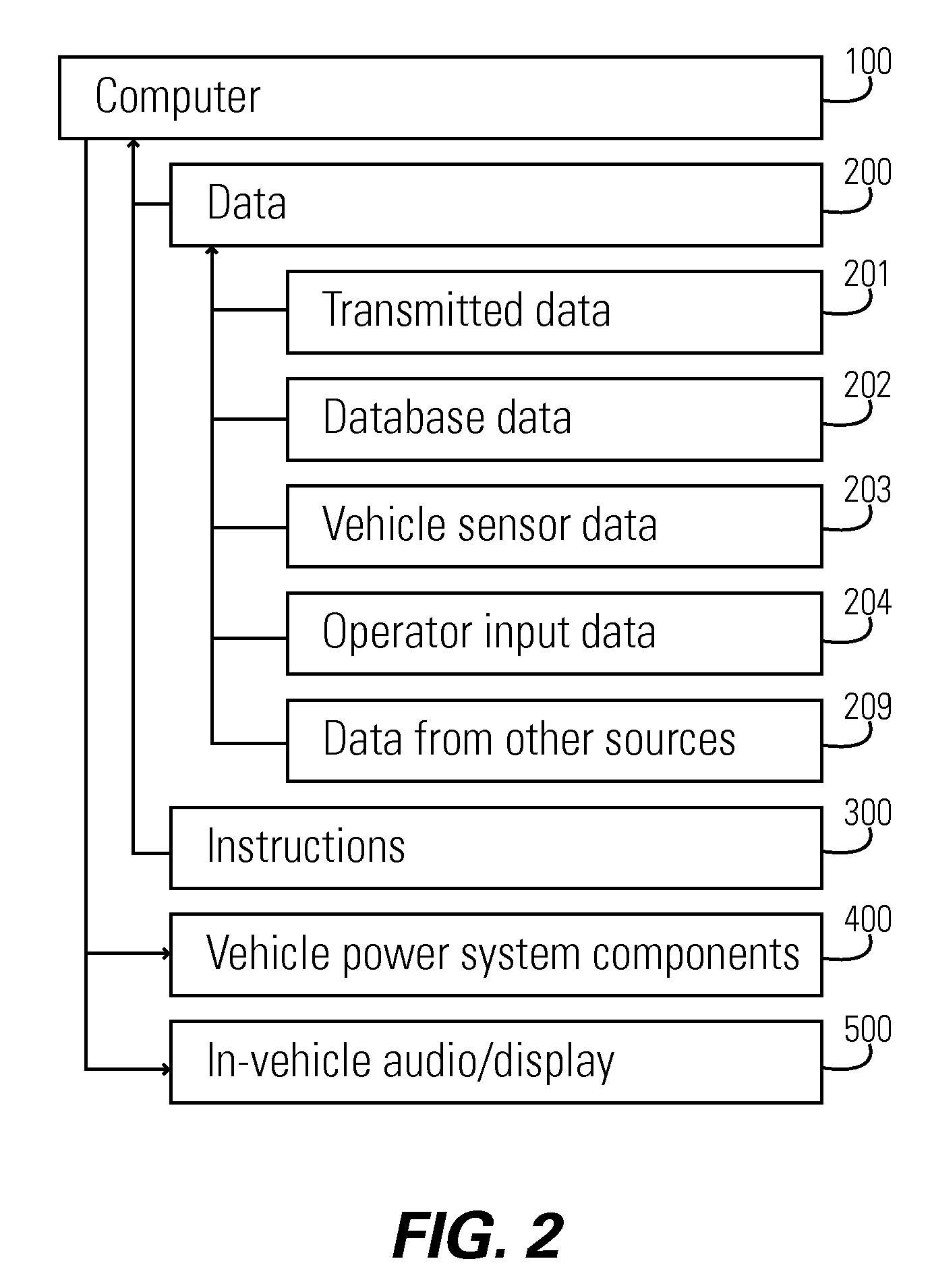
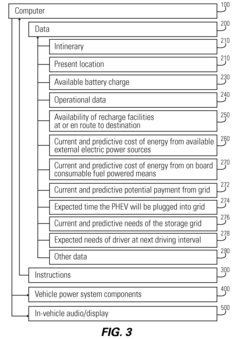
- A system that includes a plug-in hybrid electric vehicle (PHEV) with a computer that receives data on expected grid conditions and driver needs, controlling battery charging and discharging to optimize state of charge, allowing the vehicle to act as a power source or storage unit, and providing economic benefits to drivers.
Environmental Impact of PHEV Off-Grid Systems
The environmental impact of PHEV off-grid systems is a complex and multifaceted issue that requires careful consideration. These systems, which combine the capabilities of plug-in hybrid electric vehicles (PHEVs) with off-grid energy solutions, have the potential to significantly reduce carbon emissions and promote sustainable energy use in remote or underserved areas.
One of the primary environmental benefits of PHEV off-grid systems is their ability to reduce reliance on fossil fuels. By utilizing the battery capacity of PHEVs as a mobile energy storage unit, these systems can harness and store renewable energy sources such as solar or wind power. This integration allows for a more efficient use of clean energy, reducing the need for diesel generators or other polluting power sources in off-grid locations.
The reduction in greenhouse gas emissions is another crucial environmental advantage of PHEV off-grid systems. When compared to traditional off-grid solutions that rely heavily on fossil fuels, these hybrid systems can significantly lower carbon dioxide and other harmful emissions. This is particularly important in ecologically sensitive areas or regions prone to air quality issues.
However, it is essential to consider the full lifecycle environmental impact of PHEV off-grid systems. The production of batteries and other components used in PHEVs and associated infrastructure can have significant environmental costs, including resource extraction and manufacturing emissions. Proper end-of-life management and recycling of these components are crucial to mitigate their long-term environmental impact.
Water conservation is another potential benefit of PHEV off-grid systems. Unlike some traditional power generation methods that require substantial water for cooling, these systems can operate with minimal water consumption. This aspect is particularly valuable in water-scarce regions where resource management is critical.
The noise pollution reduction offered by PHEV off-grid systems is an often-overlooked environmental benefit. Electric vehicles and their associated power systems typically operate much more quietly than conventional internal combustion engines or diesel generators. This reduced noise pollution can be particularly beneficial in natural habitats, minimizing disturbance to local wildlife.
Land use considerations are also important when assessing the environmental impact of PHEV off-grid systems. While these systems may require some infrastructure for charging and energy management, they generally have a smaller physical footprint compared to large-scale power plants or extensive grid networks. This can help preserve natural habitats and reduce land degradation associated with traditional energy infrastructure.
In conclusion, while PHEV off-grid systems offer significant environmental benefits, particularly in terms of emissions reduction and sustainable energy use, a holistic approach is necessary to fully understand and optimize their environmental impact. Ongoing research and development in battery technology, renewable energy integration, and lifecycle management will be crucial in maximizing the positive environmental contributions of these innovative systems.
One of the primary environmental benefits of PHEV off-grid systems is their ability to reduce reliance on fossil fuels. By utilizing the battery capacity of PHEVs as a mobile energy storage unit, these systems can harness and store renewable energy sources such as solar or wind power. This integration allows for a more efficient use of clean energy, reducing the need for diesel generators or other polluting power sources in off-grid locations.
The reduction in greenhouse gas emissions is another crucial environmental advantage of PHEV off-grid systems. When compared to traditional off-grid solutions that rely heavily on fossil fuels, these hybrid systems can significantly lower carbon dioxide and other harmful emissions. This is particularly important in ecologically sensitive areas or regions prone to air quality issues.
However, it is essential to consider the full lifecycle environmental impact of PHEV off-grid systems. The production of batteries and other components used in PHEVs and associated infrastructure can have significant environmental costs, including resource extraction and manufacturing emissions. Proper end-of-life management and recycling of these components are crucial to mitigate their long-term environmental impact.
Water conservation is another potential benefit of PHEV off-grid systems. Unlike some traditional power generation methods that require substantial water for cooling, these systems can operate with minimal water consumption. This aspect is particularly valuable in water-scarce regions where resource management is critical.
The noise pollution reduction offered by PHEV off-grid systems is an often-overlooked environmental benefit. Electric vehicles and their associated power systems typically operate much more quietly than conventional internal combustion engines or diesel generators. This reduced noise pollution can be particularly beneficial in natural habitats, minimizing disturbance to local wildlife.
Land use considerations are also important when assessing the environmental impact of PHEV off-grid systems. While these systems may require some infrastructure for charging and energy management, they generally have a smaller physical footprint compared to large-scale power plants or extensive grid networks. This can help preserve natural habitats and reduce land degradation associated with traditional energy infrastructure.
In conclusion, while PHEV off-grid systems offer significant environmental benefits, particularly in terms of emissions reduction and sustainable energy use, a holistic approach is necessary to fully understand and optimize their environmental impact. Ongoing research and development in battery technology, renewable energy integration, and lifecycle management will be crucial in maximizing the positive environmental contributions of these innovative systems.
Regulatory Framework for PHEV Grid Support
The regulatory framework for PHEV grid support is a critical aspect of integrating plug-in hybrid electric vehicles (PHEVs) into off-grid energy solutions. As PHEVs become more prevalent, governments and regulatory bodies are developing policies and standards to ensure their safe and efficient integration with the power grid, including off-grid applications.
One key component of this framework is the establishment of vehicle-to-grid (V2G) standards. These standards define the technical requirements for bidirectional power flow between PHEVs and the grid, enabling vehicles to not only draw power but also supply it back when needed. This capability is particularly valuable in off-grid scenarios where PHEVs can serve as mobile power sources.
Regulatory bodies are also addressing the need for interoperability between different PHEV models and charging infrastructure. This includes standardizing communication protocols and physical connectors to ensure seamless integration across various off-grid energy systems. Such standardization efforts facilitate the widespread adoption of PHEVs as reliable power sources in remote or disaster-stricken areas.
Safety regulations play a crucial role in the regulatory framework. These include guidelines for battery management systems, thermal runaway prevention, and electrical isolation to mitigate risks associated with using PHEVs as power sources. Additionally, regulations are being developed to address cybersecurity concerns, ensuring that the integration of PHEVs into off-grid energy solutions does not compromise the overall system's integrity.
Environmental considerations are another important aspect of the regulatory framework. Policies are being implemented to incentivize the use of PHEVs in off-grid applications, recognizing their potential to reduce reliance on diesel generators and other high-emission power sources. These may include tax incentives, grants, or preferential treatment in government procurement processes for PHEV-based off-grid solutions.
The regulatory framework also addresses the economic aspects of PHEV grid support. This includes developing tariff structures and compensation mechanisms for PHEV owners who provide power to off-grid systems. Such policies aim to create a fair and sustainable market for vehicle-to-grid services, encouraging PHEV owners to participate in supporting off-grid energy solutions.
Lastly, regulations are being established to govern the lifecycle management of PHEVs used in off-grid applications. This encompasses guidelines for battery recycling, second-life applications of PHEV batteries in stationary energy storage, and proper disposal of end-of-life components. These regulations ensure that the environmental benefits of PHEVs extend beyond their operational life, contributing to a more sustainable energy ecosystem.
One key component of this framework is the establishment of vehicle-to-grid (V2G) standards. These standards define the technical requirements for bidirectional power flow between PHEVs and the grid, enabling vehicles to not only draw power but also supply it back when needed. This capability is particularly valuable in off-grid scenarios where PHEVs can serve as mobile power sources.
Regulatory bodies are also addressing the need for interoperability between different PHEV models and charging infrastructure. This includes standardizing communication protocols and physical connectors to ensure seamless integration across various off-grid energy systems. Such standardization efforts facilitate the widespread adoption of PHEVs as reliable power sources in remote or disaster-stricken areas.
Safety regulations play a crucial role in the regulatory framework. These include guidelines for battery management systems, thermal runaway prevention, and electrical isolation to mitigate risks associated with using PHEVs as power sources. Additionally, regulations are being developed to address cybersecurity concerns, ensuring that the integration of PHEVs into off-grid energy solutions does not compromise the overall system's integrity.
Environmental considerations are another important aspect of the regulatory framework. Policies are being implemented to incentivize the use of PHEVs in off-grid applications, recognizing their potential to reduce reliance on diesel generators and other high-emission power sources. These may include tax incentives, grants, or preferential treatment in government procurement processes for PHEV-based off-grid solutions.
The regulatory framework also addresses the economic aspects of PHEV grid support. This includes developing tariff structures and compensation mechanisms for PHEV owners who provide power to off-grid systems. Such policies aim to create a fair and sustainable market for vehicle-to-grid services, encouraging PHEV owners to participate in supporting off-grid energy solutions.
Lastly, regulations are being established to govern the lifecycle management of PHEVs used in off-grid applications. This encompasses guidelines for battery recycling, second-life applications of PHEV batteries in stationary energy storage, and proper disposal of end-of-life components. These regulations ensure that the environmental benefits of PHEVs extend beyond their operational life, contributing to a more sustainable energy ecosystem.
Unlock deeper insights with Patsnap Eureka Quick Research — get a full tech report to explore trends and direct your research. Try now!
Generate Your Research Report Instantly with AI Agent
Supercharge your innovation with Patsnap Eureka AI Agent Platform!