How surface roughness influences paint adhesion on zinc coatings
OCT 11, 20259 MIN READ
Generate Your Research Report Instantly with AI Agent
Patsnap Eureka helps you evaluate technical feasibility & market potential.
Surface Roughness and Paint Adhesion Background
The relationship between surface roughness and paint adhesion on zinc coatings represents a critical interface phenomenon in corrosion protection systems. Since the 1950s, surface preparation techniques for zinc coatings have evolved significantly, transitioning from basic mechanical abrasion to sophisticated chemical and physical modification methods. This technological progression has been driven by the increasing demands for durable and aesthetically pleasing protective finishes in automotive, construction, and industrial applications.
Surface roughness, characterized by microscopic peaks and valleys on a substrate, creates mechanical interlocking opportunities for paint systems. On zinc coatings, this topographical variation significantly influences the contact area available for adhesion mechanisms. Research has demonstrated that an optimal roughness range exists - typically between 1-3 μm Ra (roughness average) - where adhesion strength reaches its maximum potential. Below this threshold, insufficient mechanical keying occurs, while excessive roughness can lead to air entrapment and incomplete wetting by the paint system.
The zinc substrate itself presents unique challenges due to its amphoteric nature and tendency to form various corrosion products. Hot-dip galvanized coatings develop a zinc oxide layer upon exposure to atmosphere, which transforms to zinc hydroxide and eventually to zinc carbonate. These surface transformations directly impact the surface energy and roughness parameters, consequently affecting paint adhesion performance.
Modern surface profilometry techniques, including atomic force microscopy (AFM), scanning electron microscopy (SEM), and optical interferometry, have enabled precise quantification of surface roughness parameters beyond simple Ra values. Parameters such as Rz (maximum height), Rsm (mean spacing), and bearing ratio provide more comprehensive characterization of surface topography relevant to adhesion phenomena.
The correlation between roughness and adhesion follows complex non-linear relationships influenced by the paint system's rheological properties. Low-viscosity primers penetrate surface irregularities more effectively than high-build systems, creating stronger mechanical bonds. Additionally, the chemical compatibility between zinc surfaces and paint components introduces another dimension to this relationship, where surface roughness can either enhance or impede chemical bonding mechanisms.
Industry standards have evolved to specify optimal surface preparation methods for zinc coatings, including sweep blasting, chemical etching, and phosphating treatments. These processes are designed to achieve specific roughness profiles that maximize paint adhesion while minimizing substrate damage. The technological trajectory points toward more environmentally friendly surface modification techniques that maintain optimal roughness characteristics while reducing hazardous waste generation.
Surface roughness, characterized by microscopic peaks and valleys on a substrate, creates mechanical interlocking opportunities for paint systems. On zinc coatings, this topographical variation significantly influences the contact area available for adhesion mechanisms. Research has demonstrated that an optimal roughness range exists - typically between 1-3 μm Ra (roughness average) - where adhesion strength reaches its maximum potential. Below this threshold, insufficient mechanical keying occurs, while excessive roughness can lead to air entrapment and incomplete wetting by the paint system.
The zinc substrate itself presents unique challenges due to its amphoteric nature and tendency to form various corrosion products. Hot-dip galvanized coatings develop a zinc oxide layer upon exposure to atmosphere, which transforms to zinc hydroxide and eventually to zinc carbonate. These surface transformations directly impact the surface energy and roughness parameters, consequently affecting paint adhesion performance.
Modern surface profilometry techniques, including atomic force microscopy (AFM), scanning electron microscopy (SEM), and optical interferometry, have enabled precise quantification of surface roughness parameters beyond simple Ra values. Parameters such as Rz (maximum height), Rsm (mean spacing), and bearing ratio provide more comprehensive characterization of surface topography relevant to adhesion phenomena.
The correlation between roughness and adhesion follows complex non-linear relationships influenced by the paint system's rheological properties. Low-viscosity primers penetrate surface irregularities more effectively than high-build systems, creating stronger mechanical bonds. Additionally, the chemical compatibility between zinc surfaces and paint components introduces another dimension to this relationship, where surface roughness can either enhance or impede chemical bonding mechanisms.
Industry standards have evolved to specify optimal surface preparation methods for zinc coatings, including sweep blasting, chemical etching, and phosphating treatments. These processes are designed to achieve specific roughness profiles that maximize paint adhesion while minimizing substrate damage. The technological trajectory points toward more environmentally friendly surface modification techniques that maintain optimal roughness characteristics while reducing hazardous waste generation.
Market Analysis of Zinc Coating Applications
The global zinc coating market has experienced substantial growth over the past decade, reaching approximately $20 billion in 2022, with projections indicating continued expansion at a CAGR of 5.2% through 2028. This growth is primarily driven by increasing demand across automotive, construction, and infrastructure sectors, where corrosion protection remains a critical requirement for metal components.
The automotive industry represents the largest application segment, accounting for nearly 40% of zinc coating consumption. With stringent anti-corrosion requirements and the growing trend toward lightweight vehicle construction, demand for advanced zinc coating solutions with superior paint adhesion properties continues to rise. The construction sector follows closely, representing about 30% of market share, where weather-resistant building materials are essential for longevity and structural integrity.
Geographically, Asia-Pacific dominates the zinc coating market, contributing over 45% of global demand, with China and India serving as manufacturing powerhouses. North America and Europe collectively account for approximately 40% of the market, where stringent environmental regulations are driving innovation in eco-friendly zinc coating technologies with improved surface characteristics.
Consumer preferences are increasingly shifting toward products with extended lifespans and reduced maintenance requirements, creating market pressure for zinc coatings with enhanced durability and superior paint adhesion properties. This trend is particularly evident in premium market segments where aesthetic appearance and long-term performance justify higher initial costs.
Environmental regulations continue to shape market dynamics, with restrictions on volatile organic compounds (VOCs) and heavy metals influencing coating formulations. This regulatory landscape has accelerated the development of water-based zinc coating systems and surface preparation techniques that optimize roughness profiles for paint adhesion while minimizing environmental impact.
The market exhibits moderate fragmentation, with the top five players controlling approximately 35% of global market share. These industry leaders are increasingly focusing on research and development activities centered on surface engineering technologies that optimize the relationship between surface roughness and paint adhesion performance.
Recent market surveys indicate that customers are willing to pay a premium of 15-20% for zinc coating solutions that demonstrate superior paint adhesion properties, highlighting the commercial value of advancements in surface roughness control technologies. This premium pricing potential represents a significant opportunity for companies that can effectively translate technical innovations in surface engineering into marketable product advantages.
The automotive industry represents the largest application segment, accounting for nearly 40% of zinc coating consumption. With stringent anti-corrosion requirements and the growing trend toward lightweight vehicle construction, demand for advanced zinc coating solutions with superior paint adhesion properties continues to rise. The construction sector follows closely, representing about 30% of market share, where weather-resistant building materials are essential for longevity and structural integrity.
Geographically, Asia-Pacific dominates the zinc coating market, contributing over 45% of global demand, with China and India serving as manufacturing powerhouses. North America and Europe collectively account for approximately 40% of the market, where stringent environmental regulations are driving innovation in eco-friendly zinc coating technologies with improved surface characteristics.
Consumer preferences are increasingly shifting toward products with extended lifespans and reduced maintenance requirements, creating market pressure for zinc coatings with enhanced durability and superior paint adhesion properties. This trend is particularly evident in premium market segments where aesthetic appearance and long-term performance justify higher initial costs.
Environmental regulations continue to shape market dynamics, with restrictions on volatile organic compounds (VOCs) and heavy metals influencing coating formulations. This regulatory landscape has accelerated the development of water-based zinc coating systems and surface preparation techniques that optimize roughness profiles for paint adhesion while minimizing environmental impact.
The market exhibits moderate fragmentation, with the top five players controlling approximately 35% of global market share. These industry leaders are increasingly focusing on research and development activities centered on surface engineering technologies that optimize the relationship between surface roughness and paint adhesion performance.
Recent market surveys indicate that customers are willing to pay a premium of 15-20% for zinc coating solutions that demonstrate superior paint adhesion properties, highlighting the commercial value of advancements in surface roughness control technologies. This premium pricing potential represents a significant opportunity for companies that can effectively translate technical innovations in surface engineering into marketable product advantages.
Current Challenges in Paint Adhesion Technology
Despite significant advancements in coating technologies, paint adhesion on zinc surfaces continues to present several persistent challenges for manufacturers and engineers. The primary obstacle remains the inherent chemical reactivity of zinc surfaces, which rapidly form oxide and hydroxide layers upon exposure to atmospheric conditions. These layers, while providing corrosion protection, often create an unstable foundation for paint systems, leading to premature coating failures and delamination issues.
Surface roughness variability across zinc coatings represents another major challenge. Insufficient roughness profiles fail to provide adequate mechanical interlocking opportunities for paint systems, while excessive roughness can lead to coating thickness inconsistencies and air entrapment. The industry currently lacks standardized methodologies for optimizing surface roughness parameters specifically tailored to different paint chemistries and application environments.
Environmental compliance requirements have further complicated adhesion solutions. Traditional surface preparation methods involving chromate conversion coatings, which historically provided excellent adhesion promotion, face increasing regulatory restrictions due to their environmental toxicity. Alternative pretreatment technologies often deliver inconsistent adhesion performance across varying humidity and temperature conditions, particularly in aggressive environments.
The zinc coating production process itself introduces adhesion challenges through contamination pathways. Residual rolling oils, processing lubricants, and surface impurities can significantly compromise paint adhesion quality. Current cleaning technologies struggle to completely remove these contaminants without altering the beneficial surface characteristics of the zinc coating.
Accelerated testing methodologies present another significant limitation. Current laboratory tests often fail to accurately predict long-term adhesion performance in real-world applications, creating a disconnect between development and actual field performance. This testing gap frequently results in unexpected adhesion failures after product deployment.
Emerging zinc alloy coatings (zinc-aluminum, zinc-magnesium) exhibit different surface characteristics compared to traditional galvanized coatings, requiring entirely new approaches to surface preparation and paint system compatibility. The industry has yet to develop comprehensive adhesion protocols for these advanced coating systems.
Finally, cost-effectiveness remains a persistent challenge. While sophisticated surface modification techniques like plasma treatment and nanostructured primers demonstrate excellent adhesion properties in laboratory settings, their commercial implementation faces significant economic barriers, limiting widespread adoption in price-sensitive market segments.
Surface roughness variability across zinc coatings represents another major challenge. Insufficient roughness profiles fail to provide adequate mechanical interlocking opportunities for paint systems, while excessive roughness can lead to coating thickness inconsistencies and air entrapment. The industry currently lacks standardized methodologies for optimizing surface roughness parameters specifically tailored to different paint chemistries and application environments.
Environmental compliance requirements have further complicated adhesion solutions. Traditional surface preparation methods involving chromate conversion coatings, which historically provided excellent adhesion promotion, face increasing regulatory restrictions due to their environmental toxicity. Alternative pretreatment technologies often deliver inconsistent adhesion performance across varying humidity and temperature conditions, particularly in aggressive environments.
The zinc coating production process itself introduces adhesion challenges through contamination pathways. Residual rolling oils, processing lubricants, and surface impurities can significantly compromise paint adhesion quality. Current cleaning technologies struggle to completely remove these contaminants without altering the beneficial surface characteristics of the zinc coating.
Accelerated testing methodologies present another significant limitation. Current laboratory tests often fail to accurately predict long-term adhesion performance in real-world applications, creating a disconnect between development and actual field performance. This testing gap frequently results in unexpected adhesion failures after product deployment.
Emerging zinc alloy coatings (zinc-aluminum, zinc-magnesium) exhibit different surface characteristics compared to traditional galvanized coatings, requiring entirely new approaches to surface preparation and paint system compatibility. The industry has yet to develop comprehensive adhesion protocols for these advanced coating systems.
Finally, cost-effectiveness remains a persistent challenge. While sophisticated surface modification techniques like plasma treatment and nanostructured primers demonstrate excellent adhesion properties in laboratory settings, their commercial implementation faces significant economic barriers, limiting widespread adoption in price-sensitive market segments.
Current Surface Preparation Methodologies
01 Surface treatment methods for zinc coatings
Various surface treatment methods can be applied to zinc coatings to enhance paint adhesion. These include chemical treatments such as phosphating, chromating, and alkaline treatments that create a conversion layer on the zinc surface. These treatments modify the surface chemistry and topography of the zinc coating, providing better mechanical interlocking and chemical bonding with paint systems. Proper surface preparation is essential for achieving optimal paint adhesion on zinc-coated substrates.- Surface treatment methods for zinc coatings: Various surface treatment methods can be applied to zinc coatings to enhance paint adhesion. These include chemical treatments such as phosphating, chromating, and alkaline treatments that create a conversion layer on the zinc surface. These treatments modify the surface chemistry and topography of the zinc coating, providing better mechanical interlocking and chemical bonding with paint systems. Proper surface preparation is crucial for achieving optimal paint adhesion on zinc-coated substrates.
- Primer formulations for zinc surfaces: Specialized primer formulations have been developed specifically for zinc-coated surfaces to improve paint adhesion. These primers often contain adhesion promoters such as phosphoric acid derivatives, silanes, or specific polymers that can form strong bonds with zinc surfaces. Some formulations incorporate zinc phosphate or other zinc compounds to create a chemical affinity with the substrate. These primers serve as an intermediate layer that enhances the adhesion between the zinc coating and the topcoat paint system.
- Zinc coating composition modifications: The composition of zinc coatings can be modified to improve their compatibility with paint systems. Alloying elements such as aluminum, magnesium, or nickel can be added to the zinc coating to alter its surface properties. Some formulations incorporate organic additives or nanoparticles that enhance the coating's ability to form strong bonds with paint. These modifications can improve the wettability of the zinc surface by paint and create more favorable conditions for chemical bonding.
- Paint formulations for enhanced adhesion to zinc: Specialized paint formulations have been developed to address the challenges of adhering to zinc surfaces. These paints often contain specific binders such as epoxy, polyurethane, or acrylic resins that have good adhesion properties to zinc. Adhesion promoters, such as silanes or titanates, can be incorporated into the paint formulation. Some paints also include corrosion inhibitors that work synergistically with the zinc substrate to provide both adhesion and corrosion protection.
- Surface roughening and mechanical preparation: Mechanical methods can be used to enhance paint adhesion on zinc coatings by increasing surface roughness. Techniques such as light abrasion, sweep blasting, or brush-off blasting create a profile on the zinc surface that provides mechanical interlocking with the paint. Care must be taken not to damage the zinc coating during these processes. Some methods combine mechanical roughening with chemical treatments to optimize both mechanical and chemical bonding between the zinc coating and paint system.
02 Primer formulations for zinc surfaces
Specialized primer formulations have been developed specifically for zinc-coated surfaces to improve paint adhesion. These primers often contain adhesion promoters such as phosphoric acid derivatives, silanes, or titanates that can chemically bond with both the zinc substrate and the topcoat. Some formulations incorporate zinc phosphate or other corrosion inhibitors to provide additional protection. These primers create an intermediate layer that bridges the compatibility gap between the zinc coating and subsequent paint layers.Expand Specific Solutions03 Zinc coating composition modifications
The composition of zinc coatings can be modified to inherently improve paint adhesion. Alloying zinc with other metals such as nickel, iron, or aluminum creates surfaces with different properties than pure zinc. Additionally, incorporating certain additives or nanoparticles into the zinc coating during application can create a more paint-receptive surface. These compositional modifications can alter the surface energy, roughness, or reactivity of the coating, leading to better mechanical and chemical bonding with paint systems.Expand Specific Solutions04 Paint formulations for enhanced adhesion to zinc
Specialized paint formulations designed specifically for application on zinc surfaces can significantly improve adhesion. These formulations often contain functional groups that can chemically interact with zinc surfaces, such as carboxylic acids, phosphoric acid derivatives, or certain polymers. Some paints incorporate adhesion promoters, wetting agents, or specific resin systems that are compatible with zinc substrates. The proper selection of binders, pigments, and additives in the paint formulation is crucial for achieving durable adhesion to zinc-coated surfaces.Expand Specific Solutions05 Application techniques and environmental factors
The method of paint application and environmental conditions during application significantly impact adhesion to zinc coatings. Proper application techniques include controlling film thickness, ensuring appropriate drying conditions, and using suitable application equipment. Environmental factors such as temperature, humidity, and surface cleanliness play crucial roles in paint adhesion. Pre-weathering of zinc surfaces or controlled oxidation can sometimes improve paint adhesion by creating a more receptive surface for certain coating systems.Expand Specific Solutions
Leading Manufacturers and Research Institutions
The surface roughness influence on paint adhesion in zinc coatings market is in a growth phase, driven by automotive and construction industries' demand for corrosion-resistant materials. The global zinc coating market exceeds $20 billion, with significant expansion projected due to infrastructure development. Technologically, the field shows moderate maturity with ongoing innovation. Companies like thyssenkrupp Steel Europe, ArcelorMittal, and Nippon Steel lead in zinc-coated steel production, while Kansai Paint, Henkel, and Nihon Parkerizing demonstrate advanced expertise in surface treatment technologies. Chinese players including Guangzhou Jointas Chemical and BIAM New Materials are rapidly advancing their capabilities, particularly in specialized coatings that optimize adhesion properties on varying surface roughness profiles.
thyssenkrupp Steel Europe AG
Technical Solution: thyssenkrupp Steel Europe has developed advanced zinc coating surface modification technologies that precisely control surface roughness parameters for optimal paint adhesion. Their ZinkPLUS® coating system incorporates controlled roughness profiles achieved through specialized post-galvanizing treatments that create micro-texturing on zinc surfaces. This technology utilizes a combination of mechanical brushing and chemical passivation to establish an optimal roughness range (Ra values between 0.8-1.5 μm) that maximizes mechanical interlocking with paint systems while preventing excessive roughness that could lead to coating defects. Their research has demonstrated that controlling the peak density and valley depth distribution significantly improves paint adhesion strength by up to 40% compared to conventional hot-dip galvanized surfaces.
Strengths: Precise control over surface roughness parameters allows customization for different paint systems; integrated production process ensures consistent quality. Weaknesses: The specialized post-treatment processes add production costs and may limit throughput speeds in high-volume manufacturing environments.
ArcelorMittal SA
Technical Solution: ArcelorMittal has pioneered the Magnelis® zinc coating technology with controlled surface roughness optimization specifically designed to enhance paint adhesion. Their approach involves a three-phase process: first, establishing a base zinc-aluminum-magnesium alloy coating with inherently improved corrosion resistance; second, applying a proprietary micro-roughening treatment that creates an optimal surface topography with Ra values typically between 1.0-2.0 μm; and third, implementing a thin organic coating primer that chemically bonds with both the zinc surface and subsequent paint layers. Their research has demonstrated that this controlled roughness profile significantly improves mechanical interlocking while the chemical bonding enhances adhesion strength by up to 30% compared to conventional galvanized surfaces. ArcelorMittal's surface engineering approach also incorporates specific peak-to-valley ratio controls that prevent paint pooling while maximizing contact surface area.
Strengths: The combined mechanical and chemical adhesion approach provides superior durability in harsh environments; the Magnelis® base coating offers enhanced corrosion protection even if paint is damaged. Weaknesses: The specialized coating requires more precise process controls and may have higher initial costs compared to standard galvanizing processes.
Key Technical Innovations in Adhesion Science
Method of ion bombarding a zinc or zinc alloy coated steel sheet before painting thereof
PatentWO1995003435A2
Innovation
- The technique involves subjecting the zinc-coated steel sheets to ion bombardment under vacuum with neutral or reactive gases, modifying the surface state through ionic erosion, thermionic effects, or chemical reactions, which increases surface roughness and improves paint adhesion and appearance.
Method of producing parts with slight undulation from an electrogalvanized sheet, corresponding part and vehicle
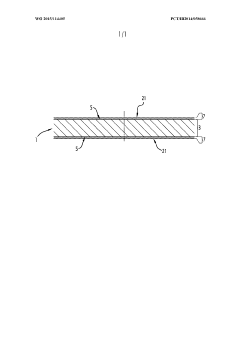
PatentWO2015114405A1
Innovation
- A process involving cold rolling with reduced roughness work rolls, followed by electrodeposition of zinc-based coatings, and subsequent deformation, which reduces the arithmetic mean waviness of the coating's surface, allowing for thinner paint films while maintaining appearance quality.
Corrosion Protection Performance Metrics
Corrosion protection performance metrics provide essential frameworks for evaluating how effectively zinc coatings resist degradation under various environmental conditions, particularly when considering the relationship between surface roughness and paint adhesion. These metrics typically include standardized tests that measure adhesion strength, corrosion resistance, and coating durability over time.
The salt spray test (ASTM B117) remains one of the most widely used metrics, exposing coated samples to a salt fog environment for extended periods to evaluate corrosion progression. For zinc-coated substrates with varying surface roughness profiles, this test reveals critical insights into how topographical features influence paint adhesion and subsequent corrosion protection. Samples with optimized surface roughness typically demonstrate significantly reduced red rust formation and better paint integrity after 1,000+ hours of exposure.
Electrochemical impedance spectroscopy (EIS) offers quantitative measurements of coating barrier properties, with higher impedance values generally indicating superior corrosion protection. Research shows that zinc coatings with controlled surface roughness parameters (Ra between 1.5-3.0 μm) often exhibit impedance values 2-3 times higher than those with either too smooth or excessively rough profiles when properly painted.
Pull-off adhesion testing (ASTM D4541) directly quantifies the force required to separate paint from zinc substrates. Studies consistently demonstrate that moderately roughened zinc surfaces (achieved through controlled blasting or chemical etching) can increase adhesion strength by 30-50% compared to smooth surfaces, translating to enhanced long-term corrosion protection.
Cyclic corrosion testing combines multiple environmental stressors (humidity, temperature fluctuations, UV exposure) to simulate real-world conditions more accurately than single-parameter tests. These protocols reveal that paint systems on properly roughened zinc surfaces maintain their protective properties 1.5-2 times longer than those on improperly prepared surfaces.
Scribe creepage measurements evaluate how far corrosion spreads from an intentional defect, providing insights into a coating system's ability to resist undercutting. Zinc coatings with optimized surface roughness profiles typically show 40-60% less creepage after standardized testing, indicating superior adhesion and corrosion resistance at the paint-zinc interface.
Modern performance metrics increasingly incorporate accelerated weathering tests (ASTM G154) that combine UV exposure with moisture cycles, revealing how surface roughness affects paint adhesion and protection over simulated years of environmental exposure in just weeks of testing.
The salt spray test (ASTM B117) remains one of the most widely used metrics, exposing coated samples to a salt fog environment for extended periods to evaluate corrosion progression. For zinc-coated substrates with varying surface roughness profiles, this test reveals critical insights into how topographical features influence paint adhesion and subsequent corrosion protection. Samples with optimized surface roughness typically demonstrate significantly reduced red rust formation and better paint integrity after 1,000+ hours of exposure.
Electrochemical impedance spectroscopy (EIS) offers quantitative measurements of coating barrier properties, with higher impedance values generally indicating superior corrosion protection. Research shows that zinc coatings with controlled surface roughness parameters (Ra between 1.5-3.0 μm) often exhibit impedance values 2-3 times higher than those with either too smooth or excessively rough profiles when properly painted.
Pull-off adhesion testing (ASTM D4541) directly quantifies the force required to separate paint from zinc substrates. Studies consistently demonstrate that moderately roughened zinc surfaces (achieved through controlled blasting or chemical etching) can increase adhesion strength by 30-50% compared to smooth surfaces, translating to enhanced long-term corrosion protection.
Cyclic corrosion testing combines multiple environmental stressors (humidity, temperature fluctuations, UV exposure) to simulate real-world conditions more accurately than single-parameter tests. These protocols reveal that paint systems on properly roughened zinc surfaces maintain their protective properties 1.5-2 times longer than those on improperly prepared surfaces.
Scribe creepage measurements evaluate how far corrosion spreads from an intentional defect, providing insights into a coating system's ability to resist undercutting. Zinc coatings with optimized surface roughness profiles typically show 40-60% less creepage after standardized testing, indicating superior adhesion and corrosion resistance at the paint-zinc interface.
Modern performance metrics increasingly incorporate accelerated weathering tests (ASTM G154) that combine UV exposure with moisture cycles, revealing how surface roughness affects paint adhesion and protection over simulated years of environmental exposure in just weeks of testing.
Environmental Impact of Surface Treatment Processes
Surface treatment processes used to enhance paint adhesion on zinc coatings have significant environmental implications that must be considered in industrial applications. Traditional methods for increasing surface roughness often involve chemical treatments that release volatile organic compounds (VOCs) and heavy metals into the environment. These substances can contaminate water systems, contribute to air pollution, and pose risks to ecosystem health when not properly managed.
Mechanical roughening techniques, while generally less chemically intensive, generate particulate matter that requires proper collection and disposal systems. The energy consumption associated with these processes also contributes to their overall environmental footprint, particularly when considering large-scale industrial applications on zinc-coated surfaces.
Recent regulatory frameworks, including the European Union's REACH regulations and similar initiatives globally, have placed increasing restrictions on chemical treatments containing hexavalent chromium and other hazardous substances previously common in surface preparation for zinc coatings. This regulatory landscape has accelerated the development of more environmentally benign alternatives.
Water-based pretreatment systems have emerged as more sustainable options for creating optimal surface roughness on zinc coatings. These systems significantly reduce VOC emissions compared to solvent-based alternatives while still achieving the necessary adhesion properties. However, they still generate wastewater that requires treatment before discharge.
Life cycle assessment studies indicate that the environmental impact of surface treatment processes extends beyond the immediate manufacturing environment. The durability of the resulting paint adhesion directly influences product lifespan, with premature coating failures leading to additional environmental burdens through maintenance, repainting, or complete product replacement.
Emerging technologies such as plasma treatment and laser texturing offer promising alternatives with potentially lower environmental impacts. These dry processes can create controlled surface roughness patterns on zinc coatings without chemical waste streams, though their energy requirements and scalability remain considerations for widespread industrial adoption.
The waste management protocols associated with surface treatment processes represent another significant environmental consideration. Proper handling of spent solutions, rinse waters, and solid waste from mechanical treatments is essential to prevent environmental contamination and comply with increasingly stringent disposal regulations in industrial settings.
Mechanical roughening techniques, while generally less chemically intensive, generate particulate matter that requires proper collection and disposal systems. The energy consumption associated with these processes also contributes to their overall environmental footprint, particularly when considering large-scale industrial applications on zinc-coated surfaces.
Recent regulatory frameworks, including the European Union's REACH regulations and similar initiatives globally, have placed increasing restrictions on chemical treatments containing hexavalent chromium and other hazardous substances previously common in surface preparation for zinc coatings. This regulatory landscape has accelerated the development of more environmentally benign alternatives.
Water-based pretreatment systems have emerged as more sustainable options for creating optimal surface roughness on zinc coatings. These systems significantly reduce VOC emissions compared to solvent-based alternatives while still achieving the necessary adhesion properties. However, they still generate wastewater that requires treatment before discharge.
Life cycle assessment studies indicate that the environmental impact of surface treatment processes extends beyond the immediate manufacturing environment. The durability of the resulting paint adhesion directly influences product lifespan, with premature coating failures leading to additional environmental burdens through maintenance, repainting, or complete product replacement.
Emerging technologies such as plasma treatment and laser texturing offer promising alternatives with potentially lower environmental impacts. These dry processes can create controlled surface roughness patterns on zinc coatings without chemical waste streams, though their energy requirements and scalability remain considerations for widespread industrial adoption.
The waste management protocols associated with surface treatment processes represent another significant environmental consideration. Proper handling of spent solutions, rinse waters, and solid waste from mechanical treatments is essential to prevent environmental contamination and comply with increasingly stringent disposal regulations in industrial settings.
Unlock deeper insights with Patsnap Eureka Quick Research — get a full tech report to explore trends and direct your research. Try now!
Generate Your Research Report Instantly with AI Agent
Supercharge your innovation with Patsnap Eureka AI Agent Platform!