

How to Align Brain-Computer Interface Setup with Regulatory Compliance
MAR 5, 20269 MIN READ
Generate Your Research Report Instantly with AI Agent
PatSnap Eureka helps you evaluate technical feasibility & market potential.
BCI Technology Background and Regulatory Alignment Goals
Brain-Computer Interface technology represents a revolutionary convergence of neuroscience, engineering, and computational sciences that enables direct communication pathways between the brain and external devices. This interdisciplinary field has evolved from early experimental concepts in the 1970s to sophisticated systems capable of translating neural signals into actionable commands for prosthetic devices, computer interfaces, and therapeutic interventions.
The fundamental principle underlying BCI systems involves the acquisition, processing, and interpretation of neural signals through various methodologies including electroencephalography (EEG), electrocorticography (ECoG), and implanted microelectrode arrays. These technologies capture electrical activity from neurons and translate complex neural patterns into digital signals that can control external devices or provide feedback to the nervous system.
Current BCI applications span multiple domains, from assistive technologies for paralyzed patients to cognitive enhancement systems and neurological disorder treatments. The technology has demonstrated remarkable potential in restoring motor function, enabling communication for locked-in syndrome patients, and providing novel therapeutic approaches for conditions such as epilepsy, depression, and Parkinson's disease.
However, the integration of BCI systems into clinical and commercial environments faces significant regulatory challenges that directly impact technology development trajectories. The primary regulatory alignment goal centers on establishing comprehensive frameworks that ensure patient safety while fostering innovation in this rapidly advancing field. This involves harmonizing technical standards across different regulatory jurisdictions, particularly between FDA guidelines in the United States, CE marking requirements in Europe, and emerging regulatory frameworks in Asia-Pacific regions.
The regulatory compliance objectives encompass multiple critical dimensions including biocompatibility of implanted components, electromagnetic compatibility standards, cybersecurity protocols for neural data protection, and long-term safety monitoring requirements. These goals necessitate the development of standardized testing methodologies, risk assessment protocols, and post-market surveillance systems specifically tailored to BCI technologies.
Furthermore, regulatory alignment aims to address ethical considerations surrounding neural data privacy, informed consent procedures for invasive procedures, and the establishment of clear boundaries between therapeutic and enhancement applications. The evolving regulatory landscape seeks to balance the imperative for rigorous safety standards with the need to accelerate access to life-changing technologies for patients with severe neurological conditions.
The ultimate regulatory alignment goal involves creating adaptive regulatory pathways that can accommodate the rapid pace of BCI technological advancement while maintaining robust safety and efficacy standards. This includes developing expedited approval processes for breakthrough technologies, establishing clear guidelines for clinical trial designs, and creating international harmonization standards that facilitate global market access for innovative BCI solutions.
The fundamental principle underlying BCI systems involves the acquisition, processing, and interpretation of neural signals through various methodologies including electroencephalography (EEG), electrocorticography (ECoG), and implanted microelectrode arrays. These technologies capture electrical activity from neurons and translate complex neural patterns into digital signals that can control external devices or provide feedback to the nervous system.
Current BCI applications span multiple domains, from assistive technologies for paralyzed patients to cognitive enhancement systems and neurological disorder treatments. The technology has demonstrated remarkable potential in restoring motor function, enabling communication for locked-in syndrome patients, and providing novel therapeutic approaches for conditions such as epilepsy, depression, and Parkinson's disease.
However, the integration of BCI systems into clinical and commercial environments faces significant regulatory challenges that directly impact technology development trajectories. The primary regulatory alignment goal centers on establishing comprehensive frameworks that ensure patient safety while fostering innovation in this rapidly advancing field. This involves harmonizing technical standards across different regulatory jurisdictions, particularly between FDA guidelines in the United States, CE marking requirements in Europe, and emerging regulatory frameworks in Asia-Pacific regions.
The regulatory compliance objectives encompass multiple critical dimensions including biocompatibility of implanted components, electromagnetic compatibility standards, cybersecurity protocols for neural data protection, and long-term safety monitoring requirements. These goals necessitate the development of standardized testing methodologies, risk assessment protocols, and post-market surveillance systems specifically tailored to BCI technologies.
Furthermore, regulatory alignment aims to address ethical considerations surrounding neural data privacy, informed consent procedures for invasive procedures, and the establishment of clear boundaries between therapeutic and enhancement applications. The evolving regulatory landscape seeks to balance the imperative for rigorous safety standards with the need to accelerate access to life-changing technologies for patients with severe neurological conditions.
The ultimate regulatory alignment goal involves creating adaptive regulatory pathways that can accommodate the rapid pace of BCI technological advancement while maintaining robust safety and efficacy standards. This includes developing expedited approval processes for breakthrough technologies, establishing clear guidelines for clinical trial designs, and creating international harmonization standards that facilitate global market access for innovative BCI solutions.
Market Demand for Compliant BCI Systems
The global brain-computer interface market is experiencing unprecedented growth driven by increasing demand for regulatory-compliant systems across multiple sectors. Healthcare applications represent the largest segment, with medical device manufacturers seeking BCI solutions that meet stringent FDA, CE marking, and other international regulatory standards. Neurological rehabilitation centers, hospitals treating spinal cord injuries, and facilities managing neurodegenerative diseases are actively procuring compliant BCI systems to ensure patient safety and legal operation.
The medical device sector demonstrates particularly strong demand for Class II and Class III compliant BCI systems. Hospitals and research institutions require systems that adhere to ISO 14155 clinical investigation standards and Good Clinical Practice guidelines. This demand is intensified by the growing prevalence of neurological disorders and the aging global population, creating substantial market opportunities for manufacturers who can navigate complex regulatory landscapes.
Consumer electronics companies are increasingly recognizing the commercial potential of regulatory-compliant BCI systems for non-medical applications. Gaming, virtual reality, and assistive technology sectors are driving demand for systems that meet consumer safety standards while maintaining performance capabilities. These companies require BCI solutions that comply with electromagnetic compatibility regulations, data privacy laws, and consumer protection standards across different jurisdictions.
Research institutions and academic organizations constitute another significant market segment demanding compliant BCI systems. Universities conducting neuroscience research, cognitive studies, and human-computer interaction experiments require systems that meet institutional review board standards and research ethics guidelines. Government-funded research programs specifically mandate compliance with federal regulations, creating sustained demand for certified systems.
The defense and aerospace sectors represent emerging high-value markets for compliant BCI systems. Military applications require systems meeting stringent security clearances, cybersecurity standards, and operational safety requirements. These specialized applications command premium pricing due to their complex compliance requirements and limited supplier base.
Market demand is further amplified by increasing regulatory scrutiny and evolving international standards. Organizations are proactively seeking compliant solutions to avoid costly retrofitting and regulatory penalties. The convergence of technological advancement and regulatory maturation is creating a robust market environment where compliance becomes a competitive differentiator rather than merely a barrier to entry.
The medical device sector demonstrates particularly strong demand for Class II and Class III compliant BCI systems. Hospitals and research institutions require systems that adhere to ISO 14155 clinical investigation standards and Good Clinical Practice guidelines. This demand is intensified by the growing prevalence of neurological disorders and the aging global population, creating substantial market opportunities for manufacturers who can navigate complex regulatory landscapes.
Consumer electronics companies are increasingly recognizing the commercial potential of regulatory-compliant BCI systems for non-medical applications. Gaming, virtual reality, and assistive technology sectors are driving demand for systems that meet consumer safety standards while maintaining performance capabilities. These companies require BCI solutions that comply with electromagnetic compatibility regulations, data privacy laws, and consumer protection standards across different jurisdictions.
Research institutions and academic organizations constitute another significant market segment demanding compliant BCI systems. Universities conducting neuroscience research, cognitive studies, and human-computer interaction experiments require systems that meet institutional review board standards and research ethics guidelines. Government-funded research programs specifically mandate compliance with federal regulations, creating sustained demand for certified systems.
The defense and aerospace sectors represent emerging high-value markets for compliant BCI systems. Military applications require systems meeting stringent security clearances, cybersecurity standards, and operational safety requirements. These specialized applications command premium pricing due to their complex compliance requirements and limited supplier base.
Market demand is further amplified by increasing regulatory scrutiny and evolving international standards. Organizations are proactively seeking compliant solutions to avoid costly retrofitting and regulatory penalties. The convergence of technological advancement and regulatory maturation is creating a robust market environment where compliance becomes a competitive differentiator rather than merely a barrier to entry.
Current BCI Regulatory Challenges and Global Standards
The regulatory landscape for brain-computer interfaces presents a complex web of challenges that vary significantly across different jurisdictions. Current regulatory frameworks were primarily designed for traditional medical devices and often lack specific provisions for the unique characteristics of BCI systems, which combine hardware implants, software algorithms, and real-time neural signal processing. This regulatory gap creates uncertainty for manufacturers and researchers attempting to navigate approval processes.
In the United States, the FDA has begun addressing BCI regulation through its existing medical device classification system, treating most BCIs as Class II or Class III devices depending on their invasiveness and intended use. However, the agency faces challenges in establishing standardized testing protocols for neural interfaces, particularly regarding long-term biocompatibility, signal stability, and cybersecurity requirements. The FDA's current approach relies heavily on case-by-case evaluations, leading to inconsistent approval timelines and requirements.
European regulatory authorities operate under the Medical Device Regulation (MDR), which came into full effect in 2021. The MDR introduces stricter requirements for clinical evidence and post-market surveillance, significantly impacting BCI development timelines. European regulators emphasize the need for comprehensive risk management systems and detailed clinical evaluation reports, but lack specific guidance on neural interface validation methodologies.
Global harmonization efforts remain fragmented, with different regions prioritizing distinct aspects of BCI safety and efficacy. The International Organization for Standardization (ISO) has initiated working groups to develop BCI-specific standards, focusing on electrical safety, biocompatibility, and electromagnetic compatibility. However, these standards are still in development phases and do not yet address emerging concerns such as neural data privacy and algorithmic transparency.
Key regulatory challenges include establishing appropriate clinical trial designs for BCI systems, defining acceptable risk-benefit ratios for invasive neural interfaces, and developing standardized methods for assessing neural signal quality and device performance. Additionally, regulators struggle with the rapid pace of technological advancement in machine learning algorithms used in BCI systems, which often outpaces traditional regulatory review processes.
The lack of internationally recognized standards for BCI testing and validation creates barriers for companies seeking global market access, often requiring multiple regulatory submissions with varying technical requirements across different jurisdictions.
In the United States, the FDA has begun addressing BCI regulation through its existing medical device classification system, treating most BCIs as Class II or Class III devices depending on their invasiveness and intended use. However, the agency faces challenges in establishing standardized testing protocols for neural interfaces, particularly regarding long-term biocompatibility, signal stability, and cybersecurity requirements. The FDA's current approach relies heavily on case-by-case evaluations, leading to inconsistent approval timelines and requirements.
European regulatory authorities operate under the Medical Device Regulation (MDR), which came into full effect in 2021. The MDR introduces stricter requirements for clinical evidence and post-market surveillance, significantly impacting BCI development timelines. European regulators emphasize the need for comprehensive risk management systems and detailed clinical evaluation reports, but lack specific guidance on neural interface validation methodologies.
Global harmonization efforts remain fragmented, with different regions prioritizing distinct aspects of BCI safety and efficacy. The International Organization for Standardization (ISO) has initiated working groups to develop BCI-specific standards, focusing on electrical safety, biocompatibility, and electromagnetic compatibility. However, these standards are still in development phases and do not yet address emerging concerns such as neural data privacy and algorithmic transparency.
Key regulatory challenges include establishing appropriate clinical trial designs for BCI systems, defining acceptable risk-benefit ratios for invasive neural interfaces, and developing standardized methods for assessing neural signal quality and device performance. Additionally, regulators struggle with the rapid pace of technological advancement in machine learning algorithms used in BCI systems, which often outpaces traditional regulatory review processes.
The lack of internationally recognized standards for BCI testing and validation creates barriers for companies seeking global market access, often requiring multiple regulatory submissions with varying technical requirements across different jurisdictions.
Current BCI Compliance Solutions and Approaches
01 Medical device classification and approval frameworks for BCIs
Brain-computer interfaces are subject to medical device regulations requiring classification based on risk level and intended use. Regulatory pathways involve demonstrating safety and efficacy through clinical trials, biocompatibility testing, and compliance with quality management systems. Approval processes vary by jurisdiction but typically require premarket submissions with technical documentation, risk analysis, and performance data to ensure devices meet safety standards before commercialization.- Medical device classification and approval frameworks for BCIs: Brain-computer interfaces are subject to medical device regulations requiring classification based on risk level and intended use. Regulatory pathways involve demonstrating safety and efficacy through clinical trials, biocompatibility testing, and compliance with quality management systems. Approval processes vary by jurisdiction but typically require premarket submissions with technical documentation, risk analysis, and performance data to ensure devices meet safety standards before commercialization.
- Data privacy and security compliance for neural data: Neural data collected by brain-computer interfaces requires stringent privacy protections under healthcare data regulations and general data protection frameworks. Compliance involves implementing encryption, access controls, anonymization techniques, and secure data transmission protocols. Regulatory requirements address informed consent procedures, data retention policies, and user rights regarding their neural information to prevent unauthorized access or misuse of sensitive brain activity data.
- Electromagnetic compatibility and safety standards: Brain-computer interfaces must comply with electromagnetic compatibility standards to prevent interference with other medical devices and ensure safe operation in clinical environments. Regulatory compliance includes testing for electromagnetic emissions, immunity to external interference, and electrical safety requirements. Standards address specific absorption rates, current leakage limits, and shielding requirements to protect patients from potential harm during device operation.
- Clinical validation and performance verification requirements: Regulatory compliance mandates rigorous clinical validation demonstrating that brain-computer interfaces perform as intended across diverse patient populations. Requirements include establishing performance metrics, conducting controlled clinical studies, and documenting accuracy, reliability, and reproducibility of neural signal interpretation. Validation protocols must address potential failure modes, user training requirements, and long-term performance stability to ensure consistent therapeutic or assistive outcomes.
- Post-market surveillance and adverse event reporting: Ongoing regulatory compliance requires manufacturers to implement post-market surveillance systems for monitoring brain-computer interface performance and safety after commercialization. Requirements include establishing adverse event reporting mechanisms, conducting periodic safety reviews, and maintaining complaint handling procedures. Regulatory frameworks mandate timely reporting of device malfunctions, serious injuries, or deaths, along with corrective and preventive action protocols to address identified risks throughout the product lifecycle.
02 Data privacy and security compliance for neural data
Neural data collected by brain-computer interfaces requires stringent privacy protections under healthcare data regulations and general data protection frameworks. Compliance involves implementing encryption, access controls, and secure data transmission protocols. Systems must address consent management, data anonymization, and user rights regarding their neural information. Special considerations apply to the sensitive nature of brain data and potential for inferring cognitive states or personal information.Expand Specific Solutions03 Electromagnetic compatibility and safety standards
Brain-computer interfaces must comply with electromagnetic compatibility standards to prevent interference with other medical devices and ensure safe operation in clinical environments. Testing protocols verify that devices do not emit harmful radiation levels and can operate reliably in the presence of electromagnetic fields. Compliance includes meeting specific absorption rate limits, electrical safety requirements, and shielding specifications to protect both users and surrounding equipment.Expand Specific Solutions04 Clinical validation and performance testing requirements
Regulatory compliance requires comprehensive clinical validation demonstrating that brain-computer interfaces perform as intended across diverse user populations. Testing protocols must establish accuracy, reliability, and consistency of neural signal interpretation. Performance metrics include signal quality, response time, error rates, and usability across different conditions. Documentation must demonstrate that devices maintain performance over extended use periods and under various environmental conditions.Expand Specific Solutions05 Post-market surveillance and adverse event reporting
Ongoing regulatory compliance requires establishing post-market surveillance systems to monitor device performance and safety after commercialization. Manufacturers must implement procedures for tracking adverse events, collecting user feedback, and reporting safety issues to regulatory authorities. Systems should enable rapid identification of potential problems, facilitate corrective actions, and maintain comprehensive records of device performance in real-world settings to ensure continued compliance with safety standards.Expand Specific Solutions
Key Players in BCI and Medical Device Regulation
The brain-computer interface regulatory compliance landscape represents an emerging market in its early developmental stage, characterized by significant growth potential but fragmented technological approaches. The market remains relatively nascent with substantial regulatory uncertainties across different jurisdictions, creating both opportunities and challenges for market participants. Technology maturity varies considerably among key players, with established medical device companies like Boston Scientific Neuromodulation Corp. and Neurolutions Inc. leading in clinical applications, while tech giants such as Huawei Technologies demonstrate advanced signal processing capabilities. Academic institutions including MIT, Cornell University, and Tsinghua University drive fundamental research breakthroughs, particularly in neural signal interpretation and safety protocols. Specialized BCI companies like MindAffect BV, Looxid Labs, and SmartStent Pty Ltd. focus on specific applications ranging from communication interfaces to minimally invasive neural implants. The competitive landscape shows a clear division between hardware-focused players developing implantable devices and software-centric companies creating non-invasive solutions, with regulatory pathways becoming increasingly critical differentiators for commercial success.
Huawei Technologies Co., Ltd.
Technical Solution: Huawei has developed regulatory compliance frameworks for their healthcare and wearable technologies that can be adapted for BCI applications, focusing on data security, privacy protection, and international standards compliance. Their approach emphasizes cybersecurity protocols meeting medical device security requirements, cloud-based data processing systems compliant with healthcare data protection regulations across multiple jurisdictions, and AI/ML algorithm validation procedures addressing regulatory concerns about artificial intelligence in medical applications. The company maintains comprehensive quality management systems and has experience navigating complex international regulatory environments, though their specific BCI regulatory experience is limited compared to dedicated medical device companies. Their regulatory strategy includes collaboration with academic institutions and healthcare partners to develop appropriate compliance frameworks for emerging neurotechnology applications.
Strengths: Strong cybersecurity and data protection capabilities, extensive international regulatory experience, robust AI/ML development frameworks. Weaknesses: Limited direct medical device regulatory experience, potential regulatory challenges in certain markets, less specialized neurotechnology expertise.
Boston Scientific Neuromodulation Corp.
Technical Solution: Boston Scientific has developed comprehensive regulatory compliance frameworks for their neurostimulation devices that align with FDA Class II and III medical device requirements. Their approach includes rigorous clinical trial protocols following Good Clinical Practice (GCP) guidelines, comprehensive risk management systems compliant with ISO 14971, and quality management systems meeting ISO 13485 standards. The company maintains detailed documentation for 510(k) submissions and PMA applications, incorporating biocompatibility testing per ISO 10993 series, electromagnetic compatibility assessments, and cybersecurity protocols following FDA guidance on medical device cybersecurity. Their regulatory strategy includes early engagement with FDA through pre-submission meetings and close collaboration with notified bodies for CE marking in Europe.
Strengths: Extensive experience with FDA approval processes, established quality systems, proven track record in neurostimulation devices. Weaknesses: Focus primarily on implantable devices may not fully address non-invasive BCI regulatory pathways, high compliance costs.
Core Regulatory Technologies for BCI Validation
Brain-computer interface device, system and operating method
PatentWO2024121529A1
Innovation
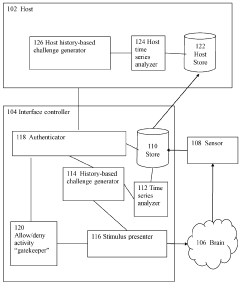
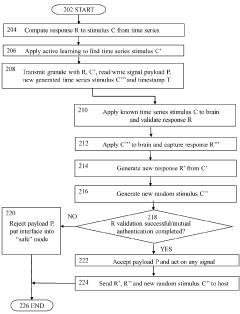
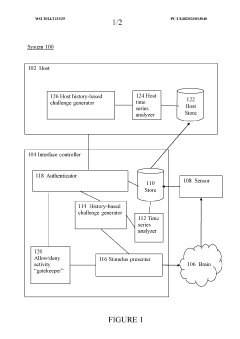
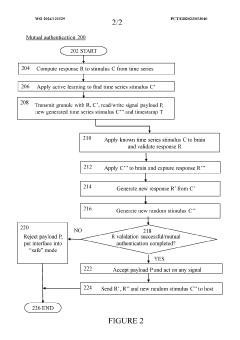
- A time-series authentication system using a long-short-term memory (LSTM) neural network and autoencoders to generate and verify stimulus-response pairs, providing a firewall-like protection between the brain and external entities, ensuring that only valid signals are processed and preventing replay attacks by using temporal authentication and biometric proof of life.
Brain-computer interface device, system and operating method
PatentActiveUS12417274B2
Innovation
- A time-sensitive authentication system using a long-short-term memory neural network and autoencoder to generate stimulus-response pairs, which are used to challenge and authenticate brain signals, preventing unauthorized communication and ensuring the integrity and confidentiality of brain-computer interface communications.


FDA and International BCI Approval Pathways
The regulatory landscape for brain-computer interfaces presents a complex framework that varies significantly across global jurisdictions, with the FDA serving as the primary gateway for the United States market. The FDA classifies BCIs as medical devices under varying risk categories, typically falling under Class II or Class III designations depending on their invasiveness and intended therapeutic applications. Class II devices generally require 510(k) premarket notification, while Class III devices necessitate the more rigorous Premarket Approval (PMA) process, which can extend approval timelines to several years.
The FDA's approach to BCI regulation emphasizes safety and efficacy through comprehensive clinical trial requirements. The agency has established specific guidance documents for neural interface devices, requiring extensive biocompatibility testing, electromagnetic compatibility assessments, and cybersecurity evaluations. The De Novo pathway has emerged as a particularly relevant route for novel BCI technologies that lack predicate devices, allowing manufacturers to establish new regulatory classifications for innovative neural interface solutions.
European regulatory pathways operate under the Medical Device Regulation (MDR), which replaced the Medical Device Directive in 2021. The European framework requires CE marking through notified body assessment, with BCIs typically classified as Class IIb or Class III devices. The European Medicines Agency (EMA) provides additional oversight for combination products that incorporate pharmaceutical components alongside neural interfaces.
International harmonization efforts through the International Medical Device Regulators Forum (IMDRF) are gradually aligning BCI approval processes across major markets. Countries including Japan, Canada, and Australia have adopted similar risk-based classification systems, though specific requirements for neural interfaces continue to evolve. Japan's Pharmaceuticals and Medical Devices Agency (PMDA) has shown particular interest in expedited pathways for breakthrough BCI technologies through their SAKIGAKE designation system.
Emerging markets are developing their own regulatory frameworks, with China's National Medical Products Administration (NMPA) establishing specific guidelines for neural interface devices. The regulatory convergence trend suggests that successful BCI commercialization increasingly requires multi-jurisdictional approval strategies that account for varying clinical trial requirements, quality system standards, and post-market surveillance obligations across different regulatory territories.
The FDA's approach to BCI regulation emphasizes safety and efficacy through comprehensive clinical trial requirements. The agency has established specific guidance documents for neural interface devices, requiring extensive biocompatibility testing, electromagnetic compatibility assessments, and cybersecurity evaluations. The De Novo pathway has emerged as a particularly relevant route for novel BCI technologies that lack predicate devices, allowing manufacturers to establish new regulatory classifications for innovative neural interface solutions.
European regulatory pathways operate under the Medical Device Regulation (MDR), which replaced the Medical Device Directive in 2021. The European framework requires CE marking through notified body assessment, with BCIs typically classified as Class IIb or Class III devices. The European Medicines Agency (EMA) provides additional oversight for combination products that incorporate pharmaceutical components alongside neural interfaces.
International harmonization efforts through the International Medical Device Regulators Forum (IMDRF) are gradually aligning BCI approval processes across major markets. Countries including Japan, Canada, and Australia have adopted similar risk-based classification systems, though specific requirements for neural interfaces continue to evolve. Japan's Pharmaceuticals and Medical Devices Agency (PMDA) has shown particular interest in expedited pathways for breakthrough BCI technologies through their SAKIGAKE designation system.
Emerging markets are developing their own regulatory frameworks, with China's National Medical Products Administration (NMPA) establishing specific guidelines for neural interface devices. The regulatory convergence trend suggests that successful BCI commercialization increasingly requires multi-jurisdictional approval strategies that account for varying clinical trial requirements, quality system standards, and post-market surveillance obligations across different regulatory territories.
Ethical Standards for BCI Human Subject Research
Ethical standards for BCI human subject research represent a critical framework that governs the responsible conduct of neurotechnology studies involving human participants. These standards have evolved from traditional biomedical research ethics but require specialized considerations due to the unique nature of brain-computer interfaces and their potential to access, interpret, and influence neural activity.
The foundation of BCI research ethics rests upon the classical principles of autonomy, beneficence, non-maleficence, and justice, as established in the Belmont Report. However, the intimate connection between BCIs and neural processes necessitates additional ethical considerations that extend beyond conventional medical device research. The principle of autonomy becomes particularly complex when dealing with technologies that can potentially influence cognitive processes or decision-making capabilities.
Informed consent procedures for BCI research require enhanced protocols that address the unique risks and uncertainties associated with neural interface technologies. Participants must be thoroughly educated about potential neurological risks, data privacy implications, and the experimental nature of many BCI applications. The consent process should explicitly address the possibility of unexpected neural effects, the reversibility of procedures, and long-term monitoring requirements.
Privacy and mental privacy considerations form a cornerstone of BCI research ethics. Unlike other medical devices, BCIs have the potential to access thoughts, intentions, and mental states, raising unprecedented questions about cognitive liberty and mental autonomy. Ethical frameworks must address how neural data is collected, stored, processed, and potentially shared, ensuring that participants maintain control over their most intimate information.
Risk-benefit assessment in BCI research requires careful evaluation of both immediate and long-term consequences. Physical risks may include surgical complications, device malfunction, or tissue damage, while psychological risks encompass potential changes in personality, cognition, or sense of self. The assessment must also consider societal implications, including potential for discrimination or stigmatization based on neural data.
Vulnerable population protections are particularly relevant in BCI research, as many potential participants may have neurological conditions, cognitive impairments, or psychiatric disorders that could affect their decision-making capacity. Special safeguards must be implemented to ensure that these individuals are not exploited while still preserving their right to participate in potentially beneficial research.
Data governance and neural data rights represent emerging ethical frontiers in BCI research. Establishing clear protocols for data ownership, sharing, and deletion is essential, particularly given the sensitive nature of neural information and its potential for misuse. Research institutions must implement robust cybersecurity measures and establish clear policies regarding data retention and participant withdrawal rights.
The foundation of BCI research ethics rests upon the classical principles of autonomy, beneficence, non-maleficence, and justice, as established in the Belmont Report. However, the intimate connection between BCIs and neural processes necessitates additional ethical considerations that extend beyond conventional medical device research. The principle of autonomy becomes particularly complex when dealing with technologies that can potentially influence cognitive processes or decision-making capabilities.
Informed consent procedures for BCI research require enhanced protocols that address the unique risks and uncertainties associated with neural interface technologies. Participants must be thoroughly educated about potential neurological risks, data privacy implications, and the experimental nature of many BCI applications. The consent process should explicitly address the possibility of unexpected neural effects, the reversibility of procedures, and long-term monitoring requirements.
Privacy and mental privacy considerations form a cornerstone of BCI research ethics. Unlike other medical devices, BCIs have the potential to access thoughts, intentions, and mental states, raising unprecedented questions about cognitive liberty and mental autonomy. Ethical frameworks must address how neural data is collected, stored, processed, and potentially shared, ensuring that participants maintain control over their most intimate information.
Risk-benefit assessment in BCI research requires careful evaluation of both immediate and long-term consequences. Physical risks may include surgical complications, device malfunction, or tissue damage, while psychological risks encompass potential changes in personality, cognition, or sense of self. The assessment must also consider societal implications, including potential for discrimination or stigmatization based on neural data.
Vulnerable population protections are particularly relevant in BCI research, as many potential participants may have neurological conditions, cognitive impairments, or psychiatric disorders that could affect their decision-making capacity. Special safeguards must be implemented to ensure that these individuals are not exploited while still preserving their right to participate in potentially beneficial research.
Data governance and neural data rights represent emerging ethical frontiers in BCI research. Establishing clear protocols for data ownership, sharing, and deletion is essential, particularly given the sensitive nature of neural information and its potential for misuse. Research institutions must implement robust cybersecurity measures and establish clear policies regarding data retention and participant withdrawal rights.
Unlock deeper insights with PatSnap Eureka Quick Research — get a full tech report to explore trends and direct your research. Try now!
Generate Your Research Report Instantly with AI Agent
Supercharge your innovation with PatSnap Eureka AI Agent Platform!