
How to Augment Distributed Control Systems with Quantum Computing Possibilities
APR 28, 20269 MIN READ
Generate Your Research Report Instantly with AI Agent
Patsnap Eureka helps you evaluate technical feasibility & market potential.
Quantum-Enhanced DCS Background and Objectives
Distributed Control Systems have evolved significantly since their inception in the 1970s, transforming from centralized mainframe-based architectures to sophisticated networked systems that manage complex industrial processes across multiple geographical locations. Traditional DCS architectures rely on classical computing paradigms, utilizing deterministic algorithms and conventional optimization techniques to coordinate distributed sensors, actuators, and control nodes.
The emergence of quantum computing presents unprecedented opportunities to revolutionize DCS capabilities through quantum mechanical phenomena such as superposition, entanglement, and quantum interference. These quantum properties enable exponential computational advantages for specific problem classes, particularly those involving complex optimization, pattern recognition, and cryptographic operations that are fundamental to modern distributed control applications.
Current DCS implementations face mounting challenges in handling increasingly complex industrial processes, real-time optimization requirements, and cybersecurity threats. Classical computing approaches struggle with combinatorial optimization problems inherent in large-scale distributed systems, often requiring approximation algorithms that compromise optimal performance. Additionally, the growing interconnectedness of industrial systems demands enhanced security protocols that classical cryptography may not adequately address in the long term.
The integration of quantum computing capabilities into distributed control systems represents a paradigm shift toward quantum-enhanced industrial automation. This convergence aims to leverage quantum algorithms for solving NP-hard optimization problems, implementing quantum-resistant security protocols, and enabling unprecedented levels of system coordination through quantum communication networks.
Primary objectives for quantum-enhanced DCS development include achieving exponential speedup in distributed optimization tasks, implementing quantum key distribution for ultra-secure inter-node communication, and developing hybrid quantum-classical algorithms that can operate within existing industrial infrastructure constraints. These objectives align with the broader industry trend toward Industry 4.0 and smart manufacturing initiatives.
The technical roadmap for quantum-enhanced DCS encompasses near-term applications utilizing quantum-inspired algorithms on classical hardware, medium-term hybrid quantum-classical systems leveraging NISQ devices, and long-term fully quantum-enabled distributed control architectures. This evolutionary approach ensures practical implementation pathways while maintaining compatibility with existing industrial systems and regulatory requirements.
Success metrics for quantum-enhanced DCS implementations focus on measurable improvements in optimization convergence rates, enhanced security resilience against quantum computing threats, and reduced computational complexity for multi-objective control problems. These quantifiable benefits will drive adoption across critical infrastructure sectors including power generation, chemical processing, and transportation systems.
The emergence of quantum computing presents unprecedented opportunities to revolutionize DCS capabilities through quantum mechanical phenomena such as superposition, entanglement, and quantum interference. These quantum properties enable exponential computational advantages for specific problem classes, particularly those involving complex optimization, pattern recognition, and cryptographic operations that are fundamental to modern distributed control applications.
Current DCS implementations face mounting challenges in handling increasingly complex industrial processes, real-time optimization requirements, and cybersecurity threats. Classical computing approaches struggle with combinatorial optimization problems inherent in large-scale distributed systems, often requiring approximation algorithms that compromise optimal performance. Additionally, the growing interconnectedness of industrial systems demands enhanced security protocols that classical cryptography may not adequately address in the long term.
The integration of quantum computing capabilities into distributed control systems represents a paradigm shift toward quantum-enhanced industrial automation. This convergence aims to leverage quantum algorithms for solving NP-hard optimization problems, implementing quantum-resistant security protocols, and enabling unprecedented levels of system coordination through quantum communication networks.
Primary objectives for quantum-enhanced DCS development include achieving exponential speedup in distributed optimization tasks, implementing quantum key distribution for ultra-secure inter-node communication, and developing hybrid quantum-classical algorithms that can operate within existing industrial infrastructure constraints. These objectives align with the broader industry trend toward Industry 4.0 and smart manufacturing initiatives.
The technical roadmap for quantum-enhanced DCS encompasses near-term applications utilizing quantum-inspired algorithms on classical hardware, medium-term hybrid quantum-classical systems leveraging NISQ devices, and long-term fully quantum-enabled distributed control architectures. This evolutionary approach ensures practical implementation pathways while maintaining compatibility with existing industrial systems and regulatory requirements.
Success metrics for quantum-enhanced DCS implementations focus on measurable improvements in optimization convergence rates, enhanced security resilience against quantum computing threats, and reduced computational complexity for multi-objective control problems. These quantifiable benefits will drive adoption across critical infrastructure sectors including power generation, chemical processing, and transportation systems.
Market Demand for Quantum-Augmented Control Systems
The convergence of quantum computing and distributed control systems represents an emerging market opportunity driven by the increasing complexity of modern industrial operations and the limitations of classical computing approaches. Industries such as smart manufacturing, autonomous transportation, energy grid management, and telecommunications are experiencing unprecedented demands for real-time optimization and control capabilities that exceed the computational boundaries of traditional systems.
Manufacturing sectors are particularly positioned to benefit from quantum-augmented control systems, where complex supply chain optimization, predictive maintenance, and multi-variable process control require simultaneous processing of vast parameter spaces. The automotive industry's transition toward autonomous vehicles creates substantial demand for quantum-enhanced distributed control systems capable of processing multiple sensor inputs and making split-second decisions across vehicle networks.
Energy sector applications present another significant demand driver, particularly in smart grid management where quantum computing could revolutionize load balancing, fault detection, and renewable energy integration across distributed power networks. The complexity of managing intermittent renewable sources while maintaining grid stability creates computational challenges ideally suited for quantum optimization algorithms.
Financial services institutions are exploring quantum-augmented control systems for high-frequency trading, risk management, and fraud detection applications where distributed systems must process massive data streams while maintaining microsecond response times. The potential for quantum speedup in optimization problems directly addresses current bottlenecks in algorithmic trading systems.
Telecommunications infrastructure modernization, particularly with 5G and future 6G networks, generates demand for quantum-enhanced network control systems capable of dynamic resource allocation, interference mitigation, and quality-of-service optimization across distributed cellular networks. The exponential growth in connected devices amplifies the computational requirements for network management.
Current market adoption faces significant barriers including quantum hardware limitations, integration complexity, and the scarcity of quantum-skilled engineers. However, hybrid classical-quantum approaches are emerging as practical stepping stones, allowing organizations to gradually incorporate quantum advantages into existing distributed control architectures while building internal expertise and infrastructure capabilities.
Manufacturing sectors are particularly positioned to benefit from quantum-augmented control systems, where complex supply chain optimization, predictive maintenance, and multi-variable process control require simultaneous processing of vast parameter spaces. The automotive industry's transition toward autonomous vehicles creates substantial demand for quantum-enhanced distributed control systems capable of processing multiple sensor inputs and making split-second decisions across vehicle networks.
Energy sector applications present another significant demand driver, particularly in smart grid management where quantum computing could revolutionize load balancing, fault detection, and renewable energy integration across distributed power networks. The complexity of managing intermittent renewable sources while maintaining grid stability creates computational challenges ideally suited for quantum optimization algorithms.
Financial services institutions are exploring quantum-augmented control systems for high-frequency trading, risk management, and fraud detection applications where distributed systems must process massive data streams while maintaining microsecond response times. The potential for quantum speedup in optimization problems directly addresses current bottlenecks in algorithmic trading systems.
Telecommunications infrastructure modernization, particularly with 5G and future 6G networks, generates demand for quantum-enhanced network control systems capable of dynamic resource allocation, interference mitigation, and quality-of-service optimization across distributed cellular networks. The exponential growth in connected devices amplifies the computational requirements for network management.
Current market adoption faces significant barriers including quantum hardware limitations, integration complexity, and the scarcity of quantum-skilled engineers. However, hybrid classical-quantum approaches are emerging as practical stepping stones, allowing organizations to gradually incorporate quantum advantages into existing distributed control architectures while building internal expertise and infrastructure capabilities.
Current State of Quantum Computing in Industrial Control
Quantum computing applications in industrial control systems remain in the nascent stages, with most implementations confined to research laboratories and proof-of-concept demonstrations. Current quantum hardware limitations, including decoherence times measured in microseconds and error rates exceeding 0.1%, present significant barriers to real-time industrial deployment. However, several pioneering initiatives have emerged across different industrial sectors, demonstrating the potential for quantum-enhanced control capabilities.
IBM's quantum network has facilitated early explorations in manufacturing optimization, where quantum algorithms have been tested for supply chain management and production scheduling. These experiments, while not yet integrated into live control systems, have shown promising results in solving complex combinatorial optimization problems that traditional distributed control systems struggle to address efficiently.
The automotive industry has witnessed notable quantum computing pilots, particularly in autonomous vehicle control systems. Companies like Volkswagen and Ford have collaborated with quantum computing firms to explore traffic flow optimization and real-time route planning. These applications leverage quantum algorithms' ability to process multiple variables simultaneously, potentially enhancing the decision-making capabilities of distributed vehicle networks.
Process industries, including chemical and pharmaceutical manufacturing, have begun investigating quantum-enhanced process control. Quantum simulators are being employed to model complex molecular interactions and chemical reactions, providing insights that could revolutionize process optimization in distributed manufacturing environments. Current implementations focus on offline optimization rather than real-time control integration.
The energy sector presents another frontier for quantum-enhanced control systems. Smart grid management, renewable energy integration, and power distribution optimization have all been subjects of quantum computing research. Quantum algorithms show particular promise in managing the complexity of distributed energy resources and optimizing power flow across interconnected networks.
Despite these advances, significant technical challenges persist. Quantum error correction remains inadequate for industrial reliability standards, and the requirement for ultra-low temperatures in most quantum systems creates practical deployment obstacles. Hybrid classical-quantum approaches are emerging as the most viable near-term solution, where quantum processors handle specific optimization tasks while classical systems maintain real-time control operations.
Current quantum computing hardware from providers like IBM, Google, and Rigetti offers limited qubit counts and connectivity, restricting the complexity of problems that can be addressed. However, the trajectory toward fault-tolerant quantum systems suggests that industrial applications may become viable within the next decade, particularly for optimization-heavy control scenarios in distributed systems.
IBM's quantum network has facilitated early explorations in manufacturing optimization, where quantum algorithms have been tested for supply chain management and production scheduling. These experiments, while not yet integrated into live control systems, have shown promising results in solving complex combinatorial optimization problems that traditional distributed control systems struggle to address efficiently.
The automotive industry has witnessed notable quantum computing pilots, particularly in autonomous vehicle control systems. Companies like Volkswagen and Ford have collaborated with quantum computing firms to explore traffic flow optimization and real-time route planning. These applications leverage quantum algorithms' ability to process multiple variables simultaneously, potentially enhancing the decision-making capabilities of distributed vehicle networks.
Process industries, including chemical and pharmaceutical manufacturing, have begun investigating quantum-enhanced process control. Quantum simulators are being employed to model complex molecular interactions and chemical reactions, providing insights that could revolutionize process optimization in distributed manufacturing environments. Current implementations focus on offline optimization rather than real-time control integration.
The energy sector presents another frontier for quantum-enhanced control systems. Smart grid management, renewable energy integration, and power distribution optimization have all been subjects of quantum computing research. Quantum algorithms show particular promise in managing the complexity of distributed energy resources and optimizing power flow across interconnected networks.
Despite these advances, significant technical challenges persist. Quantum error correction remains inadequate for industrial reliability standards, and the requirement for ultra-low temperatures in most quantum systems creates practical deployment obstacles. Hybrid classical-quantum approaches are emerging as the most viable near-term solution, where quantum processors handle specific optimization tasks while classical systems maintain real-time control operations.
Current quantum computing hardware from providers like IBM, Google, and Rigetti offers limited qubit counts and connectivity, restricting the complexity of problems that can be addressed. However, the trajectory toward fault-tolerant quantum systems suggests that industrial applications may become viable within the next decade, particularly for optimization-heavy control scenarios in distributed systems.
Existing Quantum Computing Solutions for Control Systems
01 Network communication and data transmission in distributed control systems
Methods and systems for enabling communication between distributed control nodes through various network protocols and data transmission techniques. These approaches focus on reliable data exchange, network topology management, and communication protocol optimization to ensure seamless information flow across distributed control architectures.- Network communication and data transmission in distributed control systems: Methods and systems for enabling communication between distributed control nodes through various network protocols and data transmission techniques. These approaches focus on establishing reliable communication channels, managing data flow, and ensuring real-time information exchange between different components of the distributed control architecture.
- Fault tolerance and redundancy mechanisms: Techniques for implementing fault-tolerant operations and redundancy systems in distributed control environments. These methods ensure system reliability through backup systems, error detection and recovery mechanisms, and maintaining operational continuity even when individual components fail or experience disruptions.
- Distributed processing and load balancing: Systems and methods for distributing computational tasks and balancing workloads across multiple control nodes. These approaches optimize system performance by efficiently allocating processing resources, managing computational demands, and coordinating parallel operations across the distributed network.
- Security and access control in distributed systems: Security frameworks and access control mechanisms designed specifically for distributed control environments. These solutions address authentication, authorization, data encryption, and protection against cyber threats while maintaining the operational integrity of the distributed control network.
- Real-time monitoring and system coordination: Technologies for real-time monitoring, supervision, and coordination of distributed control systems. These methods enable centralized or decentralized monitoring of system status, performance metrics, and operational parameters while facilitating coordinated control actions across multiple distributed nodes.
02 Real-time monitoring and control algorithms for distributed systems
Advanced algorithms and methodologies for real-time monitoring, control, and decision-making in distributed control environments. These solutions address latency issues, synchronization challenges, and provide mechanisms for coordinated control actions across multiple distributed nodes while maintaining system stability and performance.Expand Specific Solutions03 Security and authentication mechanisms for distributed control networks
Security frameworks and authentication protocols designed to protect distributed control systems from cyber threats and unauthorized access. These implementations include encryption methods, access control mechanisms, and intrusion detection systems specifically tailored for industrial control environments.Expand Specific Solutions04 Fault tolerance and redundancy management in distributed control architectures
Systems and methods for implementing fault tolerance, error detection, and redundancy management in distributed control environments. These approaches ensure system reliability through backup mechanisms, failover procedures, and distributed fault diagnosis techniques that maintain operational continuity during component failures.Expand Specific Solutions05 Integration and interoperability solutions for heterogeneous distributed control systems
Techniques for integrating diverse control systems and ensuring interoperability between different platforms, protocols, and legacy systems. These solutions provide standardized interfaces, protocol conversion methods, and middleware solutions that enable seamless operation across heterogeneous distributed control environments.Expand Specific Solutions
Key Players in Quantum Computing and DCS Industry
The quantum-enhanced distributed control systems landscape represents an emerging technological frontier currently in its nascent development stage. The market remains relatively small but shows significant growth potential as quantum computing matures from experimental to practical applications. Technology maturity varies considerably across players, with established tech giants like Google LLC, IBM, and Intel leading quantum hardware development, while specialized firms such as D-Wave Systems, Rigetti & Co., and PsiQuantum focus on specific quantum computing approaches. Companies like Q-CTRL and Quantum Machines provide crucial quantum control infrastructure, while traditional industrial players including Robert Bosch GmbH and BASF Corp. explore quantum applications in manufacturing and process control. The competitive landscape spans from pure-play quantum startups to diversified technology corporations, indicating broad industry recognition of quantum computing's transformative potential for distributed control systems.
Google LLC
Technical Solution: Google has developed quantum-classical hybrid algorithms specifically for distributed control optimization problems. Their approach leverages the Quantum Approximate Optimization Algorithm (QAOA) to solve complex scheduling and resource allocation tasks in distributed systems. The company's Sycamore quantum processor can handle up to 70 qubits for control optimization problems, with quantum advantage demonstrated in specific distributed scheduling scenarios. Google's quantum control framework integrates with classical distributed systems through APIs that allow real-time quantum-enhanced decision making for load balancing, network routing, and resource management across distributed infrastructures.
Strengths: Leading quantum hardware capabilities with proven quantum supremacy, strong integration between quantum and classical systems. Weaknesses: Limited to specific problem types, requires significant classical preprocessing for practical distributed control applications.
D-Wave Systems, Inc.
Technical Solution: D-Wave specializes in quantum annealing technology specifically designed for optimization problems common in distributed control systems. Their quantum annealing processors can solve quadratic unconstrained binary optimization (QUBO) problems with thousands of variables, making them particularly suitable for large-scale distributed resource allocation and scheduling tasks. D-Wave's Leap quantum cloud service provides real-time access to quantum annealing capabilities for distributed control applications, with demonstrated performance improvements in traffic flow optimization, energy grid management, and distributed manufacturing scheduling. Their hybrid solver combines quantum annealing with classical optimization techniques to handle complex distributed control scenarios.
Strengths: Specialized for optimization problems, can handle large-scale problems with thousands of variables, proven commercial applications. Weaknesses: Limited to specific types of optimization problems, not suitable for general quantum computing applications.
Core Quantum Algorithms for Distributed Control
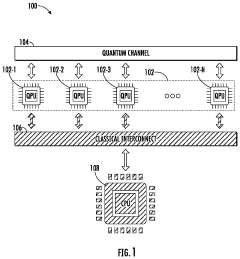
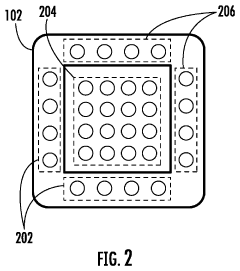
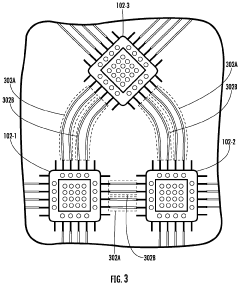
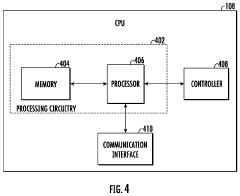
Systems and methods for distributed quantum computing
PatentPendingUS20230315539A1
Innovation
- The implementation of a distributed quantum computing system with synchronization qubits that allow quantum processing units (QPUs) to operate in parallel, using a quantum channel for synchronization, enabling continuous operation until all QPUs are in sync, thereby avoiding idle resources and reducing latency by determining synchronization at the qubit level.
Resilient distributed microgrid control
PatentWO2023225040A1
Innovation
- A quantum distributed microgrid control system employing interactive qubits for secure direct communication, where quantum states are used as information carriers over quantum channels to regulate frequency and voltage in AC and DC microgrids, ensuring secure and resilient control.


Quantum Computing Security and Standardization
The integration of quantum computing capabilities into distributed control systems introduces unprecedented security challenges that demand comprehensive standardization frameworks. Current cryptographic protocols protecting industrial control networks rely heavily on mathematical complexity assumptions that quantum algorithms could potentially compromise. The advent of Shor's algorithm poses particular threats to RSA and elliptic curve cryptography, which form the backbone of secure communications in modern distributed control infrastructures.
Post-quantum cryptography emerges as the primary defense mechanism against quantum-enabled attacks. NIST's ongoing standardization efforts have identified lattice-based, hash-based, and multivariate cryptographic schemes as viable alternatives. However, implementing these quantum-resistant algorithms in resource-constrained control devices presents significant computational overhead challenges. The increased key sizes and processing requirements must be balanced against real-time operational demands typical in industrial environments.
Quantum key distribution protocols offer theoretically unbreakable security guarantees through fundamental quantum mechanical principles. The integration of QKD networks with existing control system architectures requires specialized hardware infrastructure and careful consideration of distance limitations. Current QKD implementations face practical constraints including photon loss rates and environmental interference, limiting their immediate applicability in large-scale distributed systems.
Standardization bodies including IEEE, IEC, and ISO are actively developing quantum-safe security frameworks specifically tailored for industrial control applications. These emerging standards address authentication protocols, secure boot procedures, and encrypted communication channels that can withstand both classical and quantum computational attacks. The challenge lies in creating unified standards that accommodate diverse control system architectures while maintaining backward compatibility.
Hybrid security approaches combining classical and quantum-resistant methods provide transitional pathways during the quantum computing evolution. These frameworks enable gradual migration strategies that protect existing investments while preparing for future quantum threats. Implementation guidelines must address key management, certificate authorities, and secure update mechanisms across distributed control networks.
The timeline for quantum computing maturation creates urgency in establishing robust security standards. Organizations must begin implementing quantum-safe measures before large-scale quantum computers become operational, ensuring continuous protection of critical infrastructure systems throughout the technological transition period.
Post-quantum cryptography emerges as the primary defense mechanism against quantum-enabled attacks. NIST's ongoing standardization efforts have identified lattice-based, hash-based, and multivariate cryptographic schemes as viable alternatives. However, implementing these quantum-resistant algorithms in resource-constrained control devices presents significant computational overhead challenges. The increased key sizes and processing requirements must be balanced against real-time operational demands typical in industrial environments.
Quantum key distribution protocols offer theoretically unbreakable security guarantees through fundamental quantum mechanical principles. The integration of QKD networks with existing control system architectures requires specialized hardware infrastructure and careful consideration of distance limitations. Current QKD implementations face practical constraints including photon loss rates and environmental interference, limiting their immediate applicability in large-scale distributed systems.
Standardization bodies including IEEE, IEC, and ISO are actively developing quantum-safe security frameworks specifically tailored for industrial control applications. These emerging standards address authentication protocols, secure boot procedures, and encrypted communication channels that can withstand both classical and quantum computational attacks. The challenge lies in creating unified standards that accommodate diverse control system architectures while maintaining backward compatibility.
Hybrid security approaches combining classical and quantum-resistant methods provide transitional pathways during the quantum computing evolution. These frameworks enable gradual migration strategies that protect existing investments while preparing for future quantum threats. Implementation guidelines must address key management, certificate authorities, and secure update mechanisms across distributed control networks.
The timeline for quantum computing maturation creates urgency in establishing robust security standards. Organizations must begin implementing quantum-safe measures before large-scale quantum computers become operational, ensuring continuous protection of critical infrastructure systems throughout the technological transition period.
Quantum Infrastructure Requirements for Industrial DCS
The integration of quantum computing capabilities into industrial Distributed Control Systems demands a comprehensive quantum infrastructure that addresses both hardware and software requirements. This infrastructure must support the unique operational characteristics of quantum systems while maintaining compatibility with existing industrial control architectures.
Quantum hardware infrastructure forms the foundation of any quantum-augmented DCS implementation. Industrial environments require quantum processors capable of operating within temperature-controlled enclosures, typically maintaining temperatures near absolute zero through sophisticated dilution refrigeration systems. These cryogenic systems must be designed for continuous operation with minimal maintenance windows, as industrial processes cannot tolerate extended downtime. The quantum processors themselves need sufficient qubit counts and coherence times to handle complex optimization problems typical in industrial control scenarios.
Classical computing infrastructure serves as the essential bridge between quantum processors and existing DCS networks. High-performance classical computers must orchestrate quantum operations, perform error correction, and translate quantum results into actionable control signals. These systems require ultra-low latency communication channels to quantum hardware, often necessitating dedicated fiber optic connections and specialized quantum control electronics.
Network architecture represents a critical component for quantum-enhanced DCS deployment. Quantum communication protocols demand secure, high-bandwidth connections capable of transmitting quantum state information and measurement results. The network must support hybrid classical-quantum data flows while maintaining the real-time communication requirements essential for industrial control applications. Redundant communication pathways ensure system reliability even during quantum hardware maintenance cycles.
Software infrastructure encompasses quantum development frameworks, quantum algorithm libraries, and integration middleware. Industrial DCS environments require quantum software stacks optimized for control theory applications, including quantum optimization algorithms for process control, quantum machine learning modules for predictive maintenance, and quantum simulation tools for system modeling. These software components must integrate seamlessly with existing DCS programming environments and industrial communication protocols.
Environmental considerations play a crucial role in quantum infrastructure design for industrial settings. Quantum systems require electromagnetic shielding to prevent interference from industrial equipment, vibration isolation to maintain quantum coherence, and backup power systems to ensure continuous operation of critical cryogenic systems. The infrastructure must also accommodate the physical footprint requirements of quantum hardware while meeting industrial safety and accessibility standards.
Quantum hardware infrastructure forms the foundation of any quantum-augmented DCS implementation. Industrial environments require quantum processors capable of operating within temperature-controlled enclosures, typically maintaining temperatures near absolute zero through sophisticated dilution refrigeration systems. These cryogenic systems must be designed for continuous operation with minimal maintenance windows, as industrial processes cannot tolerate extended downtime. The quantum processors themselves need sufficient qubit counts and coherence times to handle complex optimization problems typical in industrial control scenarios.
Classical computing infrastructure serves as the essential bridge between quantum processors and existing DCS networks. High-performance classical computers must orchestrate quantum operations, perform error correction, and translate quantum results into actionable control signals. These systems require ultra-low latency communication channels to quantum hardware, often necessitating dedicated fiber optic connections and specialized quantum control electronics.
Network architecture represents a critical component for quantum-enhanced DCS deployment. Quantum communication protocols demand secure, high-bandwidth connections capable of transmitting quantum state information and measurement results. The network must support hybrid classical-quantum data flows while maintaining the real-time communication requirements essential for industrial control applications. Redundant communication pathways ensure system reliability even during quantum hardware maintenance cycles.
Software infrastructure encompasses quantum development frameworks, quantum algorithm libraries, and integration middleware. Industrial DCS environments require quantum software stacks optimized for control theory applications, including quantum optimization algorithms for process control, quantum machine learning modules for predictive maintenance, and quantum simulation tools for system modeling. These software components must integrate seamlessly with existing DCS programming environments and industrial communication protocols.
Environmental considerations play a crucial role in quantum infrastructure design for industrial settings. Quantum systems require electromagnetic shielding to prevent interference from industrial equipment, vibration isolation to maintain quantum coherence, and backup power systems to ensure continuous operation of critical cryogenic systems. The infrastructure must also accommodate the physical footprint requirements of quantum hardware while meeting industrial safety and accessibility standards.
Unlock deeper insights with Patsnap Eureka Quick Research — get a full tech report to explore trends and direct your research. Try now!
Generate Your Research Report Instantly with AI Agent
Supercharge your innovation with Patsnap Eureka AI Agent Platform!