
How to Implement Robust Control Algorithms in Distributed Control Systems
APR 28, 20269 MIN READ
Generate Your Research Report Instantly with AI Agent
Patsnap Eureka helps you evaluate technical feasibility & market potential.
Robust Control in DCS Background and Objectives
Distributed Control Systems (DCS) have evolved significantly since their inception in the 1970s, transforming from centralized architectures to sophisticated networked systems that manage complex industrial processes. The evolution began with basic supervisory control and data acquisition systems and progressed through multiple generations of technological advancement, incorporating digital communication protocols, advanced human-machine interfaces, and intelligent field devices. Modern DCS architectures leverage high-speed Ethernet networks, wireless communication technologies, and cloud-based analytics to provide unprecedented levels of process visibility and control capability.
The integration of robust control algorithms into DCS represents a critical advancement in addressing the inherent challenges of distributed industrial automation. Traditional control strategies often struggle with system uncertainties, parameter variations, network-induced delays, and communication failures that are characteristic of distributed environments. These challenges have intensified as industrial processes become more complex and interconnected, demanding control solutions that maintain stability and performance despite various disturbances and uncertainties.
Robust control theory emerged as a response to the limitations of classical control methods when dealing with model uncertainties and external disturbances. The field has progressed through several paradigms, including H-infinity control, mu-synthesis, sliding mode control, and adaptive robust control techniques. Each approach offers unique advantages for handling specific types of uncertainties and performance requirements in distributed systems.
The primary objective of implementing robust control algorithms in DCS is to achieve consistent process performance while maintaining system stability under various operating conditions and uncertainties. This includes compensating for modeling errors, parameter variations due to equipment aging or process changes, network communication delays, and potential component failures. The goal extends beyond mere stability to encompass optimal performance metrics such as settling time, overshoot minimization, and disturbance rejection capabilities.
Furthermore, the implementation seeks to enhance system reliability and fault tolerance by incorporating predictive capabilities and adaptive mechanisms that can respond to changing system dynamics. The ultimate aim is to create a control framework that seamlessly integrates with existing DCS infrastructure while providing superior robustness compared to conventional PID-based control strategies commonly employed in industrial settings.
The integration of robust control algorithms into DCS represents a critical advancement in addressing the inherent challenges of distributed industrial automation. Traditional control strategies often struggle with system uncertainties, parameter variations, network-induced delays, and communication failures that are characteristic of distributed environments. These challenges have intensified as industrial processes become more complex and interconnected, demanding control solutions that maintain stability and performance despite various disturbances and uncertainties.
Robust control theory emerged as a response to the limitations of classical control methods when dealing with model uncertainties and external disturbances. The field has progressed through several paradigms, including H-infinity control, mu-synthesis, sliding mode control, and adaptive robust control techniques. Each approach offers unique advantages for handling specific types of uncertainties and performance requirements in distributed systems.
The primary objective of implementing robust control algorithms in DCS is to achieve consistent process performance while maintaining system stability under various operating conditions and uncertainties. This includes compensating for modeling errors, parameter variations due to equipment aging or process changes, network communication delays, and potential component failures. The goal extends beyond mere stability to encompass optimal performance metrics such as settling time, overshoot minimization, and disturbance rejection capabilities.
Furthermore, the implementation seeks to enhance system reliability and fault tolerance by incorporating predictive capabilities and adaptive mechanisms that can respond to changing system dynamics. The ultimate aim is to create a control framework that seamlessly integrates with existing DCS infrastructure while providing superior robustness compared to conventional PID-based control strategies commonly employed in industrial settings.
Market Demand for Reliable Distributed Control Systems
The global market for distributed control systems demonstrates unprecedented growth driven by increasing industrial automation demands and the critical need for reliable process control across multiple sectors. Manufacturing industries, particularly in chemicals, petrochemicals, oil and gas, power generation, and water treatment facilities, represent the primary demand drivers for robust distributed control solutions. These sectors require continuous operation with minimal downtime, making system reliability a paramount concern rather than a luxury feature.
Industrial digitalization trends have accelerated market demand significantly, as organizations seek to optimize operational efficiency while maintaining stringent safety standards. The integration of Industry 4.0 principles has created substantial pressure for control systems that can handle complex, interconnected processes while providing real-time monitoring and adaptive response capabilities. This transformation has elevated the importance of robust control algorithms that can maintain system stability even under adverse conditions or component failures.
Critical infrastructure sectors exhibit particularly strong demand for reliable distributed control systems due to their essential role in societal functioning. Power grids, water distribution networks, transportation systems, and telecommunications infrastructure require control solutions that can withstand cyber threats, equipment malfunctions, and environmental disturbances. The increasing frequency of extreme weather events and cybersecurity concerns has further intensified the focus on system robustness and fault tolerance.
The pharmaceutical and biotechnology industries represent emerging high-growth segments for reliable distributed control systems. These sectors demand precise process control with comprehensive documentation capabilities to meet regulatory compliance requirements. The need for consistent product quality and batch-to-batch reproducibility drives demand for control algorithms that can maintain performance despite process variations and external disturbances.
Smart city initiatives and renewable energy integration projects have created new market opportunities for distributed control systems. Wind farms, solar installations, and energy storage systems require sophisticated control algorithms that can manage distributed generation resources while maintaining grid stability. The intermittent nature of renewable energy sources necessitates robust control strategies that can adapt to rapidly changing conditions.
Market growth is further supported by increasing regulatory requirements for process safety and environmental protection. Industries face mounting pressure to demonstrate reliable operation and minimize environmental impact, driving investment in advanced control systems that can prevent accidents and optimize resource utilization. The convergence of operational technology and information technology has created demand for control systems that can seamlessly integrate with enterprise-level management systems while maintaining operational reliability.
Industrial digitalization trends have accelerated market demand significantly, as organizations seek to optimize operational efficiency while maintaining stringent safety standards. The integration of Industry 4.0 principles has created substantial pressure for control systems that can handle complex, interconnected processes while providing real-time monitoring and adaptive response capabilities. This transformation has elevated the importance of robust control algorithms that can maintain system stability even under adverse conditions or component failures.
Critical infrastructure sectors exhibit particularly strong demand for reliable distributed control systems due to their essential role in societal functioning. Power grids, water distribution networks, transportation systems, and telecommunications infrastructure require control solutions that can withstand cyber threats, equipment malfunctions, and environmental disturbances. The increasing frequency of extreme weather events and cybersecurity concerns has further intensified the focus on system robustness and fault tolerance.
The pharmaceutical and biotechnology industries represent emerging high-growth segments for reliable distributed control systems. These sectors demand precise process control with comprehensive documentation capabilities to meet regulatory compliance requirements. The need for consistent product quality and batch-to-batch reproducibility drives demand for control algorithms that can maintain performance despite process variations and external disturbances.
Smart city initiatives and renewable energy integration projects have created new market opportunities for distributed control systems. Wind farms, solar installations, and energy storage systems require sophisticated control algorithms that can manage distributed generation resources while maintaining grid stability. The intermittent nature of renewable energy sources necessitates robust control strategies that can adapt to rapidly changing conditions.
Market growth is further supported by increasing regulatory requirements for process safety and environmental protection. Industries face mounting pressure to demonstrate reliable operation and minimize environmental impact, driving investment in advanced control systems that can prevent accidents and optimize resource utilization. The convergence of operational technology and information technology has created demand for control systems that can seamlessly integrate with enterprise-level management systems while maintaining operational reliability.
Current State and Challenges of Robust DCS Implementation
The implementation of robust control algorithms in distributed control systems has reached a critical juncture where theoretical advances must translate into practical industrial applications. Current distributed control architectures predominantly rely on conventional PID controllers and basic model predictive control schemes, which often struggle with system uncertainties, network-induced delays, and dynamic topology changes inherent in modern industrial networks.
Contemporary robust DCS implementations face significant computational constraints when deploying advanced algorithms across distributed nodes. The limited processing power of field devices creates bottlenecks for complex robust control calculations, forcing engineers to compromise between control performance and computational feasibility. This limitation becomes particularly pronounced when implementing H-infinity controllers or sliding mode control algorithms that require intensive real-time computations.
Network communication presents another fundamental challenge in robust DCS deployment. Variable communication delays, packet losses, and bandwidth limitations introduce uncertainties that can destabilize even well-designed robust controllers. Current industrial Ethernet protocols and wireless communication standards struggle to provide the deterministic timing guarantees required for optimal robust control performance, leading to conservative controller designs that sacrifice performance for stability margins.
The heterogeneous nature of modern distributed systems compounds implementation difficulties. Different manufacturers' devices often employ proprietary communication protocols and varying computational architectures, making standardized robust control algorithm deployment extremely challenging. Integration issues frequently arise when attempting to coordinate robust controllers across multi-vendor platforms, resulting in suboptimal system-wide performance.
Scalability remains a persistent obstacle in large-scale distributed implementations. As system complexity increases, the computational burden of robust control algorithms grows exponentially, particularly for centralized robust control schemes. Current decentralized approaches often lack the coordination mechanisms necessary to maintain global system stability while ensuring local robustness properties.
Security vulnerabilities in networked control systems pose emerging challenges for robust DCS implementation. Cyber-attacks can compromise control algorithm integrity, making traditional robustness assumptions invalid. Current security measures often conflict with real-time control requirements, creating trade-offs between system protection and control performance that existing robust control frameworks inadequately address.
Contemporary robust DCS implementations face significant computational constraints when deploying advanced algorithms across distributed nodes. The limited processing power of field devices creates bottlenecks for complex robust control calculations, forcing engineers to compromise between control performance and computational feasibility. This limitation becomes particularly pronounced when implementing H-infinity controllers or sliding mode control algorithms that require intensive real-time computations.
Network communication presents another fundamental challenge in robust DCS deployment. Variable communication delays, packet losses, and bandwidth limitations introduce uncertainties that can destabilize even well-designed robust controllers. Current industrial Ethernet protocols and wireless communication standards struggle to provide the deterministic timing guarantees required for optimal robust control performance, leading to conservative controller designs that sacrifice performance for stability margins.
The heterogeneous nature of modern distributed systems compounds implementation difficulties. Different manufacturers' devices often employ proprietary communication protocols and varying computational architectures, making standardized robust control algorithm deployment extremely challenging. Integration issues frequently arise when attempting to coordinate robust controllers across multi-vendor platforms, resulting in suboptimal system-wide performance.
Scalability remains a persistent obstacle in large-scale distributed implementations. As system complexity increases, the computational burden of robust control algorithms grows exponentially, particularly for centralized robust control schemes. Current decentralized approaches often lack the coordination mechanisms necessary to maintain global system stability while ensuring local robustness properties.
Security vulnerabilities in networked control systems pose emerging challenges for robust DCS implementation. Cyber-attacks can compromise control algorithm integrity, making traditional robustness assumptions invalid. Current security measures often conflict with real-time control requirements, creating trade-offs between system protection and control performance that existing robust control frameworks inadequately address.
Existing Robust Control Algorithm Solutions for DCS
01 Adaptive control algorithms for system robustness
Adaptive control methods that automatically adjust control parameters in real-time to maintain system stability and performance under varying operating conditions. These algorithms use feedback mechanisms to continuously monitor system behavior and modify control strategies to compensate for uncertainties, disturbances, and parameter variations. The adaptive nature allows the control system to learn and respond to changes in the controlled process.- Adaptive control algorithms for system robustness: Adaptive control methods that automatically adjust control parameters in response to system variations and uncertainties. These algorithms continuously monitor system performance and modify control strategies to maintain stability and desired performance characteristics under changing operating conditions. The adaptive nature allows the control system to handle parameter variations, disturbances, and modeling uncertainties effectively.
- Model predictive control with uncertainty handling: Advanced predictive control strategies that incorporate uncertainty models and robust optimization techniques. These methods use mathematical models to predict future system behavior while accounting for model uncertainties and external disturbances. The control algorithms optimize control actions over a prediction horizon while ensuring robust performance and constraint satisfaction under various uncertainty scenarios.
- Sliding mode control for robust performance: Control techniques that utilize sliding mode principles to achieve robust performance against parameter variations and external disturbances. These methods force the system trajectory to reach and remain on a predefined sliding surface, providing inherent robustness to uncertainties. The discontinuous control action ensures finite-time convergence and maintains system stability despite modeling errors and disturbances.
- H-infinity and robust optimization methods: Mathematical optimization approaches that design controllers to minimize the worst-case performance degradation under bounded uncertainties. These methods formulate the control design problem as an optimization task where the objective is to achieve the best possible performance under the worst-case scenario. The resulting controllers provide guaranteed stability margins and performance bounds for specified uncertainty ranges.
- Neural network-based robust control: Intelligent control systems that employ neural networks and machine learning techniques to enhance robustness against uncertainties and nonlinearities. These approaches use learning algorithms to approximate unknown system dynamics and adapt control strategies based on observed system behavior. The neural network components can handle complex nonlinear relationships and provide robust performance in the presence of unmodeled dynamics.
02 Model predictive control with uncertainty handling
Advanced control strategies that incorporate predictive models to anticipate future system behavior while accounting for model uncertainties and external disturbances. These methods use optimization techniques to determine optimal control actions over a prediction horizon, with built-in mechanisms to handle modeling errors and maintain robust performance even when the actual system deviates from the predicted model.Expand Specific Solutions03 Sliding mode control for robust performance
Control techniques that force the system trajectory to reach and remain on a predetermined sliding surface, providing inherent robustness against parameter variations and external disturbances. The method ensures finite-time convergence and maintains insensitivity to matched uncertainties once the sliding mode is established, making it particularly effective for systems with significant uncertainties.Expand Specific Solutions04 Neural network-based robust control
Intelligent control approaches that utilize artificial neural networks to approximate unknown system dynamics and provide robust control in the presence of uncertainties. These methods leverage the universal approximation capabilities of neural networks to learn complex nonlinear relationships and adapt to changing system conditions, offering improved robustness compared to traditional linear control methods.Expand Specific Solutions05 Fault-tolerant control systems
Control architectures designed to maintain acceptable system performance even in the presence of component failures, sensor faults, or actuator malfunctions. These systems incorporate fault detection and isolation mechanisms along with reconfigurable control strategies that can automatically switch to backup components or modify control laws to compensate for detected faults, ensuring continued operation under adverse conditions.Expand Specific Solutions
Key Players in DCS and Robust Control Industry
The distributed control systems market for robust control algorithms is experiencing rapid growth, driven by increasing industrial automation demands and digital transformation initiatives. The industry is in a mature expansion phase with significant market opportunities across manufacturing, energy, and infrastructure sectors. Technology maturity varies considerably among key players, with established industrial giants like Siemens AG, ABB Ltd., and Schneider Electric leading in proven, commercially-deployed solutions. Companies such as Hitachi Ltd., Mitsubishi Electric Corp., and Robert Bosch GmbH demonstrate strong capabilities in automotive and industrial applications. Emerging players like Dexterity Inc. and RS Automation are advancing specialized robotic control systems, while technology companies including Huawei Technologies are integrating advanced algorithms with IoT platforms. The competitive landscape shows a clear division between mature industrial automation providers with decades of field-proven experience and innovative technology firms developing next-generation adaptive control solutions, creating a dynamic ecosystem where traditional reliability meets cutting-edge algorithmic advancement.
ABB Ltd.
Technical Solution: ABB's System 800xA platform implements robust control through distributed architecture with embedded fault detection and isolation capabilities. Their approach utilizes adaptive control algorithms that automatically tune PID parameters and implement gain scheduling for nonlinear processes. The system incorporates predictive control strategies with constraint handling for multivariable processes, ensuring optimal performance under varying operating conditions. ABB's robust control implementation features decentralized control nodes with local decision-making capabilities, reducing dependency on central controllers. Their solution includes advanced cybersecurity measures and encrypted communication protocols to maintain system integrity in distributed environments. The platform supports real-time model identification and controller adaptation for handling plant-model mismatches.
Strengths: Excellent scalability, strong cybersecurity features, proven reliability in harsh industrial environments. Weaknesses: Requires specialized expertise for implementation, limited flexibility in custom algorithm development.
Schneider Electric Systems USA, Inc.
Technical Solution: Schneider Electric's EcoStruxure Foxboro DCS implements robust control through distributed processing nodes with advanced control algorithms including model predictive control and fuzzy logic control. Their approach features self-healing network architectures that automatically reconfigure communication paths during network failures. The system incorporates machine learning algorithms for real-time optimization and adaptive control parameter tuning. Schneider's robust control implementation includes advanced process modeling capabilities with online parameter estimation for handling process variations. Their solution features distributed historian and analytics capabilities that enable predictive control strategies based on historical trends and patterns. The platform supports hybrid control architectures combining centralized optimization with decentralized execution for enhanced robustness.
Strengths: Strong process industry focus, excellent integration with IoT devices, comprehensive analytics capabilities. Weaknesses: Complex system architecture, requires significant training for operators and engineers.
Core Innovations in Distributed Robust Control Methods
System and method for implementing logic control in programmable controllers in distributed control systems
PatentInactiveUS7225037B2
Innovation
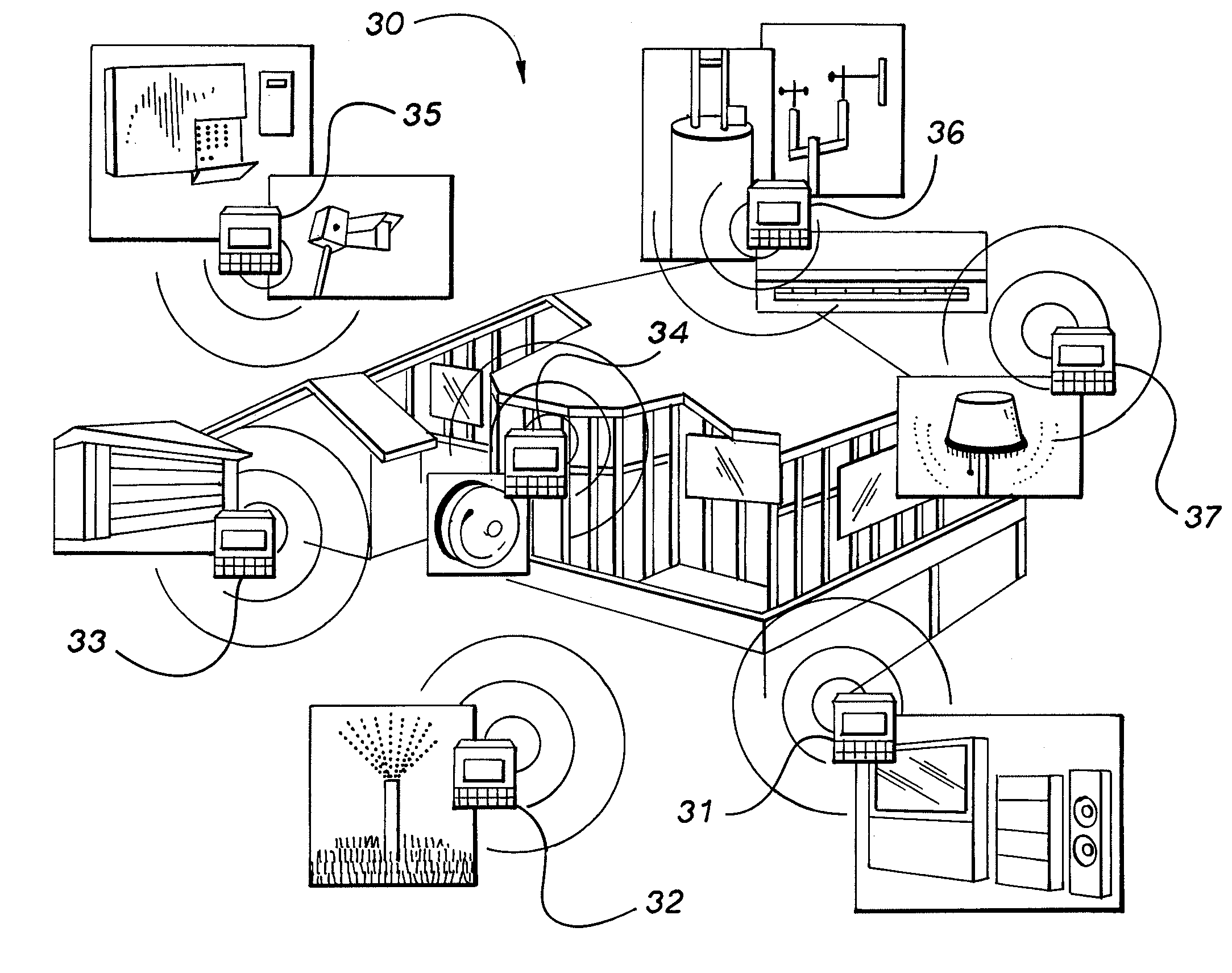
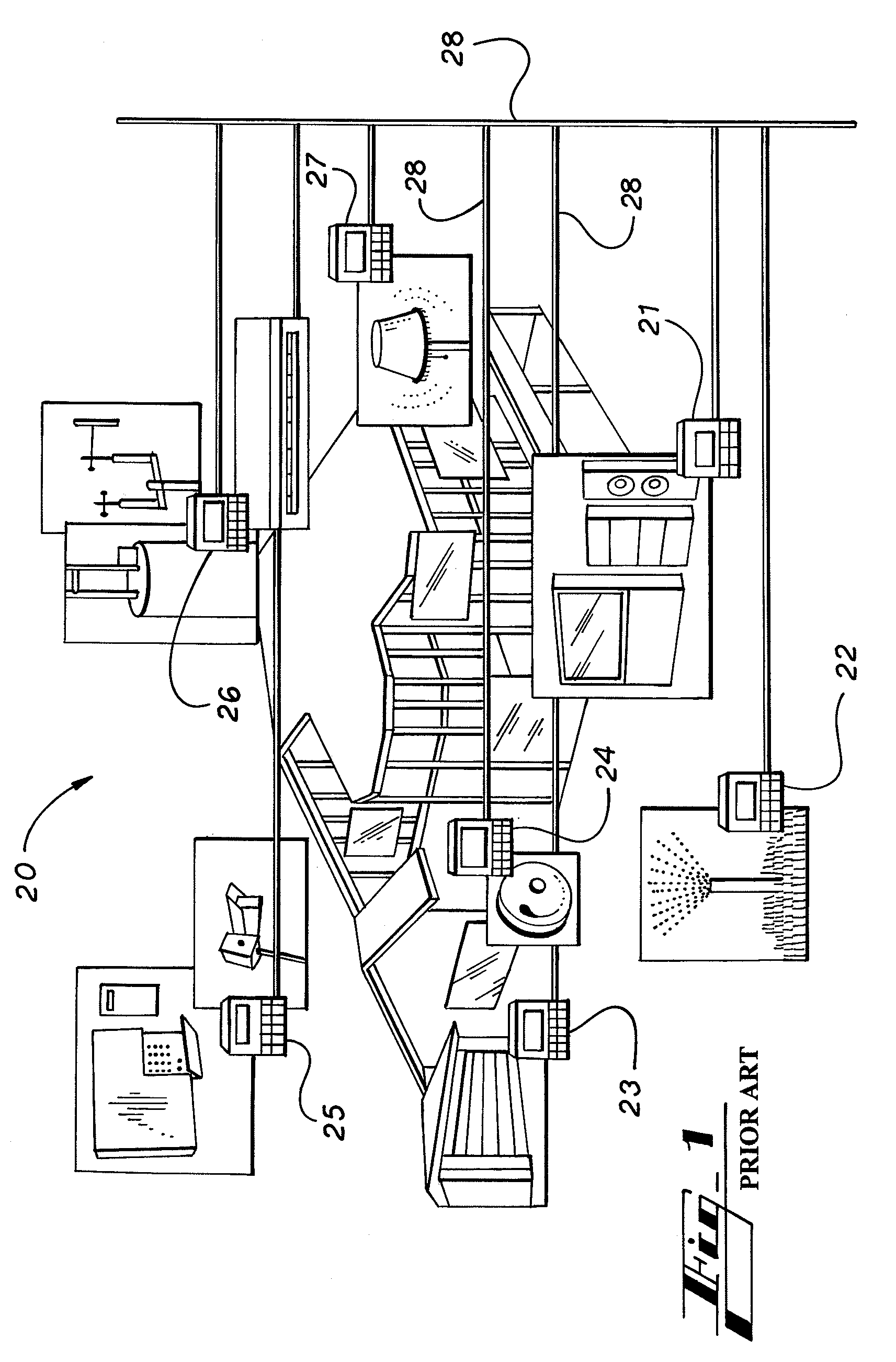
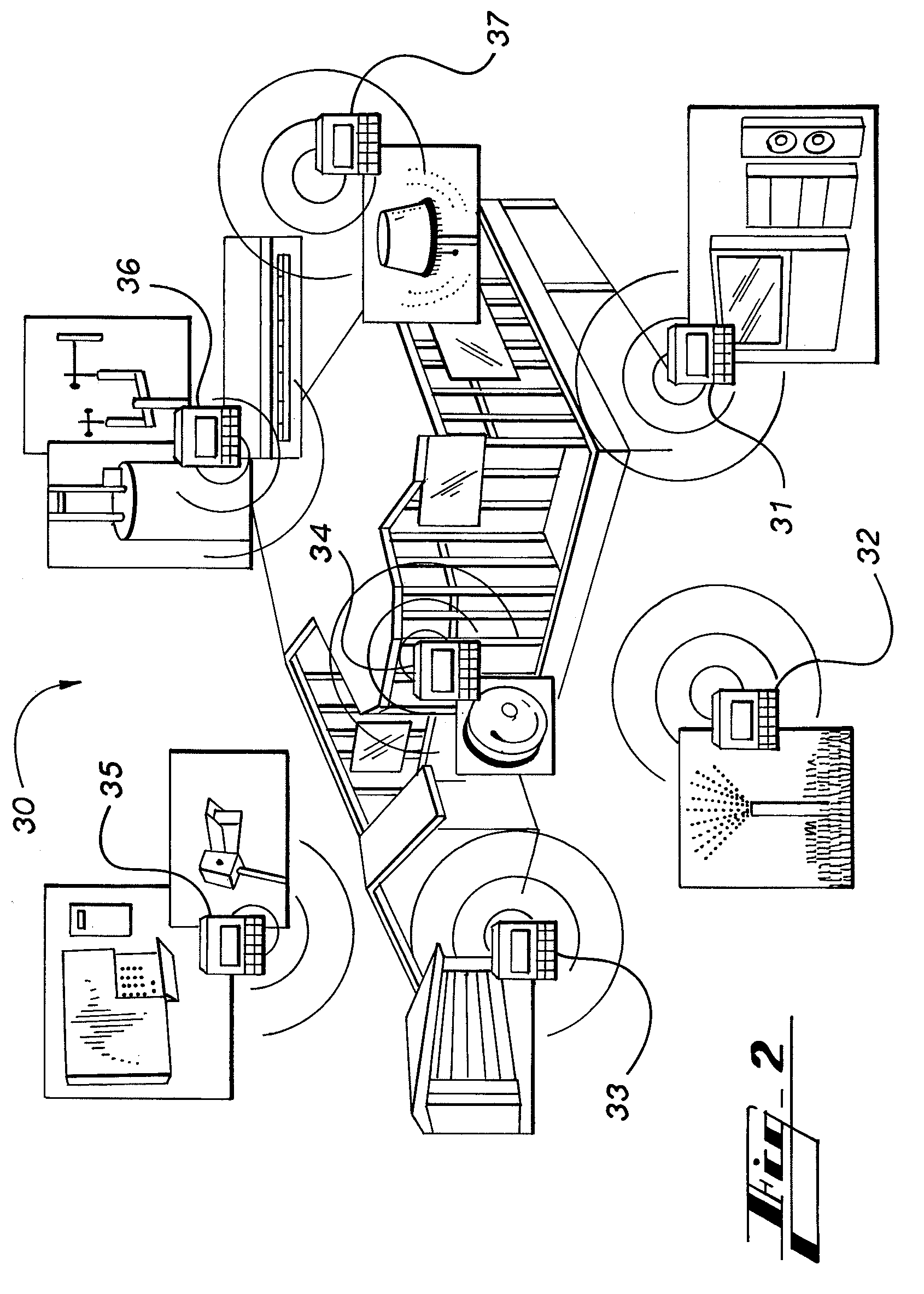
- A control system that combines centralized and distributed architectures, using wireless communication and an Internet-based instant messaging platform to enable seamless programming and synchronization across interconnected PLCs, eliminating the need for extensive cabling and allowing for easy expansion and modification.

Safety Standards and Regulations for Industrial DCS
The implementation of robust control algorithms in distributed control systems must adhere to stringent safety standards and regulations that govern industrial operations. These regulatory frameworks ensure that control systems maintain operational integrity while protecting personnel, equipment, and the environment from potential hazards associated with automated industrial processes.
International safety standards form the foundation for industrial DCS implementations. IEC 61508 serves as the umbrella standard for functional safety of electrical, electronic, and programmable electronic safety-related systems, establishing Safety Integrity Levels (SIL) that define the probability of failure on demand. For process industries, IEC 61511 specifically addresses safety instrumented systems, providing detailed requirements for the entire safety lifecycle from concept through decommissioning.
Regional regulatory bodies impose additional compliance requirements that vary by geographic location and industry sector. In the United States, OSHA regulations mandate specific safety protocols for industrial automation systems, while the EPA enforces environmental protection standards that directly impact control system design. European markets must comply with the Machinery Directive and ATEX regulations for explosive atmospheres, requiring certified equipment and rigorous safety assessments.
Industry-specific standards further refine safety requirements based on operational contexts. The pharmaceutical industry follows FDA 21 CFR Part 11 for electronic records and signatures, while nuclear facilities must meet NRC guidelines. Chemical processing plants adhere to API standards, and automotive manufacturing follows ISO 26262 for functional safety in road vehicles.
Cybersecurity regulations have become increasingly critical as distributed control systems face growing cyber threats. The NIST Cybersecurity Framework provides comprehensive guidelines for protecting industrial control systems, while IEC 62443 specifically addresses security for industrial automation and control systems. These standards mandate secure communication protocols, access controls, and incident response procedures.
Compliance verification requires systematic documentation and testing procedures. Safety case development demonstrates that systems meet required safety integrity levels through hazard analysis, risk assessment, and verification activities. Regular safety audits and certification renewals ensure ongoing compliance throughout the system lifecycle, with particular attention to software updates and configuration changes that could impact safety functions.
International safety standards form the foundation for industrial DCS implementations. IEC 61508 serves as the umbrella standard for functional safety of electrical, electronic, and programmable electronic safety-related systems, establishing Safety Integrity Levels (SIL) that define the probability of failure on demand. For process industries, IEC 61511 specifically addresses safety instrumented systems, providing detailed requirements for the entire safety lifecycle from concept through decommissioning.
Regional regulatory bodies impose additional compliance requirements that vary by geographic location and industry sector. In the United States, OSHA regulations mandate specific safety protocols for industrial automation systems, while the EPA enforces environmental protection standards that directly impact control system design. European markets must comply with the Machinery Directive and ATEX regulations for explosive atmospheres, requiring certified equipment and rigorous safety assessments.
Industry-specific standards further refine safety requirements based on operational contexts. The pharmaceutical industry follows FDA 21 CFR Part 11 for electronic records and signatures, while nuclear facilities must meet NRC guidelines. Chemical processing plants adhere to API standards, and automotive manufacturing follows ISO 26262 for functional safety in road vehicles.
Cybersecurity regulations have become increasingly critical as distributed control systems face growing cyber threats. The NIST Cybersecurity Framework provides comprehensive guidelines for protecting industrial control systems, while IEC 62443 specifically addresses security for industrial automation and control systems. These standards mandate secure communication protocols, access controls, and incident response procedures.
Compliance verification requires systematic documentation and testing procedures. Safety case development demonstrates that systems meet required safety integrity levels through hazard analysis, risk assessment, and verification activities. Regular safety audits and certification renewals ensure ongoing compliance throughout the system lifecycle, with particular attention to software updates and configuration changes that could impact safety functions.
Cybersecurity Considerations in Distributed Control Networks
The implementation of robust control algorithms in distributed control systems introduces significant cybersecurity vulnerabilities that require comprehensive protection strategies. These systems, characterized by multiple interconnected nodes communicating across networks, present expanded attack surfaces compared to centralized architectures. The distributed nature inherently creates numerous entry points for potential cyber threats, making security considerations paramount in system design and deployment.
Network communication channels represent the primary vulnerability vector in distributed control networks. Control data, sensor measurements, and command signals traverse multiple communication pathways, creating opportunities for interception, manipulation, or disruption. Man-in-the-middle attacks pose particular risks, where adversaries can intercept and modify control signals, potentially causing system instability or unsafe operations. The real-time nature of control communications further complicates security implementation, as traditional encryption methods may introduce unacceptable latency.
Authentication and authorization mechanisms become increasingly complex in distributed environments. Each control node must verify the legitimacy of incoming commands and data while maintaining system responsiveness. Compromised nodes can propagate malicious commands throughout the network, making robust identity verification essential. Certificate-based authentication systems and secure key management protocols are critical components, though they must be implemented without compromising system performance or reliability.
Data integrity protection requires multi-layered approaches in distributed control networks. Cryptographic hash functions and digital signatures can ensure command authenticity, while redundant communication paths provide resilience against targeted attacks. However, the computational overhead of continuous integrity verification must be balanced against real-time control requirements. Lightweight cryptographic protocols specifically designed for industrial control applications are emerging as viable solutions.
Network segmentation and isolation strategies play crucial roles in limiting attack propagation. Implementing secure communication protocols, such as encrypted industrial Ethernet or secure wireless standards, helps protect against eavesdropping and unauthorized access. Intrusion detection systems specifically designed for control networks can identify anomalous behavior patterns that may indicate cyber attacks, enabling rapid response and system protection.
The integration of cybersecurity measures with robust control algorithms requires careful consideration of system performance impacts. Security implementations must not interfere with control loop stability or introduce delays that could compromise system safety. This necessitates the development of security-aware control algorithms that can maintain robust performance even under potential cyber attack scenarios.
Network communication channels represent the primary vulnerability vector in distributed control networks. Control data, sensor measurements, and command signals traverse multiple communication pathways, creating opportunities for interception, manipulation, or disruption. Man-in-the-middle attacks pose particular risks, where adversaries can intercept and modify control signals, potentially causing system instability or unsafe operations. The real-time nature of control communications further complicates security implementation, as traditional encryption methods may introduce unacceptable latency.
Authentication and authorization mechanisms become increasingly complex in distributed environments. Each control node must verify the legitimacy of incoming commands and data while maintaining system responsiveness. Compromised nodes can propagate malicious commands throughout the network, making robust identity verification essential. Certificate-based authentication systems and secure key management protocols are critical components, though they must be implemented without compromising system performance or reliability.
Data integrity protection requires multi-layered approaches in distributed control networks. Cryptographic hash functions and digital signatures can ensure command authenticity, while redundant communication paths provide resilience against targeted attacks. However, the computational overhead of continuous integrity verification must be balanced against real-time control requirements. Lightweight cryptographic protocols specifically designed for industrial control applications are emerging as viable solutions.
Network segmentation and isolation strategies play crucial roles in limiting attack propagation. Implementing secure communication protocols, such as encrypted industrial Ethernet or secure wireless standards, helps protect against eavesdropping and unauthorized access. Intrusion detection systems specifically designed for control networks can identify anomalous behavior patterns that may indicate cyber attacks, enabling rapid response and system protection.
The integration of cybersecurity measures with robust control algorithms requires careful consideration of system performance impacts. Security implementations must not interfere with control loop stability or introduce delays that could compromise system safety. This necessitates the development of security-aware control algorithms that can maintain robust performance even under potential cyber attack scenarios.
Unlock deeper insights with Patsnap Eureka Quick Research — get a full tech report to explore trends and direct your research. Try now!
Generate Your Research Report Instantly with AI Agent
Supercharge your innovation with Patsnap Eureka AI Agent Platform!