
How to Refine Analysis Techniques in Distributed Control Systems for Increased Insight
APR 28, 20269 MIN READ
Generate Your Research Report Instantly with AI Agent
Patsnap Eureka helps you evaluate technical feasibility & market potential.
Distributed Control Systems Analysis Background and Objectives
Distributed Control Systems (DCS) have evolved significantly since their inception in the 1970s, transforming from centralized architectures to sophisticated distributed networks that manage complex industrial processes. The evolution began with early pneumatic and analog control systems, progressed through digital control units in the 1980s, and has now reached the era of intelligent, interconnected systems leveraging advanced computing capabilities and communication protocols.
The fundamental objective of refining analysis techniques in DCS centers on enhancing system visibility, predictive capabilities, and operational intelligence. Traditional analysis methods often provide limited insight into system behavior, particularly in complex multi-loop configurations where interactions between control elements can create unexpected dynamics. The primary goal is to develop analytical frameworks that can extract meaningful patterns from vast amounts of operational data while maintaining real-time performance requirements.
Current technological trends indicate a shift toward data-driven analysis methodologies that complement traditional control theory approaches. The integration of machine learning algorithms, advanced signal processing techniques, and statistical analysis methods represents a paradigm shift in how DCS performance is evaluated and optimized. These emerging approaches aim to uncover hidden correlations, predict system degradation, and identify optimization opportunities that conventional analysis methods might overlook.
The strategic importance of enhanced analysis techniques extends beyond immediate operational benefits. Organizations seek to achieve predictive maintenance capabilities, reduce unplanned downtime, optimize energy consumption, and improve overall equipment effectiveness. Advanced analysis techniques enable the transformation of raw operational data into actionable insights that support both tactical decision-making and long-term strategic planning.
Modern DCS environments generate unprecedented volumes of data from sensors, actuators, and control loops, creating both opportunities and challenges for analysis. The objective is to develop scalable analytical frameworks that can process this information efficiently while providing operators and engineers with intuitive visualization tools and automated anomaly detection capabilities.
The ultimate vision encompasses the creation of self-aware control systems that continuously monitor their own performance, adapt to changing conditions, and provide proactive recommendations for optimization. This represents a fundamental shift from reactive maintenance and troubleshooting toward predictive and prescriptive analytics that enhance system reliability and performance.
The fundamental objective of refining analysis techniques in DCS centers on enhancing system visibility, predictive capabilities, and operational intelligence. Traditional analysis methods often provide limited insight into system behavior, particularly in complex multi-loop configurations where interactions between control elements can create unexpected dynamics. The primary goal is to develop analytical frameworks that can extract meaningful patterns from vast amounts of operational data while maintaining real-time performance requirements.
Current technological trends indicate a shift toward data-driven analysis methodologies that complement traditional control theory approaches. The integration of machine learning algorithms, advanced signal processing techniques, and statistical analysis methods represents a paradigm shift in how DCS performance is evaluated and optimized. These emerging approaches aim to uncover hidden correlations, predict system degradation, and identify optimization opportunities that conventional analysis methods might overlook.
The strategic importance of enhanced analysis techniques extends beyond immediate operational benefits. Organizations seek to achieve predictive maintenance capabilities, reduce unplanned downtime, optimize energy consumption, and improve overall equipment effectiveness. Advanced analysis techniques enable the transformation of raw operational data into actionable insights that support both tactical decision-making and long-term strategic planning.
Modern DCS environments generate unprecedented volumes of data from sensors, actuators, and control loops, creating both opportunities and challenges for analysis. The objective is to develop scalable analytical frameworks that can process this information efficiently while providing operators and engineers with intuitive visualization tools and automated anomaly detection capabilities.
The ultimate vision encompasses the creation of self-aware control systems that continuously monitor their own performance, adapt to changing conditions, and provide proactive recommendations for optimization. This represents a fundamental shift from reactive maintenance and troubleshooting toward predictive and prescriptive analytics that enhance system reliability and performance.
Market Demand for Advanced DCS Analysis Solutions
The global distributed control systems market is experiencing unprecedented growth driven by increasing industrial automation demands and the need for enhanced operational efficiency. Manufacturing industries, particularly in process sectors such as oil and gas, chemicals, pharmaceuticals, and power generation, are actively seeking advanced DCS analysis solutions to optimize their operations and maintain competitive advantages.
Traditional DCS implementations often suffer from limited analytical capabilities, providing basic monitoring and control functions without deep insights into system performance patterns. This gap has created substantial market demand for sophisticated analysis techniques that can extract meaningful intelligence from vast amounts of operational data generated by distributed control networks.
The pharmaceutical and biotechnology sectors represent particularly lucrative markets for advanced DCS analysis solutions, where regulatory compliance and process validation requirements necessitate comprehensive data analysis capabilities. These industries require real-time monitoring systems that can detect subtle process deviations and provide predictive insights to prevent quality issues and production disruptions.
Energy sector organizations are increasingly investing in advanced DCS analysis technologies to optimize power generation efficiency and reduce operational costs. The integration of renewable energy sources into traditional power grids has amplified the complexity of control systems, creating demand for sophisticated analytical tools that can manage distributed energy resources effectively.
Chemical processing facilities face growing pressure to enhance safety protocols and environmental compliance, driving adoption of advanced DCS analysis solutions capable of identifying potential hazards and optimizing resource utilization. These facilities require analytical systems that can process complex multi-variable data streams and provide actionable insights for process optimization.
The emergence of Industry 4.0 initiatives has accelerated market demand for intelligent DCS analysis platforms that can integrate with enterprise-wide digital transformation strategies. Organizations seek solutions that combine traditional control system functionality with advanced analytics, machine learning capabilities, and cloud-based data processing to enable predictive maintenance and operational optimization.
Market research indicates strong growth potential in emerging economies where industrial infrastructure development is rapidly expanding. These regions present opportunities for deploying next-generation DCS analysis solutions that incorporate modern analytical techniques from the initial implementation phase, avoiding the limitations of legacy systems prevalent in established industrial markets.
Traditional DCS implementations often suffer from limited analytical capabilities, providing basic monitoring and control functions without deep insights into system performance patterns. This gap has created substantial market demand for sophisticated analysis techniques that can extract meaningful intelligence from vast amounts of operational data generated by distributed control networks.
The pharmaceutical and biotechnology sectors represent particularly lucrative markets for advanced DCS analysis solutions, where regulatory compliance and process validation requirements necessitate comprehensive data analysis capabilities. These industries require real-time monitoring systems that can detect subtle process deviations and provide predictive insights to prevent quality issues and production disruptions.
Energy sector organizations are increasingly investing in advanced DCS analysis technologies to optimize power generation efficiency and reduce operational costs. The integration of renewable energy sources into traditional power grids has amplified the complexity of control systems, creating demand for sophisticated analytical tools that can manage distributed energy resources effectively.
Chemical processing facilities face growing pressure to enhance safety protocols and environmental compliance, driving adoption of advanced DCS analysis solutions capable of identifying potential hazards and optimizing resource utilization. These facilities require analytical systems that can process complex multi-variable data streams and provide actionable insights for process optimization.
The emergence of Industry 4.0 initiatives has accelerated market demand for intelligent DCS analysis platforms that can integrate with enterprise-wide digital transformation strategies. Organizations seek solutions that combine traditional control system functionality with advanced analytics, machine learning capabilities, and cloud-based data processing to enable predictive maintenance and operational optimization.
Market research indicates strong growth potential in emerging economies where industrial infrastructure development is rapidly expanding. These regions present opportunities for deploying next-generation DCS analysis solutions that incorporate modern analytical techniques from the initial implementation phase, avoiding the limitations of legacy systems prevalent in established industrial markets.
Current State and Challenges in DCS Analysis Techniques
Distributed Control Systems (DCS) analysis techniques have evolved significantly over the past decades, yet they continue to face substantial limitations in providing comprehensive operational insights. Current methodologies primarily rely on traditional statistical process control, alarm management systems, and basic trending analysis. These approaches, while foundational, often operate in isolation and fail to capture the complex interdependencies inherent in modern distributed control environments.
The predominant analysis frameworks in today's DCS implementations include real-time data historians, performance monitoring dashboards, and rule-based diagnostic systems. However, these tools frequently generate fragmented views of system performance, making it challenging for operators and engineers to develop holistic understanding of process dynamics. Many existing solutions struggle with data integration across multiple control loops, subsystems, and hierarchical levels within the distributed architecture.
A critical challenge facing current DCS analysis techniques is the overwhelming volume of data generated by modern industrial processes. Traditional analysis methods often result in information overload, where operators receive excessive alarms and notifications without sufficient context or prioritization. This phenomenon, commonly known as alarm flooding, significantly impairs decision-making capabilities and can lead to delayed responses to critical process deviations.
The geographical distribution of DCS technology development shows concentrated expertise in industrial automation hubs across North America, Europe, and Asia-Pacific regions. Leading research institutions and technology providers in these areas have developed varying approaches to analysis enhancement, yet standardization remains limited. This fragmentation has resulted in incompatible analysis methodologies and reduced interoperability between different vendor systems.
Another significant constraint involves the limited predictive capabilities of existing analysis techniques. Most current approaches are reactive, identifying issues only after they have manifested in process parameters or equipment performance. The lack of advanced predictive analytics integration means that potential problems often go undetected until they impact production efficiency or product quality.
Integration challenges persist between legacy DCS infrastructure and modern analytical tools. Many industrial facilities operate with mixed-vintage control systems, creating data silos that prevent comprehensive analysis across the entire process landscape. This technological heterogeneity complicates efforts to implement unified analysis strategies and limits the effectiveness of cross-system correlation analysis.
The complexity of modern industrial processes demands more sophisticated analysis techniques that can handle multi-variable interactions, non-linear relationships, and dynamic operating conditions. Current methodologies often rely on simplified models that may not accurately represent the true behavior of complex distributed systems, leading to suboptimal insights and recommendations.
The predominant analysis frameworks in today's DCS implementations include real-time data historians, performance monitoring dashboards, and rule-based diagnostic systems. However, these tools frequently generate fragmented views of system performance, making it challenging for operators and engineers to develop holistic understanding of process dynamics. Many existing solutions struggle with data integration across multiple control loops, subsystems, and hierarchical levels within the distributed architecture.
A critical challenge facing current DCS analysis techniques is the overwhelming volume of data generated by modern industrial processes. Traditional analysis methods often result in information overload, where operators receive excessive alarms and notifications without sufficient context or prioritization. This phenomenon, commonly known as alarm flooding, significantly impairs decision-making capabilities and can lead to delayed responses to critical process deviations.
The geographical distribution of DCS technology development shows concentrated expertise in industrial automation hubs across North America, Europe, and Asia-Pacific regions. Leading research institutions and technology providers in these areas have developed varying approaches to analysis enhancement, yet standardization remains limited. This fragmentation has resulted in incompatible analysis methodologies and reduced interoperability between different vendor systems.
Another significant constraint involves the limited predictive capabilities of existing analysis techniques. Most current approaches are reactive, identifying issues only after they have manifested in process parameters or equipment performance. The lack of advanced predictive analytics integration means that potential problems often go undetected until they impact production efficiency or product quality.
Integration challenges persist between legacy DCS infrastructure and modern analytical tools. Many industrial facilities operate with mixed-vintage control systems, creating data silos that prevent comprehensive analysis across the entire process landscape. This technological heterogeneity complicates efforts to implement unified analysis strategies and limits the effectiveness of cross-system correlation analysis.
The complexity of modern industrial processes demands more sophisticated analysis techniques that can handle multi-variable interactions, non-linear relationships, and dynamic operating conditions. Current methodologies often rely on simplified models that may not accurately represent the true behavior of complex distributed systems, leading to suboptimal insights and recommendations.
Existing DCS Analysis and Monitoring Solutions
01 Real-time monitoring and data acquisition techniques
Advanced monitoring systems that continuously collect and process data from distributed control networks. These techniques involve sophisticated sensors, data loggers, and real-time processing algorithms to capture system performance metrics, operational parameters, and environmental conditions. The methods enable comprehensive visibility into system behavior and facilitate proactive maintenance and optimization strategies.- Real-time monitoring and data acquisition techniques: Advanced monitoring systems that continuously collect and process data from distributed control networks. These techniques involve sophisticated sensors, data loggers, and real-time processing algorithms to capture system performance metrics, operational parameters, and environmental conditions. The methods enable comprehensive visibility into system behavior and facilitate proactive maintenance and optimization strategies.
- Network communication protocol analysis: Methodologies for analyzing communication protocols and data exchange patterns within distributed control systems. These approaches focus on evaluating network performance, identifying bottlenecks, and ensuring reliable data transmission between control nodes. The techniques include protocol validation, latency measurement, and communication reliability assessment to optimize system connectivity and responsiveness.
- Fault detection and diagnostic algorithms: Systematic approaches for identifying, isolating, and diagnosing faults in distributed control environments. These methods employ pattern recognition, statistical analysis, and machine learning techniques to detect anomalies and predict potential system failures. The diagnostic capabilities enable rapid fault identification and support automated recovery procedures to maintain system reliability.
- Performance optimization and control loop analysis: Techniques for evaluating and enhancing the performance of control loops and system dynamics in distributed architectures. These methods analyze controller behavior, system response characteristics, and optimization parameters to improve overall system efficiency. The approaches include tuning algorithms, stability analysis, and performance benchmarking to achieve optimal control system operation.
- Security assessment and vulnerability analysis: Comprehensive evaluation methods for assessing cybersecurity risks and vulnerabilities in distributed control systems. These techniques involve penetration testing, threat modeling, and security protocol validation to identify potential attack vectors and system weaknesses. The analysis frameworks help implement robust security measures and ensure system integrity against cyber threats.
02 Network communication protocol analysis
Methodologies for analyzing communication protocols and data exchange patterns within distributed control systems. These approaches focus on evaluating network performance, identifying bottlenecks, and ensuring reliable data transmission between control nodes. The techniques include protocol validation, latency measurement, and communication reliability assessment to optimize system connectivity and response times.Expand Specific Solutions03 Fault detection and diagnostic algorithms
Systematic approaches for identifying, isolating, and diagnosing faults in distributed control environments. These methods employ pattern recognition, statistical analysis, and machine learning techniques to detect anomalies and predict potential system failures. The diagnostic capabilities enable early intervention and minimize system downtime through predictive maintenance strategies.Expand Specific Solutions04 Performance optimization and control loop analysis
Techniques for evaluating and enhancing the performance of control loops and system responses in distributed architectures. These methods analyze controller behavior, system stability, and response characteristics to optimize control parameters and improve overall system efficiency. The approaches include tuning algorithms, stability analysis, and performance benchmarking methodologies.Expand Specific Solutions05 Security assessment and vulnerability analysis
Comprehensive evaluation methods for assessing cybersecurity risks and vulnerabilities in distributed control systems. These techniques involve penetration testing, threat modeling, and security protocol analysis to identify potential attack vectors and system weaknesses. The methodologies help establish robust security frameworks and implement appropriate countermeasures to protect critical infrastructure.Expand Specific Solutions
Key Players in DCS Analysis and Industrial Automation
The distributed control systems analysis techniques market represents a mature yet rapidly evolving sector driven by increasing industrial automation and IoT integration. The industry is experiencing significant growth with market expansion fueled by digital transformation initiatives across manufacturing, energy, and infrastructure sectors. Technology maturity varies considerably among key players, with established industrial giants like Siemens Corp., ABB Ltd., and Hitachi Ltd. leading in traditional DCS solutions, while technology innovators such as IBM, Microsoft Corp., and VMware LLC are advancing cloud-based and AI-enhanced analytics capabilities. Companies like State Grid Corp. of China and Fisher-Rosemount Systems represent domain-specific expertise in power systems and process automation respectively. The competitive landscape shows a clear bifurcation between hardware-centric traditional automation providers and software-focused technology companies offering advanced data analytics, machine learning, and cloud integration solutions for enhanced system insights and predictive maintenance capabilities.
International Business Machines Corp.
Technical Solution: IBM has developed comprehensive distributed control system analysis solutions through their Watson IoT platform and edge computing technologies. Their approach combines artificial intelligence and machine learning algorithms to analyze distributed system data in real-time, providing predictive insights and automated decision-making capabilities. The company's analysis techniques include natural language processing for interpreting system logs, computer vision for equipment monitoring, and advanced statistical modeling for performance optimization. IBM's solution architecture supports hybrid cloud deployments that enable seamless data flow between edge devices and centralized analytics platforms, while their cognitive computing capabilities help identify complex patterns in system behavior.
Strengths: Advanced AI and machine learning capabilities with strong cloud infrastructure and data analytics expertise. Weaknesses: Limited domain-specific industrial automation experience compared to traditional DCS vendors.
ABB Ltd.
Technical Solution: ABB's System 800xA distributed control system incorporates sophisticated analysis techniques including advanced process analytics and condition monitoring capabilities. Their solution leverages cloud-based analytics platforms that process vast amounts of operational data to identify patterns and optimize system performance. The company has developed proprietary algorithms for fault detection and diagnosis that utilize statistical process control methods combined with artificial intelligence. Their analysis framework includes real-time performance monitoring, predictive maintenance capabilities, and energy optimization tools that provide actionable insights for operators. ABB's approach emphasizes collaborative engineering environments where multiple stakeholders can access and analyze system data simultaneously.
Strengths: Strong global presence with proven track record in power and automation technologies, excellent scalability. Weaknesses: Integration challenges with legacy systems and high maintenance requirements for complex installations.
Core Innovations in Advanced DCS Analysis Techniques
Source-independent queries in distributed industrial systems
PatentActiveCN106933206B
Innovation
- Introduce a distributed data engine into the process control system, perform streaming transmission and local analysis through the data analysis network, provide real-time data monitoring and analysis capabilities, and support large-scale data processing and predictive analysis.


System analyzer and method for analyzing an impact of a change in a component of a distributed control system
PatentActiveUS20160099863A1
Innovation
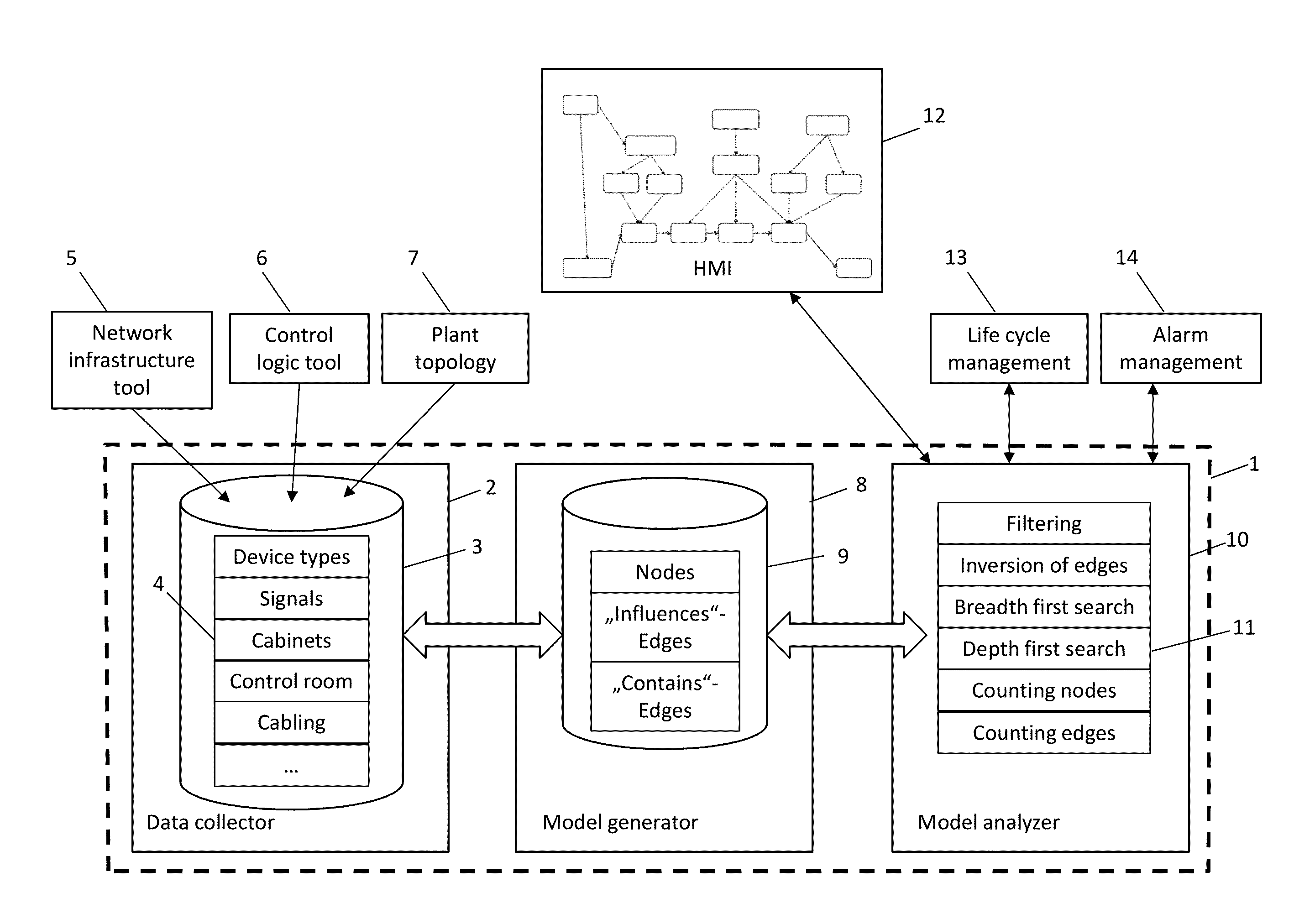
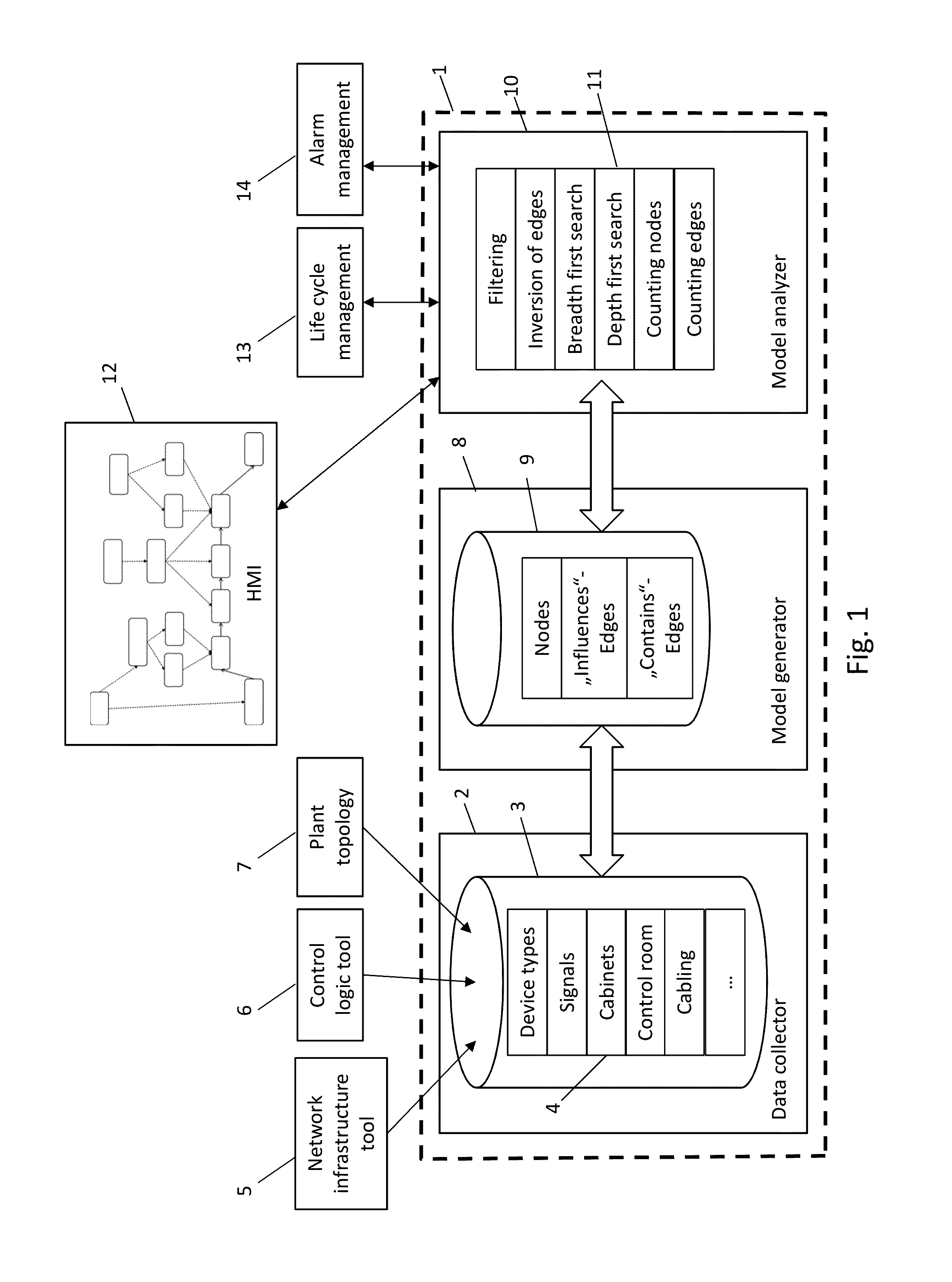
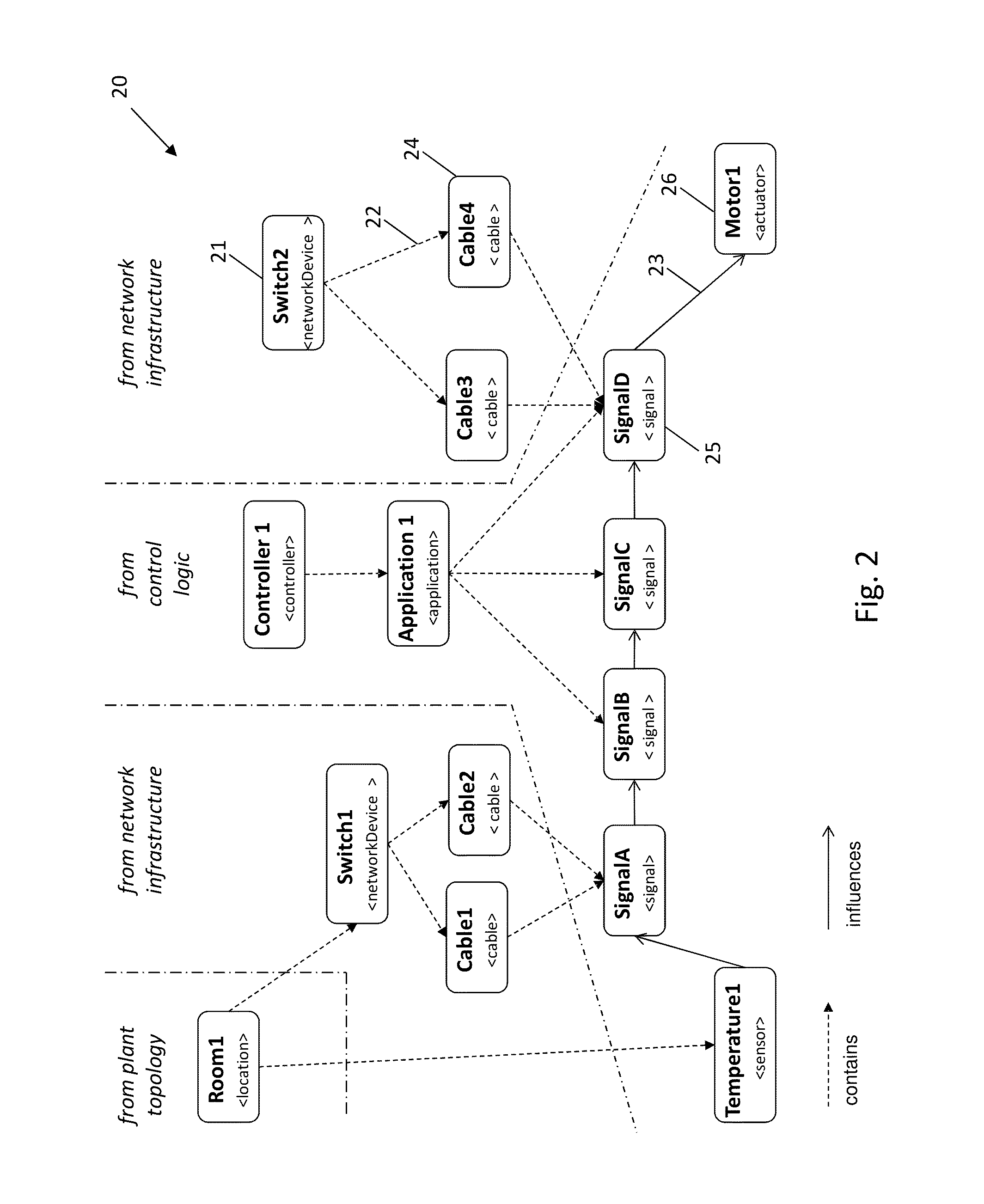
- A system analyzer comprising a data collecting unit, a model generating unit, and a model analyzing unit that uses a graphic representation with nodes and directed edges to model DCS components and signals, allowing for depth-first or breadth-first searches to determine the effects of changes on DCS components, and transmitting this information to an operator interface.

Industrial Safety Standards for DCS Analysis Systems
Industrial safety standards for DCS analysis systems represent a critical framework that governs the implementation, operation, and maintenance of distributed control systems in industrial environments. These standards ensure that analytical capabilities within DCS architectures maintain the highest levels of safety integrity while providing enhanced operational insights. The regulatory landscape encompasses multiple international standards including IEC 61511, ISA-84, and ANSI/ISA-18.2, which collectively establish comprehensive guidelines for safety instrumented systems and their analytical components.
The Safety Integrity Level (SIL) classification system forms the cornerstone of DCS analysis system standards, defining four distinct levels of risk reduction and reliability requirements. SIL-rated analytical functions must demonstrate specific probability of failure on demand (PFD) values, ranging from 10^-1 to 10^-4 for SIL 1 through SIL 4 respectively. These classifications directly impact the design and implementation of analysis techniques, requiring redundant measurement systems, diverse analytical algorithms, and fail-safe operational modes to meet prescribed safety targets.
Functional safety assessment protocols mandate rigorous validation procedures for analytical algorithms integrated within DCS environments. These assessments evaluate the systematic capability of analysis techniques to detect process deviations, equipment malfunctions, and potential hazardous conditions. The standards require comprehensive documentation of analytical model assumptions, uncertainty quantification methods, and performance validation under various operational scenarios including normal, abnormal, and emergency conditions.
Cybersecurity considerations have become increasingly prominent in industrial safety standards, particularly regarding DCS analysis systems that process critical operational data. Standards such as IEC 62443 establish security zones and conduits that govern data flow between analytical components and control systems. These requirements influence the architecture of analysis techniques, necessitating secure communication protocols, encrypted data transmission, and robust authentication mechanisms to prevent unauthorized access to safety-critical analytical functions.
Compliance verification processes require systematic testing and documentation of analysis system performance against established safety benchmarks. This includes periodic proof testing of analytical sensors, validation of algorithm accuracy under degraded conditions, and demonstration of proper response to simulated failure scenarios. The standards mandate specific testing frequencies and acceptance criteria that directly influence the operational reliability of refined analysis techniques in distributed control environments.
The Safety Integrity Level (SIL) classification system forms the cornerstone of DCS analysis system standards, defining four distinct levels of risk reduction and reliability requirements. SIL-rated analytical functions must demonstrate specific probability of failure on demand (PFD) values, ranging from 10^-1 to 10^-4 for SIL 1 through SIL 4 respectively. These classifications directly impact the design and implementation of analysis techniques, requiring redundant measurement systems, diverse analytical algorithms, and fail-safe operational modes to meet prescribed safety targets.
Functional safety assessment protocols mandate rigorous validation procedures for analytical algorithms integrated within DCS environments. These assessments evaluate the systematic capability of analysis techniques to detect process deviations, equipment malfunctions, and potential hazardous conditions. The standards require comprehensive documentation of analytical model assumptions, uncertainty quantification methods, and performance validation under various operational scenarios including normal, abnormal, and emergency conditions.
Cybersecurity considerations have become increasingly prominent in industrial safety standards, particularly regarding DCS analysis systems that process critical operational data. Standards such as IEC 62443 establish security zones and conduits that govern data flow between analytical components and control systems. These requirements influence the architecture of analysis techniques, necessitating secure communication protocols, encrypted data transmission, and robust authentication mechanisms to prevent unauthorized access to safety-critical analytical functions.
Compliance verification processes require systematic testing and documentation of analysis system performance against established safety benchmarks. This includes periodic proof testing of analytical sensors, validation of algorithm accuracy under degraded conditions, and demonstration of proper response to simulated failure scenarios. The standards mandate specific testing frequencies and acceptance criteria that directly influence the operational reliability of refined analysis techniques in distributed control environments.
Data Privacy and Security in Distributed Control Analytics
Data privacy and security represent critical considerations in distributed control analytics, where sensitive operational data flows across multiple nodes and networks. The distributed nature of these systems creates expanded attack surfaces and introduces complex challenges for maintaining data confidentiality, integrity, and availability throughout the analytical pipeline.
Traditional centralized security models prove inadequate for distributed control environments, where data processing occurs across geographically dispersed locations with varying security infrastructures. The challenge intensifies when analytical processes require real-time data sharing between control nodes, creating potential vulnerabilities during data transmission and storage phases.
Encryption mechanisms form the foundation of secure distributed analytics, employing both symmetric and asymmetric cryptographic protocols to protect data in transit and at rest. Advanced encryption standards must be implemented without significantly impacting system performance, requiring careful balance between security strength and computational efficiency. Hardware security modules increasingly provide dedicated encryption processing capabilities to minimize performance overhead.
Access control frameworks in distributed environments demand sophisticated authentication and authorization mechanisms that can operate seamlessly across network boundaries. Multi-factor authentication systems, combined with role-based access controls, ensure that only authorized personnel can access specific analytical functions and datasets. Zero-trust security models are gaining prominence, requiring continuous verification of user credentials and device integrity.
Data anonymization and differential privacy techniques enable analytical insights while protecting sensitive information about individual system components or operational parameters. These approaches allow organizations to share analytical results and collaborate on system improvements without exposing proprietary control strategies or revealing system vulnerabilities to potential adversaries.
Blockchain technology emerges as a promising solution for maintaining data integrity and creating immutable audit trails in distributed control analytics. Smart contracts can automate security policy enforcement and ensure consistent application of privacy protection measures across all network nodes, while distributed ledger systems provide transparent yet secure record-keeping capabilities.
Regulatory compliance adds another layer of complexity, as distributed systems often span multiple jurisdictions with varying data protection requirements. Organizations must implement flexible privacy frameworks capable of adapting to different regulatory environments while maintaining consistent security standards across the entire distributed infrastructure.
Traditional centralized security models prove inadequate for distributed control environments, where data processing occurs across geographically dispersed locations with varying security infrastructures. The challenge intensifies when analytical processes require real-time data sharing between control nodes, creating potential vulnerabilities during data transmission and storage phases.
Encryption mechanisms form the foundation of secure distributed analytics, employing both symmetric and asymmetric cryptographic protocols to protect data in transit and at rest. Advanced encryption standards must be implemented without significantly impacting system performance, requiring careful balance between security strength and computational efficiency. Hardware security modules increasingly provide dedicated encryption processing capabilities to minimize performance overhead.
Access control frameworks in distributed environments demand sophisticated authentication and authorization mechanisms that can operate seamlessly across network boundaries. Multi-factor authentication systems, combined with role-based access controls, ensure that only authorized personnel can access specific analytical functions and datasets. Zero-trust security models are gaining prominence, requiring continuous verification of user credentials and device integrity.
Data anonymization and differential privacy techniques enable analytical insights while protecting sensitive information about individual system components or operational parameters. These approaches allow organizations to share analytical results and collaborate on system improvements without exposing proprietary control strategies or revealing system vulnerabilities to potential adversaries.
Blockchain technology emerges as a promising solution for maintaining data integrity and creating immutable audit trails in distributed control analytics. Smart contracts can automate security policy enforcement and ensure consistent application of privacy protection measures across all network nodes, while distributed ledger systems provide transparent yet secure record-keeping capabilities.
Regulatory compliance adds another layer of complexity, as distributed systems often span multiple jurisdictions with varying data protection requirements. Organizations must implement flexible privacy frameworks capable of adapting to different regulatory environments while maintaining consistent security standards across the entire distributed infrastructure.
Unlock deeper insights with Patsnap Eureka Quick Research — get a full tech report to explore trends and direct your research. Try now!
Generate Your Research Report Instantly with AI Agent
Supercharge your innovation with Patsnap Eureka AI Agent Platform!