
How to Boost Distributed Control Systems’ Interoperability with External Devices
APR 28, 20269 MIN READ
Generate Your Research Report Instantly with AI Agent
Patsnap Eureka helps you evaluate technical feasibility & market potential.
DCS Interoperability Background and Technical Objectives
Distributed Control Systems (DCS) have evolved from isolated, proprietary platforms into complex industrial ecosystems requiring seamless integration with diverse external devices and systems. Originally designed in the 1970s as centralized control architectures, DCS platforms prioritized reliability and real-time performance within closed environments. However, the digital transformation of industrial operations has fundamentally shifted requirements toward open, interoperable systems capable of communicating with enterprise resource planning systems, cloud platforms, IoT sensors, mobile devices, and third-party automation equipment.
The historical development of DCS interoperability reflects broader industry trends toward standardization and connectivity. Early DCS implementations relied heavily on proprietary communication protocols and hardware interfaces, creating vendor lock-in scenarios that limited operational flexibility. The emergence of fieldbus technologies in the 1990s, followed by Ethernet-based industrial networks and web services integration, marked significant milestones in breaking down these silos.
Contemporary industrial environments demand unprecedented levels of data exchange and system integration. Manufacturing execution systems require real-time production data from DCS platforms, while predictive maintenance applications need access to equipment health parameters. Supply chain optimization depends on seamless information flow between process control systems and logistics networks. Additionally, regulatory compliance increasingly requires comprehensive data logging and reporting capabilities that span multiple system boundaries.
Current technological trends are accelerating interoperability requirements. Industry 4.0 initiatives emphasize horizontal and vertical integration across entire value chains. Edge computing deployments require DCS systems to interface with local processing nodes and cloud analytics platforms. Artificial intelligence and machine learning applications demand access to historical and real-time process data for optimization algorithms.
The primary technical objective centers on establishing robust, secure, and scalable communication frameworks that enable DCS platforms to exchange data and control signals with heterogeneous external systems without compromising operational integrity. This encompasses developing standardized application programming interfaces, implementing secure authentication mechanisms, and ensuring real-time performance requirements are maintained across system boundaries.
Secondary objectives include achieving vendor-neutral interoperability standards that prevent technology lock-in, establishing comprehensive cybersecurity frameworks for external communications, and developing flexible integration architectures that can adapt to evolving technological landscapes. These objectives collectively aim to transform DCS platforms from isolated control systems into integral components of broader digital industrial ecosystems while maintaining the reliability and safety standards critical for industrial operations.
The historical development of DCS interoperability reflects broader industry trends toward standardization and connectivity. Early DCS implementations relied heavily on proprietary communication protocols and hardware interfaces, creating vendor lock-in scenarios that limited operational flexibility. The emergence of fieldbus technologies in the 1990s, followed by Ethernet-based industrial networks and web services integration, marked significant milestones in breaking down these silos.
Contemporary industrial environments demand unprecedented levels of data exchange and system integration. Manufacturing execution systems require real-time production data from DCS platforms, while predictive maintenance applications need access to equipment health parameters. Supply chain optimization depends on seamless information flow between process control systems and logistics networks. Additionally, regulatory compliance increasingly requires comprehensive data logging and reporting capabilities that span multiple system boundaries.
Current technological trends are accelerating interoperability requirements. Industry 4.0 initiatives emphasize horizontal and vertical integration across entire value chains. Edge computing deployments require DCS systems to interface with local processing nodes and cloud analytics platforms. Artificial intelligence and machine learning applications demand access to historical and real-time process data for optimization algorithms.
The primary technical objective centers on establishing robust, secure, and scalable communication frameworks that enable DCS platforms to exchange data and control signals with heterogeneous external systems without compromising operational integrity. This encompasses developing standardized application programming interfaces, implementing secure authentication mechanisms, and ensuring real-time performance requirements are maintained across system boundaries.
Secondary objectives include achieving vendor-neutral interoperability standards that prevent technology lock-in, establishing comprehensive cybersecurity frameworks for external communications, and developing flexible integration architectures that can adapt to evolving technological landscapes. These objectives collectively aim to transform DCS platforms from isolated control systems into integral components of broader digital industrial ecosystems while maintaining the reliability and safety standards critical for industrial operations.
Market Demand for Enhanced DCS Integration Solutions
The industrial automation sector is experiencing unprecedented demand for enhanced Distributed Control Systems (DCS) integration capabilities, driven by the accelerating digital transformation across manufacturing industries. Organizations are increasingly recognizing that seamless interoperability between DCS platforms and external devices represents a critical competitive advantage in achieving operational excellence and maintaining market leadership.
Manufacturing enterprises across sectors including oil and gas, chemicals, pharmaceuticals, and power generation are actively seeking solutions that can bridge the connectivity gap between legacy DCS infrastructure and modern smart devices. This demand stems from the need to leverage advanced analytics, predictive maintenance capabilities, and real-time optimization tools that require comprehensive data integration from diverse sources.
The market appetite for enhanced DCS integration solutions is particularly pronounced in facilities undergoing Industry 4.0 transformation initiatives. Companies are investing heavily in technologies that enable their existing control systems to communicate effectively with Internet of Things sensors, edge computing devices, advanced process analyzers, and cloud-based management platforms without compromising system reliability or security.
Process industries are demonstrating strong willingness to invest in interoperability solutions that can reduce operational silos and enable cross-platform data sharing. The demand is especially acute for solutions that support multiple communication protocols, provide standardized interfaces, and offer backward compatibility with existing infrastructure investments.
Regulatory compliance requirements are further amplifying market demand, as industries face increasing pressure to implement comprehensive monitoring and reporting systems that necessitate seamless integration between control systems and external monitoring devices. Environmental regulations, safety standards, and quality assurance mandates are driving organizations to seek robust integration solutions that can aggregate data from multiple sources while maintaining audit trails and ensuring data integrity.
The emergence of hybrid cloud architectures and edge computing paradigms has created additional market pull for DCS integration solutions that can securely connect on-premises control systems with external cloud services and remote monitoring platforms, enabling advanced analytics and centralized management capabilities across distributed operations.
Manufacturing enterprises across sectors including oil and gas, chemicals, pharmaceuticals, and power generation are actively seeking solutions that can bridge the connectivity gap between legacy DCS infrastructure and modern smart devices. This demand stems from the need to leverage advanced analytics, predictive maintenance capabilities, and real-time optimization tools that require comprehensive data integration from diverse sources.
The market appetite for enhanced DCS integration solutions is particularly pronounced in facilities undergoing Industry 4.0 transformation initiatives. Companies are investing heavily in technologies that enable their existing control systems to communicate effectively with Internet of Things sensors, edge computing devices, advanced process analyzers, and cloud-based management platforms without compromising system reliability or security.
Process industries are demonstrating strong willingness to invest in interoperability solutions that can reduce operational silos and enable cross-platform data sharing. The demand is especially acute for solutions that support multiple communication protocols, provide standardized interfaces, and offer backward compatibility with existing infrastructure investments.
Regulatory compliance requirements are further amplifying market demand, as industries face increasing pressure to implement comprehensive monitoring and reporting systems that necessitate seamless integration between control systems and external monitoring devices. Environmental regulations, safety standards, and quality assurance mandates are driving organizations to seek robust integration solutions that can aggregate data from multiple sources while maintaining audit trails and ensuring data integrity.
The emergence of hybrid cloud architectures and edge computing paradigms has created additional market pull for DCS integration solutions that can securely connect on-premises control systems with external cloud services and remote monitoring platforms, enabling advanced analytics and centralized management capabilities across distributed operations.
Current DCS Interoperability Challenges and Constraints
Distributed Control Systems face significant interoperability challenges when integrating with external devices, primarily stemming from the heterogeneous nature of industrial automation environments. Legacy DCS architectures were typically designed as closed systems with proprietary communication protocols, creating substantial barriers when attempting to interface with third-party equipment from different manufacturers.
Protocol fragmentation represents one of the most persistent constraints in DCS interoperability. Industrial environments often contain a mixture of communication standards including Modbus, HART, Foundation Fieldbus, PROFIBUS, and Ethernet-based protocols. Each protocol operates with distinct data structures, timing requirements, and addressing schemes, making seamless integration extremely complex. The lack of universal translation mechanisms forces system integrators to develop custom interfaces for each protocol combination.
Data format incompatibility further compounds interoperability issues. External devices frequently utilize different data encoding methods, scaling factors, and measurement units compared to the host DCS. Real-time data synchronization becomes problematic when devices operate on varying sampling rates and update frequencies, potentially leading to control loop instability and reduced system performance.
Security constraints have emerged as critical barriers to DCS interoperability, particularly as industrial systems become more connected. Traditional DCS networks were designed with air-gapped architectures, but modern interoperability requirements demand network connectivity that introduces cybersecurity vulnerabilities. Implementing secure communication channels while maintaining real-time performance requirements creates significant technical challenges.
Vendor lock-in strategies continue to limit interoperability options, as manufacturers often implement proprietary extensions to standard protocols or utilize closed APIs that restrict third-party integration capabilities. This approach forces end users to rely on single-vendor solutions, limiting flexibility and increasing long-term operational costs.
Configuration complexity presents another major constraint, as integrating external devices typically requires extensive parameter mapping, signal conditioning, and custom programming. The absence of standardized configuration tools means that each integration project demands specialized expertise and significant engineering resources, making interoperability projects time-consuming and expensive to implement.
Protocol fragmentation represents one of the most persistent constraints in DCS interoperability. Industrial environments often contain a mixture of communication standards including Modbus, HART, Foundation Fieldbus, PROFIBUS, and Ethernet-based protocols. Each protocol operates with distinct data structures, timing requirements, and addressing schemes, making seamless integration extremely complex. The lack of universal translation mechanisms forces system integrators to develop custom interfaces for each protocol combination.
Data format incompatibility further compounds interoperability issues. External devices frequently utilize different data encoding methods, scaling factors, and measurement units compared to the host DCS. Real-time data synchronization becomes problematic when devices operate on varying sampling rates and update frequencies, potentially leading to control loop instability and reduced system performance.
Security constraints have emerged as critical barriers to DCS interoperability, particularly as industrial systems become more connected. Traditional DCS networks were designed with air-gapped architectures, but modern interoperability requirements demand network connectivity that introduces cybersecurity vulnerabilities. Implementing secure communication channels while maintaining real-time performance requirements creates significant technical challenges.
Vendor lock-in strategies continue to limit interoperability options, as manufacturers often implement proprietary extensions to standard protocols or utilize closed APIs that restrict third-party integration capabilities. This approach forces end users to rely on single-vendor solutions, limiting flexibility and increasing long-term operational costs.
Configuration complexity presents another major constraint, as integrating external devices typically requires extensive parameter mapping, signal conditioning, and custom programming. The absence of standardized configuration tools means that each integration project demands specialized expertise and significant engineering resources, making interoperability projects time-consuming and expensive to implement.
Existing DCS-External Device Integration Approaches
01 Communication protocols and standards for system integration
Implementation of standardized communication protocols and interfaces that enable different distributed control systems to exchange data and commands seamlessly. These protocols ensure compatibility between various system components and facilitate real-time communication across heterogeneous control networks.- Communication protocols and standards for system integration: Implementation of standardized communication protocols and interfaces to enable seamless data exchange between different distributed control system components. These protocols facilitate the integration of heterogeneous systems by providing common communication frameworks and ensuring compatibility across various platforms and vendors.
- Data translation and format conversion mechanisms: Systems and methods for converting data formats and translating information between different control system architectures. These mechanisms enable interoperability by bridging the gap between systems that use different data structures, encoding schemes, and communication formats, allowing for unified operation across diverse platforms.
- Middleware and gateway solutions for system bridging: Development of intermediate software layers and gateway devices that act as translators and coordinators between different distributed control systems. These solutions provide abstraction layers that hide the complexity of individual systems while enabling them to work together through standardized interfaces and protocols.
- Network architecture and topology optimization: Design and implementation of network infrastructures that support interoperability between distributed control systems. This includes optimization of network topologies, bandwidth allocation, and routing mechanisms to ensure reliable and efficient communication between interconnected systems while maintaining performance and security requirements.
- Security and authentication frameworks for interconnected systems: Implementation of comprehensive security measures and authentication protocols to protect data integrity and system access in interconnected distributed control environments. These frameworks ensure secure communication channels, access control, and data protection while maintaining interoperability between different system components and vendors.
02 Data exchange and message formatting mechanisms
Methods for structuring and formatting data messages between distributed control systems to ensure proper interpretation and processing. These mechanisms handle data conversion, message routing, and protocol translation to maintain data integrity during inter-system communication.Expand Specific Solutions03 Network architecture and topology management
Design and implementation of network infrastructures that support interoperability between multiple distributed control systems. This includes network configuration, topology optimization, and management of communication pathways to ensure reliable and efficient system integration.Expand Specific Solutions04 Security and authentication frameworks
Implementation of security measures and authentication protocols to protect inter-system communications in distributed control environments. These frameworks ensure secure data exchange while maintaining system integrity and preventing unauthorized access during interoperability operations.Expand Specific Solutions05 Real-time synchronization and coordination methods
Techniques for synchronizing operations and coordinating activities between multiple distributed control systems to ensure coherent system behavior. These methods handle timing constraints, event sequencing, and distributed decision-making processes to maintain system-wide coordination.Expand Specific Solutions
Major DCS Vendors and Integration Solution Providers
The distributed control systems (DCS) interoperability market is experiencing rapid growth driven by increasing industrial digitalization and Industry 4.0 adoption. The market demonstrates significant scale with established players like ABB Ltd., Rockwell Automation, and Emerson's Fisher-Rosemount Systems leading through mature automation platforms and extensive integration capabilities. Technology maturity varies considerably across the competitive landscape - while traditional automation giants possess well-established DCS architectures, emerging players like Huawei Technologies and New H3C Technologies are advancing cloud-native and software-defined approaches. Chinese companies including Beijing Sifang Automation and Guodian Nanjing Automation are strengthening domestic capabilities, while technology leaders such as IBM and Mitsubishi Electric drive innovation in AI-enhanced interoperability solutions. The industry is transitioning from proprietary systems toward open standards and edge computing integration, creating opportunities for both established manufacturers and specialized technology providers to enhance cross-platform device connectivity and real-time data exchange capabilities.
ABB Ltd.
Technical Solution: ABB implements a comprehensive interoperability framework based on IEC 61850 and OPC UA standards for distributed control systems. Their solution features standardized communication protocols that enable seamless integration with third-party devices through universal gateways and protocol converters. The system supports real-time data exchange, device discovery, and automatic configuration capabilities. ABB's Ability System 800xA platform provides native support for multiple industrial protocols including Modbus, PROFIBUS, and Ethernet/IP, ensuring broad compatibility with external devices across different manufacturers and technology generations.
Strengths: Industry-leading protocol support and proven scalability in large industrial installations. Weaknesses: High implementation costs and complexity requiring specialized expertise for deployment.
Fisher-Rosemount Systems, Inc.
Technical Solution: Fisher-Rosemount develops interoperability solutions through their DeltaV distributed control system, which incorporates advanced protocol translation engines and standardized communication interfaces. Their approach utilizes FOUNDATION Fieldbus and HART protocols as core technologies, supplemented by OPC servers and custom gateway solutions for legacy device integration. The system features intelligent device management capabilities that automatically detect and configure external devices, while maintaining real-time performance requirements. Their solution includes comprehensive diagnostic tools and device health monitoring to ensure reliable operation across heterogeneous device networks.
Strengths: Excellent process industry expertise and robust fieldbus integration capabilities. Weaknesses: Limited flexibility with non-process control applications and vendor-specific protocol dependencies.
Core Protocol Translation and Gateway Technologies
Method and system for modular interoperable distributed control
PatentActiveUS20160065656A1
Innovation
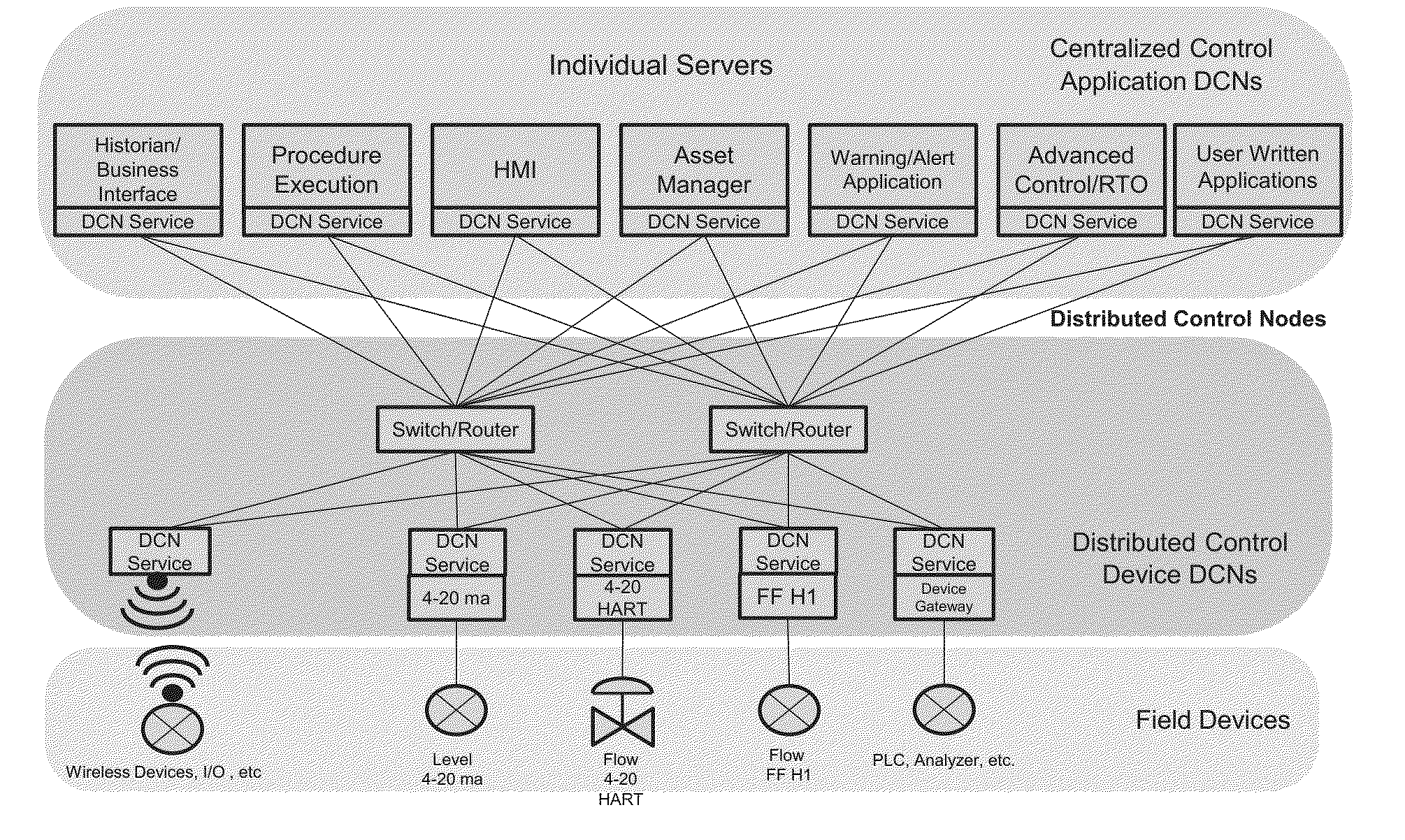
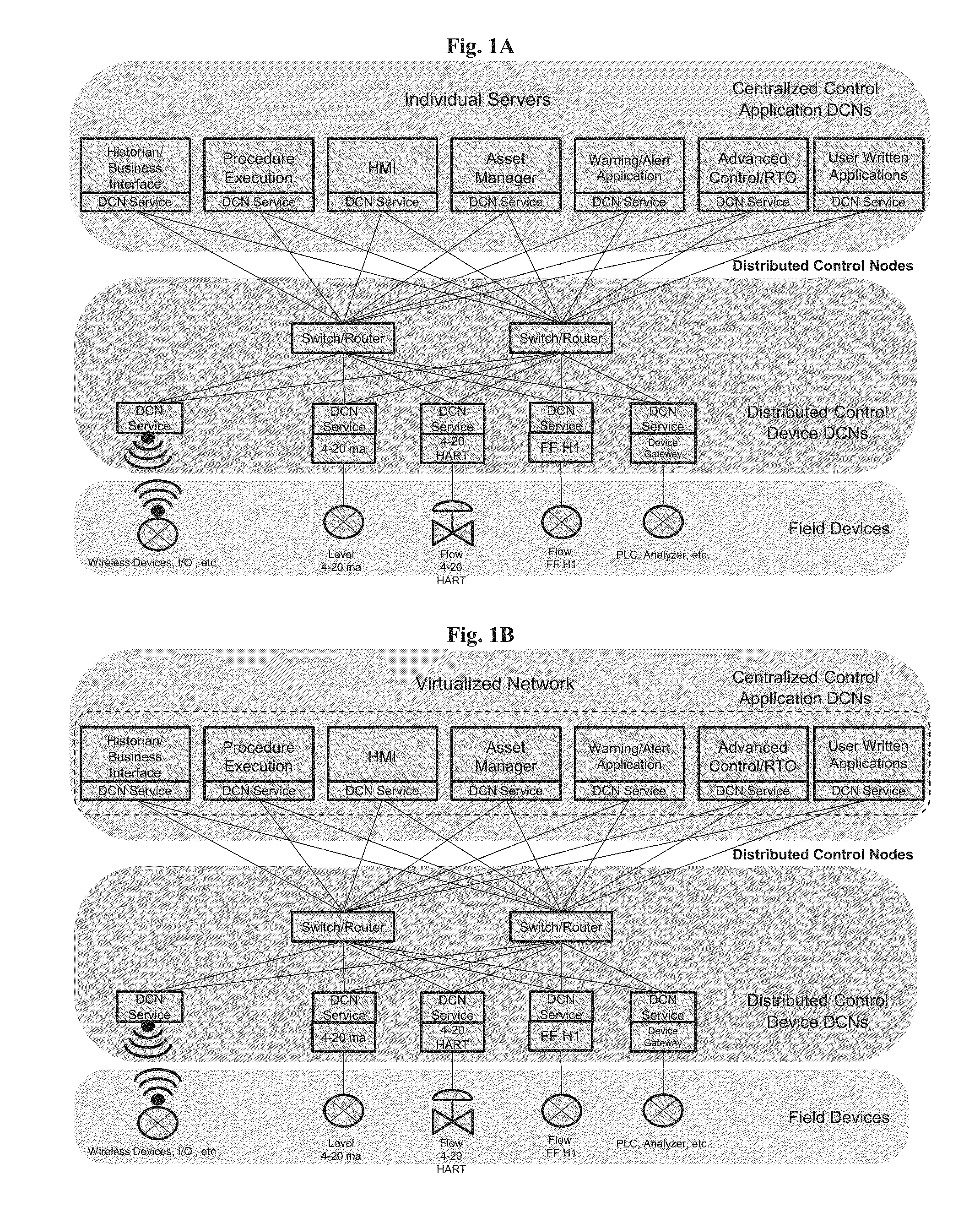
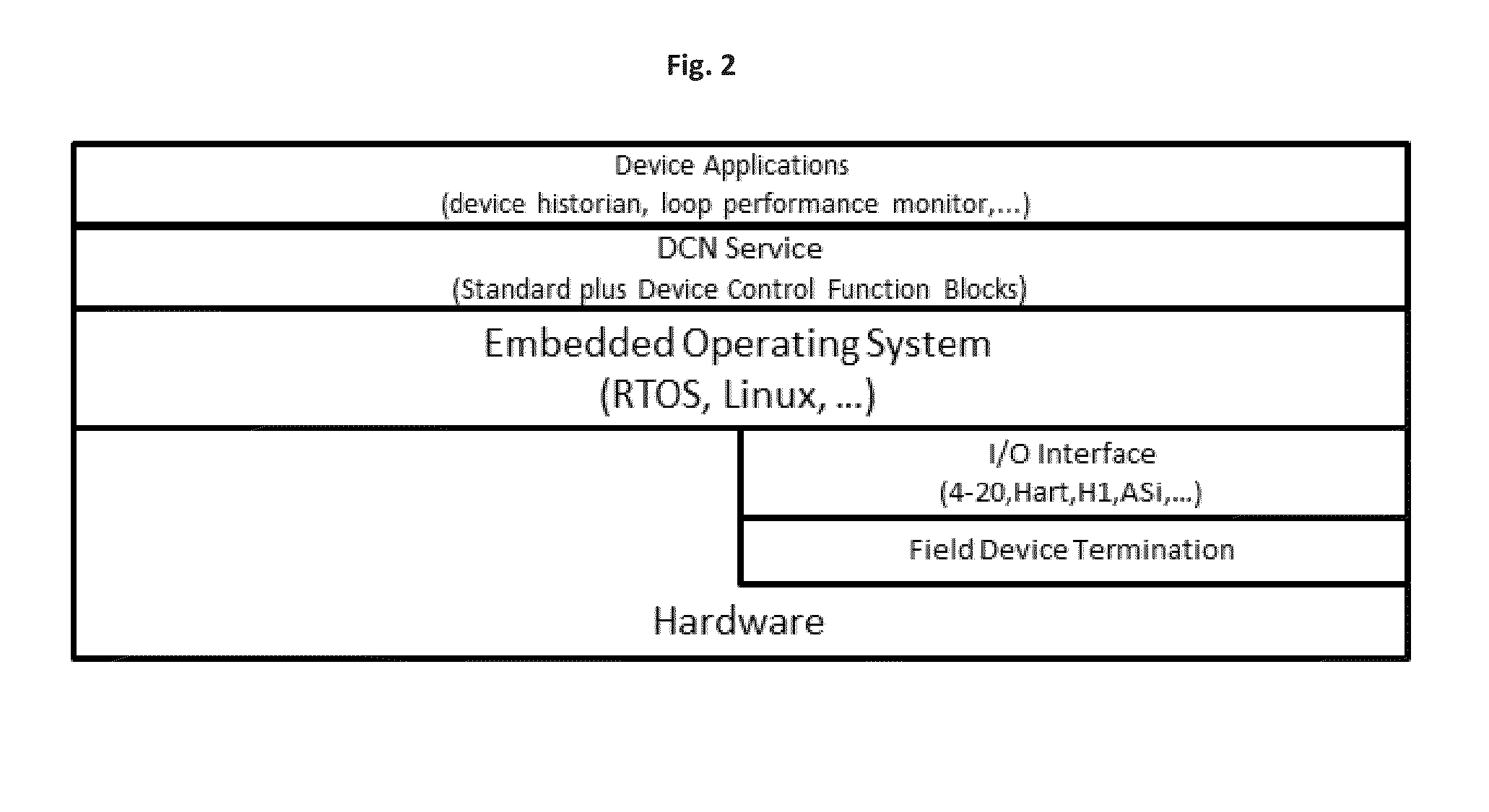
- A modular, interoperable DCS architecture utilizing distributed control nodes (DCNs) with a high-speed Layer 3 Ethernet switch fabric and industry-standard software runtime, enabling flexible integration of applications and I/O interfaces, and allowing for peer-to-peer communication between Device DCNs and Application DCNs using standard function blocks and protocols.

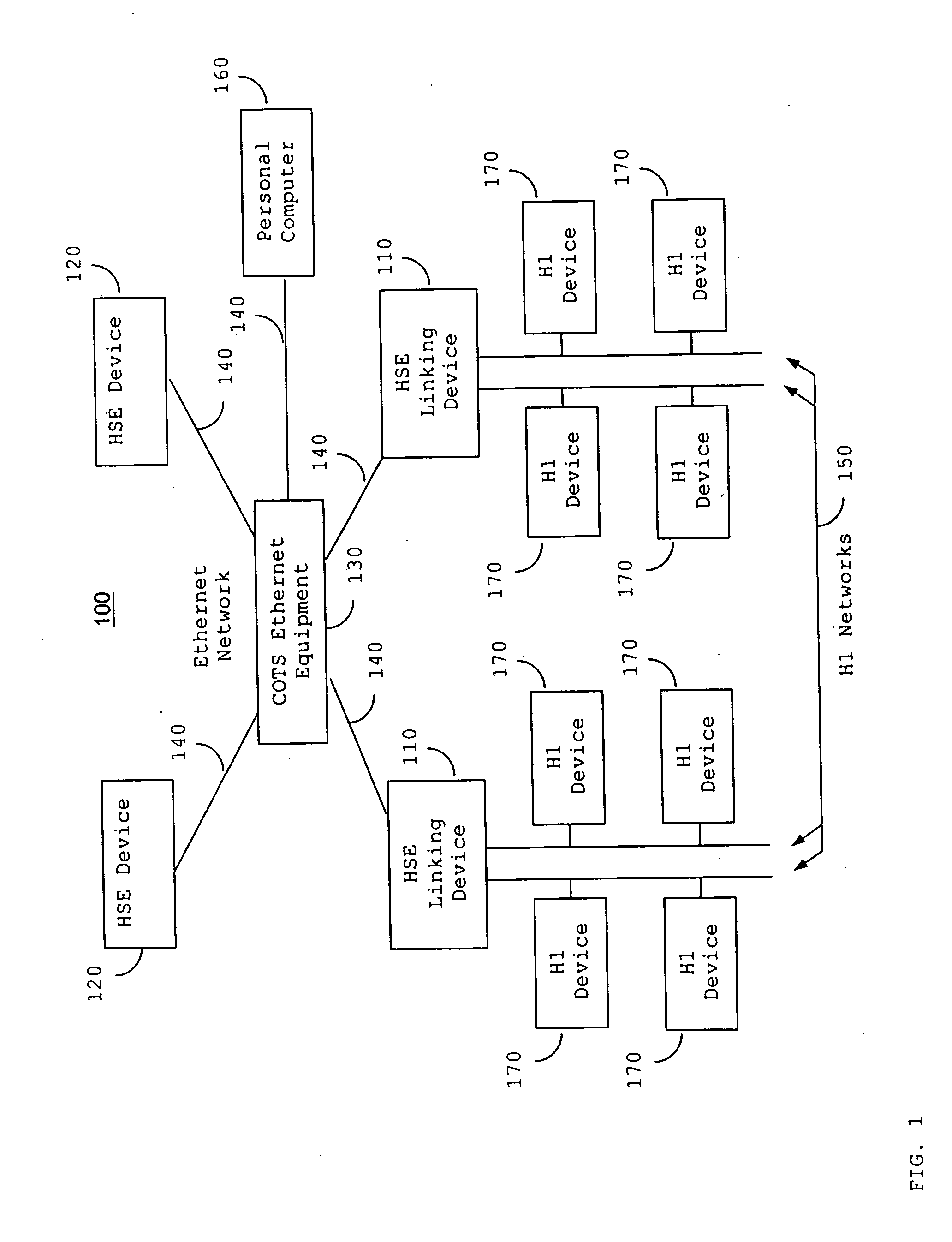
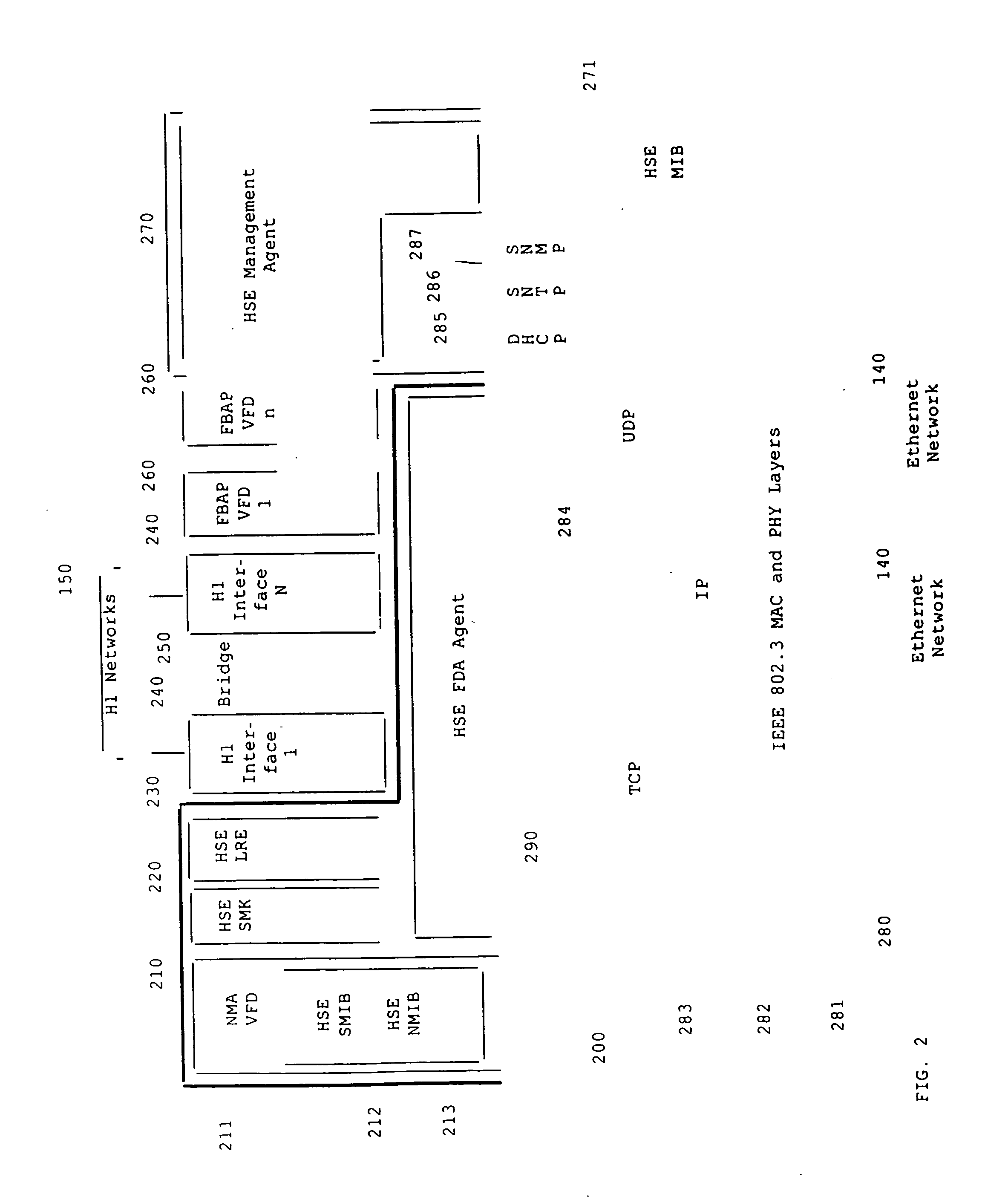
Block-oriented control system on high speed ethernet
PatentInactiveUS20050240286A1
Innovation
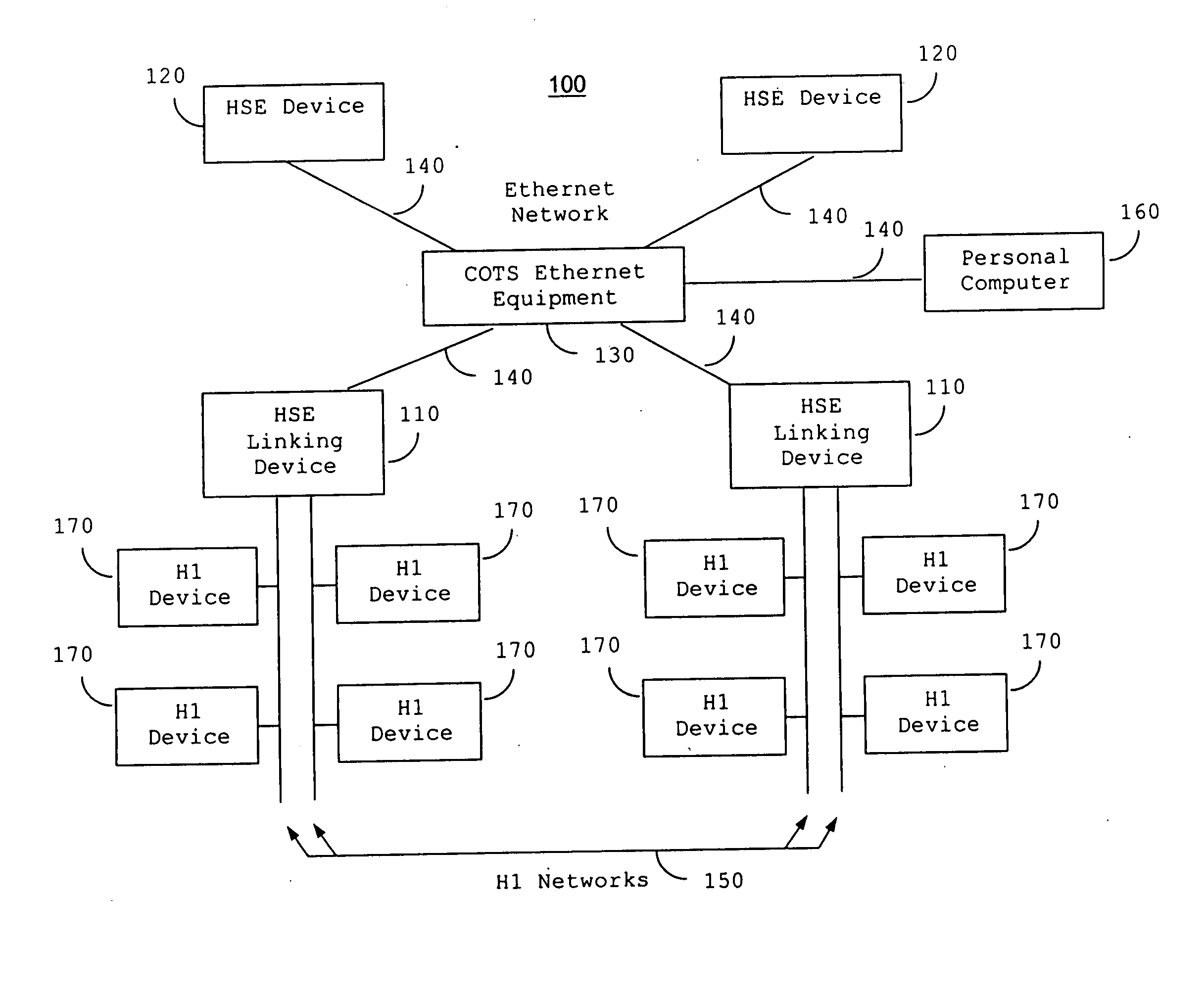
- The implementation of High Speed Ethernet (HSE) protocols, including the HSE Field Device Access (FDA) Agent, System Management Kernel (SMK), and Local Area Network Redundancy Entity (LRE), which utilize standard Internet protocols to enable communication, system time synchronization, and fault tolerance without requiring special hardware or redundancy managers.

Industrial Communication Standards and Compliance
Industrial communication standards serve as the backbone for achieving seamless interoperability between distributed control systems and external devices. These standards define common protocols, data formats, and communication mechanisms that enable diverse equipment from different manufacturers to exchange information effectively. The establishment of standardized frameworks has become increasingly critical as industrial environments evolve toward more complex, interconnected ecosystems requiring real-time data exchange and coordinated operations.
The landscape of industrial communication standards encompasses several key protocols, each designed to address specific operational requirements. Ethernet-based standards such as EtherNet/IP, PROFINET, and EtherCAT have gained significant traction due to their high-speed capabilities and compatibility with existing IT infrastructure. These protocols facilitate deterministic communication essential for time-critical control applications while supporting standard TCP/IP networking features.
Fieldbus technologies continue to play vital roles in legacy system integration and specialized applications. FOUNDATION Fieldbus, HART, and DeviceNet protocols provide robust solutions for process automation and discrete manufacturing environments. These standards offer proven reliability and extensive device ecosystems, making them indispensable for maintaining compatibility with existing installations while enabling gradual system modernization.
Compliance with industrial communication standards requires adherence to specific certification processes and testing procedures. Organizations such as the Industrial Internet Consortium, ODVA, and PROFIBUS International establish rigorous conformance testing protocols to ensure device interoperability. These certification programs validate that devices meet protocol specifications, timing requirements, and safety standards necessary for reliable industrial operation.
The emergence of Industrial Internet of Things has driven the development of newer standards like OPC UA and TSN, which address modern requirements for cloud connectivity, cybersecurity, and advanced analytics. OPC UA provides platform-independent communication with built-in security features, while Time-Sensitive Networking ensures deterministic Ethernet communication for mission-critical applications.
Regulatory compliance adds another layer of complexity, as industrial communication systems must meet safety standards such as IEC 61508 and industry-specific regulations. These requirements influence protocol selection and implementation strategies, particularly in sectors like pharmaceuticals, oil and gas, and nuclear power where safety-critical operations demand the highest levels of reliability and traceability.
The landscape of industrial communication standards encompasses several key protocols, each designed to address specific operational requirements. Ethernet-based standards such as EtherNet/IP, PROFINET, and EtherCAT have gained significant traction due to their high-speed capabilities and compatibility with existing IT infrastructure. These protocols facilitate deterministic communication essential for time-critical control applications while supporting standard TCP/IP networking features.
Fieldbus technologies continue to play vital roles in legacy system integration and specialized applications. FOUNDATION Fieldbus, HART, and DeviceNet protocols provide robust solutions for process automation and discrete manufacturing environments. These standards offer proven reliability and extensive device ecosystems, making them indispensable for maintaining compatibility with existing installations while enabling gradual system modernization.
Compliance with industrial communication standards requires adherence to specific certification processes and testing procedures. Organizations such as the Industrial Internet Consortium, ODVA, and PROFIBUS International establish rigorous conformance testing protocols to ensure device interoperability. These certification programs validate that devices meet protocol specifications, timing requirements, and safety standards necessary for reliable industrial operation.
The emergence of Industrial Internet of Things has driven the development of newer standards like OPC UA and TSN, which address modern requirements for cloud connectivity, cybersecurity, and advanced analytics. OPC UA provides platform-independent communication with built-in security features, while Time-Sensitive Networking ensures deterministic Ethernet communication for mission-critical applications.
Regulatory compliance adds another layer of complexity, as industrial communication systems must meet safety standards such as IEC 61508 and industry-specific regulations. These requirements influence protocol selection and implementation strategies, particularly in sectors like pharmaceuticals, oil and gas, and nuclear power where safety-critical operations demand the highest levels of reliability and traceability.
Cybersecurity Considerations in DCS Integration
The integration of Distributed Control Systems with external devices introduces significant cybersecurity vulnerabilities that require comprehensive risk assessment and mitigation strategies. Traditional DCS architectures were designed with air-gapped networks and proprietary protocols, providing inherent security through isolation. However, modern interoperability requirements necessitate network connectivity and standardized communication protocols, creating potential attack vectors for malicious actors.
Network segmentation emerges as a fundamental security principle in DCS integration scenarios. Implementing properly configured firewalls, virtual LANs, and demilitarized zones helps isolate critical control functions from external device communications. Industrial firewalls with deep packet inspection capabilities can monitor and filter traffic based on industrial protocol specifications, ensuring only legitimate control commands reach critical systems.
Authentication and authorization mechanisms must be strengthened when external devices access DCS networks. Multi-factor authentication, certificate-based device authentication, and role-based access control systems help verify device legitimacy and limit access privileges. Regular credential rotation and centralized identity management systems further enhance security posture against unauthorized access attempts.
Encryption protocols play a crucial role in protecting data integrity during transmission between DCS components and external devices. Implementation of Transport Layer Security for industrial protocols, secure key management systems, and end-to-end encryption help prevent data interception and manipulation attacks. However, encryption implementation must consider real-time performance requirements inherent in industrial control applications.
Continuous monitoring and anomaly detection systems provide essential visibility into DCS integration security status. Security Information and Event Management platforms specifically designed for industrial environments can correlate events across multiple systems, identifying potential security incidents before they impact operations. Network traffic analysis tools help detect unusual communication patterns that may indicate compromise attempts.
Regular security assessments, including penetration testing and vulnerability scanning, ensure ongoing protection effectiveness. Incident response procedures must be specifically tailored for industrial environments, considering the potential impact on physical processes and safety systems during security events.
Network segmentation emerges as a fundamental security principle in DCS integration scenarios. Implementing properly configured firewalls, virtual LANs, and demilitarized zones helps isolate critical control functions from external device communications. Industrial firewalls with deep packet inspection capabilities can monitor and filter traffic based on industrial protocol specifications, ensuring only legitimate control commands reach critical systems.
Authentication and authorization mechanisms must be strengthened when external devices access DCS networks. Multi-factor authentication, certificate-based device authentication, and role-based access control systems help verify device legitimacy and limit access privileges. Regular credential rotation and centralized identity management systems further enhance security posture against unauthorized access attempts.
Encryption protocols play a crucial role in protecting data integrity during transmission between DCS components and external devices. Implementation of Transport Layer Security for industrial protocols, secure key management systems, and end-to-end encryption help prevent data interception and manipulation attacks. However, encryption implementation must consider real-time performance requirements inherent in industrial control applications.
Continuous monitoring and anomaly detection systems provide essential visibility into DCS integration security status. Security Information and Event Management platforms specifically designed for industrial environments can correlate events across multiple systems, identifying potential security incidents before they impact operations. Network traffic analysis tools help detect unusual communication patterns that may indicate compromise attempts.
Regular security assessments, including penetration testing and vulnerability scanning, ensure ongoing protection effectiveness. Incident response procedures must be specifically tailored for industrial environments, considering the potential impact on physical processes and safety systems during security events.
Unlock deeper insights with Patsnap Eureka Quick Research — get a full tech report to explore trends and direct your research. Try now!
Generate Your Research Report Instantly with AI Agent
Supercharge your innovation with Patsnap Eureka AI Agent Platform!