How to Enhance HEV User Experience through Connected Technologies?
AUG 14, 20259 MIN READ
Generate Your Research Report Instantly with AI Agent
Patsnap Eureka helps you evaluate technical feasibility & market potential.
HEV Connectivity Evolution
The evolution of connectivity in Hybrid Electric Vehicles (HEVs) has been a transformative journey, significantly enhancing user experience and vehicle performance. Initially, HEVs were primarily focused on improving fuel efficiency and reducing emissions. However, as connected technologies advanced, they became integral to the HEV ecosystem, revolutionizing the driving experience.
In the early stages of HEV connectivity, basic telematics systems were introduced, allowing for remote diagnostics and maintenance alerts. This marked the beginning of a more interactive relationship between the vehicle and its user. As smartphone integration became prevalent, HEVs began to offer features like remote start, climate control, and battery status monitoring through mobile applications.
The next phase saw the integration of advanced infotainment systems, providing real-time navigation, traffic updates, and entertainment options. These systems not only enhanced the in-car experience but also began to utilize vehicle data to optimize routes for better energy efficiency. Concurrently, over-the-air (OTA) updates emerged, enabling manufacturers to improve vehicle software and introduce new features without requiring physical dealership visits.
As connectivity matured, HEVs started leveraging cloud computing and big data analytics. This allowed for more sophisticated energy management systems that could learn from driving patterns and optimize the balance between electric and combustion engine usage. Vehicle-to-grid (V2G) technology also emerged, enabling HEVs to interact with the power grid, potentially selling excess energy back during peak demand periods.
The latest developments in HEV connectivity focus on Vehicle-to-Everything (V2X) communication. This technology enables HEVs to communicate with other vehicles, infrastructure, and even pedestrians, enhancing safety and efficiency. For instance, HEVs can now receive real-time information about traffic lights, road conditions, and nearby charging stations, allowing for more intelligent route planning and energy management.
Artificial Intelligence (AI) and machine learning have become crucial in interpreting the vast amounts of data generated by connected HEVs. These technologies are being used to predict maintenance needs, personalize driving experiences, and even autonomously adjust vehicle settings based on driver preferences and environmental conditions.
Looking forward, the integration of 5G networks promises to further revolutionize HEV connectivity. Higher bandwidth and lower latency will enable more real-time services, enhanced autonomous driving capabilities, and seamless integration with smart city infrastructure. This evolution in connectivity is not just enhancing the HEV user experience but is also paving the way for a more sustainable and efficient transportation ecosystem.
In the early stages of HEV connectivity, basic telematics systems were introduced, allowing for remote diagnostics and maintenance alerts. This marked the beginning of a more interactive relationship between the vehicle and its user. As smartphone integration became prevalent, HEVs began to offer features like remote start, climate control, and battery status monitoring through mobile applications.
The next phase saw the integration of advanced infotainment systems, providing real-time navigation, traffic updates, and entertainment options. These systems not only enhanced the in-car experience but also began to utilize vehicle data to optimize routes for better energy efficiency. Concurrently, over-the-air (OTA) updates emerged, enabling manufacturers to improve vehicle software and introduce new features without requiring physical dealership visits.
As connectivity matured, HEVs started leveraging cloud computing and big data analytics. This allowed for more sophisticated energy management systems that could learn from driving patterns and optimize the balance between electric and combustion engine usage. Vehicle-to-grid (V2G) technology also emerged, enabling HEVs to interact with the power grid, potentially selling excess energy back during peak demand periods.
The latest developments in HEV connectivity focus on Vehicle-to-Everything (V2X) communication. This technology enables HEVs to communicate with other vehicles, infrastructure, and even pedestrians, enhancing safety and efficiency. For instance, HEVs can now receive real-time information about traffic lights, road conditions, and nearby charging stations, allowing for more intelligent route planning and energy management.
Artificial Intelligence (AI) and machine learning have become crucial in interpreting the vast amounts of data generated by connected HEVs. These technologies are being used to predict maintenance needs, personalize driving experiences, and even autonomously adjust vehicle settings based on driver preferences and environmental conditions.
Looking forward, the integration of 5G networks promises to further revolutionize HEV connectivity. Higher bandwidth and lower latency will enable more real-time services, enhanced autonomous driving capabilities, and seamless integration with smart city infrastructure. This evolution in connectivity is not just enhancing the HEV user experience but is also paving the way for a more sustainable and efficient transportation ecosystem.
HEV User Experience Needs
The enhancement of HEV (Hybrid Electric Vehicle) user experience through connected technologies is driven by evolving consumer expectations and the rapid advancement of digital solutions. HEV users increasingly demand seamless integration of their vehicles with their digital lives, expecting features that go beyond traditional driving functionalities. These users seek real-time information about their vehicle's performance, energy consumption, and charging status, accessible through smartphone apps or in-vehicle displays.
One of the primary needs for HEV users is efficient energy management. Connected technologies can provide detailed insights into battery status, charging station availability, and optimal routes for energy conservation. Users want to be able to plan their journeys with confidence, knowing they can locate charging stations easily and estimate their vehicle's range accurately based on real-time data and driving conditions.
Another crucial aspect of the HEV user experience is personalization. Connected technologies enable vehicles to learn and adapt to individual driving habits, preferences, and schedules. Users expect their vehicles to anticipate their needs, such as automatically adjusting climate control settings or suggesting optimal departure times based on traffic conditions and calendar events.
Connectivity also plays a vital role in enhancing safety and convenience for HEV users. Features such as remote vehicle monitoring, over-the-air software updates, and predictive maintenance alerts are becoming standard expectations. Users want to be able to check their vehicle's status, lock or unlock doors, and even start climate control systems remotely through their smartphones.
The integration of smart home technologies with HEVs is another area of growing interest. Users are looking for seamless connections between their home energy systems, smart devices, and their vehicles. This could include features like scheduling charging times to coincide with off-peak electricity rates or integrating the vehicle's battery with home energy storage systems.
Furthermore, HEV users are increasingly environmentally conscious and seek ways to quantify and optimize their impact. Connected technologies can provide detailed analytics on energy consumption, carbon footprint reduction, and even gamification elements to encourage more efficient driving behaviors. This data can be shared within communities or social networks, fostering a sense of collective environmental responsibility.
Lastly, as autonomous driving technologies advance, HEV users are showing interest in features that enhance the driving experience during semi-autonomous modes. This includes improved human-machine interfaces, augmented reality displays, and systems that seamlessly transition between manual and autonomous driving modes while keeping the user informed and in control.
One of the primary needs for HEV users is efficient energy management. Connected technologies can provide detailed insights into battery status, charging station availability, and optimal routes for energy conservation. Users want to be able to plan their journeys with confidence, knowing they can locate charging stations easily and estimate their vehicle's range accurately based on real-time data and driving conditions.
Another crucial aspect of the HEV user experience is personalization. Connected technologies enable vehicles to learn and adapt to individual driving habits, preferences, and schedules. Users expect their vehicles to anticipate their needs, such as automatically adjusting climate control settings or suggesting optimal departure times based on traffic conditions and calendar events.
Connectivity also plays a vital role in enhancing safety and convenience for HEV users. Features such as remote vehicle monitoring, over-the-air software updates, and predictive maintenance alerts are becoming standard expectations. Users want to be able to check their vehicle's status, lock or unlock doors, and even start climate control systems remotely through their smartphones.
The integration of smart home technologies with HEVs is another area of growing interest. Users are looking for seamless connections between their home energy systems, smart devices, and their vehicles. This could include features like scheduling charging times to coincide with off-peak electricity rates or integrating the vehicle's battery with home energy storage systems.
Furthermore, HEV users are increasingly environmentally conscious and seek ways to quantify and optimize their impact. Connected technologies can provide detailed analytics on energy consumption, carbon footprint reduction, and even gamification elements to encourage more efficient driving behaviors. This data can be shared within communities or social networks, fostering a sense of collective environmental responsibility.
Lastly, as autonomous driving technologies advance, HEV users are showing interest in features that enhance the driving experience during semi-autonomous modes. This includes improved human-machine interfaces, augmented reality displays, and systems that seamlessly transition between manual and autonomous driving modes while keeping the user informed and in control.
Connected Tech Challenges
Connected technologies present several challenges in enhancing the user experience for Hybrid Electric Vehicles (HEVs). One of the primary obstacles is ensuring seamless integration between the vehicle's systems and external networks. This integration must be robust and reliable, capable of handling varying network conditions and potential connectivity disruptions without compromising the vehicle's performance or user experience.
Data security and privacy pose significant challenges in connected HEV technologies. As vehicles become more connected, they generate and transmit vast amounts of sensitive data, including location information, driving patterns, and personal preferences. Protecting this data from unauthorized access and cyber threats is crucial, requiring advanced encryption methods and secure communication protocols.
The complexity of managing multiple connected systems within an HEV presents another challenge. Coordinating various subsystems, such as power management, infotainment, navigation, and vehicle diagnostics, requires sophisticated software architecture and real-time data processing capabilities. Ensuring these systems work harmoniously without conflicts or latency issues is essential for a smooth user experience.
Interoperability between different manufacturers' systems and standards is a persistent challenge in the connected HEV ecosystem. The lack of universal protocols and standards can lead to compatibility issues, limiting the potential for seamless integration of third-party applications and services. This fragmentation can hinder the development of a cohesive and user-friendly connected experience across different HEV models and brands.
User interface design for connected HEV technologies presents unique challenges. Creating intuitive and non-distracting interfaces that allow drivers to access and control various connected features while maintaining focus on the road is critical. This involves balancing the need for information accessibility with safety considerations, often requiring innovative approaches to human-machine interaction.
The dynamic nature of software updates and feature additions in connected HEVs introduces challenges in maintaining system stability and user satisfaction. Regular over-the-air updates must be managed carefully to avoid disrupting the vehicle's core functionalities or introducing new vulnerabilities. Ensuring backward compatibility and smooth transitions between software versions is crucial for maintaining a consistent user experience.
Addressing the varying levels of user tech-savviness presents another challenge. Connected HEV technologies must cater to a wide range of users, from tech enthusiasts to those less comfortable with advanced features. Developing adaptive interfaces and providing appropriate user education and support are essential for ensuring that all users can benefit from connected technologies, regardless of their technical proficiency.
Data security and privacy pose significant challenges in connected HEV technologies. As vehicles become more connected, they generate and transmit vast amounts of sensitive data, including location information, driving patterns, and personal preferences. Protecting this data from unauthorized access and cyber threats is crucial, requiring advanced encryption methods and secure communication protocols.
The complexity of managing multiple connected systems within an HEV presents another challenge. Coordinating various subsystems, such as power management, infotainment, navigation, and vehicle diagnostics, requires sophisticated software architecture and real-time data processing capabilities. Ensuring these systems work harmoniously without conflicts or latency issues is essential for a smooth user experience.
Interoperability between different manufacturers' systems and standards is a persistent challenge in the connected HEV ecosystem. The lack of universal protocols and standards can lead to compatibility issues, limiting the potential for seamless integration of third-party applications and services. This fragmentation can hinder the development of a cohesive and user-friendly connected experience across different HEV models and brands.
User interface design for connected HEV technologies presents unique challenges. Creating intuitive and non-distracting interfaces that allow drivers to access and control various connected features while maintaining focus on the road is critical. This involves balancing the need for information accessibility with safety considerations, often requiring innovative approaches to human-machine interaction.
The dynamic nature of software updates and feature additions in connected HEVs introduces challenges in maintaining system stability and user satisfaction. Regular over-the-air updates must be managed carefully to avoid disrupting the vehicle's core functionalities or introducing new vulnerabilities. Ensuring backward compatibility and smooth transitions between software versions is crucial for maintaining a consistent user experience.
Addressing the varying levels of user tech-savviness presents another challenge. Connected HEV technologies must cater to a wide range of users, from tech enthusiasts to those less comfortable with advanced features. Developing adaptive interfaces and providing appropriate user education and support are essential for ensuring that all users can benefit from connected technologies, regardless of their technical proficiency.
Current HEV UX Solutions
01 User Interface Design for Connected Devices
This category focuses on creating intuitive and user-friendly interfaces for connected technologies. It involves designing graphical user interfaces (GUIs) that are responsive, accessible, and adaptable across various devices and platforms. The emphasis is on enhancing user interaction with connected systems through improved visual elements, navigation, and input methods.- User Interface Optimization for Connected Devices: This involves designing and improving user interfaces for connected technologies to enhance user experience. It includes developing intuitive layouts, responsive designs, and interactive elements that make it easier for users to navigate and control their connected devices. The focus is on creating seamless interactions between users and their smart home systems, wearables, or IoT devices.
- Personalization and Adaptive Learning in Connected Systems: This approach utilizes machine learning and AI to personalize user experiences in connected technologies. The system learns from user behavior and preferences to adapt its functionality, providing tailored recommendations, automating routines, and anticipating user needs. This results in a more intuitive and efficient user experience across various connected devices and platforms.
- Cross-Device Synchronization and Continuity: This feature focuses on creating a seamless experience across multiple connected devices. It involves synchronizing data, settings, and user preferences across smartphones, tablets, computers, and IoT devices. The aim is to allow users to start a task on one device and continue it on another without interruption, enhancing overall user experience in the connected ecosystem.
- Voice and Natural Language Interaction for Connected Technologies: This involves integrating voice recognition and natural language processing capabilities into connected devices and systems. It allows users to control their smart home devices, access information, and perform tasks using voice commands or conversational interfaces. The goal is to make interaction with connected technologies more natural, accessible, and user-friendly.
- Privacy and Security Enhancements in User Experience: This aspect focuses on integrating robust privacy and security features into the user experience of connected technologies. It includes developing user-friendly interfaces for managing privacy settings, implementing transparent data usage policies, and providing easy-to-understand security controls. The aim is to build trust and give users more control over their personal data in the connected ecosystem.
02 Personalization and Adaptive User Experiences
This area deals with tailoring the user experience of connected technologies based on individual preferences, behaviors, and usage patterns. It includes implementing machine learning algorithms to predict user needs, customizing content delivery, and adapting interface elements to enhance user satisfaction and engagement with connected devices and services.Expand Specific Solutions03 Seamless Integration and Interoperability
This category addresses the challenges of creating a cohesive user experience across multiple connected devices and platforms. It involves developing protocols and standards for device communication, ensuring data synchronization, and providing smooth transitions between different connected technologies to create a unified ecosystem for users.Expand Specific Solutions04 Voice and Natural Language Interaction
This point focuses on enhancing user experience through voice-controlled interfaces and natural language processing in connected technologies. It includes developing voice recognition systems, implementing conversational AI, and creating voice-activated commands to allow for more intuitive and hands-free interaction with connected devices and services.Expand Specific Solutions05 Security and Privacy in Connected User Experiences
This category emphasizes the importance of maintaining user trust through robust security measures and privacy controls in connected technologies. It involves implementing encryption protocols, secure authentication methods, and transparent data handling practices to protect user information while ensuring a seamless and user-friendly experience across connected devices and services.Expand Specific Solutions
Key HEV Tech Players
The competition landscape for enhancing HEV user experience through connected technologies is evolving rapidly, with the market in a growth phase. As the automotive industry shifts towards electrification and connectivity, major players like Ford, Toyota, and Hyundai are investing heavily in this area. The market size is expanding, driven by increasing consumer demand for smart, connected vehicles. Technologically, companies are at various stages of maturity, with established automakers like BYD and SAIC Motor leading in implementation, while newer entrants like Chery and Great Wall Motor are catching up quickly. Universities such as Tsinghua and Hunan are contributing to R&D efforts, indicating a collaborative approach to innovation in this field.
Ford Global Technologies LLC
Technical Solution: Ford's connected technology for HEVs focuses on enhancing user experience through intelligent energy management and personalized driving modes. Their system utilizes real-time data from vehicle sensors, GPS, and cloud-based services to optimize hybrid powertrain performance. The FordPass Connect feature allows users to remotely monitor and control various vehicle functions, including battery charge status and cabin pre-conditioning[1]. Ford's SYNC 4 infotainment system integrates with the hybrid powertrain to provide eco-coaching and detailed energy flow information, helping drivers maximize efficiency[2]. Additionally, Ford is developing AI-driven predictive energy management that adapts to individual driving patterns and routes to further improve fuel economy and electric range[3].
Strengths: Comprehensive connectivity features, user-friendly interface, and advanced energy management. Weaknesses: Potential privacy concerns with data collection and reliance on stable internet connectivity for full functionality.
Toyota Motor Engineering & Manufacturing North America, Inc.
Technical Solution: Toyota's approach to enhancing HEV user experience through connected technologies centers around their Toyota Connected Services platform. This system integrates with the vehicle's hybrid powertrain to provide real-time efficiency data, personalized driving suggestions, and remote vehicle management. Toyota's Hybrid Coach feature uses AI algorithms to analyze driving behavior and offer tailored advice for improving fuel economy[4]. The Predictive Efficient Drive function learns frequently traveled routes and optimizes the hybrid system's operation accordingly, potentially increasing electric-only driving time by up to 5%[5]. Toyota also implements over-the-air updates for continuous improvement of hybrid system performance and user interface enhancements. Their smartphone app allows users to remotely monitor battery levels, schedule charging, and pre-condition the cabin, improving overall convenience[6].
Strengths: Advanced AI-driven efficiency optimization, seamless integration with smartphone apps, and continuous improvement through OTA updates. Weaknesses: May require a learning curve for users to fully utilize all features, and effectiveness can vary based on individual driving patterns.
Core HEV UX Innovations
Real time trajectory optimization for hybrid energy management utilizing connected information technologies
PatentInactiveCN112399938A
Innovation
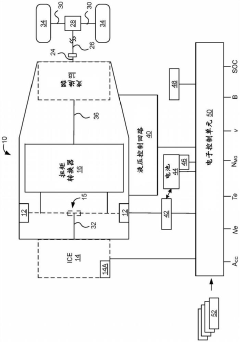
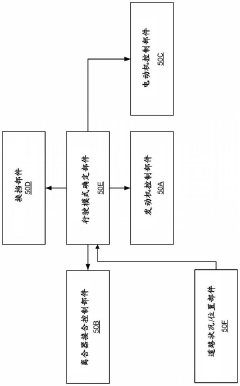
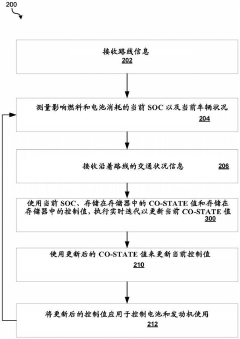
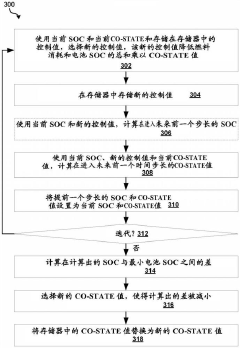
- The electronic control unit is used to optimize the energy usage of the engine and battery in real time. By iteratively updating the co-state value and combining the current SOC, traffic conditions and future driving conditions, the engine speed and torque are dynamically adjusted to achieve optimal power distribution.
A hybrid vehicle
PatentWO2022044029A1
Innovation
- A drive mode engagement control system utilizing a battery management system, vehicle mode processor units, sensors for real-time data, and a method to apply predetermined brake torque on electric machines and an integrated starter generator to manage mode transitions smoothly, ensuring seamless power source changes without compromising vehicle performance.


HEV Data Security
As connected technologies continue to revolutionize the automotive industry, ensuring the security of Hybrid Electric Vehicle (HEV) data has become a critical concern. The integration of advanced connectivity features in HEVs has led to an increased vulnerability to cyber threats, necessitating robust security measures to protect sensitive vehicle and user information.
One of the primary challenges in HEV data security is safeguarding the communication channels between the vehicle and external networks. This includes protecting data transmitted to and from charging stations, smart grid systems, and cloud-based services. Encryption protocols and secure authentication mechanisms are essential to prevent unauthorized access and data interception during these interactions.
Another crucial aspect of HEV data security is protecting the vehicle's internal systems from potential cyber-attacks. This involves securing the onboard diagnostics (OBD) port, infotainment systems, and other entry points that could be exploited by malicious actors. Implementing firewalls, intrusion detection systems, and regular security updates can help mitigate these risks and ensure the integrity of the vehicle's critical systems.
User privacy is also a significant concern in HEV data security. As these vehicles collect and process vast amounts of personal information, including location data, driving habits, and charging patterns, it is essential to implement robust data protection measures. This includes anonymizing sensitive data, implementing strict access controls, and providing users with transparent options for managing their data privacy settings.
The automotive industry is increasingly adopting blockchain technology to enhance HEV data security. Blockchain's decentralized and immutable nature can provide a secure platform for managing vehicle identities, tracking maintenance records, and facilitating secure transactions related to charging and other services. This technology can help prevent fraud and unauthorized modifications to critical vehicle data.
As HEVs become more connected and autonomous, the importance of over-the-air (OTA) updates in maintaining data security cannot be overstated. OTA updates allow manufacturers to quickly address security vulnerabilities and deploy patches to a large fleet of vehicles. However, these update mechanisms themselves must be secured to prevent them from becoming potential attack vectors.
To address the evolving landscape of HEV data security, a collaborative approach involving automakers, technology providers, and regulatory bodies is crucial. This includes developing industry-wide security standards, conducting regular security audits, and fostering a culture of continuous improvement in cybersecurity practices. By prioritizing data security in the development and operation of HEVs, manufacturers can enhance user trust and drive the widespread adoption of these environmentally friendly vehicles.
One of the primary challenges in HEV data security is safeguarding the communication channels between the vehicle and external networks. This includes protecting data transmitted to and from charging stations, smart grid systems, and cloud-based services. Encryption protocols and secure authentication mechanisms are essential to prevent unauthorized access and data interception during these interactions.
Another crucial aspect of HEV data security is protecting the vehicle's internal systems from potential cyber-attacks. This involves securing the onboard diagnostics (OBD) port, infotainment systems, and other entry points that could be exploited by malicious actors. Implementing firewalls, intrusion detection systems, and regular security updates can help mitigate these risks and ensure the integrity of the vehicle's critical systems.
User privacy is also a significant concern in HEV data security. As these vehicles collect and process vast amounts of personal information, including location data, driving habits, and charging patterns, it is essential to implement robust data protection measures. This includes anonymizing sensitive data, implementing strict access controls, and providing users with transparent options for managing their data privacy settings.
The automotive industry is increasingly adopting blockchain technology to enhance HEV data security. Blockchain's decentralized and immutable nature can provide a secure platform for managing vehicle identities, tracking maintenance records, and facilitating secure transactions related to charging and other services. This technology can help prevent fraud and unauthorized modifications to critical vehicle data.
As HEVs become more connected and autonomous, the importance of over-the-air (OTA) updates in maintaining data security cannot be overstated. OTA updates allow manufacturers to quickly address security vulnerabilities and deploy patches to a large fleet of vehicles. However, these update mechanisms themselves must be secured to prevent them from becoming potential attack vectors.
To address the evolving landscape of HEV data security, a collaborative approach involving automakers, technology providers, and regulatory bodies is crucial. This includes developing industry-wide security standards, conducting regular security audits, and fostering a culture of continuous improvement in cybersecurity practices. By prioritizing data security in the development and operation of HEVs, manufacturers can enhance user trust and drive the widespread adoption of these environmentally friendly vehicles.
Sustainable HEV Tech
Sustainable HEV technology is a critical component in the evolution of eco-friendly transportation. As the automotive industry shifts towards greener solutions, Hybrid Electric Vehicles (HEVs) serve as a bridge between conventional internal combustion engines and fully electric vehicles. The focus on sustainability in HEV technology encompasses various aspects, including improved energy efficiency, reduced emissions, and enhanced longevity of vehicle components.
One of the key areas of sustainable HEV technology is the development of more efficient powertrains. This involves optimizing the integration of electric motors with internal combustion engines to maximize fuel economy and minimize environmental impact. Advanced power management systems play a crucial role in this optimization, ensuring seamless transitions between electric and gasoline power sources based on driving conditions and energy demands.
Battery technology is another cornerstone of sustainable HEV development. Researchers are working on creating more durable and energy-dense batteries that can withstand frequent charge-discharge cycles without significant degradation. This not only extends the lifespan of HEVs but also reduces the environmental impact associated with battery production and disposal.
Regenerative braking systems have become increasingly sophisticated in HEVs, capturing and storing energy that would otherwise be lost during deceleration. This technology not only improves overall vehicle efficiency but also reduces wear on traditional braking components, contributing to the longevity of the vehicle.
Lightweight materials and aerodynamic designs are being incorporated into HEV construction to reduce overall vehicle weight and improve fuel efficiency. Advanced composites and high-strength steels are replacing heavier traditional materials, while streamlined body shapes minimize air resistance, further enhancing energy conservation.
The integration of smart technologies in HEVs is advancing sustainability efforts. Intelligent energy management systems use real-time data and predictive algorithms to optimize power distribution between the electric motor and internal combustion engine. This adaptive approach ensures that the vehicle operates in its most efficient mode based on current driving conditions and anticipated energy needs.
Sustainable HEV technology also extends to the manufacturing process. Automakers are implementing more environmentally friendly production methods, including the use of recycled materials, energy-efficient assembly lines, and waste reduction strategies. These efforts aim to minimize the carbon footprint of HEV production, aligning with broader sustainability goals.
As HEV technology continues to evolve, the focus on sustainability will drive innovations that not only improve vehicle performance but also contribute to a cleaner, more energy-efficient transportation ecosystem. This holistic approach to sustainability in HEV technology is essential for meeting increasingly stringent environmental regulations and consumer expectations for eco-friendly mobility solutions.
One of the key areas of sustainable HEV technology is the development of more efficient powertrains. This involves optimizing the integration of electric motors with internal combustion engines to maximize fuel economy and minimize environmental impact. Advanced power management systems play a crucial role in this optimization, ensuring seamless transitions between electric and gasoline power sources based on driving conditions and energy demands.
Battery technology is another cornerstone of sustainable HEV development. Researchers are working on creating more durable and energy-dense batteries that can withstand frequent charge-discharge cycles without significant degradation. This not only extends the lifespan of HEVs but also reduces the environmental impact associated with battery production and disposal.
Regenerative braking systems have become increasingly sophisticated in HEVs, capturing and storing energy that would otherwise be lost during deceleration. This technology not only improves overall vehicle efficiency but also reduces wear on traditional braking components, contributing to the longevity of the vehicle.
Lightweight materials and aerodynamic designs are being incorporated into HEV construction to reduce overall vehicle weight and improve fuel efficiency. Advanced composites and high-strength steels are replacing heavier traditional materials, while streamlined body shapes minimize air resistance, further enhancing energy conservation.
The integration of smart technologies in HEVs is advancing sustainability efforts. Intelligent energy management systems use real-time data and predictive algorithms to optimize power distribution between the electric motor and internal combustion engine. This adaptive approach ensures that the vehicle operates in its most efficient mode based on current driving conditions and anticipated energy needs.
Sustainable HEV technology also extends to the manufacturing process. Automakers are implementing more environmentally friendly production methods, including the use of recycled materials, energy-efficient assembly lines, and waste reduction strategies. These efforts aim to minimize the carbon footprint of HEV production, aligning with broader sustainability goals.
As HEV technology continues to evolve, the focus on sustainability will drive innovations that not only improve vehicle performance but also contribute to a cleaner, more energy-efficient transportation ecosystem. This holistic approach to sustainability in HEV technology is essential for meeting increasingly stringent environmental regulations and consumer expectations for eco-friendly mobility solutions.
Unlock deeper insights with Patsnap Eureka Quick Research — get a full tech report to explore trends and direct your research. Try now!
Generate Your Research Report Instantly with AI Agent
Supercharge your innovation with Patsnap Eureka AI Agent Platform!