How to Implement AI Solutions in HEV Driving Systems?
AUG 14, 20259 MIN READ
Generate Your Research Report Instantly with AI Agent
Patsnap Eureka helps you evaluate technical feasibility & market potential.
AI in HEV Background
Artificial Intelligence (AI) has emerged as a transformative technology across various industries, and its integration into Hybrid Electric Vehicle (HEV) driving systems represents a significant leap forward in automotive innovation. The convergence of AI and HEV technologies aims to enhance vehicle performance, efficiency, and safety while reducing environmental impact.
The development of AI in HEV systems can be traced back to the early 2000s when automakers began exploring ways to optimize hybrid powertrains. Initially, these efforts focused on simple rule-based systems for managing power distribution between electric motors and internal combustion engines. As AI technologies advanced, more sophisticated algorithms were introduced to predict driving conditions, optimize energy management, and improve overall vehicle efficiency.
The evolution of AI in HEV driving systems has been driven by several key factors. Advancements in machine learning and deep learning algorithms have enabled more accurate predictions of driver behavior, traffic patterns, and energy consumption. The increasing availability of high-performance computing hardware has made it possible to process complex AI models in real-time within vehicles. Additionally, the proliferation of sensors and connectivity technologies has provided a wealth of data for AI systems to analyze and learn from.
One of the primary goals of implementing AI in HEV driving systems is to maximize fuel efficiency and reduce emissions. AI algorithms can continuously analyze driving conditions, route information, and historical data to optimize the balance between electric and combustion power sources. This dynamic optimization can lead to significant improvements in overall energy efficiency compared to traditional hybrid systems.
Another crucial aspect of AI integration in HEV systems is enhancing vehicle safety and driver assistance features. AI-powered systems can process data from multiple sensors to detect potential hazards, predict traffic flow, and assist drivers in making safer decisions. These capabilities are particularly important as the automotive industry moves towards higher levels of vehicle autonomy.
The implementation of AI in HEV driving systems also presents opportunities for personalized driving experiences. By learning individual driver preferences and habits, AI systems can tailor vehicle performance, comfort settings, and energy management strategies to suit each user's needs. This level of customization not only improves user satisfaction but can also contribute to better overall efficiency and performance.
As the technology continues to evolve, researchers and automakers are exploring more advanced applications of AI in HEV systems. These include predictive maintenance, where AI algorithms can analyze vehicle data to anticipate potential issues before they occur, and vehicle-to-everything (V2X) communication, enabling HEVs to interact with smart infrastructure and other vehicles for improved traffic management and energy efficiency.
The development of AI in HEV systems can be traced back to the early 2000s when automakers began exploring ways to optimize hybrid powertrains. Initially, these efforts focused on simple rule-based systems for managing power distribution between electric motors and internal combustion engines. As AI technologies advanced, more sophisticated algorithms were introduced to predict driving conditions, optimize energy management, and improve overall vehicle efficiency.
The evolution of AI in HEV driving systems has been driven by several key factors. Advancements in machine learning and deep learning algorithms have enabled more accurate predictions of driver behavior, traffic patterns, and energy consumption. The increasing availability of high-performance computing hardware has made it possible to process complex AI models in real-time within vehicles. Additionally, the proliferation of sensors and connectivity technologies has provided a wealth of data for AI systems to analyze and learn from.
One of the primary goals of implementing AI in HEV driving systems is to maximize fuel efficiency and reduce emissions. AI algorithms can continuously analyze driving conditions, route information, and historical data to optimize the balance between electric and combustion power sources. This dynamic optimization can lead to significant improvements in overall energy efficiency compared to traditional hybrid systems.
Another crucial aspect of AI integration in HEV systems is enhancing vehicle safety and driver assistance features. AI-powered systems can process data from multiple sensors to detect potential hazards, predict traffic flow, and assist drivers in making safer decisions. These capabilities are particularly important as the automotive industry moves towards higher levels of vehicle autonomy.
The implementation of AI in HEV driving systems also presents opportunities for personalized driving experiences. By learning individual driver preferences and habits, AI systems can tailor vehicle performance, comfort settings, and energy management strategies to suit each user's needs. This level of customization not only improves user satisfaction but can also contribute to better overall efficiency and performance.
As the technology continues to evolve, researchers and automakers are exploring more advanced applications of AI in HEV systems. These include predictive maintenance, where AI algorithms can analyze vehicle data to anticipate potential issues before they occur, and vehicle-to-everything (V2X) communication, enabling HEVs to interact with smart infrastructure and other vehicles for improved traffic management and energy efficiency.
HEV Market Analysis
The Hybrid Electric Vehicle (HEV) market has experienced significant growth in recent years, driven by increasing environmental concerns and stringent emissions regulations worldwide. As of 2023, the global HEV market size was valued at over $200 billion, with projections indicating a compound annual growth rate (CAGR) of around 8% through 2030. This robust growth is attributed to the rising demand for fuel-efficient vehicles and the gradual shift towards electrification in the automotive industry.
Key factors influencing the HEV market include government incentives, advancements in battery technology, and growing consumer awareness of environmental issues. Many countries have implemented policies to promote HEV adoption, such as tax rebates, subsidies, and stricter fuel economy standards. These initiatives have significantly boosted HEV sales, particularly in regions like Europe, North America, and parts of Asia.
The HEV market is characterized by intense competition among established automakers and new entrants. Toyota, Honda, and Ford have been long-standing leaders in the HEV segment, while luxury brands like BMW and Mercedes-Benz have also expanded their hybrid offerings. Additionally, Chinese manufacturers are rapidly gaining market share, leveraging their expertise in electric vehicle technology.
Consumer preferences in the HEV market are evolving, with a growing demand for larger vehicles such as SUVs and crossovers. This trend has led to the development of hybrid powertrains for a wider range of vehicle types, expanding the market potential. Moreover, advancements in hybrid technology have resulted in improved fuel efficiency and performance, making HEVs increasingly attractive to a broader consumer base.
The integration of AI solutions in HEV driving systems represents a significant opportunity for market growth and differentiation. AI technologies can enhance various aspects of HEV performance, including energy management, predictive maintenance, and driver assistance features. This integration aligns with the broader trend of increasing vehicle connectivity and automation, potentially opening new revenue streams for manufacturers through data-driven services and over-the-air updates.
However, challenges remain in the HEV market, including the higher initial cost of hybrid vehicles compared to conventional counterparts and the need for continued investment in charging infrastructure. Additionally, the rapid advancement of fully electric vehicles (EVs) poses a potential threat to long-term HEV market growth, as some consumers may opt to transition directly from conventional vehicles to EVs, bypassing hybrids altogether.
Key factors influencing the HEV market include government incentives, advancements in battery technology, and growing consumer awareness of environmental issues. Many countries have implemented policies to promote HEV adoption, such as tax rebates, subsidies, and stricter fuel economy standards. These initiatives have significantly boosted HEV sales, particularly in regions like Europe, North America, and parts of Asia.
The HEV market is characterized by intense competition among established automakers and new entrants. Toyota, Honda, and Ford have been long-standing leaders in the HEV segment, while luxury brands like BMW and Mercedes-Benz have also expanded their hybrid offerings. Additionally, Chinese manufacturers are rapidly gaining market share, leveraging their expertise in electric vehicle technology.
Consumer preferences in the HEV market are evolving, with a growing demand for larger vehicles such as SUVs and crossovers. This trend has led to the development of hybrid powertrains for a wider range of vehicle types, expanding the market potential. Moreover, advancements in hybrid technology have resulted in improved fuel efficiency and performance, making HEVs increasingly attractive to a broader consumer base.
The integration of AI solutions in HEV driving systems represents a significant opportunity for market growth and differentiation. AI technologies can enhance various aspects of HEV performance, including energy management, predictive maintenance, and driver assistance features. This integration aligns with the broader trend of increasing vehicle connectivity and automation, potentially opening new revenue streams for manufacturers through data-driven services and over-the-air updates.
However, challenges remain in the HEV market, including the higher initial cost of hybrid vehicles compared to conventional counterparts and the need for continued investment in charging infrastructure. Additionally, the rapid advancement of fully electric vehicles (EVs) poses a potential threat to long-term HEV market growth, as some consumers may opt to transition directly from conventional vehicles to EVs, bypassing hybrids altogether.
AI Challenges in HEV
The integration of Artificial Intelligence (AI) in Hybrid Electric Vehicle (HEV) driving systems presents a complex set of challenges that require careful consideration and innovative solutions. One of the primary obstacles is the development of robust and reliable AI algorithms capable of handling the diverse and dynamic driving conditions encountered in real-world scenarios. These algorithms must process vast amounts of data from multiple sensors in real-time, making split-second decisions that directly impact vehicle safety and performance.
Another significant challenge lies in the seamless integration of AI systems with existing HEV components. The AI must effectively communicate and coordinate with various subsystems, including the internal combustion engine, electric motor, battery management system, and regenerative braking system. This integration requires a deep understanding of both AI and automotive engineering principles to ensure optimal performance and energy efficiency.
Data quality and quantity pose additional hurdles in AI implementation for HEVs. Machine learning models require extensive, high-quality datasets for training and validation. Collecting, processing, and managing this data while ensuring privacy and security presents logistical and ethical challenges. Furthermore, the AI systems must be capable of continuous learning and adaptation to improve performance over time and adjust to changing driving conditions and user preferences.
The computational requirements for running sophisticated AI algorithms in real-time within the constraints of an automotive environment present another significant challenge. HEV manufacturers must balance the need for powerful onboard computing capabilities with considerations of cost, energy efficiency, and space limitations within the vehicle.
Ensuring the safety and reliability of AI-driven systems in HEVs is paramount. Rigorous testing and validation processes must be developed to verify the AI's decision-making capabilities across a wide range of scenarios, including edge cases and potential system failures. This challenge extends to the need for explainable AI, where the reasoning behind the AI's decisions can be understood and audited, particularly in the event of accidents or malfunctions.
Regulatory compliance and standardization present additional complexities in the implementation of AI solutions in HEV driving systems. As AI technologies rapidly evolve, regulatory frameworks struggle to keep pace, creating uncertainty for manufacturers and potentially slowing innovation. Developing industry-wide standards for AI implementation in automotive applications is crucial for ensuring interoperability, safety, and consumer trust.
Lastly, the human-AI interface in HEVs poses unique challenges. Designing intuitive and user-friendly interfaces that allow drivers to understand and interact with AI-driven systems effectively is critical. This includes developing appropriate feedback mechanisms and ensuring that drivers maintain situational awareness and the ability to override AI decisions when necessary.
Another significant challenge lies in the seamless integration of AI systems with existing HEV components. The AI must effectively communicate and coordinate with various subsystems, including the internal combustion engine, electric motor, battery management system, and regenerative braking system. This integration requires a deep understanding of both AI and automotive engineering principles to ensure optimal performance and energy efficiency.
Data quality and quantity pose additional hurdles in AI implementation for HEVs. Machine learning models require extensive, high-quality datasets for training and validation. Collecting, processing, and managing this data while ensuring privacy and security presents logistical and ethical challenges. Furthermore, the AI systems must be capable of continuous learning and adaptation to improve performance over time and adjust to changing driving conditions and user preferences.
The computational requirements for running sophisticated AI algorithms in real-time within the constraints of an automotive environment present another significant challenge. HEV manufacturers must balance the need for powerful onboard computing capabilities with considerations of cost, energy efficiency, and space limitations within the vehicle.
Ensuring the safety and reliability of AI-driven systems in HEVs is paramount. Rigorous testing and validation processes must be developed to verify the AI's decision-making capabilities across a wide range of scenarios, including edge cases and potential system failures. This challenge extends to the need for explainable AI, where the reasoning behind the AI's decisions can be understood and audited, particularly in the event of accidents or malfunctions.
Regulatory compliance and standardization present additional complexities in the implementation of AI solutions in HEV driving systems. As AI technologies rapidly evolve, regulatory frameworks struggle to keep pace, creating uncertainty for manufacturers and potentially slowing innovation. Developing industry-wide standards for AI implementation in automotive applications is crucial for ensuring interoperability, safety, and consumer trust.
Lastly, the human-AI interface in HEVs poses unique challenges. Designing intuitive and user-friendly interfaces that allow drivers to understand and interact with AI-driven systems effectively is critical. This includes developing appropriate feedback mechanisms and ensuring that drivers maintain situational awareness and the ability to override AI decisions when necessary.
Current AI-HEV Solutions
01 AI-powered data analysis and decision making
AI solutions are being developed to analyze large datasets and provide insights for decision-making processes. These systems can identify patterns, predict outcomes, and offer recommendations based on complex data analysis, improving efficiency and accuracy in various industries.- AI-powered predictive analytics and decision support: AI solutions are being developed to enhance predictive analytics and decision support systems across various industries. These systems utilize machine learning algorithms to analyze large datasets, identify patterns, and provide actionable insights to improve decision-making processes and operational efficiency.
- AI-driven natural language processing and generation: Advancements in AI are enabling more sophisticated natural language processing and generation capabilities. These solutions can understand, interpret, and generate human-like text, facilitating improved communication between humans and machines, as well as automating various language-related tasks.
- AI-enhanced computer vision and image recognition: AI solutions are being developed to improve computer vision and image recognition technologies. These systems can analyze and interpret visual data from various sources, enabling applications such as facial recognition, object detection, and automated visual inspection in industries like manufacturing and security.
- AI-based automation and robotics: AI is being integrated into automation and robotics systems to enhance their capabilities and adaptability. These solutions enable robots and automated systems to learn from their environments, make decisions, and perform complex tasks with increased efficiency and accuracy across various industries.
- AI for personalized recommendations and user experiences: AI solutions are being developed to provide personalized recommendations and enhance user experiences across various platforms and services. These systems analyze user data and behavior to deliver tailored content, product suggestions, and customized interactions, improving engagement and satisfaction.
02 Natural language processing and conversational AI
Advanced natural language processing techniques are being implemented to create more sophisticated conversational AI systems. These solutions can understand and generate human-like text, enabling better human-computer interactions and improving customer service applications.Expand Specific Solutions03 AI in healthcare and medical diagnostics
AI solutions are being developed for healthcare applications, including medical image analysis, disease diagnosis, and treatment planning. These systems can assist healthcare professionals in making more accurate and timely decisions, potentially improving patient outcomes.Expand Specific Solutions04 AI-driven automation and robotics
AI technologies are being integrated into automation and robotics systems to enhance their capabilities. These solutions can perform complex tasks, adapt to changing environments, and work alongside humans in various industries, improving productivity and safety.Expand Specific Solutions05 AI for cybersecurity and threat detection
AI-powered cybersecurity solutions are being developed to detect and respond to evolving threats in real-time. These systems can analyze network traffic, identify anomalies, and automate security responses, enhancing the protection of digital assets and infrastructure.Expand Specific Solutions
HEV AI Key Players
The implementation of AI solutions in HEV driving systems is currently in a rapidly evolving phase, with significant market growth potential. The global market for AI in automotive is projected to expand substantially, driven by increasing demand for advanced driver assistance systems and autonomous vehicles. While the technology is still maturing, major players like Ford, GM, Toyota, Hyundai, and Kia are investing heavily in research and development. These companies are at various stages of technological readiness, with some already incorporating AI-driven features in their HEV models. Universities such as Chongqing University, Beihang University, and the University of Michigan are also contributing to advancements in this field through collaborative research efforts with industry partners.
Ford Global Technologies LLC
Technical Solution: Ford's AI implementation in HEV driving systems focuses on intelligent energy management and predictive control. They utilize machine learning algorithms to optimize power distribution between the electric motor and internal combustion engine. The system analyzes real-time data from various sensors, including GPS, traffic conditions, and driver behavior, to predict energy demands and adjust powertrain operation accordingly[1]. Ford has also developed an AI-driven adaptive cruise control system that learns from driver preferences and road conditions to provide a more personalized and efficient driving experience[2]. Additionally, their AI solution incorporates reinforcement learning techniques to continuously improve fuel efficiency and battery life over time[3].
Strengths: Personalized driving experience, continuous improvement through learning. Weaknesses: Potential over-reliance on connectivity for optimal performance.
GM Global Technology Operations LLC
Technical Solution: GM's approach to AI in HEV driving systems centers around their proprietary "Vehicle Intelligence Platform" (VIP). This system integrates AI algorithms for advanced driver assistance, energy optimization, and vehicle health monitoring. GM employs deep learning networks to process data from multiple sensors, enabling real-time decision-making for hybrid powertrain control[4]. Their AI solution also includes a predictive maintenance feature that uses machine learning to analyze vehicle data and predict potential issues before they occur[5]. GM has implemented natural language processing in their infotainment systems, allowing for more intuitive voice commands and personalized interactions with the vehicle's hybrid functions[6].
Strengths: Comprehensive integration of AI across multiple vehicle systems, predictive maintenance capabilities. Weaknesses: Complexity may lead to higher costs and potential reliability issues in early implementations.
Core AI-HEV Innovations
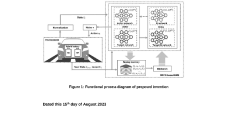
System and method for hybrid electric vehicle energy management using deep learning and cloud computing
PatentPendingIN202341054736A
Innovation
- A system that integrates deep learning techniques with cloud computing to process real-time data from multiple sensors, allowing for adaptive energy management by learning from diverse driving scenarios and sharing insights across a network of vehicles, enhancing energy storage efficiency and overall performance.
Advanced automated hybrid electric vehicle with performance monitoring system
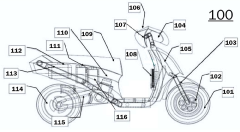
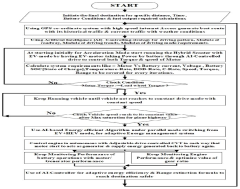
PatentActiveIN202121031277A
Innovation
- The implementation of Artificial Intelligence (AI) and Internet of Things (IoT) controlled systems for automatic mode shifting, real-time motor and battery condition monitoring, intelligent thermal management, and fast bidirectional charging, which optimize energy use and simplify maintenance, enabling efficient and extended vehicle range with reduced human effort.


Regulatory Framework
The implementation of AI solutions in Hybrid Electric Vehicle (HEV) driving systems is subject to a complex regulatory framework that varies across different regions and jurisdictions. In the United States, the National Highway Traffic Safety Administration (NHTSA) plays a crucial role in setting safety standards and regulations for autonomous vehicles, including those with AI-driven systems. The NHTSA has developed a framework for Automated Driving Systems (ADS) that outlines safety principles and guidelines for manufacturers and developers.
The European Union has established the General Safety Regulation (GSR) and the Automated Driving Regulation (ADR) to address the safety and technical requirements for autonomous vehicles. These regulations cover various aspects of AI implementation in HEVs, including data protection, cybersecurity, and ethical considerations. The EU's approach emphasizes the importance of human oversight and the need for clear accountability in AI-driven systems.
In China, the government has introduced the Intelligent Connected Vehicle (ICV) Road Test Management Regulation, which provides guidelines for testing and deploying AI-enabled vehicles on public roads. This regulation addresses issues such as data collection, privacy protection, and liability in case of accidents involving autonomous vehicles.
International standards organizations, such as ISO and SAE International, have developed guidelines and standards for the implementation of AI in automotive systems. These standards cover areas such as functional safety, cybersecurity, and software updates for AI-driven vehicles. Compliance with these standards is often required or strongly recommended by regulatory bodies in various countries.
The regulatory landscape for AI in HEV driving systems is continuously evolving, with many jurisdictions working on updating their existing regulations to address the rapid advancements in AI technology. Key areas of focus include data privacy, liability frameworks, and the ethical use of AI in decision-making processes for autonomous vehicles. Manufacturers and developers must stay informed about these regulatory changes and ensure compliance to successfully implement AI solutions in HEV driving systems.
As AI technology continues to advance, regulators are grappling with the challenge of balancing innovation with safety and ethical concerns. This has led to the development of adaptive regulatory approaches that allow for flexibility in addressing emerging technologies while maintaining stringent safety standards. Collaboration between industry stakeholders, policymakers, and regulatory bodies is crucial in shaping effective and balanced regulations for AI implementation in HEV driving systems.
The European Union has established the General Safety Regulation (GSR) and the Automated Driving Regulation (ADR) to address the safety and technical requirements for autonomous vehicles. These regulations cover various aspects of AI implementation in HEVs, including data protection, cybersecurity, and ethical considerations. The EU's approach emphasizes the importance of human oversight and the need for clear accountability in AI-driven systems.
In China, the government has introduced the Intelligent Connected Vehicle (ICV) Road Test Management Regulation, which provides guidelines for testing and deploying AI-enabled vehicles on public roads. This regulation addresses issues such as data collection, privacy protection, and liability in case of accidents involving autonomous vehicles.
International standards organizations, such as ISO and SAE International, have developed guidelines and standards for the implementation of AI in automotive systems. These standards cover areas such as functional safety, cybersecurity, and software updates for AI-driven vehicles. Compliance with these standards is often required or strongly recommended by regulatory bodies in various countries.
The regulatory landscape for AI in HEV driving systems is continuously evolving, with many jurisdictions working on updating their existing regulations to address the rapid advancements in AI technology. Key areas of focus include data privacy, liability frameworks, and the ethical use of AI in decision-making processes for autonomous vehicles. Manufacturers and developers must stay informed about these regulatory changes and ensure compliance to successfully implement AI solutions in HEV driving systems.
As AI technology continues to advance, regulators are grappling with the challenge of balancing innovation with safety and ethical concerns. This has led to the development of adaptive regulatory approaches that allow for flexibility in addressing emerging technologies while maintaining stringent safety standards. Collaboration between industry stakeholders, policymakers, and regulatory bodies is crucial in shaping effective and balanced regulations for AI implementation in HEV driving systems.
Environmental Impact
The implementation of AI solutions in Hybrid Electric Vehicle (HEV) driving systems has significant implications for environmental sustainability. These advanced systems contribute to reducing the overall carbon footprint of transportation by optimizing energy consumption and enhancing vehicle efficiency. AI-driven HEVs can adapt to various driving conditions, traffic patterns, and road topographies, resulting in more efficient use of both electric and combustion power sources.
One of the primary environmental benefits of AI-enhanced HEV systems is the reduction in fuel consumption. By leveraging machine learning algorithms, these systems can predict optimal power distribution between the electric motor and internal combustion engine, minimizing unnecessary fuel usage. This intelligent energy management leads to decreased greenhouse gas emissions, particularly in urban environments where stop-and-start traffic is common.
AI solutions in HEVs also contribute to improved air quality in cities. By maximizing the use of electric power in densely populated areas, these systems help reduce local emissions of pollutants such as nitrogen oxides and particulate matter. The ability of AI to analyze real-time data on air quality and traffic conditions allows for dynamic adjustments in the vehicle's power source, prioritizing electric propulsion in areas with poor air quality.
Furthermore, AI-driven HEVs can optimize regenerative braking systems, capturing and storing more kinetic energy that would otherwise be lost as heat. This increased energy recovery not only improves overall vehicle efficiency but also extends the lifespan of brake components, reducing the environmental impact associated with the production and disposal of brake parts.
The integration of AI in HEV driving systems also enables more accurate prediction of battery life and performance. This capability allows for better planning of charging cycles and maintenance schedules, potentially extending the useful life of batteries and reducing the environmental impact associated with battery production and disposal. Additionally, AI can optimize route planning to maximize electric-only driving modes, further reducing emissions and fuel consumption.
As AI technologies continue to advance, their application in HEV driving systems is expected to yield even greater environmental benefits. Future developments may include more sophisticated predictive maintenance algorithms that can further reduce vehicle downtime and resource consumption. Additionally, AI could enable HEVs to participate more effectively in smart grid systems, optimizing charging times to coincide with periods of high renewable energy availability, thus indirectly supporting the transition to cleaner energy sources.
One of the primary environmental benefits of AI-enhanced HEV systems is the reduction in fuel consumption. By leveraging machine learning algorithms, these systems can predict optimal power distribution between the electric motor and internal combustion engine, minimizing unnecessary fuel usage. This intelligent energy management leads to decreased greenhouse gas emissions, particularly in urban environments where stop-and-start traffic is common.
AI solutions in HEVs also contribute to improved air quality in cities. By maximizing the use of electric power in densely populated areas, these systems help reduce local emissions of pollutants such as nitrogen oxides and particulate matter. The ability of AI to analyze real-time data on air quality and traffic conditions allows for dynamic adjustments in the vehicle's power source, prioritizing electric propulsion in areas with poor air quality.
Furthermore, AI-driven HEVs can optimize regenerative braking systems, capturing and storing more kinetic energy that would otherwise be lost as heat. This increased energy recovery not only improves overall vehicle efficiency but also extends the lifespan of brake components, reducing the environmental impact associated with the production and disposal of brake parts.
The integration of AI in HEV driving systems also enables more accurate prediction of battery life and performance. This capability allows for better planning of charging cycles and maintenance schedules, potentially extending the useful life of batteries and reducing the environmental impact associated with battery production and disposal. Additionally, AI can optimize route planning to maximize electric-only driving modes, further reducing emissions and fuel consumption.
As AI technologies continue to advance, their application in HEV driving systems is expected to yield even greater environmental benefits. Future developments may include more sophisticated predictive maintenance algorithms that can further reduce vehicle downtime and resource consumption. Additionally, AI could enable HEVs to participate more effectively in smart grid systems, optimizing charging times to coincide with periods of high renewable energy availability, thus indirectly supporting the transition to cleaner energy sources.
Unlock deeper insights with Patsnap Eureka Quick Research — get a full tech report to explore trends and direct your research. Try now!
Generate Your Research Report Instantly with AI Agent
Supercharge your innovation with Patsnap Eureka AI Agent Platform!