How to Integrate HEV Systems in Autonomous Fleets?
AUG 14, 20259 MIN READ
Generate Your Research Report Instantly with AI Agent
PatSnap Eureka helps you evaluate technical feasibility & market potential.
HEV Integration Goals
The integration of Hybrid Electric Vehicle (HEV) systems into autonomous fleets represents a significant technological leap in the automotive industry. This convergence aims to leverage the benefits of both HEV technology and autonomous driving capabilities to create more efficient, sustainable, and intelligent transportation solutions. The primary goal of this integration is to optimize energy consumption and reduce emissions while maintaining or enhancing the operational efficiency of autonomous fleets.
One of the key objectives is to develop advanced energy management systems that can seamlessly coordinate between the electric and combustion components of HEVs in an autonomous context. This involves creating sophisticated algorithms that can predict energy demands based on route planning, traffic conditions, and passenger requirements, allowing for optimal utilization of both power sources.
Another crucial goal is to enhance the range and operational time of autonomous fleets. By integrating HEV systems, these fleets can potentially operate for longer periods without the need for frequent refueling or recharging stops. This increased autonomy is particularly valuable in scenarios such as ride-sharing services, logistics, and public transportation, where minimizing downtime is essential for operational efficiency.
Improving the overall environmental impact of autonomous fleets is also a central aim of HEV integration. By reducing fuel consumption and emissions through hybrid technology, autonomous fleets can contribute significantly to urban air quality improvement and the reduction of greenhouse gas emissions. This aligns with increasingly stringent environmental regulations and growing public demand for sustainable transportation solutions.
The integration process also seeks to address the challenge of balancing performance with energy efficiency. Autonomous vehicles require substantial computing power for their various sensors, navigation systems, and decision-making processes. HEV systems must be optimized to provide sufficient power for these systems while maintaining fuel efficiency and low emissions.
Furthermore, the goal extends to developing standardized interfaces and protocols for seamless communication between HEV systems and autonomous driving technologies. This standardization is crucial for ensuring interoperability across different manufacturers and facilitating easier integration and maintenance of these complex systems.
Lastly, the integration aims to enhance the safety and reliability of autonomous fleets. HEV systems can provide redundancy in power supply, ensuring that critical autonomous driving functions remain operational even in the event of a primary power source failure. This redundancy is vital for maintaining the safety standards expected of autonomous vehicles.
One of the key objectives is to develop advanced energy management systems that can seamlessly coordinate between the electric and combustion components of HEVs in an autonomous context. This involves creating sophisticated algorithms that can predict energy demands based on route planning, traffic conditions, and passenger requirements, allowing for optimal utilization of both power sources.
Another crucial goal is to enhance the range and operational time of autonomous fleets. By integrating HEV systems, these fleets can potentially operate for longer periods without the need for frequent refueling or recharging stops. This increased autonomy is particularly valuable in scenarios such as ride-sharing services, logistics, and public transportation, where minimizing downtime is essential for operational efficiency.
Improving the overall environmental impact of autonomous fleets is also a central aim of HEV integration. By reducing fuel consumption and emissions through hybrid technology, autonomous fleets can contribute significantly to urban air quality improvement and the reduction of greenhouse gas emissions. This aligns with increasingly stringent environmental regulations and growing public demand for sustainable transportation solutions.
The integration process also seeks to address the challenge of balancing performance with energy efficiency. Autonomous vehicles require substantial computing power for their various sensors, navigation systems, and decision-making processes. HEV systems must be optimized to provide sufficient power for these systems while maintaining fuel efficiency and low emissions.
Furthermore, the goal extends to developing standardized interfaces and protocols for seamless communication between HEV systems and autonomous driving technologies. This standardization is crucial for ensuring interoperability across different manufacturers and facilitating easier integration and maintenance of these complex systems.
Lastly, the integration aims to enhance the safety and reliability of autonomous fleets. HEV systems can provide redundancy in power supply, ensuring that critical autonomous driving functions remain operational even in the event of a primary power source failure. This redundancy is vital for maintaining the safety standards expected of autonomous vehicles.
Autonomous Fleet Market
The autonomous fleet market is experiencing rapid growth and transformation, driven by advancements in technology and increasing demand for efficient transportation solutions. This market segment encompasses a wide range of vehicles, including cars, trucks, and buses, all equipped with self-driving capabilities. The integration of Hybrid Electric Vehicle (HEV) systems into autonomous fleets represents a significant opportunity to enhance operational efficiency and reduce environmental impact.
Market analysts project substantial growth for the autonomous fleet sector in the coming years. Factors contributing to this expansion include the potential for reduced operational costs, improved safety, and increased efficiency in logistics and transportation services. The convergence of autonomous driving technology and electrification is particularly noteworthy, as it addresses both the need for sustainable transportation and the demand for advanced mobility solutions.
Several key industries are driving the adoption of autonomous fleets. The logistics and delivery sector is at the forefront, with companies exploring the use of self-driving vehicles for last-mile delivery and long-haul transportation. Ride-hailing services are also investing heavily in autonomous technology, aiming to reduce labor costs and improve service availability. Additionally, public transportation authorities are showing interest in autonomous buses and shuttles to enhance urban mobility.
The integration of HEV systems in autonomous fleets offers numerous benefits. These include improved fuel efficiency, reduced emissions, and lower maintenance costs compared to traditional internal combustion engine vehicles. HEV technology also provides the flexibility to operate in various environments, making it suitable for diverse fleet applications. Furthermore, the combination of autonomous driving and hybrid powertrains can optimize energy management, potentially extending the range and operational hours of fleet vehicles.
However, the market faces several challenges. Regulatory frameworks for autonomous vehicles are still evolving in many regions, creating uncertainty for fleet operators and technology providers. Infrastructure requirements, such as charging stations and dedicated lanes for autonomous vehicles, need significant investment. There are also concerns regarding cybersecurity and data privacy, which must be addressed to ensure public trust and widespread adoption.
Despite these challenges, the autonomous fleet market continues to attract substantial investment from both established automotive manufacturers and technology startups. Collaborations between these entities are becoming increasingly common, as they combine expertise in vehicle manufacturing, artificial intelligence, and electric powertrain technology. This convergence of skills and resources is accelerating the development of integrated solutions for autonomous HEV fleets.
As the market matures, we can expect to see a gradual shift from pilot projects to large-scale deployments of autonomous fleets. The success of these deployments will depend on the ability to demonstrate clear economic benefits, safety improvements, and environmental advantages over conventional fleet operations. The integration of HEV systems in autonomous fleets is poised to play a crucial role in shaping the future of transportation, offering a pathway to more sustainable and efficient mobility solutions.
Market analysts project substantial growth for the autonomous fleet sector in the coming years. Factors contributing to this expansion include the potential for reduced operational costs, improved safety, and increased efficiency in logistics and transportation services. The convergence of autonomous driving technology and electrification is particularly noteworthy, as it addresses both the need for sustainable transportation and the demand for advanced mobility solutions.
Several key industries are driving the adoption of autonomous fleets. The logistics and delivery sector is at the forefront, with companies exploring the use of self-driving vehicles for last-mile delivery and long-haul transportation. Ride-hailing services are also investing heavily in autonomous technology, aiming to reduce labor costs and improve service availability. Additionally, public transportation authorities are showing interest in autonomous buses and shuttles to enhance urban mobility.
The integration of HEV systems in autonomous fleets offers numerous benefits. These include improved fuel efficiency, reduced emissions, and lower maintenance costs compared to traditional internal combustion engine vehicles. HEV technology also provides the flexibility to operate in various environments, making it suitable for diverse fleet applications. Furthermore, the combination of autonomous driving and hybrid powertrains can optimize energy management, potentially extending the range and operational hours of fleet vehicles.
However, the market faces several challenges. Regulatory frameworks for autonomous vehicles are still evolving in many regions, creating uncertainty for fleet operators and technology providers. Infrastructure requirements, such as charging stations and dedicated lanes for autonomous vehicles, need significant investment. There are also concerns regarding cybersecurity and data privacy, which must be addressed to ensure public trust and widespread adoption.
Despite these challenges, the autonomous fleet market continues to attract substantial investment from both established automotive manufacturers and technology startups. Collaborations between these entities are becoming increasingly common, as they combine expertise in vehicle manufacturing, artificial intelligence, and electric powertrain technology. This convergence of skills and resources is accelerating the development of integrated solutions for autonomous HEV fleets.
As the market matures, we can expect to see a gradual shift from pilot projects to large-scale deployments of autonomous fleets. The success of these deployments will depend on the ability to demonstrate clear economic benefits, safety improvements, and environmental advantages over conventional fleet operations. The integration of HEV systems in autonomous fleets is poised to play a crucial role in shaping the future of transportation, offering a pathway to more sustainable and efficient mobility solutions.
HEV-AV Integration Status
The integration of Hybrid Electric Vehicle (HEV) systems into autonomous fleets represents a significant technological convergence in the automotive industry. Currently, this integration is in its early stages, with various companies and research institutions exploring different approaches to combine the benefits of HEVs with autonomous driving capabilities.
Several major automakers have initiated pilot projects to test HEV-autonomous vehicle (AV) integration. These projects primarily focus on optimizing energy management systems, enhancing battery life, and improving overall vehicle efficiency. The integration process involves complex software development to harmonize the HEV powertrain control with autonomous driving algorithms.
One of the key challenges in HEV-AV integration is the development of advanced energy management strategies. These strategies must account for both the hybrid powertrain's operation and the energy demands of autonomous systems, including sensors, computing hardware, and communication modules. Current efforts are centered on creating predictive algorithms that can anticipate energy needs based on route planning, traffic conditions, and driving behaviors specific to autonomous operation.
Another critical aspect of the integration status is the adaptation of HEV powertrains to meet the unique requirements of autonomous fleets. This includes redesigning power distribution systems to ensure consistent and reliable energy supply to all AV components. Some companies are exploring the use of dedicated auxiliary power units to support the high-power demands of autonomous systems without compromising the HEV's fuel efficiency.
In terms of hardware integration, there is ongoing work to optimize the placement and packaging of autonomous driving components within HEV architectures. This involves careful consideration of weight distribution, thermal management, and electromagnetic compatibility to maintain the HEV's performance characteristics while accommodating the additional AV hardware.
The regulatory landscape for HEV-AV integration is still evolving. While there are established standards for both HEVs and AVs separately, the combination of these technologies presents new challenges for policymakers and regulators. Current efforts are focused on developing comprehensive safety and performance standards that address the unique aspects of HEV-AV integration.
From a market perspective, several fleet operators are showing interest in HEV-AV integration, particularly for urban mobility and logistics applications. These early adopters are conducting small-scale trials to assess the potential benefits, such as reduced operational costs and improved sustainability. However, widespread commercial deployment remains limited, primarily due to technological and regulatory uncertainties.
Several major automakers have initiated pilot projects to test HEV-autonomous vehicle (AV) integration. These projects primarily focus on optimizing energy management systems, enhancing battery life, and improving overall vehicle efficiency. The integration process involves complex software development to harmonize the HEV powertrain control with autonomous driving algorithms.
One of the key challenges in HEV-AV integration is the development of advanced energy management strategies. These strategies must account for both the hybrid powertrain's operation and the energy demands of autonomous systems, including sensors, computing hardware, and communication modules. Current efforts are centered on creating predictive algorithms that can anticipate energy needs based on route planning, traffic conditions, and driving behaviors specific to autonomous operation.
Another critical aspect of the integration status is the adaptation of HEV powertrains to meet the unique requirements of autonomous fleets. This includes redesigning power distribution systems to ensure consistent and reliable energy supply to all AV components. Some companies are exploring the use of dedicated auxiliary power units to support the high-power demands of autonomous systems without compromising the HEV's fuel efficiency.
In terms of hardware integration, there is ongoing work to optimize the placement and packaging of autonomous driving components within HEV architectures. This involves careful consideration of weight distribution, thermal management, and electromagnetic compatibility to maintain the HEV's performance characteristics while accommodating the additional AV hardware.
The regulatory landscape for HEV-AV integration is still evolving. While there are established standards for both HEVs and AVs separately, the combination of these technologies presents new challenges for policymakers and regulators. Current efforts are focused on developing comprehensive safety and performance standards that address the unique aspects of HEV-AV integration.
From a market perspective, several fleet operators are showing interest in HEV-AV integration, particularly for urban mobility and logistics applications. These early adopters are conducting small-scale trials to assess the potential benefits, such as reduced operational costs and improved sustainability. However, widespread commercial deployment remains limited, primarily due to technological and regulatory uncertainties.
Current HEV-AV Solutions
01 HEV system design and integration
This category focuses on the overall design and integration of HEV (Hybrid Electric Vehicle) systems. It includes innovations in system architecture, component integration, and optimization of hybrid powertrains for improved efficiency and performance.- HEV system design and integration: This category focuses on the overall design and integration of HEV (Hybrid Electric Vehicle) systems. It includes innovations in system architecture, component layout, and the integration of electric and combustion powertrains. These advancements aim to improve the efficiency, performance, and packaging of hybrid vehicles.
- Power management and control strategies: This area covers the development of sophisticated power management and control strategies for HEV systems. It includes algorithms for optimizing power distribution between electric and combustion engines, energy recovery systems, and adaptive control methods to maximize fuel efficiency and performance under various driving conditions.
- Battery and energy storage technologies: Innovations in battery and energy storage technologies for HEV systems are crucial for improving vehicle range and performance. This category encompasses advancements in battery chemistry, cell design, thermal management, and energy density improvements to enhance the overall efficiency of hybrid electric vehicles.
- Electric motor and power electronics: This category focuses on the development of electric motors and power electronics specifically designed for HEV applications. It includes innovations in motor design, power inverters, and control systems to improve efficiency, power density, and reliability of the electric drivetrain components in hybrid vehicles.
- Thermal management and cooling systems: Effective thermal management is critical for the performance and longevity of HEV systems. This category covers innovations in cooling systems for batteries, electric motors, and power electronics. It includes advanced heat exchanger designs, intelligent thermal control strategies, and integration of cooling systems with overall vehicle thermal management.
02 Energy management and control strategies
This point covers advanced control algorithms and energy management strategies for HEV systems. It includes techniques for optimizing power distribution between the internal combustion engine and electric motor, as well as improving overall system efficiency and fuel economy.Expand Specific Solutions03 Thermal management in HEV systems
This category addresses thermal management solutions for HEV systems, including cooling systems for batteries, power electronics, and electric motors. It covers innovations in heat dissipation, temperature control, and thermal efficiency to enhance overall system performance and longevity.Expand Specific Solutions04 HEV battery technologies
This point focuses on advancements in battery technologies specifically designed for HEV applications. It includes innovations in battery chemistry, cell design, and battery management systems to improve energy density, charging efficiency, and overall performance of HEV powertrains.Expand Specific Solutions05 Power electronics for HEV systems
This category covers innovations in power electronics components and systems for HEVs, including inverters, converters, and motor controllers. It focuses on improving efficiency, reducing size and weight, and enhancing the overall performance of electric drive systems in hybrid vehicles.Expand Specific Solutions
Key HEV-AV Players
The integration of HEV systems in autonomous fleets is at an early stage of development, with the market poised for significant growth as autonomous vehicle technology matures. The global market for autonomous electric vehicles is projected to expand rapidly in the coming years, driven by advancements in battery technology, AI, and sensor systems. Major players like Ford, GM, Toyota, and Hyundai are investing heavily in this space, leveraging their expertise in hybrid and electric powertrains. Chinese automakers such as SAIC, Dongfeng, and Changan are also making strides, particularly in their domestic market. While the technology is still evolving, collaborations between automotive giants and tech companies are accelerating progress towards commercially viable autonomous HEV fleets.
GM Global Technology Operations LLC
Technical Solution: GM's integration of HEV systems in autonomous fleets leverages their Voltec technology, originally developed for the Chevrolet Volt. For autonomous applications, GM has enhanced this system with advanced power electronics and a more robust battery pack designed for continuous operation[1]. The company has implemented a sophisticated energy management system that uses machine learning to optimize the balance between electric and gasoline power based on autonomous driving patterns and environmental conditions[3]. GM's approach includes a modular design that allows for easy integration with various autonomous driving hardware and software platforms[5]. They have also developed a fleet management system that monitors and optimizes the performance of hybrid powertrains across multiple autonomous vehicles in real-time[7].
Strengths: Proven hybrid technology, strong integration with autonomous systems, comprehensive fleet management. Weaknesses: Potential higher costs due to advanced technology integration.
Hyundai Motor Co., Ltd.
Technical Solution: Hyundai's strategy for integrating HEV systems in autonomous fleets centers around their IONIQ platform. They have developed a dedicated hybrid powertrain for autonomous vehicles that combines a high-efficiency Atkinson cycle engine with a powerful electric motor[1]. Hyundai's system features an intelligent power distribution controller that optimizes energy flow between the engine, motor, and battery based on autonomous driving patterns and traffic conditions[3]. The company has also implemented an advanced regenerative braking system that maximizes energy recovery during autonomous operations, particularly in urban environments with frequent stops[5]. Hyundai's integration approach includes a sophisticated thermal management system to ensure optimal battery performance and longevity in various autonomous driving scenarios[7].
Strengths: Dedicated hybrid platform for autonomous vehicles, advanced energy recovery systems. Weaknesses: May face challenges in scaling up production for large autonomous fleets.
Core HEV-AV Innovations
Hybrid electric vehicle with electric motor providing strategic power assist to load balance internal combustion engine
PatentPendingIN202441000035A
Innovation
- A Hybrid Electric Vehicle (HEV) system with an electric motor providing strategic power assist to the internal combustion engine, optimizing power distribution and energy management through advanced control algorithms.
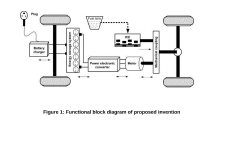
System and method for engine stall recovery and restart for hybrid electric vehicle
PatentPendingUS20250242795A1
Innovation
- A powertrain system with a clutch that disengages the internal combustion engine from the driveline during a stall, allowing the vehicle to continue in electric mode, and a controller that manages engine restarts and hybrid operation based on stall conditions, with counter mechanisms to prevent battery drain.


Energy Infrastructure
The integration of Hybrid Electric Vehicle (HEV) systems into autonomous fleets requires a robust and adaptable energy infrastructure. This infrastructure must support the unique demands of both electric and conventional fuel systems while accommodating the operational requirements of autonomous vehicles.
A key component of this energy infrastructure is the development of smart charging stations. These stations need to be strategically located to optimize the fleet's operational efficiency. They should be equipped with fast-charging capabilities to minimize downtime and maximize the fleet's utilization. Additionally, these stations must be designed to handle the high-power demands of multiple vehicles charging simultaneously.
The energy grid supporting these charging stations must be upgraded to handle the increased load. This may involve the implementation of smart grid technologies, which can dynamically manage power distribution based on demand. Energy storage systems, such as large-scale batteries or flywheel systems, can be integrated to help balance the load and provide backup power during peak usage periods.
For the conventional fuel aspect of HEVs, the infrastructure must include efficient refueling stations. These stations should be equipped with automated refueling systems compatible with autonomous vehicles, allowing for quick and seamless refueling without human intervention.
Data management systems play a crucial role in this energy infrastructure. These systems must collect and analyze data from the fleet, charging stations, and energy grid to optimize energy distribution and predict maintenance needs. Machine learning algorithms can be employed to forecast energy demands and adjust the infrastructure accordingly.
The energy infrastructure must also incorporate renewable energy sources to reduce the environmental impact of the fleet. This could include on-site solar panels at charging stations or partnerships with wind farms to provide clean energy to the grid.
Lastly, the infrastructure should be designed with scalability in mind. As autonomous HEV fleets grow, the energy infrastructure must be able to expand seamlessly to meet increasing demands. This may involve modular designs for charging stations and flexible grid systems that can easily accommodate additional power requirements.
A key component of this energy infrastructure is the development of smart charging stations. These stations need to be strategically located to optimize the fleet's operational efficiency. They should be equipped with fast-charging capabilities to minimize downtime and maximize the fleet's utilization. Additionally, these stations must be designed to handle the high-power demands of multiple vehicles charging simultaneously.
The energy grid supporting these charging stations must be upgraded to handle the increased load. This may involve the implementation of smart grid technologies, which can dynamically manage power distribution based on demand. Energy storage systems, such as large-scale batteries or flywheel systems, can be integrated to help balance the load and provide backup power during peak usage periods.
For the conventional fuel aspect of HEVs, the infrastructure must include efficient refueling stations. These stations should be equipped with automated refueling systems compatible with autonomous vehicles, allowing for quick and seamless refueling without human intervention.
Data management systems play a crucial role in this energy infrastructure. These systems must collect and analyze data from the fleet, charging stations, and energy grid to optimize energy distribution and predict maintenance needs. Machine learning algorithms can be employed to forecast energy demands and adjust the infrastructure accordingly.
The energy infrastructure must also incorporate renewable energy sources to reduce the environmental impact of the fleet. This could include on-site solar panels at charging stations or partnerships with wind farms to provide clean energy to the grid.
Lastly, the infrastructure should be designed with scalability in mind. As autonomous HEV fleets grow, the energy infrastructure must be able to expand seamlessly to meet increasing demands. This may involve modular designs for charging stations and flexible grid systems that can easily accommodate additional power requirements.
Regulatory Challenges
The integration of Hybrid Electric Vehicle (HEV) systems into autonomous fleets presents a complex regulatory landscape that must be carefully navigated. As these technologies converge, policymakers and regulatory bodies are grappling with the need to update existing frameworks to address the unique challenges posed by this intersection of innovations.
One of the primary regulatory challenges lies in the development of safety standards for autonomous HEVs. Current regulations for conventional vehicles and autonomous systems may not adequately cover the specific risks associated with combining these technologies. Regulatory bodies must work to establish comprehensive safety protocols that address both the autonomous driving aspects and the hybrid powertrain components, ensuring that these systems interact seamlessly and safely.
Emissions regulations also present a significant challenge for the integration of HEV systems in autonomous fleets. While HEVs generally offer improved fuel efficiency and reduced emissions compared to conventional vehicles, the regulatory landscape for emissions in autonomous fleets is still evolving. Policymakers must consider how to adapt existing emissions standards to account for the unique operational patterns of autonomous fleets, which may involve different usage profiles and driving behaviors compared to human-operated vehicles.
Data privacy and cybersecurity regulations pose another critical challenge. Autonomous HEVs generate and process vast amounts of data related to vehicle performance, energy consumption, and passenger information. Regulatory frameworks must be developed to ensure the protection of this sensitive data while also allowing for the necessary data sharing to optimize fleet operations and improve overall system performance.
The regulatory landscape surrounding vehicle testing and certification procedures also requires significant adaptation. Current testing protocols may not adequately assess the combined performance of autonomous driving systems and HEV powertrains. Regulatory bodies need to develop new testing methodologies and certification processes that can effectively evaluate the safety, reliability, and efficiency of these integrated systems.
Furthermore, the deployment of autonomous HEV fleets raises questions about liability and insurance regulations. Determining responsibility in the event of accidents or system failures becomes more complex when dealing with autonomous vehicles, and the addition of HEV technology adds another layer of complexity. Regulatory frameworks must evolve to clearly define liability in various scenarios and establish appropriate insurance requirements for fleet operators.
Lastly, the regulatory challenges extend to infrastructure and energy policies. The widespread adoption of autonomous HEV fleets may require changes to existing regulations governing charging infrastructure, energy grid management, and urban planning. Policymakers must consider how to incentivize the development of necessary infrastructure while ensuring fair access and competition in the market.
One of the primary regulatory challenges lies in the development of safety standards for autonomous HEVs. Current regulations for conventional vehicles and autonomous systems may not adequately cover the specific risks associated with combining these technologies. Regulatory bodies must work to establish comprehensive safety protocols that address both the autonomous driving aspects and the hybrid powertrain components, ensuring that these systems interact seamlessly and safely.
Emissions regulations also present a significant challenge for the integration of HEV systems in autonomous fleets. While HEVs generally offer improved fuel efficiency and reduced emissions compared to conventional vehicles, the regulatory landscape for emissions in autonomous fleets is still evolving. Policymakers must consider how to adapt existing emissions standards to account for the unique operational patterns of autonomous fleets, which may involve different usage profiles and driving behaviors compared to human-operated vehicles.
Data privacy and cybersecurity regulations pose another critical challenge. Autonomous HEVs generate and process vast amounts of data related to vehicle performance, energy consumption, and passenger information. Regulatory frameworks must be developed to ensure the protection of this sensitive data while also allowing for the necessary data sharing to optimize fleet operations and improve overall system performance.
The regulatory landscape surrounding vehicle testing and certification procedures also requires significant adaptation. Current testing protocols may not adequately assess the combined performance of autonomous driving systems and HEV powertrains. Regulatory bodies need to develop new testing methodologies and certification processes that can effectively evaluate the safety, reliability, and efficiency of these integrated systems.
Furthermore, the deployment of autonomous HEV fleets raises questions about liability and insurance regulations. Determining responsibility in the event of accidents or system failures becomes more complex when dealing with autonomous vehicles, and the addition of HEV technology adds another layer of complexity. Regulatory frameworks must evolve to clearly define liability in various scenarios and establish appropriate insurance requirements for fleet operators.
Lastly, the regulatory challenges extend to infrastructure and energy policies. The widespread adoption of autonomous HEV fleets may require changes to existing regulations governing charging infrastructure, energy grid management, and urban planning. Policymakers must consider how to incentivize the development of necessary infrastructure while ensuring fair access and competition in the market.
Unlock deeper insights with PatSnap Eureka Quick Research — get a full tech report to explore trends and direct your research. Try now!
Generate Your Research Report Instantly with AI Agent
Supercharge your innovation with PatSnap Eureka AI Agent Platform!