

How to Integrate PVDF into 3D Printing Technologies?
PVDF in 3D Printing: Background and Objectives
Polyvinylidene fluoride (PVDF) has emerged as a promising material in the realm of 3D printing technologies, offering unique properties that could revolutionize various applications. The integration of PVDF into 3D printing processes represents a convergence of advanced polymer science and additive manufacturing techniques, aiming to harness the material's exceptional characteristics for creating complex, functional structures.
PVDF, a fluoropolymer known for its piezoelectric properties, chemical resistance, and thermal stability, has traditionally been used in applications ranging from sensors and actuators to protective coatings. The evolution of 3D printing technologies has opened new avenues for utilizing PVDF's unique attributes in more intricate and customized forms. This technological synergy promises to expand the capabilities of both PVDF applications and 3D printing methodologies.
The primary objective of integrating PVDF into 3D printing is to develop a reliable, reproducible process that maintains the material's desirable properties while achieving precise geometries and structures. This integration aims to overcome the limitations of traditional PVDF processing methods, which often struggle with complex shapes and miniaturization. By leveraging 3D printing techniques, researchers and engineers seek to unlock new possibilities in fields such as biomedical engineering, aerospace, and energy harvesting.
One of the key challenges in this integration lies in optimizing the printing parameters to ensure the proper crystallization and phase formation of PVDF, which are crucial for its piezoelectric performance. The printing process must be carefully controlled to achieve the desired β-phase content, responsible for the material's piezoelectric behavior. Additionally, researchers are exploring various additives and post-processing techniques to enhance the printability and final properties of PVDF structures.
The technological trajectory of PVDF in 3D printing is closely aligned with broader trends in advanced manufacturing, including the development of smart materials and the push towards more sustainable production methods. As the field progresses, it is anticipated that new PVDF-based composites and hybrid materials will emerge, tailored specifically for 3D printing applications. These developments could lead to breakthroughs in areas such as flexible electronics, self-sensing structures, and customized medical devices.
In conclusion, the integration of PVDF into 3D printing technologies represents a significant technological frontier with far-reaching implications. By combining the unique properties of PVDF with the flexibility and precision of 3D printing, researchers and industry professionals are poised to unlock new possibilities in material science and manufacturing. The ongoing efforts in this field are expected to drive innovation across multiple sectors, paving the way for advanced, multifunctional products and solutions.
Market Analysis for PVDF-based 3D Printed Products
The market for PVDF-based 3D printed products is experiencing significant growth, driven by the unique properties of PVDF and the expanding applications of 3D printing technologies. PVDF, known for its excellent chemical resistance, thermal stability, and piezoelectric properties, is finding increasing use in various industries, including aerospace, automotive, medical, and electronics.
In the aerospace sector, PVDF-based 3D printed components are gaining traction due to their lightweight nature and resistance to harsh environmental conditions. The automotive industry is exploring PVDF 3D printing for producing durable, chemical-resistant parts for fuel systems and under-the-hood applications. The medical field is particularly interested in PVDF's biocompatibility and potential for creating customized implants and prosthetics.
The electronics industry is leveraging PVDF's piezoelectric properties for sensor applications, with 3D printing enabling the production of complex geometries and miniaturized components. This is opening up new possibilities in wearable technology and IoT devices. Additionally, the chemical processing industry is adopting PVDF 3D printed parts for corrosion-resistant equipment and components.
Market analysts project a compound annual growth rate (CAGR) for PVDF-based 3D printed products to exceed the overall 3D printing materials market growth. This is attributed to the increasing demand for high-performance, chemically resistant materials in advanced manufacturing processes. The Asia-Pacific region is expected to witness the highest growth rate, driven by rapid industrialization and increasing adoption of additive manufacturing technologies.
However, challenges remain in the widespread adoption of PVDF in 3D printing. The material's high melting point and specific processing requirements necessitate specialized 3D printing equipment and expertise. This has led to a higher cost of entry for manufacturers looking to incorporate PVDF into their 3D printing processes. Despite these challenges, ongoing research and development efforts are focused on optimizing PVDF formulations for 3D printing, which is expected to reduce processing difficulties and expand the material's applicability.
The market is also seeing a trend towards the development of PVDF composites and blends specifically designed for 3D printing applications. These new materials aim to enhance printability while maintaining or improving upon the desirable properties of PVDF. As a result, the range of potential applications for PVDF-based 3D printed products is expanding, creating new market opportunities across various industries.
In conclusion, the market for PVDF-based 3D printed products shows promising growth potential, driven by the material's unique properties and the increasing adoption of additive manufacturing technologies across multiple sectors. As technical challenges are overcome and new applications emerge, the market is poised for continued expansion in the coming years.
Current Challenges in PVDF 3D Printing Integration
The integration of PVDF (Polyvinylidene Fluoride) into 3D printing technologies faces several significant challenges that hinder its widespread adoption and efficient utilization. One of the primary obstacles is the high melting point of PVDF, which typically ranges from 170°C to 180°C. This elevated processing temperature poses difficulties for many conventional 3D printing systems, requiring specialized equipment and careful thermal management to prevent material degradation or printer damage.
Another critical challenge lies in the rheological properties of PVDF. The polymer's high melt viscosity and shear sensitivity can lead to inconsistent extrusion and poor layer adhesion, compromising the structural integrity and surface quality of printed parts. This issue is particularly pronounced when attempting to create complex geometries or fine details, limiting the potential applications of PVDF in 3D printing.
The hygroscopic nature of PVDF presents additional complications during the printing process. Moisture absorption can significantly affect the material's properties and printing behavior, necessitating careful storage and handling procedures. Failure to properly dry the filament before use can result in defects such as bubbles, voids, or weak interlayer bonding in the final printed object.
Compatibility with support materials and post-processing techniques also remains a challenge for PVDF 3D printing. The chemical resistance that makes PVDF attractive for many applications also makes it difficult to remove support structures or apply surface treatments, limiting the complexity of parts that can be produced and the finishing options available.
Furthermore, the relatively high cost of PVDF compared to more common 3D printing materials like PLA or ABS can be prohibitive for some applications, especially in large-scale or high-volume production scenarios. This economic factor, combined with the technical challenges, has slowed the adoption of PVDF in additive manufacturing processes.
Lastly, there is a lack of standardization and optimized printing parameters for PVDF across different 3D printing platforms. This absence of established guidelines makes it challenging for users to achieve consistent results, requiring extensive experimentation and expertise to produce high-quality PVDF parts. The development of reliable printing profiles and material-specific slicing software remains an ongoing challenge in the field.
Existing PVDF 3D Printing Integration Methods
01 PVDF membrane fabrication and modification
Various techniques for fabricating and modifying PVDF membranes to enhance their properties, such as improving hydrophilicity, mechanical strength, and fouling resistance. These methods may include blending with other polymers, surface modification, or incorporating nanoparticles.- PVDF membrane fabrication and modification: Various techniques for fabricating and modifying PVDF membranes are explored, including blending with other polymers, surface treatments, and incorporation of nanoparticles. These modifications aim to enhance properties such as hydrophilicity, fouling resistance, and mechanical strength for applications in water treatment and filtration.
- PVDF in energy storage applications: PVDF is utilized in energy storage devices, particularly in lithium-ion batteries and supercapacitors. Its high dielectric constant and electrochemical stability make it suitable as a binder for electrode materials and as a separator membrane, improving the overall performance and safety of these devices.
- PVDF-based piezoelectric materials: The piezoelectric properties of PVDF are exploited for various applications, including sensors, actuators, and energy harvesting devices. Research focuses on enhancing the piezoelectric response through copolymerization, nanocomposite formation, and specialized processing techniques.
- PVDF in coating and film applications: PVDF is used in high-performance coatings and films due to its excellent weather resistance, chemical inertness, and durability. Applications include architectural coatings, protective films for solar panels, and anti-corrosion coatings for industrial equipment.
- PVDF composites and blends: PVDF is combined with other materials to create composites and blends with enhanced properties. These include improved mechanical strength, thermal stability, and specific functionalities such as electromagnetic interference shielding or flame retardancy. Applications range from aerospace to electronics industries.
02 PVDF in energy storage applications
Utilization of PVDF in energy storage devices, particularly in lithium-ion batteries and supercapacitors. PVDF serves as a binder material for electrodes, separator membranes, or as a component in solid electrolytes, contributing to improved performance and stability of these devices.Expand Specific Solutions03 PVDF-based piezoelectric materials
Development of PVDF and its copolymers as piezoelectric materials for various applications, including sensors, actuators, and energy harvesters. Research focuses on enhancing the piezoelectric properties through different processing methods and additives.Expand Specific Solutions04 PVDF in water treatment and filtration
Application of PVDF membranes in water treatment and filtration processes, including ultrafiltration and microfiltration. Research aims to improve membrane performance, antifouling properties, and durability for various water purification applications.Expand Specific Solutions05 PVDF composites and blends
Development of PVDF-based composites and blends with other materials to create new functional materials with enhanced properties. These composites may exhibit improved mechanical, thermal, or electrical characteristics for specific applications in various industries.Expand Specific Solutions
Key Players in PVDF and 3D Printing Industries
The integration of PVDF into 3D printing technologies is in an emerging stage, with a growing market driven by demand for high-performance materials. The technology is still developing, with varying levels of maturity across different applications. Key players like Arkema, Solvay, and 3M are advancing PVDF 3D printing capabilities, while research institutions such as the Chinese Academy of Science Institute of Chemistry and universities like Sichuan University are contributing to fundamental research. Companies like Xerox Holdings Corp. and Nikon Corp. are exploring PVDF applications in industrial 3D printing, indicating a trend towards commercialization. The market size is expanding, particularly in aerospace, automotive, and medical sectors, as PVDF's unique properties become more accessible through additive manufacturing.
Nikon Corp.
Seurat Technologies, Inc.
Innovative PVDF 3D Printing Techniques
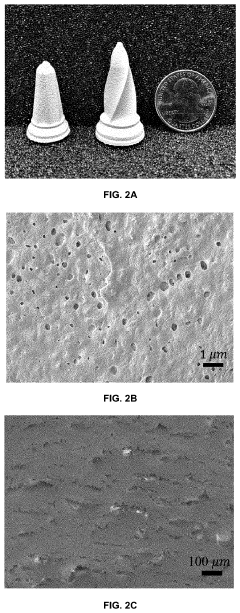
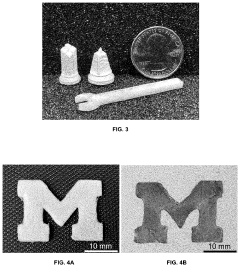
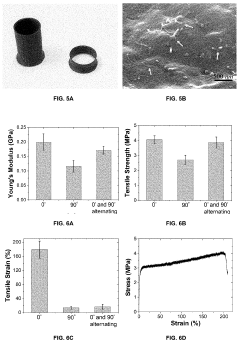
- The method involves providing a polymeric solution dissolved in a solvent and a non-solvent where the solvent is miscible but the polymer is insoluble, injecting the solution in a predetermined 3D pattern to precipitate the polymer as a solid, allowing for the formation of complex geometries without melting or solvent evaporation, using a temperature-controlled additive manufacturing apparatus.

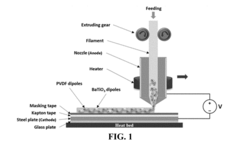
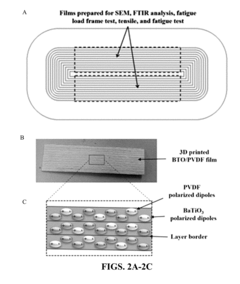
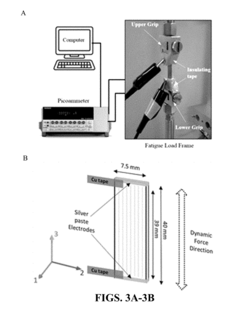
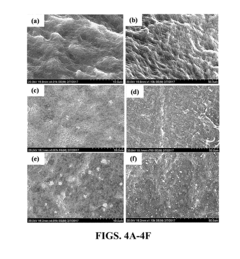
- A composite filament comprising barium titanate (BTO) particles and poly(vinylidene fluoride) (PVDF) with optional multiwall carbon nanotubes (MWCNTs) is developed, using a solvent-casting process to create a uniform distribution of BTO in PVDF, followed by extrusion into a printable form, enabling multi-layer fabrication and enhanced piezoelectric properties through in-situ electric poling during the 3D printing process.
Environmental Impact of PVDF in 3D Printing
The integration of PVDF (Polyvinylidene fluoride) into 3D printing technologies has raised concerns about its environmental impact. As a thermoplastic fluoropolymer, PVDF offers excellent chemical resistance and durability, making it an attractive material for various applications. However, its use in 3D printing processes necessitates a thorough examination of potential environmental consequences.
One of the primary environmental concerns associated with PVDF in 3D printing is its production process. The synthesis of PVDF involves the use of fluorine-containing compounds, which can contribute to greenhouse gas emissions and ozone depletion if not properly managed. Additionally, the energy-intensive nature of PVDF production may result in a higher carbon footprint compared to some alternative 3D printing materials.
During the 3D printing process itself, PVDF may release volatile organic compounds (VOCs) and ultrafine particles (UFPs) into the surrounding environment. These emissions can potentially impact indoor air quality and pose health risks to operators and nearby individuals. Proper ventilation and filtration systems are crucial to mitigate these risks and minimize environmental contamination.
The disposal of PVDF-printed objects and waste materials presents another environmental challenge. PVDF is not biodegradable and can persist in the environment for extended periods. Improper disposal may lead to the accumulation of microplastics in ecosystems, potentially affecting wildlife and entering the food chain. Recycling PVDF can be complex due to its chemical properties, requiring specialized processes to break down and reuse the material effectively.
However, the environmental impact of PVDF in 3D printing is not entirely negative. The precision and efficiency of 3D printing technologies can lead to reduced material waste compared to traditional manufacturing methods. This optimization of material usage may partially offset the environmental costs associated with PVDF production.
Furthermore, the durability and chemical resistance of PVDF-printed objects can contribute to longer product lifespans, potentially reducing the need for frequent replacements and the associated environmental burden of manufacturing new items. In certain applications, such as water treatment or chemical processing, PVDF's unique properties may enable the creation of more efficient and environmentally friendly solutions.
To address the environmental concerns surrounding PVDF in 3D printing, ongoing research is focused on developing more sustainable production methods, improving recycling techniques, and exploring bio-based alternatives that maintain PVDF's desirable properties while reducing its environmental footprint. Additionally, the implementation of strict emission control measures and the adoption of closed-loop recycling systems in 3D printing facilities can help mitigate the environmental impact of PVDF usage.
Intellectual Property Landscape for PVDF 3D Printing
The intellectual property landscape for PVDF 3D printing is rapidly evolving, reflecting the growing interest in integrating this versatile polymer into additive manufacturing processes. A comprehensive analysis of patent filings and granted patents reveals several key trends and focal points in the development of PVDF 3D printing technologies.
One prominent area of innovation is the formulation of PVDF-based filaments and powders specifically tailored for 3D printing applications. Patents in this domain often focus on optimizing the material properties to enhance printability, mechanical strength, and piezoelectric performance. These formulations frequently incorporate additives or nanoparticles to improve specific characteristics of the printed objects.
Another significant cluster of patents revolves around the development of specialized 3D printing equipment and processes for PVDF. These innovations address the unique challenges posed by PVDF's high melting point and tendency to crystallize rapidly. Patents in this category often describe modified extruder designs, temperature control systems, and post-processing techniques to achieve optimal print quality and material properties.
The application of PVDF 3D printing in specific industries has also generated a substantial number of patents. The medical and aerospace sectors, in particular, have shown keen interest in leveraging PVDF's properties for customized implants, sensors, and lightweight structural components. These patents often combine PVDF 3D printing with other technologies to create multi-functional devices.
A growing trend in the patent landscape is the focus on post-processing methods to enhance the properties of 3D printed PVDF objects. This includes techniques for improving crystallinity, increasing piezoelectric response, and enhancing chemical resistance. Such patents are crucial for bridging the gap between the properties of conventionally processed PVDF and its 3D printed counterparts.
Geographically, the patent landscape shows a concentration of activity in countries with strong manufacturing and research bases in advanced materials and 3D printing. The United States, China, Japan, and several European countries are at the forefront of PVDF 3D printing innovation, with both academic institutions and industrial players contributing significantly to the patent pool.
The intellectual property landscape also reveals an increasing interest in sustainable and eco-friendly approaches to PVDF 3D printing. Patents in this area focus on recycling methods, bio-based additives, and energy-efficient processing techniques, reflecting the growing emphasis on environmental considerations in materials science and manufacturing.