How to Use Lithium Chloride for Consistent Temperature Control
AUG 28, 20259 MIN READ
Generate Your Research Report Instantly with AI Agent
PatSnap Eureka helps you evaluate technical feasibility & market potential.
Lithium Chloride Temperature Control Background and Objectives
Lithium chloride (LiCl) has emerged as a significant compound in temperature control applications due to its unique thermodynamic properties. The history of LiCl usage in temperature regulation dates back to the early 20th century, with initial applications primarily in industrial dehumidification systems. Over time, research has expanded its utility across various sectors including HVAC systems, pharmaceutical storage, laboratory environments, and precision manufacturing processes.
The evolution of LiCl-based temperature control technology has been marked by several key advancements. Initially utilized in basic absorption refrigeration systems, the technology has progressed to incorporate sophisticated phase-change materials, advanced sensor integration, and automated control mechanisms. Recent developments have focused on enhancing the energy efficiency and response time of LiCl systems, addressing previous limitations in thermal stability and control precision.
Current technological trends indicate a growing interest in hybrid systems that combine LiCl with other materials to achieve more precise and sustainable temperature regulation. The integration of digital monitoring and IoT capabilities represents another significant direction, enabling remote management and predictive maintenance of temperature control systems.
The primary technical objectives for LiCl temperature control research include achieving greater temperature stability within ±0.1°C across varying ambient conditions, reducing energy consumption by at least 25% compared to conventional systems, and extending the operational lifespan of LiCl-based solutions. Additionally, there is a focus on developing more environmentally friendly formulations that maintain performance while reducing potential ecological impacts.
Another critical objective involves enhancing the scalability of LiCl temperature control systems, making them viable for both micro-applications (such as medical device cooling) and large-scale implementations (like data center climate control). This requires addressing challenges related to system size, weight, and cost-effectiveness across different scales of operation.
Research also aims to improve the response characteristics of LiCl systems, particularly in environments requiring rapid temperature adjustments. This includes developing advanced algorithms for predictive control and optimizing the physical properties of LiCl solutions to achieve faster thermal response without compromising stability.
The ultimate goal of current research efforts is to establish LiCl-based temperature control as a standard technology in applications requiring exceptional precision, reliability, and energy efficiency. This involves not only technical advancement but also addressing manufacturing challenges, regulatory considerations, and market education to facilitate broader adoption across industries.
The evolution of LiCl-based temperature control technology has been marked by several key advancements. Initially utilized in basic absorption refrigeration systems, the technology has progressed to incorporate sophisticated phase-change materials, advanced sensor integration, and automated control mechanisms. Recent developments have focused on enhancing the energy efficiency and response time of LiCl systems, addressing previous limitations in thermal stability and control precision.
Current technological trends indicate a growing interest in hybrid systems that combine LiCl with other materials to achieve more precise and sustainable temperature regulation. The integration of digital monitoring and IoT capabilities represents another significant direction, enabling remote management and predictive maintenance of temperature control systems.
The primary technical objectives for LiCl temperature control research include achieving greater temperature stability within ±0.1°C across varying ambient conditions, reducing energy consumption by at least 25% compared to conventional systems, and extending the operational lifespan of LiCl-based solutions. Additionally, there is a focus on developing more environmentally friendly formulations that maintain performance while reducing potential ecological impacts.
Another critical objective involves enhancing the scalability of LiCl temperature control systems, making them viable for both micro-applications (such as medical device cooling) and large-scale implementations (like data center climate control). This requires addressing challenges related to system size, weight, and cost-effectiveness across different scales of operation.
Research also aims to improve the response characteristics of LiCl systems, particularly in environments requiring rapid temperature adjustments. This includes developing advanced algorithms for predictive control and optimizing the physical properties of LiCl solutions to achieve faster thermal response without compromising stability.
The ultimate goal of current research efforts is to establish LiCl-based temperature control as a standard technology in applications requiring exceptional precision, reliability, and energy efficiency. This involves not only technical advancement but also addressing manufacturing challenges, regulatory considerations, and market education to facilitate broader adoption across industries.
Market Analysis for Thermal Regulation Applications
The global market for thermal regulation applications utilizing lithium chloride is experiencing significant growth, driven by increasing demand for precise temperature control solutions across multiple industries. The market size for advanced thermal regulation technologies was valued at approximately $7.2 billion in 2022, with projections indicating a compound annual growth rate of 6.8% through 2030. Lithium chloride-based solutions are capturing an expanding share of this market due to their superior hygroscopic properties and temperature stabilization capabilities.
HVAC systems represent the largest application segment, accounting for roughly 34% of the total market. The growing emphasis on energy efficiency in commercial and residential buildings has accelerated the adoption of lithium chloride-based desiccant cooling systems, which can reduce energy consumption by up to 40% compared to conventional cooling technologies. This segment is particularly strong in regions with high humidity levels, such as Southeast Asia and the Gulf states.
The pharmaceutical and biotechnology sectors constitute the fastest-growing market segment, with an estimated growth rate of 9.3% annually. Temperature-sensitive pharmaceutical manufacturing processes and cold chain logistics increasingly rely on precise thermal regulation that lithium chloride solutions can provide. The COVID-19 pandemic has further highlighted the critical importance of reliable temperature control in vaccine storage and distribution.
Industrial processing applications represent another substantial market segment, particularly in chemical manufacturing, food processing, and electronics production. These industries require consistent temperature and humidity control to maintain product quality and process efficiency. Lithium chloride-based systems offer advantages in terms of reliability, precision, and energy efficiency compared to traditional methods.
Geographically, North America and Europe currently dominate the market with a combined share of approximately 58%. However, the Asia-Pacific region is expected to witness the highest growth rate, driven by rapid industrialization, increasing construction activities, and growing awareness about energy-efficient technologies in countries like China, India, and Japan.
Market challenges include the relatively high initial investment costs for lithium chloride-based systems and competition from alternative technologies such as silica gel and molecular sieve desiccants. However, the long-term operational cost benefits and superior performance characteristics of lithium chloride solutions are gradually overcoming these barriers to adoption.
Consumer awareness regarding indoor air quality and energy conservation is creating additional market opportunities, particularly in the residential sector. Smart home integration capabilities are becoming increasingly important as consumers seek automated climate control solutions that can be managed remotely while optimizing energy usage.
HVAC systems represent the largest application segment, accounting for roughly 34% of the total market. The growing emphasis on energy efficiency in commercial and residential buildings has accelerated the adoption of lithium chloride-based desiccant cooling systems, which can reduce energy consumption by up to 40% compared to conventional cooling technologies. This segment is particularly strong in regions with high humidity levels, such as Southeast Asia and the Gulf states.
The pharmaceutical and biotechnology sectors constitute the fastest-growing market segment, with an estimated growth rate of 9.3% annually. Temperature-sensitive pharmaceutical manufacturing processes and cold chain logistics increasingly rely on precise thermal regulation that lithium chloride solutions can provide. The COVID-19 pandemic has further highlighted the critical importance of reliable temperature control in vaccine storage and distribution.
Industrial processing applications represent another substantial market segment, particularly in chemical manufacturing, food processing, and electronics production. These industries require consistent temperature and humidity control to maintain product quality and process efficiency. Lithium chloride-based systems offer advantages in terms of reliability, precision, and energy efficiency compared to traditional methods.
Geographically, North America and Europe currently dominate the market with a combined share of approximately 58%. However, the Asia-Pacific region is expected to witness the highest growth rate, driven by rapid industrialization, increasing construction activities, and growing awareness about energy-efficient technologies in countries like China, India, and Japan.
Market challenges include the relatively high initial investment costs for lithium chloride-based systems and competition from alternative technologies such as silica gel and molecular sieve desiccants. However, the long-term operational cost benefits and superior performance characteristics of lithium chloride solutions are gradually overcoming these barriers to adoption.
Consumer awareness regarding indoor air quality and energy conservation is creating additional market opportunities, particularly in the residential sector. Smart home integration capabilities are becoming increasingly important as consumers seek automated climate control solutions that can be managed remotely while optimizing energy usage.
Current Challenges in LiCl-based Temperature Control Systems
Despite the promising potential of lithium chloride (LiCl) for temperature control applications, several significant challenges currently impede its widespread implementation and optimal performance. One of the primary obstacles is the corrosive nature of LiCl solutions, which can aggressively attack many common metals and materials used in temperature control systems. This corrosivity necessitates the use of specialized, often expensive materials for system components, increasing both initial investment and maintenance costs.
Concentration stability presents another major challenge, as LiCl solutions tend to experience concentration fluctuations during operation. These variations occur due to water evaporation or absorption, particularly in open systems or those with imperfect sealing. Since the temperature control properties of LiCl solutions are highly dependent on concentration, these fluctuations can lead to unpredictable and inconsistent temperature regulation performance.
The crystallization risk at lower temperatures poses a significant operational concern. When LiCl solutions approach their saturation point during cooling cycles, salt precipitation can occur, forming crystals that may clog pipes, valves, and heat exchangers. This not only reduces system efficiency but can also cause mechanical failures requiring costly maintenance interventions.
Energy efficiency limitations represent another challenge, as LiCl-based systems often require substantial energy input for regeneration processes, particularly in absorption cooling applications. The high energy demand for solution regeneration can offset the potential energy savings these systems might otherwise offer, reducing their overall sustainability advantage.
Long-term stability issues also plague LiCl-based temperature control systems. Over extended operational periods, these systems may experience degradation of thermal properties, often due to contamination, side reactions, or physical changes in the solution. This degradation necessitates more frequent maintenance and solution replacement, increasing operational costs and downtime.
Scaling challenges emerge when attempting to implement LiCl-based temperature control in varying system sizes. While the technology may perform adequately at certain scales, maintaining consistent performance across different system dimensions requires significant engineering adjustments and customization, complicating standardization efforts.
Environmental and safety concerns cannot be overlooked, as LiCl, while less hazardous than many alternative materials, still presents handling risks and potential environmental impacts if improperly managed or disposed of. These concerns necessitate additional safety protocols and disposal procedures that add complexity to system operation and maintenance.
Concentration stability presents another major challenge, as LiCl solutions tend to experience concentration fluctuations during operation. These variations occur due to water evaporation or absorption, particularly in open systems or those with imperfect sealing. Since the temperature control properties of LiCl solutions are highly dependent on concentration, these fluctuations can lead to unpredictable and inconsistent temperature regulation performance.
The crystallization risk at lower temperatures poses a significant operational concern. When LiCl solutions approach their saturation point during cooling cycles, salt precipitation can occur, forming crystals that may clog pipes, valves, and heat exchangers. This not only reduces system efficiency but can also cause mechanical failures requiring costly maintenance interventions.
Energy efficiency limitations represent another challenge, as LiCl-based systems often require substantial energy input for regeneration processes, particularly in absorption cooling applications. The high energy demand for solution regeneration can offset the potential energy savings these systems might otherwise offer, reducing their overall sustainability advantage.
Long-term stability issues also plague LiCl-based temperature control systems. Over extended operational periods, these systems may experience degradation of thermal properties, often due to contamination, side reactions, or physical changes in the solution. This degradation necessitates more frequent maintenance and solution replacement, increasing operational costs and downtime.
Scaling challenges emerge when attempting to implement LiCl-based temperature control in varying system sizes. While the technology may perform adequately at certain scales, maintaining consistent performance across different system dimensions requires significant engineering adjustments and customization, complicating standardization efforts.
Environmental and safety concerns cannot be overlooked, as LiCl, while less hazardous than many alternative materials, still presents handling risks and potential environmental impacts if improperly managed or disposed of. These concerns necessitate additional safety protocols and disposal procedures that add complexity to system operation and maintenance.
Existing LiCl Temperature Control Implementation Methods
01 Lithium chloride in thermal energy storage systems
Lithium chloride is utilized in thermal energy storage systems due to its excellent heat absorption and release properties. These systems can store excess heat during periods of high energy availability and release it when needed, providing efficient temperature control in various applications. The compound's high thermal capacity makes it particularly valuable for maintaining stable temperatures in both industrial and residential settings.- Lithium chloride in thermal energy storage systems: Lithium chloride is utilized in thermal energy storage systems due to its excellent heat absorption and release properties. These systems can store excess thermal energy and release it when needed, providing efficient temperature control in various applications. The high energy density of lithium chloride makes it particularly suitable for compact thermal storage solutions, allowing for better temperature management in limited spaces.
- Lithium chloride in absorption refrigeration and heat pump systems: Lithium chloride serves as an effective absorbent in absorption refrigeration and heat pump systems. Its hygroscopic properties allow it to absorb water vapor, enabling the cooling cycle to function efficiently. These systems provide temperature control without conventional compressors, offering energy-efficient alternatives for cooling and heating applications. The strong affinity of lithium chloride for water makes it particularly effective in maintaining stable temperature conditions.
- Lithium chloride in humidity control and dehumidification: Lithium chloride is employed in humidity control systems due to its strong hygroscopic properties. By absorbing moisture from the air, it helps maintain optimal humidity levels, which indirectly affects temperature control. These dehumidification systems are crucial in environments where both temperature and humidity need to be precisely regulated. The moisture absorption capacity of lithium chloride makes it effective in creating stable environmental conditions.
- Lithium chloride in phase change materials and temperature stabilization: Lithium chloride is incorporated into phase change materials to enhance their thermal properties for temperature stabilization. These materials can absorb or release large amounts of energy during phase transitions, helping maintain constant temperatures in various applications. The addition of lithium chloride can modify the melting point and thermal conductivity of these materials, allowing for customized temperature control solutions in specific temperature ranges.
- Lithium chloride in electrochemical temperature control systems: Lithium chloride is used in electrochemical systems for temperature control, where electrical energy can be converted to thermal energy and vice versa. These systems offer precise temperature regulation through controlled electrochemical reactions involving lithium chloride solutions. The ionic properties of lithium chloride make it suitable for applications requiring rapid temperature adjustments and high precision control in specialized environments.
02 Lithium chloride in absorption refrigeration and cooling systems
Lithium chloride serves as an effective absorbent in refrigeration and cooling systems. Its hygroscopic properties allow it to absorb water vapor, which is a key mechanism in absorption refrigeration cycles. These systems can provide cooling without mechanical compression, offering energy-efficient temperature control solutions. The compound's ability to maintain stable absorption rates across varying conditions makes it valuable for consistent cooling performance.Expand Specific Solutions03 Temperature-controlled lithium chloride extraction and processing
Temperature control is critical in the extraction and processing of lithium chloride from various sources. Precise temperature management during evaporation, crystallization, and purification processes ensures optimal yield and purity of the compound. Advanced temperature control systems are employed to maintain specific thermal conditions required for efficient lithium chloride production, particularly when processing brine solutions or lithium-containing minerals.Expand Specific Solutions04 Lithium chloride in humidity control applications
Lithium chloride is employed in humidity control systems where temperature regulation is essential. Its strong hygroscopic properties make it effective for dehumidification processes in which temperature control affects performance efficiency. These systems are used in environments where precise humidity levels must be maintained, such as in pharmaceutical manufacturing, food storage, and specialized industrial processes. The relationship between temperature and the compound's moisture absorption capacity is carefully managed to achieve optimal results.Expand Specific Solutions05 Temperature-sensitive lithium chloride batteries and energy systems
Lithium chloride is used in certain battery and energy storage technologies where temperature control is crucial for optimal performance and safety. These systems require careful thermal management to prevent degradation of components and maintain efficiency. Temperature monitoring and regulation systems are integrated into these energy solutions to ensure stable operation across varying environmental conditions and usage patterns. Advanced thermal management techniques help extend the lifespan and reliability of lithium chloride-based energy systems.Expand Specific Solutions
Leading Manufacturers and Research Institutions in the Field
The lithium chloride temperature control technology market is currently in a growth phase, with an estimated global market size of $300-400 million and expanding at 8-10% annually. The technology has reached moderate maturity, with key players demonstrating varied capabilities. Leading companies like Ganfeng Lithium Group and RIST have established advanced applications in thermal energy storage systems, while Shandong RuiFu Lithium and Eve Power focus on temperature control for battery manufacturing. University collaborations (University of Science & Technology of China, North China Electric Power University) are driving innovation in phase change materials. Emerging players like Shenzhen Pinzhong Automation and Prime Planet Energy & Solutions are developing specialized temperature control equipment for industrial applications, indicating growing market diversification and technological refinement.
RIST (Research Institute of Industrial Science & Technology)
Technical Solution: RIST has developed an advanced lithium chloride-based temperature control system primarily for industrial applications requiring precise thermal management. Their technology utilizes a multi-phase approach where lithium chloride solutions serve as both desiccants and thermal energy carriers in a closed-loop system. The institute's solution incorporates proprietary heat exchanger designs that maximize thermal transfer efficiency while minimizing lithium chloride consumption. Their system features intelligent concentration management through continuous refractive index monitoring, allowing real-time adjustments to maintain optimal temperature control parameters. RIST's technology also includes innovative regeneration processes that extend solution lifespan by removing accumulated impurities that typically degrade performance over time. The system achieves temperature stability within ±0.3°C across a wide range of ambient conditions, making it particularly valuable for manufacturing processes requiring consistent thermal environments.
Strengths: Strong integration capabilities with existing industrial systems; robust performance in variable environmental conditions; extensive experience in scaling laboratory concepts to industrial applications. Weaknesses: Higher implementation complexity requiring specialized engineering expertise; system performance can be affected by contaminants in industrial environments; requires more frequent maintenance in high-dust settings.
Shandong RuiFu Lithium Co., Ltd.
Technical Solution: Shandong RuiFu Lithium has developed an innovative temperature control system utilizing lithium chloride's hygroscopic properties for industrial applications. Their technology centers on a patented LiCl solution circulation system that maintains precise temperature control through controlled absorption and desorption of moisture. The company's approach incorporates multi-stage concentration management where lithium chloride solutions of varying concentrations are strategically deployed to create temperature gradients that can be precisely manipulated. Their system features automated density monitoring equipment that continuously adjusts solution parameters to maintain optimal performance across varying ambient conditions. RuiFu's technology also includes proprietary anti-crystallization additives that extend system lifespan by preventing salt precipitation during extended operation periods, addressing one of the traditional challenges of lithium chloride-based systems.
Strengths: Specialized expertise in lithium compound processing; robust industrial-scale implementation capabilities; solutions optimized for harsh operating environments. Weaknesses: Systems require regular maintenance to prevent salt crystallization; performance can degrade in extremely low humidity environments; higher initial investment compared to conventional HVAC systems.
Key Technical Innovations in Lithium Chloride Applications
Lithium chloride recovery
PatentInactiveGB891785A
Innovation
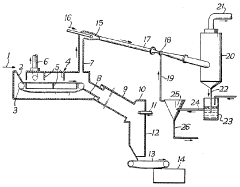
- A process involving the roasting of spodumene with calcium chloride, followed by cooling and dilution of the gaseous mixture with a gas, then contacting it with water or an aqueous solution in a venturi scrubber to form an aqueous lithium chloride solution, which is separated using a cyclone separator, reducing dust adhesion and improving efficiency.
Energy Efficiency Considerations in LiCl Temperature Systems
Energy efficiency represents a critical dimension in the evaluation and implementation of lithium chloride-based temperature control systems. The hygroscopic properties of LiCl that make it effective for temperature regulation also present unique opportunities and challenges for energy optimization. When properly designed, LiCl temperature control systems can achieve significant energy savings compared to conventional HVAC systems, with potential reductions of 30-40% in energy consumption under optimal conditions.
The primary energy efficiency advantage of LiCl systems stems from their ability to manage latent heat loads separately from sensible heat loads. This separation allows for more precise temperature and humidity control without the energy-intensive overcooling and reheating cycles common in traditional systems. In desiccant-based applications utilizing LiCl, the regeneration process—where moisture is removed from the saturated solution—represents the most energy-intensive phase of operation.
Recent technological innovations have focused on improving this regeneration efficiency through heat recovery systems, solar thermal integration, and low-grade waste heat utilization. For instance, solar-assisted LiCl regeneration systems have demonstrated energy efficiency improvements of 25-35% in appropriate climatic conditions, significantly reducing operational costs while maintaining consistent temperature control performance.
The concentration management of LiCl solutions directly impacts energy consumption. Higher concentration solutions offer more effective dehumidification but require greater energy input for regeneration. Research indicates an optimal concentration range of 30-35% for most applications, balancing dehumidification effectiveness with energy requirements. Advanced control algorithms that dynamically adjust concentration based on real-time conditions have shown promise in further reducing energy consumption by 15-20%.
System configuration also plays a crucial role in energy efficiency. Closed-loop LiCl systems typically demonstrate higher energy efficiency than open systems due to reduced solution losses and better thermal management. Hybrid systems that combine LiCl technology with conventional cooling methods have emerged as particularly promising, leveraging the strengths of each approach while mitigating their respective energy inefficiencies.
Material selection for system components significantly impacts thermal transfer efficiency and energy consumption. Advanced heat exchanger designs specifically optimized for LiCl solutions have demonstrated thermal efficiency improvements of up to 22% compared to conventional designs. Additionally, corrosion-resistant materials that maintain performance over extended operational periods help prevent efficiency degradation that would otherwise necessitate higher energy inputs to maintain consistent temperature control.
The primary energy efficiency advantage of LiCl systems stems from their ability to manage latent heat loads separately from sensible heat loads. This separation allows for more precise temperature and humidity control without the energy-intensive overcooling and reheating cycles common in traditional systems. In desiccant-based applications utilizing LiCl, the regeneration process—where moisture is removed from the saturated solution—represents the most energy-intensive phase of operation.
Recent technological innovations have focused on improving this regeneration efficiency through heat recovery systems, solar thermal integration, and low-grade waste heat utilization. For instance, solar-assisted LiCl regeneration systems have demonstrated energy efficiency improvements of 25-35% in appropriate climatic conditions, significantly reducing operational costs while maintaining consistent temperature control performance.
The concentration management of LiCl solutions directly impacts energy consumption. Higher concentration solutions offer more effective dehumidification but require greater energy input for regeneration. Research indicates an optimal concentration range of 30-35% for most applications, balancing dehumidification effectiveness with energy requirements. Advanced control algorithms that dynamically adjust concentration based on real-time conditions have shown promise in further reducing energy consumption by 15-20%.
System configuration also plays a crucial role in energy efficiency. Closed-loop LiCl systems typically demonstrate higher energy efficiency than open systems due to reduced solution losses and better thermal management. Hybrid systems that combine LiCl technology with conventional cooling methods have emerged as particularly promising, leveraging the strengths of each approach while mitigating their respective energy inefficiencies.
Material selection for system components significantly impacts thermal transfer efficiency and energy consumption. Advanced heat exchanger designs specifically optimized for LiCl solutions have demonstrated thermal efficiency improvements of up to 22% compared to conventional designs. Additionally, corrosion-resistant materials that maintain performance over extended operational periods help prevent efficiency degradation that would otherwise necessitate higher energy inputs to maintain consistent temperature control.
Environmental Impact and Safety Regulations for Lithium Compounds
The use of lithium chloride for temperature control applications must be evaluated within the context of its environmental impact and regulatory framework. Lithium compounds, while technologically valuable, pose significant environmental concerns throughout their lifecycle. Mining operations for lithium extraction cause habitat disruption, soil degradation, and water table alterations in sensitive ecosystems, particularly in the lithium-rich regions of South America's "Lithium Triangle."
Water consumption represents a critical environmental challenge, with lithium brine operations consuming approximately 500,000 gallons of water per ton of lithium extracted. This intensive water usage creates substantial pressure on local water resources, especially in arid regions where lithium mining is concentrated. Additionally, the chemical processes involved in lithium refinement generate waste products containing toxic substances that can contaminate soil and water systems if improperly managed.
Regulatory frameworks governing lithium compounds vary significantly across jurisdictions but generally address three key areas: extraction practices, handling protocols, and disposal requirements. In the United States, lithium chloride falls under the Toxic Substances Control Act (TSCA) and requires compliance with EPA guidelines for chemical management. The European Union regulates lithium compounds under REACH (Registration, Evaluation, Authorization and Restriction of Chemicals), imposing strict documentation and risk assessment requirements.
Occupational safety regulations mandate specific handling protocols for lithium chloride, including proper ventilation systems, personal protective equipment, and emergency response procedures. OSHA in the US and similar agencies worldwide have established exposure limits for lithium compounds, typically set at 0.025 mg/m³ for respirable lithium dust over an 8-hour workday.
End-of-life management presents additional regulatory challenges. Lithium chloride solutions used in temperature control systems must be disposed of as hazardous waste in most jurisdictions, requiring specialized handling and documentation. Recovery and recycling processes, while environmentally preferable, must comply with waste management regulations and often require permits for operation.
Recent regulatory trends indicate increasing scrutiny of lithium compound applications, with particular focus on closed-loop systems that minimize environmental discharge. Companies implementing lithium chloride temperature control systems must therefore develop comprehensive compliance strategies that address the full lifecycle environmental impact of these compounds, from sourcing through to ultimate disposal or recycling.
Water consumption represents a critical environmental challenge, with lithium brine operations consuming approximately 500,000 gallons of water per ton of lithium extracted. This intensive water usage creates substantial pressure on local water resources, especially in arid regions where lithium mining is concentrated. Additionally, the chemical processes involved in lithium refinement generate waste products containing toxic substances that can contaminate soil and water systems if improperly managed.
Regulatory frameworks governing lithium compounds vary significantly across jurisdictions but generally address three key areas: extraction practices, handling protocols, and disposal requirements. In the United States, lithium chloride falls under the Toxic Substances Control Act (TSCA) and requires compliance with EPA guidelines for chemical management. The European Union regulates lithium compounds under REACH (Registration, Evaluation, Authorization and Restriction of Chemicals), imposing strict documentation and risk assessment requirements.
Occupational safety regulations mandate specific handling protocols for lithium chloride, including proper ventilation systems, personal protective equipment, and emergency response procedures. OSHA in the US and similar agencies worldwide have established exposure limits for lithium compounds, typically set at 0.025 mg/m³ for respirable lithium dust over an 8-hour workday.
End-of-life management presents additional regulatory challenges. Lithium chloride solutions used in temperature control systems must be disposed of as hazardous waste in most jurisdictions, requiring specialized handling and documentation. Recovery and recycling processes, while environmentally preferable, must comply with waste management regulations and often require permits for operation.
Recent regulatory trends indicate increasing scrutiny of lithium compound applications, with particular focus on closed-loop systems that minimize environmental discharge. Companies implementing lithium chloride temperature control systems must therefore develop comprehensive compliance strategies that address the full lifecycle environmental impact of these compounds, from sourcing through to ultimate disposal or recycling.
Unlock deeper insights with PatSnap Eureka Quick Research — get a full tech report to explore trends and direct your research. Try now!
Generate Your Research Report Instantly with AI Agent
Supercharge your innovation with PatSnap Eureka AI Agent Platform!