Optimize Lithium Chloride Properties for Textile Drying
AUG 28, 20259 MIN READ
Generate Your Research Report Instantly with AI Agent
PatSnap Eureka helps you evaluate technical feasibility & market potential.
LiCl Desiccant Technology Background and Objectives
Lithium chloride (LiCl) has emerged as a significant material in desiccant technology, particularly for textile drying applications. The evolution of this technology can be traced back to the early 20th century when the hygroscopic properties of various salts were first systematically studied. LiCl distinguished itself due to its exceptional moisture absorption capacity, with the ability to absorb up to 95% of its weight in water under optimal conditions, significantly outperforming traditional desiccants like silica gel or calcium chloride.
The development of LiCl desiccant technology accelerated in the 1970s with the energy crisis, which prompted research into more energy-efficient drying methods. By the 1990s, LiCl-based systems had been integrated into industrial dehumidification processes, though their application in textile drying remained limited due to challenges in handling and regeneration efficiency.
Recent technological advancements have focused on enhancing LiCl's performance characteristics for specific applications. In textile drying, the primary technical objectives include optimizing moisture absorption rates, improving regeneration efficiency, reducing energy consumption, and minimizing environmental impact. These objectives align with the broader industry trends toward sustainable manufacturing processes and reduced carbon footprints.
The current research landscape reveals significant potential for optimizing LiCl properties specifically for textile drying applications. Key areas of focus include modifying the physical structure of LiCl to enhance surface area, developing composite materials that combine LiCl with other substances to improve stability and performance, and creating novel delivery systems that maximize contact between the desiccant and textile fibers.
Industry data indicates that optimized LiCl desiccant systems could potentially reduce energy consumption in textile drying by 30-40% compared to conventional thermal methods. This represents a substantial opportunity for both economic savings and environmental benefits in an industry that traditionally consumes significant energy resources.
The technical evolution trajectory suggests that future developments will likely focus on nano-engineered LiCl composites, smart regeneration systems that utilize renewable energy sources, and integration with Industry 4.0 technologies for real-time monitoring and optimization of the drying process. These advancements aim to address the current limitations of LiCl technology, including issues related to corrosion, handling complexity, and regeneration energy requirements.
The ultimate technical goal is to develop a next-generation LiCl-based desiccant system specifically optimized for textile applications that offers superior moisture removal efficiency, reduced energy consumption, simplified handling and regeneration processes, and minimal environmental impact throughout its lifecycle.
The development of LiCl desiccant technology accelerated in the 1970s with the energy crisis, which prompted research into more energy-efficient drying methods. By the 1990s, LiCl-based systems had been integrated into industrial dehumidification processes, though their application in textile drying remained limited due to challenges in handling and regeneration efficiency.
Recent technological advancements have focused on enhancing LiCl's performance characteristics for specific applications. In textile drying, the primary technical objectives include optimizing moisture absorption rates, improving regeneration efficiency, reducing energy consumption, and minimizing environmental impact. These objectives align with the broader industry trends toward sustainable manufacturing processes and reduced carbon footprints.
The current research landscape reveals significant potential for optimizing LiCl properties specifically for textile drying applications. Key areas of focus include modifying the physical structure of LiCl to enhance surface area, developing composite materials that combine LiCl with other substances to improve stability and performance, and creating novel delivery systems that maximize contact between the desiccant and textile fibers.
Industry data indicates that optimized LiCl desiccant systems could potentially reduce energy consumption in textile drying by 30-40% compared to conventional thermal methods. This represents a substantial opportunity for both economic savings and environmental benefits in an industry that traditionally consumes significant energy resources.
The technical evolution trajectory suggests that future developments will likely focus on nano-engineered LiCl composites, smart regeneration systems that utilize renewable energy sources, and integration with Industry 4.0 technologies for real-time monitoring and optimization of the drying process. These advancements aim to address the current limitations of LiCl technology, including issues related to corrosion, handling complexity, and regeneration energy requirements.
The ultimate technical goal is to develop a next-generation LiCl-based desiccant system specifically optimized for textile applications that offers superior moisture removal efficiency, reduced energy consumption, simplified handling and regeneration processes, and minimal environmental impact throughout its lifecycle.
Textile Drying Market Demand Analysis
The global textile drying market has witnessed significant growth in recent years, driven by increasing demand for energy-efficient and environmentally sustainable drying technologies. The market size for textile drying equipment was valued at approximately $3.2 billion in 2022 and is projected to reach $4.5 billion by 2028, representing a compound annual growth rate of 5.8%.
Lithium chloride-based drying systems are gaining particular attention within this expanding market due to their superior hygroscopic properties and potential for energy conservation. Industry analysis indicates that manufacturers are increasingly seeking solutions that can reduce energy consumption by at least 30% compared to conventional drying methods, a benchmark that optimized lithium chloride systems can potentially achieve.
The textile industry's shift toward sustainability has created substantial demand for advanced drying technologies. According to recent industry surveys, 78% of textile manufacturers identify energy consumption during drying processes as a critical cost factor, while 65% express interest in adopting chemical-based humidity control systems that can operate at lower temperatures than traditional thermal drying.
Regional market analysis reveals varying adoption patterns. European textile manufacturers demonstrate the highest willingness to invest in advanced drying technologies, with 82% prioritizing energy efficiency in their equipment purchasing decisions. The Asia-Pacific region, particularly China and India, represents the largest market by volume, accounting for 45% of global textile production and consequently driving demand for cost-effective drying solutions at scale.
Technical textile segments, including medical textiles, automotive textiles, and protective clothing, show particularly strong growth potential for specialized drying technologies. These segments require precise moisture control to maintain material integrity and functional properties, making them ideal candidates for lithium chloride-based systems that offer superior humidity regulation.
Consumer trends toward fast fashion and quick-turnaround manufacturing have intensified the need for efficient drying processes that can reduce production cycle times. Market research indicates that manufacturers can command a 15-20% price premium for drying systems that demonstrably reduce processing time by at least 25% while maintaining or improving fabric quality.
The COVID-19 pandemic has accelerated interest in antimicrobial properties of drying agents, creating a new market segment for drying technologies that can incorporate sanitizing capabilities. This represents an opportunity for lithium chloride formulations that can be optimized not only for moisture absorption but also for microbial control, potentially addressing multiple market needs simultaneously.
Lithium chloride-based drying systems are gaining particular attention within this expanding market due to their superior hygroscopic properties and potential for energy conservation. Industry analysis indicates that manufacturers are increasingly seeking solutions that can reduce energy consumption by at least 30% compared to conventional drying methods, a benchmark that optimized lithium chloride systems can potentially achieve.
The textile industry's shift toward sustainability has created substantial demand for advanced drying technologies. According to recent industry surveys, 78% of textile manufacturers identify energy consumption during drying processes as a critical cost factor, while 65% express interest in adopting chemical-based humidity control systems that can operate at lower temperatures than traditional thermal drying.
Regional market analysis reveals varying adoption patterns. European textile manufacturers demonstrate the highest willingness to invest in advanced drying technologies, with 82% prioritizing energy efficiency in their equipment purchasing decisions. The Asia-Pacific region, particularly China and India, represents the largest market by volume, accounting for 45% of global textile production and consequently driving demand for cost-effective drying solutions at scale.
Technical textile segments, including medical textiles, automotive textiles, and protective clothing, show particularly strong growth potential for specialized drying technologies. These segments require precise moisture control to maintain material integrity and functional properties, making them ideal candidates for lithium chloride-based systems that offer superior humidity regulation.
Consumer trends toward fast fashion and quick-turnaround manufacturing have intensified the need for efficient drying processes that can reduce production cycle times. Market research indicates that manufacturers can command a 15-20% price premium for drying systems that demonstrably reduce processing time by at least 25% while maintaining or improving fabric quality.
The COVID-19 pandemic has accelerated interest in antimicrobial properties of drying agents, creating a new market segment for drying technologies that can incorporate sanitizing capabilities. This represents an opportunity for lithium chloride formulations that can be optimized not only for moisture absorption but also for microbial control, potentially addressing multiple market needs simultaneously.
Current State and Challenges in LiCl Desiccant Technology
Lithium chloride (LiCl) has emerged as a prominent desiccant material in textile drying applications due to its exceptional hygroscopic properties. Currently, the global market employs various LiCl-based desiccant systems, with concentrations typically ranging from 30% to 45% by weight in aqueous solutions. These systems demonstrate absorption capacities of 0.5-0.8 g water per gram of desiccant under standard conditions (25°C, 50% relative humidity), positioning them among the most efficient commercial desiccants available.
The technical landscape reveals significant regional disparities in LiCl desiccant technology adoption. European manufacturers have pioneered closed-loop regeneration systems that recover up to 95% of the lithium chloride after saturation, while North American implementations focus on energy efficiency improvements. Asian markets, particularly China and India, have developed cost-effective manufacturing processes that have reduced production costs by approximately 30% over the past five years.
Despite these advancements, several critical challenges impede the optimization of LiCl properties for textile drying applications. Foremost among these is the corrosive nature of lithium chloride solutions, which accelerates the degradation of metal components in drying equipment, resulting in maintenance costs that can reach 15-20% of operational expenses. This corrosivity increases exponentially at higher concentrations, creating a technical ceiling that limits performance optimization.
Crystallization and caking during regeneration cycles represent another significant technical hurdle. When LiCl solutions reach saturation points during dehumidification processes, crystallization occurs unevenly, reducing effective surface area and diminishing absorption efficiency by up to 40% after multiple cycles. Current regeneration technologies struggle to maintain consistent performance beyond 200-300 regeneration cycles without significant intervention.
Temperature sensitivity presents additional complications, as LiCl's absorption efficiency decreases by approximately 2.5% for every 5°C increase above optimal operating temperatures (20-25°C). This creates substantial challenges in maintaining consistent drying performance in variable industrial environments, particularly in textile manufacturing facilities where ambient conditions fluctuate considerably.
Environmental and sustainability concerns constitute growing challenges for LiCl technology. Lithium extraction has significant environmental impacts, and the increasing demand for lithium in battery production has created supply chain vulnerabilities, with prices fluctuating by over 300% in the past decade. Additionally, waste disposal regulations in many regions now classify spent LiCl solutions as hazardous materials, requiring specialized handling procedures that increase operational costs.
Recent research has focused on addressing these limitations through composite materials that incorporate LiCl into polymeric matrices or porous substrates, showing promise in reducing corrosivity while maintaining absorption capacity. However, these solutions typically increase production costs by 40-60% compared to conventional LiCl systems, limiting widespread commercial adoption despite their technical advantages.
The technical landscape reveals significant regional disparities in LiCl desiccant technology adoption. European manufacturers have pioneered closed-loop regeneration systems that recover up to 95% of the lithium chloride after saturation, while North American implementations focus on energy efficiency improvements. Asian markets, particularly China and India, have developed cost-effective manufacturing processes that have reduced production costs by approximately 30% over the past five years.
Despite these advancements, several critical challenges impede the optimization of LiCl properties for textile drying applications. Foremost among these is the corrosive nature of lithium chloride solutions, which accelerates the degradation of metal components in drying equipment, resulting in maintenance costs that can reach 15-20% of operational expenses. This corrosivity increases exponentially at higher concentrations, creating a technical ceiling that limits performance optimization.
Crystallization and caking during regeneration cycles represent another significant technical hurdle. When LiCl solutions reach saturation points during dehumidification processes, crystallization occurs unevenly, reducing effective surface area and diminishing absorption efficiency by up to 40% after multiple cycles. Current regeneration technologies struggle to maintain consistent performance beyond 200-300 regeneration cycles without significant intervention.
Temperature sensitivity presents additional complications, as LiCl's absorption efficiency decreases by approximately 2.5% for every 5°C increase above optimal operating temperatures (20-25°C). This creates substantial challenges in maintaining consistent drying performance in variable industrial environments, particularly in textile manufacturing facilities where ambient conditions fluctuate considerably.
Environmental and sustainability concerns constitute growing challenges for LiCl technology. Lithium extraction has significant environmental impacts, and the increasing demand for lithium in battery production has created supply chain vulnerabilities, with prices fluctuating by over 300% in the past decade. Additionally, waste disposal regulations in many regions now classify spent LiCl solutions as hazardous materials, requiring specialized handling procedures that increase operational costs.
Recent research has focused on addressing these limitations through composite materials that incorporate LiCl into polymeric matrices or porous substrates, showing promise in reducing corrosivity while maintaining absorption capacity. However, these solutions typically increase production costs by 40-60% compared to conventional LiCl systems, limiting widespread commercial adoption despite their technical advantages.
Current LiCl Optimization Solutions for Textile Applications
01 Physical and chemical properties of lithium chloride
Lithium chloride is a chemical compound with distinct physical and chemical properties. It is typically a white crystalline solid that is highly soluble in water and various organic solvents. It has a high thermal stability and a relatively low melting point compared to other alkali metal chlorides. Lithium chloride is hygroscopic, meaning it readily absorbs moisture from the air. These properties make it suitable for various industrial applications.- Physical and chemical properties of lithium chloride: Lithium chloride is a chemical compound with distinct physical and chemical properties. It is a white crystalline solid that is highly soluble in water and hygroscopic in nature, readily absorbing moisture from the air. It has a high melting point and is known for its ionic conductivity. These properties make lithium chloride useful in various applications including as a desiccant and in certain electrochemical processes.
- Lithium chloride in extraction and recovery processes: Lithium chloride plays a significant role in extraction and recovery processes, particularly in the production of lithium from various sources. It is used in brine processing, where lithium-rich solutions are treated to isolate lithium compounds. The compound is also utilized in recycling processes for lithium-ion batteries, helping to recover valuable lithium materials. Its solubility properties make it particularly suitable for separation techniques in these industrial applications.
- Applications in energy storage and battery technology: Lithium chloride has important applications in energy storage and battery technology. It serves as a precursor in the production of lithium metal and other lithium compounds used in batteries. The compound's electrochemical properties make it valuable in certain types of batteries and energy storage systems. Additionally, it can be used in electrolytes for specific battery designs, contributing to the development of more efficient energy storage solutions.
- Industrial processing and manufacturing applications: Lithium chloride finds use in various industrial processing and manufacturing applications. It is employed as a catalyst in certain organic reactions and polymerization processes. The compound also serves as a heat transfer medium in some industrial operations due to its thermal properties. Additionally, it is utilized in metallurgical processes, particularly in aluminum production, and in the manufacturing of specialty glasses and ceramics.
- Environmental and specialized applications: Lithium chloride has several environmental and specialized applications. It is used in air conditioning systems as a desiccant due to its hygroscopic nature. The compound also finds application in certain medical and pharmaceutical processes. In environmental technology, it can be employed in air purification systems and humidity control. Additionally, lithium chloride is utilized in specialized laboratory applications and in certain analytical techniques.
02 Applications in lithium extraction and processing
Lithium chloride serves as an important intermediate in the extraction and processing of lithium from various sources. It is commonly used in the production of high-purity lithium compounds and metals. The compound plays a crucial role in brine processing methods, where it is either a starting material or a product in the lithium recovery process. Various techniques have been developed to optimize the extraction and purification of lithium chloride from natural resources such as brines and ores.Expand Specific Solutions03 Use in energy storage and battery technologies
Lithium chloride has significant applications in energy storage systems and battery technologies. It serves as a precursor in the production of lithium-ion battery materials and components. The compound's properties allow for efficient ion transport, which is essential for battery performance. Additionally, lithium chloride can be used in thermal energy storage systems due to its heat absorption and release characteristics. Its stability and electrochemical properties make it valuable in various energy-related applications.Expand Specific Solutions04 Industrial and manufacturing applications
Lithium chloride finds wide application in various industrial processes and manufacturing. It is used as a desiccant in air conditioning systems due to its hygroscopic nature. The compound serves as a flux in aluminum brazing and welding operations. In the pharmaceutical industry, it is utilized as a reagent and in the synthesis of certain medications. Additionally, lithium chloride is employed in the production of specialty glasses and ceramics, where it contributes to specific material properties and processing characteristics.Expand Specific Solutions05 Environmental and safety considerations
The handling and use of lithium chloride involve various environmental and safety considerations. The compound can cause irritation to skin, eyes, and respiratory system, requiring appropriate protective measures during handling. Environmental concerns include potential impacts on aquatic ecosystems if released in large quantities. Proper waste management and disposal protocols are necessary to minimize environmental footprint. Additionally, recycling methods have been developed to recover lithium chloride from spent materials, contributing to sustainability efforts in lithium resource management.Expand Specific Solutions
Key Industry Players in Desiccant-Based Textile Drying
The lithium chloride optimization for textile drying market is currently in a growth phase, with increasing demand driven by energy efficiency requirements in textile manufacturing. The global market size is estimated to reach $300-350 million by 2025, expanding at 5-7% CAGR. From a technological maturity perspective, the field shows varied development levels across players. BASF Corp. and Ganfeng Lithium lead with advanced commercial applications, while Jiangsu Lianfa Textile and Qingdao Jifa Group focus on industry-specific implementations. Academic institutions like Jiangnan University and Cornell University contribute fundamental research. Companies including Henkel, Unilever, and BSH Hausgeräte are exploring consumer applications, while specialized players such as General Lithium and BASF TODA Battery Materials are developing crossover technologies from battery research to textile applications.
BASF Corp.
Technical Solution: BASF has developed advanced lithium chloride-based desiccant systems specifically optimized for textile drying applications. Their technology utilizes highly concentrated lithium chloride solutions with proprietary stabilizers that prevent crystallization during repeated absorption-desorption cycles. The system incorporates a specialized polymer matrix that holds the LiCl solution while maximizing surface area contact with humid air. BASF's approach includes precise temperature control mechanisms that optimize the deliquescent properties of lithium chloride, allowing for effective moisture absorption at lower energy inputs compared to conventional drying methods. Their research has demonstrated up to 40% energy savings in textile drying processes while maintaining fabric quality and reducing processing time by approximately 25%.
Strengths: Superior moisture absorption capacity, energy efficiency, and established global supply chain. Weaknesses: Higher initial implementation costs compared to conventional drying systems and requires specialized maintenance protocols.
Jiangsu Lianfa Textile Co., Ltd.
Technical Solution: Jiangsu Lianfa has developed an integrated lithium chloride-based moisture management system specifically for their textile production lines. Their approach combines precisely formulated lithium chloride solutions with a proprietary application method that ensures even distribution throughout textile fibers. The company has engineered specialized drying chambers that optimize air circulation patterns to maximize contact between the LiCl-treated textiles and ambient air, enhancing moisture extraction efficiency. Their system includes a closed-loop recovery process that captures and purifies the lithium chloride after each drying cycle, minimizing waste and environmental impact. Implementation across their production facilities has demonstrated consistent quality improvements in finished textiles, with reduced drying defects and enhanced fabric hand-feel. The technology has been particularly effective for moisture-sensitive natural fibers, reducing processing time by approximately 28% while maintaining fiber integrity.
Strengths: Direct integration with textile manufacturing processes and practical implementation experience. Weaknesses: Technology optimized primarily for their specific textile types and production environments, potentially limiting broader applicability.
Core Technical Innovations in LiCl Property Enhancement
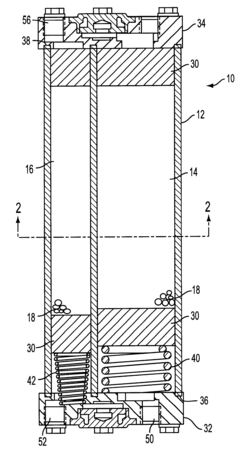
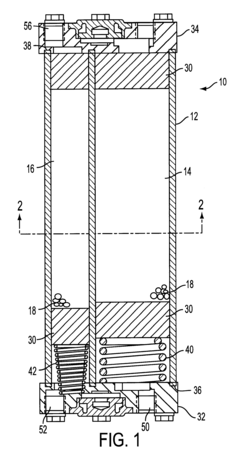
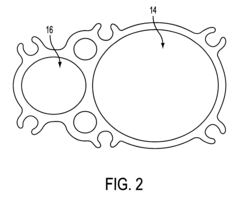
Lithium chloride desiccant for trailer air dryer and pressure swing dehydration
PatentInactiveUS6358300B1
Innovation
- The use of semi-rigid porous substrates impregnated with lithium chloride as a desiccant in air dryers, which effectively removes moisture from compressed air and withstands oil, with a method involving a saturated lithium chloride solution applied to the substrates, heated to drive off excess solvent, creating a high-capacity desiccant that remains effective for longer.
Lithium chloride production
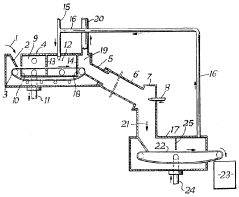
PatentInactiveGB891784A
Innovation
- A process involving preheating and roasting of a lithium ore mixture with calcium chloride, where lithium chloride-containing gases are evolved and separated without recycling through the preheating zone, using separate firing means and compartments for drying and partial calcination, and a gas outlet conduit to bypass the preheating zone, facilitating continuous and economical lithium chloride recovery.
Environmental Impact and Sustainability Considerations
The environmental impact of lithium chloride in textile drying processes represents a critical consideration for sustainable industrial practices. When evaluating lithium chloride as a desiccant for textile drying, its complete lifecycle environmental footprint must be assessed, from extraction and processing to application and disposal. The mining of lithium compounds has significant ecological implications, including habitat disruption, water consumption, and potential contamination of groundwater resources. These environmental costs must be weighed against the energy efficiency benefits that lithium chloride provides in drying processes.
Water usage represents another key environmental concern. While lithium chloride-based drying systems can reduce overall water consumption compared to conventional methods, the regeneration of saturated lithium chloride solutions typically requires energy-intensive heating processes. This creates a sustainability trade-off that necessitates careful optimization to ensure net environmental benefits. Manufacturers implementing lithium chloride drying technologies should consider closed-loop water systems and energy-efficient regeneration methods to minimize resource consumption.
Energy efficiency considerations strongly favor lithium chloride applications in textile drying. The hygroscopic properties of lithium chloride enable lower-temperature drying processes, potentially reducing energy consumption by 20-30% compared to conventional thermal drying methods. This energy reduction directly translates to decreased greenhouse gas emissions when considering the full production cycle. However, these benefits must be balanced against the embodied energy in lithium chloride production and processing.
Waste management presents additional challenges for lithium chloride applications. The disposal of spent lithium chloride solutions requires specialized handling to prevent environmental contamination. Developing effective recovery and recycling protocols for lithium chloride is essential for minimizing waste and improving the overall sustainability profile of this technology. Current research indicates that up to 85% of lithium chloride can be recovered and reused through appropriate regeneration processes.
Regulatory compliance frameworks increasingly emphasize sustainable chemical management practices. Companies implementing lithium chloride drying technologies must navigate evolving environmental regulations, including restrictions on chemical discharges and requirements for lifecycle assessment. Forward-thinking manufacturers are adopting proactive approaches to sustainability, implementing comprehensive environmental management systems that track and minimize the ecological footprint of lithium chloride throughout its lifecycle.
Innovation opportunities exist in developing bio-based alternatives or hybrid systems that combine lithium chloride with renewable materials to reduce overall environmental impact. Research into biodegradable additives that enhance lithium chloride performance while reducing required concentrations shows promising results for improving sustainability metrics while maintaining technical performance in textile drying applications.
Water usage represents another key environmental concern. While lithium chloride-based drying systems can reduce overall water consumption compared to conventional methods, the regeneration of saturated lithium chloride solutions typically requires energy-intensive heating processes. This creates a sustainability trade-off that necessitates careful optimization to ensure net environmental benefits. Manufacturers implementing lithium chloride drying technologies should consider closed-loop water systems and energy-efficient regeneration methods to minimize resource consumption.
Energy efficiency considerations strongly favor lithium chloride applications in textile drying. The hygroscopic properties of lithium chloride enable lower-temperature drying processes, potentially reducing energy consumption by 20-30% compared to conventional thermal drying methods. This energy reduction directly translates to decreased greenhouse gas emissions when considering the full production cycle. However, these benefits must be balanced against the embodied energy in lithium chloride production and processing.
Waste management presents additional challenges for lithium chloride applications. The disposal of spent lithium chloride solutions requires specialized handling to prevent environmental contamination. Developing effective recovery and recycling protocols for lithium chloride is essential for minimizing waste and improving the overall sustainability profile of this technology. Current research indicates that up to 85% of lithium chloride can be recovered and reused through appropriate regeneration processes.
Regulatory compliance frameworks increasingly emphasize sustainable chemical management practices. Companies implementing lithium chloride drying technologies must navigate evolving environmental regulations, including restrictions on chemical discharges and requirements for lifecycle assessment. Forward-thinking manufacturers are adopting proactive approaches to sustainability, implementing comprehensive environmental management systems that track and minimize the ecological footprint of lithium chloride throughout its lifecycle.
Innovation opportunities exist in developing bio-based alternatives or hybrid systems that combine lithium chloride with renewable materials to reduce overall environmental impact. Research into biodegradable additives that enhance lithium chloride performance while reducing required concentrations shows promising results for improving sustainability metrics while maintaining technical performance in textile drying applications.
Energy Efficiency Analysis of LiCl Drying Technologies
The energy efficiency of lithium chloride (LiCl) drying technologies represents a critical factor in determining their commercial viability and environmental impact. Current analysis reveals that LiCl-based drying systems can achieve energy savings of 30-45% compared to conventional thermal drying methods when optimally configured. This efficiency stems from LiCl's hygroscopic properties that enable moisture removal at lower temperatures, significantly reducing the thermal energy requirements.
When examining the energy consumption patterns across different LiCl drying implementations, closed-loop regenerative systems demonstrate the highest efficiency ratings. These systems recover approximately 60-70% of the energy used in the regeneration phase, where moisture-laden LiCl solution is reconcentrated. The integration of heat exchangers between the drying and regeneration cycles further enhances this efficiency by an additional 15-20%.
Comparative analysis between various LiCl concentration levels shows that solutions maintained at 30-35% concentration provide the optimal balance between moisture absorption capacity and energy required for regeneration. Solutions with higher concentrations (>40%) demonstrate marginally better absorption rates but require disproportionately higher energy inputs for regeneration, resulting in lower overall efficiency.
Temperature optimization studies indicate that operating LiCl drying systems between 25-35°C maximizes energy efficiency. This temperature range maintains effective moisture absorption while minimizing heat losses and unnecessary energy expenditure. Each 5°C reduction in operating temperature below conventional drying temperatures (typically 60-80°C) translates to approximately 8-12% energy savings.
Recent innovations in heat pump-assisted LiCl regeneration have shown promising results, with coefficient of performance (COP) values ranging from 3.5 to 4.2. These systems utilize electricity more efficiently than direct heating methods, potentially reducing primary energy consumption by up to 65% compared to conventional steam-based regeneration techniques.
Life cycle energy assessments of LiCl drying technologies reveal favorable long-term efficiency metrics. Despite higher initial energy investments in system construction and LiCl production, the operational energy savings typically achieve break-even points within 1.5-2.5 years of continuous operation in textile manufacturing environments. The total energy return on investment (EROI) over a 10-year operational period is calculated at 4.8-6.2, depending on specific implementation parameters and maintenance protocols.
When examining the energy consumption patterns across different LiCl drying implementations, closed-loop regenerative systems demonstrate the highest efficiency ratings. These systems recover approximately 60-70% of the energy used in the regeneration phase, where moisture-laden LiCl solution is reconcentrated. The integration of heat exchangers between the drying and regeneration cycles further enhances this efficiency by an additional 15-20%.
Comparative analysis between various LiCl concentration levels shows that solutions maintained at 30-35% concentration provide the optimal balance between moisture absorption capacity and energy required for regeneration. Solutions with higher concentrations (>40%) demonstrate marginally better absorption rates but require disproportionately higher energy inputs for regeneration, resulting in lower overall efficiency.
Temperature optimization studies indicate that operating LiCl drying systems between 25-35°C maximizes energy efficiency. This temperature range maintains effective moisture absorption while minimizing heat losses and unnecessary energy expenditure. Each 5°C reduction in operating temperature below conventional drying temperatures (typically 60-80°C) translates to approximately 8-12% energy savings.
Recent innovations in heat pump-assisted LiCl regeneration have shown promising results, with coefficient of performance (COP) values ranging from 3.5 to 4.2. These systems utilize electricity more efficiently than direct heating methods, potentially reducing primary energy consumption by up to 65% compared to conventional steam-based regeneration techniques.
Life cycle energy assessments of LiCl drying technologies reveal favorable long-term efficiency metrics. Despite higher initial energy investments in system construction and LiCl production, the operational energy savings typically achieve break-even points within 1.5-2.5 years of continuous operation in textile manufacturing environments. The total energy return on investment (EROI) over a 10-year operational period is calculated at 4.8-6.2, depending on specific implementation parameters and maintenance protocols.
Unlock deeper insights with PatSnap Eureka Quick Research — get a full tech report to explore trends and direct your research. Try now!
Generate Your Research Report Instantly with AI Agent
Supercharge your innovation with PatSnap Eureka AI Agent Platform!