
ICP-MS vs ESI-MS: Comparing Detectability for Metal Complexes
SEP 19, 20259 MIN READ
Generate Your Research Report Instantly with AI Agent
Patsnap Eureka helps you evaluate technical feasibility & market potential.
Metal Complex Detection Technology Background and Objectives
The detection and analysis of metal complexes have evolved significantly over the past decades, driven by advancements in analytical chemistry and instrumentation. Metal complexes play crucial roles in various fields including catalysis, pharmaceuticals, environmental monitoring, and materials science. The ability to accurately detect and characterize these compounds is essential for understanding their structure-function relationships and optimizing their applications.
Inductively Coupled Plasma Mass Spectrometry (ICP-MS) emerged in the 1980s as a powerful technique for elemental analysis, offering exceptional sensitivity for metal detection. Concurrently, Electrospray Ionization Mass Spectrometry (ESI-MS) developed as a soft ionization technique capable of preserving molecular structures during analysis. These complementary approaches have revolutionized our ability to study metal complexes across diverse scientific disciplines.
The technological evolution in this field has been characterized by continuous improvements in detection limits, resolution, and analytical capabilities. Early mass spectrometry techniques often struggled with the delicate nature of metal-ligand bonds, frequently causing fragmentation that complicated accurate analysis. Modern instrumentation has largely overcome these limitations, enabling researchers to probe increasingly complex metallic systems with greater precision.
Current trends in metal complex detection technology focus on enhancing sensitivity, improving specificity, and developing methods that preserve the native state of complexes during analysis. The integration of separation techniques with mass spectrometry has further expanded analytical capabilities, allowing for the characterization of complex mixtures and the study of metal speciation in various matrices.
The primary objective of comparing ICP-MS and ESI-MS for metal complex detection is to establish a comprehensive understanding of their respective strengths, limitations, and optimal application scenarios. This comparison aims to provide guidance for selecting the most appropriate analytical technique based on specific research requirements, sample characteristics, and desired outcomes.
Additional goals include identifying potential synergies between these techniques, exploring hybrid approaches that leverage the advantages of both methods, and anticipating future technological developments that may enhance metal complex detection capabilities. Understanding the fundamental differences in ionization mechanisms, detection sensitivity, and structural information provided by each technique is essential for advancing analytical methodologies in this field.
As research continues to push the boundaries of metal complex applications in areas such as targeted drug delivery, environmental remediation, and advanced materials, the demand for more sophisticated detection methods grows correspondingly. This technological assessment seeks to map the current landscape and illuminate promising directions for future development.
Inductively Coupled Plasma Mass Spectrometry (ICP-MS) emerged in the 1980s as a powerful technique for elemental analysis, offering exceptional sensitivity for metal detection. Concurrently, Electrospray Ionization Mass Spectrometry (ESI-MS) developed as a soft ionization technique capable of preserving molecular structures during analysis. These complementary approaches have revolutionized our ability to study metal complexes across diverse scientific disciplines.
The technological evolution in this field has been characterized by continuous improvements in detection limits, resolution, and analytical capabilities. Early mass spectrometry techniques often struggled with the delicate nature of metal-ligand bonds, frequently causing fragmentation that complicated accurate analysis. Modern instrumentation has largely overcome these limitations, enabling researchers to probe increasingly complex metallic systems with greater precision.
Current trends in metal complex detection technology focus on enhancing sensitivity, improving specificity, and developing methods that preserve the native state of complexes during analysis. The integration of separation techniques with mass spectrometry has further expanded analytical capabilities, allowing for the characterization of complex mixtures and the study of metal speciation in various matrices.
The primary objective of comparing ICP-MS and ESI-MS for metal complex detection is to establish a comprehensive understanding of their respective strengths, limitations, and optimal application scenarios. This comparison aims to provide guidance for selecting the most appropriate analytical technique based on specific research requirements, sample characteristics, and desired outcomes.
Additional goals include identifying potential synergies between these techniques, exploring hybrid approaches that leverage the advantages of both methods, and anticipating future technological developments that may enhance metal complex detection capabilities. Understanding the fundamental differences in ionization mechanisms, detection sensitivity, and structural information provided by each technique is essential for advancing analytical methodologies in this field.
As research continues to push the boundaries of metal complex applications in areas such as targeted drug delivery, environmental remediation, and advanced materials, the demand for more sophisticated detection methods grows correspondingly. This technological assessment seeks to map the current landscape and illuminate promising directions for future development.
Market Analysis for Mass Spectrometry in Metal Complex Analysis
The mass spectrometry market for metal complex analysis has experienced significant growth over the past decade, driven by increasing applications in pharmaceutical research, environmental monitoring, and materials science. Currently valued at approximately $5.8 billion globally, this specialized segment is projected to grow at a compound annual growth rate of 7.2% through 2028, outpacing the broader analytical instrumentation market.
Metal complex analysis represents a critical application area within the broader mass spectrometry landscape, accounting for roughly 18% of the total market share. This segment has seen particularly strong demand from pharmaceutical and biotechnology sectors, where metal-based therapeutics and catalysts require precise characterization and quantification methods.
ICP-MS technology currently dominates the metal analysis market with approximately 65% market share due to its established presence and robust quantitative capabilities. However, ESI-MS is rapidly gaining ground, showing a 12.3% annual growth rate in metal complex applications compared to ICP-MS's 5.8%, indicating a shifting market preference toward techniques that preserve molecular information.
Regional analysis reveals North America leads with 38% of the global market share, followed by Europe (29%) and Asia-Pacific (24%). China and India represent the fastest-growing markets, with annual growth rates exceeding 15%, driven by expanding pharmaceutical manufacturing and environmental monitoring requirements.
End-user segmentation shows pharmaceutical and biotechnology companies constitute the largest customer base (42%), followed by academic and research institutions (27%), environmental testing laboratories (18%), and other industrial applications (13%). The pharmaceutical sector's dominance is attributed to increasing development of metallodrugs and metal-tagged antibodies for targeted therapies.
Pricing analysis indicates significant investment differences between technologies. Average ICP-MS systems range from $150,000 to $300,000, while high-resolution ESI-MS systems typically cost between $250,000 and $500,000. However, the total cost of ownership analysis reveals that despite higher initial investment, ESI-MS often provides better return on investment for facilities requiring structural characterization alongside elemental analysis.
Market forecasts suggest a gradual shift toward hybrid or complementary analytical approaches, with laboratories increasingly adopting both technologies to maximize analytical capabilities. This trend is expected to drive demand for integrated software platforms capable of processing and correlating data from multiple instrument types, representing an emerging opportunity for instrumentation vendors and software developers.
Metal complex analysis represents a critical application area within the broader mass spectrometry landscape, accounting for roughly 18% of the total market share. This segment has seen particularly strong demand from pharmaceutical and biotechnology sectors, where metal-based therapeutics and catalysts require precise characterization and quantification methods.
ICP-MS technology currently dominates the metal analysis market with approximately 65% market share due to its established presence and robust quantitative capabilities. However, ESI-MS is rapidly gaining ground, showing a 12.3% annual growth rate in metal complex applications compared to ICP-MS's 5.8%, indicating a shifting market preference toward techniques that preserve molecular information.
Regional analysis reveals North America leads with 38% of the global market share, followed by Europe (29%) and Asia-Pacific (24%). China and India represent the fastest-growing markets, with annual growth rates exceeding 15%, driven by expanding pharmaceutical manufacturing and environmental monitoring requirements.
End-user segmentation shows pharmaceutical and biotechnology companies constitute the largest customer base (42%), followed by academic and research institutions (27%), environmental testing laboratories (18%), and other industrial applications (13%). The pharmaceutical sector's dominance is attributed to increasing development of metallodrugs and metal-tagged antibodies for targeted therapies.
Pricing analysis indicates significant investment differences between technologies. Average ICP-MS systems range from $150,000 to $300,000, while high-resolution ESI-MS systems typically cost between $250,000 and $500,000. However, the total cost of ownership analysis reveals that despite higher initial investment, ESI-MS often provides better return on investment for facilities requiring structural characterization alongside elemental analysis.
Market forecasts suggest a gradual shift toward hybrid or complementary analytical approaches, with laboratories increasingly adopting both technologies to maximize analytical capabilities. This trend is expected to drive demand for integrated software platforms capable of processing and correlating data from multiple instrument types, representing an emerging opportunity for instrumentation vendors and software developers.
Current Challenges in ICP-MS and ESI-MS Technologies
Despite significant advancements in mass spectrometry technologies, both Inductively Coupled Plasma Mass Spectrometry (ICP-MS) and Electrospray Ionization Mass Spectrometry (ESI-MS) face distinct challenges when analyzing metal complexes. These limitations impact their detectability capabilities and overall analytical performance in different applications.
ICP-MS encounters significant challenges related to molecular information preservation. The high-temperature plasma (6,000-10,000K) completely atomizes and ionizes samples, which effectively eliminates molecular bonds and structural information of metal complexes. This fundamental limitation makes ICP-MS unsuitable for speciation studies where maintaining the original molecular structure is critical for understanding metal-ligand interactions.
Sample introduction efficiency remains problematic for ICP-MS, with typical nebulizer systems delivering only 1-2% of the sample to the plasma. This inefficiency necessitates larger sample volumes and higher concentrations, limiting applications where sample quantity is restricted. Additionally, the formation of polyatomic interferences (e.g., ArO+ interfering with Fe+ detection) continues to complicate accurate quantification of certain metals.
ESI-MS faces its own set of challenges, particularly regarding ionization efficiency variability across different metal complexes. The soft ionization process is highly dependent on complex properties such as polarity, size, and charge state, leading to unpredictable response factors that complicate quantitative analysis without proper calibration standards for each specific complex.
Matrix effects present significant obstacles for ESI-MS analysis, as co-eluting compounds can suppress or enhance ionization of target metal complexes. High salt concentrations particularly interfere with the electrospray process, necessitating extensive sample clean-up procedures that may risk sample integrity or recovery.
Fragmentation control represents another challenge for ESI-MS. While the technique is considered a soft ionization method, metal complexes—especially those with coordination bonds—can still undergo in-source fragmentation, complicating spectral interpretation and potentially leading to misidentification of complex structures.
Instrument accessibility and expertise requirements differ significantly between these technologies. ICP-MS systems typically require specialized facilities due to their size, gas requirements, and safety considerations. ESI-MS instruments, while more compact, demand extensive expertise in method development and data interpretation, particularly for complex metal species analysis.
Recent technological developments have attempted to address these challenges through hybrid systems and improved interfaces. However, fundamental limitations in ionization mechanisms continue to restrict the comprehensive analysis of metal complexes, highlighting the need for complementary analytical approaches and continued innovation in both technologies.
ICP-MS encounters significant challenges related to molecular information preservation. The high-temperature plasma (6,000-10,000K) completely atomizes and ionizes samples, which effectively eliminates molecular bonds and structural information of metal complexes. This fundamental limitation makes ICP-MS unsuitable for speciation studies where maintaining the original molecular structure is critical for understanding metal-ligand interactions.
Sample introduction efficiency remains problematic for ICP-MS, with typical nebulizer systems delivering only 1-2% of the sample to the plasma. This inefficiency necessitates larger sample volumes and higher concentrations, limiting applications where sample quantity is restricted. Additionally, the formation of polyatomic interferences (e.g., ArO+ interfering with Fe+ detection) continues to complicate accurate quantification of certain metals.
ESI-MS faces its own set of challenges, particularly regarding ionization efficiency variability across different metal complexes. The soft ionization process is highly dependent on complex properties such as polarity, size, and charge state, leading to unpredictable response factors that complicate quantitative analysis without proper calibration standards for each specific complex.
Matrix effects present significant obstacles for ESI-MS analysis, as co-eluting compounds can suppress or enhance ionization of target metal complexes. High salt concentrations particularly interfere with the electrospray process, necessitating extensive sample clean-up procedures that may risk sample integrity or recovery.
Fragmentation control represents another challenge for ESI-MS. While the technique is considered a soft ionization method, metal complexes—especially those with coordination bonds—can still undergo in-source fragmentation, complicating spectral interpretation and potentially leading to misidentification of complex structures.
Instrument accessibility and expertise requirements differ significantly between these technologies. ICP-MS systems typically require specialized facilities due to their size, gas requirements, and safety considerations. ESI-MS instruments, while more compact, demand extensive expertise in method development and data interpretation, particularly for complex metal species analysis.
Recent technological developments have attempted to address these challenges through hybrid systems and improved interfaces. However, fundamental limitations in ionization mechanisms continue to restrict the comprehensive analysis of metal complexes, highlighting the need for complementary analytical approaches and continued innovation in both technologies.
Comparative Analysis of ICP-MS and ESI-MS Technical Solutions
01 ICP-MS detection sensitivity and limits
Inductively Coupled Plasma Mass Spectrometry (ICP-MS) offers high sensitivity for elemental analysis with detection limits in the parts per trillion (ppt) range. The technique excels at multi-element detection across the periodic table and provides quantitative measurement of trace elements in various sample matrices. Recent advancements have improved detection capabilities through enhanced ionization efficiency, reduced background interference, and optimized sample introduction systems.- ICP-MS detection sensitivity and limits: Inductively Coupled Plasma Mass Spectrometry (ICP-MS) offers high sensitivity for elemental analysis with detection limits in the parts per trillion (ppt) range. The technique excels at multi-element detection across the periodic table and can analyze samples in various matrices. Innovations in ICP-MS technology have focused on reducing interferences, improving ion transmission efficiency, and enhancing detection capabilities for ultra-trace analysis in environmental, pharmaceutical, and semiconductor applications.
- ESI-MS detection capabilities for biomolecules: Electrospray Ionization Mass Spectrometry (ESI-MS) provides excellent detectability for large biomolecules, proteins, and organic compounds. The soft ionization technique preserves molecular structures while generating multiply charged ions, extending the mass range for analysis. ESI-MS offers high sensitivity for polar and ionic compounds, with detection limits typically in the femtomole to attomole range. The technique is particularly valuable for proteomics, metabolomics, and pharmaceutical compound analysis.
- Hybrid and hyphenated MS techniques for enhanced detectability: Combining ICP-MS and ESI-MS with other analytical techniques creates powerful hybrid systems with improved detectability. Chromatographic separation methods (LC, GC, CE) coupled with these MS techniques allow for enhanced sensitivity and selectivity. Tandem mass spectrometry configurations provide additional structural information and lower detection limits. These hyphenated techniques enable comprehensive analysis of complex samples with improved detection capabilities for trace components in environmental, clinical, and industrial applications.
- Sample preparation and introduction innovations for improved detection: Advanced sample preparation and introduction systems significantly enhance the detectability of both ICP-MS and ESI-MS techniques. Specialized nebulizers, desolvation systems, and collision/reaction cells reduce matrix effects and interferences. Preconcentration methods, solid phase extraction, and microextraction techniques improve detection limits by orders of magnitude. Novel sample introduction interfaces optimize ionization efficiency and transmission, particularly for challenging samples with complex matrices or ultra-trace analytes.
- Comparative detectability and complementary applications: ICP-MS and ESI-MS offer complementary detectability profiles suited for different analytical challenges. ICP-MS excels at elemental and isotopic analysis with uniform response across the periodic table, while ESI-MS provides superior molecular information and structural characterization. The detection limits vary based on the analyte, matrix, and instrument configuration. Modern instruments incorporate advanced technologies like collision/reaction cells for ICP-MS and ion mobility separations for ESI-MS to further enhance detectability for specific applications in environmental monitoring, clinical diagnostics, and materials characterization.
02 ESI-MS detection capabilities for biomolecules
Electrospray Ionization Mass Spectrometry (ESI-MS) provides excellent detection capabilities for biomolecules, particularly proteins, peptides, and other large organic compounds. The soft ionization technique preserves molecular structure while achieving high sensitivity. ESI-MS excels at analyzing complex biological samples and can detect compounds in the femtomole to attomole range. Recent developments have focused on improving ionization efficiency and reducing matrix effects to enhance detectability of low-abundance analytes.Expand Specific Solutions03 Comparative analysis of ICP-MS and ESI-MS detection limits
When comparing ICP-MS and ESI-MS techniques, each offers distinct advantages for different analytical applications. ICP-MS provides superior detection limits for elemental analysis, while ESI-MS excels at molecular characterization of organic compounds. The detection limits of ICP-MS for metals can reach parts per trillion, whereas ESI-MS can detect organic molecules in the femtomole range. The choice between techniques depends on the analyte type, sample matrix, and specific analytical requirements.Expand Specific Solutions04 Sample preparation techniques to enhance detectability
Sample preparation plays a crucial role in improving detectability for both ICP-MS and ESI-MS analyses. For ICP-MS, techniques such as acid digestion, matrix removal, and preconcentration can significantly lower detection limits. For ESI-MS, sample clean-up procedures, chromatographic separation, and derivatization can enhance ionization efficiency and reduce matrix effects. Optimized sample introduction systems and specialized interfaces have been developed to improve analyte transfer and ionization, thereby enhancing overall detectability.Expand Specific Solutions05 Hybrid and hyphenated MS techniques for improved detection
Hybrid and hyphenated mass spectrometry techniques combine the strengths of multiple analytical approaches to enhance detectability. Coupling liquid chromatography with either ICP-MS or ESI-MS (LC-ICP-MS or LC-ESI-MS) improves separation and reduces matrix interference. Dual ionization sources and multi-detector systems allow for simultaneous elemental and molecular analysis. These advanced configurations provide comprehensive analytical capabilities with improved detection limits for complex samples containing both inorganic and organic compounds.Expand Specific Solutions
Leading Manufacturers and Research Institutions in MS Technology
The ICP-MS vs ESI-MS metal complex detection landscape is currently in a mature development phase, with a global market valued at approximately $5 billion and growing steadily at 7-8% annually. ICP-MS technology demonstrates superior detectability for elemental analysis, while ESI-MS excels in structural characterization of intact metal complexes. Industry leaders Agilent Technologies and Revvity Health Sciences dominate with comprehensive solutions, while specialized players like Bioyong Technology and Spectra Analysis Instruments focus on niche applications. Academic institutions including Harvard and Vanderbilt University contribute significantly to method development. The technology continues to evolve with recent innovations in hyphenated techniques and high-resolution instruments, driving applications across pharmaceutical, environmental, and materials science sectors.
Agilent Technologies, Inc.
Technical Solution: Agilent Technologies has developed comprehensive solutions for both ICP-MS and ESI-MS analysis of metal complexes. Their ICP-MS systems feature proprietary collision/reaction cell technology (CRC) that effectively removes polyatomic interferences, enabling detection limits in the sub-ppt range for most metals. For metal complex analysis, Agilent's 8900 Triple Quadrupole ICP-MS offers MS/MS capability with controlled reaction chemistry for enhanced selectivity. Their ESI-MS platforms incorporate Jet Stream technology that improves ionization efficiency for metal complexes through a heated sheath gas that collimates the ESI spray. Agilent has also developed specialized software tools for isotope pattern recognition and quantification of metalloproteins and metal-ligand complexes. Their integrated LC-ICP-MS and LC-ESI-MS solutions allow complementary analysis of metal complexes, with ICP-MS providing elemental information while ESI-MS delivers structural insights.
Strengths: Superior sensitivity for elemental detection with ICP-MS (ppt-ppq range); comprehensive software for isotope pattern analysis; integrated hyphenated techniques. Weaknesses: ESI-MS systems may struggle with certain coordination complexes that dissociate during ionization; higher operational costs compared to some competitors.
Revvity Health Sciences, Inc.
Technical Solution: Revvity Health Sciences (formerly part of PerkinElmer) has developed specialized mass spectrometry solutions for metal complex analysis across both ICP-MS and ESI-MS platforms. Their NexION ICP-MS systems feature a patented Triple Cone Interface and Quadrupole Ion Deflector that significantly enhance sensitivity for metal detection, while their collision/reaction cell technology effectively eliminates polyatomic interferences common in complex biological matrices. For ESI-MS analysis of metal complexes, Revvity's QSight platforms incorporate their proprietary StayClean™ ion source technology that minimizes maintenance requirements and ensures consistent performance during extended metal complex studies. The company has developed specialized chromatographic interfaces that preserve metal complex integrity during separation prior to detection. Their Chromera® software platform includes dedicated tools for metal speciation analysis, isotope pattern recognition, and quantitative modeling of metal-ligand binding. Revvity also offers integrated LC-ICP-MS and LC-ESI-MS workflows specifically optimized for metallomics research and bioinorganic chemistry applications.
Strengths: Excellent sensitivity and stability for long-term studies; comprehensive software tools for metal speciation; robust performance with minimal maintenance. Weaknesses: Higher operational costs than some competitors; more complex method development required for certain metal complexes; less flexibility in custom hardware configurations.
Key Technical Innovations in Metal Complex Mass Spectrometry
Ion source for inductively coupled plasma mass spectrometry
PatentWO2020187856A1
Innovation
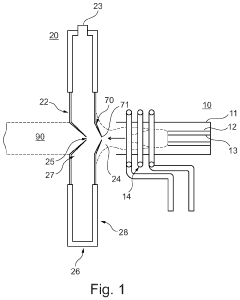
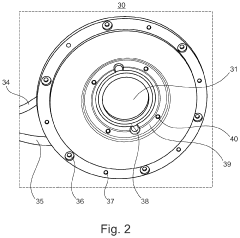
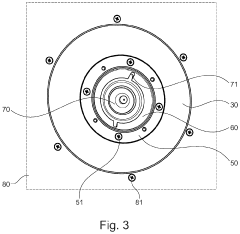
- An ICP source with a vertically oriented plasma torch and injector tube allows sample introduction along a downwards-pointing vertical direction, reducing dependence on carrier gas flow and enabling 100% transport efficiency by utilizing gravity, and includes a metallic cooling plate and electromagnetic coupling element for efficient plasma generation.
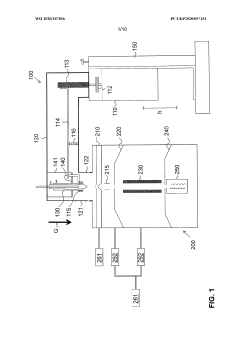
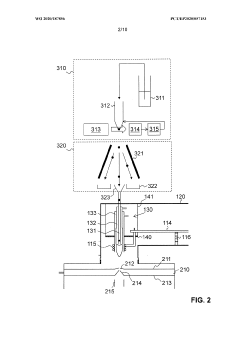
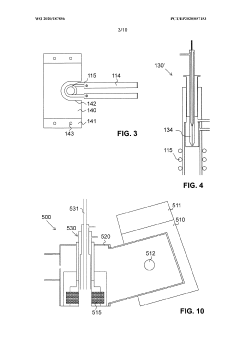
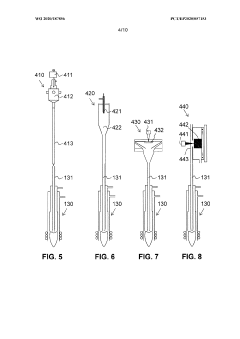
Cooling Plate for ICP-MS
PatentActiveUS20200194247A1
Innovation
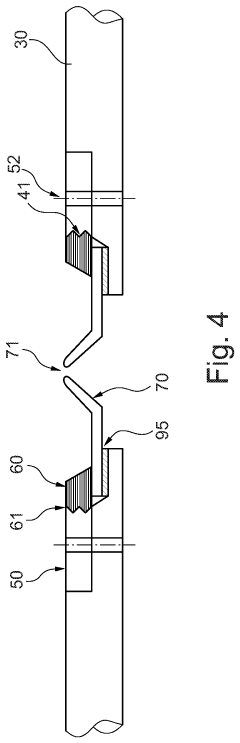
- A bronze cooling plate is used, which provides sufficient thermal conductivity and enhanced chemical resistance, eliminating the need for a corrosion-resistant coating and reducing matrix deposition effects, thereby stabilizing the sampling interface.
Sample Preparation Techniques for Optimal MS Performance
Sample preparation represents a critical determinant in the successful analysis of metal complexes using mass spectrometry techniques. For ICP-MS analysis, sample preparation typically begins with acid digestion to break down complex matrices and release metal ions. This process often employs combinations of nitric acid, hydrochloric acid, and hydrogen peroxide under controlled temperature conditions, with microwave-assisted digestion systems offering advantages in efficiency and reproducibility.
In contrast, ESI-MS requires gentler preparation approaches to preserve the integrity of metal complexes. Samples are typically dissolved in MS-compatible solvents such as methanol, acetonitrile, or water-organic mixtures with volatile additives like formic acid or ammonium acetate. The solvent composition must be carefully optimized to maintain complex stability while ensuring efficient ionization.
Pre-concentration techniques play a vital role in enhancing detectability for both methods. For ICP-MS, solid-phase extraction (SPE) and chelating resins can effectively separate and concentrate target metals from complex matrices. ESI-MS may benefit from liquid-liquid extraction or specialized SPE cartridges designed to retain intact metal complexes while removing interfering components.
Matrix effects present significant challenges in both techniques. For ICP-MS, internal standardization using elements with similar mass and ionization potential to the analytes helps compensate for matrix-induced signal suppression or enhancement. ESI-MS often requires more extensive clean-up procedures, as matrix components can dramatically affect ionization efficiency and cause ion suppression.
The physical state of samples also dictates preparation strategies. Solid samples for ICP-MS typically undergo complete dissolution, while ESI-MS may employ extraction techniques that selectively isolate intact complexes. Liquid samples generally require filtration through 0.22 μm filters to remove particulates that could clog the nebulizer or spray capillary.
Stability considerations are particularly important for metal complexes. ESI-MS sample preparation must minimize exposure to conditions that might alter complex equilibria or cause ligand exchange. This often necessitates careful pH control and avoidance of strong redox agents. ICP-MS preparation, while more aggressive, must ensure complete recovery of target metals without losses through precipitation or volatilization.
Advanced techniques such as field-flow fractionation or size exclusion chromatography prior to MS analysis can provide additional separation capabilities, particularly valuable for complex environmental or biological samples containing multiple metal species with varying molecular weights and chemical properties.
In contrast, ESI-MS requires gentler preparation approaches to preserve the integrity of metal complexes. Samples are typically dissolved in MS-compatible solvents such as methanol, acetonitrile, or water-organic mixtures with volatile additives like formic acid or ammonium acetate. The solvent composition must be carefully optimized to maintain complex stability while ensuring efficient ionization.
Pre-concentration techniques play a vital role in enhancing detectability for both methods. For ICP-MS, solid-phase extraction (SPE) and chelating resins can effectively separate and concentrate target metals from complex matrices. ESI-MS may benefit from liquid-liquid extraction or specialized SPE cartridges designed to retain intact metal complexes while removing interfering components.
Matrix effects present significant challenges in both techniques. For ICP-MS, internal standardization using elements with similar mass and ionization potential to the analytes helps compensate for matrix-induced signal suppression or enhancement. ESI-MS often requires more extensive clean-up procedures, as matrix components can dramatically affect ionization efficiency and cause ion suppression.
The physical state of samples also dictates preparation strategies. Solid samples for ICP-MS typically undergo complete dissolution, while ESI-MS may employ extraction techniques that selectively isolate intact complexes. Liquid samples generally require filtration through 0.22 μm filters to remove particulates that could clog the nebulizer or spray capillary.
Stability considerations are particularly important for metal complexes. ESI-MS sample preparation must minimize exposure to conditions that might alter complex equilibria or cause ligand exchange. This often necessitates careful pH control and avoidance of strong redox agents. ICP-MS preparation, while more aggressive, must ensure complete recovery of target metals without losses through precipitation or volatilization.
Advanced techniques such as field-flow fractionation or size exclusion chromatography prior to MS analysis can provide additional separation capabilities, particularly valuable for complex environmental or biological samples containing multiple metal species with varying molecular weights and chemical properties.
Environmental and Safety Considerations in MS Applications
Mass spectrometry techniques, particularly ICP-MS and ESI-MS, involve various environmental and safety considerations that must be addressed in laboratory settings. Both techniques generate waste streams containing potentially hazardous materials, including metal-containing solutions, organic solvents, and acidic or basic reagents. ICP-MS typically produces more significant environmental concerns due to its consumption of argon gas and generation of metal-contaminated waste, while ESI-MS primarily raises issues related to organic solvent disposal.
Waste management protocols for ICP-MS must address the proper disposal of solutions containing heavy metals and other potentially toxic elements. These wastes require specialized handling procedures to prevent environmental contamination. In contrast, ESI-MS waste management focuses on the proper disposal of organic solvents, which may present flammability hazards and potential environmental impacts if improperly discharged.
Laboratory safety considerations differ significantly between these techniques. ICP-MS operations involve high-temperature plasma (6000-10000K), presenting thermal hazards and requiring proper ventilation systems to manage ozone generation and metal vapor emissions. The high voltage components in both systems necessitate proper electrical safety protocols, with particular attention to ESI-MS's high voltage electrospray source (typically 2-5kV).
Personal protective equipment requirements include standard laboratory attire for both techniques, with additional considerations for ICP-MS operators due to potential exposure to metal aerosols and acid vapors. Specialized training is essential for operators of both systems, with emphasis on proper sample preparation techniques that minimize exposure to hazardous materials.
Regulatory compliance frameworks governing these technologies include environmental protection regulations for waste disposal, occupational safety standards for laboratory operations, and specific guidelines for handling compressed gases (particularly relevant for ICP-MS). Facilities must maintain proper documentation of waste disposal practices and regularly review safety protocols to ensure compliance with evolving regulations.
Recent advancements in green chemistry approaches have led to developments in both techniques, including reduced sample volumes, more environmentally friendly mobile phases for ESI-MS, and recirculating cooling systems for ICP-MS that minimize water consumption. These innovations reflect the growing emphasis on sustainability in analytical chemistry practices while maintaining analytical performance for metal complex detection.
Waste management protocols for ICP-MS must address the proper disposal of solutions containing heavy metals and other potentially toxic elements. These wastes require specialized handling procedures to prevent environmental contamination. In contrast, ESI-MS waste management focuses on the proper disposal of organic solvents, which may present flammability hazards and potential environmental impacts if improperly discharged.
Laboratory safety considerations differ significantly between these techniques. ICP-MS operations involve high-temperature plasma (6000-10000K), presenting thermal hazards and requiring proper ventilation systems to manage ozone generation and metal vapor emissions. The high voltage components in both systems necessitate proper electrical safety protocols, with particular attention to ESI-MS's high voltage electrospray source (typically 2-5kV).
Personal protective equipment requirements include standard laboratory attire for both techniques, with additional considerations for ICP-MS operators due to potential exposure to metal aerosols and acid vapors. Specialized training is essential for operators of both systems, with emphasis on proper sample preparation techniques that minimize exposure to hazardous materials.
Regulatory compliance frameworks governing these technologies include environmental protection regulations for waste disposal, occupational safety standards for laboratory operations, and specific guidelines for handling compressed gases (particularly relevant for ICP-MS). Facilities must maintain proper documentation of waste disposal practices and regularly review safety protocols to ensure compliance with evolving regulations.
Recent advancements in green chemistry approaches have led to developments in both techniques, including reduced sample volumes, more environmentally friendly mobile phases for ESI-MS, and recirculating cooling systems for ICP-MS that minimize water consumption. These innovations reflect the growing emphasis on sustainability in analytical chemistry practices while maintaining analytical performance for metal complex detection.
Unlock deeper insights with Patsnap Eureka Quick Research — get a full tech report to explore trends and direct your research. Try now!
Generate Your Research Report Instantly with AI Agent
Supercharge your innovation with Patsnap Eureka AI Agent Platform!