

Improving Brain-Computer Interface Accuracy with Advanced Machine Learning
MAR 5, 202610 MIN READ
Generate Your Research Report Instantly with AI Agent
PatSnap Eureka helps you evaluate technical feasibility & market potential.
BCI Technology Background and ML Integration Goals
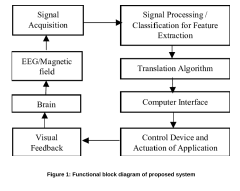
Brain-Computer Interface technology represents a revolutionary paradigm in human-machine interaction, enabling direct communication pathways between neural activity and external devices. The field has evolved from early experimental concepts in the 1970s to sophisticated systems capable of translating neural signals into actionable commands for prosthetic devices, computer interfaces, and therapeutic applications. This evolution has been marked by significant breakthroughs in signal acquisition, processing methodologies, and real-world implementation strategies.
The historical trajectory of BCI development reveals distinct phases of technological advancement. Initial research focused primarily on invasive electrode-based systems that could capture high-resolution neural signals directly from cortical tissue. Subsequently, non-invasive approaches utilizing electroencephalography, functional magnetic resonance imaging, and near-infrared spectroscopy emerged as viable alternatives, expanding accessibility while addressing safety concerns inherent in surgical implantation procedures.
Contemporary BCI systems face persistent challenges in signal quality, processing speed, and classification accuracy that limit their practical deployment. Traditional signal processing approaches, including spectral analysis and time-domain feature extraction, often struggle with the inherent variability and noise characteristics of neural signals. These limitations have created a compelling need for more sophisticated analytical frameworks capable of handling complex, high-dimensional neural data patterns.
Machine learning integration represents the next evolutionary leap in BCI technology, offering unprecedented opportunities to enhance system performance across multiple dimensions. Advanced algorithms can potentially address fundamental challenges including signal artifact removal, feature selection optimization, and adaptive classification that responds to individual user characteristics and changing neural patterns over time.
The primary technical objectives for ML-enhanced BCI systems encompass several critical areas. Accuracy improvement through sophisticated pattern recognition algorithms aims to reduce classification errors that currently limit system reliability. Real-time processing capabilities must be enhanced to minimize latency between neural signal acquisition and system response, ensuring seamless user experience in practical applications.
Adaptive learning mechanisms represent another crucial goal, enabling systems to continuously refine their performance based on individual user patterns and evolving neural signatures. This personalization aspect is essential for long-term usability and effectiveness across diverse user populations with varying neurological conditions and cognitive capabilities.
Furthermore, robustness enhancement through advanced preprocessing and noise reduction techniques aims to improve system performance across different environmental conditions and user states. These improvements are fundamental for transitioning BCI technology from controlled laboratory settings to real-world applications where reliability and consistency are paramount for user acceptance and safety.
The historical trajectory of BCI development reveals distinct phases of technological advancement. Initial research focused primarily on invasive electrode-based systems that could capture high-resolution neural signals directly from cortical tissue. Subsequently, non-invasive approaches utilizing electroencephalography, functional magnetic resonance imaging, and near-infrared spectroscopy emerged as viable alternatives, expanding accessibility while addressing safety concerns inherent in surgical implantation procedures.
Contemporary BCI systems face persistent challenges in signal quality, processing speed, and classification accuracy that limit their practical deployment. Traditional signal processing approaches, including spectral analysis and time-domain feature extraction, often struggle with the inherent variability and noise characteristics of neural signals. These limitations have created a compelling need for more sophisticated analytical frameworks capable of handling complex, high-dimensional neural data patterns.
Machine learning integration represents the next evolutionary leap in BCI technology, offering unprecedented opportunities to enhance system performance across multiple dimensions. Advanced algorithms can potentially address fundamental challenges including signal artifact removal, feature selection optimization, and adaptive classification that responds to individual user characteristics and changing neural patterns over time.
The primary technical objectives for ML-enhanced BCI systems encompass several critical areas. Accuracy improvement through sophisticated pattern recognition algorithms aims to reduce classification errors that currently limit system reliability. Real-time processing capabilities must be enhanced to minimize latency between neural signal acquisition and system response, ensuring seamless user experience in practical applications.
Adaptive learning mechanisms represent another crucial goal, enabling systems to continuously refine their performance based on individual user patterns and evolving neural signatures. This personalization aspect is essential for long-term usability and effectiveness across diverse user populations with varying neurological conditions and cognitive capabilities.
Furthermore, robustness enhancement through advanced preprocessing and noise reduction techniques aims to improve system performance across different environmental conditions and user states. These improvements are fundamental for transitioning BCI technology from controlled laboratory settings to real-world applications where reliability and consistency are paramount for user acceptance and safety.
Market Demand for High-Accuracy BCI Systems
The global brain-computer interface market is experiencing unprecedented growth driven by increasing demand for high-accuracy systems across multiple sectors. Healthcare applications represent the largest market segment, with neurological rehabilitation centers, hospitals, and specialized clinics seeking advanced BCI solutions for treating conditions such as stroke, spinal cord injuries, and neurodegenerative diseases. The precision requirements in medical applications are particularly stringent, as therapeutic outcomes directly depend on the system's ability to accurately decode neural signals and translate them into meaningful control commands.
Military and defense sectors constitute another significant demand driver, with defense agencies worldwide investing heavily in BCI technologies for enhanced soldier performance and next-generation human-machine interfaces. These applications require extremely high accuracy rates to ensure operational reliability in critical missions, creating substantial market opportunities for advanced machine learning-enhanced BCI systems.
The consumer electronics market is emerging as a rapidly expanding segment, fueled by growing interest in gaming, virtual reality, and smart home applications. Major technology companies are increasingly incorporating BCI capabilities into their product roadmaps, recognizing the potential for creating entirely new user interaction paradigms. Consumer applications, while having different accuracy requirements than medical uses, still demand reliable performance to ensure user satisfaction and market adoption.
Research institutions and universities represent a steady demand source, requiring high-precision BCI systems for advancing neuroscience research and developing next-generation applications. Academic markets often serve as testing grounds for cutting-edge technologies before they transition to commercial applications.
The assistive technology market shows particularly strong growth potential, driven by aging populations in developed countries and increasing awareness of accessibility needs. Individuals with motor disabilities require highly accurate BCI systems for communication devices, wheelchair control, and computer interaction, creating sustained demand for precision-focused solutions.
Market demand is further amplified by regulatory approvals and clinical validations that are expanding the addressable market for medical BCI applications. As accuracy improvements through advanced machine learning enable new therapeutic possibilities, healthcare providers are increasingly willing to invest in these sophisticated systems, driving market expansion across multiple geographic regions.
Military and defense sectors constitute another significant demand driver, with defense agencies worldwide investing heavily in BCI technologies for enhanced soldier performance and next-generation human-machine interfaces. These applications require extremely high accuracy rates to ensure operational reliability in critical missions, creating substantial market opportunities for advanced machine learning-enhanced BCI systems.
The consumer electronics market is emerging as a rapidly expanding segment, fueled by growing interest in gaming, virtual reality, and smart home applications. Major technology companies are increasingly incorporating BCI capabilities into their product roadmaps, recognizing the potential for creating entirely new user interaction paradigms. Consumer applications, while having different accuracy requirements than medical uses, still demand reliable performance to ensure user satisfaction and market adoption.
Research institutions and universities represent a steady demand source, requiring high-precision BCI systems for advancing neuroscience research and developing next-generation applications. Academic markets often serve as testing grounds for cutting-edge technologies before they transition to commercial applications.
The assistive technology market shows particularly strong growth potential, driven by aging populations in developed countries and increasing awareness of accessibility needs. Individuals with motor disabilities require highly accurate BCI systems for communication devices, wheelchair control, and computer interaction, creating sustained demand for precision-focused solutions.
Market demand is further amplified by regulatory approvals and clinical validations that are expanding the addressable market for medical BCI applications. As accuracy improvements through advanced machine learning enable new therapeutic possibilities, healthcare providers are increasingly willing to invest in these sophisticated systems, driving market expansion across multiple geographic regions.
Current BCI-ML State and Signal Processing Challenges
Brain-computer interfaces currently face significant challenges in achieving consistent and reliable signal acquisition and processing. The primary obstacle lies in the inherently noisy nature of neural signals, which are susceptible to various forms of interference including electrical artifacts, muscle movements, and environmental electromagnetic disturbances. These noise sources can substantially degrade signal quality and compromise the accuracy of downstream machine learning algorithms.
Contemporary BCI systems predominantly rely on electroencephalography (EEG) and electrocorticography (ECoG) for signal acquisition, each presenting distinct technical limitations. EEG signals suffer from poor spatial resolution due to skull attenuation and volume conduction effects, while ECoG requires invasive surgical procedures that limit widespread adoption. The temporal resolution, though adequate for many applications, still presents challenges for real-time processing requirements in high-performance BCI systems.
Signal preprocessing remains a critical bottleneck in current BCI-ML pipelines. Traditional filtering approaches, including bandpass filtering and common average referencing, often fail to adequately address the complex, non-stationary nature of neural signals. Artifact removal techniques such as independent component analysis (ICA) and principal component analysis (PCA) show limited effectiveness when dealing with overlapping signal components or when artifacts share similar spectral characteristics with target neural activity.
Feature extraction methodologies in existing BCI systems face substantial constraints in capturing the full complexity of neural information. Conventional approaches focus on power spectral density, event-related potentials, and time-frequency representations, but these methods may not adequately represent the intricate spatiotemporal dynamics of brain activity. The curse of dimensionality further complicates feature selection, as high-dimensional neural data often leads to overfitting in machine learning models.
Current machine learning implementations in BCI systems predominantly utilize classical algorithms such as support vector machines, linear discriminant analysis, and basic neural networks. While these approaches have demonstrated reasonable performance in controlled laboratory settings, they struggle with real-world variability, inter-subject differences, and long-term signal stability. The lack of adaptive learning capabilities in these systems results in performance degradation over time due to electrode impedance changes and neural plasticity.
Cross-session and cross-subject generalization represents another fundamental challenge in contemporary BCI-ML systems. Existing models typically require extensive calibration procedures for each user and session, limiting practical usability. The high inter-individual variability in neural signal patterns, combined with temporal non-stationarity, necessitates more sophisticated machine learning approaches capable of handling these variations without compromising accuracy or requiring frequent recalibration procedures.
Contemporary BCI systems predominantly rely on electroencephalography (EEG) and electrocorticography (ECoG) for signal acquisition, each presenting distinct technical limitations. EEG signals suffer from poor spatial resolution due to skull attenuation and volume conduction effects, while ECoG requires invasive surgical procedures that limit widespread adoption. The temporal resolution, though adequate for many applications, still presents challenges for real-time processing requirements in high-performance BCI systems.
Signal preprocessing remains a critical bottleneck in current BCI-ML pipelines. Traditional filtering approaches, including bandpass filtering and common average referencing, often fail to adequately address the complex, non-stationary nature of neural signals. Artifact removal techniques such as independent component analysis (ICA) and principal component analysis (PCA) show limited effectiveness when dealing with overlapping signal components or when artifacts share similar spectral characteristics with target neural activity.
Feature extraction methodologies in existing BCI systems face substantial constraints in capturing the full complexity of neural information. Conventional approaches focus on power spectral density, event-related potentials, and time-frequency representations, but these methods may not adequately represent the intricate spatiotemporal dynamics of brain activity. The curse of dimensionality further complicates feature selection, as high-dimensional neural data often leads to overfitting in machine learning models.
Current machine learning implementations in BCI systems predominantly utilize classical algorithms such as support vector machines, linear discriminant analysis, and basic neural networks. While these approaches have demonstrated reasonable performance in controlled laboratory settings, they struggle with real-world variability, inter-subject differences, and long-term signal stability. The lack of adaptive learning capabilities in these systems results in performance degradation over time due to electrode impedance changes and neural plasticity.
Cross-session and cross-subject generalization represents another fundamental challenge in contemporary BCI-ML systems. Existing models typically require extensive calibration procedures for each user and session, limiting practical usability. The high inter-individual variability in neural signal patterns, combined with temporal non-stationarity, necessitates more sophisticated machine learning approaches capable of handling these variations without compromising accuracy or requiring frequent recalibration procedures.
Existing ML Solutions for BCI Signal Enhancement
01 Signal processing and feature extraction methods
Advanced signal processing techniques and feature extraction algorithms are employed to improve the accuracy of brain-computer interfaces. These methods involve filtering noise from EEG signals, extracting relevant features from brain activity patterns, and applying machine learning algorithms to classify different mental states or intentions. Techniques such as wavelet transforms, independent component analysis, and deep learning approaches help to enhance the signal-to-noise ratio and improve the reliability of decoded brain signals.- Signal processing and feature extraction methods: Advanced signal processing techniques are employed to extract meaningful features from brain signals, improving the accuracy of brain-computer interfaces. These methods include filtering, artifact removal, time-frequency analysis, and pattern recognition algorithms that enhance the quality of neural signals before classification. Machine learning and deep learning approaches are utilized to identify relevant features that correlate with user intentions, thereby increasing the overall system accuracy.
- Electrode design and placement optimization: The accuracy of brain-computer interfaces is significantly influenced by the design and positioning of electrodes used to capture brain signals. Optimized electrode configurations, including the number, type, and spatial arrangement of sensors, can improve signal quality and reduce noise interference. Novel electrode materials and structures are developed to enhance contact with the scalp or brain tissue, ensuring more reliable signal acquisition and higher classification accuracy.
- Adaptive and personalized calibration systems: Personalized calibration methods are implemented to adapt brain-computer interface systems to individual users, accounting for variations in brain signal patterns across different people. These adaptive systems continuously learn and adjust to user-specific characteristics, improving accuracy over time. Calibration procedures may involve initial training sessions and ongoing adjustments based on real-time feedback, ensuring optimal performance for each user.
- Multi-modal integration and hybrid approaches: Combining multiple types of brain signals or integrating brain-computer interfaces with other input modalities can enhance overall system accuracy. Hybrid systems may utilize electroencephalography, functional near-infrared spectroscopy, or other neuroimaging techniques simultaneously to capture complementary information. This multi-modal approach provides redundancy and cross-validation of detected intentions, leading to more robust and accurate interface performance.
- Real-time feedback and error correction mechanisms: Implementing real-time feedback systems and error correction protocols can significantly improve the accuracy of brain-computer interfaces. These mechanisms allow users to receive immediate information about system interpretations of their intentions, enabling them to adjust their mental strategies accordingly. Error detection algorithms identify and correct misclassifications, while continuous monitoring ensures that the system maintains high accuracy during extended use periods.
02 Electrode design and placement optimization
The accuracy of brain-computer interfaces can be significantly improved through optimized electrode design and strategic placement on the scalp or cortical surface. This includes the development of high-density electrode arrays, flexible electrode materials, and algorithms for determining optimal electrode positions based on individual brain anatomy. Proper electrode configuration ensures better signal acquisition from target brain regions and reduces interference from non-relevant neural activity.Expand Specific Solutions03 Adaptive calibration and user training systems
Adaptive calibration methods and user training protocols are implemented to enhance brain-computer interface accuracy over time. These systems continuously adjust decoding parameters based on user performance and changing brain signal characteristics. Training paradigms help users develop better control over their brain signals through neurofeedback and practice sessions, while adaptive algorithms account for signal variability across different sessions and environmental conditions.Expand Specific Solutions04 Multi-modal integration and hybrid approaches
Combining multiple signal modalities and hybrid brain-computer interface approaches can significantly improve accuracy. This involves integrating different types of brain signals such as EEG, fNIRS, or EMG, or combining brain signals with other physiological measurements. Hybrid systems leverage the complementary strengths of different modalities to provide more robust and accurate decoding of user intentions, particularly in complex or noisy environments.Expand Specific Solutions05 Real-time error detection and correction mechanisms
Implementation of real-time error detection and correction mechanisms helps maintain high accuracy in brain-computer interface systems. These mechanisms identify when the system has misinterpreted user intentions and provide opportunities for correction through error-related potentials or confirmation protocols. Feedback systems alert users to potential errors and allow for immediate correction, improving overall system reliability and user confidence in the interface.Expand Specific Solutions
Key Players in BCI and Neural Interface Industry
The brain-computer interface (BCI) field is experiencing rapid evolution driven by advanced machine learning integration, currently transitioning from early research phases to practical applications. The market demonstrates significant growth potential, with increasing investment from both academic institutions and technology corporations seeking to commercialize neural interface solutions. Technology maturity varies considerably across the competitive landscape, with established tech giants like IBM, Huawei, and OpenAI leveraging their AI expertise to enhance signal processing algorithms, while specialized companies such as Neurable focus exclusively on BCI development. Leading research universities including Columbia, Tsinghua, Caltech, and Cornell contribute fundamental breakthroughs in neural decoding methodologies. European research organizations like CEA and CNRS advance hardware innovations, while telecommunications companies such as Ericsson explore BCI applications in next-generation communication systems. The convergence of machine learning sophistication and neural interface technology positions this sector for substantial advancement, though commercial viability remains dependent on overcoming technical challenges in signal accuracy and real-time processing capabilities.
Neurable, Inc.
Technical Solution: Neurable develops advanced brain-computer interface technology using machine learning algorithms to decode neural signals with high precision. Their approach combines real-time signal processing with adaptive learning models that continuously improve accuracy through user interaction. The company's proprietary algorithms can distinguish between different types of brain activity patterns, enabling intuitive control of digital devices through thought alone. Their system incorporates noise reduction techniques and feature extraction methods specifically designed for EEG-based BCIs, achieving significant improvements in classification accuracy compared to traditional approaches.
Strengths: Specialized BCI focus with commercial applications, real-time processing capabilities. Weaknesses: Limited to non-invasive EEG signals, smaller scale compared to tech giants.
The Trustees of Columbia University in The City of New York
Technical Solution: Columbia University has pioneered advanced machine learning approaches for brain-computer interfaces through their neuroscience and engineering departments. Their research focuses on developing novel deep learning architectures specifically designed for neural signal decoding, including graph neural networks that can model the complex connectivity patterns in brain networks. The university's BCI research incorporates reinforcement learning techniques to create adaptive systems that improve performance through continuous interaction with users. Their work includes developing interpretable machine learning models that can provide insights into the underlying neural mechanisms while maintaining high decoding accuracy for practical BCI applications.
Strengths: Strong academic research foundation, interdisciplinary collaboration, innovative algorithm development. Weaknesses: Limited commercial scalability, longer development timelines for practical applications.
Core ML Innovations in Neural Signal Decoding
Optimized learning model for brain computer interface
PatentPendingIN202441009019A
Innovation
- The Optimized Learning Model leverages deep learning algorithms, such as convolutional neural networks (CNNs) and recurrent neural networks (RNNs), combined with optimization techniques like stochastic gradient descent and adaptive learning rate methods, to automatically extract features from EEG data, enhance signal processing, and incorporate user feedback for personalized adaptation, improving accuracy and adaptability in BCI classification.
Adaptive brain-computer interface decoding method based on multi-model dynamic integration
PatentActiveUS12106204B2
Innovation
- An adaptive brain-computer interface decoding method using a multi-model dynamic ensemble, which dynamically characterizes the relationship between neural and motion signals with a pool of candidate models, including linear functions and neural networks, and employs a Bayesian update mechanism to automatically select and combine models, reducing the impact of signal instability.


Regulatory Framework for Neural Interface Devices
The regulatory landscape for neural interface devices represents one of the most complex and evolving areas in medical device oversight, particularly as brain-computer interfaces incorporating advanced machine learning capabilities push the boundaries of traditional regulatory frameworks. Current regulatory approaches primarily fall under existing medical device classifications, with the FDA treating most BCIs as Class II or Class III devices depending on their invasiveness and risk profile.
The FDA's breakthrough device designation has accelerated several BCI applications, yet significant gaps remain in addressing machine learning-specific challenges. Traditional regulatory pathways focus on static device performance, while ML-enhanced BCIs continuously adapt and learn, creating unprecedented challenges for validation and post-market surveillance. The European Union's Medical Device Regulation (MDR) similarly struggles with adaptive algorithms, requiring manufacturers to demonstrate ongoing safety and efficacy as systems evolve.
Key regulatory considerations center on data privacy, algorithmic transparency, and long-term safety monitoring. Neural data represents the most intimate form of personal information, necessitating robust cybersecurity frameworks and consent mechanisms that current regulations inadequately address. The FDA's recent guidance on Software as Medical Device (SaMD) provides some direction, but lacks specificity for neural interfaces that process brain signals in real-time.
International harmonization efforts through ISO standards and IEC guidelines are emerging, with ISO 14155 for clinical investigations and ISO 27001 for information security management becoming increasingly relevant. However, these standards require adaptation for neural interface-specific applications, particularly regarding signal processing algorithms and neural data handling protocols.
The regulatory approval process typically involves extensive preclinical testing, followed by phased clinical trials demonstrating safety and efficacy. For ML-enhanced BCIs, regulators increasingly require algorithmic impact assessments, bias evaluation protocols, and continuous monitoring systems. Post-market surveillance requirements are expanding to include algorithm performance tracking and adverse event reporting related to ML decision-making processes.
Future regulatory evolution will likely incorporate adaptive regulatory pathways, allowing for iterative approval processes that accommodate the learning nature of advanced BCI systems while maintaining rigorous safety standards.
The FDA's breakthrough device designation has accelerated several BCI applications, yet significant gaps remain in addressing machine learning-specific challenges. Traditional regulatory pathways focus on static device performance, while ML-enhanced BCIs continuously adapt and learn, creating unprecedented challenges for validation and post-market surveillance. The European Union's Medical Device Regulation (MDR) similarly struggles with adaptive algorithms, requiring manufacturers to demonstrate ongoing safety and efficacy as systems evolve.
Key regulatory considerations center on data privacy, algorithmic transparency, and long-term safety monitoring. Neural data represents the most intimate form of personal information, necessitating robust cybersecurity frameworks and consent mechanisms that current regulations inadequately address. The FDA's recent guidance on Software as Medical Device (SaMD) provides some direction, but lacks specificity for neural interfaces that process brain signals in real-time.
International harmonization efforts through ISO standards and IEC guidelines are emerging, with ISO 14155 for clinical investigations and ISO 27001 for information security management becoming increasingly relevant. However, these standards require adaptation for neural interface-specific applications, particularly regarding signal processing algorithms and neural data handling protocols.
The regulatory approval process typically involves extensive preclinical testing, followed by phased clinical trials demonstrating safety and efficacy. For ML-enhanced BCIs, regulators increasingly require algorithmic impact assessments, bias evaluation protocols, and continuous monitoring systems. Post-market surveillance requirements are expanding to include algorithm performance tracking and adverse event reporting related to ML decision-making processes.
Future regulatory evolution will likely incorporate adaptive regulatory pathways, allowing for iterative approval processes that accommodate the learning nature of advanced BCI systems while maintaining rigorous safety standards.
Ethical Implications of Advanced BCI Technologies
The integration of advanced machine learning algorithms into brain-computer interfaces represents a paradigm shift that introduces profound ethical considerations requiring immediate attention from researchers, policymakers, and society at large. As BCI accuracy improves through sophisticated neural network architectures and deep learning methodologies, the potential for these systems to decode increasingly complex neural patterns raises fundamental questions about mental privacy, cognitive autonomy, and the boundaries of human consciousness.
Privacy concerns emerge as the most pressing ethical challenge, particularly as enhanced machine learning models demonstrate unprecedented capability in interpreting neural signals with granular precision. The ability to decode not only intended motor commands but potentially abstract thoughts, emotions, and memories creates an unprecedented vulnerability in human privacy. Unlike traditional biometric data, neural information represents the most intimate aspects of human experience, making unauthorized access or misuse particularly invasive.
Informed consent becomes increasingly complex as BCI systems evolve beyond simple command-based interactions toward more sophisticated neural interpretation. Users may not fully comprehend the extent of neural information being collected, processed, or potentially stored by advanced machine learning algorithms. The dynamic nature of these learning systems means that their capabilities may expand beyond initial consent parameters, creating ongoing ethical obligations for transparent communication and renewed consent processes.
The enhancement of human cognitive capabilities through improved BCI accuracy raises questions about fairness and social equity. As these technologies become more precise and accessible, disparities in access could create new forms of cognitive inequality, where enhanced individuals gain significant advantages in professional, educational, and social contexts. This technological stratification could fundamentally alter societal structures and challenge existing concepts of merit and achievement.
Data ownership and algorithmic transparency present additional ethical dimensions, as the neural data used to train machine learning models becomes increasingly valuable for both therapeutic and commercial applications. The proprietary nature of advanced algorithms may conflict with patients' rights to understand how their neural information is being processed and utilized, particularly when these systems make decisions affecting their treatment or quality of life.
Finally, the potential for neural manipulation or influence through sophisticated BCI systems demands careful consideration of autonomy and free will. As machine learning algorithms become more adept at predicting and potentially influencing neural patterns, the distinction between therapeutic intervention and cognitive manipulation becomes increasingly blurred, necessitating robust ethical frameworks to protect individual agency and mental integrity.
Privacy concerns emerge as the most pressing ethical challenge, particularly as enhanced machine learning models demonstrate unprecedented capability in interpreting neural signals with granular precision. The ability to decode not only intended motor commands but potentially abstract thoughts, emotions, and memories creates an unprecedented vulnerability in human privacy. Unlike traditional biometric data, neural information represents the most intimate aspects of human experience, making unauthorized access or misuse particularly invasive.
Informed consent becomes increasingly complex as BCI systems evolve beyond simple command-based interactions toward more sophisticated neural interpretation. Users may not fully comprehend the extent of neural information being collected, processed, or potentially stored by advanced machine learning algorithms. The dynamic nature of these learning systems means that their capabilities may expand beyond initial consent parameters, creating ongoing ethical obligations for transparent communication and renewed consent processes.
The enhancement of human cognitive capabilities through improved BCI accuracy raises questions about fairness and social equity. As these technologies become more precise and accessible, disparities in access could create new forms of cognitive inequality, where enhanced individuals gain significant advantages in professional, educational, and social contexts. This technological stratification could fundamentally alter societal structures and challenge existing concepts of merit and achievement.
Data ownership and algorithmic transparency present additional ethical dimensions, as the neural data used to train machine learning models becomes increasingly valuable for both therapeutic and commercial applications. The proprietary nature of advanced algorithms may conflict with patients' rights to understand how their neural information is being processed and utilized, particularly when these systems make decisions affecting their treatment or quality of life.
Finally, the potential for neural manipulation or influence through sophisticated BCI systems demands careful consideration of autonomy and free will. As machine learning algorithms become more adept at predicting and potentially influencing neural patterns, the distinction between therapeutic intervention and cognitive manipulation becomes increasingly blurred, necessitating robust ethical frameworks to protect individual agency and mental integrity.
Unlock deeper insights with PatSnap Eureka Quick Research — get a full tech report to explore trends and direct your research. Try now!
Generate Your Research Report Instantly with AI Agent
Supercharge your innovation with PatSnap Eureka AI Agent Platform!