
K24 Engine Infrastructure: Analyzing Market and Resource Needs
JUL 3, 20258 MIN READ
Generate Your Research Report Instantly with AI Agent
Patsnap Eureka helps you evaluate technical feasibility & market potential.
K24 Engine Background and Objectives
The K24 engine represents a significant milestone in automotive engineering, marking a new era of high-performance, fuel-efficient powertrains. Developed as a response to increasing demands for both power and sustainability, the K24 engine infrastructure aims to revolutionize the automotive industry by offering a versatile platform that can be adapted to various vehicle types and market segments.
The evolution of the K24 engine can be traced back to the early 2000s when manufacturers began exploring ways to improve engine efficiency without compromising performance. Over the years, advancements in materials science, combustion technology, and electronic control systems have contributed to the continuous refinement of the K24 platform. Today, it stands as a testament to the industry's commitment to innovation and environmental responsibility.
The primary objective of the K24 engine infrastructure is to provide a robust and adaptable foundation for next-generation powertrains. This includes achieving higher power output, improved fuel efficiency, and reduced emissions while maintaining reliability and longevity. Additionally, the K24 platform aims to support the integration of hybrid and electric technologies, ensuring its relevance in an increasingly electrified automotive landscape.
From a technical perspective, the K24 engine incorporates several cutting-edge features. These include variable valve timing and lift systems, direct fuel injection, advanced thermal management, and lightweight construction materials. The engine's modular design allows for easy customization and adaptation to different vehicle applications, from compact cars to SUVs and light trucks.
Market trends indicate a growing demand for engines that can deliver both performance and efficiency. The K24 infrastructure is positioned to meet these needs by offering a scalable solution that can be tailored to specific market requirements. This flexibility is crucial in addressing the diverse preferences of consumers across different regions and vehicle segments.
As environmental regulations become more stringent worldwide, the K24 engine's focus on emissions reduction and fuel efficiency aligns with global sustainability goals. This positions the technology as a key player in the automotive industry's efforts to meet increasingly stringent emissions standards while satisfying consumer demands for performance and drivability.
Looking ahead, the K24 engine infrastructure is expected to play a pivotal role in bridging the gap between traditional internal combustion engines and future powertrain technologies. Its adaptability to hybrid systems and potential for further electrification make it a strategic asset for manufacturers navigating the transition to low-emission and zero-emission vehicles.
The evolution of the K24 engine can be traced back to the early 2000s when manufacturers began exploring ways to improve engine efficiency without compromising performance. Over the years, advancements in materials science, combustion technology, and electronic control systems have contributed to the continuous refinement of the K24 platform. Today, it stands as a testament to the industry's commitment to innovation and environmental responsibility.
The primary objective of the K24 engine infrastructure is to provide a robust and adaptable foundation for next-generation powertrains. This includes achieving higher power output, improved fuel efficiency, and reduced emissions while maintaining reliability and longevity. Additionally, the K24 platform aims to support the integration of hybrid and electric technologies, ensuring its relevance in an increasingly electrified automotive landscape.
From a technical perspective, the K24 engine incorporates several cutting-edge features. These include variable valve timing and lift systems, direct fuel injection, advanced thermal management, and lightweight construction materials. The engine's modular design allows for easy customization and adaptation to different vehicle applications, from compact cars to SUVs and light trucks.
Market trends indicate a growing demand for engines that can deliver both performance and efficiency. The K24 infrastructure is positioned to meet these needs by offering a scalable solution that can be tailored to specific market requirements. This flexibility is crucial in addressing the diverse preferences of consumers across different regions and vehicle segments.
As environmental regulations become more stringent worldwide, the K24 engine's focus on emissions reduction and fuel efficiency aligns with global sustainability goals. This positions the technology as a key player in the automotive industry's efforts to meet increasingly stringent emissions standards while satisfying consumer demands for performance and drivability.
Looking ahead, the K24 engine infrastructure is expected to play a pivotal role in bridging the gap between traditional internal combustion engines and future powertrain technologies. Its adaptability to hybrid systems and potential for further electrification make it a strategic asset for manufacturers navigating the transition to low-emission and zero-emission vehicles.
Market Analysis for K24 Engine Applications
The K24 engine, a prominent player in the automotive industry, has garnered significant attention due to its advanced technology and potential applications. Market analysis reveals a growing demand for high-performance, fuel-efficient engines across various sectors, particularly in passenger vehicles, light commercial vehicles, and marine applications.
In the passenger vehicle segment, the K24 engine has shown strong market potential, especially in mid-size sedans and compact SUVs. Consumers are increasingly prioritizing fuel efficiency without compromising on power, making the K24 an attractive option. The engine's balance of performance and economy aligns well with current market trends, potentially capturing a substantial market share in this segment.
The light commercial vehicle sector presents another promising market for K24 engine applications. With businesses focusing on reducing operational costs and meeting stricter emission standards, the K24's efficiency and reliability make it a compelling choice for fleet operators and small businesses. This sector's growth, driven by e-commerce and last-mile delivery services, further enhances the market prospects for K24-equipped vehicles.
In the marine industry, there's an emerging interest in K24 engine applications for small to medium-sized boats. The engine's compact design, coupled with its power output, makes it suitable for various recreational and commercial marine vessels. As environmental regulations tighten in the marine sector, the K24's relatively low emissions profile could provide a competitive edge.
Market trends indicate a shift towards electrification and hybrid powertrains. While this might seem challenging for traditional combustion engines, it presents an opportunity for K24 technology. The engine's adaptability for hybrid configurations could position it as a transitional technology, bridging the gap between conventional and fully electric powertrains.
Geographically, mature automotive markets like North America and Europe show steady demand for K24-equipped vehicles, primarily driven by stringent emission norms and consumer preference for fuel-efficient options. Emerging markets in Asia and Latin America present significant growth potential, as rising disposable incomes and expanding middle-class populations drive demand for higher-performance vehicles.
However, market challenges exist. The push towards full electrification in some regions may limit long-term growth prospects. Additionally, competition from other advanced internal combustion engines and alternative powertrain technologies could impact market share. To maintain competitiveness, continuous innovation in K24 technology, focusing on further improving efficiency and reducing emissions, will be crucial.
In conclusion, the market analysis for K24 engine applications reveals a positive outlook across multiple sectors. Its versatility, efficiency, and adaptability position it well to meet current market demands and navigate future trends. Strategic positioning and ongoing development will be key to maximizing its market potential in an evolving automotive landscape.
In the passenger vehicle segment, the K24 engine has shown strong market potential, especially in mid-size sedans and compact SUVs. Consumers are increasingly prioritizing fuel efficiency without compromising on power, making the K24 an attractive option. The engine's balance of performance and economy aligns well with current market trends, potentially capturing a substantial market share in this segment.
The light commercial vehicle sector presents another promising market for K24 engine applications. With businesses focusing on reducing operational costs and meeting stricter emission standards, the K24's efficiency and reliability make it a compelling choice for fleet operators and small businesses. This sector's growth, driven by e-commerce and last-mile delivery services, further enhances the market prospects for K24-equipped vehicles.
In the marine industry, there's an emerging interest in K24 engine applications for small to medium-sized boats. The engine's compact design, coupled with its power output, makes it suitable for various recreational and commercial marine vessels. As environmental regulations tighten in the marine sector, the K24's relatively low emissions profile could provide a competitive edge.
Market trends indicate a shift towards electrification and hybrid powertrains. While this might seem challenging for traditional combustion engines, it presents an opportunity for K24 technology. The engine's adaptability for hybrid configurations could position it as a transitional technology, bridging the gap between conventional and fully electric powertrains.
Geographically, mature automotive markets like North America and Europe show steady demand for K24-equipped vehicles, primarily driven by stringent emission norms and consumer preference for fuel-efficient options. Emerging markets in Asia and Latin America present significant growth potential, as rising disposable incomes and expanding middle-class populations drive demand for higher-performance vehicles.
However, market challenges exist. The push towards full electrification in some regions may limit long-term growth prospects. Additionally, competition from other advanced internal combustion engines and alternative powertrain technologies could impact market share. To maintain competitiveness, continuous innovation in K24 technology, focusing on further improving efficiency and reducing emissions, will be crucial.
In conclusion, the market analysis for K24 engine applications reveals a positive outlook across multiple sectors. Its versatility, efficiency, and adaptability position it well to meet current market demands and navigate future trends. Strategic positioning and ongoing development will be key to maximizing its market potential in an evolving automotive landscape.
Technical Challenges in K24 Engine Development
The development of the K24 engine infrastructure presents several significant technical challenges that require innovative solutions and careful consideration. One of the primary obstacles is achieving optimal power output while maintaining fuel efficiency. Engineers must balance the need for increased horsepower with the demand for reduced fuel consumption, a task that involves complex trade-offs in engine design and performance characteristics.
Another major challenge lies in meeting increasingly stringent emissions regulations. As environmental concerns continue to drive policy changes, the K24 engine must adapt to produce fewer pollutants without sacrificing performance. This necessitates advanced combustion technologies, improved catalytic converters, and sophisticated engine management systems to ensure compliance with evolving standards.
Durability and reliability remain critical factors in engine development. The K24 engine must withstand high temperatures, pressures, and mechanical stresses over extended periods. Engineers face the challenge of selecting materials and designing components that can endure these harsh conditions while maintaining consistent performance throughout the engine's lifespan.
Weight reduction is another significant hurdle in K24 engine development. As automotive manufacturers strive for improved fuel economy and handling, reducing engine weight becomes paramount. This challenge requires innovative use of lightweight materials and clever engineering solutions to maintain structural integrity while minimizing mass.
Integration of advanced technologies, such as direct injection and variable valve timing, presents its own set of challenges. These systems must be seamlessly incorporated into the engine design, requiring careful consideration of packaging constraints and potential interactions with other engine components.
Thermal management is a critical aspect of K24 engine development. Efficient heat dissipation is essential for maintaining optimal engine performance and longevity. Engineers must design cooling systems that can effectively manage heat across a wide range of operating conditions, from idle to high-speed operation.
Noise, vibration, and harshness (NVH) reduction is another area of focus. As consumer expectations for quiet and smooth-running engines increase, developers must find ways to minimize engine noise and vibration without compromising performance or adding excessive weight.
Finally, manufacturability and cost-effectiveness pose significant challenges. The K24 engine must be designed with production feasibility in mind, ensuring that it can be manufactured efficiently and at a competitive cost. This requires close collaboration between design engineers and manufacturing specialists to optimize the engine for mass production.
Another major challenge lies in meeting increasingly stringent emissions regulations. As environmental concerns continue to drive policy changes, the K24 engine must adapt to produce fewer pollutants without sacrificing performance. This necessitates advanced combustion technologies, improved catalytic converters, and sophisticated engine management systems to ensure compliance with evolving standards.
Durability and reliability remain critical factors in engine development. The K24 engine must withstand high temperatures, pressures, and mechanical stresses over extended periods. Engineers face the challenge of selecting materials and designing components that can endure these harsh conditions while maintaining consistent performance throughout the engine's lifespan.
Weight reduction is another significant hurdle in K24 engine development. As automotive manufacturers strive for improved fuel economy and handling, reducing engine weight becomes paramount. This challenge requires innovative use of lightweight materials and clever engineering solutions to maintain structural integrity while minimizing mass.
Integration of advanced technologies, such as direct injection and variable valve timing, presents its own set of challenges. These systems must be seamlessly incorporated into the engine design, requiring careful consideration of packaging constraints and potential interactions with other engine components.
Thermal management is a critical aspect of K24 engine development. Efficient heat dissipation is essential for maintaining optimal engine performance and longevity. Engineers must design cooling systems that can effectively manage heat across a wide range of operating conditions, from idle to high-speed operation.
Noise, vibration, and harshness (NVH) reduction is another area of focus. As consumer expectations for quiet and smooth-running engines increase, developers must find ways to minimize engine noise and vibration without compromising performance or adding excessive weight.
Finally, manufacturability and cost-effectiveness pose significant challenges. The K24 engine must be designed with production feasibility in mind, ensuring that it can be manufactured efficiently and at a competitive cost. This requires close collaboration between design engineers and manufacturing specialists to optimize the engine for mass production.
Current K24 Engine Design Solutions
01 Engine Control and Management Systems
Advanced systems for controlling and managing K24 engine operations, including performance optimization, fuel efficiency, and emissions control. These systems utilize sophisticated algorithms and sensors to monitor and adjust engine parameters in real-time.- Engine Control and Management Systems: Advanced systems for controlling and managing K24 engine operations, including performance optimization, fuel efficiency, and emissions control. These systems utilize sophisticated algorithms and sensors to monitor and adjust engine parameters in real-time.
- Network Infrastructure for Engine Data: Networking solutions designed to collect, transmit, and analyze data from K24 engines. This infrastructure enables remote monitoring, diagnostics, and performance tracking, facilitating predictive maintenance and fleet management.
- Thermal Management and Cooling Systems: Innovative cooling and thermal management solutions for K24 engines, designed to optimize engine temperature, improve efficiency, and extend component lifespan. These systems may include advanced coolant circulation, heat exchangers, and intelligent temperature control mechanisms.
- Engine Performance Simulation and Testing: Software and hardware tools for simulating and testing K24 engine performance under various conditions. These systems allow for virtual prototyping, performance optimization, and validation of engine designs before physical implementation.
- Integration with Vehicle Systems: Technologies for seamlessly integrating K24 engines with other vehicle systems, such as transmission, electrical systems, and onboard diagnostics. This integration enhances overall vehicle performance, efficiency, and user experience.
02 K24 Engine Diagnostics and Monitoring
Innovative diagnostic and monitoring solutions for K24 engines, enabling early detection of potential issues, predictive maintenance, and performance analysis. These systems use data analytics and machine learning to provide insights into engine health and efficiency.Expand Specific Solutions03 K24 Engine Integration with Vehicle Systems
Methods and systems for seamlessly integrating K24 engines with other vehicle systems, such as transmission, electrical, and cooling systems. This integration enhances overall vehicle performance, efficiency, and reliability through coordinated operation of various components.Expand Specific Solutions04 K24 Engine Performance Optimization
Techniques for optimizing K24 engine performance through advanced tuning, component design, and software enhancements. These innovations focus on improving power output, torque delivery, and overall engine efficiency while maintaining reliability.Expand Specific Solutions05 K24 Engine Data Management and Connectivity
Infrastructure for collecting, processing, and utilizing data from K24 engines to enhance performance, maintenance, and user experience. This includes connectivity solutions for remote diagnostics, over-the-air updates, and integration with smart vehicle systems.Expand Specific Solutions
Core K24 Engine Innovations
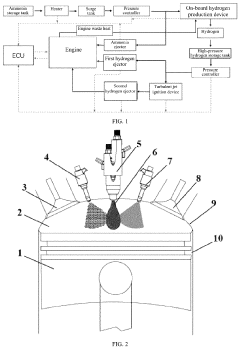
Ammonia-hydrogen fusion fuel diffusion combustion control system based on reactivity regulation
PatentInactiveUS20240018915A1
Innovation
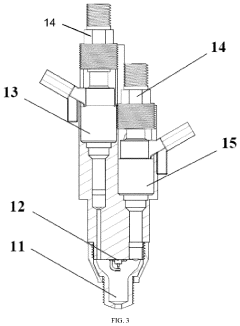
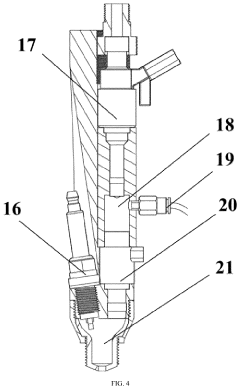
- An ammonia-hydrogen fusion fuel diffusion combustion control system with a compact scavenging type precombustion chamber and ECU control, where hydrogen is injected to form a reactive environment, and ammonia is injected near top dead center, either before or synchronous with the precombustion chamber jet flame formation, to achieve diffusion combustion in the main combustion chamber.
Active pre-chamber jet-assisted H2 multi-mode combustion
PatentActiveUS11828220B1
Innovation
- An engine system with a step-lipped piston bowl, radially asymmetrical pre-chamber, and hydrogen direct injector, employing a multi-mode combustion strategy that includes homogeneous jet ignition at low loads, jet-assisted PPCI combustion at medium loads, and jet-assisted PPCI-diffusion combustion at high loads, along with tailored injection strategies and exhaust gas recirculation to manage combustion modes and efficiency.


K24 Engine Resource Requirements
The K24 Engine infrastructure requires careful consideration of resource allocation to ensure optimal performance and efficiency. A comprehensive analysis of the engine's resource requirements reveals several key areas of focus.
Computational resources form the backbone of the K24 Engine's operations. High-performance processors and specialized hardware accelerators are essential to handle the complex calculations and data processing tasks inherent in the engine's functionality. The infrastructure must be designed to support parallel processing capabilities, allowing for efficient distribution of workloads across multiple cores or nodes.
Memory management is another critical aspect of the K24 Engine's resource requirements. Sufficient RAM allocation is necessary to accommodate large datasets and intermediate results during processing. Additionally, fast storage solutions, such as solid-state drives (SSDs) or high-speed network-attached storage (NAS), are crucial for rapid data access and retrieval.
Network resources play a vital role in the K24 Engine's infrastructure. High-bandwidth, low-latency network connections are required to facilitate seamless data transfer between components and ensure real-time responsiveness. The network architecture should be scalable to accommodate future growth and increased data volumes.
Power and cooling considerations are equally important for the K24 Engine's resource requirements. The infrastructure must be designed to provide stable and sufficient power supply to all components, with redundancy measures in place to prevent downtime. Efficient cooling systems are necessary to maintain optimal operating temperatures and prevent performance degradation due to thermal issues.
Software resources, including operating systems, libraries, and development tools, must be carefully selected and optimized for the K24 Engine's specific needs. Compatibility with existing systems and future upgrades should be taken into account when choosing software components.
Human resources are a crucial factor in the successful implementation and maintenance of the K24 Engine infrastructure. Skilled engineers, developers, and system administrators are required to design, deploy, and manage the complex ecosystem of hardware and software components.
Lastly, security resources must be allocated to protect the K24 Engine infrastructure from potential threats. This includes implementing robust authentication mechanisms, encryption protocols, and intrusion detection systems to safeguard sensitive data and maintain the integrity of the engine's operations.
Computational resources form the backbone of the K24 Engine's operations. High-performance processors and specialized hardware accelerators are essential to handle the complex calculations and data processing tasks inherent in the engine's functionality. The infrastructure must be designed to support parallel processing capabilities, allowing for efficient distribution of workloads across multiple cores or nodes.
Memory management is another critical aspect of the K24 Engine's resource requirements. Sufficient RAM allocation is necessary to accommodate large datasets and intermediate results during processing. Additionally, fast storage solutions, such as solid-state drives (SSDs) or high-speed network-attached storage (NAS), are crucial for rapid data access and retrieval.
Network resources play a vital role in the K24 Engine's infrastructure. High-bandwidth, low-latency network connections are required to facilitate seamless data transfer between components and ensure real-time responsiveness. The network architecture should be scalable to accommodate future growth and increased data volumes.
Power and cooling considerations are equally important for the K24 Engine's resource requirements. The infrastructure must be designed to provide stable and sufficient power supply to all components, with redundancy measures in place to prevent downtime. Efficient cooling systems are necessary to maintain optimal operating temperatures and prevent performance degradation due to thermal issues.
Software resources, including operating systems, libraries, and development tools, must be carefully selected and optimized for the K24 Engine's specific needs. Compatibility with existing systems and future upgrades should be taken into account when choosing software components.
Human resources are a crucial factor in the successful implementation and maintenance of the K24 Engine infrastructure. Skilled engineers, developers, and system administrators are required to design, deploy, and manage the complex ecosystem of hardware and software components.
Lastly, security resources must be allocated to protect the K24 Engine infrastructure from potential threats. This includes implementing robust authentication mechanisms, encryption protocols, and intrusion detection systems to safeguard sensitive data and maintain the integrity of the engine's operations.
Environmental Impact of K24 Engines
The environmental impact of K24 engines is a critical consideration in the analysis of market and resource needs for this engine infrastructure. K24 engines, known for their balance of performance and efficiency, have both positive and negative effects on the environment throughout their lifecycle.
From a production standpoint, the manufacturing process of K24 engines involves resource extraction and energy-intensive processes. The aluminum alloy used in the engine block and cylinder head requires significant energy for mining and refining. However, the lightweight nature of these materials contributes to improved fuel efficiency during the engine's operational life, potentially offsetting some of the initial environmental costs.
During operation, K24 engines demonstrate relatively good fuel efficiency for their power output, particularly in comparison to larger displacement engines. This efficiency translates to lower carbon dioxide emissions per mile driven. The i-VTEC (intelligent Variable Valve Timing and Lift Electronic Control) system employed in K24 engines further enhances fuel economy and reduces emissions by optimizing valve timing across different engine speeds and loads.
Emissions from K24 engines generally meet or exceed regulatory standards in most markets. The engines are equipped with catalytic converters and other emissions control technologies that significantly reduce the output of harmful pollutants such as carbon monoxide, nitrogen oxides, and unburned hydrocarbons. However, like all internal combustion engines, K24 engines still contribute to air pollution and greenhouse gas emissions, albeit at lower levels than many of their counterparts.
The longevity of K24 engines is another factor that impacts their environmental footprint. These engines are known for their durability and reliability, often lasting well over 200,000 miles with proper maintenance. This extended lifespan reduces the frequency of engine replacement and the associated environmental costs of manufacturing new engines.
End-of-life considerations for K24 engines also play a role in their overall environmental impact. Many components of the engine, particularly the aluminum parts, are recyclable. Proper recycling practices can significantly reduce the environmental burden by reclaiming materials and reducing the need for new resource extraction.
In the context of evolving environmental regulations and the shift towards electrification, the future environmental impact of K24 engines may be influenced by advancements in hybrid technology. Integrating K24 engines into hybrid powertrains could further improve their efficiency and reduce emissions, potentially extending their viability in an increasingly eco-conscious market.
From a production standpoint, the manufacturing process of K24 engines involves resource extraction and energy-intensive processes. The aluminum alloy used in the engine block and cylinder head requires significant energy for mining and refining. However, the lightweight nature of these materials contributes to improved fuel efficiency during the engine's operational life, potentially offsetting some of the initial environmental costs.
During operation, K24 engines demonstrate relatively good fuel efficiency for their power output, particularly in comparison to larger displacement engines. This efficiency translates to lower carbon dioxide emissions per mile driven. The i-VTEC (intelligent Variable Valve Timing and Lift Electronic Control) system employed in K24 engines further enhances fuel economy and reduces emissions by optimizing valve timing across different engine speeds and loads.
Emissions from K24 engines generally meet or exceed regulatory standards in most markets. The engines are equipped with catalytic converters and other emissions control technologies that significantly reduce the output of harmful pollutants such as carbon monoxide, nitrogen oxides, and unburned hydrocarbons. However, like all internal combustion engines, K24 engines still contribute to air pollution and greenhouse gas emissions, albeit at lower levels than many of their counterparts.
The longevity of K24 engines is another factor that impacts their environmental footprint. These engines are known for their durability and reliability, often lasting well over 200,000 miles with proper maintenance. This extended lifespan reduces the frequency of engine replacement and the associated environmental costs of manufacturing new engines.
End-of-life considerations for K24 engines also play a role in their overall environmental impact. Many components of the engine, particularly the aluminum parts, are recyclable. Proper recycling practices can significantly reduce the environmental burden by reclaiming materials and reducing the need for new resource extraction.
In the context of evolving environmental regulations and the shift towards electrification, the future environmental impact of K24 engines may be influenced by advancements in hybrid technology. Integrating K24 engines into hybrid powertrains could further improve their efficiency and reduce emissions, potentially extending their viability in an increasingly eco-conscious market.
Unlock deeper insights with Patsnap Eureka Quick Research — get a full tech report to explore trends and direct your research. Try now!
Generate Your Research Report Instantly with AI Agent
Supercharge your innovation with Patsnap Eureka AI Agent Platform!