

Luminol: Advancing Accuracy in Analytical Methods
AUG 19, 20259 MIN READ
Generate Your Research Report Instantly with AI Agent
Patsnap Eureka helps you evaluate technical feasibility & market potential.
Luminol Technology Overview
Luminol, a chemiluminescent compound, has emerged as a powerful tool in analytical methods, particularly in forensic science and biochemical research. This organic compound, with the chemical formula C8H7NO2, is known for its ability to emit light when oxidized, a property that has been harnessed for various analytical applications.
The discovery of luminol dates back to 1928 when German chemist H. O. Albrecht first synthesized it. However, its potential in forensic science wasn't realized until the 1930s when forensic scientists began exploring its use in crime scene investigations. Since then, luminol has undergone significant developments, evolving from a simple chemical reagent to a sophisticated analytical tool.
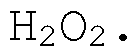
In forensic science, luminol is primarily used to detect trace amounts of blood at crime scenes. When mixed with an appropriate oxidizing agent, such as hydrogen peroxide, in the presence of iron from hemoglobin, luminol produces a bright blue chemiluminescence. This reaction is extremely sensitive, capable of detecting blood diluted up to 1:1,000,000, making it invaluable in identifying cleaned-up crime scenes or old bloodstains.
Beyond forensics, luminol has found applications in various fields of scientific research. In biochemistry, it's used to detect small quantities of transition metal ions, particularly copper, iron, and cyanide ions. This capability has led to its use in environmental monitoring, where it can detect trace amounts of metal pollutants in water samples.
The technology behind luminol has seen continuous improvement over the years. Modern formulations have enhanced stability and sensitivity, allowing for more accurate and reliable results. Researchers have also developed variants of luminol with different spectral properties, expanding its range of applications.
One significant advancement in luminol technology is its integration with imaging systems. High-sensitivity cameras coupled with luminol-based detection methods have enabled the creation of detailed crime scene maps, providing investigators with a comprehensive view of blood distribution patterns. This integration of chemical and digital technologies has greatly enhanced the analytical capabilities of luminol-based methods.
Recent research has focused on improving the specificity of luminol reactions. While luminol is highly sensitive to blood, it can also react with other substances, potentially leading to false positives. Scientists are working on developing more selective formulations and complementary techniques to differentiate between blood and other interfering substances, thereby increasing the accuracy and reliability of luminol-based analyses.
The discovery of luminol dates back to 1928 when German chemist H. O. Albrecht first synthesized it. However, its potential in forensic science wasn't realized until the 1930s when forensic scientists began exploring its use in crime scene investigations. Since then, luminol has undergone significant developments, evolving from a simple chemical reagent to a sophisticated analytical tool.
In forensic science, luminol is primarily used to detect trace amounts of blood at crime scenes. When mixed with an appropriate oxidizing agent, such as hydrogen peroxide, in the presence of iron from hemoglobin, luminol produces a bright blue chemiluminescence. This reaction is extremely sensitive, capable of detecting blood diluted up to 1:1,000,000, making it invaluable in identifying cleaned-up crime scenes or old bloodstains.
Beyond forensics, luminol has found applications in various fields of scientific research. In biochemistry, it's used to detect small quantities of transition metal ions, particularly copper, iron, and cyanide ions. This capability has led to its use in environmental monitoring, where it can detect trace amounts of metal pollutants in water samples.
The technology behind luminol has seen continuous improvement over the years. Modern formulations have enhanced stability and sensitivity, allowing for more accurate and reliable results. Researchers have also developed variants of luminol with different spectral properties, expanding its range of applications.
One significant advancement in luminol technology is its integration with imaging systems. High-sensitivity cameras coupled with luminol-based detection methods have enabled the creation of detailed crime scene maps, providing investigators with a comprehensive view of blood distribution patterns. This integration of chemical and digital technologies has greatly enhanced the analytical capabilities of luminol-based methods.
Recent research has focused on improving the specificity of luminol reactions. While luminol is highly sensitive to blood, it can also react with other substances, potentially leading to false positives. Scientists are working on developing more selective formulations and complementary techniques to differentiate between blood and other interfering substances, thereby increasing the accuracy and reliability of luminol-based analyses.
Market Demand Analysis
The market demand for Luminol and its applications in analytical methods has been steadily growing, driven by the increasing need for accurate and sensitive detection techniques across various industries. Luminol, a chemiluminescent compound, has found widespread use in forensic science, environmental monitoring, and biomedical research due to its ability to produce a bright blue light when oxidized.
In the forensic science sector, the demand for Luminol-based detection methods has surged as law enforcement agencies and crime scene investigators seek more reliable tools for detecting trace amounts of blood. The compound's ability to react with the iron in hemoglobin, even in highly diluted samples, makes it invaluable in crime scene analysis and cold case investigations.
Environmental monitoring represents another significant market for Luminol-based analytical methods. As regulations on water quality and pollution control become more stringent, there is a growing need for sensitive detection techniques to identify and quantify contaminants. Luminol's applications in detecting heavy metals and other pollutants in water bodies have led to increased adoption by environmental agencies and research institutions.
The biomedical research field has also contributed to the rising demand for Luminol. Its use in chemiluminescence immunoassays and as a tool for studying cellular processes, particularly in the detection of reactive oxygen species, has made it an essential component in many laboratory settings. The pharmaceutical industry's focus on drug discovery and development has further fueled the demand for sensitive analytical methods, including those based on Luminol.
Market trends indicate a shift towards more portable and user-friendly analytical devices, which has opened up new opportunities for Luminol-based technologies. The development of compact, field-deployable instruments that utilize Luminol's chemiluminescent properties for rapid on-site analysis is gaining traction across various sectors.
The global market for analytical reagents and detection technologies, which includes Luminol-based methods, has been experiencing steady growth. This growth is attributed to factors such as increasing research and development activities, rising concerns about environmental pollution, and advancements in healthcare diagnostics.
Despite the positive market outlook, challenges such as the need for improved specificity and reduced interference from other substances in complex samples persist. These challenges present opportunities for further innovation in Luminol-based analytical methods, driving ongoing research and development efforts to enhance the accuracy and reliability of detection techniques.
As industries continue to prioritize precision and sensitivity in their analytical processes, the demand for advanced Luminol-based methods is expected to grow. This trend is likely to be reinforced by emerging applications in fields such as food safety testing, industrial quality control, and biosecurity, further expanding the market potential for Luminol and related technologies.
In the forensic science sector, the demand for Luminol-based detection methods has surged as law enforcement agencies and crime scene investigators seek more reliable tools for detecting trace amounts of blood. The compound's ability to react with the iron in hemoglobin, even in highly diluted samples, makes it invaluable in crime scene analysis and cold case investigations.
Environmental monitoring represents another significant market for Luminol-based analytical methods. As regulations on water quality and pollution control become more stringent, there is a growing need for sensitive detection techniques to identify and quantify contaminants. Luminol's applications in detecting heavy metals and other pollutants in water bodies have led to increased adoption by environmental agencies and research institutions.
The biomedical research field has also contributed to the rising demand for Luminol. Its use in chemiluminescence immunoassays and as a tool for studying cellular processes, particularly in the detection of reactive oxygen species, has made it an essential component in many laboratory settings. The pharmaceutical industry's focus on drug discovery and development has further fueled the demand for sensitive analytical methods, including those based on Luminol.
Market trends indicate a shift towards more portable and user-friendly analytical devices, which has opened up new opportunities for Luminol-based technologies. The development of compact, field-deployable instruments that utilize Luminol's chemiluminescent properties for rapid on-site analysis is gaining traction across various sectors.
The global market for analytical reagents and detection technologies, which includes Luminol-based methods, has been experiencing steady growth. This growth is attributed to factors such as increasing research and development activities, rising concerns about environmental pollution, and advancements in healthcare diagnostics.
Despite the positive market outlook, challenges such as the need for improved specificity and reduced interference from other substances in complex samples persist. These challenges present opportunities for further innovation in Luminol-based analytical methods, driving ongoing research and development efforts to enhance the accuracy and reliability of detection techniques.
As industries continue to prioritize precision and sensitivity in their analytical processes, the demand for advanced Luminol-based methods is expected to grow. This trend is likely to be reinforced by emerging applications in fields such as food safety testing, industrial quality control, and biosecurity, further expanding the market potential for Luminol and related technologies.
Current Challenges
Luminol, a chemiluminescent compound widely used in forensic science and analytical chemistry, faces several challenges in its application and development. These challenges primarily stem from the need for increased accuracy, sensitivity, and reliability in analytical methods.
One of the primary challenges is the optimization of luminol's chemiluminescence reaction. While luminol has been extensively used for decades, there is still room for improvement in terms of its light emission intensity and duration. Researchers are continuously working on enhancing the chemiluminescent properties of luminol to achieve brighter and longer-lasting light emissions, which would significantly improve its detection capabilities in various applications.
Another significant challenge lies in reducing the interference from other substances present in complex sample matrices. In forensic applications, for instance, the presence of other organic compounds or metals can lead to false-positive results or mask the presence of blood. Developing more specific and selective luminol-based detection methods that can differentiate between target analytes and potential interferents remains a crucial area of research.
The stability of luminol solutions is another concern that researchers are addressing. Luminol solutions tend to degrade over time, which can affect the reliability and reproducibility of analytical results. Efforts are being made to develop more stable formulations or alternative storage methods to extend the shelf life of luminol-based reagents without compromising their performance.
Sensitivity is a critical factor in many analytical applications, and improving the detection limits of luminol-based methods is an ongoing challenge. Researchers are exploring various approaches, such as the incorporation of nanoparticles or the development of novel catalysts, to enhance the sensitivity of luminol chemiluminescence and enable the detection of trace amounts of target analytes.
The quantification of analytes using luminol-based methods also presents challenges. While luminol is excellent for qualitative detection, achieving accurate and precise quantitative measurements can be difficult due to variations in reaction kinetics and environmental factors. Developing robust calibration methods and standardizing analytical procedures are essential steps in overcoming this limitation.
Environmental concerns and safety considerations pose additional challenges in the use of luminol. As analytical methods become more stringent, there is a growing need for eco-friendly and non-toxic alternatives or modifications to traditional luminol-based techniques. Researchers are investigating greener synthesis routes and exploring the potential of bio-based luminol analogues to address these issues.
One of the primary challenges is the optimization of luminol's chemiluminescence reaction. While luminol has been extensively used for decades, there is still room for improvement in terms of its light emission intensity and duration. Researchers are continuously working on enhancing the chemiluminescent properties of luminol to achieve brighter and longer-lasting light emissions, which would significantly improve its detection capabilities in various applications.
Another significant challenge lies in reducing the interference from other substances present in complex sample matrices. In forensic applications, for instance, the presence of other organic compounds or metals can lead to false-positive results or mask the presence of blood. Developing more specific and selective luminol-based detection methods that can differentiate between target analytes and potential interferents remains a crucial area of research.
The stability of luminol solutions is another concern that researchers are addressing. Luminol solutions tend to degrade over time, which can affect the reliability and reproducibility of analytical results. Efforts are being made to develop more stable formulations or alternative storage methods to extend the shelf life of luminol-based reagents without compromising their performance.
Sensitivity is a critical factor in many analytical applications, and improving the detection limits of luminol-based methods is an ongoing challenge. Researchers are exploring various approaches, such as the incorporation of nanoparticles or the development of novel catalysts, to enhance the sensitivity of luminol chemiluminescence and enable the detection of trace amounts of target analytes.
The quantification of analytes using luminol-based methods also presents challenges. While luminol is excellent for qualitative detection, achieving accurate and precise quantitative measurements can be difficult due to variations in reaction kinetics and environmental factors. Developing robust calibration methods and standardizing analytical procedures are essential steps in overcoming this limitation.
Environmental concerns and safety considerations pose additional challenges in the use of luminol. As analytical methods become more stringent, there is a growing need for eco-friendly and non-toxic alternatives or modifications to traditional luminol-based techniques. Researchers are investigating greener synthesis routes and exploring the potential of bio-based luminol analogues to address these issues.
Existing Luminol Solutions
01 Enhancing luminol detection accuracy
Various methods are employed to improve the accuracy of luminol-based detection systems. These include optimizing reaction conditions, developing novel formulations, and incorporating additional reagents to enhance sensitivity and specificity. Advanced detection techniques and data analysis methods are also utilized to increase the reliability of luminol-based assays.- Enhanced luminol detection methods: Improved techniques for enhancing the accuracy and sensitivity of luminol-based detection systems. These methods may involve optimizing reaction conditions, incorporating catalysts, or using novel formulations to increase the intensity and duration of the chemiluminescent signal.
- Advanced instrumentation for luminol analysis: Development of sophisticated instruments and devices specifically designed for luminol-based detection. These may include specialized cameras, spectrophotometers, or portable detection units that improve the accuracy of luminol measurements in various applications.
- Luminol accuracy in forensic applications: Techniques to improve the accuracy of luminol in forensic science, particularly for blood detection at crime scenes. This may involve methods to reduce false positives, enhance specificity for blood, and improve the ability to detect aged or cleaned blood traces.
- Luminol-based biosensors and analytical methods: Development of biosensors and analytical techniques that utilize luminol chemiluminescence for accurate detection and quantification of specific analytes. These methods may be applied in medical diagnostics, environmental monitoring, or food safety testing.
- Data processing and analysis for luminol accuracy: Advanced algorithms and data processing techniques to improve the interpretation of luminol-generated signals. This may include machine learning approaches, image analysis software, or statistical methods to enhance the accuracy and reliability of luminol-based measurements.
02 Luminol-based detection in forensic applications
Luminol is widely used in forensic science for detecting trace amounts of blood. Improvements in luminol formulations and application techniques have led to increased accuracy in crime scene investigations. These advancements include better spray methods, enhanced visualization techniques, and the development of portable detection devices for on-site analysis.Expand Specific Solutions03 Luminol accuracy in environmental monitoring
Luminol-based systems are utilized for accurate detection of pollutants and contaminants in environmental samples. Researchers have developed specialized luminol formulations and detection methods for various environmental applications, including water quality monitoring, air pollution detection, and soil contamination analysis.Expand Specific Solutions04 Improving luminol accuracy in medical diagnostics
Luminol-based assays are employed in medical diagnostics for detecting various biomarkers and pathogens. Advancements in luminol chemistry and detection technologies have led to increased accuracy in clinical testing. These improvements include the development of highly sensitive luminol derivatives and the integration of luminol-based detection with microfluidic devices.Expand Specific Solutions05 Enhancing luminol accuracy through instrumentation
Advanced instrumentation plays a crucial role in improving the accuracy of luminol-based detection systems. Researchers have developed specialized equipment, including high-sensitivity photomultiplier tubes, charge-coupled devices, and advanced imaging systems, to enhance the detection and quantification of luminol chemiluminescence. These instruments, combined with sophisticated data analysis algorithms, significantly improve the accuracy and reliability of luminol-based measurements.Expand Specific Solutions
Key Industry Players
The luminol technology market is in a growth phase, with increasing demand for accurate analytical methods across various industries. The market size is expanding as more sectors recognize the potential of luminol-based detection systems. Technologically, luminol applications are advancing rapidly, with major players like F. Hoffmann-La Roche Ltd. and Roche Diagnostics GmbH leading innovation in medical diagnostics. Companies such as Alverix, Inc. and Fujirebio Europe NV are developing portable and high-sensitivity luminol-based devices, indicating a trend towards miniaturization and improved accuracy. Academic institutions like Washington University in St. Louis and Georgetown University School of Medicine are contributing to fundamental research, potentially opening new application areas for luminol technology.
F. Hoffmann-La Roche Ltd.
Technical Solution: Roche has developed advanced luminol-based chemiluminescence techniques for highly sensitive analytical methods. Their approach involves enhancing luminol's light emission through the use of specialized catalysts and additives. This results in improved detection limits for various biomarkers and analytes in clinical diagnostics. Roche's technology incorporates microfluidic platforms for precise reagent handling and signal amplification, allowing for multiplexed assays with reduced sample volumes[1][3]. The company has also integrated machine learning algorithms to optimize signal processing and data interpretation, further improving the accuracy and reliability of their luminol-based analytical methods[5].
Strengths: High sensitivity, multiplexing capability, and integration with advanced data analysis. Weaknesses: Potential for interference from complex biological matrices and the need for specialized equipment.
FUJIFILM Corp.
Technical Solution: FUJIFILM has innovated in luminol-based imaging technologies, particularly for medical and forensic applications. Their approach combines luminol chemistry with advanced image sensors and processing algorithms. The company has developed a proprietary luminol formulation that offers enhanced stability and prolonged light emission, crucial for extended imaging sessions[2]. FUJIFILM's system incorporates high-sensitivity CMOS sensors capable of detecting faint luminol signals, coupled with noise reduction techniques to improve image quality. They have also implemented spectral unmixing algorithms to differentiate luminol signals from background autofluorescence, enhancing the specificity of detection[4]. For forensic applications, FUJIFILM has created portable luminol-based imaging devices with real-time processing capabilities[6].
Strengths: Advanced imaging capabilities, enhanced luminol formulation, and portability for field use. Weaknesses: May require specialized training for optimal use and interpretation of results.
Core Luminol Innovations
“analyte detection based on enhanced chemiluminescence and smartphone imaging in biological fluids and method thereof”
PatentActiveIN202111051598A
Innovation
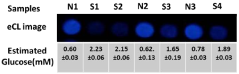
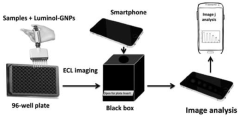
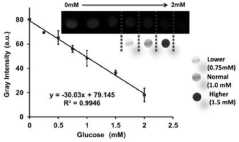
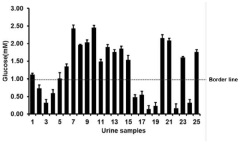
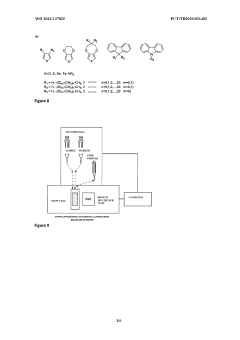
- A device and method utilizing enhanced chemiluminescence (ECL) imaging with a smartphone, incorporating a 96-well sample plate, an injector, and cross-linked gold nanoparticles (GNPs) with luminol, enabling detection and quantification of glucose and antigen-antibody interactions in biological fluids, such as urine, through optimized chemiluminescence signal capture and analysis.
Electroactive chemiluminescent compounds for detecting blood in forensic science
PatentWO2021137825A1
Innovation
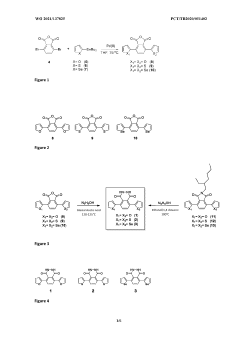
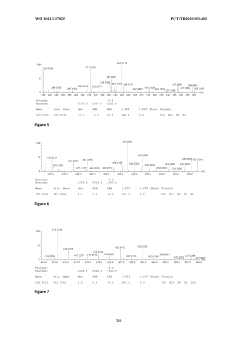
- The synthesis of 5,8-di(thiophene-2-yl)-2,3-dihydrophthalazine-1,4-dione (TLumT) and related compounds, which exhibit enhanced chemiluminescent properties catalyzed by metal ions, particularly iron, allowing for more evident and clear imaging of blood samples.
Regulatory Considerations
The regulatory landscape surrounding luminol and its applications in analytical methods is complex and multifaceted. As luminol gains prominence in forensic science and other analytical fields, regulatory bodies have increased scrutiny on its use and implementation. In the United States, the Food and Drug Administration (FDA) has established guidelines for the use of luminol in certain analytical procedures, particularly in food safety testing. These guidelines outline specific protocols for sample preparation, luminol application, and result interpretation to ensure consistency and reliability across different laboratories.
The Environmental Protection Agency (EPA) has also weighed in on the use of luminol, particularly in environmental testing scenarios. Their regulations focus on the potential environmental impact of luminol and its byproducts, mandating proper disposal methods and setting limits on acceptable concentrations in waste streams. This has led to the development of more environmentally friendly luminol formulations and application techniques.
In the forensic realm, organizations such as the International Association for Identification (IAI) have published best practices for luminol use in crime scene investigation. These guidelines address issues such as contamination prevention, documentation procedures, and the admissibility of luminol-based evidence in court. Adherence to these standards is crucial for maintaining the integrity of forensic investigations and ensuring that luminol-derived evidence stands up to legal scrutiny.
Internationally, the use of luminol in analytical methods is subject to varying regulations. The European Union, through its European Chemicals Agency (ECHA), has classified luminol under the Registration, Evaluation, Authorization and Restriction of Chemicals (REACH) regulation. This classification imposes specific requirements on manufacturers, importers, and users of luminol within the EU, including safety assessments and reporting obligations.
As the applications of luminol continue to expand, regulatory bodies are likely to refine and update their guidelines. Emerging areas of concern include the potential for false positives in certain analytical scenarios and the need for standardized training programs for luminol users. Additionally, as luminol-based techniques become more sensitive and capable of detecting ever-smaller traces of target substances, regulators may need to reassess threshold levels and detection limits in various applications.
The Environmental Protection Agency (EPA) has also weighed in on the use of luminol, particularly in environmental testing scenarios. Their regulations focus on the potential environmental impact of luminol and its byproducts, mandating proper disposal methods and setting limits on acceptable concentrations in waste streams. This has led to the development of more environmentally friendly luminol formulations and application techniques.
In the forensic realm, organizations such as the International Association for Identification (IAI) have published best practices for luminol use in crime scene investigation. These guidelines address issues such as contamination prevention, documentation procedures, and the admissibility of luminol-based evidence in court. Adherence to these standards is crucial for maintaining the integrity of forensic investigations and ensuring that luminol-derived evidence stands up to legal scrutiny.
Internationally, the use of luminol in analytical methods is subject to varying regulations. The European Union, through its European Chemicals Agency (ECHA), has classified luminol under the Registration, Evaluation, Authorization and Restriction of Chemicals (REACH) regulation. This classification imposes specific requirements on manufacturers, importers, and users of luminol within the EU, including safety assessments and reporting obligations.
As the applications of luminol continue to expand, regulatory bodies are likely to refine and update their guidelines. Emerging areas of concern include the potential for false positives in certain analytical scenarios and the need for standardized training programs for luminol users. Additionally, as luminol-based techniques become more sensitive and capable of detecting ever-smaller traces of target substances, regulators may need to reassess threshold levels and detection limits in various applications.
Environmental Impact
The environmental impact of Luminol in advancing analytical methods is a crucial aspect to consider in its development and application. Luminol, a chemiluminescent compound, has gained significant attention in forensic science and analytical chemistry due to its ability to detect trace amounts of blood and other substances. However, its widespread use raises important questions about its potential effects on the environment.
One of the primary environmental concerns associated with Luminol is its persistence in ecosystems. While the compound itself is not highly toxic, its breakdown products and the chemicals used in conjunction with it may have longer-lasting effects. Studies have shown that Luminol and its derivatives can remain in soil and water systems for extended periods, potentially affecting microbial communities and aquatic organisms.
The production and disposal of Luminol also contribute to its environmental footprint. The synthesis of Luminol involves several chemical processes that may generate hazardous waste products. Proper handling and disposal of these byproducts are essential to minimize environmental contamination. Additionally, the use of Luminol in forensic investigations often results in the compound being released into the environment, albeit in small quantities.
Water systems are particularly vulnerable to the effects of Luminol. When used in crime scene investigations or analytical procedures, residual Luminol can enter waterways through runoff or improper disposal. This can lead to potential bioaccumulation in aquatic organisms and disruption of delicate ecosystem balances. Research has indicated that even low concentrations of Luminol can affect the behavior and physiology of certain aquatic species.
Despite these concerns, it is important to note that the environmental impact of Luminol is generally considered to be relatively low compared to many other chemical compounds used in analytical methods. The small quantities typically used in applications help mitigate its overall environmental footprint. Furthermore, ongoing research is focused on developing more environmentally friendly formulations of Luminol and improving disposal methods to reduce its ecological impact.
To address environmental concerns, scientists and forensic professionals are exploring alternative compounds and techniques that offer similar analytical capabilities with reduced environmental risks. These efforts include the development of biodegradable luminescent compounds and the optimization of Luminol-based methods to minimize the amount of chemical required for effective analysis.
In conclusion, while Luminol has proven to be a valuable tool in advancing analytical methods, its environmental impact must be carefully managed. Continued research into its ecological effects, coupled with the development of more sustainable practices in its production, use, and disposal, will be crucial in ensuring that the benefits of Luminol in analytical applications can be realized without compromising environmental integrity.
One of the primary environmental concerns associated with Luminol is its persistence in ecosystems. While the compound itself is not highly toxic, its breakdown products and the chemicals used in conjunction with it may have longer-lasting effects. Studies have shown that Luminol and its derivatives can remain in soil and water systems for extended periods, potentially affecting microbial communities and aquatic organisms.
The production and disposal of Luminol also contribute to its environmental footprint. The synthesis of Luminol involves several chemical processes that may generate hazardous waste products. Proper handling and disposal of these byproducts are essential to minimize environmental contamination. Additionally, the use of Luminol in forensic investigations often results in the compound being released into the environment, albeit in small quantities.
Water systems are particularly vulnerable to the effects of Luminol. When used in crime scene investigations or analytical procedures, residual Luminol can enter waterways through runoff or improper disposal. This can lead to potential bioaccumulation in aquatic organisms and disruption of delicate ecosystem balances. Research has indicated that even low concentrations of Luminol can affect the behavior and physiology of certain aquatic species.
Despite these concerns, it is important to note that the environmental impact of Luminol is generally considered to be relatively low compared to many other chemical compounds used in analytical methods. The small quantities typically used in applications help mitigate its overall environmental footprint. Furthermore, ongoing research is focused on developing more environmentally friendly formulations of Luminol and improving disposal methods to reduce its ecological impact.
To address environmental concerns, scientists and forensic professionals are exploring alternative compounds and techniques that offer similar analytical capabilities with reduced environmental risks. These efforts include the development of biodegradable luminescent compounds and the optimization of Luminol-based methods to minimize the amount of chemical required for effective analysis.
In conclusion, while Luminol has proven to be a valuable tool in advancing analytical methods, its environmental impact must be carefully managed. Continued research into its ecological effects, coupled with the development of more sustainable practices in its production, use, and disposal, will be crucial in ensuring that the benefits of Luminol in analytical applications can be realized without compromising environmental integrity.
Unlock deeper insights with Patsnap Eureka Quick Research — get a full tech report to explore trends and direct your research. Try now!
Generate Your Research Report Instantly with AI Agent
Supercharge your innovation with Patsnap Eureka AI Agent Platform!