

Microbial Electrosynthesis For Urban Waste Valorization
SEP 4, 20259 MIN READ
Generate Your Research Report Instantly with AI Agent
PatSnap Eureka helps you evaluate technical feasibility & market potential.
Microbial Electrosynthesis Background and Objectives
Microbial Electrosynthesis (MES) represents a groundbreaking biotechnological approach that has evolved significantly over the past decade. This technology integrates microbial metabolism with electrochemical systems to convert electrical energy into valuable chemical compounds. The historical trajectory of MES began with rudimentary bioelectrochemical systems in the early 2000s, progressing through significant breakthroughs in electrode materials, microbial community engineering, and process optimization throughout the 2010s.
The evolution of MES technology has been characterized by increasing efficiency in electron transfer mechanisms, expanding the range of producible compounds, and enhancing scalability potential. Recent advancements have particularly focused on improving cathode materials, optimizing reactor designs, and developing more robust microbial consortia capable of withstanding industrial conditions.
In the context of urban waste valorization, MES presents a particularly promising application pathway. Urban environments generate massive quantities of organic waste streams, including food waste, sewage sludge, and industrial effluents, which traditionally represent disposal challenges and environmental burdens. The technological trajectory is increasingly focused on harnessing these waste streams as feedstocks for MES processes.
The primary objective of implementing MES for urban waste valorization is to establish a circular bioeconomy framework where waste materials are transformed into high-value products. Specifically, this involves developing integrated systems capable of converting complex urban waste streams into platform chemicals, biofuels, and other commercially valuable compounds while simultaneously reducing waste management costs and environmental impacts.
Secondary objectives include optimizing energy efficiency in the conversion process, maximizing product yield and selectivity, and developing modular, scalable systems suitable for implementation across various urban contexts and waste stream compositions. Additionally, there is significant focus on reducing capital and operational costs to enhance commercial viability.
The technological goals extend to developing robust control systems capable of managing the inherent variability in urban waste compositions, establishing effective pre-treatment protocols to enhance waste digestibility, and creating integrated recovery systems for efficient product separation and purification.
Long-term objectives include achieving carbon-negative waste processing through the integration of MES with carbon capture technologies, establishing standardized protocols for system implementation across diverse urban environments, and developing policy frameworks that incentivize the adoption of MES technologies within municipal waste management strategies.
The evolution of MES technology has been characterized by increasing efficiency in electron transfer mechanisms, expanding the range of producible compounds, and enhancing scalability potential. Recent advancements have particularly focused on improving cathode materials, optimizing reactor designs, and developing more robust microbial consortia capable of withstanding industrial conditions.
In the context of urban waste valorization, MES presents a particularly promising application pathway. Urban environments generate massive quantities of organic waste streams, including food waste, sewage sludge, and industrial effluents, which traditionally represent disposal challenges and environmental burdens. The technological trajectory is increasingly focused on harnessing these waste streams as feedstocks for MES processes.
The primary objective of implementing MES for urban waste valorization is to establish a circular bioeconomy framework where waste materials are transformed into high-value products. Specifically, this involves developing integrated systems capable of converting complex urban waste streams into platform chemicals, biofuels, and other commercially valuable compounds while simultaneously reducing waste management costs and environmental impacts.
Secondary objectives include optimizing energy efficiency in the conversion process, maximizing product yield and selectivity, and developing modular, scalable systems suitable for implementation across various urban contexts and waste stream compositions. Additionally, there is significant focus on reducing capital and operational costs to enhance commercial viability.
The technological goals extend to developing robust control systems capable of managing the inherent variability in urban waste compositions, establishing effective pre-treatment protocols to enhance waste digestibility, and creating integrated recovery systems for efficient product separation and purification.
Long-term objectives include achieving carbon-negative waste processing through the integration of MES with carbon capture technologies, establishing standardized protocols for system implementation across diverse urban environments, and developing policy frameworks that incentivize the adoption of MES technologies within municipal waste management strategies.
Urban Waste Valorization Market Analysis
The urban waste valorization market is experiencing significant growth globally, driven by increasing urbanization and the mounting challenges of waste management in metropolitan areas. As of 2023, the global waste valorization market is valued at approximately 1.2 trillion USD, with a compound annual growth rate (CAGR) of 5.7% projected through 2030. Urban waste, particularly organic municipal solid waste, represents a substantial untapped resource that can be transformed into valuable products through technologies like Microbial Electrosynthesis (MES).
The market demand for waste valorization solutions is primarily fueled by stringent environmental regulations, rising landfill costs, and growing awareness of circular economy principles. In developed regions such as North America and Europe, the implementation of zero-waste initiatives and extended producer responsibility policies has created a favorable environment for waste valorization technologies. The European Union's Circular Economy Action Plan, for instance, has set ambitious targets for waste reduction and recycling, creating a market pull for innovative valorization solutions.
In the context of Microbial Electrosynthesis for urban waste valorization, the addressable market encompasses multiple segments including municipal waste management authorities, waste-to-energy facilities, biorefinery operators, and chemical manufacturing industries. The technology's ability to convert waste streams into high-value chemicals and fuels positions it at the intersection of waste management and renewable chemical production markets.
Market analysis reveals that the waste-to-chemicals segment, where MES technology is particularly relevant, is growing at a faster rate than traditional waste-to-energy approaches, with a CAGR of 8.3%. This is attributed to the higher value proposition of chemical products compared to mere energy recovery. The global market for bio-based chemicals derived from waste is expected to reach 23.9 billion USD by 2025, presenting a substantial opportunity for MES technology deployment.
Regional analysis indicates varying market maturity and potential. While North America and Europe lead in terms of technology adoption and regulatory support, the Asia-Pacific region represents the fastest-growing market for waste valorization technologies due to rapid urbanization and industrialization. China, India, and Southeast Asian countries are investing heavily in waste management infrastructure, creating significant opportunities for innovative technologies like MES.
Consumer and industrial demand for sustainably produced chemicals is another market driver. Companies across various sectors are increasingly committing to sourcing bio-based materials as part of their sustainability initiatives. This trend is creating pull-through demand for technologies that can convert waste into chemical precursors with lower carbon footprints than conventional petrochemical routes.
The economic value proposition of MES for urban waste valorization is compelling when considering the dual benefits of waste reduction and valuable product generation. Market analysis suggests that integrated MES systems could achieve payback periods of 3-5 years in optimal conditions, making them increasingly attractive to both public and private sector investors in the waste management space.
The market demand for waste valorization solutions is primarily fueled by stringent environmental regulations, rising landfill costs, and growing awareness of circular economy principles. In developed regions such as North America and Europe, the implementation of zero-waste initiatives and extended producer responsibility policies has created a favorable environment for waste valorization technologies. The European Union's Circular Economy Action Plan, for instance, has set ambitious targets for waste reduction and recycling, creating a market pull for innovative valorization solutions.
In the context of Microbial Electrosynthesis for urban waste valorization, the addressable market encompasses multiple segments including municipal waste management authorities, waste-to-energy facilities, biorefinery operators, and chemical manufacturing industries. The technology's ability to convert waste streams into high-value chemicals and fuels positions it at the intersection of waste management and renewable chemical production markets.
Market analysis reveals that the waste-to-chemicals segment, where MES technology is particularly relevant, is growing at a faster rate than traditional waste-to-energy approaches, with a CAGR of 8.3%. This is attributed to the higher value proposition of chemical products compared to mere energy recovery. The global market for bio-based chemicals derived from waste is expected to reach 23.9 billion USD by 2025, presenting a substantial opportunity for MES technology deployment.
Regional analysis indicates varying market maturity and potential. While North America and Europe lead in terms of technology adoption and regulatory support, the Asia-Pacific region represents the fastest-growing market for waste valorization technologies due to rapid urbanization and industrialization. China, India, and Southeast Asian countries are investing heavily in waste management infrastructure, creating significant opportunities for innovative technologies like MES.
Consumer and industrial demand for sustainably produced chemicals is another market driver. Companies across various sectors are increasingly committing to sourcing bio-based materials as part of their sustainability initiatives. This trend is creating pull-through demand for technologies that can convert waste into chemical precursors with lower carbon footprints than conventional petrochemical routes.
The economic value proposition of MES for urban waste valorization is compelling when considering the dual benefits of waste reduction and valuable product generation. Market analysis suggests that integrated MES systems could achieve payback periods of 3-5 years in optimal conditions, making them increasingly attractive to both public and private sector investors in the waste management space.
MES Technology Status and Barriers
Microbial Electrosynthesis (MES) technology has reached a critical development stage globally, with significant advancements in laboratory settings but limited large-scale implementation for urban waste valorization. Current research demonstrates successful conversion of CO2 and organic waste into value-added chemicals and biofuels through bioelectrochemical systems, with coulombic efficiencies reaching 80-90% in optimized laboratory conditions. However, these results have not translated effectively to industrial applications due to several persistent barriers.
The primary technical challenge remains the low production rates and yields when scaling up MES systems. Laboratory-scale reactors typically achieve production rates of 0.1-5 g/L/day for target compounds, whereas commercial viability requires at least an order of magnitude improvement. This performance gap stems from limitations in electrode materials, microbial catalysts, and reactor designs that cannot maintain optimal conditions at larger scales.
Electrode materials present a significant barrier, as current options face trade-offs between conductivity, biocompatibility, durability, and cost. Carbon-based electrodes show promising biocompatibility but suffer from limited conductivity and surface area. Metal-based alternatives offer better electrical properties but may inhibit microbial growth or prove cost-prohibitive for large-scale deployment.
Microbial catalyst limitations further constrain MES advancement. Pure cultures demonstrate high specificity but limited robustness, while mixed communities offer resilience but reduced product selectivity. Genetic engineering approaches to optimize electroactive microorganisms remain in early development stages, with regulatory hurdles complicating field implementation.
Energy efficiency represents another critical barrier, with current MES systems requiring 2-10 kWh per kg of product. This energy demand significantly impacts economic viability, particularly when processing dilute waste streams typical in urban environments. Theoretical minimum energy requirements suggest potential for 60-70% improvement through advanced electrode materials and optimized reactor configurations.
System integration challenges persist when incorporating MES into existing waste management infrastructure. Current urban waste processing facilities lack the technical expertise and equipment for bioelectrochemical systems, creating significant implementation barriers. Additionally, the heterogeneous nature of urban waste streams introduces variability that destabilizes microbial communities and reduces process reliability.
Geographically, MES research concentrations exist primarily in North America, Western Europe, and East Asia, with limited development in regions that could benefit most from distributed waste valorization technologies. This uneven distribution of technical expertise creates additional barriers to global implementation and technology transfer.
The primary technical challenge remains the low production rates and yields when scaling up MES systems. Laboratory-scale reactors typically achieve production rates of 0.1-5 g/L/day for target compounds, whereas commercial viability requires at least an order of magnitude improvement. This performance gap stems from limitations in electrode materials, microbial catalysts, and reactor designs that cannot maintain optimal conditions at larger scales.
Electrode materials present a significant barrier, as current options face trade-offs between conductivity, biocompatibility, durability, and cost. Carbon-based electrodes show promising biocompatibility but suffer from limited conductivity and surface area. Metal-based alternatives offer better electrical properties but may inhibit microbial growth or prove cost-prohibitive for large-scale deployment.
Microbial catalyst limitations further constrain MES advancement. Pure cultures demonstrate high specificity but limited robustness, while mixed communities offer resilience but reduced product selectivity. Genetic engineering approaches to optimize electroactive microorganisms remain in early development stages, with regulatory hurdles complicating field implementation.
Energy efficiency represents another critical barrier, with current MES systems requiring 2-10 kWh per kg of product. This energy demand significantly impacts economic viability, particularly when processing dilute waste streams typical in urban environments. Theoretical minimum energy requirements suggest potential for 60-70% improvement through advanced electrode materials and optimized reactor configurations.
System integration challenges persist when incorporating MES into existing waste management infrastructure. Current urban waste processing facilities lack the technical expertise and equipment for bioelectrochemical systems, creating significant implementation barriers. Additionally, the heterogeneous nature of urban waste streams introduces variability that destabilizes microbial communities and reduces process reliability.
Geographically, MES research concentrations exist primarily in North America, Western Europe, and East Asia, with limited development in regions that could benefit most from distributed waste valorization technologies. This uneven distribution of technical expertise creates additional barriers to global implementation and technology transfer.
Current MES Solutions for Urban Waste Processing
01 Microbial electrosynthesis systems and bioreactors
Specialized bioreactor designs for microbial electrosynthesis that optimize electron transfer between electrodes and microorganisms. These systems include innovative electrode configurations, membrane separators, and controlled environmental conditions to enhance the efficiency of bioelectrochemical processes. The bioreactors are engineered to maintain optimal conditions for microbial growth while facilitating the conversion of electrical energy into chemical products through microbial metabolism.- Microbial electrosynthesis systems and bioreactors: Specialized bioreactor designs for microbial electrosynthesis that optimize electron transfer between electrodes and microorganisms. These systems include innovative electrode configurations, membrane separators, and control mechanisms to enhance the efficiency of bioelectrochemical processes. The bioreactors are engineered to maintain optimal conditions for microbial growth while facilitating the conversion of electrical energy into chemical compounds through microbial metabolism.
- Electrode materials and modifications for enhanced microbial interaction: Development of advanced electrode materials that improve electron transfer between electrodes and microorganisms in electrosynthesis processes. These materials include carbon-based electrodes, metal catalysts, and biocompatible conductive polymers that are specifically designed to enhance microbial attachment and electron exchange. Surface modifications of electrodes with functional groups or nanostructures further improve the interface between microbes and electrodes, leading to higher conversion efficiencies.
- Production of value-added chemicals through microbial electrosynthesis: Methods for producing high-value chemicals and fuels using microbial electrosynthesis. These processes utilize electroactive microorganisms to convert carbon dioxide or other simple substrates into complex organic compounds using electrical energy. The techniques focus on optimizing production pathways for specific target molecules such as organic acids, alcohols, and biofuels, while maximizing yield and selectivity through genetic engineering and process optimization.
- Microbial communities and genetic engineering for electrosynthesis: Selection and engineering of microbial communities specifically adapted for electrosynthesis applications. This includes the identification of naturally electroactive microorganisms, genetic modification to enhance electron uptake capabilities, and development of synthetic consortia that work synergistically in bioelectrochemical systems. The approaches focus on improving the electron transfer mechanisms, metabolic pathways, and stress tolerance of microorganisms to increase the efficiency and productivity of electrosynthesis processes.
- Integration of microbial electrosynthesis with renewable energy and waste treatment: Systems that combine microbial electrosynthesis with renewable energy sources and waste treatment processes. These integrated approaches use surplus renewable electricity to power electrosynthesis while simultaneously treating organic waste or capturing carbon dioxide. The systems create valuable products from waste streams, providing environmental benefits through carbon capture and waste reduction while generating economically valuable chemicals through bioelectrochemical conversion.
02 Electrode materials and modifications for enhanced microbial interaction
Development of advanced electrode materials that improve electron transfer between electrodes and microorganisms in electrosynthesis processes. These materials include carbon-based electrodes, metal oxides, and composite materials with specific surface modifications to enhance microbial attachment and biofilm formation. Surface treatments and coatings are applied to increase biocompatibility and conductivity, resulting in more efficient bioelectrochemical reactions and higher product yields.Expand Specific Solutions03 Microbial strains and genetic engineering for electrosynthesis
Selection and genetic modification of microorganisms specifically for electrosynthesis applications. These include bacteria and archaea capable of accepting electrons from electrodes and using them to reduce carbon dioxide or other substrates into valuable products. Genetic engineering techniques are employed to enhance electron uptake mechanisms, improve metabolic pathways for target product synthesis, and increase tolerance to process conditions, resulting in higher conversion efficiencies and product specificity.Expand Specific Solutions04 Production of value-added chemicals through microbial electrosynthesis
Applications of microbial electrosynthesis for producing specific high-value chemicals and fuels. These processes utilize electroactive microorganisms to convert carbon dioxide or other simple substrates into complex organic compounds such as alcohols, organic acids, biofuels, and pharmaceutical precursors. The technology enables sustainable production pathways that can operate using renewable electricity, providing alternatives to traditional petrochemical synthesis routes while potentially consuming carbon dioxide as a feedstock.Expand Specific Solutions05 Integration of microbial electrosynthesis with other technologies
Combining microbial electrosynthesis with complementary technologies to create integrated biorefinery concepts. These hybrid systems may incorporate photovoltaics for renewable electricity generation, waste treatment processes that provide feedstocks, or downstream processing technologies for product recovery. The integration enables more efficient resource utilization, improved energy balance, and enhanced economic viability of the overall process while potentially addressing multiple environmental challenges simultaneously.Expand Specific Solutions
Leading Organizations in MES Research and Implementation
Microbial Electrosynthesis for Urban Waste Valorization is emerging as a promising technology in the early commercialization phase, with the global waste valorization market projected to reach $1.2 billion by 2030. The competitive landscape features academic institutions leading fundamental research (Tongji University, Nanjing University, Huazhong University of Science & Technology) alongside specialized companies developing commercial applications (Microbial Discovery Group, Econward Tech). Technical maturity varies significantly, with established players like Bayer AG and National Research Council of Canada investing in scaled applications, while startups focus on niche solutions. Chinese universities demonstrate strong patent activity, while European research institutions (CNRS, University of Milan) focus on process optimization. The technology remains in transition from laboratory to industrial implementation, with key challenges in scaling efficiency and economic viability.
Bayer AG
Technical Solution: Bayer AG has developed an integrated microbial electrosynthesis (MES) platform for urban waste valorization that combines bioelectrochemical systems with proprietary microbial consortia. Their approach utilizes specialized electroactive microorganisms to convert organic waste compounds into high-value chemicals and biofuels through electrode-driven redox reactions. The system employs a two-chamber configuration with optimized cathode materials (typically carbon-based) that facilitate electron transfer to microorganisms. Bayer's platform incorporates real-time monitoring systems that adjust electrical parameters based on microbial activity and substrate availability, maximizing conversion efficiency. Their waste-to-value approach targets municipal solid waste streams, particularly food waste and agricultural residues, converting them into platform chemicals such as acetate, ethanol, and medium-chain fatty acids.
Strengths: Proprietary microbial consortia optimized for specific waste streams; integrated monitoring and control systems; established global distribution network for resulting bio-products. Weaknesses: Higher capital costs compared to traditional waste treatment; requires consistent waste composition for optimal performance; energy input requirements may limit economic viability in certain regions.
Microbial Discovery Group LLC
Technical Solution: Microbial Discovery Group has pioneered a specialized MES technology focused on urban organic waste streams. Their system employs a consortium of electroactive bacteria that can directly accept electrons from cathodes to reduce CO2 and other waste-derived carbon sources into valuable organic compounds. The technology utilizes a modular bioelectrochemical reactor design that can be scaled according to waste volume requirements. Their proprietary electrode materials feature enhanced biofilm formation capabilities, increasing electron transfer efficiency between electrodes and microorganisms. The company has developed a two-stage process where waste is first hydrolyzed to simpler compounds before entering the electrosynthesis chamber, improving overall conversion rates. Their system can operate at ambient temperatures with minimal external energy inputs beyond the applied voltage, making it suitable for decentralized waste management applications in urban environments.
Strengths: Specialized in microbial consortia development; modular and scalable system design; lower operating temperature requirements reducing energy costs. Weaknesses: Limited to primarily organic waste streams; requires pre-treatment of complex waste materials; technology still in early commercial deployment phase with limited large-scale implementation data.
Key Patents and Scientific Advances in MES Technology
Microbial electrochemical system for generation of hydrogen peroxide and in-situ valorization of agricultural waste
PatentPendingIN202321081362A
Innovation
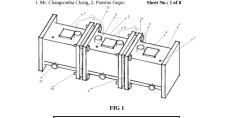
- A three-chamber Microbial Electrochemical Cell system utilizing Methyltrioxorhenium (MTO) catalyst with in-situ generated H2O2, featuring dual anodes and a cathode chamber separated by a cation exchange membrane, designed to minimize internal resistance and enhance electron transfer, proton diffusion, and mass transfer for efficient H2O2 production and lignin valorization.


Method of reducing and controlling hazardous substance in process of high-value biological conversion of urban organic waste
PatentActiveUS12122696B2
Innovation
- A method involving acclimation of sludge with organic acids followed by anaerobic culture with denitrifying and exoelectrogenic bacteria to degrade antibiotics and reduce heavy metal ions, utilizing a controlled pH and temperature regimen to enhance microbial activity and organic acid production.

Environmental Impact Assessment of MES Applications
Microbial Electrosynthesis (MES) applications for urban waste valorization present significant environmental implications that warrant comprehensive assessment. When evaluating the environmental footprint of MES systems, greenhouse gas emissions reduction stands as a primary benefit. Conventional waste management practices typically generate substantial methane and carbon dioxide emissions, whereas MES technology can effectively sequester carbon by converting CO2 into valuable organic compounds, potentially achieving carbon-negative operations under optimal conditions.
Water resource impacts represent another critical dimension of MES environmental assessment. The technology demonstrates promising water conservation potential compared to traditional waste treatment methods, requiring significantly less freshwater input. Additionally, MES systems can process high-strength wastewaters while simultaneously generating value-added products, thereby addressing two environmental challenges concurrently.
Energy efficiency metrics reveal that MES systems generally consume less energy than conventional chemical synthesis routes for producing equivalent compounds. The integration of renewable energy sources to power MES operations further enhances this advantage, creating synergistic relationships between intermittent renewable generation and flexible bioelectrochemical systems that can operate as energy storage mechanisms.
Land use considerations highlight MES's compact footprint relative to alternative biological waste treatment technologies. The modular nature of MES systems enables vertical integration within existing urban infrastructure, minimizing additional land requirements and potentially allowing for decentralized waste valorization at the neighborhood scale.
Life cycle assessment (LCA) studies of MES applications demonstrate favorable outcomes regarding acidification potential, eutrophication impacts, and ecotoxicity when compared to conventional waste management and chemical synthesis pathways. However, these benefits remain contingent upon system optimization, particularly regarding electrode materials, which may involve rare earth elements with their own environmental extraction concerns.
Circular economy principles are inherently embodied in MES applications, as they transform waste streams into resources while minimizing environmental externalities. The technology enables urban centers to close material loops locally, reducing transportation emissions associated with waste disposal and product distribution. This localization of resource cycles represents a paradigm shift in urban metabolism, potentially transforming cities from resource consumers to resource generators.
Water resource impacts represent another critical dimension of MES environmental assessment. The technology demonstrates promising water conservation potential compared to traditional waste treatment methods, requiring significantly less freshwater input. Additionally, MES systems can process high-strength wastewaters while simultaneously generating value-added products, thereby addressing two environmental challenges concurrently.
Energy efficiency metrics reveal that MES systems generally consume less energy than conventional chemical synthesis routes for producing equivalent compounds. The integration of renewable energy sources to power MES operations further enhances this advantage, creating synergistic relationships between intermittent renewable generation and flexible bioelectrochemical systems that can operate as energy storage mechanisms.
Land use considerations highlight MES's compact footprint relative to alternative biological waste treatment technologies. The modular nature of MES systems enables vertical integration within existing urban infrastructure, minimizing additional land requirements and potentially allowing for decentralized waste valorization at the neighborhood scale.
Life cycle assessment (LCA) studies of MES applications demonstrate favorable outcomes regarding acidification potential, eutrophication impacts, and ecotoxicity when compared to conventional waste management and chemical synthesis pathways. However, these benefits remain contingent upon system optimization, particularly regarding electrode materials, which may involve rare earth elements with their own environmental extraction concerns.
Circular economy principles are inherently embodied in MES applications, as they transform waste streams into resources while minimizing environmental externalities. The technology enables urban centers to close material loops locally, reducing transportation emissions associated with waste disposal and product distribution. This localization of resource cycles represents a paradigm shift in urban metabolism, potentially transforming cities from resource consumers to resource generators.
Scaling Challenges and Economic Viability Analysis
The scaling of Microbial Electrosynthesis (MES) from laboratory to industrial applications presents significant challenges that must be addressed for successful urban waste valorization implementation. Current pilot-scale MES systems demonstrate limited production rates of 0.2-0.5 g/L/day for target compounds, which falls short of the 1-2 g/L/day threshold typically required for commercial viability. This productivity gap represents a primary technical barrier to widespread adoption.
Reactor design optimization remains a critical challenge, with current configurations struggling to maintain efficient electron transfer across larger volumes. The surface area-to-volume ratio decreases dramatically in scaled-up systems, reducing the effectiveness of biofilm-electrode interactions. Recent innovations in 3D electrode materials show promise, with carbon nanotube-enhanced electrodes demonstrating up to 300% improvement in microbial colonization and electron transfer efficiency.
Capital expenditure requirements present another significant hurdle, with current MES installations costing approximately $500-800 per kilogram of annual production capacity. This compares unfavorably to conventional chemical synthesis methods at $200-300 per kilogram. However, lifecycle cost analyses suggest that operational expenses for MES could be 30-40% lower than traditional approaches when utilizing waste streams as feedstock.
Energy consumption patterns reveal that MES systems require 5-8 kWh per kilogram of product, representing 40-60% of operational costs. Integration with renewable energy sources could significantly improve economic viability, with recent studies demonstrating that intermittent operation synchronized with renewable energy availability can maintain 85-90% of continuous production efficiency while reducing energy costs by up to 25%.
Waste stream variability introduces additional complexity to scaling efforts. Urban waste compositions fluctuate seasonally and geographically, affecting microbial community stability and product yields. Adaptive control systems utilizing real-time monitoring have shown promise in maintaining performance despite input variations, with machine learning algorithms improving yield consistency by 15-20% in variable feedstock conditions.
Economic modeling indicates that MES technologies could achieve cost parity with conventional processes within 5-7 years, contingent upon achieving three key milestones: doubling current production rates, reducing electrode material costs by 40-50%, and developing more robust microbial consortia capable of maintaining performance across varying waste stream compositions. Strategic co-location with waste treatment facilities could further improve economics through reduced transportation costs and integration of existing infrastructure.
Reactor design optimization remains a critical challenge, with current configurations struggling to maintain efficient electron transfer across larger volumes. The surface area-to-volume ratio decreases dramatically in scaled-up systems, reducing the effectiveness of biofilm-electrode interactions. Recent innovations in 3D electrode materials show promise, with carbon nanotube-enhanced electrodes demonstrating up to 300% improvement in microbial colonization and electron transfer efficiency.
Capital expenditure requirements present another significant hurdle, with current MES installations costing approximately $500-800 per kilogram of annual production capacity. This compares unfavorably to conventional chemical synthesis methods at $200-300 per kilogram. However, lifecycle cost analyses suggest that operational expenses for MES could be 30-40% lower than traditional approaches when utilizing waste streams as feedstock.
Energy consumption patterns reveal that MES systems require 5-8 kWh per kilogram of product, representing 40-60% of operational costs. Integration with renewable energy sources could significantly improve economic viability, with recent studies demonstrating that intermittent operation synchronized with renewable energy availability can maintain 85-90% of continuous production efficiency while reducing energy costs by up to 25%.
Waste stream variability introduces additional complexity to scaling efforts. Urban waste compositions fluctuate seasonally and geographically, affecting microbial community stability and product yields. Adaptive control systems utilizing real-time monitoring have shown promise in maintaining performance despite input variations, with machine learning algorithms improving yield consistency by 15-20% in variable feedstock conditions.
Economic modeling indicates that MES technologies could achieve cost parity with conventional processes within 5-7 years, contingent upon achieving three key milestones: doubling current production rates, reducing electrode material costs by 40-50%, and developing more robust microbial consortia capable of maintaining performance across varying waste stream compositions. Strategic co-location with waste treatment facilities could further improve economics through reduced transportation costs and integration of existing infrastructure.
Unlock deeper insights with PatSnap Eureka Quick Research — get a full tech report to explore trends and direct your research. Try now!
Generate Your Research Report Instantly with AI Agent
Supercharge your innovation with PatSnap Eureka AI Agent Platform!