Nitinol's Role in Dynamic Bracing Devices
AUG 6, 20259 MIN READ
Generate Your Research Report Instantly with AI Agent
PatSnap Eureka helps you evaluate technical feasibility & market potential.
Nitinol in Bracing: Background and Objectives
Nitinol, a unique nickel-titanium alloy, has revolutionized the field of dynamic bracing devices since its discovery in the 1960s. This shape memory alloy possesses remarkable properties that make it ideal for use in medical and orthopedic applications, particularly in the development of advanced bracing systems.
The evolution of Nitinol in bracing technology has been driven by the increasing demand for more effective, comfortable, and adaptable support devices. Traditional bracing systems often relied on rigid materials that limited mobility and comfort, leading to poor patient compliance. The introduction of Nitinol has allowed for the creation of dynamic braces that can adapt to the wearer's movements while providing necessary support.
Nitinol's superelastic properties enable it to undergo large deformations and return to its original shape when the stress is removed. This characteristic is crucial in bracing applications, as it allows for devices that can flex and conform to the body's movements while maintaining their supportive structure. Additionally, Nitinol's shape memory effect allows braces to be designed with temperature-activated adjustments, providing customized support based on the wearer's body heat or external stimuli.
The primary objective of incorporating Nitinol in dynamic bracing devices is to enhance patient outcomes by improving comfort, functionality, and effectiveness. These devices aim to provide optimal support while allowing for natural movement, thereby promoting faster recovery and rehabilitation. The technology seeks to address the limitations of traditional bracing systems, such as restricted range of motion, skin irritation, and muscle atrophy due to prolonged immobilization.
Another key goal is to develop bracing solutions that can be personalized to individual patient needs. Nitinol's unique properties allow for the creation of devices that can be easily adjusted and fine-tuned, either by healthcare professionals or through smart, self-adjusting mechanisms. This adaptability is particularly valuable in treating conditions that require progressive support or accommodation of changing anatomical needs over time.
The integration of Nitinol in bracing technology also aims to expand the application of dynamic support devices across various medical fields. From orthopedics and sports medicine to neurology and pediatrics, the versatility of Nitinol-based braces offers potential solutions for a wide range of conditions and patient populations.
As research and development in this field continue, the objectives extend to incorporating advanced technologies such as sensors and actuators into Nitinol-based braces. These smart bracing systems could provide real-time feedback, monitor patient progress, and even adjust support levels automatically based on activity and recovery patterns.
The evolution of Nitinol in bracing technology has been driven by the increasing demand for more effective, comfortable, and adaptable support devices. Traditional bracing systems often relied on rigid materials that limited mobility and comfort, leading to poor patient compliance. The introduction of Nitinol has allowed for the creation of dynamic braces that can adapt to the wearer's movements while providing necessary support.
Nitinol's superelastic properties enable it to undergo large deformations and return to its original shape when the stress is removed. This characteristic is crucial in bracing applications, as it allows for devices that can flex and conform to the body's movements while maintaining their supportive structure. Additionally, Nitinol's shape memory effect allows braces to be designed with temperature-activated adjustments, providing customized support based on the wearer's body heat or external stimuli.
The primary objective of incorporating Nitinol in dynamic bracing devices is to enhance patient outcomes by improving comfort, functionality, and effectiveness. These devices aim to provide optimal support while allowing for natural movement, thereby promoting faster recovery and rehabilitation. The technology seeks to address the limitations of traditional bracing systems, such as restricted range of motion, skin irritation, and muscle atrophy due to prolonged immobilization.
Another key goal is to develop bracing solutions that can be personalized to individual patient needs. Nitinol's unique properties allow for the creation of devices that can be easily adjusted and fine-tuned, either by healthcare professionals or through smart, self-adjusting mechanisms. This adaptability is particularly valuable in treating conditions that require progressive support or accommodation of changing anatomical needs over time.
The integration of Nitinol in bracing technology also aims to expand the application of dynamic support devices across various medical fields. From orthopedics and sports medicine to neurology and pediatrics, the versatility of Nitinol-based braces offers potential solutions for a wide range of conditions and patient populations.
As research and development in this field continue, the objectives extend to incorporating advanced technologies such as sensors and actuators into Nitinol-based braces. These smart bracing systems could provide real-time feedback, monitor patient progress, and even adjust support levels automatically based on activity and recovery patterns.
Market Analysis for Dynamic Bracing Solutions
The dynamic bracing solutions market has experienced significant growth in recent years, driven by increasing awareness of musculoskeletal disorders and the rising demand for non-invasive treatment options. This market segment encompasses a wide range of products designed to provide support and stability to joints and limbs while allowing for controlled movement, with Nitinol-based devices emerging as a key innovation.
The global market for dynamic bracing solutions is projected to continue its upward trajectory, with a compound annual growth rate (CAGR) expected to exceed 5% over the next five years. This growth is primarily attributed to the aging population, the rise in sports-related injuries, and the growing prevalence of chronic conditions such as osteoarthritis and rheumatoid arthritis.
North America currently holds the largest market share, followed by Europe and Asia-Pacific. The United States, in particular, dominates the market due to its advanced healthcare infrastructure and high adoption rate of innovative medical technologies. However, emerging economies in Asia-Pacific, such as China and India, are expected to witness the fastest growth rates in the coming years, driven by improving healthcare access and rising disposable incomes.
The market is segmented by product type, including knee braces, ankle braces, wrist braces, and others. Among these, knee braces represent the largest segment, accounting for a substantial portion of the overall market revenue. This is largely due to the high incidence of knee-related injuries and disorders across all age groups.
Key market players in the dynamic bracing solutions industry include DJO Global, Össur, Breg, Inc., and DeRoyal Industries, among others. These companies are increasingly focusing on the development of smart bracing solutions incorporating advanced materials like Nitinol, as well as sensors and connectivity features for improved patient outcomes and data-driven treatment approaches.
The integration of Nitinol in dynamic bracing devices has opened up new opportunities for market growth. Nitinol's unique properties, such as superelasticity and shape memory, allow for the creation of more comfortable, adaptive, and effective bracing solutions. This has led to increased patient compliance and better treatment outcomes, further driving market demand.
Consumer trends indicate a growing preference for lightweight, low-profile braces that can be worn discreetly under clothing. Additionally, there is an increasing demand for customizable and adjustable bracing solutions that can be tailored to individual patient needs. These trends are shaping product development strategies across the industry, with a focus on user-centric design and advanced materials.
The global market for dynamic bracing solutions is projected to continue its upward trajectory, with a compound annual growth rate (CAGR) expected to exceed 5% over the next five years. This growth is primarily attributed to the aging population, the rise in sports-related injuries, and the growing prevalence of chronic conditions such as osteoarthritis and rheumatoid arthritis.
North America currently holds the largest market share, followed by Europe and Asia-Pacific. The United States, in particular, dominates the market due to its advanced healthcare infrastructure and high adoption rate of innovative medical technologies. However, emerging economies in Asia-Pacific, such as China and India, are expected to witness the fastest growth rates in the coming years, driven by improving healthcare access and rising disposable incomes.
The market is segmented by product type, including knee braces, ankle braces, wrist braces, and others. Among these, knee braces represent the largest segment, accounting for a substantial portion of the overall market revenue. This is largely due to the high incidence of knee-related injuries and disorders across all age groups.
Key market players in the dynamic bracing solutions industry include DJO Global, Össur, Breg, Inc., and DeRoyal Industries, among others. These companies are increasingly focusing on the development of smart bracing solutions incorporating advanced materials like Nitinol, as well as sensors and connectivity features for improved patient outcomes and data-driven treatment approaches.
The integration of Nitinol in dynamic bracing devices has opened up new opportunities for market growth. Nitinol's unique properties, such as superelasticity and shape memory, allow for the creation of more comfortable, adaptive, and effective bracing solutions. This has led to increased patient compliance and better treatment outcomes, further driving market demand.
Consumer trends indicate a growing preference for lightweight, low-profile braces that can be worn discreetly under clothing. Additionally, there is an increasing demand for customizable and adjustable bracing solutions that can be tailored to individual patient needs. These trends are shaping product development strategies across the industry, with a focus on user-centric design and advanced materials.
Nitinol Properties and Challenges in Bracing
Nitinol, a unique nickel-titanium alloy, possesses remarkable properties that make it ideal for dynamic bracing devices. Its superelasticity allows for large recoverable strains, enabling braces to flex and return to their original shape without permanent deformation. This characteristic is crucial for maintaining consistent support and comfort during various body movements.
The shape memory effect of Nitinol is another key property utilized in bracing applications. When heated above its transformation temperature, Nitinol can "remember" and return to a pre-set shape, allowing for adaptive and responsive bracing designs. This feature enables the creation of smart braces that can adjust their shape or tension based on body temperature or external stimuli.
However, the implementation of Nitinol in dynamic bracing devices faces several challenges. One significant hurdle is the precise control of the alloy's transformation temperatures. The transition between austenite and martensite phases, which governs the shape memory and superelastic behaviors, must be carefully tailored to match the specific requirements of each bracing application. This often requires complex heat treatments and precise composition control.
Fatigue resistance is another critical concern in bracing applications. While Nitinol exhibits superior fatigue properties compared to many conventional materials, the repeated stress cycles experienced in dynamic braces can still lead to material degradation over time. Engineers must carefully design and test Nitinol components to ensure long-term reliability and safety.
The biocompatibility of Nitinol is generally favorable, but concerns remain regarding the potential release of nickel ions, which can cause allergic reactions in some individuals. Surface treatments and coatings are often employed to mitigate this risk, but these additional processes can complicate manufacturing and increase costs.
Manufacturing challenges also present significant obstacles. The unique properties of Nitinol make it difficult to machine and form using conventional techniques. Specialized processes such as laser cutting, shape setting, and precision heat treatments are often required, leading to higher production costs and potential scalability issues.
Lastly, the integration of Nitinol components with other materials in bracing devices poses design and manufacturing challenges. Ensuring proper interfaces between Nitinol elements and traditional materials like textiles or plastics is crucial for optimal performance and durability. This often requires innovative joining techniques and careful consideration of material interactions.
The shape memory effect of Nitinol is another key property utilized in bracing applications. When heated above its transformation temperature, Nitinol can "remember" and return to a pre-set shape, allowing for adaptive and responsive bracing designs. This feature enables the creation of smart braces that can adjust their shape or tension based on body temperature or external stimuli.
However, the implementation of Nitinol in dynamic bracing devices faces several challenges. One significant hurdle is the precise control of the alloy's transformation temperatures. The transition between austenite and martensite phases, which governs the shape memory and superelastic behaviors, must be carefully tailored to match the specific requirements of each bracing application. This often requires complex heat treatments and precise composition control.
Fatigue resistance is another critical concern in bracing applications. While Nitinol exhibits superior fatigue properties compared to many conventional materials, the repeated stress cycles experienced in dynamic braces can still lead to material degradation over time. Engineers must carefully design and test Nitinol components to ensure long-term reliability and safety.
The biocompatibility of Nitinol is generally favorable, but concerns remain regarding the potential release of nickel ions, which can cause allergic reactions in some individuals. Surface treatments and coatings are often employed to mitigate this risk, but these additional processes can complicate manufacturing and increase costs.
Manufacturing challenges also present significant obstacles. The unique properties of Nitinol make it difficult to machine and form using conventional techniques. Specialized processes such as laser cutting, shape setting, and precision heat treatments are often required, leading to higher production costs and potential scalability issues.
Lastly, the integration of Nitinol components with other materials in bracing devices poses design and manufacturing challenges. Ensuring proper interfaces between Nitinol elements and traditional materials like textiles or plastics is crucial for optimal performance and durability. This often requires innovative joining techniques and careful consideration of material interactions.
Current Nitinol Applications in Dynamic Bracing
01 Shape memory properties of Nitinol
Nitinol is a shape memory alloy that can return to its original shape when heated. This unique property makes it useful in various applications, including medical devices, aerospace, and automotive industries. The shape memory effect allows for the creation of compact, deployable structures and self-expanding devices.- Shape memory properties of Nitinol: Nitinol, a nickel-titanium alloy, exhibits unique shape memory and superelastic properties. It can return to a predetermined shape when heated, making it useful in various applications such as medical devices, actuators, and aerospace components. Its ability to undergo large deformations and recover its original shape makes it ideal for self-expanding stents and other biomedical implants.
- Nitinol in medical devices: Nitinol is widely used in medical devices due to its biocompatibility and unique properties. It is commonly used in stents, guidewires, orthodontic archwires, and surgical instruments. The material's superelasticity allows for minimally invasive procedures, as devices can be compressed for insertion and then expand to their functional shape within the body.
- Manufacturing and processing of Nitinol: The production and processing of Nitinol require specialized techniques due to its unique properties. Methods include vacuum induction melting, vacuum arc remelting, and careful heat treatment to achieve desired characteristics. Advanced manufacturing processes, such as laser cutting and shape setting, are used to create complex Nitinol components for various applications.
- Nitinol in actuators and mechanical systems: Nitinol's shape memory effect makes it suitable for use in actuators and mechanical systems. It can be used to create compact, lightweight actuators that respond to temperature changes or electrical stimulation. These actuators find applications in robotics, automotive systems, and aerospace technologies, offering advantages such as silent operation and high power-to-weight ratios.
- Surface treatment and coating of Nitinol: Surface treatment and coating of Nitinol are crucial for enhancing its performance and biocompatibility. Techniques such as electropolishing, passivation, and application of specialized coatings can improve corrosion resistance, reduce nickel ion release, and modify surface properties for specific applications. These treatments are particularly important for medical devices to ensure long-term stability and safety within the human body.
02 Superelasticity of Nitinol
Nitinol exhibits superelastic behavior, allowing it to undergo large deformations and return to its original shape without permanent damage. This property is particularly valuable in medical applications, such as stents and orthodontic wires, where flexibility and resilience are crucial.Expand Specific Solutions03 Nitinol in medical devices
Nitinol is widely used in medical devices due to its biocompatibility and unique properties. Applications include stents, guidewires, orthodontic archwires, and surgical instruments. The material's ability to change shape at body temperature makes it ideal for minimally invasive procedures.Expand Specific Solutions04 Manufacturing and processing of Nitinol
The production and processing of Nitinol require specialized techniques due to its unique properties. This includes precise control of composition, heat treatment, and shaping methods. Advanced manufacturing processes, such as laser cutting and 3D printing, are being explored to create complex Nitinol structures.Expand Specific Solutions05 Nitinol in industrial applications
Nitinol finds applications in various industrial sectors beyond medicine. It is used in actuators, couplings, seals, and safety devices. The material's ability to operate in harsh environments and its high fatigue resistance make it suitable for aerospace, automotive, and robotics applications.Expand Specific Solutions
Key Players in Nitinol-Based Bracing Industry
The market for Nitinol-based dynamic bracing devices is in a growth phase, with increasing adoption in orthopedic and cardiovascular applications. The global market size for shape memory alloys, including Nitinol, is projected to reach several billion dollars by 2025. Technologically, the field is advancing rapidly, with companies like Boston Scientific, Abbott Laboratories, and Stryker leading innovation. These firms are developing sophisticated Nitinol-based devices for minimally invasive surgeries and dynamic support structures. Academic institutions such as St. Louis University and the University of Michigan are contributing to research and development, pushing the boundaries of Nitinol applications in medical devices. The competitive landscape is characterized by a mix of established medical device manufacturers and specialized Nitinol technology companies, indicating a maturing but still evolving market.
Boston Scientific Scimed, Inc.
Technical Solution: Boston Scientific Scimed has developed advanced dynamic bracing devices utilizing Nitinol's unique properties. Their technology incorporates Nitinol-based stents and support structures in minimally invasive medical devices. These devices exploit Nitinol's superelasticity and shape memory effects to provide dynamic, flexible support in various anatomical locations. For instance, their Nitinol-based vascular stents can expand and contract with blood vessel movement, maintaining patency while reducing the risk of vessel damage[1]. The company has also applied Nitinol in neurovascular coils for aneurysm treatment, leveraging the material's ability to conform to complex vessel shapes while providing consistent outward force[3].
Strengths: Excellent biocompatibility, shape memory properties allow for minimally invasive deployment. Weaknesses: Higher cost compared to traditional materials, potential for nickel sensitivity in some patients.
Abbott Laboratories
Technical Solution: Abbott Laboratories has pioneered the use of Nitinol in dynamic bracing devices, particularly in cardiovascular applications. Their Nitinol-based stents, such as the Xience series, utilize the material's superelastic properties to provide flexible support in coronary arteries. These stents can withstand repeated deformation without permanent damage, making them ideal for use in dynamic vascular environments[2]. Abbott has also developed Nitinol-based heart valve repair systems, like the MitraClip, which leverage the material's shape memory to create adjustable, minimally invasive solutions for mitral valve regurgitation[4]. The company's research has focused on optimizing Nitinol's performance through precise control of its microstructure and thermomechanical processing.
Strengths: Extensive experience in Nitinol-based medical devices, strong R&D capabilities. Weaknesses: High development and manufacturing costs, regulatory challenges for novel applications.
Innovative Nitinol Designs for Adaptive Support
Ni-free beta ti alloys with share memory and super-elastic properties
PatentWO2018089028A1
Innovation
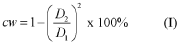
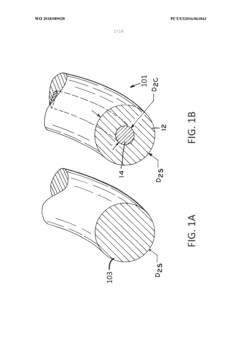
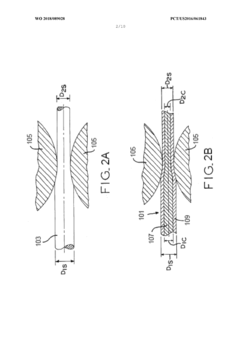
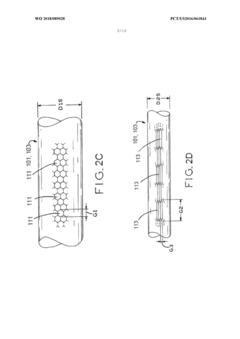
- Development of nickel-free beta-titanium alloys with compositions including 16-20 at.% hafnium or zirconium, 8-17 at.% niobium, and 0.25-6 at.% tin, which exhibit recoverable strains of at least 3.5% after deformation, utilizing niobium and tin to control beta phase stability and enhance shape memory and super-elastic properties, with hafnium and zirconium contributing to radiopacity and superelasticity.
Supreme distracter
PatentInactiveUS6908467B2
Innovation
- A Nitinol-based fixation device, known as the 'Supreme Distracter', utilizing shape memory alloy properties to generate a constant distraction force by changing shape from a martensite to an austenite state in response to temperature, allowing for self-locking anchorage and resistance to axial loading, compression, and distraction.


Biocompatibility and Safety Considerations
Nitinol's biocompatibility and safety considerations are crucial aspects in its application for dynamic bracing devices. The material's unique properties, including shape memory and superelasticity, make it an attractive option for medical implants and devices. However, these same characteristics also necessitate careful evaluation of its long-term effects on the human body.
One of the primary concerns in using Nitinol for dynamic bracing devices is its potential for nickel release. Nickel is a known allergen and can cause adverse reactions in some individuals. Studies have shown that the rate of nickel release from Nitinol is generally low and decreases over time due to the formation of a protective titanium oxide layer on the surface. Nevertheless, manufacturers must carefully control the composition and surface treatment of Nitinol to minimize nickel leaching and ensure patient safety.
The mechanical properties of Nitinol also present unique safety considerations. Its superelastic behavior allows for large deformations without permanent damage, which is beneficial for dynamic bracing applications. However, this property also means that the material can exert continuous forces on surrounding tissues. Careful design and testing are necessary to ensure that these forces do not cause tissue damage or discomfort over extended periods of use.
Biocompatibility testing of Nitinol for dynamic bracing devices typically includes in vitro cytotoxicity assays, sensitization studies, and implantation tests. These evaluations assess the material's potential to cause cellular damage, allergic reactions, or local tissue responses. Long-term studies are particularly important to understand the effects of prolonged exposure to Nitinol in the body.
The manufacturing process of Nitinol components for dynamic bracing devices also plays a critical role in their safety profile. Impurities introduced during production can affect the material's biocompatibility and mechanical properties. Strict quality control measures, including precise composition control and surface treatments, are essential to ensure consistent and safe performance of Nitinol-based devices.
Regulatory bodies, such as the FDA in the United States, have established guidelines for the use of Nitinol in medical devices. These guidelines typically require extensive biocompatibility testing, mechanical characterization, and clinical trials to demonstrate the safety and efficacy of Nitinol-based dynamic bracing devices. Manufacturers must adhere to these regulations and provide comprehensive documentation to obtain approval for their devices.
In conclusion, while Nitinol offers significant advantages for dynamic bracing applications, its use requires careful consideration of biocompatibility and safety factors. Ongoing research continues to refine our understanding of Nitinol's long-term effects in the body, leading to improved manufacturing processes and device designs that maximize safety and efficacy.
One of the primary concerns in using Nitinol for dynamic bracing devices is its potential for nickel release. Nickel is a known allergen and can cause adverse reactions in some individuals. Studies have shown that the rate of nickel release from Nitinol is generally low and decreases over time due to the formation of a protective titanium oxide layer on the surface. Nevertheless, manufacturers must carefully control the composition and surface treatment of Nitinol to minimize nickel leaching and ensure patient safety.
The mechanical properties of Nitinol also present unique safety considerations. Its superelastic behavior allows for large deformations without permanent damage, which is beneficial for dynamic bracing applications. However, this property also means that the material can exert continuous forces on surrounding tissues. Careful design and testing are necessary to ensure that these forces do not cause tissue damage or discomfort over extended periods of use.
Biocompatibility testing of Nitinol for dynamic bracing devices typically includes in vitro cytotoxicity assays, sensitization studies, and implantation tests. These evaluations assess the material's potential to cause cellular damage, allergic reactions, or local tissue responses. Long-term studies are particularly important to understand the effects of prolonged exposure to Nitinol in the body.
The manufacturing process of Nitinol components for dynamic bracing devices also plays a critical role in their safety profile. Impurities introduced during production can affect the material's biocompatibility and mechanical properties. Strict quality control measures, including precise composition control and surface treatments, are essential to ensure consistent and safe performance of Nitinol-based devices.
Regulatory bodies, such as the FDA in the United States, have established guidelines for the use of Nitinol in medical devices. These guidelines typically require extensive biocompatibility testing, mechanical characterization, and clinical trials to demonstrate the safety and efficacy of Nitinol-based dynamic bracing devices. Manufacturers must adhere to these regulations and provide comprehensive documentation to obtain approval for their devices.
In conclusion, while Nitinol offers significant advantages for dynamic bracing applications, its use requires careful consideration of biocompatibility and safety factors. Ongoing research continues to refine our understanding of Nitinol's long-term effects in the body, leading to improved manufacturing processes and device designs that maximize safety and efficacy.
Manufacturing Processes for Nitinol Bracing Components
The manufacturing processes for Nitinol bracing components are critical to ensuring the quality, performance, and reliability of dynamic bracing devices. Nitinol, a nickel-titanium alloy known for its shape memory and superelastic properties, requires specialized manufacturing techniques to harness its unique characteristics effectively.
One of the primary manufacturing methods for Nitinol components is vacuum induction melting (VIM) followed by vacuum arc remelting (VAR). This two-step process ensures high purity and homogeneity of the alloy, which is crucial for consistent shape memory behavior. The resulting ingots are then hot-worked through processes such as forging or hot rolling to achieve the desired shape and microstructure.
Cold working is another essential step in Nitinol manufacturing, typically performed through drawing or rolling. This process helps to refine the grain structure and impart the necessary mechanical properties. However, cold working can induce stress in the material, necessitating subsequent heat treatment to relieve internal stresses and set the desired shape memory characteristics.
Heat treatment is a critical phase in Nitinol manufacturing, involving precise temperature control and timing. The process typically includes solution annealing, shape-setting, and aging treatments. These steps are crucial for programming the shape memory effect and optimizing the transformation temperatures for specific applications in dynamic bracing devices.
For complex geometries often required in bracing components, advanced manufacturing techniques such as laser cutting and electrical discharge machining (EDM) are employed. These methods allow for intricate designs while minimizing material waste and maintaining the alloy's properties. Additionally, 3D printing technologies, particularly selective laser melting (SLM), are emerging as promising methods for producing custom Nitinol components with complex geometries.
Surface treatments play a vital role in enhancing the biocompatibility and corrosion resistance of Nitinol bracing components. Techniques such as electropolishing and passivation are commonly used to create a smooth, oxide-rich surface layer that improves the material's performance in biological environments.
Quality control is paramount throughout the manufacturing process. Non-destructive testing methods, including X-ray diffraction and differential scanning calorimetry, are employed to verify the material's composition, transformation temperatures, and mechanical properties. These tests ensure that the Nitinol components meet the stringent requirements for use in dynamic bracing devices.
In conclusion, the manufacturing of Nitinol bracing components involves a complex series of processes, each critical to achieving the desired shape memory and superelastic properties. Continuous advancements in manufacturing techniques are driving improvements in the performance and reliability of Nitinol-based dynamic bracing devices, expanding their potential applications in medical and rehabilitative fields.
One of the primary manufacturing methods for Nitinol components is vacuum induction melting (VIM) followed by vacuum arc remelting (VAR). This two-step process ensures high purity and homogeneity of the alloy, which is crucial for consistent shape memory behavior. The resulting ingots are then hot-worked through processes such as forging or hot rolling to achieve the desired shape and microstructure.
Cold working is another essential step in Nitinol manufacturing, typically performed through drawing or rolling. This process helps to refine the grain structure and impart the necessary mechanical properties. However, cold working can induce stress in the material, necessitating subsequent heat treatment to relieve internal stresses and set the desired shape memory characteristics.
Heat treatment is a critical phase in Nitinol manufacturing, involving precise temperature control and timing. The process typically includes solution annealing, shape-setting, and aging treatments. These steps are crucial for programming the shape memory effect and optimizing the transformation temperatures for specific applications in dynamic bracing devices.
For complex geometries often required in bracing components, advanced manufacturing techniques such as laser cutting and electrical discharge machining (EDM) are employed. These methods allow for intricate designs while minimizing material waste and maintaining the alloy's properties. Additionally, 3D printing technologies, particularly selective laser melting (SLM), are emerging as promising methods for producing custom Nitinol components with complex geometries.
Surface treatments play a vital role in enhancing the biocompatibility and corrosion resistance of Nitinol bracing components. Techniques such as electropolishing and passivation are commonly used to create a smooth, oxide-rich surface layer that improves the material's performance in biological environments.
Quality control is paramount throughout the manufacturing process. Non-destructive testing methods, including X-ray diffraction and differential scanning calorimetry, are employed to verify the material's composition, transformation temperatures, and mechanical properties. These tests ensure that the Nitinol components meet the stringent requirements for use in dynamic bracing devices.
In conclusion, the manufacturing of Nitinol bracing components involves a complex series of processes, each critical to achieving the desired shape memory and superelastic properties. Continuous advancements in manufacturing techniques are driving improvements in the performance and reliability of Nitinol-based dynamic bracing devices, expanding their potential applications in medical and rehabilitative fields.
Unlock deeper insights with PatSnap Eureka Quick Research — get a full tech report to explore trends and direct your research. Try now!
Generate Your Research Report Instantly with AI Agent
Supercharge your innovation with PatSnap Eureka AI Agent Platform!