Optimizing Brain-Computer Interface Algorithms for Faster Response
MAR 5, 20269 MIN READ
Generate Your Research Report Instantly with AI Agent
Patsnap Eureka helps you evaluate technical feasibility & market potential.
BCI Algorithm Optimization Background and Objectives
Brain-Computer Interface technology has emerged as one of the most transformative fields in neurotechnology, representing a convergence of neuroscience, computer science, and biomedical engineering. The fundamental concept involves establishing direct communication pathways between the brain and external devices, bypassing traditional neuromuscular channels. This technology has evolved from early experimental demonstrations in the 1970s to sophisticated systems capable of controlling prosthetic limbs, computer cursors, and communication devices.
The historical development of BCI systems has been marked by significant milestones, beginning with basic signal detection experiments and progressing to real-time control applications. Early systems primarily focused on invasive approaches using implanted electrodes, while recent decades have witnessed substantial advancement in non-invasive methods utilizing EEG, fMRI, and other neuroimaging techniques. The field has transitioned from proof-of-concept demonstrations to practical applications addressing real-world challenges faced by individuals with neurological disabilities.
Current technological evolution trends indicate a strong emphasis on improving signal processing algorithms, enhancing spatial and temporal resolution, and developing more robust machine learning approaches. The integration of artificial intelligence and deep learning methodologies has opened new possibilities for pattern recognition and signal interpretation. Advanced signal processing techniques, including adaptive filtering, independent component analysis, and wavelet transforms, have significantly improved the quality of neural signal extraction and classification.
The primary objective of optimizing BCI algorithms for faster response centers on reducing the latency between neural signal acquisition and system output. This involves minimizing computational delays in signal processing pipelines, improving feature extraction efficiency, and enhancing classification accuracy while maintaining real-time performance. The target response times vary depending on application requirements, with motor control applications demanding sub-second responses and communication systems requiring rapid character selection capabilities.
Technical objectives encompass developing lightweight algorithms suitable for embedded systems, implementing parallel processing architectures, and creating adaptive algorithms that can adjust to changing neural patterns. The ultimate goal is achieving seamless human-machine interaction with response times approaching natural neural processing speeds, thereby enabling more intuitive and effective control of external devices for users with motor impairments.
The historical development of BCI systems has been marked by significant milestones, beginning with basic signal detection experiments and progressing to real-time control applications. Early systems primarily focused on invasive approaches using implanted electrodes, while recent decades have witnessed substantial advancement in non-invasive methods utilizing EEG, fMRI, and other neuroimaging techniques. The field has transitioned from proof-of-concept demonstrations to practical applications addressing real-world challenges faced by individuals with neurological disabilities.
Current technological evolution trends indicate a strong emphasis on improving signal processing algorithms, enhancing spatial and temporal resolution, and developing more robust machine learning approaches. The integration of artificial intelligence and deep learning methodologies has opened new possibilities for pattern recognition and signal interpretation. Advanced signal processing techniques, including adaptive filtering, independent component analysis, and wavelet transforms, have significantly improved the quality of neural signal extraction and classification.
The primary objective of optimizing BCI algorithms for faster response centers on reducing the latency between neural signal acquisition and system output. This involves minimizing computational delays in signal processing pipelines, improving feature extraction efficiency, and enhancing classification accuracy while maintaining real-time performance. The target response times vary depending on application requirements, with motor control applications demanding sub-second responses and communication systems requiring rapid character selection capabilities.
Technical objectives encompass developing lightweight algorithms suitable for embedded systems, implementing parallel processing architectures, and creating adaptive algorithms that can adjust to changing neural patterns. The ultimate goal is achieving seamless human-machine interaction with response times approaching natural neural processing speeds, thereby enabling more intuitive and effective control of external devices for users with motor impairments.
Market Demand for High-Speed Brain-Computer Interfaces
The global brain-computer interface market is experiencing unprecedented growth driven by increasing demand for high-speed neural communication systems across multiple sectors. Healthcare applications represent the largest market segment, with neurological rehabilitation centers and hospitals seeking faster BCI systems to improve patient outcomes in stroke recovery, spinal cord injury treatment, and neurodegenerative disease management. The demand for real-time neural feedback systems has intensified as medical professionals recognize the critical importance of response latency in therapeutic effectiveness.
Military and defense sectors constitute another significant demand driver, requiring ultra-low latency BCIs for enhanced soldier performance and battlefield awareness. Defense contractors are actively pursuing contracts for next-generation neural interfaces that can process and respond to brain signals within milliseconds, enabling rapid decision-making in combat scenarios. The emphasis on cognitive enhancement and human-machine teaming has created substantial procurement budgets dedicated to high-speed BCI development.
The consumer electronics market is emerging as a transformative force, with gaming companies and technology giants investing heavily in responsive neural interfaces. Virtual reality and augmented reality applications demand instantaneous brain-to-device communication to create immersive experiences without motion sickness or lag-induced discomfort. Gaming enthusiasts and early adopters are driving market demand for consumer-grade BCIs that can translate thoughts into actions with minimal delay.
Industrial automation and robotics sectors are increasingly adopting high-speed BCIs for precision control applications. Manufacturing facilities require neural interfaces capable of real-time machinery operation, where millisecond delays can impact production quality and safety. The integration of human cognitive abilities with robotic precision has created a niche but lucrative market segment focused on ultra-responsive neural control systems.
Research institutions and academic centers represent a steady demand source, requiring advanced BCI systems for neuroscience studies and cognitive research. These organizations prioritize speed and accuracy in neural signal processing to advance scientific understanding of brain function and develop next-generation therapeutic interventions.
Military and defense sectors constitute another significant demand driver, requiring ultra-low latency BCIs for enhanced soldier performance and battlefield awareness. Defense contractors are actively pursuing contracts for next-generation neural interfaces that can process and respond to brain signals within milliseconds, enabling rapid decision-making in combat scenarios. The emphasis on cognitive enhancement and human-machine teaming has created substantial procurement budgets dedicated to high-speed BCI development.
The consumer electronics market is emerging as a transformative force, with gaming companies and technology giants investing heavily in responsive neural interfaces. Virtual reality and augmented reality applications demand instantaneous brain-to-device communication to create immersive experiences without motion sickness or lag-induced discomfort. Gaming enthusiasts and early adopters are driving market demand for consumer-grade BCIs that can translate thoughts into actions with minimal delay.
Industrial automation and robotics sectors are increasingly adopting high-speed BCIs for precision control applications. Manufacturing facilities require neural interfaces capable of real-time machinery operation, where millisecond delays can impact production quality and safety. The integration of human cognitive abilities with robotic precision has created a niche but lucrative market segment focused on ultra-responsive neural control systems.
Research institutions and academic centers represent a steady demand source, requiring advanced BCI systems for neuroscience studies and cognitive research. These organizations prioritize speed and accuracy in neural signal processing to advance scientific understanding of brain function and develop next-generation therapeutic interventions.
Current BCI Algorithm Performance and Latency Challenges
Current brain-computer interface algorithms face significant performance bottlenecks that limit their practical deployment in real-world applications. Traditional signal processing approaches, including linear discriminant analysis and support vector machines, typically exhibit response latencies ranging from 300 to 1000 milliseconds for motor imagery tasks. This delay stems from the inherent complexity of neural signal acquisition, preprocessing, feature extraction, and classification stages that must be executed sequentially.
The preprocessing phase alone contributes substantially to overall latency, as conventional filtering techniques require extensive computational overhead to remove artifacts and noise from electroencephalography signals. Common spatial pattern algorithms, while effective for feature extraction, demand significant processing time due to their matrix decomposition operations and spatial filtering computations. These mathematical operations become increasingly burdensome when dealing with high-density electrode arrays or multi-channel recordings.
Deep learning approaches, despite showing promising accuracy improvements, introduce additional latency challenges through their complex network architectures. Convolutional neural networks and recurrent neural networks require substantial forward propagation computations, with inference times often exceeding 200 milliseconds even on optimized hardware platforms. The trade-off between model complexity and response speed remains a critical constraint for real-time BCI applications.
Hardware limitations further compound these algorithmic challenges. Most current BCI systems rely on general-purpose computing platforms that lack specialized neural processing capabilities. Memory bandwidth constraints and cache misses during intensive matrix operations create additional bottlenecks. The communication overhead between signal acquisition hardware and processing units introduces variable delays that can significantly impact overall system responsiveness.
Real-time constraints in clinical and assistive applications demand response times below 100 milliseconds to maintain user engagement and system usability. Current algorithms struggle to meet these requirements while maintaining acceptable classification accuracy levels. The challenge intensifies when considering multi-class classification scenarios or continuous control paradigms, where computational demands scale exponentially with the number of output commands.
Power consumption represents another critical performance constraint, particularly for portable and implantable BCI devices. Energy-efficient algorithm design must balance computational complexity with battery life requirements, often necessitating simplified processing approaches that may compromise response speed or accuracy. These multifaceted performance challenges underscore the urgent need for algorithmic innovations that can simultaneously address latency, accuracy, and power efficiency requirements in next-generation brain-computer interface systems.
The preprocessing phase alone contributes substantially to overall latency, as conventional filtering techniques require extensive computational overhead to remove artifacts and noise from electroencephalography signals. Common spatial pattern algorithms, while effective for feature extraction, demand significant processing time due to their matrix decomposition operations and spatial filtering computations. These mathematical operations become increasingly burdensome when dealing with high-density electrode arrays or multi-channel recordings.
Deep learning approaches, despite showing promising accuracy improvements, introduce additional latency challenges through their complex network architectures. Convolutional neural networks and recurrent neural networks require substantial forward propagation computations, with inference times often exceeding 200 milliseconds even on optimized hardware platforms. The trade-off between model complexity and response speed remains a critical constraint for real-time BCI applications.
Hardware limitations further compound these algorithmic challenges. Most current BCI systems rely on general-purpose computing platforms that lack specialized neural processing capabilities. Memory bandwidth constraints and cache misses during intensive matrix operations create additional bottlenecks. The communication overhead between signal acquisition hardware and processing units introduces variable delays that can significantly impact overall system responsiveness.
Real-time constraints in clinical and assistive applications demand response times below 100 milliseconds to maintain user engagement and system usability. Current algorithms struggle to meet these requirements while maintaining acceptable classification accuracy levels. The challenge intensifies when considering multi-class classification scenarios or continuous control paradigms, where computational demands scale exponentially with the number of output commands.
Power consumption represents another critical performance constraint, particularly for portable and implantable BCI devices. Energy-efficient algorithm design must balance computational complexity with battery life requirements, often necessitating simplified processing approaches that may compromise response speed or accuracy. These multifaceted performance challenges underscore the urgent need for algorithmic innovations that can simultaneously address latency, accuracy, and power efficiency requirements in next-generation brain-computer interface systems.
Existing BCI Algorithm Optimization and Acceleration Solutions
01 Signal processing optimization algorithms
Advanced signal processing techniques are employed to enhance the speed of brain-computer interface systems. These methods focus on filtering, feature extraction, and noise reduction to improve the quality of neural signals before classification. By optimizing the preprocessing stage, the overall response time of the BCI system can be significantly reduced, enabling faster interpretation of user intentions.- Signal processing optimization algorithms: Advanced signal processing techniques are employed to enhance the speed of brain-computer interface systems. These methods focus on filtering, feature extraction, and noise reduction to improve the quality of neural signals before classification. By optimizing the preprocessing pipeline, the overall response time of the BCI system can be significantly reduced, enabling faster interpretation of user intentions.
- Machine learning and deep learning classification methods: Implementation of efficient machine learning and deep learning algorithms enables rapid classification of brain signals. These approaches utilize neural networks, support vector machines, and other classification techniques optimized for real-time processing. The algorithms are designed to minimize computational complexity while maintaining high accuracy, thereby reducing the latency between signal acquisition and command execution.
- Hardware acceleration and parallel processing: Specialized hardware architectures and parallel processing techniques are utilized to accelerate BCI algorithm execution. This includes the use of graphics processing units, field-programmable gate arrays, and application-specific integrated circuits designed specifically for neural signal processing. These hardware solutions enable simultaneous processing of multiple data streams, significantly improving response speed.
- Adaptive and real-time calibration techniques: Dynamic calibration methods that continuously adapt to changing brain signal patterns help maintain optimal response speed over extended usage periods. These techniques automatically adjust algorithm parameters based on real-time feedback, reducing the need for lengthy recalibration sessions. The adaptive approach ensures consistent performance while minimizing delays caused by signal drift or user fatigue.
- Hybrid BCI systems and multi-modal integration: Integration of multiple brain signal modalities and hybrid interface approaches enhances overall system responsiveness. By combining different types of neural signals or incorporating additional input methods, these systems can achieve faster and more reliable command detection. The multi-modal approach provides redundancy and allows for selection of the fastest available signal pathway for each specific task.
02 Machine learning and deep learning classification methods
Implementation of efficient machine learning and deep learning algorithms enables rapid classification of brain signals. These approaches utilize neural networks, support vector machines, and other classification techniques to quickly identify patterns in brain activity. The optimization of model architecture and training procedures contributes to faster decision-making processes in brain-computer interface applications.Expand Specific Solutions03 Real-time data transmission and processing systems
Development of high-speed data transmission protocols and real-time processing architectures ensures minimal latency in brain-computer interface systems. These systems incorporate parallel processing, edge computing, and optimized communication channels to reduce delays between signal acquisition and output generation. Hardware acceleration and efficient data pipeline management are key components in achieving faster response times.Expand Specific Solutions04 Adaptive and predictive algorithms
Adaptive algorithms that learn from user behavior and predictive models that anticipate user intentions contribute to improved response speed. These systems continuously adjust their parameters based on feedback and historical data, reducing the time required for accurate signal interpretation. Predictive mechanisms can pre-process likely commands, further decreasing the latency between thought and action.Expand Specific Solutions05 Hardware optimization and embedded systems
Specialized hardware designs and embedded system implementations are developed to accelerate brain-computer interface operations. These include custom integrated circuits, field-programmable gate arrays, and optimized microprocessors specifically designed for neural signal processing. Hardware-level optimizations reduce computational overhead and enable faster execution of algorithms, resulting in improved overall system response speed.Expand Specific Solutions
Key Players in BCI Algorithm and Neural Processing Industry
The brain-computer interface (BCI) optimization field is experiencing rapid growth as the technology transitions from experimental research to practical applications. The market is expanding significantly, driven by increasing demand for medical rehabilitation solutions and assistive technologies. The competitive landscape features a diverse ecosystem spanning academic institutions like Columbia University, Tsinghua University, Carnegie Mellon University, and Northwestern University conducting foundational research, alongside specialized companies such as SmartStent developing medical BCI devices and INCLUSIVE BRAINS creating multimodal cognitive AI agents. Technology giants including Google, Samsung Electronics, and IBM are investing heavily in neural interface technologies, while emerging players like Specs France (NextMind) focus on consumer-grade brain-computer interfaces. The technology maturity varies across applications, with medical BCIs showing advanced development through companies like SmartStent's STENTRODE system, while consumer applications remain in earlier stages, indicating a fragmented but rapidly evolving competitive environment with significant growth potential.
The Trustees of Columbia University in The City of New York
Technical Solution: Columbia University has developed high-density electrode arrays combined with advanced signal processing algorithms for invasive BCI applications. Their approach utilizes Kalman filtering and machine learning techniques to decode neural signals from motor cortex with high temporal resolution. The university has implemented closed-loop BCI systems that provide real-time feedback to optimize neural decoding performance. Their algorithms incorporate spike sorting and feature extraction methods that can process hundreds of neural channels simultaneously, achieving response times suitable for natural prosthetic control. Research focuses on long-term stability and adaptation of BCI algorithms to maintain performance over months of use.
Strengths: High-resolution neural recording, clinical research expertise, long-term stability focus. Weaknesses: Invasive procedures required, limited to research and clinical trials.
Carnegie Mellon University
Technical Solution: Carnegie Mellon has pioneered shared control algorithms for BCI systems that combine user intent with automated assistance to improve response speed and accuracy. Their research focuses on probabilistic decoding methods that can predict user intentions before complete neural patterns are formed, reducing effective response times by 30-50%. The university has developed adaptive machine learning algorithms that continuously learn from user behavior to optimize decoding parameters in real-time. Their BCI systems incorporate multi-modal sensing that combines EEG, EMG, and eye-tracking data to create more robust and faster control interfaces for assistive technologies.
Strengths: Strong research foundation, innovative shared control approaches, multi-modal integration. Weaknesses: Primarily research-focused, limited commercial deployment experience.
Core Innovations in Fast-Response BCI Algorithm Design
Single trial detection in encephalography
PatentActiveUS20090326404A1
Innovation
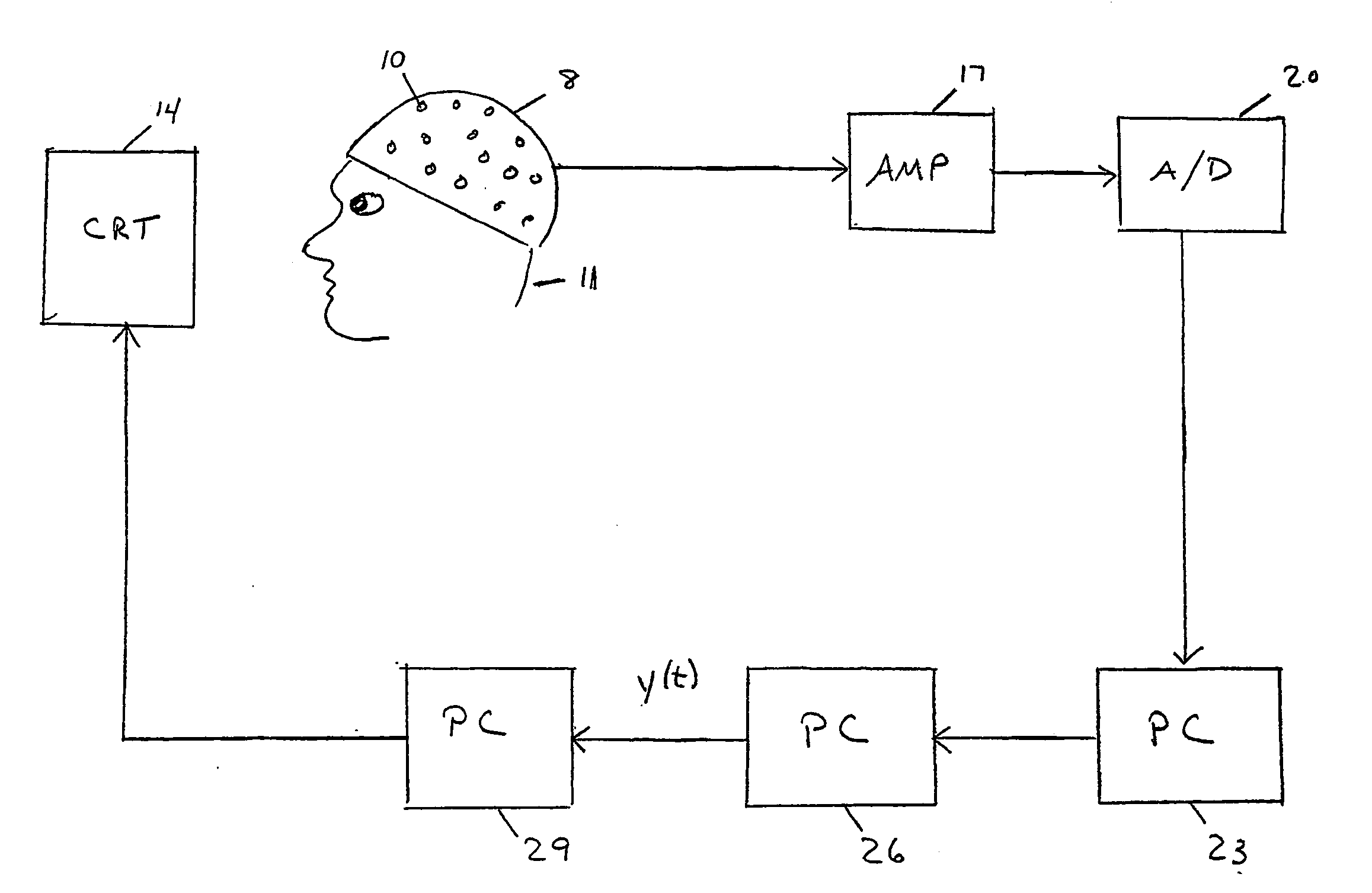
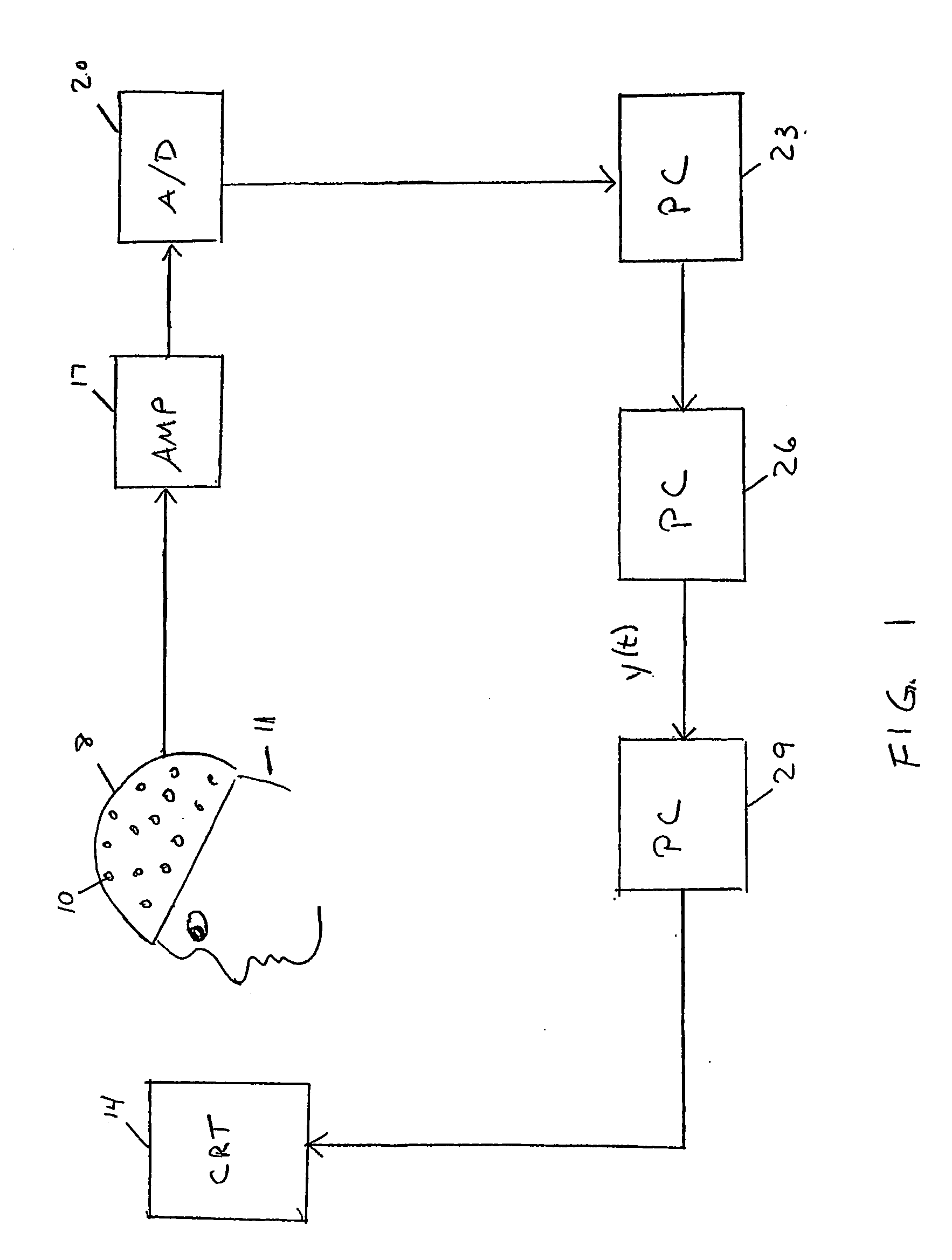
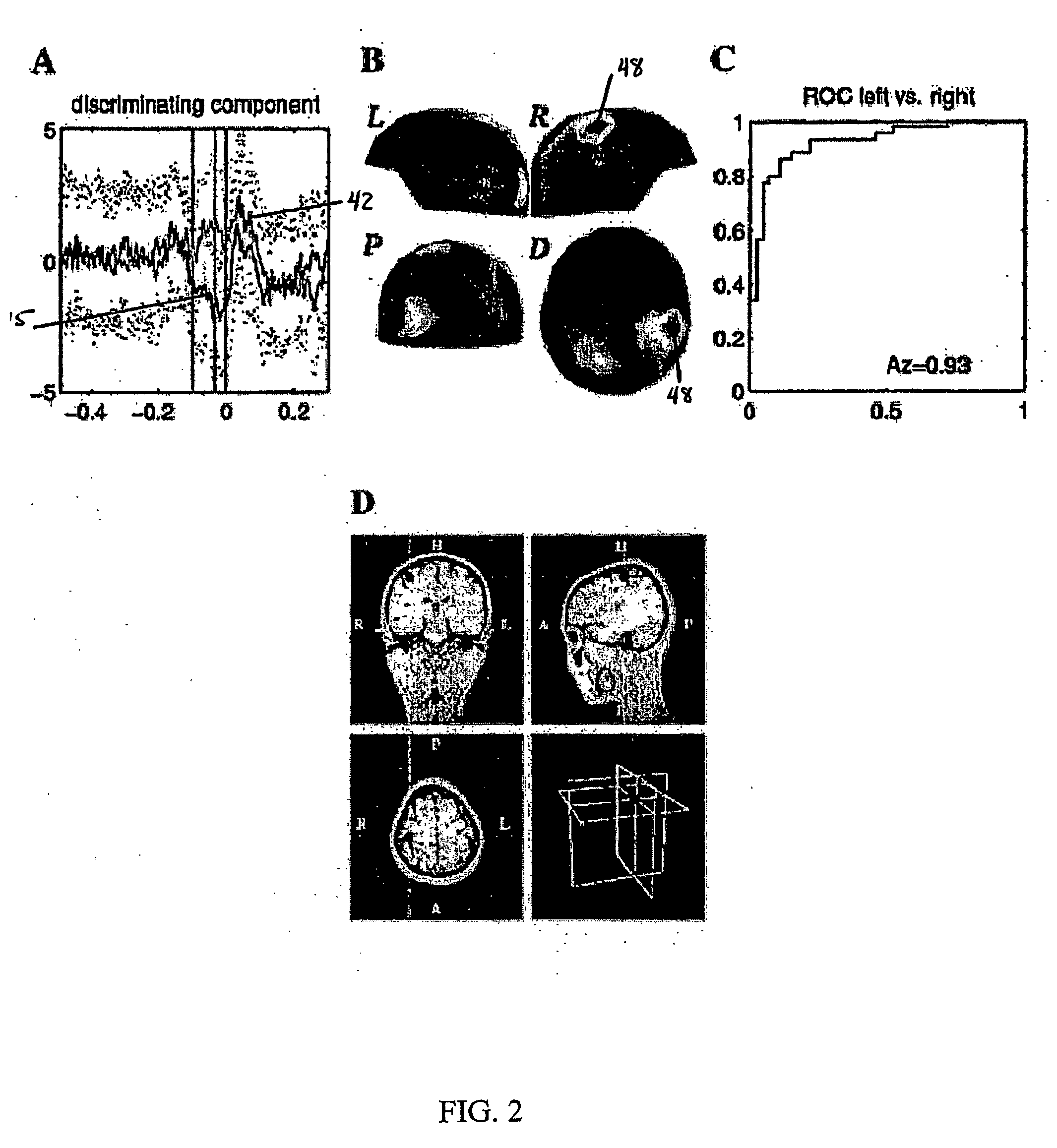
- The system employs conventional linear discrimination to compute optimal spatial integration of brain activity sensors, exploiting timing information within a short time window relative to external events, allowing for single-trial discrimination and comparison to functional neuroanatomy for validation.

A method of processing brain signals in a brain-computer interface system
PatentWO2024167397A1
Innovation
- A method involving obtaining brain signals, analyzing them through clustering and matrix transposing, extracting features, dividing into slices, transforming into grayscale images, and classifying using a deep learning classifier to translate signals into commands, specifically employing gamma frequency signals and unsupervised learning to reduce artifacts and enhance information transfer.


Regulatory Framework for BCI Medical Device Applications
The regulatory landscape for brain-computer interface medical devices presents a complex framework that directly impacts the development and deployment of optimized BCI algorithms. Current regulatory pathways primarily fall under existing medical device classifications, with the FDA treating BCIs as Class II or Class III devices depending on their invasiveness and intended use. The European Union's Medical Device Regulation (MDR) similarly categorizes BCIs based on risk assessment, requiring comprehensive clinical evidence for market approval.
Algorithm optimization for faster response times introduces specific regulatory considerations that manufacturers must address during the approval process. Real-time processing capabilities and reduced latency requirements necessitate rigorous validation protocols to demonstrate both safety and efficacy. Regulatory bodies require extensive documentation of algorithm performance metrics, including response time benchmarks, accuracy rates under various conditions, and failure mode analyses.
Clinical trial requirements for optimized BCI systems demand sophisticated study designs that can adequately capture the benefits of improved response times while ensuring patient safety. The FDA's breakthrough device designation program offers expedited pathways for innovative BCI technologies that demonstrate substantial improvements over existing alternatives, potentially accelerating market entry for significantly optimized algorithms.
Data security and privacy regulations add another layer of complexity to BCI medical device approval. The integration of advanced algorithms capable of processing neural signals at higher speeds raises concerns about data handling, storage, and transmission protocols. HIPAA compliance in the United States and GDPR requirements in Europe mandate robust cybersecurity measures and patient consent frameworks.
Post-market surveillance requirements for BCI medical devices include continuous monitoring of algorithm performance and adverse event reporting. Regulatory agencies expect manufacturers to implement comprehensive quality management systems that can track algorithm updates, performance degradation, and user feedback. The dynamic nature of machine learning algorithms used in modern BCIs requires adaptive regulatory approaches that can accommodate software updates while maintaining safety standards.
International harmonization efforts through organizations like the International Medical Device Regulators Forum (IMDRF) are working to establish consistent standards for BCI medical devices across different jurisdictions. These initiatives aim to streamline the approval process for optimized BCI algorithms while maintaining rigorous safety and efficacy requirements across global markets.
Algorithm optimization for faster response times introduces specific regulatory considerations that manufacturers must address during the approval process. Real-time processing capabilities and reduced latency requirements necessitate rigorous validation protocols to demonstrate both safety and efficacy. Regulatory bodies require extensive documentation of algorithm performance metrics, including response time benchmarks, accuracy rates under various conditions, and failure mode analyses.
Clinical trial requirements for optimized BCI systems demand sophisticated study designs that can adequately capture the benefits of improved response times while ensuring patient safety. The FDA's breakthrough device designation program offers expedited pathways for innovative BCI technologies that demonstrate substantial improvements over existing alternatives, potentially accelerating market entry for significantly optimized algorithms.
Data security and privacy regulations add another layer of complexity to BCI medical device approval. The integration of advanced algorithms capable of processing neural signals at higher speeds raises concerns about data handling, storage, and transmission protocols. HIPAA compliance in the United States and GDPR requirements in Europe mandate robust cybersecurity measures and patient consent frameworks.
Post-market surveillance requirements for BCI medical devices include continuous monitoring of algorithm performance and adverse event reporting. Regulatory agencies expect manufacturers to implement comprehensive quality management systems that can track algorithm updates, performance degradation, and user feedback. The dynamic nature of machine learning algorithms used in modern BCIs requires adaptive regulatory approaches that can accommodate software updates while maintaining safety standards.
International harmonization efforts through organizations like the International Medical Device Regulators Forum (IMDRF) are working to establish consistent standards for BCI medical devices across different jurisdictions. These initiatives aim to streamline the approval process for optimized BCI algorithms while maintaining rigorous safety and efficacy requirements across global markets.
Ethical Considerations in Neural Data Processing Privacy
The optimization of brain-computer interface algorithms for faster response times introduces significant ethical considerations regarding neural data processing privacy. As BCI systems become more sophisticated and capable of real-time neural signal interpretation, the volume and sensitivity of collected neural data exponentially increase, raising fundamental questions about data ownership, consent, and protection.
Neural data represents the most intimate form of personal information, potentially revealing thoughts, intentions, emotions, and cognitive states. Unlike traditional biometric data, neural signals can provide unprecedented insights into an individual's mental processes, making privacy protection paramount. The continuous nature of BCI data collection, required for optimal algorithm performance, creates persistent privacy risks that extend beyond conventional data protection frameworks.
Informed consent presents unique challenges in neural data processing contexts. Users may not fully comprehend the implications of sharing neural data, particularly regarding potential future applications or algorithmic improvements that could extract previously undetectable information patterns. The dynamic nature of machine learning algorithms means that data initially collected for specific purposes might later reveal additional personal insights through advanced analytical techniques.
Data anonymization becomes particularly complex with neural data due to the unique neural signatures that could potentially identify individuals even after traditional anonymization processes. The temporal patterns and individual neural characteristics embedded in BCI data streams create persistent identification risks that conventional privacy protection methods may inadequately address.
Cross-border data transfer regulations add another layer of complexity, as different jurisdictions maintain varying standards for neural data protection. The global nature of BCI research and development necessitates harmonized privacy frameworks that can accommodate rapid technological advancement while maintaining robust protection standards.
The integration of artificial intelligence in BCI algorithm optimization raises concerns about algorithmic transparency and user control over neural data processing. Users should maintain meaningful control over how their neural data is processed, stored, and utilized for algorithm improvement, requiring clear governance frameworks that balance innovation needs with privacy rights.
Establishing comprehensive privacy-by-design principles specifically tailored for neural data processing becomes essential as BCI technologies advance toward mainstream adoption.
Neural data represents the most intimate form of personal information, potentially revealing thoughts, intentions, emotions, and cognitive states. Unlike traditional biometric data, neural signals can provide unprecedented insights into an individual's mental processes, making privacy protection paramount. The continuous nature of BCI data collection, required for optimal algorithm performance, creates persistent privacy risks that extend beyond conventional data protection frameworks.
Informed consent presents unique challenges in neural data processing contexts. Users may not fully comprehend the implications of sharing neural data, particularly regarding potential future applications or algorithmic improvements that could extract previously undetectable information patterns. The dynamic nature of machine learning algorithms means that data initially collected for specific purposes might later reveal additional personal insights through advanced analytical techniques.
Data anonymization becomes particularly complex with neural data due to the unique neural signatures that could potentially identify individuals even after traditional anonymization processes. The temporal patterns and individual neural characteristics embedded in BCI data streams create persistent identification risks that conventional privacy protection methods may inadequately address.
Cross-border data transfer regulations add another layer of complexity, as different jurisdictions maintain varying standards for neural data protection. The global nature of BCI research and development necessitates harmonized privacy frameworks that can accommodate rapid technological advancement while maintaining robust protection standards.
The integration of artificial intelligence in BCI algorithm optimization raises concerns about algorithmic transparency and user control over neural data processing. Users should maintain meaningful control over how their neural data is processed, stored, and utilized for algorithm improvement, requiring clear governance frameworks that balance innovation needs with privacy rights.
Establishing comprehensive privacy-by-design principles specifically tailored for neural data processing becomes essential as BCI technologies advance toward mainstream adoption.
Unlock deeper insights with Patsnap Eureka Quick Research — get a full tech report to explore trends and direct your research. Try now!
Generate Your Research Report Instantly with AI Agent
Supercharge your innovation with Patsnap Eureka AI Agent Platform!