

Optimizing Brain-Computer Interface Latency in IoT Devices
MAR 5, 20268 MIN READ
Generate Your Research Report Instantly with AI Agent
PatSnap Eureka helps you evaluate technical feasibility & market potential.
BCI-IoT Integration Background and Latency Objectives
Brain-Computer Interface technology has undergone remarkable evolution since its inception in the 1970s, transitioning from basic signal detection experiments to sophisticated neural control systems. The convergence of BCI technology with Internet of Things devices represents a paradigm shift in human-machine interaction, enabling direct neural control of connected environments. This integration promises to revolutionize accessibility, healthcare monitoring, and ambient intelligence systems.
The historical trajectory of BCI development reveals three distinct phases: exploratory research focusing on signal acquisition, algorithmic advancement in signal processing and machine learning, and recent emphasis on real-time applications. Early systems achieved latencies measured in seconds, while contemporary implementations target sub-100 millisecond response times. The integration with IoT infrastructure introduces additional complexity layers, as neural signals must traverse multiple processing stages before actuating connected devices.
Current BCI-IoT systems face significant latency challenges stemming from signal acquisition delays, computational processing overhead, wireless transmission bottlenecks, and IoT device response times. Traditional BCI systems operating in isolation typically achieve 50-200 millisecond latencies, but IoT integration can increase total system latency to 300-800 milliseconds, severely impacting user experience and practical applicability.
The primary technical objective centers on achieving end-to-end latencies below 100 milliseconds for BCI-IoT systems, matching human perceptual thresholds for real-time interaction. This target encompasses the complete signal pathway from neural signal acquisition through IoT device actuation. Secondary objectives include maintaining signal fidelity across wireless transmission, optimizing power consumption for portable BCI devices, and ensuring robust performance across diverse IoT network topologies.
Emerging applications driving these latency requirements include smart home control for individuals with mobility limitations, real-time health monitoring systems, and augmented reality interfaces. These use cases demand near-instantaneous response times to maintain user engagement and safety. The convergence of 5G networks, edge computing capabilities, and advanced signal processing algorithms creates unprecedented opportunities for achieving these ambitious latency targets while expanding BCI accessibility to broader user populations.
The historical trajectory of BCI development reveals three distinct phases: exploratory research focusing on signal acquisition, algorithmic advancement in signal processing and machine learning, and recent emphasis on real-time applications. Early systems achieved latencies measured in seconds, while contemporary implementations target sub-100 millisecond response times. The integration with IoT infrastructure introduces additional complexity layers, as neural signals must traverse multiple processing stages before actuating connected devices.
Current BCI-IoT systems face significant latency challenges stemming from signal acquisition delays, computational processing overhead, wireless transmission bottlenecks, and IoT device response times. Traditional BCI systems operating in isolation typically achieve 50-200 millisecond latencies, but IoT integration can increase total system latency to 300-800 milliseconds, severely impacting user experience and practical applicability.
The primary technical objective centers on achieving end-to-end latencies below 100 milliseconds for BCI-IoT systems, matching human perceptual thresholds for real-time interaction. This target encompasses the complete signal pathway from neural signal acquisition through IoT device actuation. Secondary objectives include maintaining signal fidelity across wireless transmission, optimizing power consumption for portable BCI devices, and ensuring robust performance across diverse IoT network topologies.
Emerging applications driving these latency requirements include smart home control for individuals with mobility limitations, real-time health monitoring systems, and augmented reality interfaces. These use cases demand near-instantaneous response times to maintain user engagement and safety. The convergence of 5G networks, edge computing capabilities, and advanced signal processing algorithms creates unprecedented opportunities for achieving these ambitious latency targets while expanding BCI accessibility to broader user populations.
Market Demand for Real-time BCI-IoT Applications
The convergence of brain-computer interfaces and Internet of Things technologies has created unprecedented opportunities across multiple market segments, driven by the critical need for real-time neural signal processing and instantaneous device control. Healthcare applications represent the most mature and rapidly expanding market segment, where real-time BCI-IoT systems enable continuous monitoring of neurological conditions, immediate seizure detection, and adaptive therapeutic interventions. The demand for ultra-low latency solutions in medical environments stems from the life-critical nature of applications where millisecond delays can significantly impact patient outcomes.
Smart home automation has emerged as a compelling consumer market for real-time BCI-IoT applications, particularly for individuals with mobility limitations or disabilities. The market demand centers on seamless integration between neural commands and household devices, requiring latency optimization to ensure natural user experiences. Users expect immediate responses when controlling lighting, temperature, security systems, or entertainment devices through thought patterns, making real-time processing capabilities essential for market acceptance.
Industrial automation and manufacturing sectors demonstrate growing interest in BCI-IoT solutions for hands-free equipment control and safety monitoring. The demand for real-time applications in these environments focuses on reducing workplace accidents through continuous cognitive load assessment and enabling operators to control complex machinery through neural interfaces without physical interaction. Manufacturing facilities require instantaneous response times to maintain production efficiency and worker safety standards.
The gaming and entertainment industry has identified significant market potential for immersive BCI-IoT experiences, where real-time neural feedback enhances user engagement and creates new interactive paradigms. Market demand in this sector emphasizes ultra-responsive systems that can translate neural signals into game actions without perceptible delays, as latency directly impacts user satisfaction and competitive gameplay.
Assistive technology markets show substantial demand for real-time BCI-IoT solutions that restore communication and mobility capabilities for individuals with severe disabilities. These applications require optimized latency to enable natural interaction patterns, whether controlling prosthetic devices, communication systems, or environmental controls. The market emphasizes reliability and responsiveness as fundamental requirements for user independence and quality of life improvements.
Smart home automation has emerged as a compelling consumer market for real-time BCI-IoT applications, particularly for individuals with mobility limitations or disabilities. The market demand centers on seamless integration between neural commands and household devices, requiring latency optimization to ensure natural user experiences. Users expect immediate responses when controlling lighting, temperature, security systems, or entertainment devices through thought patterns, making real-time processing capabilities essential for market acceptance.
Industrial automation and manufacturing sectors demonstrate growing interest in BCI-IoT solutions for hands-free equipment control and safety monitoring. The demand for real-time applications in these environments focuses on reducing workplace accidents through continuous cognitive load assessment and enabling operators to control complex machinery through neural interfaces without physical interaction. Manufacturing facilities require instantaneous response times to maintain production efficiency and worker safety standards.
The gaming and entertainment industry has identified significant market potential for immersive BCI-IoT experiences, where real-time neural feedback enhances user engagement and creates new interactive paradigms. Market demand in this sector emphasizes ultra-responsive systems that can translate neural signals into game actions without perceptible delays, as latency directly impacts user satisfaction and competitive gameplay.
Assistive technology markets show substantial demand for real-time BCI-IoT solutions that restore communication and mobility capabilities for individuals with severe disabilities. These applications require optimized latency to enable natural interaction patterns, whether controlling prosthetic devices, communication systems, or environmental controls. The market emphasizes reliability and responsiveness as fundamental requirements for user independence and quality of life improvements.
Current BCI Latency Issues in IoT Environments
Brain-Computer Interface systems integrated with IoT devices face significant latency challenges that fundamentally limit their practical deployment and real-world effectiveness. Current BCI-IoT implementations typically experience end-to-end latencies ranging from 200 to 800 milliseconds, far exceeding the sub-100ms threshold required for seamless human-machine interaction. This latency bottleneck stems from multiple cascading delays across the signal processing pipeline, creating substantial barriers to responsive neural control applications.
Signal acquisition represents the first major latency contributor in IoT-based BCI systems. Traditional electroencephalography sensors require analog-to-digital conversion processes that introduce 20-50ms delays, while wireless transmission protocols add another 15-30ms depending on network conditions. The computational overhead of real-time signal preprocessing, including noise filtering and artifact removal, contributes an additional 50-100ms to the overall system response time.
Processing and classification delays constitute another critical bottleneck in current implementations. Machine learning algorithms deployed on resource-constrained IoT devices often require 100-200ms for feature extraction and intent classification. The limited computational capacity of edge devices forces many systems to rely on cloud-based processing, introducing network transmission delays of 50-150ms each way, effectively doubling the communication overhead.
Communication protocol inefficiencies further exacerbate latency issues in distributed BCI-IoT architectures. Standard IoT protocols like MQTT and CoAP, while suitable for general sensor data, lack the low-latency optimizations required for real-time neural interfaces. Buffer management strategies and packet prioritization mechanisms remain inadequately addressed in current implementations, leading to unpredictable jitter and increased average response times.
Hardware limitations in existing IoT platforms create additional constraints on BCI performance optimization. Most commercial IoT devices utilize general-purpose microcontrollers with insufficient parallel processing capabilities for real-time neural signal analysis. Memory bandwidth restrictions and limited floating-point processing power force suboptimal algorithm implementations that prioritize resource efficiency over response time minimization.
The integration complexity between heterogeneous IoT devices and BCI systems introduces synchronization challenges that compound latency issues. Current solutions lack standardized timing protocols specifically designed for neural interface applications, resulting in inconsistent performance across different device configurations and network topologies.
Signal acquisition represents the first major latency contributor in IoT-based BCI systems. Traditional electroencephalography sensors require analog-to-digital conversion processes that introduce 20-50ms delays, while wireless transmission protocols add another 15-30ms depending on network conditions. The computational overhead of real-time signal preprocessing, including noise filtering and artifact removal, contributes an additional 50-100ms to the overall system response time.
Processing and classification delays constitute another critical bottleneck in current implementations. Machine learning algorithms deployed on resource-constrained IoT devices often require 100-200ms for feature extraction and intent classification. The limited computational capacity of edge devices forces many systems to rely on cloud-based processing, introducing network transmission delays of 50-150ms each way, effectively doubling the communication overhead.
Communication protocol inefficiencies further exacerbate latency issues in distributed BCI-IoT architectures. Standard IoT protocols like MQTT and CoAP, while suitable for general sensor data, lack the low-latency optimizations required for real-time neural interfaces. Buffer management strategies and packet prioritization mechanisms remain inadequately addressed in current implementations, leading to unpredictable jitter and increased average response times.
Hardware limitations in existing IoT platforms create additional constraints on BCI performance optimization. Most commercial IoT devices utilize general-purpose microcontrollers with insufficient parallel processing capabilities for real-time neural signal analysis. Memory bandwidth restrictions and limited floating-point processing power force suboptimal algorithm implementations that prioritize resource efficiency over response time minimization.
The integration complexity between heterogeneous IoT devices and BCI systems introduces synchronization challenges that compound latency issues. Current solutions lack standardized timing protocols specifically designed for neural interface applications, resulting in inconsistent performance across different device configurations and network topologies.
Existing BCI Latency Optimization Solutions
01 Signal processing optimization for latency reduction
Brain-computer interface systems employ advanced signal processing algorithms to minimize latency in neural signal acquisition and interpretation. These methods include real-time filtering, feature extraction, and pattern recognition techniques that reduce computational delays. Optimization of data processing pipelines and parallel processing architectures enable faster translation of brain signals into control commands, improving overall system responsiveness.- Signal processing optimization for latency reduction: Brain-computer interface systems employ advanced signal processing algorithms to minimize latency in neural signal acquisition and interpretation. These methods include real-time filtering, feature extraction, and pattern recognition techniques that reduce computational delays. Optimization of data processing pipelines and parallel processing architectures enable faster translation of brain signals into control commands, improving overall system responsiveness.
- Hardware architecture for low-latency neural signal acquisition: Specialized hardware designs focus on reducing latency through high-speed data acquisition systems and efficient electrode configurations. These implementations utilize dedicated processing units, optimized analog-to-digital converters, and streamlined data transmission pathways. The hardware solutions minimize delays between neural signal detection and system response, enabling more natural and immediate control in brain-computer interface applications.
- Adaptive algorithms for predictive latency compensation: Machine learning and adaptive algorithms are employed to predict user intentions and compensate for inherent system delays. These approaches analyze historical neural patterns to anticipate commands before complete signal processing, effectively reducing perceived latency. The systems continuously learn and adjust to individual user characteristics, improving prediction accuracy and minimizing the time gap between thought and action.
- Wireless communication protocols for minimal transmission delay: Advanced wireless communication technologies are integrated to reduce latency in data transmission between neural sensors and processing units. These protocols optimize bandwidth allocation, implement low-latency encoding schemes, and utilize high-frequency transmission methods. The wireless solutions maintain signal integrity while minimizing delays, enabling untethered brain-computer interface systems with performance comparable to wired configurations.
- Hybrid processing architectures combining edge and cloud computing: Distributed computing frameworks balance local edge processing with cloud-based analysis to optimize latency performance. Critical time-sensitive operations are handled at the edge device level, while complex computations leverage cloud resources. This hybrid approach reduces overall system latency by performing immediate response tasks locally while maintaining access to powerful computational capabilities for advanced processing and model updates.
02 Hardware architecture for low-latency neural signal acquisition
Specialized hardware designs focus on reducing latency through high-speed data acquisition systems and efficient electrode configurations. These implementations utilize dedicated processing units, optimized analog-to-digital converters, and streamlined data transmission pathways. The hardware solutions minimize delays between neural signal detection and system response, enabling more natural and immediate control in brain-computer interface applications.Expand Specific Solutions03 Adaptive algorithms for predictive latency compensation
Machine learning and adaptive algorithms are employed to predict user intentions and compensate for inherent system delays. These approaches analyze historical neural patterns to anticipate commands before complete signal processing, effectively reducing perceived latency. Predictive models continuously learn from user behavior to improve accuracy and responsiveness over time.Expand Specific Solutions04 Wireless communication protocols for minimal transmission delay
Advanced wireless communication technologies are integrated to reduce latency in data transmission between neural sensors and processing units. These protocols optimize bandwidth allocation, implement low-latency encoding schemes, and utilize high-frequency transmission methods. The wireless solutions maintain signal integrity while minimizing delays associated with data transfer in untethered brain-computer interface systems.Expand Specific Solutions05 Hybrid processing architectures combining edge and cloud computing
Distributed computing frameworks leverage both local edge processing and cloud-based resources to balance computational load and minimize latency. Critical time-sensitive operations are performed at the edge near the signal source, while complex analyses utilize cloud resources. This hybrid approach optimizes the trade-off between processing power and response time, ensuring low-latency performance for real-time brain-computer interface applications.Expand Specific Solutions
Core Patents in Low-Latency BCI Processing
Brain-computer interface apparatus and information acquisition method
PatentWO2023125478A1
Innovation
- Using wavelength division-time division multiplexing technology, combined with wide-spectrum pulsed light and time domain delay technology, through the light source, time domain delay module, wavelength-related spectrometry module and sensor network, the decomposition of multi-wave pulse light trains and sparse pulse light trains are achieved The transmission improves the spatial density of the sensing point layout, reduces the system cost, and achieves high spatial resolution while ensuring small integration.


Brain-computer interface device, operation method therefor, and brain-computer interface system
PatentWO2025156995A1
Innovation
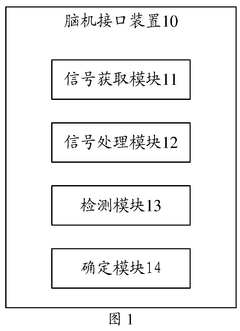
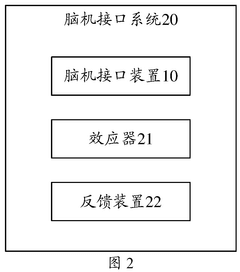
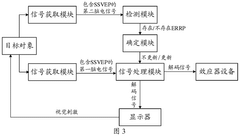
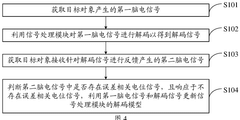
- By introducing signal acquisition modules, signal processing modules, detection modules and determination modules into the brain-computer interface device, the decoding model is realized using the memristor array, and error-related potential signals are detected during the interaction process, the decoding model parameters are updated, and the electroencephalopathy and memristor conductance drift phenomenon are overcome.
Privacy and Security in BCI-IoT Systems
Privacy and security concerns represent critical challenges in BCI-IoT systems, where neural data transmission and processing create unprecedented vulnerabilities. The intimate nature of brain signals, containing potentially sensitive cognitive and emotional information, demands robust protection mechanisms that extend beyond traditional IoT security frameworks. Current implementations face significant gaps in end-to-end encryption, authentication protocols, and data anonymization techniques specifically designed for neural signal processing.
The distributed architecture of BCI-IoT networks introduces multiple attack vectors, including signal interception during wireless transmission, unauthorized access to edge computing nodes, and potential manipulation of neural feedback loops. Traditional encryption methods often conflict with latency optimization requirements, creating a fundamental tension between security and performance. Real-time neural data processing demands lightweight cryptographic solutions that can operate within microsecond timeframes while maintaining cryptographic strength.
Data privacy challenges emerge from the persistent and identifiable nature of neural signatures, which can potentially reveal personal thoughts, medical conditions, and behavioral patterns. Unlike conventional biometric data, brain signals carry temporal context and emotional states, making anonymization particularly complex. Current privacy-preserving techniques such as differential privacy and homomorphic encryption require significant computational overhead that conflicts with real-time processing requirements.
Authentication mechanisms in BCI-IoT systems must address both device-level and user-level security while accommodating the dynamic nature of neural signals. Continuous authentication based on neural patterns presents opportunities for enhanced security but introduces risks of signal spoofing and replay attacks. The challenge lies in developing authentication protocols that can distinguish between legitimate neural variations and malicious interference.
Regulatory compliance adds another layer of complexity, as BCI-IoT systems must navigate healthcare data protection regulations, IoT security standards, and emerging neurotechnology governance frameworks. The intersection of medical device regulations with IoT security requirements creates compliance challenges that current frameworks inadequately address, necessitating new approaches to privacy-by-design implementation in neural interface systems.
The distributed architecture of BCI-IoT networks introduces multiple attack vectors, including signal interception during wireless transmission, unauthorized access to edge computing nodes, and potential manipulation of neural feedback loops. Traditional encryption methods often conflict with latency optimization requirements, creating a fundamental tension between security and performance. Real-time neural data processing demands lightweight cryptographic solutions that can operate within microsecond timeframes while maintaining cryptographic strength.
Data privacy challenges emerge from the persistent and identifiable nature of neural signatures, which can potentially reveal personal thoughts, medical conditions, and behavioral patterns. Unlike conventional biometric data, brain signals carry temporal context and emotional states, making anonymization particularly complex. Current privacy-preserving techniques such as differential privacy and homomorphic encryption require significant computational overhead that conflicts with real-time processing requirements.
Authentication mechanisms in BCI-IoT systems must address both device-level and user-level security while accommodating the dynamic nature of neural signals. Continuous authentication based on neural patterns presents opportunities for enhanced security but introduces risks of signal spoofing and replay attacks. The challenge lies in developing authentication protocols that can distinguish between legitimate neural variations and malicious interference.
Regulatory compliance adds another layer of complexity, as BCI-IoT systems must navigate healthcare data protection regulations, IoT security standards, and emerging neurotechnology governance frameworks. The intersection of medical device regulations with IoT security requirements creates compliance challenges that current frameworks inadequately address, necessitating new approaches to privacy-by-design implementation in neural interface systems.
Edge Computing for Real-time BCI Processing
Edge computing represents a paradigm shift in Brain-Computer Interface processing architecture, moving computational resources closer to the data source to minimize latency-critical operations. Traditional cloud-based BCI systems suffer from inherent network delays that can range from 50-200 milliseconds, making them unsuitable for real-time neural signal processing where response times under 10 milliseconds are often required for optimal user experience.
The deployment of edge computing nodes in BCI-IoT ecosystems enables distributed processing capabilities that can handle signal preprocessing, feature extraction, and initial classification tasks locally. These edge nodes typically incorporate specialized hardware accelerators such as neuromorphic chips, FPGA-based signal processors, and dedicated AI inference engines optimized for neural signal patterns. This distributed architecture reduces the computational burden on central processing units while maintaining low-latency performance.
Real-time BCI processing at the edge involves multi-stage pipeline optimization where raw neural signals undergo immediate preprocessing including noise filtering, artifact removal, and signal conditioning. Advanced edge computing frameworks implement predictive caching mechanisms that anticipate user intentions based on historical neural patterns, further reducing response latency through proactive processing.
The integration of 5G and upcoming 6G networks with edge computing infrastructure creates opportunities for ultra-low latency communication between distributed BCI nodes. Network slicing technologies enable dedicated bandwidth allocation for BCI applications, ensuring consistent performance even under varying network conditions. Edge-to-edge communication protocols facilitate seamless handover between processing nodes as users move within IoT environments.
Machine learning model optimization for edge deployment requires careful consideration of computational constraints and power limitations. Techniques such as model quantization, pruning, and knowledge distillation enable complex neural network architectures to operate efficiently on resource-constrained edge devices while maintaining acceptable accuracy levels for BCI classification tasks.
Security and privacy considerations become paramount when implementing edge computing for BCI systems, as sensitive neural data must be processed locally while maintaining encryption standards. Federated learning approaches allow model training across distributed edge nodes without centralizing raw neural data, addressing privacy concerns while improving system performance through collaborative learning mechanisms.
The deployment of edge computing nodes in BCI-IoT ecosystems enables distributed processing capabilities that can handle signal preprocessing, feature extraction, and initial classification tasks locally. These edge nodes typically incorporate specialized hardware accelerators such as neuromorphic chips, FPGA-based signal processors, and dedicated AI inference engines optimized for neural signal patterns. This distributed architecture reduces the computational burden on central processing units while maintaining low-latency performance.
Real-time BCI processing at the edge involves multi-stage pipeline optimization where raw neural signals undergo immediate preprocessing including noise filtering, artifact removal, and signal conditioning. Advanced edge computing frameworks implement predictive caching mechanisms that anticipate user intentions based on historical neural patterns, further reducing response latency through proactive processing.
The integration of 5G and upcoming 6G networks with edge computing infrastructure creates opportunities for ultra-low latency communication between distributed BCI nodes. Network slicing technologies enable dedicated bandwidth allocation for BCI applications, ensuring consistent performance even under varying network conditions. Edge-to-edge communication protocols facilitate seamless handover between processing nodes as users move within IoT environments.
Machine learning model optimization for edge deployment requires careful consideration of computational constraints and power limitations. Techniques such as model quantization, pruning, and knowledge distillation enable complex neural network architectures to operate efficiently on resource-constrained edge devices while maintaining acceptable accuracy levels for BCI classification tasks.
Security and privacy considerations become paramount when implementing edge computing for BCI systems, as sensitive neural data must be processed locally while maintaining encryption standards. Federated learning approaches allow model training across distributed edge nodes without centralizing raw neural data, addressing privacy concerns while improving system performance through collaborative learning mechanisms.
Unlock deeper insights with PatSnap Eureka Quick Research — get a full tech report to explore trends and direct your research. Try now!
Generate Your Research Report Instantly with AI Agent
Supercharge your innovation with PatSnap Eureka AI Agent Platform!