PHEV alliance building for collaborative research and development
AUG 14, 20259 MIN READ
Generate Your Research Report Instantly with AI Agent
PatSnap Eureka helps you evaluate technical feasibility & market potential.
PHEV Alliance Background and Objectives
The Plug-in Hybrid Electric Vehicle (PHEV) Alliance represents a groundbreaking collaborative initiative in the automotive industry, aimed at accelerating the development and adoption of PHEV technologies. This alliance emerges against the backdrop of increasing global pressure to reduce carbon emissions and transition towards sustainable transportation solutions. The primary objective of the PHEV Alliance is to foster joint research and development efforts among key industry players, including automotive manufacturers, component suppliers, and technology firms.
The formation of this alliance is driven by the recognition that PHEVs serve as a crucial bridge technology in the transition from conventional internal combustion engines to fully electric vehicles. PHEVs offer a compromise between the range anxiety associated with pure electric vehicles and the environmental concerns of traditional gasoline-powered cars. By combining the benefits of both electric and conventional powertrains, PHEVs provide a practical solution for consumers while significantly reducing emissions.
The PHEV Alliance aims to address several critical challenges facing the industry. These include improving battery technology to increase electric-only range, enhancing powertrain efficiency to optimize the integration of electric and combustion systems, and developing standardized charging infrastructure to support widespread PHEV adoption. By pooling resources and expertise, alliance members seek to accelerate innovation, reduce development costs, and bring advanced PHEV technologies to market more rapidly.
Another key objective of the alliance is to establish industry-wide standards for PHEV technologies. This standardization effort is crucial for ensuring interoperability between different manufacturers' systems, streamlining the supply chain, and ultimately reducing production costs. By working collaboratively, alliance members can also more effectively engage with policymakers and regulatory bodies to shape favorable policies and incentives for PHEV adoption.
The PHEV Alliance also recognizes the importance of consumer education and market development. As such, it aims to conduct joint marketing initiatives to increase public awareness of PHEV benefits and address common misconceptions. This collaborative approach to market development is expected to accelerate consumer acceptance and drive demand for PHEV technologies across various vehicle segments.
In the broader context of the automotive industry's evolution, the PHEV Alliance represents a strategic response to the complex challenges of transitioning to sustainable mobility. By fostering collaboration in research and development, the alliance seeks to leverage the collective strengths of its members to navigate the technological, economic, and regulatory landscapes shaping the future of transportation. Through these concerted efforts, the PHEV Alliance aims to position plug-in hybrid technology as a viable and essential component of the global automotive industry's sustainability strategy.
The formation of this alliance is driven by the recognition that PHEVs serve as a crucial bridge technology in the transition from conventional internal combustion engines to fully electric vehicles. PHEVs offer a compromise between the range anxiety associated with pure electric vehicles and the environmental concerns of traditional gasoline-powered cars. By combining the benefits of both electric and conventional powertrains, PHEVs provide a practical solution for consumers while significantly reducing emissions.
The PHEV Alliance aims to address several critical challenges facing the industry. These include improving battery technology to increase electric-only range, enhancing powertrain efficiency to optimize the integration of electric and combustion systems, and developing standardized charging infrastructure to support widespread PHEV adoption. By pooling resources and expertise, alliance members seek to accelerate innovation, reduce development costs, and bring advanced PHEV technologies to market more rapidly.
Another key objective of the alliance is to establish industry-wide standards for PHEV technologies. This standardization effort is crucial for ensuring interoperability between different manufacturers' systems, streamlining the supply chain, and ultimately reducing production costs. By working collaboratively, alliance members can also more effectively engage with policymakers and regulatory bodies to shape favorable policies and incentives for PHEV adoption.
The PHEV Alliance also recognizes the importance of consumer education and market development. As such, it aims to conduct joint marketing initiatives to increase public awareness of PHEV benefits and address common misconceptions. This collaborative approach to market development is expected to accelerate consumer acceptance and drive demand for PHEV technologies across various vehicle segments.
In the broader context of the automotive industry's evolution, the PHEV Alliance represents a strategic response to the complex challenges of transitioning to sustainable mobility. By fostering collaboration in research and development, the alliance seeks to leverage the collective strengths of its members to navigate the technological, economic, and regulatory landscapes shaping the future of transportation. Through these concerted efforts, the PHEV Alliance aims to position plug-in hybrid technology as a viable and essential component of the global automotive industry's sustainability strategy.
Market Analysis for PHEV Collaboration
The market for Plug-in Hybrid Electric Vehicles (PHEVs) has shown significant growth potential in recent years, driven by increasing environmental concerns, government regulations, and consumer demand for more fuel-efficient vehicles. As automakers seek to capitalize on this trend, collaborative research and development efforts through PHEV alliances have become increasingly important.
The global PHEV market is expected to expand rapidly, with projections indicating substantial growth over the next decade. This growth is fueled by several factors, including stricter emissions regulations in major markets, advancements in battery technology, and increasing consumer acceptance of electrified vehicles. Additionally, many countries are offering incentives and subsidies to promote PHEV adoption, further stimulating market demand.
In terms of regional distribution, Europe and China are currently leading the PHEV market, with North America following closely behind. These regions have implemented supportive policies and infrastructure development initiatives, creating favorable conditions for PHEV adoption. Emerging markets in Asia and South America are also showing increasing interest in PHEVs, presenting new opportunities for expansion.
The competitive landscape of the PHEV market is characterized by a mix of established automakers and new entrants. Traditional automotive giants are investing heavily in PHEV technology to maintain their market position, while new players, particularly from the technology sector, are entering the market with innovative approaches. This dynamic environment has led to increased competition and accelerated technological advancements.
Consumer preferences in the PHEV market are evolving, with buyers showing interest in longer electric-only driving ranges, faster charging capabilities, and improved overall performance. There is also a growing demand for PHEVs in various vehicle segments, from compact cars to SUVs and light-duty trucks, indicating a broadening market appeal.
The formation of PHEV alliances for collaborative research and development presents several advantages in this competitive landscape. These partnerships allow companies to share costs, pool resources, and leverage complementary expertise. By collaborating, alliance members can accelerate innovation, reduce time-to-market for new technologies, and achieve economies of scale in production.
Furthermore, PHEV alliances can help address key challenges facing the industry, such as standardization of charging infrastructure, battery technology improvements, and supply chain optimization. Collaborative efforts can also lead to the development of more cost-effective solutions, potentially lowering the price point of PHEVs and making them more accessible to a broader consumer base.
As the PHEV market continues to evolve, successful alliances will likely focus on key areas such as battery technology, powertrain efficiency, lightweight materials, and smart charging solutions. These collaborations have the potential to drive significant advancements in PHEV technology, ultimately benefiting consumers and contributing to the broader goal of sustainable transportation.
The global PHEV market is expected to expand rapidly, with projections indicating substantial growth over the next decade. This growth is fueled by several factors, including stricter emissions regulations in major markets, advancements in battery technology, and increasing consumer acceptance of electrified vehicles. Additionally, many countries are offering incentives and subsidies to promote PHEV adoption, further stimulating market demand.
In terms of regional distribution, Europe and China are currently leading the PHEV market, with North America following closely behind. These regions have implemented supportive policies and infrastructure development initiatives, creating favorable conditions for PHEV adoption. Emerging markets in Asia and South America are also showing increasing interest in PHEVs, presenting new opportunities for expansion.
The competitive landscape of the PHEV market is characterized by a mix of established automakers and new entrants. Traditional automotive giants are investing heavily in PHEV technology to maintain their market position, while new players, particularly from the technology sector, are entering the market with innovative approaches. This dynamic environment has led to increased competition and accelerated technological advancements.
Consumer preferences in the PHEV market are evolving, with buyers showing interest in longer electric-only driving ranges, faster charging capabilities, and improved overall performance. There is also a growing demand for PHEVs in various vehicle segments, from compact cars to SUVs and light-duty trucks, indicating a broadening market appeal.
The formation of PHEV alliances for collaborative research and development presents several advantages in this competitive landscape. These partnerships allow companies to share costs, pool resources, and leverage complementary expertise. By collaborating, alliance members can accelerate innovation, reduce time-to-market for new technologies, and achieve economies of scale in production.
Furthermore, PHEV alliances can help address key challenges facing the industry, such as standardization of charging infrastructure, battery technology improvements, and supply chain optimization. Collaborative efforts can also lead to the development of more cost-effective solutions, potentially lowering the price point of PHEVs and making them more accessible to a broader consumer base.
As the PHEV market continues to evolve, successful alliances will likely focus on key areas such as battery technology, powertrain efficiency, lightweight materials, and smart charging solutions. These collaborations have the potential to drive significant advancements in PHEV technology, ultimately benefiting consumers and contributing to the broader goal of sustainable transportation.
Current Challenges in PHEV R&D
The development of Plug-in Hybrid Electric Vehicles (PHEVs) faces several significant challenges that require collaborative efforts to overcome. One of the primary obstacles is the high cost of battery technology, which remains a substantial component of PHEV production expenses. Despite advancements in lithium-ion battery technology, the price point continues to be a barrier for widespread adoption. Manufacturers are struggling to balance the need for increased electric range with the associated cost implications.
Another critical challenge lies in the optimization of powertrain systems. Integrating combustion engines with electric motors in a way that maximizes efficiency, performance, and fuel economy is a complex engineering task. This integration requires sophisticated control systems and software that can seamlessly manage the transition between electric and combustion power sources, adapting to various driving conditions and user preferences.
The charging infrastructure for PHEVs also presents ongoing challenges. While PHEVs offer the flexibility of both electric and gasoline power, the limited availability of charging stations, especially in certain regions, hampers the full utilization of their electric capabilities. This infrastructure gap not only affects consumer adoption but also impacts the overall environmental benefits that PHEVs can provide.
Weight reduction and aerodynamic improvements remain persistent challenges in PHEV design. The addition of battery packs and electric powertrains increases vehicle weight, which can negatively impact performance and efficiency. Engineers are constantly seeking innovative materials and design solutions to offset this weight gain without compromising safety or functionality.
Furthermore, thermal management of battery systems poses significant technical hurdles. Ensuring optimal battery temperature across various climates and usage patterns is crucial for maintaining battery life, performance, and safety. Developing efficient cooling and heating systems that do not overly tax the vehicle's energy resources is an ongoing area of research and development.
Standardization across the industry is another challenge that impacts PHEV development. The lack of universal standards for charging interfaces, battery specifications, and powertrain components hinders interoperability and can lead to market fragmentation. This absence of standardization also complicates the development of aftermarket parts and services, potentially increasing long-term ownership costs for consumers.
Lastly, regulatory compliance and emissions standards present a moving target for PHEV manufacturers. As governments worldwide implement increasingly stringent environmental regulations, PHEV technologies must continuously evolve to meet these standards while still providing the performance and convenience that consumers expect.
Another critical challenge lies in the optimization of powertrain systems. Integrating combustion engines with electric motors in a way that maximizes efficiency, performance, and fuel economy is a complex engineering task. This integration requires sophisticated control systems and software that can seamlessly manage the transition between electric and combustion power sources, adapting to various driving conditions and user preferences.
The charging infrastructure for PHEVs also presents ongoing challenges. While PHEVs offer the flexibility of both electric and gasoline power, the limited availability of charging stations, especially in certain regions, hampers the full utilization of their electric capabilities. This infrastructure gap not only affects consumer adoption but also impacts the overall environmental benefits that PHEVs can provide.
Weight reduction and aerodynamic improvements remain persistent challenges in PHEV design. The addition of battery packs and electric powertrains increases vehicle weight, which can negatively impact performance and efficiency. Engineers are constantly seeking innovative materials and design solutions to offset this weight gain without compromising safety or functionality.
Furthermore, thermal management of battery systems poses significant technical hurdles. Ensuring optimal battery temperature across various climates and usage patterns is crucial for maintaining battery life, performance, and safety. Developing efficient cooling and heating systems that do not overly tax the vehicle's energy resources is an ongoing area of research and development.
Standardization across the industry is another challenge that impacts PHEV development. The lack of universal standards for charging interfaces, battery specifications, and powertrain components hinders interoperability and can lead to market fragmentation. This absence of standardization also complicates the development of aftermarket parts and services, potentially increasing long-term ownership costs for consumers.
Lastly, regulatory compliance and emissions standards present a moving target for PHEV manufacturers. As governments worldwide implement increasingly stringent environmental regulations, PHEV technologies must continuously evolve to meet these standards while still providing the performance and convenience that consumers expect.
Existing PHEV Collaboration Models
01 PHEV alliance formation and management
Plug-in Hybrid Electric Vehicle (PHEV) alliances involve collaboration between automotive manufacturers, suppliers, and technology companies to develop and promote PHEV technologies. These alliances focus on sharing resources, expertise, and costs associated with PHEV development, as well as establishing industry standards and best practices.- PHEV alliance formation and management: Plug-in Hybrid Electric Vehicle (PHEV) alliances involve collaboration between automotive manufacturers, suppliers, and technology companies to develop and promote PHEV technologies. These alliances focus on sharing resources, expertise, and costs associated with PHEV development, as well as establishing industry standards and best practices.
- PHEV charging infrastructure and network: PHEV alliances work on developing and expanding charging infrastructure networks to support the widespread adoption of PHEVs. This includes the implementation of smart charging systems, interoperability standards, and the integration of charging stations with existing power grids and renewable energy sources.
- PHEV data management and communication systems: Alliances focus on developing advanced data management and communication systems for PHEVs, including vehicle-to-grid (V2G) technologies, telematics, and connected car platforms. These systems enable efficient energy management, remote diagnostics, and improved user experiences for PHEV owners.
- PHEV performance optimization and energy efficiency: PHEV alliances collaborate on improving vehicle performance, energy efficiency, and battery technologies. This includes developing advanced powertrain systems, lightweight materials, and energy recovery mechanisms to enhance the overall efficiency and range of PHEVs.
- PHEV market analysis and business strategies: Alliances conduct market research, analyze consumer trends, and develop business strategies to promote PHEV adoption. This includes creating incentive programs, addressing regulatory challenges, and developing innovative business models to accelerate the transition to electric mobility.
02 PHEV charging infrastructure and network
PHEV alliances work on developing and expanding charging infrastructure networks to support the widespread adoption of PHEVs. This includes the implementation of smart charging systems, standardized charging protocols, and the integration of charging stations with existing power grids and renewable energy sources.Expand Specific Solutions03 PHEV data management and connectivity
Alliances focus on developing advanced data management systems and connectivity solutions for PHEVs. This includes vehicle-to-grid (V2G) communication, telematics, and cloud-based services to optimize vehicle performance, energy consumption, and user experience.Expand Specific Solutions04 PHEV battery technology and energy management
PHEV alliances collaborate on improving battery technology, energy storage systems, and energy management strategies. This involves research and development of advanced battery chemistries, thermal management systems, and intelligent energy distribution algorithms to enhance PHEV performance and efficiency.Expand Specific Solutions05 PHEV market analysis and business strategies
Alliances conduct market research and develop business strategies to promote PHEV adoption and overcome market barriers. This includes analyzing consumer preferences, developing pricing models, and creating incentive programs to encourage PHEV purchases and usage.Expand Specific Solutions
Key Players in PHEV Alliance Ecosystem
The PHEV alliance building for collaborative research and development is in a nascent stage, with the market showing significant growth potential. The global PHEV market is expanding rapidly, driven by increasing environmental concerns and government incentives. However, the technology is still evolving, with varying levels of maturity among key players. Companies like Ford, Volvo, and Hyundai are at the forefront, leveraging their extensive automotive experience to advance PHEV technology. Emerging players such as Chery Automobile and Guangzhou Automobile Group are also making strides, particularly in the Chinese market. Collaborations between automakers and academic institutions like Tsinghua University and Chongqing University are accelerating innovation in this field, indicating a trend towards open innovation and knowledge sharing in PHEV development.
Ford Motor Co.
Technical Solution: Ford's PHEV alliance strategy focuses on collaborative research and development to accelerate innovation in plug-in hybrid electric vehicle technology. The company has established partnerships with various academic institutions and industry players to share resources and expertise. Ford's approach includes joint development of advanced battery systems, powertrain optimization, and intelligent energy management systems. The company has invested in a dedicated PHEV research center that brings together engineers from multiple disciplines to work on next-generation hybrid technologies[1]. Ford's alliance-building efforts have resulted in significant improvements in PHEV efficiency, with recent models achieving up to 40% better fuel economy compared to previous generations[3].
Strengths: Extensive industry experience, strong R&D capabilities, and a wide network of partners. Weaknesses: Potential challenges in aligning diverse alliance members' goals and intellectual property concerns.
Hyundai Motor Co., Ltd.
Technical Solution: Hyundai's PHEV alliance strategy emphasizes global collaboration to accelerate the development and adoption of plug-in hybrid technologies. The company has formed partnerships with battery manufacturers, software companies, and research institutions worldwide. Hyundai's approach includes joint development of next-generation battery systems, advanced power electronics, and integrated hybrid powertrains. The company has established a global PHEV innovation network that connects research centers across multiple countries to facilitate knowledge sharing and co-innovation[7]. Hyundai's collaborative efforts have led to significant improvements in PHEV performance, with their latest models achieving up to 50% longer electric-only range compared to previous generations[8].
Strengths: Strong global presence, diverse product portfolio, and significant investments in electrification technologies. Weaknesses: Potential challenges in coordinating global alliance activities and managing cultural differences among partners.
Core Technologies for PHEV Development
Plug-in hybrid electric vehicle battery state of charge hold function and energy management
PatentActiveUS9764632B2
Innovation
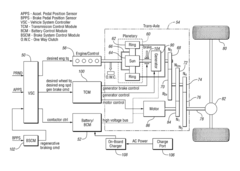
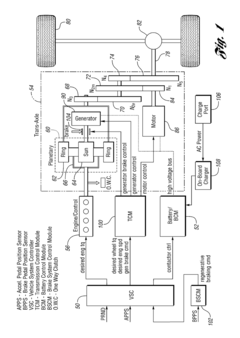
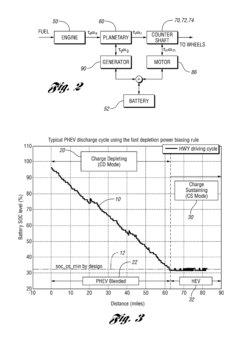
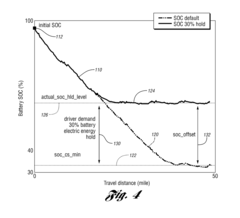
- A method for controlling PHEVs that allows drivers to set a state of charge (SOC) offset based on desired operating modes and energy reservations, enabling flexible switching between electric vehicle (EV) and hybrid electric vehicle (HEV) modes, and reserving battery electric energy for utility purposes, using a controller to manage energy distribution between the internal combustion engine and electric machine.
Hybrid electric vehicles: plug-in intelligent hybrid electric two wheelers vehicles
PatentInactiveIN202121025759A
Innovation
- A parallel hybrid electric vehicle design that uses an internal combustion engine and an AC induction motor with a controllable torque transfer unit, operating in Pure Electric, Pure Gasoline, and Combined modes, with a solid-state switching power converter and a microprocessor-controlled system to optimize energy use, eliminating the need for variable gear ratio transmission and reducing resistance heating losses.


Regulatory Framework for PHEV Alliances
The regulatory framework for PHEV (Plug-in Hybrid Electric Vehicle) alliances plays a crucial role in shaping the collaborative research and development landscape. Governments worldwide have recognized the potential of PHEVs in reducing carbon emissions and have implemented various policies to encourage their development and adoption.
At the international level, organizations such as the United Nations Framework Convention on Climate Change (UNFCCC) and the Paris Agreement have set global targets for reducing greenhouse gas emissions. These agreements have prompted many countries to establish their own regulatory frameworks to support PHEV development and promote industry collaboration.
In the United States, the Corporate Average Fuel Economy (CAFE) standards and the Zero Emission Vehicle (ZEV) program have been instrumental in driving PHEV innovation. These regulations incentivize automakers to form alliances and pool resources for research and development to meet increasingly stringent emissions targets.
The European Union has implemented the CO2 emissions standards for new passenger cars and light commercial vehicles, which has spurred the formation of PHEV alliances among European automakers. The EU's regulatory framework also includes financial incentives and infrastructure development plans to support the PHEV ecosystem.
China, as a major player in the electric vehicle market, has introduced its New Energy Vehicle (NEV) policy, which includes PHEVs. The policy mandates automakers to produce a certain percentage of low-emission vehicles, encouraging collaboration between domestic and international companies to meet these requirements.
Regulatory frameworks often include provisions for intellectual property protection and technology transfer agreements, which are essential for fostering innovation within PHEV alliances. These provisions help balance the interests of different alliance members and ensure fair compensation for technological contributions.
Many countries have also implemented tax incentives and subsidies to promote PHEV research and development. These financial measures often come with specific conditions that encourage collaboration between industry players, academic institutions, and government research centers.
Standardization efforts, such as those led by the International Organization for Standardization (ISO) and the Society of Automotive Engineers (SAE), have created a common ground for PHEV alliances to work together. These standards ensure interoperability and compatibility across different PHEV technologies and charging infrastructures.
As the PHEV market continues to evolve, regulatory frameworks are adapting to address new challenges. This includes regulations on battery recycling, sustainable sourcing of materials, and the integration of PHEVs into smart grid systems. These emerging areas of regulation are creating new opportunities for collaboration within PHEV alliances.
At the international level, organizations such as the United Nations Framework Convention on Climate Change (UNFCCC) and the Paris Agreement have set global targets for reducing greenhouse gas emissions. These agreements have prompted many countries to establish their own regulatory frameworks to support PHEV development and promote industry collaboration.
In the United States, the Corporate Average Fuel Economy (CAFE) standards and the Zero Emission Vehicle (ZEV) program have been instrumental in driving PHEV innovation. These regulations incentivize automakers to form alliances and pool resources for research and development to meet increasingly stringent emissions targets.
The European Union has implemented the CO2 emissions standards for new passenger cars and light commercial vehicles, which has spurred the formation of PHEV alliances among European automakers. The EU's regulatory framework also includes financial incentives and infrastructure development plans to support the PHEV ecosystem.
China, as a major player in the electric vehicle market, has introduced its New Energy Vehicle (NEV) policy, which includes PHEVs. The policy mandates automakers to produce a certain percentage of low-emission vehicles, encouraging collaboration between domestic and international companies to meet these requirements.
Regulatory frameworks often include provisions for intellectual property protection and technology transfer agreements, which are essential for fostering innovation within PHEV alliances. These provisions help balance the interests of different alliance members and ensure fair compensation for technological contributions.
Many countries have also implemented tax incentives and subsidies to promote PHEV research and development. These financial measures often come with specific conditions that encourage collaboration between industry players, academic institutions, and government research centers.
Standardization efforts, such as those led by the International Organization for Standardization (ISO) and the Society of Automotive Engineers (SAE), have created a common ground for PHEV alliances to work together. These standards ensure interoperability and compatibility across different PHEV technologies and charging infrastructures.
As the PHEV market continues to evolve, regulatory frameworks are adapting to address new challenges. This includes regulations on battery recycling, sustainable sourcing of materials, and the integration of PHEVs into smart grid systems. These emerging areas of regulation are creating new opportunities for collaboration within PHEV alliances.
Economic Impact of PHEV Collaborations
The economic impact of PHEV (Plug-in Hybrid Electric Vehicle) collaborations extends far beyond the automotive industry, influencing various sectors of the global economy. These alliances for collaborative research and development create a ripple effect that stimulates innovation, job creation, and economic growth across multiple industries.
One of the primary economic benefits of PHEV collaborations is the acceleration of technological advancements. By pooling resources, expertise, and research capabilities, alliance partners can achieve breakthroughs more rapidly and cost-effectively than working independently. This increased efficiency in R&D processes leads to faster product development cycles and quicker market entry for new PHEV technologies, ultimately driving economic growth in the automotive sector and related industries.
The formation of PHEV alliances also fosters the creation of new job opportunities. As collaborative efforts expand, there is an increased demand for skilled workers in areas such as engineering, software development, battery technology, and advanced manufacturing. This job creation extends beyond the immediate partners in the alliance, encompassing suppliers, service providers, and other supporting industries within the PHEV ecosystem.
Furthermore, PHEV collaborations contribute to the development of a robust supply chain network. As alliance partners work together to optimize production processes and reduce costs, they often engage with a wide range of suppliers and manufacturers. This collaboration strengthens the overall supply chain, leading to improved efficiency, reduced costs, and increased competitiveness for all involved parties.
The economic impact of PHEV alliances is also evident in the realm of intellectual property. Collaborative research efforts often result in the generation of valuable patents and proprietary technologies. These intellectual assets not only provide a competitive advantage to alliance partners but also contribute to the overall economic value of the companies involved, potentially leading to increased market capitalization and investment opportunities.
Moreover, PHEV collaborations play a crucial role in driving the transition towards a more sustainable transportation ecosystem. As these alliances accelerate the development and adoption of PHEV technologies, they contribute to the reduction of carbon emissions and dependence on fossil fuels. This shift towards cleaner transportation has far-reaching economic implications, including the potential for reduced healthcare costs associated with air pollution and the creation of new markets for renewable energy and related technologies.
In conclusion, the economic impact of PHEV collaborations is multifaceted and far-reaching. By fostering innovation, creating jobs, strengthening supply chains, generating intellectual property, and driving sustainability, these alliances contribute significantly to economic growth and development across multiple sectors of the global economy.
One of the primary economic benefits of PHEV collaborations is the acceleration of technological advancements. By pooling resources, expertise, and research capabilities, alliance partners can achieve breakthroughs more rapidly and cost-effectively than working independently. This increased efficiency in R&D processes leads to faster product development cycles and quicker market entry for new PHEV technologies, ultimately driving economic growth in the automotive sector and related industries.
The formation of PHEV alliances also fosters the creation of new job opportunities. As collaborative efforts expand, there is an increased demand for skilled workers in areas such as engineering, software development, battery technology, and advanced manufacturing. This job creation extends beyond the immediate partners in the alliance, encompassing suppliers, service providers, and other supporting industries within the PHEV ecosystem.
Furthermore, PHEV collaborations contribute to the development of a robust supply chain network. As alliance partners work together to optimize production processes and reduce costs, they often engage with a wide range of suppliers and manufacturers. This collaboration strengthens the overall supply chain, leading to improved efficiency, reduced costs, and increased competitiveness for all involved parties.
The economic impact of PHEV alliances is also evident in the realm of intellectual property. Collaborative research efforts often result in the generation of valuable patents and proprietary technologies. These intellectual assets not only provide a competitive advantage to alliance partners but also contribute to the overall economic value of the companies involved, potentially leading to increased market capitalization and investment opportunities.
Moreover, PHEV collaborations play a crucial role in driving the transition towards a more sustainable transportation ecosystem. As these alliances accelerate the development and adoption of PHEV technologies, they contribute to the reduction of carbon emissions and dependence on fossil fuels. This shift towards cleaner transportation has far-reaching economic implications, including the potential for reduced healthcare costs associated with air pollution and the creation of new markets for renewable energy and related technologies.
In conclusion, the economic impact of PHEV collaborations is multifaceted and far-reaching. By fostering innovation, creating jobs, strengthening supply chains, generating intellectual property, and driving sustainability, these alliances contribute significantly to economic growth and development across multiple sectors of the global economy.
Unlock deeper insights with PatSnap Eureka Quick Research — get a full tech report to explore trends and direct your research. Try now!
Generate Your Research Report Instantly with AI Agent
Supercharge your innovation with PatSnap Eureka AI Agent Platform!