PHEV charging scalability issues in urban settings
AUG 14, 20259 MIN READ
Generate Your Research Report Instantly with AI Agent
PatSnap Eureka helps you evaluate technical feasibility & market potential.
PHEV Urban Charging Landscape and Objectives
Plug-in Hybrid Electric Vehicles (PHEVs) have emerged as a promising solution to reduce urban emissions and fuel consumption. However, as their adoption increases, the urban charging infrastructure faces significant scalability challenges. The current landscape of PHEV charging in urban settings is characterized by a growing demand for charging stations, limited availability of parking spaces, and strain on the existing power grid.
The evolution of PHEV technology has led to increased electric-only ranges and larger battery capacities, intensifying the need for efficient charging solutions. Urban areas, with their high population density and limited space, present unique challenges for scaling up charging infrastructure. The concentration of vehicles in cities during peak hours exacerbates the demand for charging, creating potential bottlenecks in the system.
One of the primary objectives in addressing PHEV charging scalability is to develop a robust and flexible charging network that can accommodate the growing number of vehicles without overwhelming the urban infrastructure. This involves not only increasing the number of charging stations but also implementing smart charging technologies that can optimize power distribution and manage peak loads effectively.
Another crucial goal is to integrate PHEV charging seamlessly into the urban landscape without compromising the aesthetics or functionality of city spaces. This requires innovative approaches to charging station design and placement, such as incorporating charging capabilities into existing street furniture or developing multi-use charging hubs that serve both transportation and community needs.
Improving the efficiency of charging processes is also a key objective. This includes developing faster charging technologies, implementing standardized charging protocols, and exploring alternative charging methods such as wireless charging or battery swapping stations. These advancements aim to reduce charging times and increase the turnover rate at charging stations, thereby improving overall system capacity.
The urban charging landscape must also address the challenge of equitable access to charging facilities. Ensuring that charging infrastructure is distributed fairly across different neighborhoods and socioeconomic areas is crucial for widespread PHEV adoption and the realization of their environmental benefits.
Lastly, a significant objective is to enhance the integration of PHEV charging with renewable energy sources and smart grid technologies. This involves developing bidirectional charging capabilities that allow PHEVs to serve as mobile energy storage units, contributing to grid stability and facilitating the integration of intermittent renewable energy sources into the urban power ecosystem.
The evolution of PHEV technology has led to increased electric-only ranges and larger battery capacities, intensifying the need for efficient charging solutions. Urban areas, with their high population density and limited space, present unique challenges for scaling up charging infrastructure. The concentration of vehicles in cities during peak hours exacerbates the demand for charging, creating potential bottlenecks in the system.
One of the primary objectives in addressing PHEV charging scalability is to develop a robust and flexible charging network that can accommodate the growing number of vehicles without overwhelming the urban infrastructure. This involves not only increasing the number of charging stations but also implementing smart charging technologies that can optimize power distribution and manage peak loads effectively.
Another crucial goal is to integrate PHEV charging seamlessly into the urban landscape without compromising the aesthetics or functionality of city spaces. This requires innovative approaches to charging station design and placement, such as incorporating charging capabilities into existing street furniture or developing multi-use charging hubs that serve both transportation and community needs.
Improving the efficiency of charging processes is also a key objective. This includes developing faster charging technologies, implementing standardized charging protocols, and exploring alternative charging methods such as wireless charging or battery swapping stations. These advancements aim to reduce charging times and increase the turnover rate at charging stations, thereby improving overall system capacity.
The urban charging landscape must also address the challenge of equitable access to charging facilities. Ensuring that charging infrastructure is distributed fairly across different neighborhoods and socioeconomic areas is crucial for widespread PHEV adoption and the realization of their environmental benefits.
Lastly, a significant objective is to enhance the integration of PHEV charging with renewable energy sources and smart grid technologies. This involves developing bidirectional charging capabilities that allow PHEVs to serve as mobile energy storage units, contributing to grid stability and facilitating the integration of intermittent renewable energy sources into the urban power ecosystem.
Urban PHEV Adoption and Charging Demand Analysis
The adoption of Plug-in Hybrid Electric Vehicles (PHEVs) in urban areas has been steadily increasing, driven by environmental concerns, government incentives, and advancements in battery technology. This trend has led to a significant rise in charging demand, particularly in densely populated urban settings where space for charging infrastructure is limited.
Urban PHEV adoption rates vary across different cities and regions, influenced by factors such as local policies, economic conditions, and consumer preferences. In some major metropolitan areas, PHEVs now account for a substantial portion of new vehicle sales, with adoption rates reaching double digits in certain urban centers. This rapid growth has outpaced the development of charging infrastructure in many cases, leading to scalability challenges.
The charging demand for PHEVs in urban environments is characterized by distinct patterns and peak periods. Typically, demand surges during evening hours as commuters return home and plug in their vehicles overnight. This creates a significant load on the electrical grid, particularly in residential areas where multiple PHEVs may be charging simultaneously. Additionally, daytime charging demand is observed in commercial and public areas, such as workplaces, shopping centers, and parking facilities.
The scalability issues arising from increased PHEV adoption in urban settings are multifaceted. Firstly, the existing electrical infrastructure in many cities was not designed to handle the additional load from widespread EV charging. This can lead to localized grid stress and potential power quality issues. Secondly, the physical space required for charging stations is often at a premium in urban areas, making it challenging to install sufficient charging points to meet growing demand.
To address these challenges, cities are exploring various strategies. Some are implementing smart charging systems that can balance the load across the grid and incentivize off-peak charging. Others are integrating charging infrastructure into existing urban fixtures, such as streetlights and parking meters, to maximize space utilization. Additionally, there is a growing focus on developing fast-charging technologies that can reduce charging times and increase throughput at public charging stations.
The analysis of urban PHEV adoption and charging demand reveals a clear need for coordinated planning between city authorities, utility companies, and automakers. As PHEV market penetration continues to grow, the demand for charging infrastructure is expected to increase exponentially. This will require significant investments in grid upgrades, innovative charging solutions, and urban planning initiatives to ensure that charging capacity can scale in line with PHEV adoption rates.
Urban PHEV adoption rates vary across different cities and regions, influenced by factors such as local policies, economic conditions, and consumer preferences. In some major metropolitan areas, PHEVs now account for a substantial portion of new vehicle sales, with adoption rates reaching double digits in certain urban centers. This rapid growth has outpaced the development of charging infrastructure in many cases, leading to scalability challenges.
The charging demand for PHEVs in urban environments is characterized by distinct patterns and peak periods. Typically, demand surges during evening hours as commuters return home and plug in their vehicles overnight. This creates a significant load on the electrical grid, particularly in residential areas where multiple PHEVs may be charging simultaneously. Additionally, daytime charging demand is observed in commercial and public areas, such as workplaces, shopping centers, and parking facilities.
The scalability issues arising from increased PHEV adoption in urban settings are multifaceted. Firstly, the existing electrical infrastructure in many cities was not designed to handle the additional load from widespread EV charging. This can lead to localized grid stress and potential power quality issues. Secondly, the physical space required for charging stations is often at a premium in urban areas, making it challenging to install sufficient charging points to meet growing demand.
To address these challenges, cities are exploring various strategies. Some are implementing smart charging systems that can balance the load across the grid and incentivize off-peak charging. Others are integrating charging infrastructure into existing urban fixtures, such as streetlights and parking meters, to maximize space utilization. Additionally, there is a growing focus on developing fast-charging technologies that can reduce charging times and increase throughput at public charging stations.
The analysis of urban PHEV adoption and charging demand reveals a clear need for coordinated planning between city authorities, utility companies, and automakers. As PHEV market penetration continues to grow, the demand for charging infrastructure is expected to increase exponentially. This will require significant investments in grid upgrades, innovative charging solutions, and urban planning initiatives to ensure that charging capacity can scale in line with PHEV adoption rates.
Current Challenges in PHEV Urban Charging Infrastructure
The rapid growth of plug-in hybrid electric vehicles (PHEVs) in urban areas has exposed significant challenges in the existing charging infrastructure. One of the primary issues is the limited availability of charging stations, particularly in densely populated city centers. As PHEV adoption increases, the demand for charging points often outpaces the rate at which new infrastructure can be installed, leading to long queues and frustrated users.
Another critical challenge is the uneven distribution of charging stations across urban areas. Many cities struggle with "charging deserts," where certain neighborhoods lack adequate access to charging facilities. This disparity can discourage PHEV adoption in these areas and exacerbate existing socioeconomic inequalities in transportation access.
The power grid capacity in urban settings is also a major concern. As more PHEVs connect to the grid simultaneously, especially during peak hours, it can lead to localized power shortages or grid instability. This issue is particularly pronounced in older urban areas where the electrical infrastructure may not have been designed to handle such high-power demands.
Charging speed remains a significant bottleneck in urban PHEV charging. While fast-charging technologies exist, their widespread implementation in cities is hindered by cost and infrastructure limitations. The majority of urban charging stations still offer slower charging speeds, which can be impractical for users who need quick charging during short stops.
Space constraints in urban environments pose another challenge. Finding suitable locations for charging stations that do not interfere with existing infrastructure or public spaces is often difficult. This limitation can lead to suboptimal placement of charging points, reducing their accessibility and efficiency.
The lack of standardization in charging technologies and payment systems further complicates the urban charging landscape. Users often face compatibility issues between their vehicles and available charging stations, or struggle with multiple apps and payment methods across different charging networks.
Lastly, the maintenance and reliability of urban charging infrastructure present ongoing challenges. High usage rates in urban areas lead to increased wear and tear on charging equipment, while vandalism and accidental damage are more common in public spaces. Ensuring consistent availability and functionality of charging stations requires significant resources and efficient management systems.
These challenges collectively contribute to the scalability issues of PHEV charging in urban settings, necessitating innovative solutions and strategic planning to support the growing electric vehicle ecosystem in cities.
Another critical challenge is the uneven distribution of charging stations across urban areas. Many cities struggle with "charging deserts," where certain neighborhoods lack adequate access to charging facilities. This disparity can discourage PHEV adoption in these areas and exacerbate existing socioeconomic inequalities in transportation access.
The power grid capacity in urban settings is also a major concern. As more PHEVs connect to the grid simultaneously, especially during peak hours, it can lead to localized power shortages or grid instability. This issue is particularly pronounced in older urban areas where the electrical infrastructure may not have been designed to handle such high-power demands.
Charging speed remains a significant bottleneck in urban PHEV charging. While fast-charging technologies exist, their widespread implementation in cities is hindered by cost and infrastructure limitations. The majority of urban charging stations still offer slower charging speeds, which can be impractical for users who need quick charging during short stops.
Space constraints in urban environments pose another challenge. Finding suitable locations for charging stations that do not interfere with existing infrastructure or public spaces is often difficult. This limitation can lead to suboptimal placement of charging points, reducing their accessibility and efficiency.
The lack of standardization in charging technologies and payment systems further complicates the urban charging landscape. Users often face compatibility issues between their vehicles and available charging stations, or struggle with multiple apps and payment methods across different charging networks.
Lastly, the maintenance and reliability of urban charging infrastructure present ongoing challenges. High usage rates in urban areas lead to increased wear and tear on charging equipment, while vandalism and accidental damage are more common in public spaces. Ensuring consistent availability and functionality of charging stations requires significant resources and efficient management systems.
These challenges collectively contribute to the scalability issues of PHEV charging in urban settings, necessitating innovative solutions and strategic planning to support the growing electric vehicle ecosystem in cities.
Existing Urban PHEV Charging Solutions
01 Smart grid integration for PHEV charging
Integration of PHEV charging infrastructure with smart grid technologies to enhance scalability. This includes load balancing, demand response, and real-time energy management to optimize charging patterns and reduce strain on the electrical grid during peak hours.- Smart grid integration for PHEV charging: Integration of PHEV charging infrastructure with smart grids to optimize power distribution, manage load balancing, and enhance overall system efficiency. This approach enables dynamic pricing, demand response, and real-time monitoring of charging stations to improve scalability and grid stability.
- Modular and expandable charging stations: Development of modular charging station designs that can be easily expanded or upgraded to accommodate increasing demand. These systems allow for flexible installation and scalability, enabling rapid deployment of charging infrastructure in various locations with minimal disruption.
- Wireless charging technology for PHEVs: Implementation of wireless charging solutions to enhance the scalability of PHEV charging infrastructure. This technology reduces the need for physical charging ports, simplifies installation, and allows for more efficient use of space in parking areas and public locations.
- Vehicle-to-Grid (V2G) technology integration: Incorporation of V2G technology in PHEV charging infrastructure to enable bidirectional power flow between vehicles and the grid. This approach enhances grid stability, provides additional energy storage capacity, and improves the overall scalability of the charging network.
- AI-powered charging management systems: Utilization of artificial intelligence and machine learning algorithms to optimize charging schedules, predict demand patterns, and manage charging infrastructure more efficiently. These systems improve scalability by maximizing the use of existing resources and reducing the need for overbuilding infrastructure.
02 Modular and expandable charging stations
Development of modular charging station designs that can be easily expanded or upgraded to meet increasing demand. These systems allow for scalable infrastructure growth without requiring complete overhauls of existing installations.Expand Specific Solutions03 Wireless charging technology for PHEVs
Implementation of wireless charging solutions to improve charging infrastructure scalability. This technology reduces the need for physical charging ports and allows for more flexible installation options in various locations, including parking lots and roadways.Expand Specific Solutions04 Vehicle-to-grid (V2G) technology
Integration of V2G capabilities in PHEV charging infrastructure to enable bidirectional power flow. This technology allows PHEVs to serve as distributed energy resources, contributing to grid stability and enhancing overall system scalability.Expand Specific Solutions05 AI-powered charging management systems
Utilization of artificial intelligence and machine learning algorithms to optimize charging infrastructure operations. These systems can predict demand patterns, manage charging schedules, and improve overall efficiency, enabling better scalability of the charging network.Expand Specific Solutions
Key Stakeholders in PHEV Charging Ecosystem
The PHEV charging scalability in urban settings presents a complex competitive landscape. The market is in a growth phase, with increasing demand for efficient charging solutions in densely populated areas. Major automotive players like Hyundai, Kia, BMW, and Audi are investing heavily in PHEV technology, while specialized companies such as EVAR and Moon Five Technologies are developing innovative charging solutions. The market size is expanding rapidly, driven by government incentives and growing environmental concerns. However, the technology is still evolving, with companies like Tanktwo Oy and PowerHydrant LLC working on advanced battery systems and autonomous charging solutions. The involvement of established tech giants like IBM and NEC indicates the potential for smart, connected charging infrastructure in urban environments.
Hyundai Motor Co., Ltd.
Technical Solution: Hyundai has developed an innovative Vehicle-to-Grid (V2G) system for their PHEV models, addressing urban charging scalability issues. This system allows PHEVs to not only charge from the grid but also feed electricity back when needed[1]. The company has implemented smart charging algorithms that optimize charging times based on grid demand and electricity prices[2]. Additionally, Hyundai has introduced a modular battery system for their PHEVs, enabling easier upgrades and replacements, which contributes to the longevity and adaptability of their vehicles in urban settings[3]. The company is also investing in ultra-fast charging technologies, aiming to reduce charging times significantly and increase the turnover rate at urban charging stations[4].
Strengths: Advanced V2G capabilities, smart charging algorithms, and modular battery systems enhance urban charging flexibility. Weaknesses: Potential high costs for infrastructure upgrades and limited availability of V2G-compatible charging stations in many urban areas.
Bayerische Motoren Werke AG
Technical Solution: BMW has developed a comprehensive approach to address PHEV charging scalability in urban environments. The company's ChargeForward program integrates smart charging technology with renewable energy sources, optimizing charging times to coincide with periods of high renewable energy generation[5]. BMW has also implemented a dynamic pricing model for charging, incentivizing off-peak charging to reduce strain on urban power grids[6]. The company's latest PHEVs feature increased electric-only range, reducing the frequency of charging needs in urban settings[7]. Additionally, BMW is piloting wireless charging technology in urban areas, which could significantly improve convenience and reduce infrastructure clutter[8].
Strengths: Integration with renewable energy, dynamic pricing models, and wireless charging technology offer innovative solutions for urban charging. Weaknesses: High costs associated with wireless charging implementation and potential limitations in scalability for dense urban areas.
Innovative PHEV Charging Technologies for Urban Areas
Charging control system
PatentWO2012120736A1
Innovation
- A charging control system that utilizes a power distribution device and interface devices connected to EVs, controlling charging based on connection and disconnection times to manage the charging schedule in real-time, optimizing power distribution and reducing computational load, while ensuring scalability and minimal impact on EV owners' freedom.


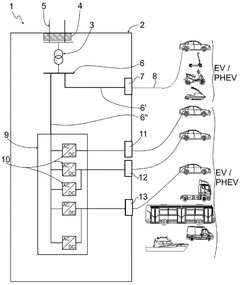
Integrated prefabricated power charging system for electric vehicles and plug-in hybrid vehicles connected directly to medium voltage electrical network and a method for changing an electric or hybrid vehicle
PatentWO2025017353A1
Innovation
- An integrated prefabricated power charging system connected directly to a medium voltage electrical network, which includes a transformer to convert medium voltage AC to low voltage AC, and AC/DC converters to provide charging options for various vehicles, allowing for simultaneous charging of multiple vehicles at high speeds.
Urban Planning and PHEV Charging Integration Strategies
Urban planning plays a crucial role in addressing the scalability issues of Plug-in Hybrid Electric Vehicle (PHEV) charging in urban settings. As cities continue to grow and evolve, integrating PHEV charging infrastructure into the urban fabric becomes increasingly important. This integration requires a comprehensive approach that considers various factors such as land use, transportation networks, and energy distribution systems.
One key strategy is the development of smart charging networks that can efficiently manage the distribution of power to PHEVs. These networks utilize advanced algorithms and real-time data to optimize charging schedules, reducing strain on the electrical grid during peak hours. By implementing smart charging systems, cities can significantly increase the number of PHEVs that can be charged simultaneously without overloading existing infrastructure.
Another important aspect of urban planning for PHEV charging is the strategic placement of charging stations. This involves analyzing traffic patterns, population density, and existing electrical infrastructure to identify optimal locations for charging facilities. By placing charging stations in high-traffic areas, near residential zones, and in proximity to public transportation hubs, cities can maximize accessibility and convenience for PHEV users.
The integration of renewable energy sources into the charging infrastructure is another critical strategy. Solar panels and wind turbines can be incorporated into charging station designs, providing clean energy and reducing the overall carbon footprint of PHEV charging. This approach not only addresses scalability issues but also aligns with broader sustainability goals of urban development.
Implementing policies that incentivize the installation of charging infrastructure in new developments is another effective strategy. By requiring or encouraging developers to include charging stations in residential and commercial projects, cities can rapidly expand their charging network without significant public investment. These policies can be coupled with zoning regulations that allocate specific areas for charging infrastructure, ensuring a balanced distribution across the urban landscape.
Collaboration between city planners, utility companies, and PHEV manufacturers is essential for successful integration. This partnership can lead to the development of innovative solutions such as vehicle-to-grid (V2G) technology, which allows PHEVs to act as mobile energy storage units. V2G systems can help balance the electrical grid during peak demand periods, further enhancing the scalability of PHEV charging in urban environments.
One key strategy is the development of smart charging networks that can efficiently manage the distribution of power to PHEVs. These networks utilize advanced algorithms and real-time data to optimize charging schedules, reducing strain on the electrical grid during peak hours. By implementing smart charging systems, cities can significantly increase the number of PHEVs that can be charged simultaneously without overloading existing infrastructure.
Another important aspect of urban planning for PHEV charging is the strategic placement of charging stations. This involves analyzing traffic patterns, population density, and existing electrical infrastructure to identify optimal locations for charging facilities. By placing charging stations in high-traffic areas, near residential zones, and in proximity to public transportation hubs, cities can maximize accessibility and convenience for PHEV users.
The integration of renewable energy sources into the charging infrastructure is another critical strategy. Solar panels and wind turbines can be incorporated into charging station designs, providing clean energy and reducing the overall carbon footprint of PHEV charging. This approach not only addresses scalability issues but also aligns with broader sustainability goals of urban development.
Implementing policies that incentivize the installation of charging infrastructure in new developments is another effective strategy. By requiring or encouraging developers to include charging stations in residential and commercial projects, cities can rapidly expand their charging network without significant public investment. These policies can be coupled with zoning regulations that allocate specific areas for charging infrastructure, ensuring a balanced distribution across the urban landscape.
Collaboration between city planners, utility companies, and PHEV manufacturers is essential for successful integration. This partnership can lead to the development of innovative solutions such as vehicle-to-grid (V2G) technology, which allows PHEVs to act as mobile energy storage units. V2G systems can help balance the electrical grid during peak demand periods, further enhancing the scalability of PHEV charging in urban environments.
Environmental Impact of Scaled PHEV Charging in Cities
The environmental impact of scaled PHEV charging in urban settings is a critical consideration as cities transition towards electrified transportation. As PHEV adoption increases, the demand for charging infrastructure grows exponentially, potentially leading to significant environmental consequences.
One of the primary concerns is the increased electricity demand and its associated emissions. While PHEVs reduce direct tailpipe emissions, the environmental benefits can be offset if the electricity used for charging is generated from fossil fuel sources. In urban areas with coal-dependent power grids, scaled PHEV charging could inadvertently increase overall greenhouse gas emissions. However, cities with cleaner energy mixes, such as those relying on renewable sources, may see a net positive environmental impact.
The installation of charging infrastructure also poses environmental challenges. The construction and maintenance of charging stations require resources and energy, potentially leading to increased carbon footprints during the initial phases of implementation. Additionally, the production of batteries for PHEVs involves mining and processing of rare earth metals, which can have significant environmental impacts if not managed sustainably.
Urban heat island effects may be exacerbated by the widespread deployment of charging stations. The heat generated by charging equipment, combined with the reduction of green spaces to accommodate charging infrastructure, could contribute to higher ambient temperatures in cities. This, in turn, may lead to increased energy consumption for cooling and air conditioning, creating a feedback loop of environmental stress.
However, scaled PHEV charging also presents opportunities for environmental improvements. Smart charging systems can be integrated with renewable energy sources, allowing for better load balancing and utilization of clean energy. This integration can help stabilize the grid and reduce reliance on fossil fuel-based peaker plants during high demand periods.
Furthermore, the shift towards PHEVs and their charging infrastructure can catalyze broader urban sustainability initiatives. Cities may be incentivized to invest in green energy projects, improve energy efficiency in buildings, and implement smart grid technologies. These complementary efforts can amplify the positive environmental impacts of PHEV adoption.
In conclusion, the environmental impact of scaled PHEV charging in cities is complex and multifaceted. While challenges exist, particularly in terms of electricity generation and infrastructure development, the potential for positive outcomes is significant. Cities must carefully plan and manage the transition to ensure that the environmental benefits of PHEVs are maximized while mitigating potential negative impacts.
One of the primary concerns is the increased electricity demand and its associated emissions. While PHEVs reduce direct tailpipe emissions, the environmental benefits can be offset if the electricity used for charging is generated from fossil fuel sources. In urban areas with coal-dependent power grids, scaled PHEV charging could inadvertently increase overall greenhouse gas emissions. However, cities with cleaner energy mixes, such as those relying on renewable sources, may see a net positive environmental impact.
The installation of charging infrastructure also poses environmental challenges. The construction and maintenance of charging stations require resources and energy, potentially leading to increased carbon footprints during the initial phases of implementation. Additionally, the production of batteries for PHEVs involves mining and processing of rare earth metals, which can have significant environmental impacts if not managed sustainably.
Urban heat island effects may be exacerbated by the widespread deployment of charging stations. The heat generated by charging equipment, combined with the reduction of green spaces to accommodate charging infrastructure, could contribute to higher ambient temperatures in cities. This, in turn, may lead to increased energy consumption for cooling and air conditioning, creating a feedback loop of environmental stress.
However, scaled PHEV charging also presents opportunities for environmental improvements. Smart charging systems can be integrated with renewable energy sources, allowing for better load balancing and utilization of clean energy. This integration can help stabilize the grid and reduce reliance on fossil fuel-based peaker plants during high demand periods.
Furthermore, the shift towards PHEVs and their charging infrastructure can catalyze broader urban sustainability initiatives. Cities may be incentivized to invest in green energy projects, improve energy efficiency in buildings, and implement smart grid technologies. These complementary efforts can amplify the positive environmental impacts of PHEV adoption.
In conclusion, the environmental impact of scaled PHEV charging in cities is complex and multifaceted. While challenges exist, particularly in terms of electricity generation and infrastructure development, the potential for positive outcomes is significant. Cities must carefully plan and manage the transition to ensure that the environmental benefits of PHEVs are maximized while mitigating potential negative impacts.
Unlock deeper insights with PatSnap Eureka Quick Research — get a full tech report to explore trends and direct your research. Try now!
Generate Your Research Report Instantly with AI Agent
Supercharge your innovation with PatSnap Eureka AI Agent Platform!