PID Control Implementation for Solenoid Valves in Automated Process Controls
JUL 23, 20259 MIN READ
Generate Your Research Report Instantly with AI Agent
PatSnap Eureka helps you evaluate technical feasibility & market potential.
PID Control Evolution and Objectives
PID control has evolved significantly since its inception in the early 20th century. Initially developed for ship steering systems, it has become a cornerstone of industrial automation and process control. The evolution of PID control can be traced through several key phases, each marked by technological advancements and expanding applications.
In the 1930s and 1940s, pneumatic controllers dominated the field, offering basic proportional control. The 1950s saw the introduction of electronic PID controllers, which provided more precise and flexible control options. This period also witnessed the development of theoretical foundations for PID control, including Ziegler-Nichols tuning methods.
The 1960s and 1970s brought digital technology to the forefront, enabling more sophisticated control algorithms and the integration of PID control into larger automation systems. This era also saw the emergence of adaptive and self-tuning PID controllers, addressing the need for more robust control in varying process conditions.
The 1980s and 1990s marked a significant leap with the advent of microprocessor-based controllers. These devices offered enhanced computational power, allowing for more complex control strategies and the implementation of advanced features such as auto-tuning and fuzzy logic integration.
In recent years, the focus has shifted towards intelligent PID control systems, incorporating machine learning and artificial intelligence to optimize performance. These systems can adapt to changing process dynamics and environmental conditions, offering unprecedented levels of efficiency and reliability.
The objectives of modern PID control implementation for solenoid valves in automated process controls are multifaceted. Primarily, the goal is to achieve precise and stable control of fluid flow or pressure, ensuring optimal process performance. This involves minimizing overshoot, reducing settling time, and maintaining steady-state accuracy under varying load conditions.
Another critical objective is to enhance energy efficiency. By optimizing valve operation through accurate PID control, energy consumption can be significantly reduced, leading to cost savings and improved sustainability in industrial processes.
Improving system responsiveness is also a key aim. PID controllers for solenoid valves must be capable of rapid adjustments to maintain desired setpoints, especially in dynamic processes where conditions can change quickly.
Furthermore, there is a growing emphasis on predictive maintenance and fault detection. Advanced PID control systems aim to incorporate diagnostic capabilities, allowing for early detection of valve wear or malfunction, thereby reducing downtime and maintenance costs.
Lastly, the integration of PID control for solenoid valves into broader Industrial Internet of Things (IIoT) ecosystems is becoming increasingly important. This integration enables real-time monitoring, remote control, and data analytics, contributing to overall process optimization and informed decision-making in automated control systems.
In the 1930s and 1940s, pneumatic controllers dominated the field, offering basic proportional control. The 1950s saw the introduction of electronic PID controllers, which provided more precise and flexible control options. This period also witnessed the development of theoretical foundations for PID control, including Ziegler-Nichols tuning methods.
The 1960s and 1970s brought digital technology to the forefront, enabling more sophisticated control algorithms and the integration of PID control into larger automation systems. This era also saw the emergence of adaptive and self-tuning PID controllers, addressing the need for more robust control in varying process conditions.
The 1980s and 1990s marked a significant leap with the advent of microprocessor-based controllers. These devices offered enhanced computational power, allowing for more complex control strategies and the implementation of advanced features such as auto-tuning and fuzzy logic integration.
In recent years, the focus has shifted towards intelligent PID control systems, incorporating machine learning and artificial intelligence to optimize performance. These systems can adapt to changing process dynamics and environmental conditions, offering unprecedented levels of efficiency and reliability.
The objectives of modern PID control implementation for solenoid valves in automated process controls are multifaceted. Primarily, the goal is to achieve precise and stable control of fluid flow or pressure, ensuring optimal process performance. This involves minimizing overshoot, reducing settling time, and maintaining steady-state accuracy under varying load conditions.
Another critical objective is to enhance energy efficiency. By optimizing valve operation through accurate PID control, energy consumption can be significantly reduced, leading to cost savings and improved sustainability in industrial processes.
Improving system responsiveness is also a key aim. PID controllers for solenoid valves must be capable of rapid adjustments to maintain desired setpoints, especially in dynamic processes where conditions can change quickly.
Furthermore, there is a growing emphasis on predictive maintenance and fault detection. Advanced PID control systems aim to incorporate diagnostic capabilities, allowing for early detection of valve wear or malfunction, thereby reducing downtime and maintenance costs.
Lastly, the integration of PID control for solenoid valves into broader Industrial Internet of Things (IIoT) ecosystems is becoming increasingly important. This integration enables real-time monitoring, remote control, and data analytics, contributing to overall process optimization and informed decision-making in automated control systems.
Industrial Demand for Precise Valve Control
The industrial demand for precise valve control has been steadily increasing across various sectors, driven by the need for improved efficiency, reduced waste, and enhanced process control. Solenoid valves, in particular, have become integral components in automated process control systems due to their reliability, fast response times, and ability to handle a wide range of fluids and gases.
In the manufacturing sector, precise valve control is crucial for maintaining product quality and consistency. Industries such as pharmaceuticals, food and beverage, and chemical processing require exact dosing and mixing of ingredients, which can only be achieved through accurate valve operation. The automotive industry also relies heavily on precise valve control for paint application, fluid dispensing, and assembly line processes.
The energy sector, including oil and gas production, refining, and power generation, demands highly accurate valve control for safety, efficiency, and environmental compliance. Precise control of flow rates and pressures is essential for optimizing production, preventing equipment damage, and minimizing emissions.
Water and wastewater treatment facilities require precise valve control for managing flow rates, chemical dosing, and filtration processes. As water scarcity becomes a growing concern globally, the demand for efficient water management systems with accurate valve control continues to rise.
The HVAC industry has seen a significant increase in demand for precise valve control, particularly in large commercial buildings and data centers. Energy-efficient climate control systems rely on accurate valve operation to optimize heating, cooling, and ventilation processes, reducing energy consumption and operational costs.
In the aerospace and defense sectors, precise valve control is critical for fuel management, hydraulic systems, and life support systems. The extreme operating conditions and high-stakes nature of these applications necessitate valves with exceptional accuracy and reliability.
The growing trend towards Industry 4.0 and smart manufacturing has further amplified the demand for precise valve control. Integration of solenoid valves with advanced sensors, actuators, and control systems enables real-time monitoring, predictive maintenance, and adaptive process control, leading to improved overall equipment effectiveness (OEE) and reduced downtime.
As environmental regulations become more stringent, industries are increasingly adopting precise valve control systems to minimize waste, reduce emissions, and improve resource utilization. This trend is particularly evident in the chemical, petrochemical, and pulp and paper industries, where accurate control of material flows can significantly impact environmental footprint and regulatory compliance.
In the manufacturing sector, precise valve control is crucial for maintaining product quality and consistency. Industries such as pharmaceuticals, food and beverage, and chemical processing require exact dosing and mixing of ingredients, which can only be achieved through accurate valve operation. The automotive industry also relies heavily on precise valve control for paint application, fluid dispensing, and assembly line processes.
The energy sector, including oil and gas production, refining, and power generation, demands highly accurate valve control for safety, efficiency, and environmental compliance. Precise control of flow rates and pressures is essential for optimizing production, preventing equipment damage, and minimizing emissions.
Water and wastewater treatment facilities require precise valve control for managing flow rates, chemical dosing, and filtration processes. As water scarcity becomes a growing concern globally, the demand for efficient water management systems with accurate valve control continues to rise.
The HVAC industry has seen a significant increase in demand for precise valve control, particularly in large commercial buildings and data centers. Energy-efficient climate control systems rely on accurate valve operation to optimize heating, cooling, and ventilation processes, reducing energy consumption and operational costs.
In the aerospace and defense sectors, precise valve control is critical for fuel management, hydraulic systems, and life support systems. The extreme operating conditions and high-stakes nature of these applications necessitate valves with exceptional accuracy and reliability.
The growing trend towards Industry 4.0 and smart manufacturing has further amplified the demand for precise valve control. Integration of solenoid valves with advanced sensors, actuators, and control systems enables real-time monitoring, predictive maintenance, and adaptive process control, leading to improved overall equipment effectiveness (OEE) and reduced downtime.
As environmental regulations become more stringent, industries are increasingly adopting precise valve control systems to minimize waste, reduce emissions, and improve resource utilization. This trend is particularly evident in the chemical, petrochemical, and pulp and paper industries, where accurate control of material flows can significantly impact environmental footprint and regulatory compliance.
Solenoid Valve Control Challenges
Implementing PID control for solenoid valves in automated process controls presents several significant challenges that engineers must address. One of the primary difficulties lies in the non-linear behavior of solenoid valves. Unlike linear actuators, solenoid valves exhibit a binary on-off characteristic, which complicates the application of traditional PID control algorithms designed for continuous systems.
The response time of solenoid valves introduces another layer of complexity. These valves typically have a delay between the control signal and the actual valve movement, known as hysteresis. This delay can lead to overshooting or undershooting in the control system, potentially causing instability or reduced performance. Engineers must carefully tune the PID parameters to account for this inherent delay and prevent oscillations in the system.
Wear and tear on solenoid valves over time can alter their performance characteristics, posing a challenge for maintaining consistent control. As the valve components degrade, the response time and actuation force may change, requiring adaptive control strategies or frequent recalibration to maintain optimal performance. This variability in valve behavior necessitates robust control algorithms that can accommodate these changes without compromising system stability.
The power consumption of solenoid valves is another concern in PID control implementation. Continuous rapid switching of the valve, which may occur in attempts to achieve fine control, can lead to increased power usage and heat generation. This not only affects energy efficiency but can also reduce the lifespan of the valve. Balancing control precision with power efficiency becomes a critical challenge in designing effective PID control systems for solenoid valves.
Environmental factors such as temperature fluctuations and pressure variations can significantly impact solenoid valve performance. These external influences can alter the valve's response characteristics, potentially leading to control inaccuracies. Developing PID control systems that can adapt to these changing conditions while maintaining precise control is a complex task that requires sophisticated sensing and adaptive control techniques.
Lastly, the integration of solenoid valve PID control into larger automated process control systems presents interoperability challenges. Ensuring seamless communication and coordination between the valve control system and other process components is crucial for overall system performance. This integration often requires careful consideration of communication protocols, data exchange formats, and system architecture to achieve harmonious operation within the broader control environment.
The response time of solenoid valves introduces another layer of complexity. These valves typically have a delay between the control signal and the actual valve movement, known as hysteresis. This delay can lead to overshooting or undershooting in the control system, potentially causing instability or reduced performance. Engineers must carefully tune the PID parameters to account for this inherent delay and prevent oscillations in the system.
Wear and tear on solenoid valves over time can alter their performance characteristics, posing a challenge for maintaining consistent control. As the valve components degrade, the response time and actuation force may change, requiring adaptive control strategies or frequent recalibration to maintain optimal performance. This variability in valve behavior necessitates robust control algorithms that can accommodate these changes without compromising system stability.
The power consumption of solenoid valves is another concern in PID control implementation. Continuous rapid switching of the valve, which may occur in attempts to achieve fine control, can lead to increased power usage and heat generation. This not only affects energy efficiency but can also reduce the lifespan of the valve. Balancing control precision with power efficiency becomes a critical challenge in designing effective PID control systems for solenoid valves.
Environmental factors such as temperature fluctuations and pressure variations can significantly impact solenoid valve performance. These external influences can alter the valve's response characteristics, potentially leading to control inaccuracies. Developing PID control systems that can adapt to these changing conditions while maintaining precise control is a complex task that requires sophisticated sensing and adaptive control techniques.
Lastly, the integration of solenoid valve PID control into larger automated process control systems presents interoperability challenges. Ensuring seamless communication and coordination between the valve control system and other process components is crucial for overall system performance. This integration often requires careful consideration of communication protocols, data exchange formats, and system architecture to achieve harmonious operation within the broader control environment.
Current PID Implementation Methods
01 Electronic control systems for solenoid valves
Advanced electronic control systems are used to regulate solenoid valves, improving precision and efficiency. These systems often incorporate microcontrollers or programmable logic controllers (PLCs) to manage valve operations, allowing for precise timing, pressure control, and flow regulation in various applications.- Electronic control systems for solenoid valves: Advanced electronic control systems are used to manage solenoid valve operations. These systems often incorporate microprocessors or programmable logic controllers (PLCs) to precisely regulate valve timing, duration, and sequencing. They can provide real-time monitoring, feedback, and adjustment capabilities, enhancing overall system efficiency and performance.
- Pressure and flow control in solenoid valve systems: Solenoid valves are designed to control pressure and flow in various fluid systems. This involves implementing pressure sensors, flow meters, and feedback mechanisms to maintain desired pressure levels and flow rates. Advanced control algorithms may be used to optimize valve operation based on system demands and environmental conditions.
- Solenoid valve control in automotive applications: Solenoid valves play a crucial role in automotive systems, particularly in engine management, transmission control, and brake systems. Control strategies for these applications focus on rapid response times, precise actuation, and integration with other vehicle control modules to ensure optimal performance and fuel efficiency.
- Energy-efficient control of solenoid valves: Implementing energy-efficient control methods for solenoid valves is becoming increasingly important. This includes using pulse-width modulation (PWM) techniques, optimizing holding currents, and employing smart power management strategies to reduce power consumption while maintaining valve performance and reliability.
- Fail-safe and redundancy in solenoid valve control systems: Ensuring fail-safe operation and implementing redundancy in solenoid valve control systems is critical for safety-critical applications. This involves designing control architectures with backup systems, fault detection mechanisms, and fail-safe positions to maintain system integrity in case of valve or control system failure.
02 Solenoid valve designs for improved performance
Innovative solenoid valve designs focus on enhancing performance characteristics such as response time, durability, and energy efficiency. These designs may include optimized magnetic circuits, improved sealing mechanisms, and materials that reduce wear and extend valve lifespan.Expand Specific Solutions03 Integration of solenoid valves in hydraulic and pneumatic systems
Solenoid valves are integrated into complex hydraulic and pneumatic systems to control fluid flow and pressure. This integration often involves specialized control algorithms and feedback mechanisms to ensure precise operation in applications such as industrial automation, automotive systems, and process control.Expand Specific Solutions04 Pulse width modulation (PWM) control for solenoid valves
PWM techniques are applied to solenoid valve control to achieve variable flow rates and precise positioning. This method involves rapidly switching the valve on and off at varying duty cycles, allowing for fine-tuned control over fluid flow and pressure in applications requiring high precision.Expand Specific Solutions05 Fault detection and diagnostics in solenoid valve systems
Advanced control systems incorporate fault detection and diagnostic capabilities for solenoid valves. These features monitor valve performance, detect anomalies, and provide predictive maintenance alerts, enhancing system reliability and reducing downtime in critical applications.Expand Specific Solutions
Key Players in Process Control Industry
The PID control implementation for solenoid valves in automated process controls is in a mature stage, with a well-established market and significant industry players. The global market for industrial valves, including solenoid valves, is projected to reach $85 billion by 2025, driven by automation trends in manufacturing and process industries. Key players like Eaton Corp., Fisher-Rosemount Systems, and Azbil Corp. have developed advanced PID control solutions for solenoid valves, integrating features such as self-tuning algorithms and digital interfaces. Emerging technologies from companies like Bosch and Danfoss are focusing on improving energy efficiency and precision in valve control, indicating ongoing innovation in this mature field.
Fisher-Rosemount Systems, Inc.
Technical Solution: Fisher-Rosemount Systems has developed an advanced PID control implementation for solenoid valves in automated process controls. Their solution utilizes a cascaded control structure, combining a fast inner loop for precise valve positioning and a slower outer loop for process variable control. The system employs adaptive tuning algorithms that automatically adjust PID parameters based on process dynamics and disturbances[1]. Additionally, they have implemented a model predictive control (MPC) layer on top of the PID control, allowing for improved handling of complex, multivariable processes[2]. The company's approach also includes dead-time compensation techniques to address delays in the control loop, enhancing overall system stability and performance[3].
Strengths: Highly adaptive and self-tuning capabilities, integration with higher-level control strategies, and robust performance in complex processes. Weaknesses: May require more computational resources and initial setup complexity compared to simpler PID implementations.
Robert Bosch GmbH
Technical Solution: Bosch has developed a sophisticated PID control system for solenoid valves in automotive and industrial applications. Their approach incorporates a hybrid control strategy that combines traditional PID control with fuzzy logic algorithms[4]. This allows for improved handling of non-linear valve characteristics and varying process conditions. Bosch's implementation also features a rapid prototyping environment that enables quick tuning and optimization of control parameters[5]. The system utilizes advanced signal processing techniques to filter out noise and improve the accuracy of valve position feedback. Additionally, Bosch has implemented a fault detection and diagnosis module within the control system, enhancing reliability and facilitating predictive maintenance[6].
Strengths: Versatile control strategy suitable for various applications, rapid prototyping capabilities for efficient development, and integrated fault detection. Weaknesses: May require specialized knowledge for optimal tuning and configuration.
Innovative PID Tuning Techniques
High-speed actuator for valves
PatentActiveUS20100090144A1
Innovation
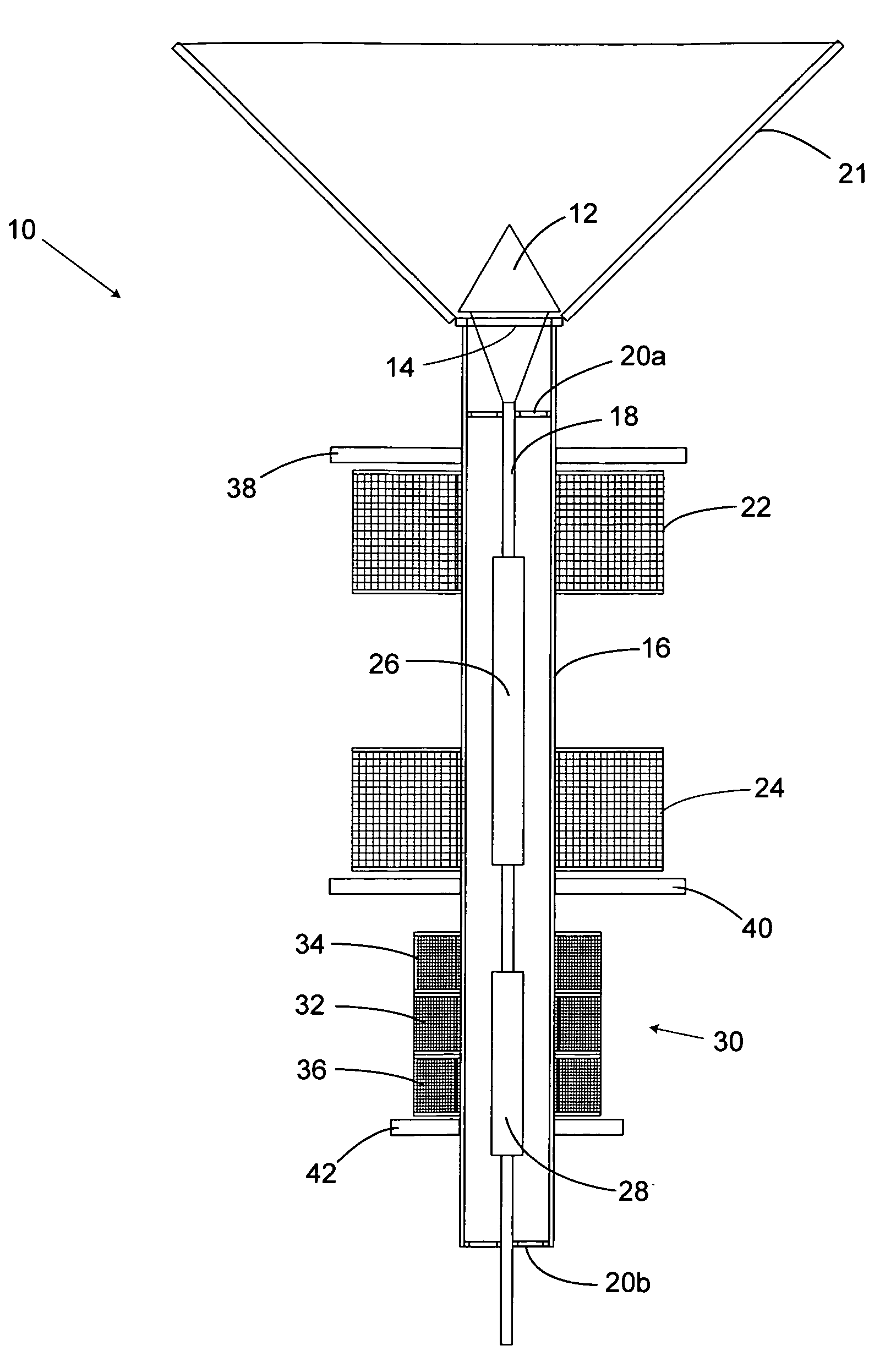
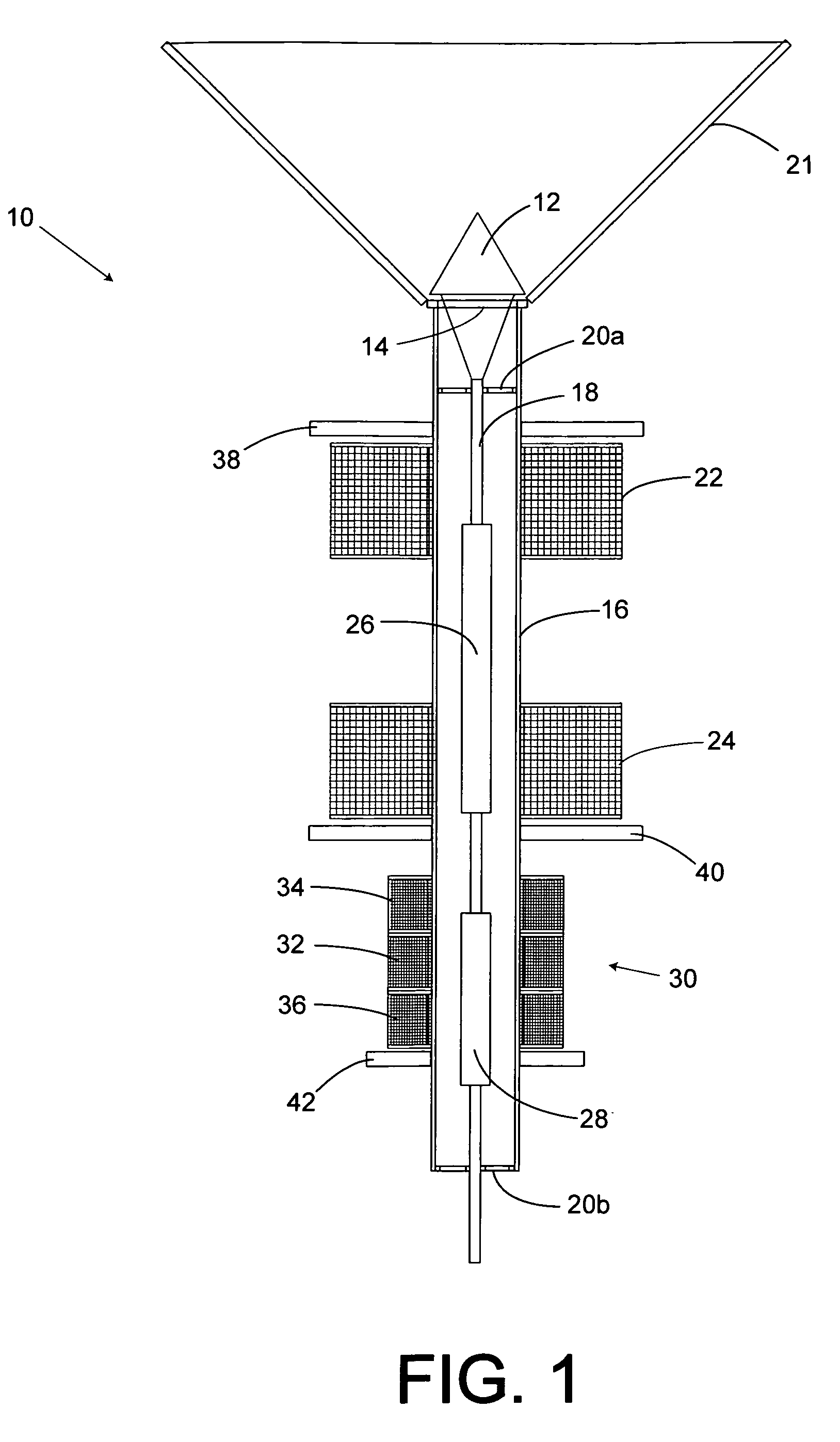
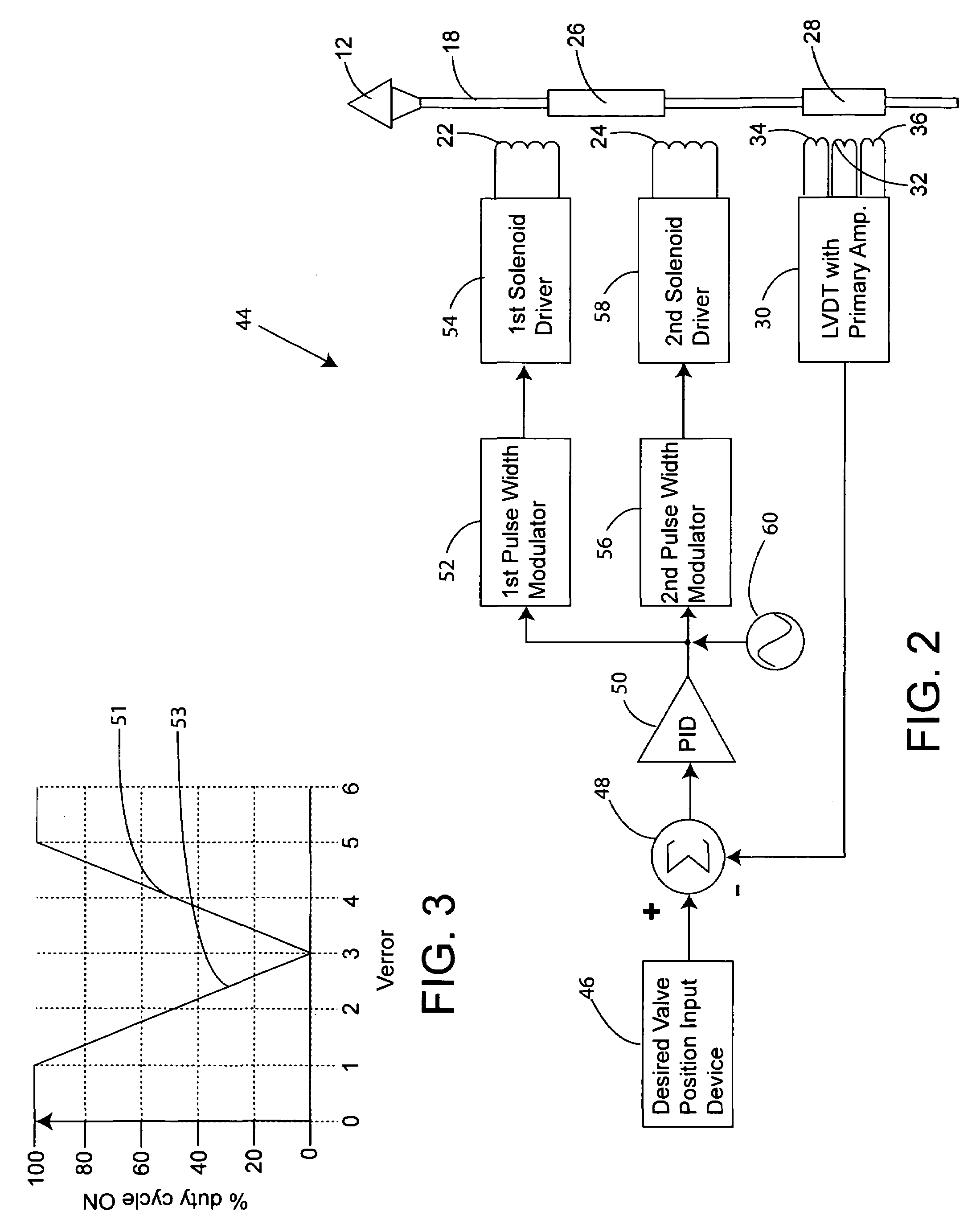
- A high-speed actuator with a hollow rod and solenoid armatures, coupled with a linear variable differential transformer (LVDT) for precise position feedback, and a control system using PID compensation and pulse modulation to control solenoid coils, ensuring accurate valve positioning and material breakup.
Control appliance comprising a regulator for regulating the electrical coil current of a regulating electrovalve
PatentWO2007107444A1
Innovation
- A digital control unit with a PID controller applies a dither signal synchronously with its clock cycle to the setpoint current, generating armature vibrations that reduce static friction and magnetic hysteresis, thereby maintaining precise control accuracy without additional filtering, allowing for lower frequency oscillations relevant in practice.


Real-time Performance Monitoring
Real-time performance monitoring is crucial for effective PID control implementation in solenoid valve systems within automated process controls. This monitoring enables operators and control systems to continuously assess and optimize the performance of solenoid valves, ensuring precise and responsive control in various industrial applications.
One key aspect of real-time performance monitoring is the continuous measurement and analysis of valve response times. By tracking the time it takes for a solenoid valve to open or close in response to control signals, operators can identify potential issues such as valve sticking, wear, or degradation. This information allows for proactive maintenance and helps prevent unexpected downtime or process disruptions.
Another important parameter monitored in real-time is the valve position accuracy. Advanced sensors and feedback mechanisms can provide precise data on the actual position of the valve stem or plug, comparing it to the desired position set by the PID controller. Any discrepancies between the commanded and actual positions can be immediately detected and corrected, ensuring optimal process control.
Pressure and flow measurements are also critical components of real-time performance monitoring for solenoid valve systems. By continuously monitoring these parameters, operators can assess the effectiveness of the valve in maintaining desired process conditions. Sudden changes in pressure or flow rates may indicate valve malfunction or process disturbances, allowing for rapid intervention and adjustment of control parameters.
Temperature monitoring is another essential aspect of real-time performance assessment. Solenoid valves can be sensitive to temperature fluctuations, which may affect their response characteristics and overall performance. By tracking temperature data in real-time, operators can identify potential overheating issues or compensate for temperature-induced variations in valve behavior.
Real-time monitoring systems often incorporate advanced data analytics and machine learning algorithms to detect patterns and trends in valve performance. These tools can help predict potential failures or performance degradation before they occur, enabling predictive maintenance strategies and minimizing unplanned downtime.
Integration of real-time performance monitoring with supervisory control and data acquisition (SCADA) systems allows for centralized monitoring and control of multiple solenoid valves across a facility. This integration enables operators to have a comprehensive view of system performance and make informed decisions regarding process optimization and maintenance scheduling.
In conclusion, real-time performance monitoring plays a vital role in ensuring the effectiveness and reliability of PID control implementation for solenoid valves in automated process controls. By providing continuous feedback on valve behavior and process conditions, it enables operators to maintain optimal control, prevent failures, and maximize overall system efficiency.
One key aspect of real-time performance monitoring is the continuous measurement and analysis of valve response times. By tracking the time it takes for a solenoid valve to open or close in response to control signals, operators can identify potential issues such as valve sticking, wear, or degradation. This information allows for proactive maintenance and helps prevent unexpected downtime or process disruptions.
Another important parameter monitored in real-time is the valve position accuracy. Advanced sensors and feedback mechanisms can provide precise data on the actual position of the valve stem or plug, comparing it to the desired position set by the PID controller. Any discrepancies between the commanded and actual positions can be immediately detected and corrected, ensuring optimal process control.
Pressure and flow measurements are also critical components of real-time performance monitoring for solenoid valve systems. By continuously monitoring these parameters, operators can assess the effectiveness of the valve in maintaining desired process conditions. Sudden changes in pressure or flow rates may indicate valve malfunction or process disturbances, allowing for rapid intervention and adjustment of control parameters.
Temperature monitoring is another essential aspect of real-time performance assessment. Solenoid valves can be sensitive to temperature fluctuations, which may affect their response characteristics and overall performance. By tracking temperature data in real-time, operators can identify potential overheating issues or compensate for temperature-induced variations in valve behavior.
Real-time monitoring systems often incorporate advanced data analytics and machine learning algorithms to detect patterns and trends in valve performance. These tools can help predict potential failures or performance degradation before they occur, enabling predictive maintenance strategies and minimizing unplanned downtime.
Integration of real-time performance monitoring with supervisory control and data acquisition (SCADA) systems allows for centralized monitoring and control of multiple solenoid valves across a facility. This integration enables operators to have a comprehensive view of system performance and make informed decisions regarding process optimization and maintenance scheduling.
In conclusion, real-time performance monitoring plays a vital role in ensuring the effectiveness and reliability of PID control implementation for solenoid valves in automated process controls. By providing continuous feedback on valve behavior and process conditions, it enables operators to maintain optimal control, prevent failures, and maximize overall system efficiency.
Energy Efficiency Considerations
Energy efficiency is a critical consideration in the implementation of PID control for solenoid valves in automated process controls. The optimization of energy consumption not only reduces operational costs but also contributes to sustainable manufacturing practices. In the context of solenoid valve control, energy efficiency can be improved through several strategies.
One primary approach is the implementation of pulse-width modulation (PWM) techniques. By rapidly switching the solenoid valve on and off, PWM allows for precise control of the valve position while minimizing power consumption. This method is particularly effective in maintaining a desired valve position with reduced energy input compared to continuous full-power operation.
Another significant factor in energy efficiency is the proper sizing and selection of solenoid valves. Oversized valves may consume unnecessary power, while undersized valves may struggle to maintain control, leading to increased energy usage through frequent adjustments. Careful consideration of flow rates, pressure differentials, and response times is essential in selecting the most energy-efficient valve for a given application.
The tuning of PID parameters also plays a crucial role in energy efficiency. Optimal tuning can reduce overshoot and settling time, minimizing the energy expended in correcting process variables. Advanced tuning methods, such as model predictive control or adaptive PID algorithms, can further enhance energy efficiency by continuously adjusting control parameters based on system dynamics and disturbances.
Implementing energy-saving modes during periods of low demand or system inactivity can significantly reduce overall power consumption. This may involve partially closing valves or reducing the frequency of control actions when full operational capacity is not required. Intelligent scheduling and predictive maintenance strategies can also contribute to energy savings by optimizing valve operation and preventing energy waste due to wear or malfunction.
The integration of smart sensors and IoT technologies enables real-time monitoring and optimization of valve performance. By collecting and analyzing data on valve operation, energy consumption patterns, and process efficiency, operators can identify opportunities for further energy savings and implement data-driven control strategies.
Lastly, the use of energy-efficient solenoid designs, such as those incorporating low-power holding circuits or magnetic latching mechanisms, can substantially reduce the power required to maintain valve positions. These advanced designs minimize the continuous power draw typically associated with traditional solenoid valves, leading to significant energy savings over extended operational periods.
One primary approach is the implementation of pulse-width modulation (PWM) techniques. By rapidly switching the solenoid valve on and off, PWM allows for precise control of the valve position while minimizing power consumption. This method is particularly effective in maintaining a desired valve position with reduced energy input compared to continuous full-power operation.
Another significant factor in energy efficiency is the proper sizing and selection of solenoid valves. Oversized valves may consume unnecessary power, while undersized valves may struggle to maintain control, leading to increased energy usage through frequent adjustments. Careful consideration of flow rates, pressure differentials, and response times is essential in selecting the most energy-efficient valve for a given application.
The tuning of PID parameters also plays a crucial role in energy efficiency. Optimal tuning can reduce overshoot and settling time, minimizing the energy expended in correcting process variables. Advanced tuning methods, such as model predictive control or adaptive PID algorithms, can further enhance energy efficiency by continuously adjusting control parameters based on system dynamics and disturbances.
Implementing energy-saving modes during periods of low demand or system inactivity can significantly reduce overall power consumption. This may involve partially closing valves or reducing the frequency of control actions when full operational capacity is not required. Intelligent scheduling and predictive maintenance strategies can also contribute to energy savings by optimizing valve operation and preventing energy waste due to wear or malfunction.
The integration of smart sensors and IoT technologies enables real-time monitoring and optimization of valve performance. By collecting and analyzing data on valve operation, energy consumption patterns, and process efficiency, operators can identify opportunities for further energy savings and implement data-driven control strategies.
Lastly, the use of energy-efficient solenoid designs, such as those incorporating low-power holding circuits or magnetic latching mechanisms, can substantially reduce the power required to maintain valve positions. These advanced designs minimize the continuous power draw typically associated with traditional solenoid valves, leading to significant energy savings over extended operational periods.
Unlock deeper insights with PatSnap Eureka Quick Research — get a full tech report to explore trends and direct your research. Try now!
Generate Your Research Report Instantly with AI Agent
Supercharge your innovation with PatSnap Eureka AI Agent Platform!