

Predicting Neodymium Magnet Failure Modes Under Strain
SEP 15, 202510 MIN READ
Generate Your Research Report Instantly with AI Agent
PatSnap Eureka helps you evaluate technical feasibility & market potential.
Neodymium Magnet Failure Prediction Background and Objectives
Neodymium magnets, discovered in the 1980s by General Motors and Sumitomo Special Metals, represent a significant advancement in permanent magnet technology. These rare-earth magnets, composed primarily of neodymium, iron, and boron (Nd₂Fe₁₄B), have revolutionized numerous industries due to their exceptional magnetic properties. With magnetic energy products reaching up to 52 MGOe, they far surpass traditional ferrite or alnico magnets, enabling substantial miniaturization of electronic components and devices.
The evolution of neodymium magnet technology has progressed through several distinct phases. Initial development focused on basic composition and manufacturing techniques, followed by improvements in corrosion resistance through surface treatments and coatings. Recent advancements have concentrated on enhancing temperature stability and mechanical properties, particularly important as these magnets find applications in increasingly demanding environments such as electric vehicle motors and wind turbine generators.
Despite their widespread adoption, neodymium magnets face significant challenges related to mechanical failure under operational conditions. These high-strength but brittle materials are susceptible to cracking, chipping, and complete fracture when subjected to mechanical strain, thermal cycling, or corrosive environments. The failure modes are complex and often interdependent, involving microstructural defects, grain boundary weaknesses, and stress concentration points.
The primary objective of this technical research is to develop predictive models and methodologies for accurately forecasting failure modes of neodymium magnets under various strain conditions. This includes identifying early indicators of potential failure, understanding the progression of material degradation, and establishing reliable lifetime predictions for components utilizing these magnets in critical applications.
Current prediction methods rely heavily on empirical testing and historical data, lacking the sophistication needed for next-generation applications where magnet failure could lead to catastrophic system failures. The industry requires more advanced predictive capabilities that incorporate multi-physics modeling, real-time monitoring techniques, and machine learning algorithms to anticipate failure before it occurs.
The strategic importance of this research extends beyond immediate technical benefits. As global competition for rare earth resources intensifies and environmental concerns regarding their mining and processing grow, extending the operational lifetime of neodymium magnets becomes increasingly critical. Improved failure prediction can significantly enhance product reliability while reducing material waste and replacement costs.
This research aims to bridge the gap between theoretical understanding of magnet failure mechanisms and practical implementation of predictive maintenance strategies, ultimately enabling more robust designs and operational protocols for systems employing these powerful but vulnerable magnetic materials.
The evolution of neodymium magnet technology has progressed through several distinct phases. Initial development focused on basic composition and manufacturing techniques, followed by improvements in corrosion resistance through surface treatments and coatings. Recent advancements have concentrated on enhancing temperature stability and mechanical properties, particularly important as these magnets find applications in increasingly demanding environments such as electric vehicle motors and wind turbine generators.
Despite their widespread adoption, neodymium magnets face significant challenges related to mechanical failure under operational conditions. These high-strength but brittle materials are susceptible to cracking, chipping, and complete fracture when subjected to mechanical strain, thermal cycling, or corrosive environments. The failure modes are complex and often interdependent, involving microstructural defects, grain boundary weaknesses, and stress concentration points.
The primary objective of this technical research is to develop predictive models and methodologies for accurately forecasting failure modes of neodymium magnets under various strain conditions. This includes identifying early indicators of potential failure, understanding the progression of material degradation, and establishing reliable lifetime predictions for components utilizing these magnets in critical applications.
Current prediction methods rely heavily on empirical testing and historical data, lacking the sophistication needed for next-generation applications where magnet failure could lead to catastrophic system failures. The industry requires more advanced predictive capabilities that incorporate multi-physics modeling, real-time monitoring techniques, and machine learning algorithms to anticipate failure before it occurs.
The strategic importance of this research extends beyond immediate technical benefits. As global competition for rare earth resources intensifies and environmental concerns regarding their mining and processing grow, extending the operational lifetime of neodymium magnets becomes increasingly critical. Improved failure prediction can significantly enhance product reliability while reducing material waste and replacement costs.
This research aims to bridge the gap between theoretical understanding of magnet failure mechanisms and practical implementation of predictive maintenance strategies, ultimately enabling more robust designs and operational protocols for systems employing these powerful but vulnerable magnetic materials.
Market Demand Analysis for Reliable Magnetic Components
The global market for reliable magnetic components, particularly those utilizing neodymium magnets, has experienced substantial growth across multiple industries. The demand for high-performance permanent magnets has been primarily driven by the rapid expansion of renewable energy technologies, electric vehicles, and advanced electronics. Current market valuations indicate that the global neodymium magnet market exceeds $15 billion annually, with projected compound annual growth rates between 8-10% through 2030.
Electric vehicle manufacturers represent the fastest-growing segment of neodymium magnet consumers, as these powerful magnets are essential components in electric motors and generators. With major automotive companies committing to electrification targets, the demand for reliable, strain-resistant magnetic components is expected to triple within the next decade. This has created urgent market pressure for advanced failure prediction technologies.
Wind turbine manufacturers constitute another significant market segment, where magnet failure in generators can result in catastrophic downtime costs averaging $30,000-50,000 per day. Industry reports indicate that improving magnet reliability through predictive technologies could reduce maintenance costs by approximately 25% while extending turbine operational lifespans by 3-5 years.
The medical device industry presents a specialized but high-value market for reliable magnetic components, particularly in MRI machines, surgical robots, and implantable devices. In these applications, magnet failure is not merely a financial concern but poses serious safety risks, creating premium demand for predictive failure technologies with near-zero tolerance for false negatives.
Consumer electronics manufacturers have also increased their utilization of neodymium magnets in speakers, haptic feedback systems, and various sensor applications. While individual component costs are lower in this sector, the massive production volumes create substantial aggregate demand for reliable magnetic solutions.
Defense and aerospace applications represent a smaller but strategically important market segment with stringent reliability requirements and willingness to invest in premium predictive technologies. These sectors prioritize performance under extreme conditions, including high strain environments, and can support higher price points for advanced reliability solutions.
Market research indicates that companies offering comprehensive solutions that combine materials science with predictive analytics capabilities are positioned to capture premium market share. End users consistently express willingness to pay 15-20% price premiums for magnetic components with documented reliability improvements and predictive failure capabilities, particularly in high-consequence applications where downtime costs significantly outweigh component expenses.
Electric vehicle manufacturers represent the fastest-growing segment of neodymium magnet consumers, as these powerful magnets are essential components in electric motors and generators. With major automotive companies committing to electrification targets, the demand for reliable, strain-resistant magnetic components is expected to triple within the next decade. This has created urgent market pressure for advanced failure prediction technologies.
Wind turbine manufacturers constitute another significant market segment, where magnet failure in generators can result in catastrophic downtime costs averaging $30,000-50,000 per day. Industry reports indicate that improving magnet reliability through predictive technologies could reduce maintenance costs by approximately 25% while extending turbine operational lifespans by 3-5 years.
The medical device industry presents a specialized but high-value market for reliable magnetic components, particularly in MRI machines, surgical robots, and implantable devices. In these applications, magnet failure is not merely a financial concern but poses serious safety risks, creating premium demand for predictive failure technologies with near-zero tolerance for false negatives.
Consumer electronics manufacturers have also increased their utilization of neodymium magnets in speakers, haptic feedback systems, and various sensor applications. While individual component costs are lower in this sector, the massive production volumes create substantial aggregate demand for reliable magnetic solutions.
Defense and aerospace applications represent a smaller but strategically important market segment with stringent reliability requirements and willingness to invest in premium predictive technologies. These sectors prioritize performance under extreme conditions, including high strain environments, and can support higher price points for advanced reliability solutions.
Market research indicates that companies offering comprehensive solutions that combine materials science with predictive analytics capabilities are positioned to capture premium market share. End users consistently express willingness to pay 15-20% price premiums for magnetic components with documented reliability improvements and predictive failure capabilities, particularly in high-consequence applications where downtime costs significantly outweigh component expenses.
Current Challenges in Predicting NdFeB Magnet Failures
Despite significant advancements in magnetic material science, predicting failure modes in neodymium magnets under strain conditions remains a complex challenge. Current computational models struggle to accurately simulate the multiphysics interactions that occur when NdFeB magnets experience mechanical stress, thermal fluctuations, and magnetic field variations simultaneously. These models often rely on simplified assumptions that fail to capture the full complexity of real-world operating conditions.
A fundamental limitation exists in understanding the microstructural evolution of NdFeB magnets under strain. The grain boundary phases, which significantly influence magnet performance and failure mechanisms, exhibit non-linear behavior that current models cannot adequately predict. This gap in knowledge becomes particularly problematic when attempting to forecast long-term reliability in applications with variable loading conditions.
Material characterization techniques present another significant hurdle. While advanced methods like neutron diffraction and high-resolution electron microscopy provide valuable insights, they typically offer only static snapshots rather than dynamic observations of failure progression. The inability to monitor microstructural changes in real-time during strain application limits our understanding of the precise failure initiation and propagation mechanisms.
Data integration across multiple scales represents a persistent challenge. Connecting atomic-level phenomena to macroscopic magnet behavior requires bridging vastly different spatial and temporal scales. Current multiscale modeling approaches often struggle with computational efficiency when attempting to maintain accuracy across these diverse scales.
The industry also faces difficulties in standardizing testing protocols for strain-induced failure. Different manufacturers employ varied methodologies, making comparative analysis challenging. This lack of standardization impedes the development of universal predictive models and reliable benchmarking systems for magnet performance under strain.
Environmental factors further complicate prediction efforts. Humidity, corrosive atmospheres, and radiation exposure can dramatically alter failure mechanisms, yet these variables are frequently overlooked in current predictive frameworks. The synergistic effects between environmental conditions and mechanical strain remain poorly understood and inadequately modeled.
Machine learning approaches show promise but are hampered by insufficient training data. The relatively low frequency of documented failures in high-quality magnets creates an imbalanced dataset problem. Additionally, the proprietary nature of many failure analyses in industrial settings restricts the availability of comprehensive data needed to train robust predictive algorithms.
Ultimately, the interdisciplinary nature of this challenge requires expertise spanning materials science, mechanical engineering, computational modeling, and data analytics—a combination that few research teams currently possess in sufficient depth to make breakthrough advances in failure prediction capabilities.
A fundamental limitation exists in understanding the microstructural evolution of NdFeB magnets under strain. The grain boundary phases, which significantly influence magnet performance and failure mechanisms, exhibit non-linear behavior that current models cannot adequately predict. This gap in knowledge becomes particularly problematic when attempting to forecast long-term reliability in applications with variable loading conditions.
Material characterization techniques present another significant hurdle. While advanced methods like neutron diffraction and high-resolution electron microscopy provide valuable insights, they typically offer only static snapshots rather than dynamic observations of failure progression. The inability to monitor microstructural changes in real-time during strain application limits our understanding of the precise failure initiation and propagation mechanisms.
Data integration across multiple scales represents a persistent challenge. Connecting atomic-level phenomena to macroscopic magnet behavior requires bridging vastly different spatial and temporal scales. Current multiscale modeling approaches often struggle with computational efficiency when attempting to maintain accuracy across these diverse scales.
The industry also faces difficulties in standardizing testing protocols for strain-induced failure. Different manufacturers employ varied methodologies, making comparative analysis challenging. This lack of standardization impedes the development of universal predictive models and reliable benchmarking systems for magnet performance under strain.
Environmental factors further complicate prediction efforts. Humidity, corrosive atmospheres, and radiation exposure can dramatically alter failure mechanisms, yet these variables are frequently overlooked in current predictive frameworks. The synergistic effects between environmental conditions and mechanical strain remain poorly understood and inadequately modeled.
Machine learning approaches show promise but are hampered by insufficient training data. The relatively low frequency of documented failures in high-quality magnets creates an imbalanced dataset problem. Additionally, the proprietary nature of many failure analyses in industrial settings restricts the availability of comprehensive data needed to train robust predictive algorithms.
Ultimately, the interdisciplinary nature of this challenge requires expertise spanning materials science, mechanical engineering, computational modeling, and data analytics—a combination that few research teams currently possess in sufficient depth to make breakthrough advances in failure prediction capabilities.
Existing Strain-Based Failure Prediction Methodologies
01 Corrosion and oxidation failure
Neodymium magnets are susceptible to corrosion and oxidation, particularly in humid or harsh environments. This degradation can lead to loss of magnetic properties and structural integrity. Protective coatings such as nickel, zinc, epoxy, or specialized anti-corrosion treatments are often applied to prevent these failure modes. Without proper protection, the magnets can deteriorate rapidly, resulting in reduced performance and eventual failure.- Thermal degradation and demagnetization: Neodymium magnets are susceptible to thermal degradation when exposed to high temperatures, which can lead to partial or complete demagnetization. The magnetic properties deteriorate as temperature increases beyond the material's maximum operating temperature. This failure mode is particularly critical in applications with heat generation or in environments with temperature fluctuations. Proper thermal management and selection of appropriate grade magnets with higher temperature resistance can mitigate this issue.
- Corrosion and oxidation resistance: Neodymium magnets are highly susceptible to corrosion and oxidation, especially in humid or harsh environments. This degradation can lead to surface damage, reduced magnetic strength, and eventual structural failure. Various protective coatings such as nickel, zinc, epoxy, or specialized surface treatments are employed to enhance corrosion resistance. The effectiveness of these protective measures depends on the specific environmental conditions and application requirements.
- Mechanical failure and structural integrity: Neodymium magnets are brittle materials prone to cracking, chipping, and breaking when subjected to mechanical stress, impact, or improper handling. Their low tensile strength makes them vulnerable to fracture, especially in applications with vibration or shock loads. Design considerations such as proper mounting techniques, protective casings, and stress distribution mechanisms are essential to prevent mechanical failures. Reinforcement structures and specialized bonding methods can improve the overall structural integrity of magnet assemblies.
- Aging and long-term performance degradation: Over time, neodymium magnets can experience gradual loss of magnetic properties due to various factors including thermal cycling, external magnetic fields, radiation exposure, and metallurgical changes in the material structure. This aging process leads to reduced magnetic flux density and diminished performance in long-term applications. The rate of degradation depends on environmental conditions, operating parameters, and the specific composition of the magnet. Proper material selection and environmental protection can significantly extend the functional lifespan of these magnets.
- Manufacturing defects and quality control: Manufacturing defects such as non-uniform composition, internal cracks, voids, improper sintering, or misalignment of magnetic domains can significantly impact the performance and reliability of neodymium magnets. These defects often lead to premature failure or unpredictable behavior in applications. Advanced quality control methods including magnetic field mapping, ultrasonic testing, and microstructural analysis are employed to detect defects before deployment. Proper handling during manufacturing, transportation, and installation is crucial to maintain the integrity of these sensitive magnetic materials.
02 Thermal demagnetization and instability
Neodymium magnets have temperature limitations that can lead to failure when exceeded. Exposure to high temperatures can cause irreversible loss of magnetic properties, known as thermal demagnetization. Each grade of neodymium magnet has a specific maximum operating temperature and Curie temperature. Temperature fluctuations can also cause dimensional changes leading to mechanical stress and potential cracking. Thermal management solutions are essential for applications where temperature variations are expected.Expand Specific Solutions03 Mechanical failure and structural damage
Neodymium magnets are brittle and prone to mechanical failure under impact, stress, or improper handling. Their brittleness makes them susceptible to chipping, cracking, and shattering when subjected to mechanical shock or excessive force. Improper mounting or clamping can create stress points leading to fractures. Design considerations must account for these mechanical vulnerabilities, often incorporating protective housings or structural supports to prevent physical damage during operation or assembly.Expand Specific Solutions04 Demagnetization from external magnetic fields
Exposure to strong external magnetic fields can partially or completely demagnetize neodymium magnets. This is particularly problematic in applications where the magnets are subjected to opposing magnetic fields or electromagnetic interference. The demagnetization resistance varies by grade, with higher coercivity grades offering better resistance to external field demagnetization. Proper shielding and magnetic circuit design are essential to protect against this failure mode in sensitive applications.Expand Specific Solutions05 Manufacturing defects and quality issues
Manufacturing processes can introduce defects that lead to premature failure of neodymium magnets. These include non-uniform material composition, improper sintering, misalignment of magnetic domains during magnetization, and coating defects. Quality control measures such as magnetic property testing, dimensional verification, and coating thickness assessment are crucial to identify potential failure points before deployment. Improper handling during manufacturing can also introduce microscopic cracks that may propagate under operational stress.Expand Specific Solutions
Key Industry Players in Magnetic Materials Testing
The neodymium magnet failure prediction market is in a growth phase, with increasing demand driven by automotive, electronics, and renewable energy applications. The global market size for rare earth magnets is projected to reach $40 billion by 2027, with neodymium magnets comprising a significant portion. Technologically, the field is moderately mature but evolving rapidly. Leading research institutions like Zhejiang University and CNRS are advancing fundamental understanding, while companies including Innuovo Magnetics, Magnequench, and Proterial are developing commercial applications. Major industrial players such as Toyota, Bosch, and Lockheed Martin are integrating predictive failure analysis into their product development cycles, indicating the technology's growing industrial relevance and commercial viability.
Zhejiang University
Technical Solution: Zhejiang University has developed a multiscale modeling approach for predicting neodymium magnet failure under various strain conditions. Their research combines atomistic simulations at the nanoscale with continuum mechanics at the macroscale to create a comprehensive failure prediction framework. The university's approach incorporates crystal plasticity finite element modeling (CPFEM) to account for the anisotropic nature of NdFeB magnets and their complex grain structure. Their models specifically address intergranular fracture mechanisms, which are the predominant failure mode in sintered NdFeB magnets under tensile strain. Researchers have implemented machine learning algorithms trained on extensive experimental datasets to improve prediction accuracy over time. The university has also developed novel non-destructive testing methods using magnetic Barkhausen noise analysis to detect early signs of strain-induced damage before catastrophic failure occurs. Their recent work has focused on incorporating environmental factors such as temperature and humidity into the prediction models, as these significantly affect corrosion-related failure modes.
Strengths: Strong theoretical foundation combining materials science and mechanical engineering principles; extensive laboratory facilities for experimental validation. Weaknesses: Models may be more academically focused than industry-optimized; implementation in commercial applications requires additional engineering work.
Zhejiang Innuovo Magnetics Co., Ltd.
Technical Solution: Zhejiang Innuovo Magnetics has developed a proprietary strain-based failure prediction system specifically designed for their high-performance neodymium magnets. Their approach combines in-line production monitoring with post-manufacturing testing to create comprehensive failure prediction models. The company utilizes advanced microstructural characterization techniques, including high-resolution electron backscatter diffraction (EBSD) and magnetic force microscopy, to identify potential failure initiation sites in their magnets. Their SMART (Strain Monitoring and Reliability Testing) system incorporates real-time strain gauges and magnetic field sensors to detect early warning signs of impending failure. Innuovo has created a database of failure patterns based on thousands of accelerated life tests, enabling their AI algorithms to recognize subtle indicators of degradation. Their technology includes specialized coating processes that not only protect against corrosion but also serve as visual indicators of excessive strain, providing an additional failure warning mechanism. The company has recently integrated acoustic emission monitoring into their testing protocols to detect microscopic crack formation before visible damage occurs.
Strengths: Direct manufacturing experience provides practical insights into real-world failure modes; integrated approach from production to application. Weaknesses: Solutions may be optimized primarily for their own magnet formulations; limited published research compared to academic institutions.
Critical Patents and Research in Magnet Failure Mechanics
Neodymium magnet, and manufacturing method thereof
PatentInactiveJP2021034583A
Innovation
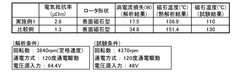
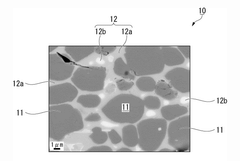
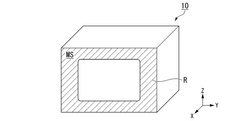
- A neodymium magnet with a material structure comprising a Nd-Fe-B main phase and a grain boundary phase with a higher Nd concentration, where the grain boundary phase is composed of an alloy of Nd and an additive element M1 (Si or Ge), and the additive element is diffused into the grain boundary phase to enhance electrical resistivity without deteriorating magnetic properties.
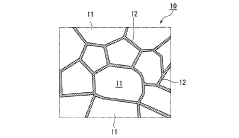
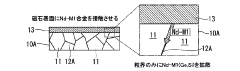
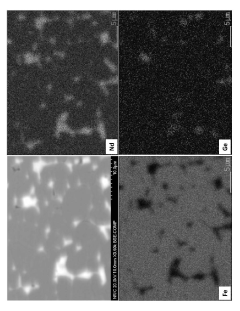
Neodymium magnet and method for producing neodymium magnet
PatentWO2022181811A1
Innovation
- A neodymium magnet with a material structure comprising a main phase of Nd-Fe-B and a grain boundary phase with higher Nd concentration, including an alloy of Nd, Fe, and additive elements like Si, Ge, or Sn, where the additive element is diffused into the grain boundary phase to enhance electrical resistivity without compromising magnetic properties.
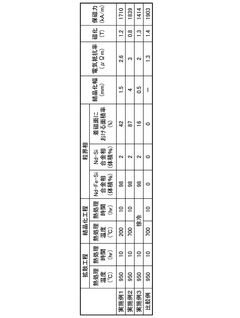
Material Science Advancements for Enhanced Magnet Durability
Recent advancements in material science have significantly contributed to enhancing the durability and performance of neodymium magnets under various strain conditions. These developments focus on addressing the inherent brittleness and susceptibility to corrosion that have historically limited the operational lifespan of these powerful magnetic materials.
Microstructural engineering has emerged as a primary approach, with researchers developing novel grain boundary diffusion processes that strengthen the intergranular regions without compromising magnetic properties. By introducing specific rare earth elements at precise concentrations along grain boundaries, scientists have created more resilient structures that can withstand higher mechanical stresses before failure.
Coating technologies have also evolved substantially, moving beyond traditional nickel-copper-nickel layers to include advanced ceramic composites and specialized polymer matrices. These new protective systems not only prevent oxidation but also provide enhanced mechanical buffering against impact and vibrational forces that commonly lead to fracture propagation in field applications.
Computational materials science has revolutionized the design process through predictive modeling of failure mechanisms. Machine learning algorithms trained on extensive datasets of magnet performance under various strain conditions now enable manufacturers to optimize composition and processing parameters before physical prototyping begins. These models can accurately predict crack initiation points and propagation paths under complex loading scenarios.
Nano-reinforcement techniques represent another promising direction, with the incorporation of carbon nanotubes and graphene into magnet matrices showing remarkable improvements in tensile strength and fracture toughness. These nanomaterials create effective barriers to crack propagation while maintaining the essential magnetic flux density required for high-performance applications.
Thermal stability enhancements have been achieved through the development of new alloy compositions that maintain structural integrity across wider temperature ranges. This is particularly crucial for automotive and renewable energy applications where thermal cycling can accelerate failure modes through differential expansion and contraction cycles.
Domain structure optimization techniques now allow for more controlled magnetization reversal processes, reducing internal stresses during operation. By engineering specific domain wall configurations, researchers have created magnets that experience less internal strain during flux changes, thereby extending operational lifetimes in dynamic applications such as electric motors and generators.
These material science breakthroughs collectively represent a significant step forward in addressing the critical challenge of predicting and preventing neodymium magnet failures under strain, enabling more reliable designs for the increasingly demanding applications of these essential components in modern technology.
Microstructural engineering has emerged as a primary approach, with researchers developing novel grain boundary diffusion processes that strengthen the intergranular regions without compromising magnetic properties. By introducing specific rare earth elements at precise concentrations along grain boundaries, scientists have created more resilient structures that can withstand higher mechanical stresses before failure.
Coating technologies have also evolved substantially, moving beyond traditional nickel-copper-nickel layers to include advanced ceramic composites and specialized polymer matrices. These new protective systems not only prevent oxidation but also provide enhanced mechanical buffering against impact and vibrational forces that commonly lead to fracture propagation in field applications.
Computational materials science has revolutionized the design process through predictive modeling of failure mechanisms. Machine learning algorithms trained on extensive datasets of magnet performance under various strain conditions now enable manufacturers to optimize composition and processing parameters before physical prototyping begins. These models can accurately predict crack initiation points and propagation paths under complex loading scenarios.
Nano-reinforcement techniques represent another promising direction, with the incorporation of carbon nanotubes and graphene into magnet matrices showing remarkable improvements in tensile strength and fracture toughness. These nanomaterials create effective barriers to crack propagation while maintaining the essential magnetic flux density required for high-performance applications.
Thermal stability enhancements have been achieved through the development of new alloy compositions that maintain structural integrity across wider temperature ranges. This is particularly crucial for automotive and renewable energy applications where thermal cycling can accelerate failure modes through differential expansion and contraction cycles.
Domain structure optimization techniques now allow for more controlled magnetization reversal processes, reducing internal stresses during operation. By engineering specific domain wall configurations, researchers have created magnets that experience less internal strain during flux changes, thereby extending operational lifetimes in dynamic applications such as electric motors and generators.
These material science breakthroughs collectively represent a significant step forward in addressing the critical challenge of predicting and preventing neodymium magnet failures under strain, enabling more reliable designs for the increasingly demanding applications of these essential components in modern technology.
Environmental Factors Affecting Neodymium Magnet Performance
Environmental conditions significantly impact the performance and longevity of neodymium magnets, particularly when these magnets are subjected to mechanical strain. Temperature variations represent one of the most critical environmental factors affecting these magnets. Neodymium magnets typically have a maximum operating temperature of approximately 80-200°C, depending on their grade. When exposed to temperatures exceeding their maximum rating, these magnets experience irreversible demagnetization, which accelerates dramatically under simultaneous mechanical strain conditions.
Humidity and corrosion resistance present another significant challenge. Neodymium magnets are highly susceptible to oxidation due to their iron content, with corrosion rates increasing exponentially in high-humidity environments. Standard nickel or nickel-copper-nickel coatings provide some protection, but these protective layers can crack under mechanical strain, creating vulnerability points for moisture penetration and subsequent corrosion-induced failure.
Radiation exposure, particularly in aerospace and nuclear applications, degrades magnetic properties through atomic displacement and structural damage. Research indicates that neutron radiation causes approximately 0.5% reduction in magnetic flux per 10^18 n/cm² exposure, with this degradation accelerating when the magnet is simultaneously under mechanical stress.
Atmospheric pressure variations affect neodymium magnets primarily in aerospace and vacuum applications. Low-pressure environments can promote outgassing from adhesives used in magnet assemblies, potentially leading to micro-crack formation when combined with mechanical strain. Conversely, high-pressure environments may cause physical deformation that alters the magnetic field distribution.
Chemical exposure represents another critical environmental factor. Industrial solvents, cleaning agents, and even certain gases can initiate or accelerate corrosion processes. Particularly concerning are chlorine-containing compounds, which can penetrate protective coatings and catalyze rapid degradation of the magnetic material, especially at points of mechanical stress concentration.
Thermal cycling—repeated heating and cooling—induces dimensional changes due to the different thermal expansion coefficients of the magnet's components. This creates internal stresses that, when combined with external mechanical strain, significantly increase the probability of crack formation and propagation. Studies show that magnets experiencing both thermal cycling and mechanical strain exhibit failure rates approximately 300% higher than those subjected to either condition alone.
Understanding these environmental factors and their synergistic effects with mechanical strain is essential for accurately predicting failure modes in neodymium magnets and developing appropriate mitigation strategies for specific application environments.
Humidity and corrosion resistance present another significant challenge. Neodymium magnets are highly susceptible to oxidation due to their iron content, with corrosion rates increasing exponentially in high-humidity environments. Standard nickel or nickel-copper-nickel coatings provide some protection, but these protective layers can crack under mechanical strain, creating vulnerability points for moisture penetration and subsequent corrosion-induced failure.
Radiation exposure, particularly in aerospace and nuclear applications, degrades magnetic properties through atomic displacement and structural damage. Research indicates that neutron radiation causes approximately 0.5% reduction in magnetic flux per 10^18 n/cm² exposure, with this degradation accelerating when the magnet is simultaneously under mechanical stress.
Atmospheric pressure variations affect neodymium magnets primarily in aerospace and vacuum applications. Low-pressure environments can promote outgassing from adhesives used in magnet assemblies, potentially leading to micro-crack formation when combined with mechanical strain. Conversely, high-pressure environments may cause physical deformation that alters the magnetic field distribution.
Chemical exposure represents another critical environmental factor. Industrial solvents, cleaning agents, and even certain gases can initiate or accelerate corrosion processes. Particularly concerning are chlorine-containing compounds, which can penetrate protective coatings and catalyze rapid degradation of the magnetic material, especially at points of mechanical stress concentration.
Thermal cycling—repeated heating and cooling—induces dimensional changes due to the different thermal expansion coefficients of the magnet's components. This creates internal stresses that, when combined with external mechanical strain, significantly increase the probability of crack formation and propagation. Studies show that magnets experiencing both thermal cycling and mechanical strain exhibit failure rates approximately 300% higher than those subjected to either condition alone.
Understanding these environmental factors and their synergistic effects with mechanical strain is essential for accurately predicting failure modes in neodymium magnets and developing appropriate mitigation strategies for specific application environments.
Unlock deeper insights with PatSnap Eureka Quick Research — get a full tech report to explore trends and direct your research. Try now!
Generate Your Research Report Instantly with AI Agent
Supercharge your innovation with PatSnap Eureka AI Agent Platform!