

PTFE’s Emerging Role in Innovative Coating Techniques
JUN 27, 20259 MIN READ
Generate Your Research Report Instantly with AI Agent
PatSnap Eureka helps you evaluate technical feasibility & market potential.
PTFE Coating Evolution
Polytetrafluoroethylene (PTFE) coating techniques have undergone significant evolution since their inception in the 1940s. Initially discovered by accident at DuPont, PTFE's unique properties quickly garnered attention for its potential in various applications. The early stages of PTFE coating development focused primarily on leveraging its non-stick and low friction characteristics for cookware and industrial machinery.
As research progressed, the 1960s and 1970s saw a expansion in PTFE coating methodologies. Spray coating techniques were refined, allowing for more uniform and durable applications. This period also marked the beginning of PTFE's use in more advanced sectors, such as aerospace and electronics, where its thermal stability and electrical insulation properties were highly valued.
The 1980s and 1990s brought about significant advancements in PTFE formulation and application processes. Multi-layer coating systems were developed, enhancing durability and performance. Plasma spray techniques emerged, enabling the creation of thinner, more adherent PTFE coatings. This era also saw the introduction of water-based PTFE dispersions, addressing environmental concerns associated with solvent-based systems.
Entering the 21st century, nanotechnology began to play a crucial role in PTFE coating evolution. Nanocomposite PTFE coatings were developed, incorporating nanoparticles to enhance specific properties such as wear resistance and thermal conductivity. This period also witnessed the rise of hybrid coatings, combining PTFE with other materials to create synergistic effects and expand application possibilities.
Recent years have seen a focus on sustainable and eco-friendly PTFE coating technologies. Research has been directed towards developing PFOA-free PTFE coatings, addressing environmental and health concerns. Additionally, advancements in surface preparation techniques and primer technologies have improved coating adhesion and longevity across various substrates.
The evolution of PTFE coatings has been marked by continuous improvements in application methods, formulation chemistry, and performance characteristics. From its humble beginnings as a non-stick coating for cookware, PTFE has transformed into a versatile material with applications ranging from industrial machinery to advanced electronics and medical devices. This journey reflects not only technological advancements but also changing market demands and regulatory landscapes, shaping the future of innovative coating techniques.
As research progressed, the 1960s and 1970s saw a expansion in PTFE coating methodologies. Spray coating techniques were refined, allowing for more uniform and durable applications. This period also marked the beginning of PTFE's use in more advanced sectors, such as aerospace and electronics, where its thermal stability and electrical insulation properties were highly valued.
The 1980s and 1990s brought about significant advancements in PTFE formulation and application processes. Multi-layer coating systems were developed, enhancing durability and performance. Plasma spray techniques emerged, enabling the creation of thinner, more adherent PTFE coatings. This era also saw the introduction of water-based PTFE dispersions, addressing environmental concerns associated with solvent-based systems.
Entering the 21st century, nanotechnology began to play a crucial role in PTFE coating evolution. Nanocomposite PTFE coatings were developed, incorporating nanoparticles to enhance specific properties such as wear resistance and thermal conductivity. This period also witnessed the rise of hybrid coatings, combining PTFE with other materials to create synergistic effects and expand application possibilities.
Recent years have seen a focus on sustainable and eco-friendly PTFE coating technologies. Research has been directed towards developing PFOA-free PTFE coatings, addressing environmental and health concerns. Additionally, advancements in surface preparation techniques and primer technologies have improved coating adhesion and longevity across various substrates.
The evolution of PTFE coatings has been marked by continuous improvements in application methods, formulation chemistry, and performance characteristics. From its humble beginnings as a non-stick coating for cookware, PTFE has transformed into a versatile material with applications ranging from industrial machinery to advanced electronics and medical devices. This journey reflects not only technological advancements but also changing market demands and regulatory landscapes, shaping the future of innovative coating techniques.
Market Demand Analysis
The market demand for PTFE-based innovative coating techniques has been experiencing significant growth in recent years, driven by the material's unique properties and versatile applications across various industries. PTFE, known for its non-stick, low friction, and chemical resistance characteristics, has found increasing adoption in sectors such as automotive, aerospace, electronics, and consumer goods.
In the automotive industry, PTFE coatings are gaining traction for their ability to enhance fuel efficiency and reduce wear on engine components. The growing emphasis on lightweight materials and improved performance in vehicles has led to a surge in demand for PTFE-coated parts. Similarly, the aerospace sector is leveraging PTFE coatings to address challenges related to extreme temperatures and harsh environmental conditions, particularly in aircraft engines and structural components.
The electronics industry has also emerged as a key driver for PTFE-based coating techniques. With the miniaturization of electronic devices and the need for improved thermal management, PTFE coatings are being increasingly utilized in printed circuit boards, connectors, and other electronic components. The material's excellent dielectric properties and resistance to high temperatures make it an ideal choice for these applications.
Consumer goods manufacturers are capitalizing on PTFE's non-stick properties to develop innovative cookware and household products. The growing consumer preference for easy-to-clean and durable kitchenware has fueled the demand for PTFE-coated products in this sector. Additionally, the textile industry is exploring PTFE-based coatings to create water-repellent and breathable fabrics for outdoor and performance wear.
The healthcare sector represents another promising market for PTFE-based coatings. The material's biocompatibility and low friction properties make it suitable for medical devices, implants, and surgical instruments. As the global population ages and healthcare expenditures increase, the demand for PTFE-coated medical products is expected to rise.
Environmental concerns and sustainability initiatives are also influencing the market demand for PTFE-based coatings. Manufacturers are developing eco-friendly PTFE formulations and exploring ways to reduce the environmental impact of coating processes. This trend is likely to drive innovation in PTFE coating techniques and open up new market opportunities.
The global market for PTFE coatings is projected to grow steadily in the coming years, with Asia-Pacific emerging as a key region for market expansion. Factors such as rapid industrialization, increasing automotive production, and growing electronics manufacturing in countries like China and India are contributing to this regional growth. North America and Europe continue to be significant markets, driven by technological advancements and stringent regulations in industries such as aerospace and healthcare.
In the automotive industry, PTFE coatings are gaining traction for their ability to enhance fuel efficiency and reduce wear on engine components. The growing emphasis on lightweight materials and improved performance in vehicles has led to a surge in demand for PTFE-coated parts. Similarly, the aerospace sector is leveraging PTFE coatings to address challenges related to extreme temperatures and harsh environmental conditions, particularly in aircraft engines and structural components.
The electronics industry has also emerged as a key driver for PTFE-based coating techniques. With the miniaturization of electronic devices and the need for improved thermal management, PTFE coatings are being increasingly utilized in printed circuit boards, connectors, and other electronic components. The material's excellent dielectric properties and resistance to high temperatures make it an ideal choice for these applications.
Consumer goods manufacturers are capitalizing on PTFE's non-stick properties to develop innovative cookware and household products. The growing consumer preference for easy-to-clean and durable kitchenware has fueled the demand for PTFE-coated products in this sector. Additionally, the textile industry is exploring PTFE-based coatings to create water-repellent and breathable fabrics for outdoor and performance wear.
The healthcare sector represents another promising market for PTFE-based coatings. The material's biocompatibility and low friction properties make it suitable for medical devices, implants, and surgical instruments. As the global population ages and healthcare expenditures increase, the demand for PTFE-coated medical products is expected to rise.
Environmental concerns and sustainability initiatives are also influencing the market demand for PTFE-based coatings. Manufacturers are developing eco-friendly PTFE formulations and exploring ways to reduce the environmental impact of coating processes. This trend is likely to drive innovation in PTFE coating techniques and open up new market opportunities.
The global market for PTFE coatings is projected to grow steadily in the coming years, with Asia-Pacific emerging as a key region for market expansion. Factors such as rapid industrialization, increasing automotive production, and growing electronics manufacturing in countries like China and India are contributing to this regional growth. North America and Europe continue to be significant markets, driven by technological advancements and stringent regulations in industries such as aerospace and healthcare.
Technical Challenges
Despite the remarkable properties of PTFE (Polytetrafluoroethylene) and its growing popularity in coating applications, several technical challenges persist in its widespread adoption and optimal utilization. These challenges span across various aspects of PTFE coating techniques and require innovative solutions to overcome.
One of the primary challenges lies in the adhesion of PTFE to substrate materials. Due to its non-stick nature, PTFE inherently resists bonding with other surfaces, making it difficult to achieve strong and durable adhesion. This issue is particularly pronounced when coating metals, ceramics, or other materials with significantly different surface energies. Researchers and engineers are continuously exploring new surface preparation methods and adhesion promoters to enhance the bonding strength between PTFE and various substrates.
Another significant challenge is the high processing temperature required for PTFE coatings. Traditional PTFE coating techniques often involve sintering at temperatures exceeding 350°C, which can be detrimental to heat-sensitive substrates and limit the range of materials that can be coated. Developing low-temperature curing methods or alternative application techniques that maintain PTFE's desirable properties while reducing processing temperatures remains an active area of research.
The uniformity and thickness control of PTFE coatings present additional technical hurdles. Achieving consistent coating thickness across complex geometries and large surface areas can be challenging, especially when using spray or dip coating methods. Variations in coating thickness can lead to inconsistent performance and reduced durability. Advanced deposition techniques and precise control mechanisms are being investigated to improve coating uniformity and thickness control.
Porosity and pinhole defects in PTFE coatings are also significant concerns, particularly in applications requiring barrier properties or corrosion resistance. These defects can compromise the coating's integrity and lead to premature failure. Developing methods to minimize porosity and eliminate pinhole defects while maintaining the coating's other desirable properties is crucial for expanding PTFE's application range.
The incorporation of functional additives into PTFE coatings without compromising its non-stick and low friction properties poses another challenge. While additives can enhance specific characteristics such as wear resistance or conductivity, they often negatively impact PTFE's inherent properties. Balancing the addition of functional components with the preservation of PTFE's unique attributes requires careful formulation and processing techniques.
Lastly, the environmental impact and sustainability of PTFE coating processes are becoming increasingly important considerations. Traditional PTFE production and application methods often involve the use of perfluorooctanoic acid (PFOA), which has raised environmental and health concerns. Developing eco-friendly alternatives and sustainable production processes for PTFE coatings is a critical challenge that the industry is actively addressing.
One of the primary challenges lies in the adhesion of PTFE to substrate materials. Due to its non-stick nature, PTFE inherently resists bonding with other surfaces, making it difficult to achieve strong and durable adhesion. This issue is particularly pronounced when coating metals, ceramics, or other materials with significantly different surface energies. Researchers and engineers are continuously exploring new surface preparation methods and adhesion promoters to enhance the bonding strength between PTFE and various substrates.
Another significant challenge is the high processing temperature required for PTFE coatings. Traditional PTFE coating techniques often involve sintering at temperatures exceeding 350°C, which can be detrimental to heat-sensitive substrates and limit the range of materials that can be coated. Developing low-temperature curing methods or alternative application techniques that maintain PTFE's desirable properties while reducing processing temperatures remains an active area of research.
The uniformity and thickness control of PTFE coatings present additional technical hurdles. Achieving consistent coating thickness across complex geometries and large surface areas can be challenging, especially when using spray or dip coating methods. Variations in coating thickness can lead to inconsistent performance and reduced durability. Advanced deposition techniques and precise control mechanisms are being investigated to improve coating uniformity and thickness control.
Porosity and pinhole defects in PTFE coatings are also significant concerns, particularly in applications requiring barrier properties or corrosion resistance. These defects can compromise the coating's integrity and lead to premature failure. Developing methods to minimize porosity and eliminate pinhole defects while maintaining the coating's other desirable properties is crucial for expanding PTFE's application range.
The incorporation of functional additives into PTFE coatings without compromising its non-stick and low friction properties poses another challenge. While additives can enhance specific characteristics such as wear resistance or conductivity, they often negatively impact PTFE's inherent properties. Balancing the addition of functional components with the preservation of PTFE's unique attributes requires careful formulation and processing techniques.
Lastly, the environmental impact and sustainability of PTFE coating processes are becoming increasingly important considerations. Traditional PTFE production and application methods often involve the use of perfluorooctanoic acid (PFOA), which has raised environmental and health concerns. Developing eco-friendly alternatives and sustainable production processes for PTFE coatings is a critical challenge that the industry is actively addressing.
Current PTFE Solutions
01 Spray coating techniques for PTFE
Spray coating is a common method for applying PTFE coatings. This technique involves spraying a PTFE dispersion onto a substrate, followed by heat curing to create a durable, non-stick surface. The process can be optimized by controlling factors such as spray pressure, nozzle type, and curing temperature to achieve desired coating thickness and uniformity.- Spray coating techniques for PTFE: Spray coating is a common method for applying PTFE coatings. This technique involves spraying a PTFE dispersion onto a substrate, followed by heat curing to create a durable, non-stick surface. The process can be optimized for various substrate materials and desired coating thicknesses.
- Electrodeposition of PTFE coatings: Electrodeposition is an advanced technique for applying PTFE coatings, particularly useful for complex-shaped components. This method involves suspending PTFE particles in an electrolyte solution and using an electric current to deposit them onto a conductive substrate, resulting in a uniform and adherent coating.
- PTFE coating with nanoparticle additives: Incorporating nanoparticles into PTFE coatings can enhance their properties, such as wear resistance, thermal conductivity, or anti-corrosion performance. Various types of nanoparticles, including metal oxides and carbon-based materials, can be dispersed in the PTFE matrix to achieve specific performance improvements.
- Plasma treatment for improved PTFE adhesion: Plasma treatment of substrates prior to PTFE coating application can significantly improve adhesion. This technique modifies the surface energy of the substrate, creating functional groups that enhance the bonding between the PTFE coating and the underlying material, resulting in more durable and long-lasting coatings.
- Multi-layer PTFE coating systems: Multi-layer PTFE coating systems involve applying multiple layers of PTFE or PTFE-based materials to achieve specific performance characteristics. This technique can include primer layers for improved adhesion, intermediate layers for enhanced durability, and top coats for optimal surface properties, resulting in coatings with superior performance in demanding applications.
02 Electrodeposition of PTFE coatings
Electrodeposition is an advanced technique for applying PTFE coatings, particularly useful for complex-shaped components. This method involves suspending PTFE particles in an electrolyte solution and using an electric current to deposit them onto a conductive substrate. The process allows for precise control of coating thickness and can result in highly uniform and adherent PTFE layers.Expand Specific Solutions03 PTFE coating with nanoparticle additives
Incorporating nanoparticles into PTFE coatings can enhance their properties, such as wear resistance, thermal conductivity, or anti-corrosion performance. Common nanoparticle additives include silica, alumina, or carbon nanotubes. These nanocomposite coatings can be applied using various techniques, including spray coating or dip coating, followed by sintering to create a cohesive layer.Expand Specific Solutions04 Plasma-enhanced PTFE coating deposition
Plasma-enhanced deposition techniques can be used to create ultra-thin, highly adherent PTFE coatings. This method involves using plasma to activate the substrate surface and decompose PTFE precursors, allowing for the formation of a thin film coating. The process can be carried out at lower temperatures compared to conventional thermal methods, making it suitable for heat-sensitive substrates.Expand Specific Solutions05 Multi-layer PTFE coating systems
Multi-layer PTFE coating systems involve applying multiple layers of PTFE or PTFE-based materials to achieve specific performance characteristics. This can include primer layers for improved adhesion, intermediate layers for enhanced durability, and top coats for optimal non-stick properties. The multi-layer approach allows for customization of coating properties to meet specific application requirements.Expand Specific Solutions
Key Industry Players
The PTFE coating industry is experiencing a dynamic phase of innovation and growth, driven by increasing demand across various sectors. The market is in a mature stage but continues to expand, with a projected global market size reaching $2.7 billion by 2026. Technological advancements are pushing the boundaries of PTFE's applications, with companies like Daikin Industries, 3M Innovative Properties, and W. L. Gore & Associates leading the charge in developing novel coating techniques. These industry leaders are investing heavily in R&D to enhance PTFE's properties and explore new applications, particularly in electronics, automotive, and medical industries. The competitive landscape is characterized by a mix of established players and innovative startups, each striving to differentiate through proprietary technologies and specialized applications.
Shengyi Technology Co., Ltd.
Technical Solution: Shengyi Technology has developed innovative PTFE coating techniques specifically tailored for the electronics industry, particularly in the production of high-frequency PCB materials. Their approach involves the precise application of PTFE coatings to glass fiber substrates, creating materials with excellent dielectric properties and thermal stability[14]. Shengyi has pioneered methods for controlling the PTFE content and distribution within the composite structure, allowing for fine-tuning of electrical and mechanical properties. They have also developed specialized surface treatment techniques to improve the adhesion between PTFE-coated substrates and copper foils, enhancing the overall reliability of PCB assemblies[15]. Additionally, Shengyi has explored the use of modified PTFE resins and fillers to create coatings with improved processability and reduced signal loss at high frequencies[16].
Strengths: Specialized expertise in high-frequency PCB materials, precise control of PTFE content and distribution, and improved adhesion properties. Weaknesses: Primarily focused on electronics applications, potentially limiting broader industrial use.
DAIKIN INDUSTRIES Ltd.
Technical Solution: DAIKIN has developed innovative PTFE coating techniques that enhance the material's non-stick and chemical resistance properties. Their OPTOOL™ technology utilizes a unique molecular structure to create ultra-thin PTFE coatings with improved durability and lower friction coefficients[1]. This method allows for precise control of coating thickness down to nanometer levels, enabling application on complex geometries and sensitive substrates. DAIKIN has also pioneered environmentally friendly water-based PTFE dispersions, reducing VOC emissions during the coating process[2]. Their advanced plasma treatment techniques improve PTFE adhesion to various substrates, expanding its application range in industries such as automotive, electronics, and medical devices[3].
Strengths: Superior non-stick properties, excellent chemical resistance, and precise thickness control. Weaknesses: Higher cost compared to traditional coatings, potential for reduced durability in extreme conditions.
PTFE Coating Breakthroughs
Aqueous dispersions of polytetrafluoroethylene particles
PatentWO2005040239A2
Innovation
- The development of an aqueous non-melt processible PTFE dispersion with 30-70% PTFE particles and one or more non-ionic surfactants, where the PTFE particles have polytetrafluoroethylene polymer chains with ionic groups, reducing the risk of coagulation and stabilizing the dispersion even at low fluorinated surfactant levels, allowing for environmentally friendly and cost-effective production.
Fluoropolymer shear-thinning INKS and methods of making and using same
PatentWO2020215047A1
Innovation
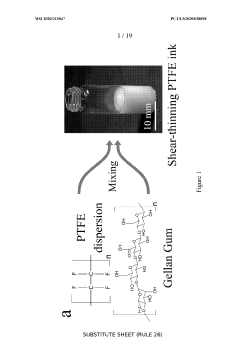
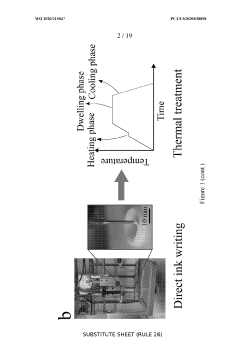
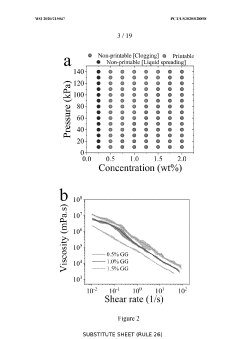
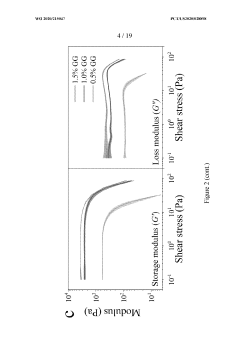
- Development of shear-thinning inks comprising PTFE particles, a medium, and a shear-thinning agent like gellan gum, combined with a multistage thermal treatment process for direct ink writing, allowing for the creation of complex PTFE structures with tunable mechanical properties.
Environmental Impact
The environmental impact of PTFE (Polytetrafluoroethylene) in innovative coating techniques is a critical consideration as this material gains prominence in various industries. PTFE coatings offer significant advantages in terms of durability, non-stick properties, and chemical resistance. However, their environmental implications require careful examination.
One of the primary environmental concerns associated with PTFE coatings is the production process. The manufacture of PTFE involves the use of perfluorooctanoic acid (PFOA), a persistent organic pollutant. While efforts have been made to phase out PFOA, its historical use has led to environmental contamination. Recent innovations in PTFE production aim to eliminate PFOA, reducing the environmental footprint of these coatings.
The longevity of PTFE coatings contributes positively to sustainability by extending the lifespan of coated products. This durability reduces the need for frequent replacements, thereby minimizing waste generation and resource consumption. Additionally, the non-stick properties of PTFE coatings can lead to reduced use of cleaning chemicals, further decreasing environmental impact during the product's lifecycle.
However, the disposal of PTFE-coated products presents challenges. PTFE is not biodegradable and can persist in the environment for extended periods. When incinerated at high temperatures, PTFE can release harmful fluorine compounds. This necessitates the development of specialized recycling and disposal methods for PTFE-coated materials.
Recent research has focused on improving the recyclability of PTFE coatings. Innovative techniques, such as chemical recycling and mechanical separation, show promise in recovering PTFE from end-of-life products. These advancements could significantly reduce the environmental impact of PTFE coatings by enabling a more circular economy approach.
The application of PTFE coatings in energy-efficient technologies presents another environmental consideration. PTFE's low friction properties can enhance the efficiency of machinery and equipment, potentially leading to reduced energy consumption and lower greenhouse gas emissions in various industrial applications.
As environmental regulations become more stringent, the coating industry is exploring eco-friendly alternatives to traditional PTFE formulations. Bio-based and water-based PTFE coatings are emerging as potential solutions, offering similar performance characteristics with reduced environmental impact. These innovations demonstrate the industry's commitment to balancing technological advancement with environmental stewardship.
In conclusion, while PTFE coatings offer significant performance benefits, their environmental impact remains a complex issue. Ongoing research and development efforts are crucial in mitigating the negative aspects of PTFE use while maximizing its potential for sustainable applications in innovative coating techniques.
One of the primary environmental concerns associated with PTFE coatings is the production process. The manufacture of PTFE involves the use of perfluorooctanoic acid (PFOA), a persistent organic pollutant. While efforts have been made to phase out PFOA, its historical use has led to environmental contamination. Recent innovations in PTFE production aim to eliminate PFOA, reducing the environmental footprint of these coatings.
The longevity of PTFE coatings contributes positively to sustainability by extending the lifespan of coated products. This durability reduces the need for frequent replacements, thereby minimizing waste generation and resource consumption. Additionally, the non-stick properties of PTFE coatings can lead to reduced use of cleaning chemicals, further decreasing environmental impact during the product's lifecycle.
However, the disposal of PTFE-coated products presents challenges. PTFE is not biodegradable and can persist in the environment for extended periods. When incinerated at high temperatures, PTFE can release harmful fluorine compounds. This necessitates the development of specialized recycling and disposal methods for PTFE-coated materials.
Recent research has focused on improving the recyclability of PTFE coatings. Innovative techniques, such as chemical recycling and mechanical separation, show promise in recovering PTFE from end-of-life products. These advancements could significantly reduce the environmental impact of PTFE coatings by enabling a more circular economy approach.
The application of PTFE coatings in energy-efficient technologies presents another environmental consideration. PTFE's low friction properties can enhance the efficiency of machinery and equipment, potentially leading to reduced energy consumption and lower greenhouse gas emissions in various industrial applications.
As environmental regulations become more stringent, the coating industry is exploring eco-friendly alternatives to traditional PTFE formulations. Bio-based and water-based PTFE coatings are emerging as potential solutions, offering similar performance characteristics with reduced environmental impact. These innovations demonstrate the industry's commitment to balancing technological advancement with environmental stewardship.
In conclusion, while PTFE coatings offer significant performance benefits, their environmental impact remains a complex issue. Ongoing research and development efforts are crucial in mitigating the negative aspects of PTFE use while maximizing its potential for sustainable applications in innovative coating techniques.
Regulatory Compliance
The regulatory landscape surrounding PTFE coatings is complex and evolving, with various agencies and standards bodies playing crucial roles in shaping compliance requirements. In the United States, the Food and Drug Administration (FDA) is a key regulator, particularly for PTFE coatings used in food contact applications and medical devices. The FDA's 21 CFR 175.300 specifically addresses resinous and polymeric coatings, including PTFE, setting guidelines for their use in food-contact surfaces.
The Environmental Protection Agency (EPA) also plays a significant role, particularly through its Toxic Substances Control Act (TSCA). PTFE and its precursors, such as perfluorooctanoic acid (PFOA), have been subject to increased scrutiny due to environmental concerns. The EPA has implemented phase-out programs for certain perfluorinated compounds, impacting the production and use of PTFE coatings.
In the European Union, the Registration, Evaluation, Authorization, and Restriction of Chemicals (REACH) regulation is a critical framework affecting PTFE coatings. REACH requires manufacturers and importers to register chemical substances and assess their potential risks. The European Food Safety Authority (EFSA) also provides guidelines for food contact materials, including PTFE coatings.
Globally, the International Organization for Standardization (ISO) has developed standards relevant to PTFE coatings, such as ISO 21809-3 for external coatings for buried or submerged pipelines used in pipeline transportation systems. These standards often serve as benchmarks for quality and performance in various industries.
As environmental concerns grow, regulations are becoming increasingly stringent. The Stockholm Convention on Persistent Organic Pollutants has led to restrictions on certain fluorinated compounds, indirectly affecting PTFE production and use. This has spurred innovation in PTFE coating techniques, driving the development of more environmentally friendly formulations and application methods.
Compliance with these regulations requires ongoing vigilance and adaptation from manufacturers and users of PTFE coatings. Companies must invest in research and development to ensure their products meet evolving standards while maintaining performance characteristics. This regulatory landscape also presents opportunities for innovation, as companies seek to develop novel PTFE coating techniques that not only comply with current regulations but also anticipate future regulatory trends.
The Environmental Protection Agency (EPA) also plays a significant role, particularly through its Toxic Substances Control Act (TSCA). PTFE and its precursors, such as perfluorooctanoic acid (PFOA), have been subject to increased scrutiny due to environmental concerns. The EPA has implemented phase-out programs for certain perfluorinated compounds, impacting the production and use of PTFE coatings.
In the European Union, the Registration, Evaluation, Authorization, and Restriction of Chemicals (REACH) regulation is a critical framework affecting PTFE coatings. REACH requires manufacturers and importers to register chemical substances and assess their potential risks. The European Food Safety Authority (EFSA) also provides guidelines for food contact materials, including PTFE coatings.
Globally, the International Organization for Standardization (ISO) has developed standards relevant to PTFE coatings, such as ISO 21809-3 for external coatings for buried or submerged pipelines used in pipeline transportation systems. These standards often serve as benchmarks for quality and performance in various industries.
As environmental concerns grow, regulations are becoming increasingly stringent. The Stockholm Convention on Persistent Organic Pollutants has led to restrictions on certain fluorinated compounds, indirectly affecting PTFE production and use. This has spurred innovation in PTFE coating techniques, driving the development of more environmentally friendly formulations and application methods.
Compliance with these regulations requires ongoing vigilance and adaptation from manufacturers and users of PTFE coatings. Companies must invest in research and development to ensure their products meet evolving standards while maintaining performance characteristics. This regulatory landscape also presents opportunities for innovation, as companies seek to develop novel PTFE coating techniques that not only comply with current regulations but also anticipate future regulatory trends.
Unlock deeper insights with PatSnap Eureka Quick Research — get a full tech report to explore trends and direct your research. Try now!
Generate Your Research Report Instantly with AI Agent
Supercharge your innovation with PatSnap Eureka AI Agent Platform!