

QNED Technology: Navigating Display Market Challenges
JUN 18, 20258 MIN READ
Generate Your Research Report Instantly with AI Agent
Patsnap Eureka helps you evaluate technical feasibility & market potential.
QNED Tech Evolution
QNED (Quantum Nano Emitting Diode) technology has undergone significant evolution since its inception, marking key milestones in the display industry. The journey began with the development of quantum dot technology, which laid the foundation for QNED. Initially, quantum dots were primarily used to enhance color performance in LCD displays.
As research progressed, scientists and engineers focused on integrating quantum dots directly into the light-emitting layers of displays. This led to the concept of electroluminescent quantum dot displays, where quantum dots could be excited electrically rather than optically. This breakthrough paved the way for QNED technology.
The next crucial step in QNED evolution was the development of nano-rod LEDs. These structures provided improved electron injection and light emission properties compared to traditional LEDs. By combining quantum dots with nano-rod LEDs, researchers created the basis for QNED displays, offering the potential for superior color performance and energy efficiency.
A significant milestone in QNED development was the successful demonstration of blue QNED devices. Blue light emission had been a challenge in many display technologies, and overcoming this hurdle was crucial for creating full-color QNED displays. This achievement opened up new possibilities for QNED application in various display products.
The evolution of QNED also saw advancements in manufacturing processes. Initially, fabrication techniques were complex and costly, limiting large-scale production. However, innovations in materials science and engineering led to more efficient and scalable manufacturing methods, bringing QNED closer to commercial viability.
Recent years have witnessed improvements in QNED stability and longevity. Early QNED prototypes faced issues with degradation over time, particularly for blue emitters. Ongoing research has focused on enhancing the durability of QNED materials, making them more suitable for long-term use in consumer electronics.
The latest phase of QNED evolution involves integrating this technology with existing display architectures. Researchers are exploring hybrid designs that combine QNED with OLED or mini-LED technologies, aiming to leverage the strengths of each approach. These hybrid solutions could potentially offer the best of both worlds: the color performance of QNED with the established manufacturing infrastructure of other technologies.
As QNED continues to evolve, efforts are being made to address remaining challenges such as power efficiency, color accuracy, and production costs. The technology is progressing towards larger screen sizes and higher resolutions, with prototypes demonstrating promising results in these areas. The ongoing evolution of QNED technology represents a significant step forward in display technology, potentially reshaping the competitive landscape of the display market in the coming years.
As research progressed, scientists and engineers focused on integrating quantum dots directly into the light-emitting layers of displays. This led to the concept of electroluminescent quantum dot displays, where quantum dots could be excited electrically rather than optically. This breakthrough paved the way for QNED technology.
The next crucial step in QNED evolution was the development of nano-rod LEDs. These structures provided improved electron injection and light emission properties compared to traditional LEDs. By combining quantum dots with nano-rod LEDs, researchers created the basis for QNED displays, offering the potential for superior color performance and energy efficiency.
A significant milestone in QNED development was the successful demonstration of blue QNED devices. Blue light emission had been a challenge in many display technologies, and overcoming this hurdle was crucial for creating full-color QNED displays. This achievement opened up new possibilities for QNED application in various display products.
The evolution of QNED also saw advancements in manufacturing processes. Initially, fabrication techniques were complex and costly, limiting large-scale production. However, innovations in materials science and engineering led to more efficient and scalable manufacturing methods, bringing QNED closer to commercial viability.
Recent years have witnessed improvements in QNED stability and longevity. Early QNED prototypes faced issues with degradation over time, particularly for blue emitters. Ongoing research has focused on enhancing the durability of QNED materials, making them more suitable for long-term use in consumer electronics.
The latest phase of QNED evolution involves integrating this technology with existing display architectures. Researchers are exploring hybrid designs that combine QNED with OLED or mini-LED technologies, aiming to leverage the strengths of each approach. These hybrid solutions could potentially offer the best of both worlds: the color performance of QNED with the established manufacturing infrastructure of other technologies.
As QNED continues to evolve, efforts are being made to address remaining challenges such as power efficiency, color accuracy, and production costs. The technology is progressing towards larger screen sizes and higher resolutions, with prototypes demonstrating promising results in these areas. The ongoing evolution of QNED technology represents a significant step forward in display technology, potentially reshaping the competitive landscape of the display market in the coming years.
Display Market Dynamics
The display market has undergone significant transformations in recent years, driven by technological advancements and changing consumer preferences. QNED (Quantum Nano Emitting Diode) technology has emerged as a potential disruptor in this dynamic landscape, offering a unique blend of QLED and Mini-LED technologies. As the market continues to evolve, several key trends are shaping its trajectory.
Firstly, there is a growing demand for larger screen sizes across various applications, from home entertainment to digital signage. This trend is particularly pronounced in the premium segment, where consumers are willing to invest in high-quality, immersive viewing experiences. QNED technology, with its ability to deliver superior picture quality on large screens, is well-positioned to capitalize on this trend.
Secondly, energy efficiency has become a critical factor in display technology adoption. As global energy consumption concerns rise, consumers and businesses alike are seeking more sustainable options. QNED displays offer improved energy efficiency compared to traditional LCD and OLED technologies, potentially giving them a competitive edge in this environmentally conscious market.
The shift towards higher resolutions and enhanced color performance continues to drive innovation in the display industry. 4K and 8K resolutions are becoming increasingly common, while HDR (High Dynamic Range) capabilities are now expected in premium displays. QNED technology's ability to deliver deep blacks, high contrast ratios, and wide color gamuts aligns well with these market demands.
Another significant trend is the integration of smart features and connectivity options in displays. Consumers expect seamless integration with their digital ecosystems, including voice control, streaming capabilities, and IoT connectivity. While QNED primarily addresses picture quality, its success in the market will also depend on how well it can be integrated with these smart features.
The commercial display sector, including digital signage and professional monitors, represents a growing opportunity for advanced display technologies. QNED's potential for high brightness and durability makes it an attractive option for these applications, where displays often operate in challenging environments for extended periods.
Lastly, the ongoing competition between different display technologies continues to shape the market. OLED, QLED, and various LED-based technologies are vying for market share, each with its own strengths and limitations. QNED's position in this competitive landscape will depend on its ability to offer a compelling value proposition that differentiates it from existing options.
Firstly, there is a growing demand for larger screen sizes across various applications, from home entertainment to digital signage. This trend is particularly pronounced in the premium segment, where consumers are willing to invest in high-quality, immersive viewing experiences. QNED technology, with its ability to deliver superior picture quality on large screens, is well-positioned to capitalize on this trend.
Secondly, energy efficiency has become a critical factor in display technology adoption. As global energy consumption concerns rise, consumers and businesses alike are seeking more sustainable options. QNED displays offer improved energy efficiency compared to traditional LCD and OLED technologies, potentially giving them a competitive edge in this environmentally conscious market.
The shift towards higher resolutions and enhanced color performance continues to drive innovation in the display industry. 4K and 8K resolutions are becoming increasingly common, while HDR (High Dynamic Range) capabilities are now expected in premium displays. QNED technology's ability to deliver deep blacks, high contrast ratios, and wide color gamuts aligns well with these market demands.
Another significant trend is the integration of smart features and connectivity options in displays. Consumers expect seamless integration with their digital ecosystems, including voice control, streaming capabilities, and IoT connectivity. While QNED primarily addresses picture quality, its success in the market will also depend on how well it can be integrated with these smart features.
The commercial display sector, including digital signage and professional monitors, represents a growing opportunity for advanced display technologies. QNED's potential for high brightness and durability makes it an attractive option for these applications, where displays often operate in challenging environments for extended periods.
Lastly, the ongoing competition between different display technologies continues to shape the market. OLED, QLED, and various LED-based technologies are vying for market share, each with its own strengths and limitations. QNED's position in this competitive landscape will depend on its ability to offer a compelling value proposition that differentiates it from existing options.
QNED Hurdles
QNED (Quantum Nano Emitting Diode) technology faces several significant hurdles as it strives to establish itself in the competitive display market. One of the primary challenges is the complexity of manufacturing processes. The production of QNED displays requires precise control over quantum dot placement and alignment, which demands advanced manufacturing techniques and equipment. This complexity not only increases production costs but also impacts yield rates, making it difficult to achieve economies of scale.
Another major hurdle is the stability and longevity of QNED displays. Quantum dots are sensitive to environmental factors such as heat and moisture, which can degrade their performance over time. Ensuring long-term stability and consistent color output remains a critical challenge for QNED technology. This issue is particularly crucial for consumer electronics, where product lifespan and reliability are key selling points.
The color gamut and brightness of QNED displays, while impressive, still face competition from established technologies like OLED and advanced LCD variants. QNED needs to demonstrate clear superiority in these areas to justify its adoption, especially considering the higher production costs. Achieving a perfect balance between color accuracy, brightness, and energy efficiency is an ongoing challenge for QNED researchers and engineers.
Power consumption is another area where QNED technology faces hurdles. While it offers improvements over traditional LCD, it still consumes more power than OLED in many scenarios. This is particularly relevant for mobile devices and other battery-powered applications, where energy efficiency is a critical factor.
Market acceptance and consumer education present additional challenges. QNED is a relatively new technology, and consumers may be hesitant to adopt it over more familiar options. Educating the market about the benefits of QNED and differentiating it from other quantum dot-based technologies requires significant marketing efforts and clear messaging.
Supply chain issues also pose a significant hurdle. The production of QNED displays relies on specialized materials and components, some of which may have limited suppliers. Ensuring a stable and cost-effective supply chain is crucial for the technology's widespread adoption and long-term viability in the market.
Lastly, regulatory compliance and environmental concerns present ongoing challenges. As with any new display technology, QNED must meet various safety and environmental standards across different regions. The use of nanomaterials in consumer products is subject to increasing scrutiny, and QNED manufacturers must navigate these regulatory landscapes carefully.
Another major hurdle is the stability and longevity of QNED displays. Quantum dots are sensitive to environmental factors such as heat and moisture, which can degrade their performance over time. Ensuring long-term stability and consistent color output remains a critical challenge for QNED technology. This issue is particularly crucial for consumer electronics, where product lifespan and reliability are key selling points.
The color gamut and brightness of QNED displays, while impressive, still face competition from established technologies like OLED and advanced LCD variants. QNED needs to demonstrate clear superiority in these areas to justify its adoption, especially considering the higher production costs. Achieving a perfect balance between color accuracy, brightness, and energy efficiency is an ongoing challenge for QNED researchers and engineers.
Power consumption is another area where QNED technology faces hurdles. While it offers improvements over traditional LCD, it still consumes more power than OLED in many scenarios. This is particularly relevant for mobile devices and other battery-powered applications, where energy efficiency is a critical factor.
Market acceptance and consumer education present additional challenges. QNED is a relatively new technology, and consumers may be hesitant to adopt it over more familiar options. Educating the market about the benefits of QNED and differentiating it from other quantum dot-based technologies requires significant marketing efforts and clear messaging.
Supply chain issues also pose a significant hurdle. The production of QNED displays relies on specialized materials and components, some of which may have limited suppliers. Ensuring a stable and cost-effective supply chain is crucial for the technology's widespread adoption and long-term viability in the market.
Lastly, regulatory compliance and environmental concerns present ongoing challenges. As with any new display technology, QNED must meet various safety and environmental standards across different regions. The use of nanomaterials in consumer products is subject to increasing scrutiny, and QNED manufacturers must navigate these regulatory landscapes carefully.
QNED Implementation
01 Display technology advancements
QNED (Quantum Nano Emitting Diode) technology represents a significant advancement in display technology, combining quantum dot and NanoCell technologies to enhance color accuracy, contrast, and overall picture quality in LCD displays. This innovation aims to bridge the gap between traditional LCD and OLED displays, offering improved performance and visual experience.- Display technology advancements: QNED (Quantum Nano Emitting Diode) technology represents a significant advancement in display technology, combining quantum dot and mini-LED technologies. It offers improved color accuracy, contrast ratios, and brightness compared to traditional LED displays. This technology enhances picture quality and viewing experience in various electronic devices.
- Network communication improvements: QNED technology has applications in network communication systems, potentially improving data transmission efficiency and reliability. It may be utilized in developing advanced wireless communication protocols and enhancing network infrastructure for faster and more stable connections.
- Energy efficiency and power management: The implementation of QNED technology in electronic devices can lead to improved energy efficiency and power management. This may result in longer battery life for portable devices and reduced power consumption in larger display systems, contributing to overall sustainability efforts.
- Integration with AI and machine learning: QNED technology may be integrated with artificial intelligence and machine learning algorithms to enhance device performance and user experience. This could include adaptive display settings, predictive maintenance, and personalized content delivery based on user preferences and behavior.
- Manufacturing and production processes: Advancements in QNED technology manufacturing processes focus on improving production efficiency, reducing costs, and enhancing product quality. This includes developing new materials, refining fabrication techniques, and optimizing assembly processes for mass production of QNED-based devices.
02 Network and communication systems
QNED technology has applications in network and communication systems, potentially improving data transmission, signal processing, and overall network efficiency. This could lead to enhanced wireless communication capabilities and more robust network infrastructures.Expand Specific Solutions03 Artificial intelligence and machine learning integration
The integration of artificial intelligence and machine learning algorithms with QNED technology could lead to smarter display systems and improved image processing capabilities. This combination may enable advanced features such as adaptive brightness, content optimization, and predictive rendering.Expand Specific Solutions04 Energy efficiency and sustainability
QNED technology may contribute to improved energy efficiency in display devices, potentially reducing power consumption while maintaining high-quality visual output. This aspect aligns with broader sustainability goals in consumer electronics and could lead to more environmentally friendly display solutions.Expand Specific Solutions05 Manufacturing and production processes
Advancements in QNED technology may involve innovative manufacturing and production processes, including new methods for creating and applying quantum dots and nanoparticles. These processes could lead to more efficient production, improved yield rates, and potentially lower costs for QNED displays.Expand Specific Solutions
Display Industry Leaders
The QNED (Quantum Nano Emitting Diode) technology market is in its early growth stage, with significant potential for expansion. The global display market, which QNED aims to disrupt, is projected to reach substantial size in the coming years. QNED's technological maturity is advancing rapidly, with key players like Samsung Display, LG Display, and BOE Technology Group leading research and development efforts. These companies are investing heavily in QNED to overcome challenges in brightness, color accuracy, and production costs. While QNED promises superior performance over existing technologies, it faces competition from established OLED and emerging microLED displays. The competitive landscape is intensifying as companies like TCL and HKC Corp. also enter the QNED arena, driving innovation and market diversification.
BOE Technology Group Co., Ltd.
Technical Solution: BOE has been actively developing QNED (Quantum Nano Emitting Diode) technology, which combines quantum dot and mini-LED technologies. Their approach involves using a quantum dot color conversion layer over a mini-LED backlight, resulting in improved color gamut, contrast ratio, and energy efficiency. BOE's QNED displays aim to achieve OLED-like picture quality with better brightness and longevity. The company has showcased prototypes with over 10,000 local dimming zones, demonstrating their commitment to advancing this technology for various applications, including high-end TVs and professional monitors.
Strengths: Advanced color reproduction, high contrast ratios, and improved energy efficiency. Weaknesses: Higher production costs compared to traditional LCD, and potential challenges in achieving uniform quantum dot distribution.
LG Display Co., Ltd.
Technical Solution: LG Display has been investing in QNED technology as part of its next-generation display strategy. Their QNED approach combines quantum dot technology with NanoCell and mini-LED backlighting. LG's QNED displays use up to 30,000 mini-LEDs grouped into around 2,500 local dimming zones, offering improved contrast and brightness compared to conventional LCD TVs. The quantum dot layer enhances color accuracy and vibrancy, while the NanoCell technology further refines color reproduction by absorbing unwanted light wavelengths. LG has already commercialized QNED TVs, positioning them as a premium option between their NanoCell and OLED offerings.
Strengths: Excellent brightness capabilities, wide color gamut, and established market presence. Weaknesses: Higher cost compared to standard LED-LCD TVs and potential blooming effects in high-contrast scenes.
QNED Core Innovations
Quantum-nano light emitting diode pixel and quantum-nano light emitting diode display device
PatentActiveUS20190081261A1
Innovation
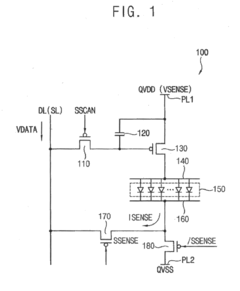
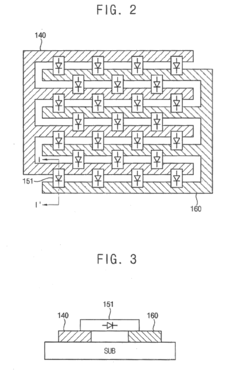
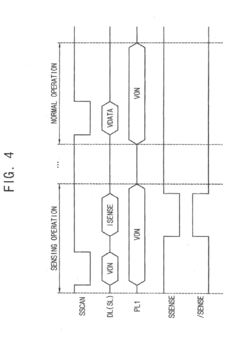
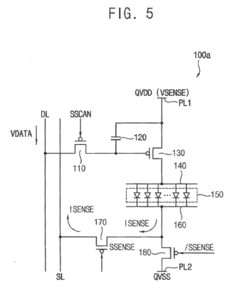
- A Q-NED pixel and display device design that includes a switching transistor, storage capacitor, driving transistor, and sensing transistors to sense and compensate for ohmic contact resistance deviations, utilizing inorganic materials like gallium nitride for the Q-NEDs, with anode and cathode electrodes having a comb shape to enhance light emission efficiency and maintain luminance over time.
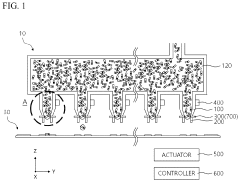
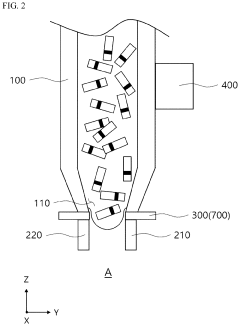
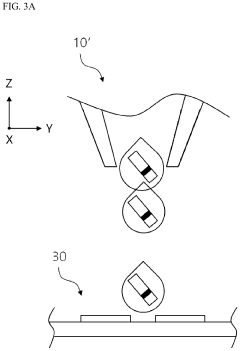
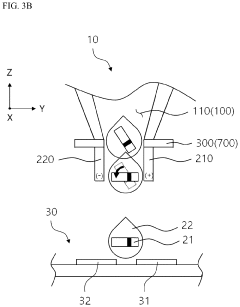
Inkjet head and method of ejecting ink using the same
PatentActiveUS11845276B2
Innovation
- An inkjet head with nozzles and pairs of electrodes that apply an electrode voltage to the light-emitting elements, including a first and second piezoelectric element, and a controller to independently control the electrode voltage, allowing for precise arrangement of light-emitting elements on a substrate with separate electrodes before and during the jetting process.
Supply Chain Analysis
The supply chain for QNED (Quantum Nano-Emitting Diode) technology is a complex network involving multiple components and processes. At its core, QNED displays require the production of quantum dots, which are typically manufactured using specialized chemical processes. These quantum dots are then integrated with nano-scale LEDs to create the QNED pixels.
Key suppliers in the QNED supply chain include manufacturers of quantum dots, such as Nanosys and QD Vision, as well as LED producers like Epistar and Lextar. The production of QNED displays also relies on suppliers of glass substrates, color filters, and other display components.
One of the main challenges in the QNED supply chain is the limited number of suppliers capable of producing high-quality quantum dots at scale. This bottleneck can lead to potential supply constraints and price fluctuations. Additionally, the production of nano-scale LEDs requires advanced manufacturing capabilities, which are currently concentrated among a few key players in the industry.
The geographical distribution of the QNED supply chain is primarily centered in East Asia, with major production hubs in South Korea, Taiwan, and China. This concentration presents both advantages in terms of established infrastructure and potential risks related to geopolitical tensions and natural disasters.
As QNED technology is still relatively new, the supply chain is evolving rapidly. Display manufacturers are working to establish more robust and diversified supply networks to mitigate risks and ensure consistent production. This includes efforts to develop in-house capabilities for key components and fostering partnerships with emerging suppliers.
The integration of QNED technology into existing display manufacturing processes presents another challenge. Manufacturers need to adapt their production lines and develop new quality control measures to accommodate the unique requirements of QNED displays. This adaptation process may lead to temporary disruptions in the supply chain as manufacturers refine their processes.
Looking ahead, the QNED supply chain is expected to mature as the technology gains wider adoption. This maturation will likely involve the emergence of new suppliers, increased competition, and potentially, vertical integration by major display manufacturers. However, the complexity of QNED technology may continue to present challenges in terms of yield rates and production scalability, which could impact the overall supply chain dynamics in the display market.
Key suppliers in the QNED supply chain include manufacturers of quantum dots, such as Nanosys and QD Vision, as well as LED producers like Epistar and Lextar. The production of QNED displays also relies on suppliers of glass substrates, color filters, and other display components.
One of the main challenges in the QNED supply chain is the limited number of suppliers capable of producing high-quality quantum dots at scale. This bottleneck can lead to potential supply constraints and price fluctuations. Additionally, the production of nano-scale LEDs requires advanced manufacturing capabilities, which are currently concentrated among a few key players in the industry.
The geographical distribution of the QNED supply chain is primarily centered in East Asia, with major production hubs in South Korea, Taiwan, and China. This concentration presents both advantages in terms of established infrastructure and potential risks related to geopolitical tensions and natural disasters.
As QNED technology is still relatively new, the supply chain is evolving rapidly. Display manufacturers are working to establish more robust and diversified supply networks to mitigate risks and ensure consistent production. This includes efforts to develop in-house capabilities for key components and fostering partnerships with emerging suppliers.
The integration of QNED technology into existing display manufacturing processes presents another challenge. Manufacturers need to adapt their production lines and develop new quality control measures to accommodate the unique requirements of QNED displays. This adaptation process may lead to temporary disruptions in the supply chain as manufacturers refine their processes.
Looking ahead, the QNED supply chain is expected to mature as the technology gains wider adoption. This maturation will likely involve the emergence of new suppliers, increased competition, and potentially, vertical integration by major display manufacturers. However, the complexity of QNED technology may continue to present challenges in terms of yield rates and production scalability, which could impact the overall supply chain dynamics in the display market.
Environmental Impact
The environmental impact of QNED (Quantum Nano Emitting Diode) technology is a crucial consideration as it navigates the challenges of the display market. QNED displays offer several potential environmental benefits compared to traditional display technologies, particularly in terms of energy efficiency and resource consumption.
QNED technology utilizes quantum dots and mini-LEDs, which can significantly reduce power consumption compared to conventional LCD and OLED displays. This improved energy efficiency translates to lower electricity usage over the lifetime of the device, potentially reducing carbon emissions associated with power generation. The enhanced brightness and color accuracy of QNED displays also mean that they can operate effectively at lower power levels, further contributing to energy savings.
In terms of materials usage, QNED technology may offer advantages over some existing display technologies. The quantum dots used in QNED displays are typically made from semiconductor nanocrystals, which require relatively small amounts of material to produce. This could lead to reduced resource extraction and processing compared to technologies that rely on rare earth elements or other scarce materials.
The potential for improved durability and longer lifespan of QNED displays could also have positive environmental implications. If QNED displays prove to be more resistant to burn-in and degradation over time, it could result in fewer replacements and less electronic waste. This longevity factor is particularly important in the context of the growing global e-waste problem.
However, it is important to consider the full lifecycle environmental impact of QNED technology. The production of quantum dots and mini-LEDs involves complex manufacturing processes that may have their own environmental considerations. The use of nanomaterials also raises questions about potential environmental and health impacts if not properly managed throughout the product lifecycle.
Recycling and end-of-life management for QNED displays will be critical areas for development. As this technology becomes more widespread, establishing effective recycling processes for recovering valuable materials and safely disposing of any potentially harmful components will be essential to minimize its environmental footprint.
As the display market evolves, manufacturers adopting QNED technology will need to prioritize eco-design principles, focusing on energy efficiency, material selection, and recyclability. This approach will be crucial for addressing environmental concerns and meeting increasingly stringent regulatory requirements related to electronic products' environmental performance.
QNED technology utilizes quantum dots and mini-LEDs, which can significantly reduce power consumption compared to conventional LCD and OLED displays. This improved energy efficiency translates to lower electricity usage over the lifetime of the device, potentially reducing carbon emissions associated with power generation. The enhanced brightness and color accuracy of QNED displays also mean that they can operate effectively at lower power levels, further contributing to energy savings.
In terms of materials usage, QNED technology may offer advantages over some existing display technologies. The quantum dots used in QNED displays are typically made from semiconductor nanocrystals, which require relatively small amounts of material to produce. This could lead to reduced resource extraction and processing compared to technologies that rely on rare earth elements or other scarce materials.
The potential for improved durability and longer lifespan of QNED displays could also have positive environmental implications. If QNED displays prove to be more resistant to burn-in and degradation over time, it could result in fewer replacements and less electronic waste. This longevity factor is particularly important in the context of the growing global e-waste problem.
However, it is important to consider the full lifecycle environmental impact of QNED technology. The production of quantum dots and mini-LEDs involves complex manufacturing processes that may have their own environmental considerations. The use of nanomaterials also raises questions about potential environmental and health impacts if not properly managed throughout the product lifecycle.
Recycling and end-of-life management for QNED displays will be critical areas for development. As this technology becomes more widespread, establishing effective recycling processes for recovering valuable materials and safely disposing of any potentially harmful components will be essential to minimize its environmental footprint.
As the display market evolves, manufacturers adopting QNED technology will need to prioritize eco-design principles, focusing on energy efficiency, material selection, and recyclability. This approach will be crucial for addressing environmental concerns and meeting increasingly stringent regulatory requirements related to electronic products' environmental performance.
Unlock deeper insights with Patsnap Eureka Quick Research — get a full tech report to explore trends and direct your research. Try now!
Generate Your Research Report Instantly with AI Agent
Supercharge your innovation with Patsnap Eureka AI Agent Platform!