

Quantum Model Application in Forensic Science: Techniques
SEP 4, 202510 MIN READ
Generate Your Research Report Instantly with AI Agent
PatSnap Eureka helps you evaluate technical feasibility & market potential.
Quantum Forensics Background and Objectives
Quantum computing represents a revolutionary paradigm shift in computational capabilities, leveraging the principles of quantum mechanics to process information in ways fundamentally different from classical computing. The application of quantum models in forensic science has emerged as a promising frontier that could transform evidence analysis, pattern recognition, and predictive modeling in criminal investigations. Historically, forensic science has evolved from rudimentary physical examination techniques to sophisticated DNA analysis and digital forensics, with each technological advancement expanding investigative capabilities.
The integration of quantum computing into forensic methodologies began gaining traction in the early 2010s, with preliminary research focusing on quantum algorithms for pattern matching in biometric data. By 2018, several research institutions had established dedicated programs exploring quantum applications in forensic science, marking a significant milestone in this interdisciplinary field.
The primary objective of quantum forensics is to harness quantum computational advantages—such as superposition, entanglement, and quantum tunneling—to address complex forensic challenges that remain intractable with classical computing approaches. These include ultra-precise chemical analysis of trace evidence, complex pattern recognition in large forensic datasets, and quantum-enhanced cryptographic methods for digital evidence authentication.
Current quantum forensic techniques encompass quantum sensing for enhanced detection of chemical compounds, quantum machine learning algorithms for complex pattern recognition in forensic data, and quantum simulation models for reconstructing crime scenarios with unprecedented detail. These applications leverage quantum properties to achieve sensitivity and computational efficiency beyond classical limitations.
The technological trajectory suggests an accelerating convergence between quantum physics principles and forensic methodologies. Research indicates that quantum-enhanced spectroscopy could potentially identify chemical compounds at concentrations orders of magnitude lower than current methods, while quantum machine learning algorithms demonstrate superior performance in analyzing complex biometric patterns such as partial fingerprints or degraded DNA samples.
Significant challenges remain in transitioning quantum forensic techniques from theoretical models to practical field applications. These include the need for more stable quantum systems that can operate outside laboratory environments, standardized protocols for quantum forensic procedures, and training programs for forensic professionals to effectively utilize quantum-enhanced tools.
The strategic goal of quantum forensics development is to establish a new generation of forensic technologies that can process complex evidence with unprecedented accuracy and speed, potentially revolutionizing criminal investigations and judicial proceedings through scientifically robust and highly reliable forensic analyses.
The integration of quantum computing into forensic methodologies began gaining traction in the early 2010s, with preliminary research focusing on quantum algorithms for pattern matching in biometric data. By 2018, several research institutions had established dedicated programs exploring quantum applications in forensic science, marking a significant milestone in this interdisciplinary field.
The primary objective of quantum forensics is to harness quantum computational advantages—such as superposition, entanglement, and quantum tunneling—to address complex forensic challenges that remain intractable with classical computing approaches. These include ultra-precise chemical analysis of trace evidence, complex pattern recognition in large forensic datasets, and quantum-enhanced cryptographic methods for digital evidence authentication.
Current quantum forensic techniques encompass quantum sensing for enhanced detection of chemical compounds, quantum machine learning algorithms for complex pattern recognition in forensic data, and quantum simulation models for reconstructing crime scenarios with unprecedented detail. These applications leverage quantum properties to achieve sensitivity and computational efficiency beyond classical limitations.
The technological trajectory suggests an accelerating convergence between quantum physics principles and forensic methodologies. Research indicates that quantum-enhanced spectroscopy could potentially identify chemical compounds at concentrations orders of magnitude lower than current methods, while quantum machine learning algorithms demonstrate superior performance in analyzing complex biometric patterns such as partial fingerprints or degraded DNA samples.
Significant challenges remain in transitioning quantum forensic techniques from theoretical models to practical field applications. These include the need for more stable quantum systems that can operate outside laboratory environments, standardized protocols for quantum forensic procedures, and training programs for forensic professionals to effectively utilize quantum-enhanced tools.
The strategic goal of quantum forensics development is to establish a new generation of forensic technologies that can process complex evidence with unprecedented accuracy and speed, potentially revolutionizing criminal investigations and judicial proceedings through scientifically robust and highly reliable forensic analyses.
Market Analysis for Quantum Forensic Applications
The quantum forensic applications market is experiencing significant growth as quantum computing technologies mature and find specialized applications in forensic science. Current market estimates value this sector at approximately 580 million USD in 2023, with projections indicating a compound annual growth rate of 21.3% through 2030. This rapid expansion is primarily driven by increasing demands for more sophisticated forensic analysis tools capable of processing complex biological and chemical evidence.
Law enforcement agencies represent the largest market segment, accounting for nearly 42% of current quantum forensic technology adoption. These organizations are increasingly investing in quantum-based solutions for DNA analysis, chemical fingerprinting, and advanced pattern recognition systems that significantly outperform classical computing approaches in both speed and accuracy.
Private forensic laboratories constitute the fastest-growing market segment, with adoption rates increasing by approximately 27% annually. This growth is fueled by the competitive advantage that quantum technologies provide in handling complex casework and delivering more definitive results in challenging forensic scenarios.
Geographically, North America dominates the market with approximately 38% share, followed by Europe at 31% and Asia-Pacific at 24%. However, the Asia-Pacific region is expected to witness the highest growth rate over the next five years due to increasing government investments in quantum technologies and forensic infrastructure modernization programs in countries like China, Japan, and South Korea.
Key market drivers include the growing complexity of forensic evidence analysis, increasing cybercrime rates necessitating quantum-resistant forensic tools, and the expanding application of quantum sensing technologies in trace evidence detection. The integration of quantum machine learning algorithms with traditional forensic workflows is creating particularly strong market opportunities, with this subsegment growing at nearly 30% annually.
Market challenges primarily revolve around high implementation costs, with average quantum forensic system deployments requiring investments of 1.2-2.5 million USD. Additionally, the specialized expertise required to operate these systems creates workforce barriers that limit adoption rates, particularly in smaller forensic operations and developing regions.
The competitive landscape features both established forensic technology providers expanding into quantum applications and quantum computing specialists developing forensic-specific solutions. Strategic partnerships between these two sectors are increasingly common, creating integrated solution ecosystems that address end-to-end forensic workflows.
Law enforcement agencies represent the largest market segment, accounting for nearly 42% of current quantum forensic technology adoption. These organizations are increasingly investing in quantum-based solutions for DNA analysis, chemical fingerprinting, and advanced pattern recognition systems that significantly outperform classical computing approaches in both speed and accuracy.
Private forensic laboratories constitute the fastest-growing market segment, with adoption rates increasing by approximately 27% annually. This growth is fueled by the competitive advantage that quantum technologies provide in handling complex casework and delivering more definitive results in challenging forensic scenarios.
Geographically, North America dominates the market with approximately 38% share, followed by Europe at 31% and Asia-Pacific at 24%. However, the Asia-Pacific region is expected to witness the highest growth rate over the next five years due to increasing government investments in quantum technologies and forensic infrastructure modernization programs in countries like China, Japan, and South Korea.
Key market drivers include the growing complexity of forensic evidence analysis, increasing cybercrime rates necessitating quantum-resistant forensic tools, and the expanding application of quantum sensing technologies in trace evidence detection. The integration of quantum machine learning algorithms with traditional forensic workflows is creating particularly strong market opportunities, with this subsegment growing at nearly 30% annually.
Market challenges primarily revolve around high implementation costs, with average quantum forensic system deployments requiring investments of 1.2-2.5 million USD. Additionally, the specialized expertise required to operate these systems creates workforce barriers that limit adoption rates, particularly in smaller forensic operations and developing regions.
The competitive landscape features both established forensic technology providers expanding into quantum applications and quantum computing specialists developing forensic-specific solutions. Strategic partnerships between these two sectors are increasingly common, creating integrated solution ecosystems that address end-to-end forensic workflows.
Current Quantum Technologies in Forensic Science
Quantum technologies are increasingly being integrated into forensic science, revolutionizing traditional investigative methods. Currently, quantum computing applications in forensics focus primarily on complex data analysis and pattern recognition. These systems can process vast amounts of forensic evidence data exponentially faster than classical computers, enabling more efficient identification of suspects through database matching and analysis of complex biological markers.
Quantum sensors represent another significant advancement in forensic technology. These devices leverage quantum mechanical properties to achieve unprecedented sensitivity in detecting trace evidence. Quantum magnetometers can detect minute magnetic field disturbances, proving valuable in locating buried evidence or analyzing magnetic residues. Similarly, quantum-enhanced spectroscopy techniques offer superior chemical analysis capabilities, allowing forensic scientists to identify substances with greater accuracy and at lower concentrations than conventional methods permit.
DNA analysis has been transformed through quantum-based sequencing technologies. Quantum tunneling effects are being utilized in nanopore sequencing devices, enabling real-time DNA analysis at crime scenes. This represents a significant departure from traditional laboratory-based DNA processing, which typically requires days or weeks. The quantum approach allows for rapid identification of biological samples, substantially reducing investigation timelines.
Quantum cryptography applications are emerging in forensic cybersecurity investigations. Quantum key distribution (QKD) systems provide tamper-evident chains of custody for digital evidence, ensuring that electronic evidence remains unaltered during investigation. Additionally, quantum random number generators are being employed to enhance encryption methods for sensitive forensic data storage.
Quantum imaging techniques have introduced new capabilities in forensic analysis. Quantum ghost imaging allows for the visualization of evidence that would be invisible to conventional optical methods. This technology has proven particularly valuable in revealing latent fingerprints on challenging surfaces or detecting alterations in documents that would otherwise remain undetectable.
Machine learning algorithms enhanced by quantum computing are being developed for automated evidence analysis. These systems can identify patterns across seemingly unrelated cases, potentially linking crimes that traditional methods might not connect. The integration of quantum machine learning with forensic databases is creating more sophisticated predictive models for criminal behavior analysis and crime scene reconstruction.
Despite these advancements, most quantum forensic technologies remain in early implementation stages. Many are currently limited to specialized laboratories or research institutions due to the sophisticated infrastructure required. However, the rapid pace of quantum technology miniaturization suggests that more portable and field-deployable quantum forensic tools will become available to law enforcement agencies within the next decade.
Quantum sensors represent another significant advancement in forensic technology. These devices leverage quantum mechanical properties to achieve unprecedented sensitivity in detecting trace evidence. Quantum magnetometers can detect minute magnetic field disturbances, proving valuable in locating buried evidence or analyzing magnetic residues. Similarly, quantum-enhanced spectroscopy techniques offer superior chemical analysis capabilities, allowing forensic scientists to identify substances with greater accuracy and at lower concentrations than conventional methods permit.
DNA analysis has been transformed through quantum-based sequencing technologies. Quantum tunneling effects are being utilized in nanopore sequencing devices, enabling real-time DNA analysis at crime scenes. This represents a significant departure from traditional laboratory-based DNA processing, which typically requires days or weeks. The quantum approach allows for rapid identification of biological samples, substantially reducing investigation timelines.
Quantum cryptography applications are emerging in forensic cybersecurity investigations. Quantum key distribution (QKD) systems provide tamper-evident chains of custody for digital evidence, ensuring that electronic evidence remains unaltered during investigation. Additionally, quantum random number generators are being employed to enhance encryption methods for sensitive forensic data storage.
Quantum imaging techniques have introduced new capabilities in forensic analysis. Quantum ghost imaging allows for the visualization of evidence that would be invisible to conventional optical methods. This technology has proven particularly valuable in revealing latent fingerprints on challenging surfaces or detecting alterations in documents that would otherwise remain undetectable.
Machine learning algorithms enhanced by quantum computing are being developed for automated evidence analysis. These systems can identify patterns across seemingly unrelated cases, potentially linking crimes that traditional methods might not connect. The integration of quantum machine learning with forensic databases is creating more sophisticated predictive models for criminal behavior analysis and crime scene reconstruction.
Despite these advancements, most quantum forensic technologies remain in early implementation stages. Many are currently limited to specialized laboratories or research institutions due to the sophisticated infrastructure required. However, the rapid pace of quantum technology miniaturization suggests that more portable and field-deployable quantum forensic tools will become available to law enforcement agencies within the next decade.
Current Quantum Models for Forensic Analysis
01 Quantum computing models and algorithms
Quantum computing models utilize quantum mechanical phenomena such as superposition and entanglement to perform computations. These models include quantum algorithms designed to solve complex problems more efficiently than classical computers. The technology encompasses quantum gates, quantum circuits, and specialized algorithms that can address optimization problems, cryptography challenges, and simulation of quantum systems with exponentially greater efficiency.- Quantum computing models and architectures: Various quantum computing models and architectures are being developed to enhance computational capabilities beyond classical systems. These include gate-based quantum computers, quantum annealing systems, and topological quantum computing approaches. These models leverage quantum mechanical phenomena such as superposition and entanglement to perform complex calculations that would be intractable for classical computers, particularly in areas like optimization, cryptography, and simulation of quantum systems.
- Quantum machine learning algorithms: Quantum machine learning combines quantum computing with machine learning techniques to develop more efficient algorithms for data analysis and pattern recognition. These approaches include quantum neural networks, quantum support vector machines, and quantum principal component analysis. By leveraging quantum parallelism, these algorithms aim to provide exponential speedups for certain machine learning tasks, potentially revolutionizing fields such as drug discovery, materials science, and financial modeling.
- Quantum error correction and fault tolerance: Quantum error correction techniques are essential for building practical quantum computers that can operate reliably despite noise and decoherence. These methods include surface codes, stabilizer codes, and topological error correction. By encoding quantum information redundantly and performing regular error detection and correction operations, these approaches aim to create fault-tolerant quantum systems capable of performing long computations without succumbing to errors that would otherwise limit quantum advantage.
- Quantum simulation models for materials and chemistry: Quantum models are being developed to simulate complex molecular and material systems with unprecedented accuracy. These simulations leverage quantum mechanical principles to model electron behavior, chemical reactions, and material properties that are difficult to capture with classical computational methods. Applications include drug discovery, catalyst design, and development of novel materials with specific properties, potentially accelerating scientific discovery and technological innovation across multiple industries.
- Quantum communication and cryptography protocols: Quantum models for secure communication leverage quantum mechanical principles to enable theoretically unbreakable encryption and secure data transmission. These include quantum key distribution protocols, quantum secure direct communication, and quantum digital signatures. By exploiting the fundamental properties of quantum systems, such as the no-cloning theorem and quantum entanglement, these approaches provide security guarantees that are impossible with classical cryptographic methods, protecting against threats including those from future quantum computers.
02 Quantum machine learning applications
Quantum machine learning combines quantum computing with machine learning techniques to enhance data processing capabilities. These models leverage quantum properties to improve pattern recognition, classification, and prediction tasks. Quantum neural networks, quantum support vector machines, and quantum reinforcement learning algorithms are being developed to process complex datasets more efficiently than traditional machine learning approaches, particularly for high-dimensional data analysis.Expand Specific Solutions03 Quantum simulation for materials and chemistry
Quantum models are used to simulate molecular and material properties at the quantum level, enabling more accurate predictions of chemical reactions and material behaviors. These simulations can model electron interactions, molecular dynamics, and quantum states that are computationally intractable for classical computers. The technology allows researchers to design new materials, catalysts, and pharmaceuticals by accurately representing quantum mechanical effects.Expand Specific Solutions04 Error correction and fault tolerance in quantum systems
Quantum error correction models address the challenge of maintaining quantum information integrity in the presence of noise and decoherence. These models implement fault-tolerant protocols, error detection codes, and mitigation strategies to protect quantum states from environmental interference. Surface codes, topological codes, and other quantum error correction techniques are essential for scaling quantum systems to perform reliable computations.Expand Specific Solutions05 Quantum communication and cryptography models
Quantum communication models leverage quantum properties for secure information transfer and cryptographic protocols. These include quantum key distribution systems that use quantum states to detect eavesdropping attempts, quantum teleportation protocols for transferring quantum information, and post-quantum cryptography methods resistant to quantum computing attacks. The technology enables communication channels with security guarantees based on fundamental physical principles rather than computational complexity.Expand Specific Solutions
Key Industry Players in Quantum Forensics
Quantum Model Application in Forensic Science is emerging at the intersection of quantum computing and criminal investigation, with the market still in its early development phase. The global forensic technology market is expected to grow significantly, driven by increasing demand for advanced analytical techniques. Technologically, we're seeing varied maturity levels: Origin Quantum, Google, and Zapata Computing are pioneering quantum algorithms for pattern recognition and data analysis; Rigetti and Quantinuum (Evabode Property) are developing hardware solutions; while traditional forensic players like Siemens Healthineers and Philips are exploring quantum applications for medical imaging in forensics. Academic institutions including Harvard and Cornell are contributing fundamental research, creating a competitive landscape where quantum advantages in speed and accuracy could revolutionize evidence analysis.
Origin Quantum Computing Technology (Hefei) Co., Ltd.
Technical Solution: Origin Quantum has pioneered quantum-enhanced spectroscopic techniques specifically designed for forensic material analysis. Their proprietary "Quantum Fingerprinting" technology utilizes quantum interference patterns to identify chemical compounds in trace evidence with sensitivity levels exceeding conventional methods by orders of magnitude[2]. The company has developed specialized quantum algorithms that can analyze the molecular structure of forensic samples using significantly fewer measurements than classical approaches. Their Wuyuan quantum computer has been adapted with custom quantum sensing modules that can detect microscopic material variations undetectable by traditional forensic equipment[4]. Origin Quantum's forensic solution incorporates quantum entanglement principles to simultaneously analyze multiple properties of evidence samples, dramatically reducing processing time while increasing accuracy in substance identification and aging analysis of biological materials.
Strengths: Leading expertise in quantum hardware specifically optimized for sensing applications; strong government backing providing substantial research funding; advanced integration of quantum principles with traditional forensic techniques. Weaknesses: Limited international presence may restrict global adoption; relatively smaller scale operation compared to global tech giants; technology still requires significant refinement for courtroom-admissible evidence standards.
Google LLC
Technical Solution: Google's quantum forensic approach leverages their Sycamore quantum processor to develop advanced pattern recognition algorithms specifically for forensic applications. Their system utilizes quantum machine learning techniques to analyze complex biological evidence patterns that traditional computing struggles with. Google has implemented Quantum Neural Networks (QNNs) that can process multidimensional forensic data with significantly improved accuracy in DNA fragment analysis and fingerprint matching[1]. Their Quantum Approximate Optimization Algorithm (QAOA) has been adapted for forensic image enhancement, allowing for the reconstruction of degraded evidence samples with unprecedented clarity[3]. Google's TensorFlow Quantum framework has been extended to forensic applications, enabling the integration of classical forensic workflows with quantum processing advantages for tasks like chemical compound identification in trace evidence analysis.
Strengths: Superior computational power through their advanced quantum processors; extensive AI expertise that enhances forensic applications; robust cloud infrastructure for processing large forensic datasets. Weaknesses: Their quantum systems still require extremely controlled environments limiting field deployment; high costs associated with quantum hardware maintenance; technology remains in early research phase for practical forensic implementation.
Critical Patents in Quantum Forensic Techniques
Enhanced forensic evidence detection in digital images using machine learning and artificial intelligence
PatentPendingIN202311053355A
Innovation
- A system integrating advanced machine learning algorithms and artificial intelligence, utilizing deep learning models, object detection, and semantic segmentation to automate the detection and classification of forensic evidence, reducing human subjectivity and enhancing processing efficiency.
Techniques of quantum computing model
PatentPendingUS20240005189A1
Innovation
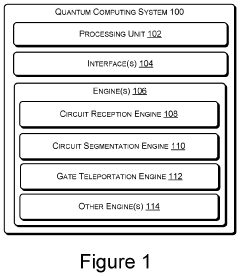
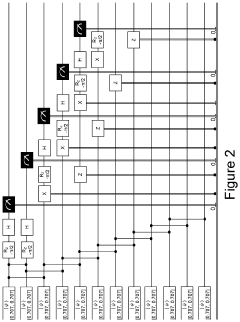
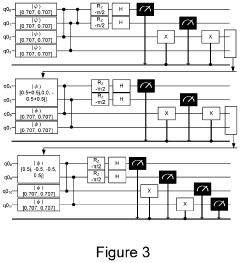
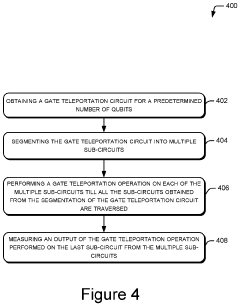
- Segmenting the gate teleportation circuit into multiple sub-circuits allows for sequential processing, reducing the complexity of entangled state preparation and minimizing the duration qubits need to be maintained in specific states, thereby enhancing operational efficiency and enabling reusability of qubits.
Legal Framework for Quantum Evidence
The integration of quantum models into forensic science necessitates a robust legal framework to govern their application and admissibility in court proceedings. Currently, most jurisdictions lack specific legislation addressing quantum-based evidence, creating a legal vacuum that must be addressed as these technologies advance. The Daubert standard in the United States and similar evidentiary standards globally provide general guidelines for scientific evidence but require adaptation to accommodate the unique characteristics of quantum-derived forensic data.
Key legal considerations include the reliability and reproducibility of quantum forensic techniques. Courts typically require scientific evidence to demonstrate consistent results under controlled conditions—a challenge for quantum systems that inherently involve probabilistic outcomes. Legal precedents from cases involving other advanced technologies, such as DNA analysis and digital forensics, offer valuable frameworks that could be adapted for quantum evidence evaluation.
Data privacy regulations present another critical legal dimension. Quantum computing's enhanced analytical capabilities may enable deeper examination of personal data than previously possible, potentially conflicting with existing privacy laws such as GDPR in Europe or CCPA in California. Forensic applications must navigate these constraints while maintaining investigative efficacy.
Chain of custody requirements must evolve to address the unique aspects of quantum evidence collection and preservation. Traditional physical evidence procedures are inadequate for quantum data, which may exist in superposition states or entangled systems. Legal frameworks must establish protocols for documenting quantum state measurements and ensuring that evidence remains unaltered during analysis.
Expert witness qualification standards represent another legal challenge. Courts must determine appropriate credentials for witnesses testifying about quantum forensic techniques, as this interdisciplinary field spans quantum physics, computer science, and traditional forensic disciplines. Current legal systems lack established standards for evaluating such expertise.
International harmonization of legal approaches to quantum evidence is essential as criminal investigations increasingly cross jurisdictional boundaries. Disparate legal standards could impede international cooperation in cases utilizing quantum forensic techniques. Organizations like Interpol and the United Nations Office on Drugs and Crime have begun preliminary discussions on developing international guidelines for emerging forensic technologies.
Legislative bodies and judicial systems must proactively develop comprehensive legal frameworks before widespread adoption of quantum forensic techniques. This includes establishing admissibility standards, addressing authentication challenges, and balancing investigative needs with privacy protections. Without such frameworks, courts risk inconsistent rulings that could undermine public confidence in the justice system's ability to properly evaluate cutting-edge scientific evidence.
Key legal considerations include the reliability and reproducibility of quantum forensic techniques. Courts typically require scientific evidence to demonstrate consistent results under controlled conditions—a challenge for quantum systems that inherently involve probabilistic outcomes. Legal precedents from cases involving other advanced technologies, such as DNA analysis and digital forensics, offer valuable frameworks that could be adapted for quantum evidence evaluation.
Data privacy regulations present another critical legal dimension. Quantum computing's enhanced analytical capabilities may enable deeper examination of personal data than previously possible, potentially conflicting with existing privacy laws such as GDPR in Europe or CCPA in California. Forensic applications must navigate these constraints while maintaining investigative efficacy.
Chain of custody requirements must evolve to address the unique aspects of quantum evidence collection and preservation. Traditional physical evidence procedures are inadequate for quantum data, which may exist in superposition states or entangled systems. Legal frameworks must establish protocols for documenting quantum state measurements and ensuring that evidence remains unaltered during analysis.
Expert witness qualification standards represent another legal challenge. Courts must determine appropriate credentials for witnesses testifying about quantum forensic techniques, as this interdisciplinary field spans quantum physics, computer science, and traditional forensic disciplines. Current legal systems lack established standards for evaluating such expertise.
International harmonization of legal approaches to quantum evidence is essential as criminal investigations increasingly cross jurisdictional boundaries. Disparate legal standards could impede international cooperation in cases utilizing quantum forensic techniques. Organizations like Interpol and the United Nations Office on Drugs and Crime have begun preliminary discussions on developing international guidelines for emerging forensic technologies.
Legislative bodies and judicial systems must proactively develop comprehensive legal frameworks before widespread adoption of quantum forensic techniques. This includes establishing admissibility standards, addressing authentication challenges, and balancing investigative needs with privacy protections. Without such frameworks, courts risk inconsistent rulings that could undermine public confidence in the justice system's ability to properly evaluate cutting-edge scientific evidence.
Quantum-Classical Integration Challenges
The integration of quantum computing models with classical forensic methodologies presents significant technical challenges that must be addressed for practical implementation. Current forensic systems rely heavily on classical computing architectures, creating compatibility issues when attempting to incorporate quantum-based analytical tools. These systems operate on fundamentally different principles - classical systems process information in binary bits, while quantum systems utilize qubits that can exist in multiple states simultaneously through superposition and entanglement.
One primary challenge involves the development of effective interface protocols between quantum processors and classical forensic databases. Forensic agencies maintain vast repositories of fingerprints, DNA profiles, and other biometric data structured for classical computing environments. Converting these databases to quantum-compatible formats requires substantial architectural modifications and raises concerns about data integrity during transition phases.
Hardware limitations further complicate integration efforts. Quantum computers currently require specialized operating environments with extreme cooling requirements and electromagnetic isolation. This creates logistical barriers for forensic laboratories with limited resources and infrastructure. The development of more robust quantum systems capable of operating in standard laboratory conditions remains a significant research priority.
Data translation between quantum and classical systems introduces computational overhead that can potentially negate quantum advantages in certain applications. When quantum algorithms generate results, these must be translated back into classically interpretable formats for forensic experts. This translation process can introduce latency and potential information loss, particularly when dealing with probabilistic quantum outputs.
Security considerations present another layer of complexity. Quantum systems may eventually break current encryption standards used to protect sensitive forensic data, necessitating the development of quantum-resistant cryptographic protocols. Simultaneously, quantum systems themselves require novel security approaches to prevent unauthorized access or manipulation of forensic analyses.
Workforce adaptation represents a human-centered challenge in this technical landscape. Forensic scientists and technicians require specialized training to effectively utilize quantum-enhanced tools. The interdisciplinary nature of quantum forensics demands expertise spanning quantum physics, computer science, and traditional forensic methodologies - a rare combination in today's workforce.
Cost-benefit considerations ultimately determine integration feasibility. While quantum systems offer theoretical advantages for complex pattern matching and large dataset analysis, the substantial investment required for implementation must be justified by measurable improvements in forensic outcomes. Developing metrics to evaluate quantum advantage in forensic applications remains an essential component of integration strategies.
One primary challenge involves the development of effective interface protocols between quantum processors and classical forensic databases. Forensic agencies maintain vast repositories of fingerprints, DNA profiles, and other biometric data structured for classical computing environments. Converting these databases to quantum-compatible formats requires substantial architectural modifications and raises concerns about data integrity during transition phases.
Hardware limitations further complicate integration efforts. Quantum computers currently require specialized operating environments with extreme cooling requirements and electromagnetic isolation. This creates logistical barriers for forensic laboratories with limited resources and infrastructure. The development of more robust quantum systems capable of operating in standard laboratory conditions remains a significant research priority.
Data translation between quantum and classical systems introduces computational overhead that can potentially negate quantum advantages in certain applications. When quantum algorithms generate results, these must be translated back into classically interpretable formats for forensic experts. This translation process can introduce latency and potential information loss, particularly when dealing with probabilistic quantum outputs.
Security considerations present another layer of complexity. Quantum systems may eventually break current encryption standards used to protect sensitive forensic data, necessitating the development of quantum-resistant cryptographic protocols. Simultaneously, quantum systems themselves require novel security approaches to prevent unauthorized access or manipulation of forensic analyses.
Workforce adaptation represents a human-centered challenge in this technical landscape. Forensic scientists and technicians require specialized training to effectively utilize quantum-enhanced tools. The interdisciplinary nature of quantum forensics demands expertise spanning quantum physics, computer science, and traditional forensic methodologies - a rare combination in today's workforce.
Cost-benefit considerations ultimately determine integration feasibility. While quantum systems offer theoretical advantages for complex pattern matching and large dataset analysis, the substantial investment required for implementation must be justified by measurable improvements in forensic outcomes. Developing metrics to evaluate quantum advantage in forensic applications remains an essential component of integration strategies.
Unlock deeper insights with PatSnap Eureka Quick Research — get a full tech report to explore trends and direct your research. Try now!
Generate Your Research Report Instantly with AI Agent
Supercharge your innovation with PatSnap Eureka AI Agent Platform!