

QLED Displays for Enhanced Visual Learning Environments
JUN 19, 20259 MIN READ
Generate Your Research Report Instantly with AI Agent
PatSnap Eureka helps you evaluate technical feasibility & market potential.
QLED Display Evolution and Learning Goals
QLED (Quantum Dot Light Emitting Diode) display technology has undergone significant evolution since its inception, revolutionizing the visual learning landscape. This advanced display technology harnesses the unique properties of quantum dots to produce vibrant, high-contrast images with exceptional color accuracy and energy efficiency.
The journey of QLED displays began with the discovery of quantum dots in the 1980s. However, it wasn't until the early 2000s that researchers started exploring their potential in display applications. The first commercial QLED displays emerged in the mid-2010s, marking a pivotal moment in display technology. Since then, continuous improvements in quantum dot synthesis, color conversion efficiency, and manufacturing processes have propelled QLED technology to the forefront of the display market.
In the context of visual learning environments, QLED displays offer several advantages that align with educational goals. The technology's ability to produce a wide color gamut enhances the visual representation of complex concepts, making it easier for students to grasp intricate details in scientific simulations, artistic renderings, and historical reconstructions. The high brightness and contrast ratios of QLED displays ensure clear visibility even in well-lit classrooms, reducing eye strain during extended viewing periods.
One of the primary goals in implementing QLED displays for enhanced visual learning is to improve information retention. Studies have shown that visual aids significantly boost memory recall, and the superior image quality of QLED technology can potentially amplify this effect. By presenting educational content with more accurate colors and sharper details, QLED displays aim to create more engaging and immersive learning experiences.
Another crucial objective is to cater to diverse learning styles. QLED displays' versatility in presenting various types of content – from text and images to videos and interactive simulations – supports multiple modes of learning. This adaptability is particularly valuable in modern educational settings that emphasize personalized learning approaches.
The evolution of QLED technology also aligns with the goal of creating more sustainable and energy-efficient learning environments. As the technology matures, power consumption has decreased while display performance has improved, contributing to reduced operational costs and environmental impact in educational institutions.
Looking ahead, the continued development of QLED displays for visual learning environments aims to integrate advanced features such as touch interactivity, 3D visualization capabilities, and seamless connectivity with other educational technologies. These advancements are expected to further enhance collaborative learning, spatial understanding, and real-time interaction with educational content.
The journey of QLED displays began with the discovery of quantum dots in the 1980s. However, it wasn't until the early 2000s that researchers started exploring their potential in display applications. The first commercial QLED displays emerged in the mid-2010s, marking a pivotal moment in display technology. Since then, continuous improvements in quantum dot synthesis, color conversion efficiency, and manufacturing processes have propelled QLED technology to the forefront of the display market.
In the context of visual learning environments, QLED displays offer several advantages that align with educational goals. The technology's ability to produce a wide color gamut enhances the visual representation of complex concepts, making it easier for students to grasp intricate details in scientific simulations, artistic renderings, and historical reconstructions. The high brightness and contrast ratios of QLED displays ensure clear visibility even in well-lit classrooms, reducing eye strain during extended viewing periods.
One of the primary goals in implementing QLED displays for enhanced visual learning is to improve information retention. Studies have shown that visual aids significantly boost memory recall, and the superior image quality of QLED technology can potentially amplify this effect. By presenting educational content with more accurate colors and sharper details, QLED displays aim to create more engaging and immersive learning experiences.
Another crucial objective is to cater to diverse learning styles. QLED displays' versatility in presenting various types of content – from text and images to videos and interactive simulations – supports multiple modes of learning. This adaptability is particularly valuable in modern educational settings that emphasize personalized learning approaches.
The evolution of QLED technology also aligns with the goal of creating more sustainable and energy-efficient learning environments. As the technology matures, power consumption has decreased while display performance has improved, contributing to reduced operational costs and environmental impact in educational institutions.
Looking ahead, the continued development of QLED displays for visual learning environments aims to integrate advanced features such as touch interactivity, 3D visualization capabilities, and seamless connectivity with other educational technologies. These advancements are expected to further enhance collaborative learning, spatial understanding, and real-time interaction with educational content.
Educational Market Demand for QLED Displays
The educational market for QLED displays is experiencing significant growth, driven by the increasing demand for advanced visual learning environments. As educational institutions strive to enhance student engagement and learning outcomes, QLED technology offers a compelling solution with its superior image quality, color accuracy, and energy efficiency.
Primary and secondary schools are rapidly adopting QLED displays for interactive whiteboards and large-format screens in classrooms. These displays provide vibrant, high-contrast images that capture students' attention and improve information retention. The wide color gamut of QLED technology allows for more accurate representation of scientific diagrams, historical artifacts, and artistic works, enhancing the learning experience across various subjects.
Higher education institutions are also embracing QLED displays for lecture halls, research laboratories, and collaborative spaces. The technology's ability to render fine details and true-to-life colors is particularly valuable in fields such as medicine, engineering, and design, where precise visual representation is crucial for learning complex concepts.
The corporate training sector represents another growing market for QLED displays. Companies are investing in these advanced screens for their training facilities to create immersive learning environments that simulate real-world scenarios more effectively. The high brightness and wide viewing angles of QLED displays ensure that all participants can clearly see the content, even in large training rooms.
Distance learning and online education platforms are driving demand for QLED displays in home learning environments. As remote education becomes more prevalent, students and educators alike are seeking high-quality displays that reduce eye strain during extended viewing periods and provide a more engaging virtual classroom experience.
The market potential for QLED displays in education is further amplified by the growing focus on STEM education and digital literacy. Schools and universities are upgrading their technology infrastructure to prepare students for future careers in technology-driven fields, with QLED displays playing a crucial role in creating state-of-the-art learning spaces.
Government initiatives aimed at modernizing educational facilities are also contributing to market growth. Many countries are allocating funds specifically for upgrading classroom technology, with QLED displays often featured prominently in these modernization efforts due to their long lifespan and energy efficiency, which align well with sustainability goals.
As the educational sector continues to evolve, the demand for QLED displays is expected to rise steadily. The technology's ability to create visually rich, interactive learning environments positions it as a key component in the future of education, promising to revolutionize how information is presented and absorbed in classrooms around the world.
Primary and secondary schools are rapidly adopting QLED displays for interactive whiteboards and large-format screens in classrooms. These displays provide vibrant, high-contrast images that capture students' attention and improve information retention. The wide color gamut of QLED technology allows for more accurate representation of scientific diagrams, historical artifacts, and artistic works, enhancing the learning experience across various subjects.
Higher education institutions are also embracing QLED displays for lecture halls, research laboratories, and collaborative spaces. The technology's ability to render fine details and true-to-life colors is particularly valuable in fields such as medicine, engineering, and design, where precise visual representation is crucial for learning complex concepts.
The corporate training sector represents another growing market for QLED displays. Companies are investing in these advanced screens for their training facilities to create immersive learning environments that simulate real-world scenarios more effectively. The high brightness and wide viewing angles of QLED displays ensure that all participants can clearly see the content, even in large training rooms.
Distance learning and online education platforms are driving demand for QLED displays in home learning environments. As remote education becomes more prevalent, students and educators alike are seeking high-quality displays that reduce eye strain during extended viewing periods and provide a more engaging virtual classroom experience.
The market potential for QLED displays in education is further amplified by the growing focus on STEM education and digital literacy. Schools and universities are upgrading their technology infrastructure to prepare students for future careers in technology-driven fields, with QLED displays playing a crucial role in creating state-of-the-art learning spaces.
Government initiatives aimed at modernizing educational facilities are also contributing to market growth. Many countries are allocating funds specifically for upgrading classroom technology, with QLED displays often featured prominently in these modernization efforts due to their long lifespan and energy efficiency, which align well with sustainability goals.
As the educational sector continues to evolve, the demand for QLED displays is expected to rise steadily. The technology's ability to create visually rich, interactive learning environments positions it as a key component in the future of education, promising to revolutionize how information is presented and absorbed in classrooms around the world.
QLED Technology: Current State and Challenges
QLED (Quantum Dot Light-Emitting Diode) technology has made significant strides in recent years, positioning itself as a promising contender in the display market. The current state of QLED technology showcases impressive advancements in color reproduction, brightness, and energy efficiency. These displays utilize quantum dots, nanoscale semiconductor particles that emit light when excited by an electric current, to produce vibrant and accurate colors.
One of the key strengths of QLED technology is its ability to achieve a wide color gamut, often surpassing that of traditional LED and OLED displays. This enhanced color reproduction is particularly beneficial in visual learning environments, where accurate representation of images and graphics is crucial. Additionally, QLED displays can achieve higher peak brightness levels compared to OLED, making them suitable for well-lit educational spaces.
However, despite these advancements, QLED technology still faces several challenges. One of the primary issues is the reliance on a backlight system, which can limit the ability to achieve true blacks and perfect contrast ratios. This limitation becomes apparent when compared to OLED technology, which can turn off individual pixels for deep blacks. The backlight dependency also impacts power efficiency, especially when displaying darker content.
Another challenge lies in the production of blue quantum dots. While red and green quantum dots have reached a high level of efficiency and stability, blue quantum dots lag behind in terms of performance and longevity. This discrepancy affects the overall color balance and lifespan of QLED displays, potentially impacting their long-term viability in educational settings that require consistent performance over extended periods.
The environmental impact of quantum dot production and disposal also presents a significant challenge. Many quantum dots contain heavy metals, raising concerns about toxicity and environmental sustainability. Researchers are actively working on developing more eco-friendly quantum dot materials, but this remains an ongoing area of improvement.
In the context of visual learning environments, QLED technology must also address challenges related to eye strain and visual comfort during prolonged use. While the high brightness capabilities of QLED displays can enhance visibility, they may also contribute to eye fatigue if not properly managed. Developing adaptive brightness and blue light filtering technologies specific to QLED displays is crucial for optimizing their use in educational settings.
As QLED technology continues to evolve, addressing these challenges will be critical for its widespread adoption in enhanced visual learning environments. Ongoing research focuses on improving quantum dot efficiency, developing alternative materials for blue light emission, and enhancing overall display performance while minimizing environmental impact.
One of the key strengths of QLED technology is its ability to achieve a wide color gamut, often surpassing that of traditional LED and OLED displays. This enhanced color reproduction is particularly beneficial in visual learning environments, where accurate representation of images and graphics is crucial. Additionally, QLED displays can achieve higher peak brightness levels compared to OLED, making them suitable for well-lit educational spaces.
However, despite these advancements, QLED technology still faces several challenges. One of the primary issues is the reliance on a backlight system, which can limit the ability to achieve true blacks and perfect contrast ratios. This limitation becomes apparent when compared to OLED technology, which can turn off individual pixels for deep blacks. The backlight dependency also impacts power efficiency, especially when displaying darker content.
Another challenge lies in the production of blue quantum dots. While red and green quantum dots have reached a high level of efficiency and stability, blue quantum dots lag behind in terms of performance and longevity. This discrepancy affects the overall color balance and lifespan of QLED displays, potentially impacting their long-term viability in educational settings that require consistent performance over extended periods.
The environmental impact of quantum dot production and disposal also presents a significant challenge. Many quantum dots contain heavy metals, raising concerns about toxicity and environmental sustainability. Researchers are actively working on developing more eco-friendly quantum dot materials, but this remains an ongoing area of improvement.
In the context of visual learning environments, QLED technology must also address challenges related to eye strain and visual comfort during prolonged use. While the high brightness capabilities of QLED displays can enhance visibility, they may also contribute to eye fatigue if not properly managed. Developing adaptive brightness and blue light filtering technologies specific to QLED displays is crucial for optimizing their use in educational settings.
As QLED technology continues to evolve, addressing these challenges will be critical for its widespread adoption in enhanced visual learning environments. Ongoing research focuses on improving quantum dot efficiency, developing alternative materials for blue light emission, and enhancing overall display performance while minimizing environmental impact.
QLED Solutions for Educational Environments
01 QLED display structure and materials
QLED displays utilize quantum dot technology to enhance color performance and efficiency. The structure typically includes a quantum dot layer, light-emitting diodes, and various optical films. Advanced materials and fabrication techniques are employed to improve display quality and durability.- QLED display structure and materials: QLED displays utilize quantum dot technology to enhance color performance and efficiency. The structure typically includes a quantum dot layer, light-emitting diodes, and various optical films. Advanced materials and fabrication techniques are employed to improve display quality and durability.
- Visual learning algorithms for QLED displays: Machine learning and artificial intelligence techniques are applied to optimize QLED display performance. These algorithms can enhance image processing, color calibration, and adaptive brightness control. Visual learning systems can also improve content rendering and user experience on QLED displays.
- QLED display driver circuits and control systems: Specialized driver circuits and control systems are developed to manage QLED displays effectively. These systems handle tasks such as pixel addressing, power management, and signal processing. Advanced control algorithms can optimize display performance and energy efficiency.
- QLED display manufacturing processes: Innovative manufacturing techniques are employed to produce QLED displays at scale. These processes may include quantum dot synthesis, deposition methods, and assembly techniques. Continuous improvements in manufacturing aim to enhance display quality and reduce production costs.
- QLED display applications and integration: QLED displays are integrated into various devices and systems, including televisions, monitors, and mobile devices. Research focuses on adapting QLED technology for specific applications, such as automotive displays, augmented reality, and flexible screens. Integration challenges and solutions are explored to expand the use of QLED displays in different fields.
02 Visual learning algorithms for QLED displays
Machine learning and artificial intelligence techniques are applied to optimize QLED display performance. These algorithms can enhance image processing, color calibration, and adaptive brightness control, resulting in improved visual quality and energy efficiency.Expand Specific Solutions03 QLED display driver circuits and control systems
Specialized driver circuits and control systems are developed to manage QLED displays effectively. These systems handle tasks such as pixel addressing, refresh rate control, and power management, ensuring optimal display performance and longevity.Expand Specific Solutions04 QLED display manufacturing processes
Advanced manufacturing techniques are employed to produce QLED displays at scale. These processes include quantum dot deposition, thin-film transistor fabrication, and assembly of various display components. Innovations in manufacturing aim to improve yield rates and reduce production costs.Expand Specific Solutions05 QLED display applications and integration
QLED displays are integrated into various devices and applications, including smartphones, televisions, and automotive displays. Research focuses on adapting QLED technology for specific use cases, such as flexible displays, transparent displays, and augmented reality applications.Expand Specific Solutions
Key QLED Display Manufacturers and Competitors
The QLED display market for enhanced visual learning environments is in a growth phase, driven by increasing demand for high-quality displays in educational settings. The market size is expanding rapidly, with major players like BOE Technology Group, Sharp Corp., and TCL China Star Optoelectronics Technology Co., Ltd. leading the way. Technologically, QLED displays are maturing, with companies such as Samsung and LG Display making significant advancements. Emerging players like Hefei Visionox Technology Co., Ltd. and Guangdong Juhua Printing Display Technology Co. Ltd. are also contributing to innovation in this field. The competition is intensifying as more companies recognize the potential of QLED technology in educational applications, leading to continuous improvements in display quality, energy efficiency, and cost-effectiveness.
BOE Technology Group Co., Ltd.
Technical Solution: BOE has developed advanced QLED display technology for enhanced visual learning environments. Their solution incorporates quantum dot technology to produce vibrant, high-contrast displays with a wide color gamut. BOE's QLED panels feature local dimming capabilities for improved HDR performance and energy efficiency. The company has also implemented blue light reduction technology to minimize eye strain during extended viewing periods, making it ideal for educational settings.
Strengths: Superior color accuracy and brightness, energy-efficient design, and eye-friendly features. Weaknesses: Higher production costs compared to traditional LCD displays, potential for image retention in static content scenarios.
Shenzhen China Star Optoelectronics Semicon Display Tech Co.
Technical Solution: China Star Optoelectronics has developed a QLED display solution specifically tailored for visual learning environments. Their technology utilizes quantum dot enhancement film (QDEF) to achieve a wider color gamut and higher color volume. The company has also implemented advanced local dimming algorithms to enhance contrast ratios and reduce power consumption. Additionally, their displays feature anti-glare coatings and adjustable color temperature settings to optimize viewing comfort in various lighting conditions.
Strengths: Excellent color reproduction, high contrast ratios, and adaptability to different lighting environments. Weaknesses: Potential for higher costs due to specialized components and more complex manufacturing processes.
Core QLED Innovations for Visual Learning
Optoelectronic device
PatentPendingUS20240107791A1
Innovation
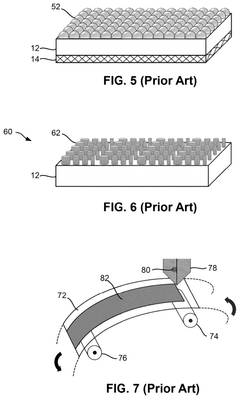
- An optoelectronic device with a quantum dot light-emitting layer in a core-shell structure, where the valence band top energy level difference between the shell layer material and the hole transport material is greater than or equal to 0.5 eV, and the electron transport layer comprises zinc oxide nanomaterials bound with amine/carboxyl ligands of 3-8 carbon atoms, optimizing hole and electron injection balance and reducing charge accumulation.
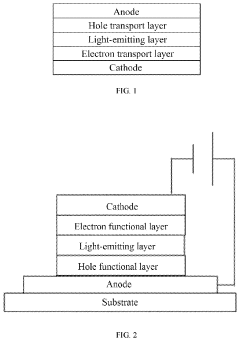
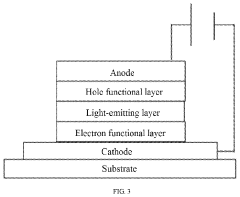
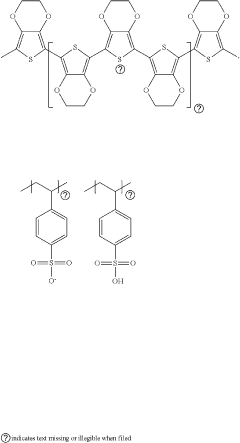
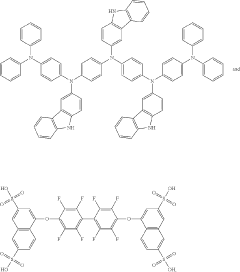
Integrated optoelectronic devices for lighting and display applications
PatentPendingUS20240341118A1
Innovation
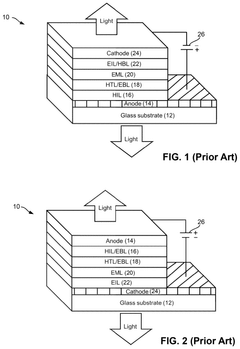
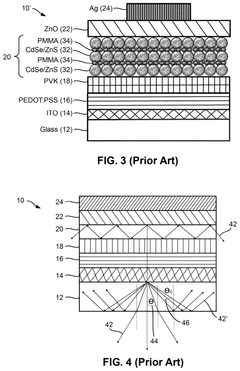
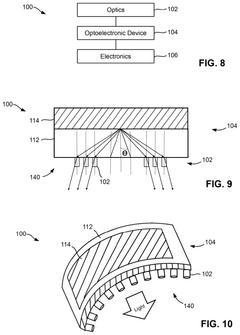
- Incorporation of metasurfaces with two-dimensional arrays of nanostructures into the light-emitting devices to reduce photon reflection, control light direction, and manipulate emission profiles, combined with machine-learning methods for optimizing light patterns and using flexible substrates like hybrid silver nanowires and carbon nanotubes for improved conductivity and stability.
Health and Safety Considerations of QLED in Classrooms
The integration of QLED displays in classroom environments necessitates a thorough examination of potential health and safety considerations. While QLED technology offers numerous advantages for visual learning, it is crucial to address any potential risks associated with its implementation in educational settings.
One primary concern is the emission of blue light from QLED displays. Prolonged exposure to high-intensity blue light has been linked to eye strain, fatigue, and potential disruption of circadian rhythms. To mitigate these risks, it is essential to implement proper lighting design in classrooms, incorporating ambient lighting that complements the QLED displays and reduces contrast-induced eye strain. Additionally, the use of blue light filters or software solutions that adjust color temperature based on time of day can help minimize potential negative effects on students' sleep patterns.
Another consideration is the potential for glare and reflections on QLED screens, which can cause visual discomfort and reduced readability. To address this issue, careful placement of displays within the classroom is crucial, taking into account natural light sources and seating arrangements. Anti-glare coatings or matte screen protectors can also be applied to QLED displays to further reduce reflections and improve visibility.
The ergonomic aspects of QLED display usage in classrooms must also be addressed. Proper positioning of screens at eye level and at an appropriate distance from students can help prevent neck strain and maintain good posture. Adjustable mounting solutions and flexible seating arrangements can accommodate students of varying heights and ensure comfortable viewing angles for all.
Electromagnetic emissions from QLED displays, while generally considered low, should be monitored to ensure compliance with relevant safety standards. Regular maintenance and testing of equipment can help identify any potential issues and ensure that emissions remain within acceptable limits.
Lastly, the durability and safety of QLED displays in a classroom setting must be considered. The use of tempered glass or protective covers can prevent damage from accidental impacts and reduce the risk of injury from broken screens. Proper cable management and secure mounting systems are essential to prevent tripping hazards and ensure the stability of the displays.
By addressing these health and safety considerations, educational institutions can maximize the benefits of QLED technology while minimizing potential risks to students and staff. Regular assessments and updates to safety protocols will be necessary as the technology evolves and new research emerges on its long-term effects in learning environments.
One primary concern is the emission of blue light from QLED displays. Prolonged exposure to high-intensity blue light has been linked to eye strain, fatigue, and potential disruption of circadian rhythms. To mitigate these risks, it is essential to implement proper lighting design in classrooms, incorporating ambient lighting that complements the QLED displays and reduces contrast-induced eye strain. Additionally, the use of blue light filters or software solutions that adjust color temperature based on time of day can help minimize potential negative effects on students' sleep patterns.
Another consideration is the potential for glare and reflections on QLED screens, which can cause visual discomfort and reduced readability. To address this issue, careful placement of displays within the classroom is crucial, taking into account natural light sources and seating arrangements. Anti-glare coatings or matte screen protectors can also be applied to QLED displays to further reduce reflections and improve visibility.
The ergonomic aspects of QLED display usage in classrooms must also be addressed. Proper positioning of screens at eye level and at an appropriate distance from students can help prevent neck strain and maintain good posture. Adjustable mounting solutions and flexible seating arrangements can accommodate students of varying heights and ensure comfortable viewing angles for all.
Electromagnetic emissions from QLED displays, while generally considered low, should be monitored to ensure compliance with relevant safety standards. Regular maintenance and testing of equipment can help identify any potential issues and ensure that emissions remain within acceptable limits.
Lastly, the durability and safety of QLED displays in a classroom setting must be considered. The use of tempered glass or protective covers can prevent damage from accidental impacts and reduce the risk of injury from broken screens. Proper cable management and secure mounting systems are essential to prevent tripping hazards and ensure the stability of the displays.
By addressing these health and safety considerations, educational institutions can maximize the benefits of QLED technology while minimizing potential risks to students and staff. Regular assessments and updates to safety protocols will be necessary as the technology evolves and new research emerges on its long-term effects in learning environments.
Cost-Benefit Analysis of QLED in Education
The implementation of QLED displays in educational environments presents a complex cost-benefit scenario that requires careful analysis. Initial investment costs for QLED technology are significantly higher than traditional display options, such as LCD or LED screens. However, the long-term benefits may outweigh these upfront expenses.
QLED displays offer superior image quality, with enhanced color accuracy, brightness, and contrast ratios. This improved visual experience can lead to increased student engagement and potentially better learning outcomes. Studies have shown that high-quality visual aids can improve information retention and comprehension, particularly in subjects that rely heavily on visual representations, such as science and geography.
Energy efficiency is another factor to consider. QLED displays typically consume less power than their LCD counterparts, especially when displaying bright content. Over time, this can result in reduced electricity costs for educational institutions, partially offsetting the initial investment.
Durability and lifespan are crucial considerations in educational settings. QLED displays generally have a longer operational life compared to traditional options, with some models rated for up to 100,000 hours of use. This extended lifespan can reduce replacement frequency and associated costs, making them a potentially more economical choice in the long run.
Maintenance costs should also be factored into the analysis. QLED displays are less prone to image retention or burn-in compared to OLED technology, which can be particularly beneficial in educational environments where static images or interfaces may be displayed for extended periods.
The versatility of QLED displays in various lighting conditions is another advantage. Their high brightness capabilities make them suitable for both well-lit classrooms and darker lecture halls, potentially reducing the need for additional lighting infrastructure or modifications.
However, it's important to consider the potential drawbacks. The advanced features of QLED displays may require additional training for staff and educators to fully utilize their capabilities. There might also be compatibility issues with existing educational software or hardware, necessitating further investments in system upgrades.
In conclusion, while the initial costs of implementing QLED displays in educational settings are substantial, the long-term benefits in terms of improved learning experiences, energy savings, and durability could justify the investment. A thorough cost-benefit analysis should consider not only immediate financial implications but also the potential for enhanced educational outcomes and long-term operational efficiencies.
QLED displays offer superior image quality, with enhanced color accuracy, brightness, and contrast ratios. This improved visual experience can lead to increased student engagement and potentially better learning outcomes. Studies have shown that high-quality visual aids can improve information retention and comprehension, particularly in subjects that rely heavily on visual representations, such as science and geography.
Energy efficiency is another factor to consider. QLED displays typically consume less power than their LCD counterparts, especially when displaying bright content. Over time, this can result in reduced electricity costs for educational institutions, partially offsetting the initial investment.
Durability and lifespan are crucial considerations in educational settings. QLED displays generally have a longer operational life compared to traditional options, with some models rated for up to 100,000 hours of use. This extended lifespan can reduce replacement frequency and associated costs, making them a potentially more economical choice in the long run.
Maintenance costs should also be factored into the analysis. QLED displays are less prone to image retention or burn-in compared to OLED technology, which can be particularly beneficial in educational environments where static images or interfaces may be displayed for extended periods.
The versatility of QLED displays in various lighting conditions is another advantage. Their high brightness capabilities make them suitable for both well-lit classrooms and darker lecture halls, potentially reducing the need for additional lighting infrastructure or modifications.
However, it's important to consider the potential drawbacks. The advanced features of QLED displays may require additional training for staff and educators to fully utilize their capabilities. There might also be compatibility issues with existing educational software or hardware, necessitating further investments in system upgrades.
In conclusion, while the initial costs of implementing QLED displays in educational settings are substantial, the long-term benefits in terms of improved learning experiences, energy savings, and durability could justify the investment. A thorough cost-benefit analysis should consider not only immediate financial implications but also the potential for enhanced educational outcomes and long-term operational efficiencies.
Unlock deeper insights with PatSnap Eureka Quick Research — get a full tech report to explore trends and direct your research. Try now!
Generate Your Research Report Instantly with AI Agent
Supercharge your innovation with PatSnap Eureka AI Agent Platform!